
 EN
EN  ES
ES  FR
FR  DE
DE  IT
IT  KO
KO  JA
JA  ZH
ZH  AR
AR  PT
PT  TR
TR PL
PL
Amazon is one of the most powerful companies in the world today – but it didn’t start that way. What began as a simple online bookstore in a garage has grown into a global empire reshaping how we shop, work, and live. In this article, we’ll take a closer look at when and how Amazon started, who founded it, and what fueled its early rise to success.
So, When Did Amazon Actually Begin?
The official date? July 5, 1994. That’s when Jeff Bezos, who had just left his Wall Street job, filed the paperwork to launch what would eventually become Amazon. Funny enough, it wasn’t even called Amazon at first. The original name was “Cadabra,” like “abracadabra.” Yeah… that didn’t stick. Apparently someone thought he said “cadaver,” and, well, that kind of killed the magic vibe.
So Bezos pivoted to “Amazon” – partly because it started with an “A” (good for listings), but also because the Amazon River is huge and wild and untamed… which is kind of the energy he was going for.
And the office? Just your classic startup-in-a-garage situation, in Bellevue, Washington. Nothing fancy. Just Bezos, a few hires, and a lot of caffeine.
Why Start with Books?
It’s a fair question. Of all the things to sell online, why books?
Here’s the logic:
- There were already millions of book titles in print – way more than any bookstore could keep on shelves.
- They were affordable and easy to ship.
- And people actually wanted them.
Basically, books were the perfect guinea pig for testing out e-commerce. You didn’t need a massive warehouse or a big ad budget. Just a good website and a lot of patience.
The Website Goes Live (July 1995)
About a year later, Amazon.com officially launched. The site was super basic – no frills, just function – but that didn’t stop it from taking off. Within the first month, they were shipping books to all 50 states and 45 countries. All from a garage. With no ads. Wild.
And just to keep things extra scrappy, the team used desks made from old doors and 4x4s. Yup – “door desks” are a thing, and they kind of became a symbol of Amazon’s DIY startup mentality.
What Was the First Thing Ever Sold?
If you’re into trivia: the first item ever sold on Amazon was a book called Fluid Concepts and Creative Analogies by Douglas Hofstadter. Not exactly a page-turner, but still a fun milestone.
Also, in those early days, they had a bell that rang every time someone placed an order. That didn’t last long – they had to silence it once the orders started flooding in.
Chasing Growth, Not Profit
One thing that made Amazon stand out early on? Bezos wasn’t in a rush to make money. His focus was long-term growth – build the foundation first, worry about profits later.
Investors weren’t always thrilled about that, especially since Amazon didn’t post its first real profit until late 2001 – seven years in. But Bezos stuck to his guns.
Still, there were plenty of wins along the way:
- Amazon’s annual revenue in 1996 was approximately $16 million.
- Amazon went public in 1997.
- By 1998, they weren’t just selling books anymore – music and movies joined the mix.
- 1999 brought third-party sellers into the fold with what they called “zShops.”
By 2003, Amazon had finally pulled a net profit – $35 million – which was a huge deal after losing $149 million the year before.

From Garage to Global
After books came, well… everything. Amazon started thinking way bigger.
Fulfillment Centers & Smarter Warehousing
In 1997, they opened their first proper distribution center in Seattle. Around that time, someone had a weird (but brilliant) idea: don’t organize items by category. Just stash things wherever there’s space. Sounds nuts, but it actually sped up the picking process – and they still use that “random stow” method today.
Amazon Prime, FBA & The Kindle
Then came the game-changers:
- 2005: Amazon Prime launched with two-day shipping for $79/year. It seemed niche at the time, but look at it now.
- 2006: Fulfillment by Amazon (FBA) rolled out. Sellers could ship their inventory to Amazon, and the company would handle packing, shipping, returns – the whole deal.
- 2007: Enter the Kindle. Suddenly, digital books were cool, and Amazon wasn’t just a store – it was also a tech company.
Beyond Shopping
Behind the scenes, Amazon had already started building something huge: AWS (Amazon Web Services). Launched quietly in 2002, it offered cloud computing power and storage. Fast forward – it’s now one of Amazon’s most profitable divisions.
Then in 2017, Amazon bought Whole Foods for nearly $14 billion. Seemed odd at first – why does an online giant want grocery stores? But it gave Amazon real-world presence and distribution reach.
And in 2022? They scooped up MGM Studios. Yep, the Rocky and James Bond people. Amazon was now a streaming powerhouse, too.
The Tech and Delivery Experiments
Let’s not forget all the gadgets: Alexa, Echo, Ring, Fire TV – all part of Amazon’s bigger plan to be in your home, not just your mailbox.
And delivery? They’re trying drones (Prime Air), sidewalk robots (Amazon Scout), and who knows what’s next. It’s like sci-fi, but real.
Prime Changed the Game
What started as just faster shipping turned into one of Amazon’s smartest moves. Prime became a full-on lifestyle – streaming shows, exclusive deals, grocery perks, even photo storage. By 2021, it brought in over $31 billion and had hundreds of millions of subscribers.
Also, Prime members spend way more – something like $1,400 a year vs. $600 for non-members. So yeah, it worked.
Not Without Controversy
As Amazon got bigger, the scrutiny got louder. Some of the big concerns?
- Harsh warehouse conditions.
- Anti-competitive behavior and monopoly accusations.
- Privacy issues.
- Tax dodging and offshore operations.
There’s been a mix of lawsuits, protests, and regulatory investigations over the years. And while the company keeps evolving, those issues definitely remain part of the conversation.
Bezos Steps Back – Sort Of
In 2021, Bezos handed over the CEO job to Andy Jassy (formerly the head of AWS) and became Executive Chairman. But his vision – customer obsession, innovation, patience – is still driving the company today.

And For Sellers? That’s Where WisePPC Comes In
Amazon might be huge, but a massive chunk of its marketplace is powered by regular people – independent sellers trying to grow their businesses.
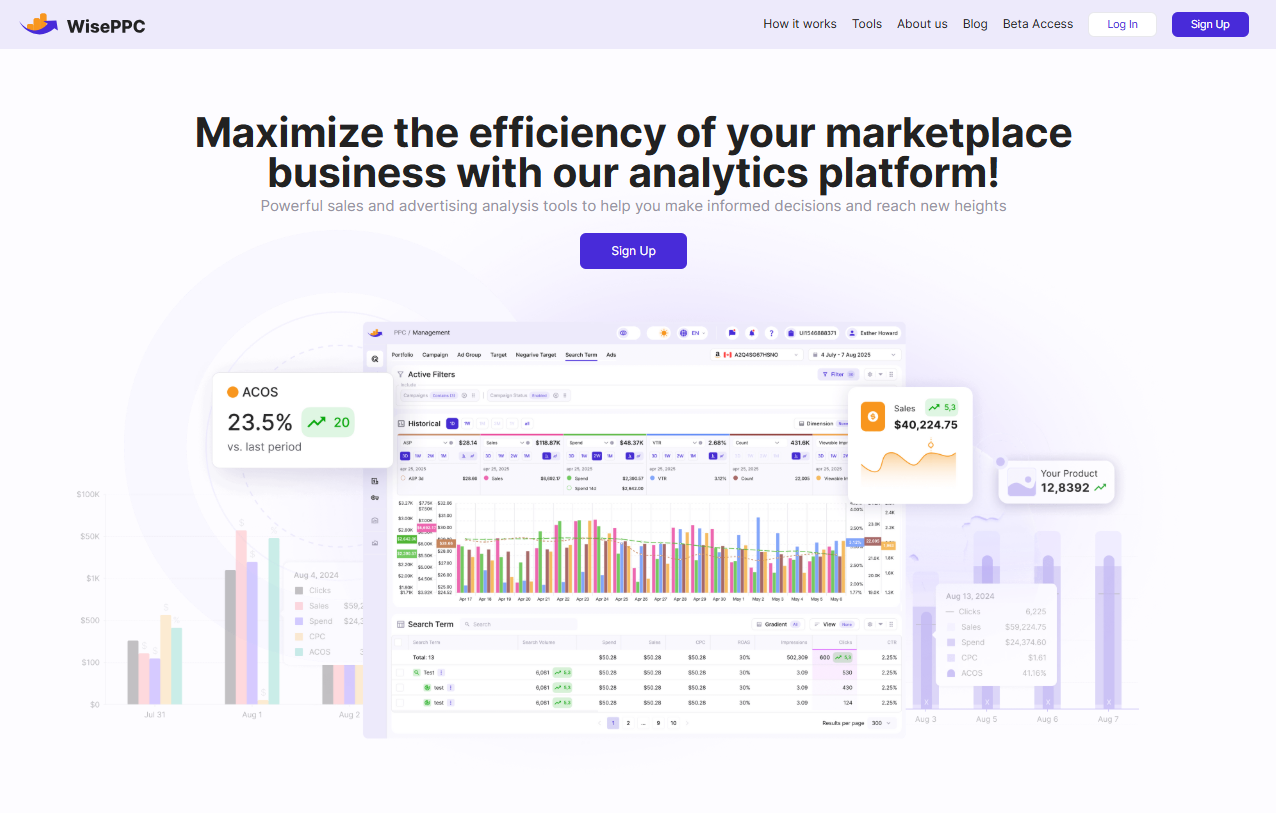
That’s where we come in at WisePPC. We help Amazon sellers get more out of their ads, campaigns, and data – without spending their lives in spreadsheets. Whether you’re just starting out or scaling fast, we’ve got the tools to help you do it smarter.
Final Thoughts: From Garage Floor to Global Force
So yeah, Amazon officially started on July 5, 1994. But more than the date, it’s the mindset that matters – big ideas, small beginnings, and a whole lot of hustle.
Even now, Amazon likes to say, “It’s always Day 1.” It’s a reminder that no matter how massive they’ve become, the company’s still driven by that scrappy startup energy.
Love it or hate it, Amazon’s journey from a garage to global domination is one heck of a business story.
FAQ
1. When exactly was Amazon founded?
Amazon officially came to life on July 5, 1994. That’s the day Jeff Bezos filed the paperwork and kicked off what would become one of the most influential businesses in modern history. Of course, the actual planning and brainstorming started a bit earlier, but July 5 is the milestone date that’s stuck.
2. Was Amazon always called Amazon?
Nope. It actually started with the name Cadabra, as in “abracadabra.” But Bezos dropped it quickly after someone misheard it as “cadaver” — probably not the best brand association. The name “Amazon” felt more fitting: bold, global, and conveniently at the top of most alphabetical lists.
3. Why did Amazon start with books?
Bezos didn’t pick books by accident. He chose them because they had huge variety, global demand, and were relatively easy to stock and ship. Plus, listing thousands of titles online let Amazon show off the power of internet-based retail before most people had even heard of e-commerce.
4. What was the first product Amazon sold?
The very first product Amazon sold was a book titled Fluid Concepts and Creative Analogies by Douglas Hofstadter. It’s a pretty niche read, but it officially kicked off a sales journey that would eventually include everything from toilet paper to smart TVs.
5. Did Amazon make money right away?
Definitely not. In fact, it took seven years before Amazon posted its first quarterly profit in late 2001. Bezos was upfront about the fact that profitability would take time, and many early investors weren’t thrilled. But his long-game thinking is part of what made Amazon what it is today.
 No credit card required