
 EN
EN  ES
ES  FR
FR  DE
DE  IT
IT  KO
KO  JA
JA  ZH
ZH  AR
AR  PT
PT  TR
TR PL
PL
If you’ve ever wrestled with a package like it was glued shut by a mischievous engineer, you’ll understand why Amazon came up with Frustration Free Packaging. The idea is simple: get rid of the excess plastic, filler, and oversized boxes so you can open your order quickly and without a small toolbox. It’s not just about convenience either – this program is also designed to cut down on waste, lower shipping costs, and make the whole delivery process a little kinder to the planet. Whether you’re a shopper who values less hassle or a seller looking to meet Amazon’s packaging standards, it’s worth knowing how it works and why it exists.
The Idea behind Frustration Free Packaging
Amazon introduced FFP back in 2008 as a voluntary program. The goal was straightforward: ship products in minimal, recyclable packaging that can be opened without tools, sharp objects, or unnecessary force.
Over time, the scope grew. More sellers joined, customers came to expect cleaner packaging, and Amazon started tying the program to cost efficiencies. By 2019, certain product types needed to meet the requirements or sellers would face chargebacks for every non-compliant unit sold.
By 2024, Amazon rebranded the initiative under the broader Ships in Product Packaging program, which now has three certification tiers. FFP remains the highest of these tiers, representing the most sustainable and customer-friendly packaging option Amazon offers.
How FFP Fits into SIPP
The updated SIPP program divides packaging into three tiers:
- Tier 1 – Frustration Free Packaging (FFP). Products ship in their own packaging with no Amazon overbox, are 100% curbside recyclable, and are easy to open in under two minutes with minimal effort.
- Tier 2 – Ships in Product Packaging (SIPP). Products can still ship in their own container without an Amazon overbox, but they don’t have to meet the recyclability or easy-open requirements of Tier 1.
- Tier 3 – Prep Free Packaging (PFP). Products need an Amazon overbox for shipping but are prepared in a way that reduces the amount of extra handling at fulfillment centers.
These tiers let Amazon gradually push more sellers toward better packaging practices, while still allowing flexibility for certain product types or categories.

Why Amazon Created FFP in the First Place
While the easy-to-open factor is a big part of the story, Amazon’s motivation goes beyond convenience. There are three main drivers:
- Reducing customer frustration: No one enjoys sawing through zip ties or tearing apart glued cardboard layers. FFP aims to make unboxing painless.
- Lowering environmental impact: Less packaging material means less waste, fewer trucks needed for the same volume of shipments, and more recyclable content in the materials that are used.
- Cutting fulfillment costs: Simpler packaging can be processed faster in warehouses, requires fewer materials, and often lowers shipping weight. That’s good for Amazon’s bottom line – and for sellers.
Key Requirements for FFP Certification
Tier 1 Frustration Free Packaging isn’t something you can just slap a label on. Amazon treats it as a standard with very specific expectations, and every box has to check all of them before it earns the certification.
The Right Form and Build
The packaging itself needs to be simple and uniform. That means a clean, rectangular shape that can be stacked, stored, and shipped without awkward edges or weak points. It’s built to fit into Amazon’s fulfillment process without needing extra reinforcement or custom handling.
Materials That Can Go Straight to Recycling
One of the cornerstones of FFP is that the box or mailer can be dropped into a curbside recycling bin without any special preparation. Amazon generally favors sturdy, paper-based materials here, as they’re widely recyclable and easier for customers to dispose of responsibly.
Effortless to Open
The “frustration-free” promise isn’t just a catchy name – it’s a requirement. Packages should be designed so that anyone can open them quickly, without a knife, scissors, or a long battle with plastic ties. Pull tabs, tear strips, or clever folds are common solutions sellers use to meet this standard.
Protection without Overpacking
Products still need to arrive intact, so the packaging must be able to withstand normal shipping bumps and drops. This is where Amazon’s transit testing comes in, ensuring that the product survives the journey without the need for excessive padding or double-boxing.
Smart Use of Space
Lastly, Amazon looks closely at how efficiently the product fits inside its packaging. Empty air or bulky filler isn’t just wasteful – it costs more to ship and store. The idea is to match the box to the product’s size as closely as possible while still protecting it.
If a package falls short in even one of these areas, it won’t make the cut for Tier 1. At best, it may qualify for a lower tier, but the full FFP badge is reserved for packaging that hits every mark.
Benefits for Sellers
For sellers, Frustration Free Packaging can feel like extra work at first, but the upside often makes it worth the effort. Once the design, testing, and certification are out of the way, the gains start showing up in more than one place:
- No penalty costs eating into profits. Products that don’t meet certain packaging standards can be hit with Amazon chargebacks. FFP certification removes that worry and keeps more of your revenue intact.
- Lower spend on materials. When you strip away unnecessary filler and oversized boxes, you naturally spend less on packaging supplies. Over time, that savings adds up.
- Faster, smoother handling in warehouses. Uniform, easy-to-manage packaging moves through storage and shipping with less hassle. That can help orders get out the door quicker.
- Better reviews and happier buyers. Customers like it when a package opens easily and arrives looking clean. That satisfaction often finds its way into ratings and feedback.
- Extra visibility in searches. Some shoppers actually filter results to only show FFP products, which could put your listings in front of more eyes.
Benefits for Customers
From a shopper’s perspective, FFP is one of those behind-the-scenes things they might not know by name, but they feel the difference. It makes the buying experience smoother in a few simple ways:
- Quick access to what they ordered. No digging for scissors or wrestling with plastic shells. The product is ready to use in moments.
- Less waste to toss. Smaller, lighter packaging means fewer materials heading to the trash, and it’s designed to go straight into the recycling bin.
- A better first impression. A clean, well-thought-out unboxing makes the order feel more premium, even if it’s just something for everyday use.
Customers may not think about the certification process, but they do remember when a package arrives in good shape, opens without a fight, and doesn’t leave a mess behind. That small win often makes them more likely to buy from the same seller again.
Sustainability Impact
From Amazon’s side, Frustration Free Packaging isn’t just about making unboxing easier – it’s also a big part of their push toward greener operations. Over the years, the program has trimmed a significant amount of weight from each shipment, which means fewer materials used and less fuel burned moving those boxes around the world. That shift has helped Amazon cut out millions of tons of packaging material entirely.
They’ve also been replacing a lot of the old plastic fillers with paper-based options, and in some fulfillment centers, plastic packaging has disappeared altogether. For sellers, tapping into this program can be a quiet but effective way to show customers that they take sustainability seriously. Still, industry experts will tell you that real environmental progress goes further than meeting Amazon’s checklist. Choosing recycled materials wherever possible and keeping packaging as lean as you can make a bigger difference than simply hitting the minimum requirements.
Common Challenges for Sellers
Switching to Frustration Free Packaging sounds straightforward on paper – make it recyclable, make it easy to open, keep it compact. In reality, the road to certification can have more twists than sellers expect. It’s not just a matter of swapping out materials or trimming down a box; the process can touch product design, supply chain planning, and even your budget. For many brands, the benefits still outweigh the hurdles, but it helps to know what those hurdles look like before diving in.
Redesigning Packaging for E-commerce
Retail packaging is often designed to stand out on a store shelf, not survive the rigors of cross-country shipping. When those same products enter the e-commerce world, the packaging that once looked polished can turn into a liability. Moving to FFP can mean rethinking everything – the shape, the construction, even how the product is secured inside. For some sellers, that’s a light refresh; for others, it’s a complete do-over.
The Cost of Testing
Amazon’s certification process comes with required transit testing, and that testing isn’t free. Smaller, lighter items might be tested in-house or at a relatively low cost, but bulkier or fragile products often require certified third-party labs. Those fees can be a shock if you haven’t planned for them, and while they’re an investment in long-term savings, they can still feel like a steep entry ticket.
Finding the Best Option between Minimalism and Protection
Cutting back on materials sounds great in theory, but too little protection can lead to damaged goods and returns. The challenge is finding a balance where the package is lean and recyclable, yet still strong enough to keep the product safe during Amazon’s sometimes rough-and-tumble fulfillment process. Achieving that balance often takes rounds of prototyping and testing.
When a Product Just Doesn’t Fit the Rules
Some products simply can’t play by FFP’s rules. Items that require tamper-proof seals, moisture barriers, or specialized protective layers may never tick all the easy-open or curbside recycling boxes. In these cases, sellers might have to aim for a lower tier in Amazon’s packaging program while still making improvements where they can.
Tips for Sellers Considering FFP
If you’re thinking about certifying products for FFP, here are a few steps to make the process smoother:
- Audit your current packaging and identify where you can remove non-recyclable materials.
- Group similar ASINs together to minimize testing and design work.
- Consider working with packaging suppliers familiar with Amazon’s requirements.
- Test prototypes internally before investing in full production.
- Keep the unboxing experience in mind – minimal doesn’t have to mean bland.
Is FFP Worth It for Every Seller?
Not always. For some categories, the cost of redesign and testing may outweigh the benefits, especially if the products already ship efficiently and aren’t subject to chargebacks. But for most, especially those in competitive spaces, FFP can improve customer satisfaction, reduce operational costs, and future-proof packaging against stricter requirements down the line.

How WisePPC Help Sellers Make the Most of FFP
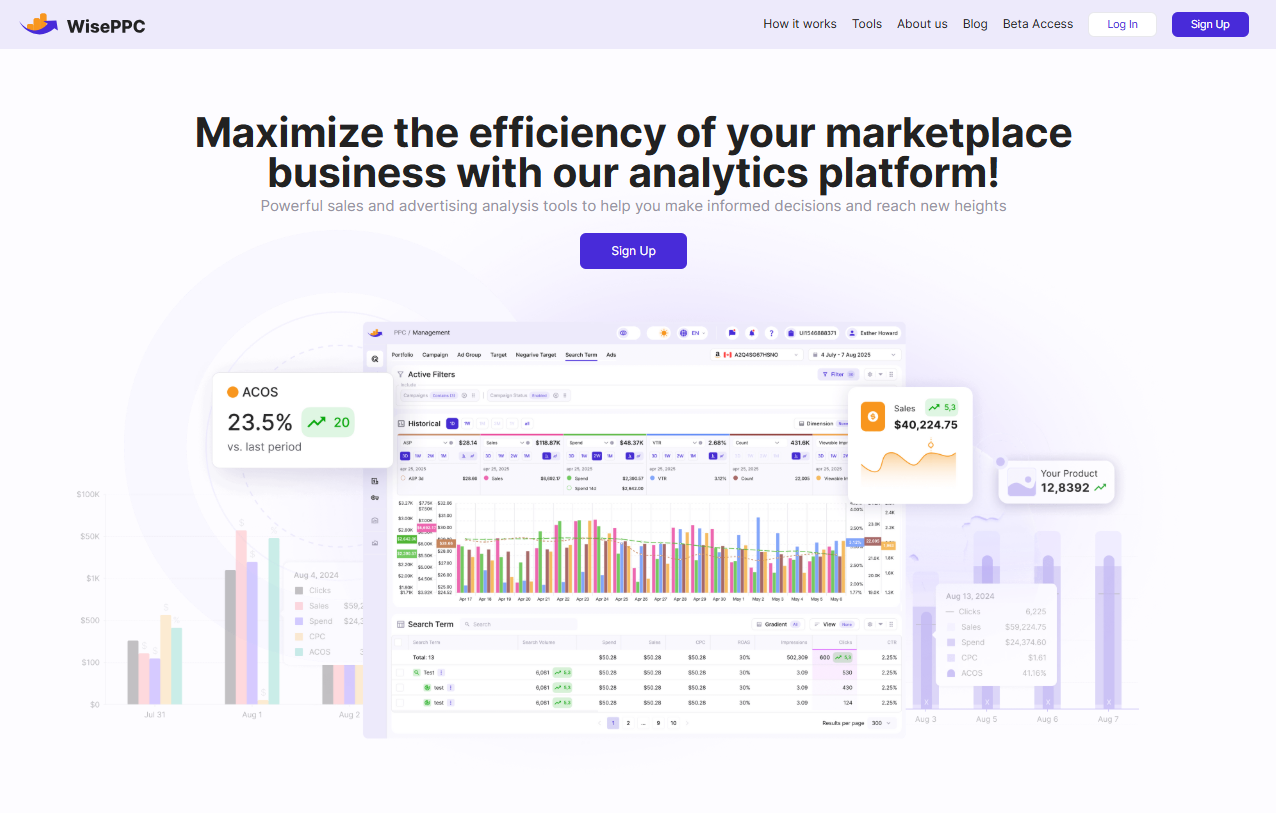
We at WisePPC know that meeting Amazon’s Frustration Free Packaging standards can feel like a big project. From redesigning packaging to passing certification tests, there’s a lot to keep track of. That’s where we come in. Our platform gives sellers the clarity and control they need to connect packaging improvements with real business results. Because we’re an Amazon Ads Verified Partner, we work directly within Amazon’s best practices and provide insights that help you see how packaging choices impact both ad performance and sales.
With our analytics, you can dig into long-term trends, spot performance shifts in real time, and understand whether your FFP-certified products are winning the visibility and conversions they deserve. We make it easy to see if that packaging update is improving customer satisfaction, lifting search rankings, or simply cutting down on wasted spend. Our tools are built to simplify the complexity, so instead of juggling spreadsheets or guessing, you’re making decisions backed by clear data.
For sellers aiming to scale, that combination of packaging compliance and actionable insight can be a real advantage. FFP can help you stand out, but it’s the data that shows you where to push harder and where to adjust. We give you both – the means to measure your progress and the confidence to act on it.
Final Thoughts
Amazon’s Frustration Free Packaging program may have started as a nice-to-have, but it has evolved into a meaningful part of selling on the platform. It addresses customer convenience, environmental concerns, and operational efficiency all at once.
For shoppers, it means fewer headaches and less waste. For sellers, it can mean cost savings, better reviews, and a smoother path to compliance with Amazon’s ever-evolving standards.
If you’re selling through FBA and haven’t looked into FFP yet, it’s worth running the numbers and seeing if your products could qualify. Sometimes, a small change in packaging can pay off in more ways than you expect.
FAQ
1. What exactly does Amazon mean by Frustration Free Packaging?
It’s Amazon’s way of cutting out all the overcomplicated, hard-to-open packaging you’ve probably wrestled with before. Think fewer layers, no plastic clamshells, and boxes that open quickly without scissors or knives. The idea is to make unboxing simple while keeping the product safe and the packaging recyclable.
2. Will my order still be protected if it’s in Frustration Free Packaging?
Yes. The program isn’t about stripping away protection – it’s about removing unnecessary bulk. Products still go through transit testing to make sure they arrive in one piece, even if the packaging is smaller or lighter.
3. Does FFP cost extra for shoppers?
No, not typically. Prices aren’t higher just because an item is shipped this way. In fact, for sellers, using less material can sometimes lower their costs, which could make pricing more competitive over time.
4. How can I tell if a product is available in Frustration Free Packaging?
Look for the “Frustration Free Packaging” badge on the product page. Amazon sometimes also mentions it at checkout. If you don’t see it, the item likely ships in traditional packaging instead.
5. Why don’t all products use Frustration Free Packaging yet?
Some items are too fragile, oddly shaped, or require specific protective layers to meet safety or preservation standards. Over time, more categories may be added as packaging designs evolve.
 No credit card required