
 EN
EN  ES
ES  FR
FR  DE
DE  IT
IT  KO
KO  JA
JA  ZH
ZH  AR
AR  PT
PT  TR
TR PL
PL
Bundling isn’t new. People have been pairing related items together for ages – a meal combo, a laptop with its charger, shampoo with conditioner. But when done right in ecommerce, product bundling goes beyond convenience. It can quietly nudge up your average order value, clear slow-moving inventory, and introduce buyers to products they didn’t even know they needed.
This guide breaks it down without the fluff: what bundling is, how it works, and how to use it strategically – whether you’re moving units on Amazon, managing a multi-brand store, or just trying to simplify things for your customers.
What Makes Product Bundling Actually Work?
The core idea behind bundling is simple: group two or more products together into one package and sell them as a set. But there’s more going on beneath the surface. A good bundle isn’t just a pile of stuff. It’s a curated offer that either solves a complete problem, supports a shared goal, or gives the buyer an easy win.
Think about it like this: someone’s shopping for a laptop. They could also use a mouse, a case, maybe even a USB-C adapter. By offering all of that in a single listing with a small discount or added convenience, you’re reducing friction, saving them time, and making the checkout process feel smoother.
What sets successful bundles apart isn’t just the discount. It’s the relevance and timing.
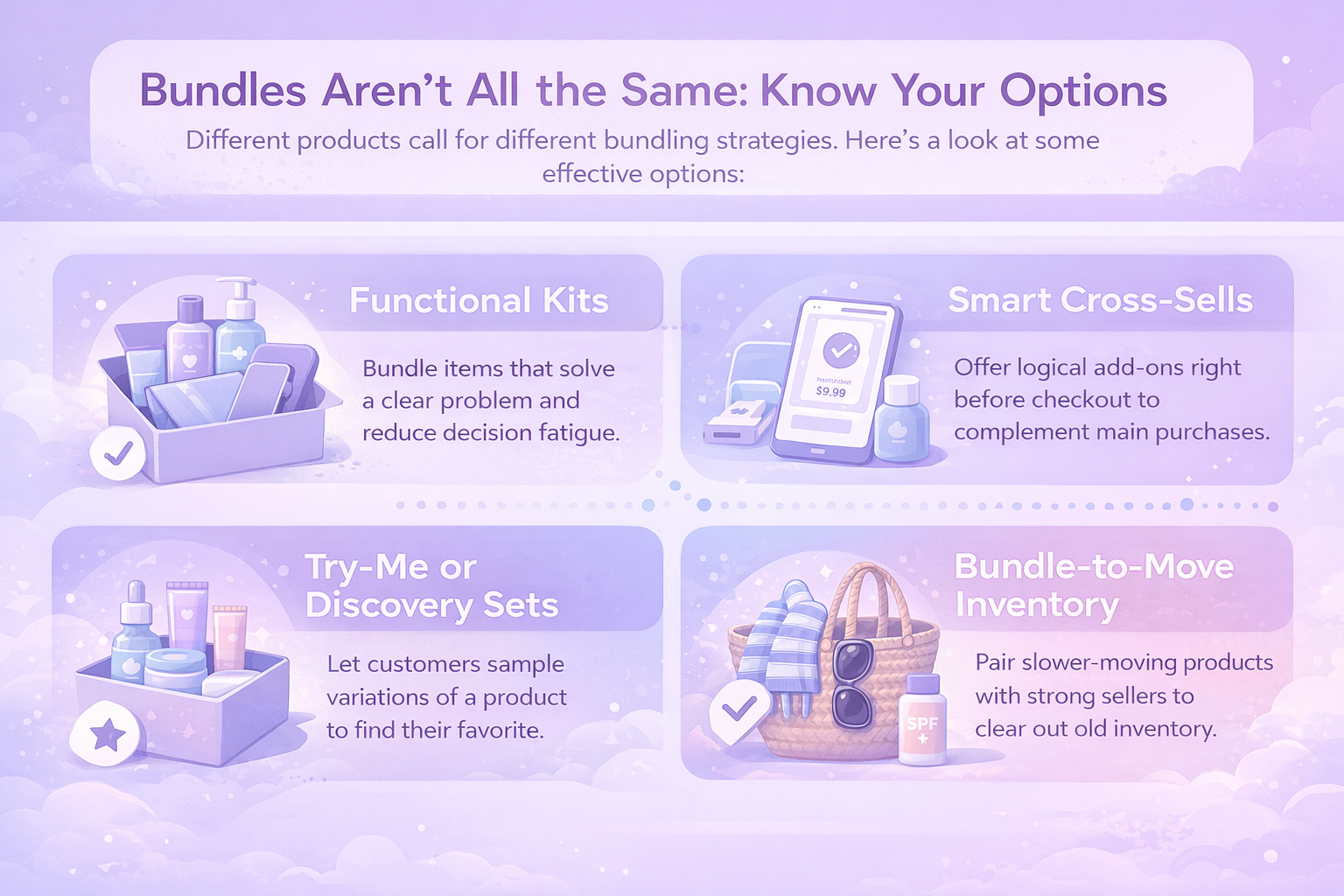
Bundles Aren’t All the Same: Know Your Options
There’s no one-size-fits-all approach to bundling. What works for a skincare brand might flop in electronics. But the good news is, there are multiple ways to do it. Let’s break down some practical bundling types without falling into old textbook labels.
Functional Kits
Functional kits are all about simplicity and solving a clear problem. Instead of letting customers piece things together on their own, you give them everything they need in one go. Think of a skincare set with a cleanser, toner, and moisturizer, or a fitness pack that comes with resistance bands, a yoga mat, and a bottle. Even back-to-school tech bundles fall into this category, offering a laptop, protective case, and USB hub in a single box. The goal is to reduce decision fatigue. The work’s already done for the customer – they just pick it up and go.
Smart Cross-Sells
Smart cross-sells lean into natural buying behavior. It’s the kind of thing you’ve probably seen on big ecommerce sites, where they suggest items that pair well with what you’re already buying. Instead of creating new bundles, they surface useful add-ons right before checkout – like a wireless charger with a phone, or a memory card with a new camera. These aren’t hard sells. They just make the customer’s life easier by helping them complete the setup.
Try-Me or Discovery Sets
These sets work great when you’ve got variations of a product. Rather than asking someone to choose right away, you give them a way to test the waters. A box of mini skincare formulas, a tea sampler, or a selection of flavored toothpaste can nudge customers toward finding their favorite. This kind of bundling doesn’t just boost the first sale – it plants the seed for long-term brand loyalty.
Bundle-to-Move Inventory
Bundle-to-move inventory is the more strategic play. Let’s face it, not every item flies off the shelves. But that doesn’t mean it’s useless. Pairing slower-moving stock with a strong seller can create a fresh story – like bundling excess sunglasses with a popular beach tote. When done right, this helps clear space in your warehouse, avoids deep discounting, and keeps your brand’s value intact. The key is making sure the connection between items still feels intentional.
Why Product Bundling Works for Both Sides
One of the best things about bundling is that it doesn’t just serve the seller. It genuinely makes life easier for the buyer too. Let’s break down what each side gets out of it.
Sellers
Product bundling isn’t just about offering more – it’s about working smarter with what you already have. Here’s how sellers benefit:
- Higher Average Order Value (AOV): Bundles encourage customers to buy more in one go, providing more revenue per transaction without relying on deep discounts.
- Better Inventory Management: Bundling helps balance your catalog by shifting both fast and slow lanes together.
- Lower Marketing Costs: Promoting a bundle can be more efficient than running campaigns for individual items.
- Increased Product Exposure: When customers try new items in a bundle, they’re more likely to come back for those individually.
- Simplified Buying Journeys: Fewer steps, fewer decisions. That means a lower bounce rate and less chance of cart abandonment due to indecision.
Customers
On the customer side, bundling turns a scattered experience into something faster, easier, and more valuable. Here is what it actually gives:
- Convenience and Time-Saving: Instead of hunting for each item one by one, everything’s ready in one place.
- Value Perception: Even a small discount or freebie creates a sense of getting more for less.
- Product Discovery: Bundles often include items customers wouldn’t have picked on their own, turning them into new favorite products.
- Simplified Decision-Making: Too many choices can slow down buying decisions, while a well-structured bundle reduces that mental load.
At its best, bundling isn’t about pushing more products. It’s about reducing friction. That’s why it feels good for everyone involved.
When to Use Product Bundling (and When Not To)
Bundling has real upside, but that doesn’t mean you should go wild and start packaging everything. Timing and strategy still matter.
Use bundles when:
- You want to increase AOV without raising product prices.
- You need to move excess stock without dumping it at a loss.
- You want to introduce new products alongside known favorites.
- You’re building a subscription and want to lock in longer cycles.
- You need to reduce decision fatigue for new customers.
Avoid bundles when:
- The products don’t make sense together (random = confusing).
- You’re forcing slow sellers into unrelated packages.
- It creates more logistics complexity than it solves.
- The pricing doesn’t actually feel like a value to the customer.
In short: keep it intentional. If a bundle causes hesitation instead of removing it, it’s probably the wrong one.
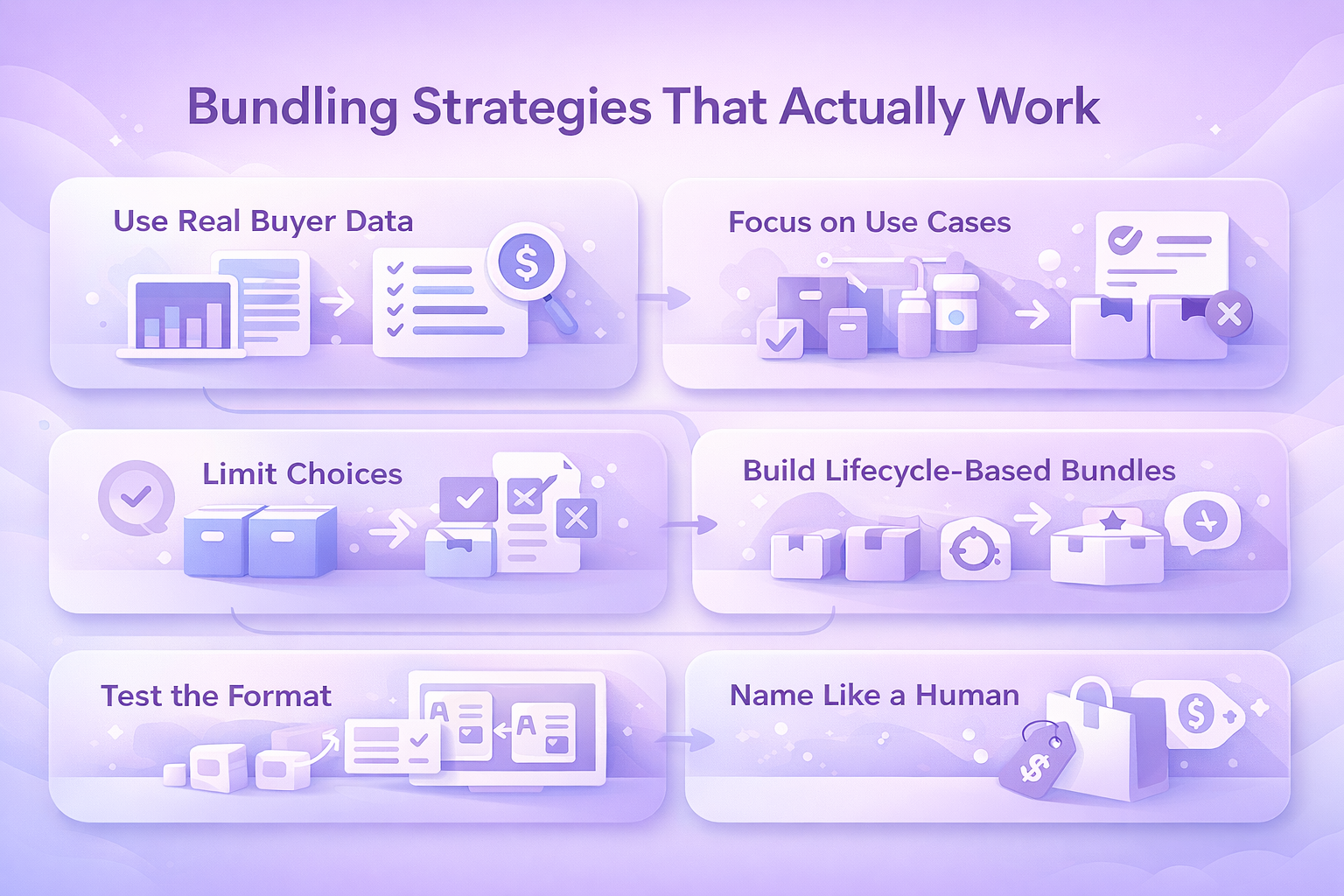
Bundling Strategies That Actually Work
If you’re planning to put bundling into action, skip the fluff and focus on strategies that are proven to perform. These approaches can help you avoid common missteps and get real results.
1. Use Real Buyer Data
Start with what’s already working. If certain products consistently appear together in carts or orders, those are your bundle signals. It’s tempting to pair items that aren’t moving, but buyers don’t think like sellers. Let their habits shape your bundles, not your inventory goals.
2. Focus on Use Cases, Not Categories
Bundles work best when they solve a problem, not when they just group similar items. Customers respond to relevance more than sameness. A well-thought-out combination built around a use case, like a morning routine or travel setup, makes the offer feel intentional and helpful, not random.
3. Limit Choices
More options can lead to hesitation. Instead of throwing five or six products into a bundle, pick the two or three that make the most sense together. Simplicity keeps the message clear and the buying decision easy.
4. Build Lifecycle-Based Bundles
A customer’s needs change over time. Your bundles should reflect that. A first-time buyer isn’t looking for the same thing as someone reordering. Offering kits tied to moments in the customer journey – starting out, restocking, upgrading – makes your offers feel like a good fit.
5. Test the Format Before Committing
There’s no need to start with full packaging and new SKUs. Use soft launches to explore what works – things like suggested pairings, add-on prompts, or simple multi-product listings. Once you see consistent traction, then decide whether to turn it into a standalone bundle.
6. Name Like a Human, Not a Catalog
Product bundles shouldn’t sound like filing system entries. A good name helps people instantly get the value or emotion behind it. It sets the tone. If it sounds like something you’d say out loud to a friend, you’re probably on the right track.
7. Don’t Oversell the Discount
Bundles don’t have to scream “deal” to sell. A slight savings is usually enough to nudge someone over the edge. The real hook is the convenience and the feeling that someone curated this for them. That’s worth more than a steep markdown.
How to Promote Product Bundles Without Feeling Pushy
Once your bundles are built, promotion is key. But you don’t have to blast them with “BUY NOW” messaging. Here are some subtle ways to integrate them:
- Homepage feature: Highlight your best-selling bundle with real use cases.
- Gift guides: Use bundles in seasonal gift guides for easy decision-making.
- Cart prompts: Suggest a bundle version when someone adds one of the items.
- Email flows: Use post-purchase emails to offer complementary bundles.
- Ads: Promote bundles that align with specific audience interests or pain points.
Tip: A/B test different product combinations, titles, and landing pages. What makes sense internally doesn’t always convert the best in real life.

How We Help Sellers Make Smarter Decisions with Bundling
Bundling can be a smart move, but only if it’s done with purpose. At WisePPC, we help you go beyond guesswork by showing how each part of your strategy connects – ads, products, and bundles included. Whether you’re trying to increase AOV with curated kits or clear out slower inventory, we make sure you know what’s performing and what’s not.
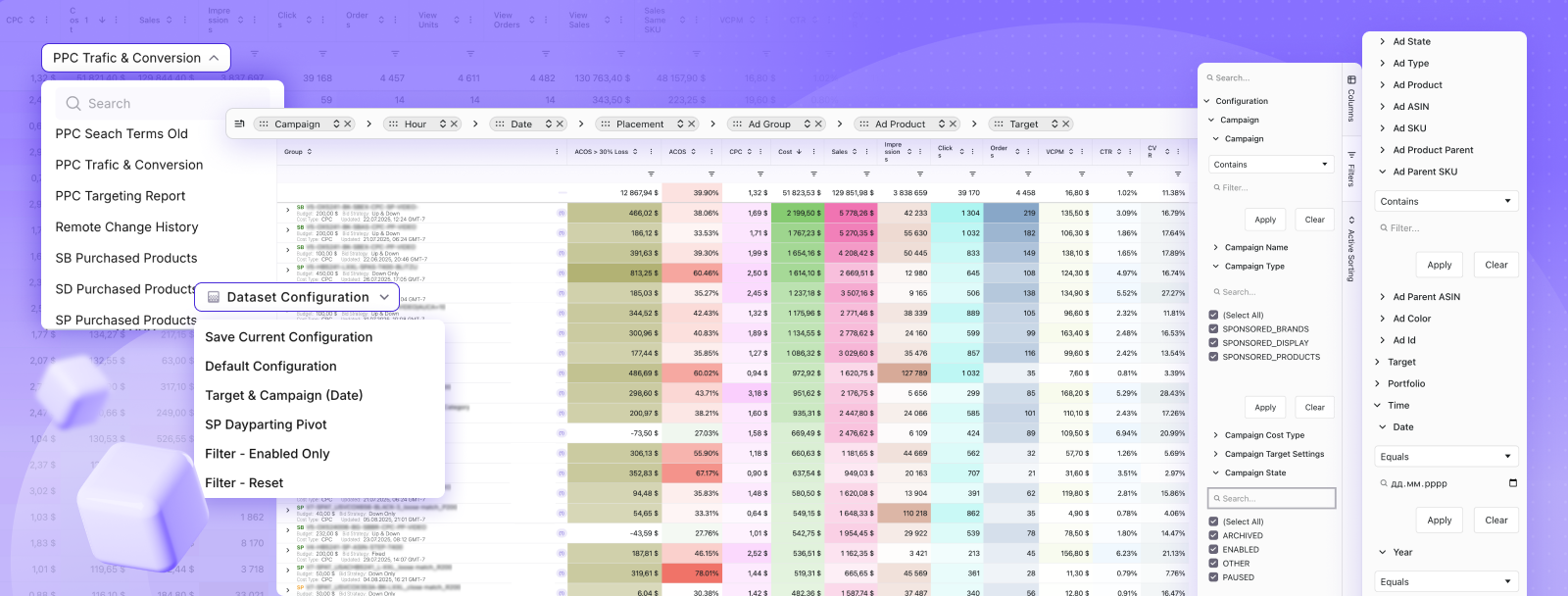
Our platform gives you the tools to analyze advertising data and basic sales metrics like ASP, helping you optimize campaigns that support product strategies, including bundling, based on ad performance insights. If two products always sell together, we help you see that. If your bundled items are underperforming due to poor targeting or bid settings, we highlight that too. And because we track historical data beyond what Amazon makes available, you’re never stuck making short-sighted decisions.
Bundling is powerful, but only when it’s strategic. We built WisePPC to help you scale that strategy with data, not assumptions. From advanced filtering to bulk updates and real-time campaign insights, we give sellers the control to move faster, test smarter, and optimize bundles that actually convert.
Final Thoughts: Keep It Useful, Not Just Tactical
At its best, bundling isn’t a trick to squeeze more money out of a customer. It’s a tool to make shopping feel smarter, smoother, and more satisfying.
That’s why the best bundles don’t feel like upsells. They feel like someone did the hard thinking for you.
As sellers, the more we lean into that mindset, the more our bundling strategies will start to feel less like tactics and more like service. And in a market flooded with noise, that’s the kind of quiet strategy that tends to stick.
FAQ
1. Do product bundles always need a discount to work?
Not necessarily. A discount helps, but it isn’t the only reason bundles convert. Many customers buy bundles because they solve a problem in one shot. If the bundle feels curated and makes life easier, it can sell just fine without a big price cut.
2. How do I know which products should be bundled together?
Start by looking at real behavior. Check what people already buy together, what they view in the same shopping session, or what your support team constantly recommends side by side. When a bundle reflects how customers actually shop, you don’t have to force the sale.
3. Can bundling hurt my margins?
It can, but only if the discount is too aggressive or the items don’t make sense together. Smart bundling lifts your AOV without destroying margin, especially when it helps you move slow stock or increases visibility for newer products. A small incentive goes a long way.
4. How many products should go into a bundle?
There’s no magic number, but simpler is usually better. A tight set of two or three well-matched products often performs better than a cluttered collection of everything you’re trying to sell. If a customer has to think too long, the bundle loses its purpose.
5. How can I tell if my bundles are performing well?
Track more than just sales. Look at conversion rate lifts, changes in AOV, individual product performance after being included in a bundle, and whether customers return for items they first tried inside a bundle. If those indicators move in the right direction, the strategy is working.
 No credit card required