
 EN
EN  ES
ES  FR
FR  DE
DE  IT
IT  KO
KO  JA
JA  ZH
ZH  AR
AR  PT
PT  TR
TR PL
PL
Selling on Amazon doesn’t have to start with a garage full of boxes or a warehouse lease you regret by month three. In fact, thousands of sellers are building real businesses without ever touching a product. Thanks to options like dropshipping, print-on-demand, and self-publishing, you can test ideas, earn revenue, and learn the ropes of ecommerce without taking on the overhead.
If you’re looking for a low-barrier way to get into the Amazon ecosystem, whether you’re short on storage space, budget, or time, this guide walks you through how to make it happen, what to expect, and what to watch out for. No fluff. Just clear paths forward.
Why Selling Without Inventory Makes Sense
Let’s be honest: the traditional private label route can work, but it’s not cheap. You often need $5,000 to $10,000 just to source inventory, pay for shipping, and cover marketing. That’s not exactly low-risk if you’re just starting out.
Selling without inventory strips that barrier away. You’re not stuck buying products upfront or worrying about storage. More importantly, you get to test the market and understand how Amazon works before committing serious capital.
Here’s what this approach gives you:
- Lower upfront investment.
- Faster launch timeline.
- Flexible product testing.
- Less risk of unsold stock.
Now let’s look at the methods that make this possible.

Your No-Inventory Selling Options on Amazon
There’s no shortage of advice out there on how to “make money on Amazon,” but if you want real options that don’t involve bulk buying or renting a storage unit, let’s cut through the noise. Below are the most reliable, inventory-free models you can actually build a business around. Each one has its quirks, advantages, and trade-offs, but all of them let you sell without ever stocking a product.
Option 1: Dropshipping
Dropshipping is often the first thing people think of when they hear “no inventory.” It’s simple in concept: you list a product for sale, someone buys it, and your supplier ships it directly to the customer. You’re the seller, but you never see or store the product.
That said, it’s not as easy as slapping up a few listings and waiting for sales.
What You’ll Need to Make It Work:
- A reliable supplier who can ship quickly and consistently.
- Compliance with Amazon’s dropshipping policy (you must be the seller of record).
- A strategy for product selection and competitive pricing.
Pros:
- No storage or shipping responsibilities.
- Can be scaled across different platforms.
- Good for international sales with the right setup.
Cons:
- Slim profit margins in most niches.
- Quality control is out of your hands.
- You’re responsible for customer service even if the supplier messes up.
If you go this route, invest time in vetting suppliers and setting clear expectations with customers. Transparency matters when you can’t control the fulfillment process directly.
Option 2: Print-on-Demand (Merch by Amazon)
If you’ve got an eye for design or love tapping into trends, print-on-demand (POD) is a creative way to sell without inventory. Amazon’s built-in program for this is called Amazon Merch on Demand.
You upload your design, select a product type (like t-shirts, mugs, or tote bags), and set your price. When someone places an order, Amazon prints and ships the item, and you earn royalties.
What Makes This Worth Exploring:
- Zero upfront cost once you’re approved.
- Amazon handles production, shipping, and support.
- Every item is Prime eligible.
Smart Moves in POD:
- Focus on specific niches instead of generic slogans.
- Track trends on TikTok, Instagram, or niche forums.
- Use keyword research to guide design ideas.
You don’t need to be a professional artist, either. Simple, bold designs sell surprisingly well if they strike the right nerve with a target audience.
Option 3: Kindle Direct Publishing (KDP)
Do you think KDP is only for novelists? Not at all.
Kindle Direct Publishing lets you publish eBooks and paperbacks that Amazon prints on demand. But you don’t have to write a 300-page thriller to use it. People make money publishing:
- Guided journals.
- Workbooks.
- Low-content books like planners or trackers.
- Niche how-to guides.
The barrier to entry is low if you’re willing to learn formatting and keyword research.
What Makes KDP Attractive:
- You retain full control over pricing and content.
- Passive income potential after initial setup.
- Global distribution to Kindle and paperback audiences.
Just like with POD, niching down is key. A well-targeted journal or guide can outperform a generic “everything book” by a long shot.
Option 4: Amazon Associates (Affiliate Marketing)
Okay, technically you’re not “selling” on Amazon here, but it’s still a legit way to earn income through Amazon without any inventory or customer interaction.
With Amazon Associates, you earn a small commission when someone buys through your affiliate link. Share the link in a blog post, social media bio, YouTube video, or email list, and if they buy, you get paid.
Ideal For:
- Bloggers and content creators.
- Niche website owners.
- Anyone with a relevant audience.
Tips to Earn with Affiliate Links:
- Focus on high-converting content (like “best of” lists or reviews).
- Use multiple channels to drive traffic.
- Stay transparent – disclose your links.
It’s not Amazon storefront ownership, but it’s a strong supplement (or starting point) for those who prefer content over logistics.
Option 5: Amazon Handmade
If you actually make your own products but don’t want to mass-produce or hold inventory, Amazon Handmade is another route.
You create and ship your handcrafted items, but Amazon handles listing and customer management. Bonus: they waive the Professional seller fee for Handmade accounts.
Good Fit For:
- Jewelry makers.
- Artists.
- Woodworkers or leather crafters.
You still have to physically produce and ship the item, but you avoid managing warehouse inventory or large product batches.
Getting Started: What to Know Before You List Anything
No matter which path you choose, a few things apply across the board:
Know Amazon’s Rules
Amazon gives you room to build, but not much room to mess up. If you’re dropshipping, you need to be the seller of record, no third-party branding sneaking into your packages. And certain products are restricted or require approval, even if they seem harmless.
Don’t guess your way through it. Violating Amazon’s policies, even by accident, can get your account suspended without much warning. Take the time to learn what’s allowed so you’re not cleaning up a mess later.
Choose the Right Plan
Amazon offers two seller plans:
- Individual (pay per sale).
- Professional ($39.99/month).
If you’re testing the waters with affiliate links or KDP, you don’t need a seller account at all. But for POD or dropshipping, you’ll need one, and probably the Professional plan if you plan to scale.
Research Before You Build
Use tools like:
- Amazon’s Best Seller lists.
- Google Trends.
- Product Opportunity Explorer (inside Amazon Seller Central).
Don’t just guess. See what’s working, then reverse-engineer your product or content idea to match what buyers are already looking for.
One More Trick: Make Your Listings Count
Even if you’re not handling the product yourself, your listing is your storefront. A poor one kills conversions. A good one sells while you sleep.
Keep this in mind when writing your product page:
- Use a clear, specific title with strong keywords.
- Write bullets that speak to customer benefits, not just features.
- Include quality images, even for POD or handmade items.
- Stay honest about shipping times, especially in dropshipping.
The more upfront you are, the fewer headaches you’ll face in customer support or reviews.

Don’t Forget Promotion
Many sellers assume Amazon’s traffic will take care of everything. It won’t – at least not at first.
Help your listings gain traction by:
- Sharing on social media.
- Using email newsletters if you have an audience.
- Running Amazon PPC ads (especially for POD or dropshipping).
- Collaborating with niche influencers.
- Writing blog content that links to your products.
Get eyes on your listing, and the sales will follow. Wait for organic visibility to do all the heavy lifting, and you may be waiting a while.
The Real Work Is in Iteration
Selling on Amazon without inventory sounds easier, and in some ways it is. But it’s still work. The key difference is where the effort goes. You’re not packaging boxes or negotiating freight shipments – you’re learning what sells, improving your offer, and adjusting based on data.
Every method mentioned above can grow into something serious if you treat it like a business and stick with it. Don’t expect overnight results, but also don’t underestimate how fast things can move once you find something that clicks.
WisePPC Helps You Grow Smarter Without the Inventory Overload
At WisePPC, we understand that running a lean operation doesn’t mean compromising on performance. Just because you’re not managing physical inventory doesn’t mean you’re not juggling a lot – ad campaigns, product listings, keyword strategy, and customer insights all still matter. That’s where we come in.
Our platform is built for marketplace sellers who want clarity and control, whether they’re dropshipping, publishing through KDP, running a POD storefront, or managing affiliate traffic. We provide real-time sales and advertising analytics across Amazon and Shopify, so you can track what’s working, adjust fast, and stay focused on growth. From bid optimization to historical trend analysis, we help you cut waste and boost what’s performing – all without digging through spreadsheets or jumping between dashboards.
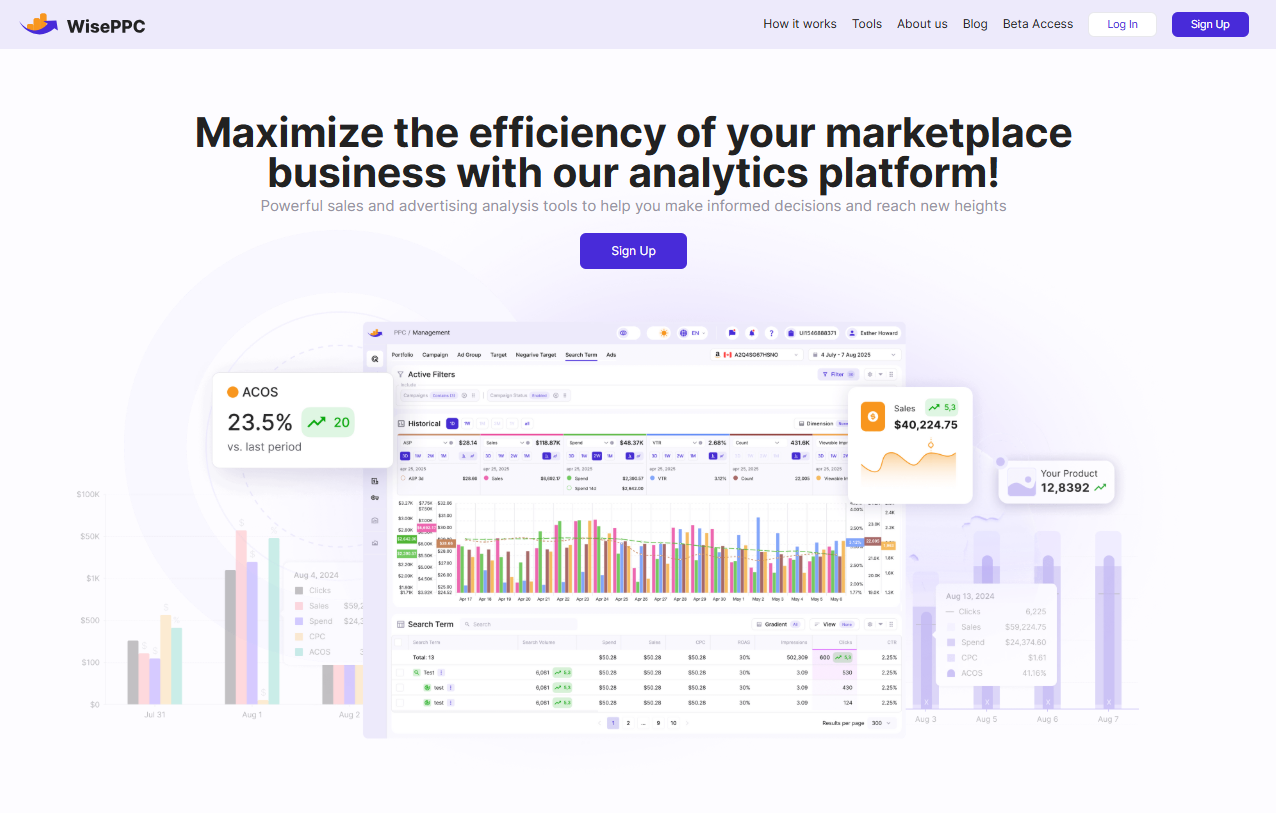
No matter how you’re selling on Amazon, if you’re doing it without inventory, efficiency is everything. We give you the tools to act on data, not guesswork. And with features like automated insights, bulk campaign edits, and cross-account views, we at WisePPC let you scale with confidence , whether you’re selling one product or one thousand.
Final Takeaway
You don’t need to rent a warehouse or buy pallets of products to become an Amazon seller. From print-on-demand to self-publishing to dropshipping, there are real, scalable paths that skip the traditional inventory model entirely.
Pick the one that fits your skills, test with minimal investment, and let data guide the rest. Some people stay inventory-free forever. Others use these models as a stepping stone to bigger operations. Either way, it’s a smart way to start.
FAQ
1. Can I really make money on Amazon without holding inventory?
Yes, and plenty of sellers do. But it’s not automatic. Whether you’re using dropshipping, KDP, POD, or affiliate links, success depends on product research, solid execution, and learning as you go. There’s no magic switch, just systems that scale if you build them right.
2. What’s the easiest method for beginners?
Kindle Direct Publishing (KDP) and Merch by Amazon are probably the most beginner-friendly. There’s no upfront cost, and Amazon handles all the heavy lifting – printing, shipping, and customer service. You just focus on creating something worth listing.
3. How much money do I need to start?
You can start with almost nothing, especially if you’re using KDP, affiliate marketing, or Merch by Amazon. For dropshipping, expect to spend a bit on tools, product listings, and maybe ads, but it’s still far less than traditional inventory-based models.
4. Do I need a business license or LLC?
Not to get started. Amazon doesn’t require you to have a registered business upfront, though having one can help with taxes and liability down the road. If you’re just testing the waters, you can start as an individual seller and decide later if you want to formalize things.
5. What’s the catch with dropshipping?
It’s convenient, but it comes with trade-offs. You don’t control fulfillment or product quality, which means you have to be extra careful about your suppliers. Also, profit margins can be tight, so you’ll need to get smart about what you sell and how you price it.
6. Can I use multiple methods at the same time?
Absolutely. In fact, many sellers do. You might start with print-on-demand, then add affiliate income or publish a few low-content books through KDP. The beauty of inventory-free models is that they’re flexible – once you get the hang of one, you can stack others on top.
 No credit card required