
 EN
EN  ES
ES  FR
FR  DE
DE  IT
IT  KO
KO  JA
JA  ZH
ZH  AR
AR  PT
PT  TR
TR PL
PL
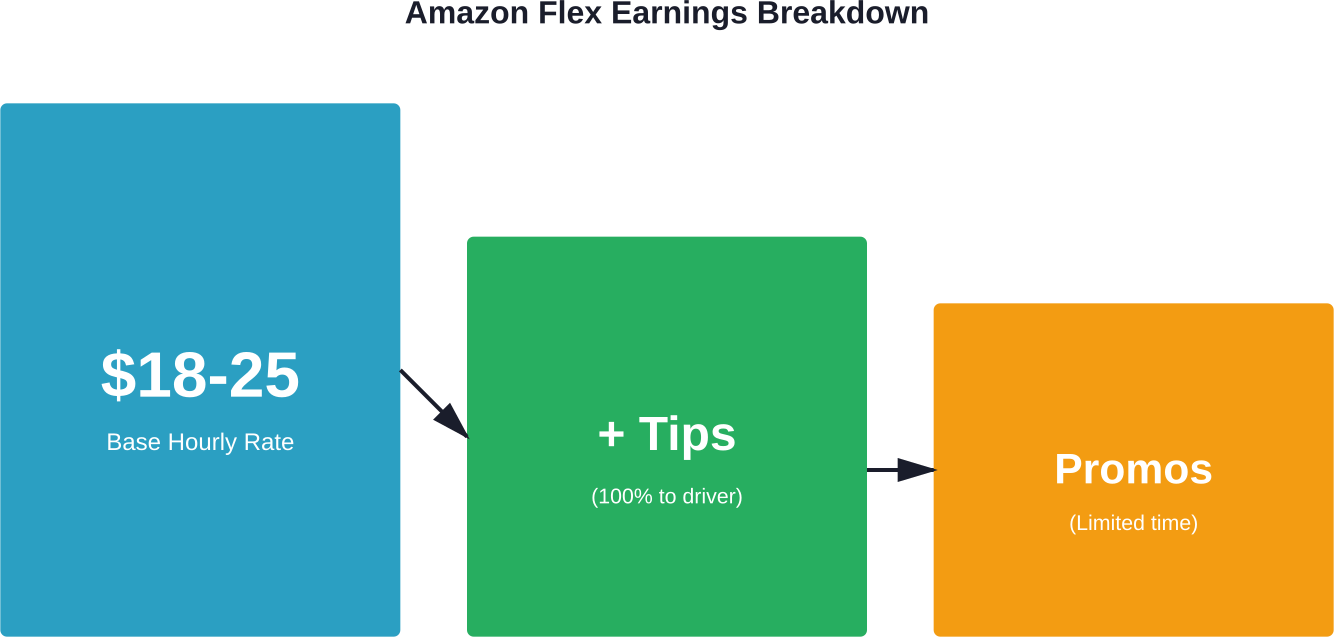
Quick Summary: Amazon Flex drivers typically earn between $18 and $25 per hour, according to the official Amazon Flex website. Actual earnings vary based on location, delivery times, tips, and promotional offers. Drivers can see their exact pay upfront before accepting any delivery block, giving them full transparency on potential earnings.
Gig economy work has transformed how people earn money on their own terms. Amazon Flex stands out as one of the most popular delivery platforms, but the burning question for anyone considering this opportunity is simple: what’s the actual pay?
According to the official Amazon Flex website, most drivers earn $18–25 per hour. But that range tells only part of the story. Location, delivery type, demand fluctuations, and tips all play significant roles in what lands in a driver’s account.
Here’s the thing though—Amazon Flex operates differently from traditional hourly jobs. Drivers work as independent contractors, accepting delivery blocks rather than clocking in for shifts. This model creates both opportunities and complications when calculating real earnings.
How Amazon Flex Payment Structure Works
Amazon Flex uses a delivery block system that sets it apart from other gig platforms. A delivery block represents a scheduled window with a specific start time, location, duration, and—most importantly—the earnings amount displayed upfront.
Before accepting any block, drivers see exactly what they’ll earn. No guesswork. No surprises after the fact.
This transparency matters because it allows drivers to make informed decisions about which blocks make financial sense. A two-hour block might show $36 in one market but $50 in another during peak demand.
Base Pay vs. Total Earnings
The amount shown for each block represents the base payment Amazon guarantees. Tips—for eligible deliveries—come on top of that amount. According to the official Amazon Flex website, 100% of tips go directly to drivers.
Not all delivery types qualify for tips. Amazon.com package deliveries typically don’t involve tipping, while Amazon Fresh and Prime Now grocery deliveries frequently do. This distinction significantly impacts total earnings potential.
What Affects Amazon Flex Earnings
Several factors determine whether a driver lands on the lower or higher end of the pay spectrum. Understanding these variables helps set realistic income expectations.
Geographic Location
Pay rates vary considerably by market. Urban areas with higher costs of living typically offer better block rates than rural regions. A three-hour block in San Francisco commands a different rate than the same duration in a smaller Midwest city.
Population density also impacts earnings. More customers in a concentrated area means more efficient routes and potentially higher tips on grocery deliveries.
Delivery Time and Day
Demand fluctuates throughout the week. Weekend blocks, especially during peak shopping hours, often pay more than midweek afternoon slots. Holiday periods see increased rates as delivery volume surges.
Early morning and late evening blocks sometimes offer premium rates to attract drivers during less desirable hours.
Delivery Type
Amazon Flex encompasses multiple service types, each with different earning potential:
| Delivery Type | Typical Duration | Tips Eligible | Notes |
|---|---|---|---|
| Amazon.com packages | 3-4 hours | No | Standard package delivery to homes |
| Amazon Fresh | 2-4 hours | Yes | Grocery deliveries, higher tip potential |
| Prime Now | 2-4 hours | Yes | Quick delivery, often includes tips |
| Whole Foods | 2 hours | Yes | Grocery delivery from Whole Foods stores |
| Store deliveries | Varies | Sometimes | Local business partnerships |
Promotional Offers
Amazon periodically runs promotions that boost earnings for specific blocks or time periods. According to the official Amazon Flex website, these special promotions provide limited-time opportunities to earn extra cash.
Surge pricing during high-demand periods can significantly increase block rates. A block that normally pays $54 might jump to $72 or more when Amazon needs more drivers on the road.

Transition from Amazon Delivery to Building Your Own Brand
While Amazon Flex offers a way to earn through local deliveries, many entrepreneurs find more long-term stability by launching and scaling their own brands on the Amazon marketplace. Managing a successful storefront, however, requires specialized knowledge of advertising and account metrics. WisePPC provides professional Amazon account management and PPC services, allowing sellers to automate their growth and focus on high-level business decisions.
- PPC Optimization: Data-driven ad management to increase sales while reducing wasted spend.
- Listing Management: Expert oversight of product pages to improve conversion rates and search rankings.
- Account Health: Continuous monitoring of seller metrics to ensure long-term platform compliance.
- Scalable Growth: Professional strategies designed to turn a side project into a full-scale retail business.
Partner with WisePPC to Scale Your Amazon Storefront.
The Amazon Flex Rewards Program
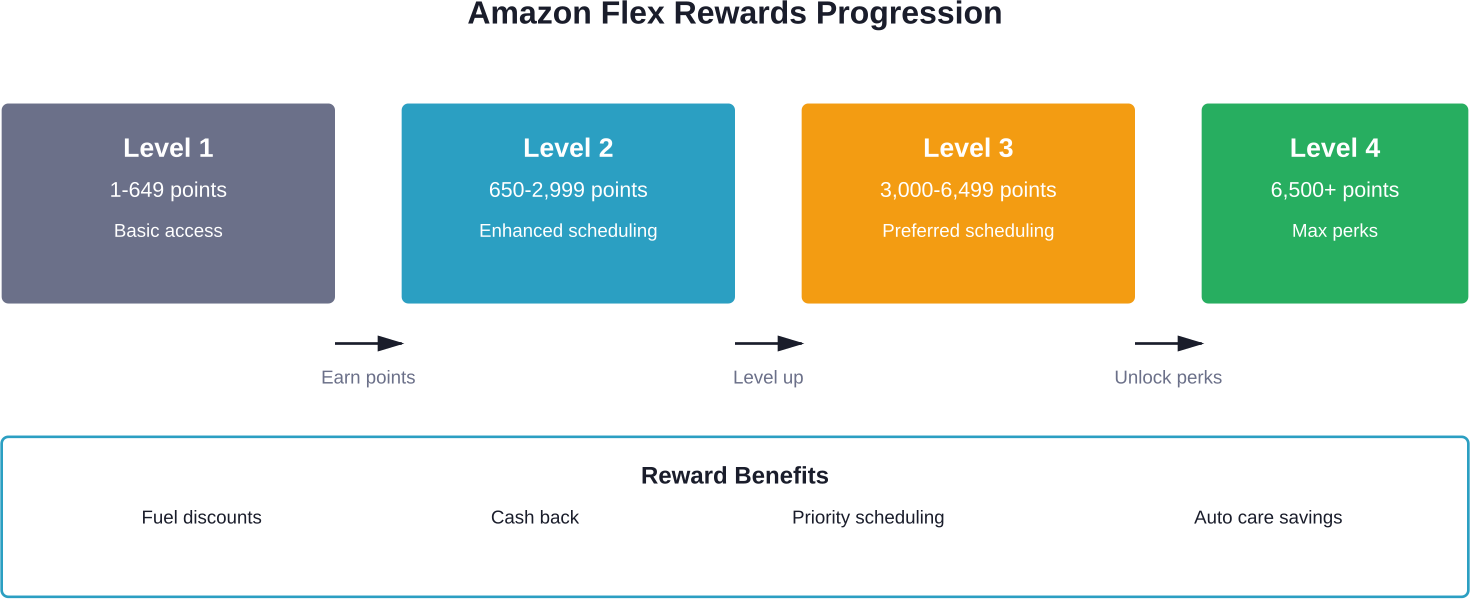
Beyond direct delivery earnings, Amazon Flex operates a points-based rewards system. Drivers earn points with each delivery, unlocking benefits across four tiers.
The rewards structure breaks down as follows:
- Level 1 (1-649 points): Basic access to the platform
- Level 2 (650-2,999 points): Enhanced scheduling options
- Level 3 (3,000-6,499 points): Preferred scheduling and increased rewards
- Level 4 (6,500+ points): Maximum perks including fuel discounts and cash back
According to the official Amazon Flex Rewards page, the program operates on cyclical three-month earning periods. Points accumulated during one period determine reward levels for the next cycle.
Preferred Scheduling—available at higher levels—grants drivers earlier access to available blocks. This advantage matters because desirable high-paying blocks get claimed quickly.
Additional Perks That Impact Net Earnings
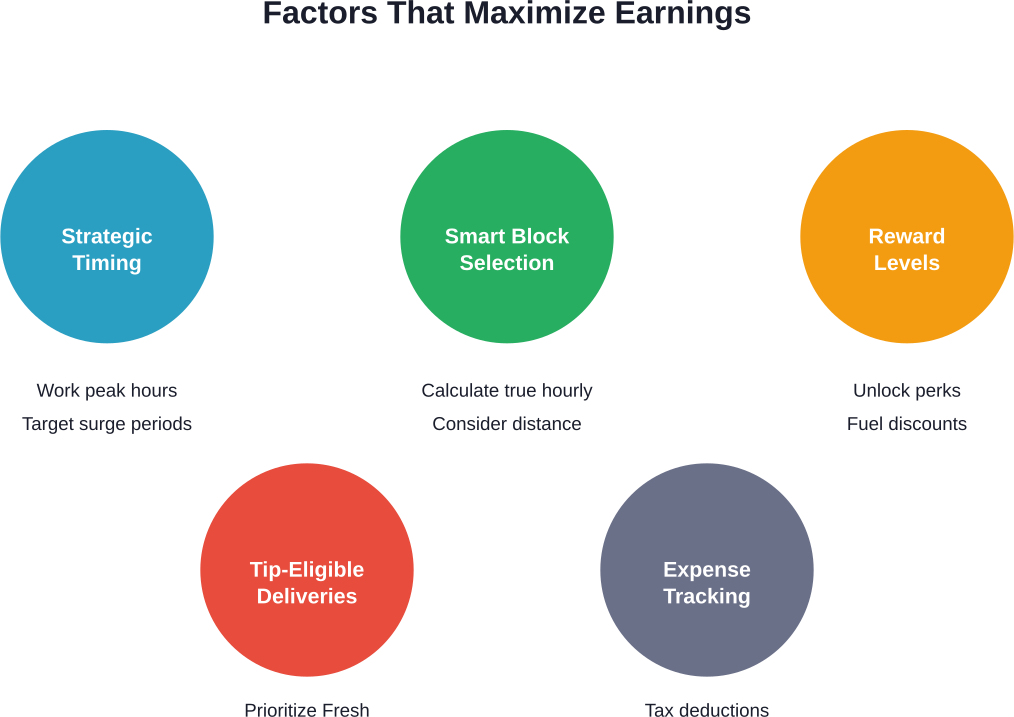
Higher reward levels unlock fuel discounts and cash back opportunities that directly affect take-home income. Since fuel represents a significant expense for delivery drivers, these perks can add meaningful value.
Cash back rewards on vehicle maintenance and other business expenses further improve the financial equation for active drivers.
Payment Timing and Methods
Amazon Flex offers flexible payment options that set it apart from many gig platforms. Standard direct deposit occurs twice weekly, but faster options exist.
According to the official Amazon Flex website, drivers using the Amazon Flex Debit Card can access Amazon Flex Instant Pay, allowing them to transfer earnings immediately after completing deliveries.
This instant access to funds addresses one of the biggest pain points in gig work: waiting days for payment. Research from UCLA Anderson Review published in May 2023 found that workers increasingly prefer frequent payment access over traditional bi-weekly cycles. Some $22 billion in earned pay went out early to more than 7 million workers through earned wage access programs in 2022, up from $3.2 billion in 2018, according to the Consumer Financial Protection Bureau.
According to the California Department of Financial Protection and Innovation (DFPI), early wage access program fees when calculated like a loan—based on withdrawal size and days prior to payday—typically top 100% APR. Amazon Flex Instant Pay, by contrast, appears to function as a standard transfer for debit card holders rather than a fee-based advance.
Real-World Earning Scenarios
Understanding potential earnings becomes clearer with concrete examples. Here’s what different activity levels might generate:
| Weekly Hours | Blocks per Week | Low End ($18/hr) | High End ($25/hr) | Monthly Range |
|---|---|---|---|---|
| 10 hours | 3-5 blocks | $180 | $250 | $720-$1,000 |
| 20 hours | 6-10 blocks | $360 | $500 | $1,440-$2,000 |
| 30 hours | 10-15 blocks | $540 | $750 | $2,160-$3,000 |
| 40 hours | 13-20 blocks | $720 | $1,000 | $2,880-$4,000 |
These figures represent gross earnings before expenses. Gas, vehicle maintenance, insurance, and taxes all reduce net income.
The Expense Reality
Independent contractors face costs that traditional employees don’t shoulder. Fuel consumption varies by vehicle efficiency and delivery route density, but generally speaking, delivery driving consumes 10-20 gallons of gas weekly for full-time work.
Vehicle wear accelerates with delivery work. Brake pads, tires, and oil changes come due more frequently. Setting aside 15-25% of gross earnings for vehicle-related expenses provides a reasonable buffer.
The tax situation deserves careful attention. As independent contractors under current Department of Labor guidelines, Amazon Flex drivers don’t have taxes withheld automatically. Setting aside 25-30% for federal and state taxes prevents year-end surprises.
Independent Contractor Status
Amazon Flex drivers work as independent contractors, not employees. This classification carries significant implications for earnings and benefits.
On February 26, 2026, the U.S. Department of Labor announced a Notice of Proposed Rulemaking (NPRM) titled “Employee or Independent Contractor Status Under the Fair Labor Standards Act, Family and Medical Leave Act, and Migrant and Seasonal Agricultural Worker Protection Act.” The comment period extends through 11:59 ET on April 28, 2026.
Current DOL guidance emphasizes that misclassification occurs when employers treat workers who should be employees as independent contractors. Independent contractor status means no minimum wage guarantees, no overtime pay, and no employer-provided benefits.
Research published by Yale Insights in April 2019 examined gig worker preferences using extensive Uber data. The data covered all UberX platform drivers from September 2015 through April 2016, with researchers working with data on 197,517 drivers who worked a total of 102,280,904 hours. The findings revealed that drivers value flexibility so highly they’d need significantly higher wages—potentially double—to accept less-flexible traditional employment arrangements.
This flexibility comes at a financial cost. No paid time off, no health insurance, no employer retirement contributions. Drivers must weigh the scheduling freedom against the lack of traditional employment protections.
Maximizing Amazon Flex Earnings
Strategic approaches can push earnings toward the higher end of the pay range. Active drivers often employ several tactics.
Block Selection Strategy
Not all blocks offer equal value. Calculating the effective hourly rate—including likely drive time to the pickup location—reveals which opportunities make financial sense.
A $60 block for three hours at a warehouse 30 minutes away effectively becomes a four-hour commitment, dropping the rate from $20 to $15 per hour.
Timing Optimization
Community discussions frequently mention that surge pricing appears during specific patterns: weekend mornings, holiday weeks, inclement weather. Drivers who position themselves to work these premium periods increase average earnings.
The Amazon Flex app allows drivers to reserve blocks up to a week in advance. Preferred Scheduling at higher reward levels extends this window, granting earlier access to newly posted blocks.
Multi-Platform Approach
Many gig workers operate across multiple platforms simultaneously. Running Amazon Flex alongside other delivery or rideshare apps fills gaps between blocks and maximizes vehicle utilization.
This strategy requires careful management to avoid scheduling conflicts, but it smooths income fluctuations inherent in gig work.
Comparing Amazon Flex to Other Gig Platforms
How does Amazon Flex stack up against alternatives? The $18-25 per hour range positions it competitively within the delivery gig economy.
DoorDash and Uber Eats drivers report similar base pay ranges, though earnings vary widely by market and time. Instacart shoppers can exceed these rates during busy periods but face more variability.
Amazon Flex’s upfront earnings display provides more transparency than platforms where final pay remains uncertain until after completion. Seeing the guaranteed amount before accepting a block reduces income unpredictability.
The rewards program adds another differentiator. Few competing platforms offer structured progression systems with tangible benefits like fuel discounts and priority scheduling.
Is Amazon Flex Worth It?
The answer depends entirely on individual circumstances and goals. For someone seeking supplemental income with complete schedule control, the $18-25 hourly range can work well.
But wait. Those considering Amazon Flex as a primary income source need to run realistic numbers. After vehicle expenses and taxes, net hourly earnings might drop to $12-18 per hour in many markets.
The flexibility carries real value—research confirms gig workers prize this highly. The ability to work only during school hours, or to ramp up during specific weeks, provides scheduling options traditional employment can’t match.
However, the lack of benefits means drivers must secure their own health insurance, fund their own retirement, and build their own safety net for sick days or slow periods.
Frequently Asked Questions
Does Amazon Flex pay daily or weekly?
Amazon Flex processes payments twice weekly via direct deposit. Drivers using the Amazon Flex Debit Card can access earnings instantly after completing delivery blocks.
Can you make $200 a day with Amazon Flex?
Yes, but it depends on hours worked and block availability. Earning $200 typically requires 8–11 hours at $18–25 per hour, plus potential tips or bonuses.
Do Amazon Flex drivers keep 100% of tips?
Yes, drivers keep 100% of tips on eligible deliveries such as Amazon Fresh, Prime Now, and Whole Foods orders.
What are the main expenses for Amazon Flex drivers?
Main expenses include fuel, vehicle maintenance, insurance, and taxes. These costs can account for 15–30% of gross earnings.
How does the Amazon Flex Rewards program affect earnings?
The program provides perks like fuel discounts, cashback, and preferred scheduling, which can improve overall net earnings.
Is Amazon Flex better than DoorDash or Uber Eats?
Amazon Flex offers upfront pay visibility, while DoorDash and Uber Eats provide more flexible, shorter delivery opportunities. Earnings are generally comparable.
What happens if you don’t feel safe completing a delivery?
Drivers can contact support through the app. Amazon advises drivers to never complete a delivery if they feel unsafe.
Conclusion
Amazon Flex pays most drivers between $18 and $25 per hour according to official sources, with actual earnings varying by location, timing, delivery type, and tips. The platform offers genuine flexibility and transparent upfront pay displays that help drivers make informed decisions about which blocks to accept.
Real talk: success with Amazon Flex requires viewing it as a small business operation. Tracking expenses meticulously, optimizing block selection strategically, and advancing through reward levels all impact whether the math works out favorably.
The independent contractor model delivers scheduling freedom but eliminates traditional employment protections. For the right person—someone who values flexibility highly and can manage the business aspects competently—Amazon Flex provides a legitimate earning opportunity in the gig economy landscape.
Ready to explore Amazon Flex opportunities in your area? Download the Amazon Flex app to see available blocks and earning rates specific to your location. Remember to calculate your actual net earnings after expenses to determine if the pay structure aligns with your financial goals.
 No credit card required