
 EN
EN  ES
ES  FR
FR  DE
DE  IT
IT  KO
KO  JA
JA  ZH
ZH  AR
AR  PT
PT  TR
TR PL
PL
Quick Summary: Amazon typically delivers packages between 6:00 a.m. and 10:00 p.m., though deliveries can occur as late as midnight in some areas. According to Amazon’s official shipping information, their delivery network operates 7 days a week with predictable 2-5 day transit times. Most standard deliveries arrive by 8:00 p.m., while Prime members often receive packages earlier in the day.
You’re refreshing the tracking page for the third time tonight. It’s 9:45 p.m., and that Amazon package still hasn’t shown up.
Sound familiar?
Amazon’s delivery windows have become progressively wider as they’ve expanded their logistics network. But that doesn’t make waiting any less frustrating when you’re trying to plan your evening around a package arrival.
This guide breaks down exactly when Amazon delivers, what affects those delivery times, and what you can realistically expect when you’re tracking a package.
Amazon’s Standard Delivery Window: The Basics
According to Amazon’s official shipping information, their delivery network runs 7 days a week, moving packages from warehouses to doorsteps with predictable 2-5 day transit times. The standard delivery window spans from 6:00 a.m. to 10:00 p.m. in most locations.
That is a 16-hour window.
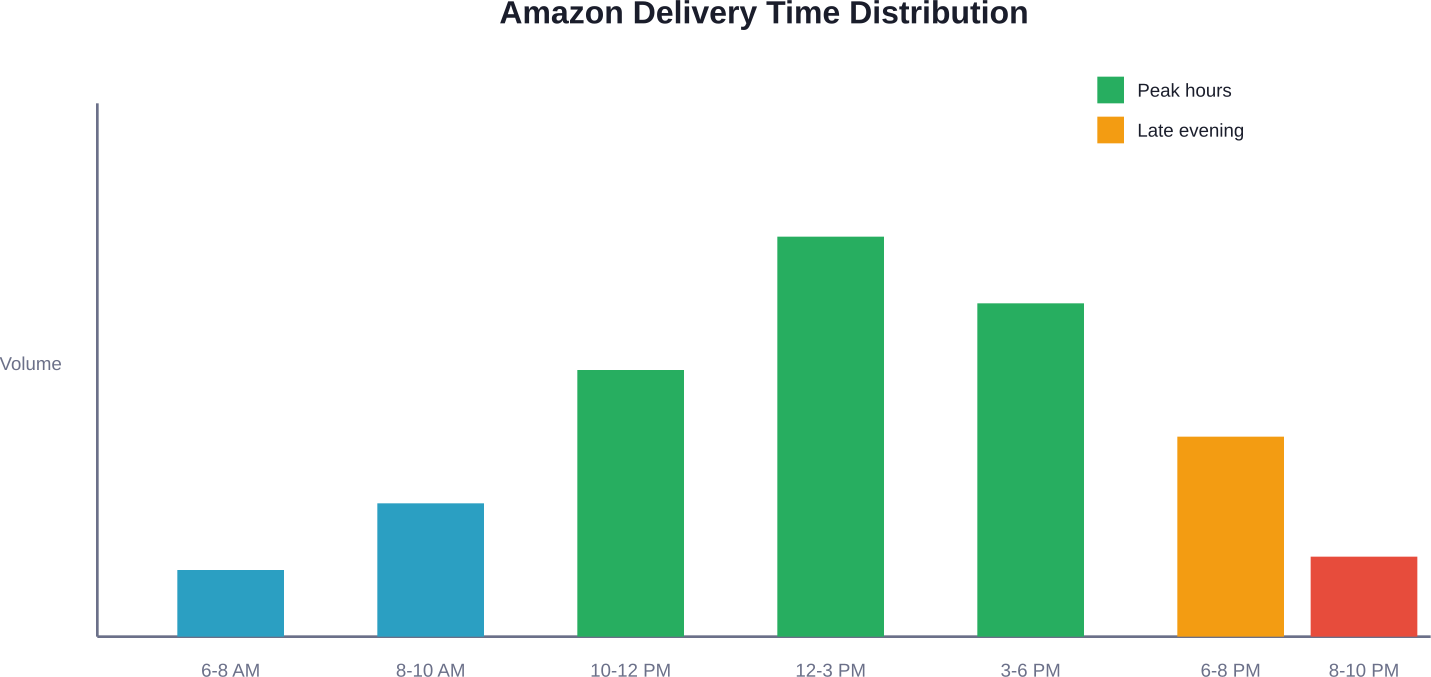
Here’s the thing though—most deliveries don’t actually use that full window. Community discussions indicate packages typically arrive between 8:00 a.m. and 8:00 p.m., with patterns suggesting afternoon concentration.
Early Morning Deliveries
Some Amazon customers report deliveries as early as 6:00 a.m., though this isn’t the norm. Early morning deliveries may occur in densely populated areas, though this varies by location.
Amazon Fresh orders and grocery deliveries operate on different schedules entirely. These can arrive even earlier depending on the selected delivery slot.
Late Evening and Night Deliveries
On the other end, deliveries can extend until 10:00 p.m. or even later. User experiences from community discussions indicate packages sometimes arrive as late as 10:30 p.m. or midnight, particularly in urban areas during peak seasons.
If tracking information shows a package is out for delivery, it could technically arrive anytime before midnight. That’s not common, but it happens.
How Amazon’s Delivery Speed Has Evolved
Amazon’s delivery infrastructure has gotten dramatically faster over the past decade. According to eMarketer data, Amazon achieved an average click-to-door speed of 1.9 days in the U.S., significantly outpacing other digital retailers who averaged 4.4 days.
That’s a huge competitive advantage.
The company operates a network that delivers to approximately 95% of the U.S. population within 2-5 days, with pickup areas expanding constantly to support coast-to-coast coverage. This network runs continuously, seven days a week, without additional weekend delivery fees.
But speed isn’t just about the number of days—it’s also about when during the day those packages arrive.

Outsource Your Amazon Operations to Professional Account Managers
While tracking delivery times is a concern for customers, Amazon sellers must manage the much larger logistical challenge of maintaining high shipping standards and account health. Ensuring your products are delivered on time involves constant monitoring of inventory levels and fulfillment metrics. WisePPC provides specialized Amazon account management and PPC services, allowing sellers to delegate the operational complexities of the marketplace to experts.
- Fulfillment Monitoring: Professional oversight of inventory and shipping health to prevent account penalties.
- Efficient PPC Management: Data-driven advertising strategies designed to increase sales velocity and visibility.
- Proactive Account Support: Management of the backend tasks that impact delivery performance and customer satisfaction.
- Revenue Scaling: Strategic planning to grow your brand’s presence without increasing your personal workload.
Maximize your Amazon sales efficiency with WisePPC.
Factors That Affect When Your Package Arrives
Several variables determine whether your package shows up at 2:00 p.m. or 9:00 p.m. Understanding these helps set realistic expectations.
Location and Route Density
Urban and suburban areas typically see deliveries throughout the day as drivers complete densely packed routes. Rural locations often receive packages later because they’re at the end of longer routes.
Drivers optimize routes based on efficiency, not just geography. Your neighborhood might be physically close to a fulfillment center but still receive afternoon deliveries if that’s how the route algorithm sequences stops.
Delivery Service Used
Amazon uses multiple delivery services: Amazon Logistics (their own drivers), USPS, UPS, FedEx, and regional carriers. Each has different operating hours and schedules.
Amazon Logistics drivers typically have the most flexibility and deliver latest. USPS and UPS generally stop earlier, though weekend schedules vary.
| Delivery Service | Typical Hours | Weekend Delivery |
|---|---|---|
| Amazon Logistics | 6:00 AM – 10:00 PM | Yes, 7 days/week |
| USPS | 9:00 AM – 7:00 PM | Sunday for Amazon packages |
| UPS | 9:00 AM – 7:00 PM | Limited, varies by area |
| FedEx | 8:00 AM – 8:00 PM | Some locations |
Package Volume and Seasonal Demand
During peak seasons—Black Friday through December, Prime Day in July—delivery windows stretch longer. More packages mean drivers work later to complete routes.
Weather events, local disruptions, and even traffic patterns influence delivery timing. A package that normally arrives at 3:00 p.m. might not show up until 8:00 p.m. during a snowstorm or major traffic incident.
Prime vs. Standard Shipping
Prime members typically receive deliveries earlier in the day and within tighter windows. The algorithm prioritizes Prime packages, and many Prime deliveries occur through Amazon’s own logistics network, which offers more control over timing.
Standard shipping orders often arrive later in delivery windows, especially when handled by third-party carriers operating on their standard schedules.
Weekend and Holiday Delivery Schedules
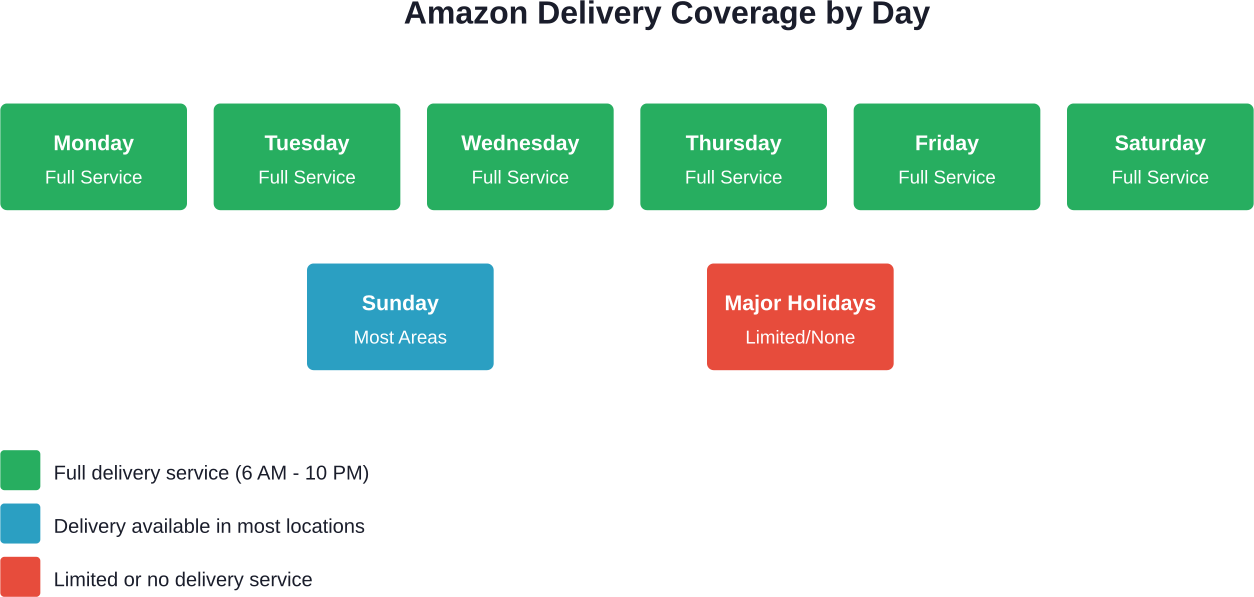
Amazon delivers seven days a week, including Sundays. This wasn’t always the case—Sunday delivery only became widespread after Amazon expanded partnerships with USPS and built out their own logistics network.
Saturday deliveries operate on the same schedule as weekdays: 6:00 a.m. to 10:00 p.m. window. Sunday delivery windows vary by location.
Major Holiday Exceptions
Amazon reduces or suspends deliveries on major holidays: Christmas Day, Thanksgiving, and sometimes New Year’s Day. Even Amazon’s own drivers take these days off.
But wait—other holidays? Deliveries usually continue. Memorial Day, Labor Day, Fourth of July—expect packages on most federal holidays outside of the major winter ones.
What the Tracking Information Really Means
That “out for delivery” notification creates a mix of anticipation and anxiety. What does it actually tell you about timing?
The notification provides limited precision about exact arrival timing.
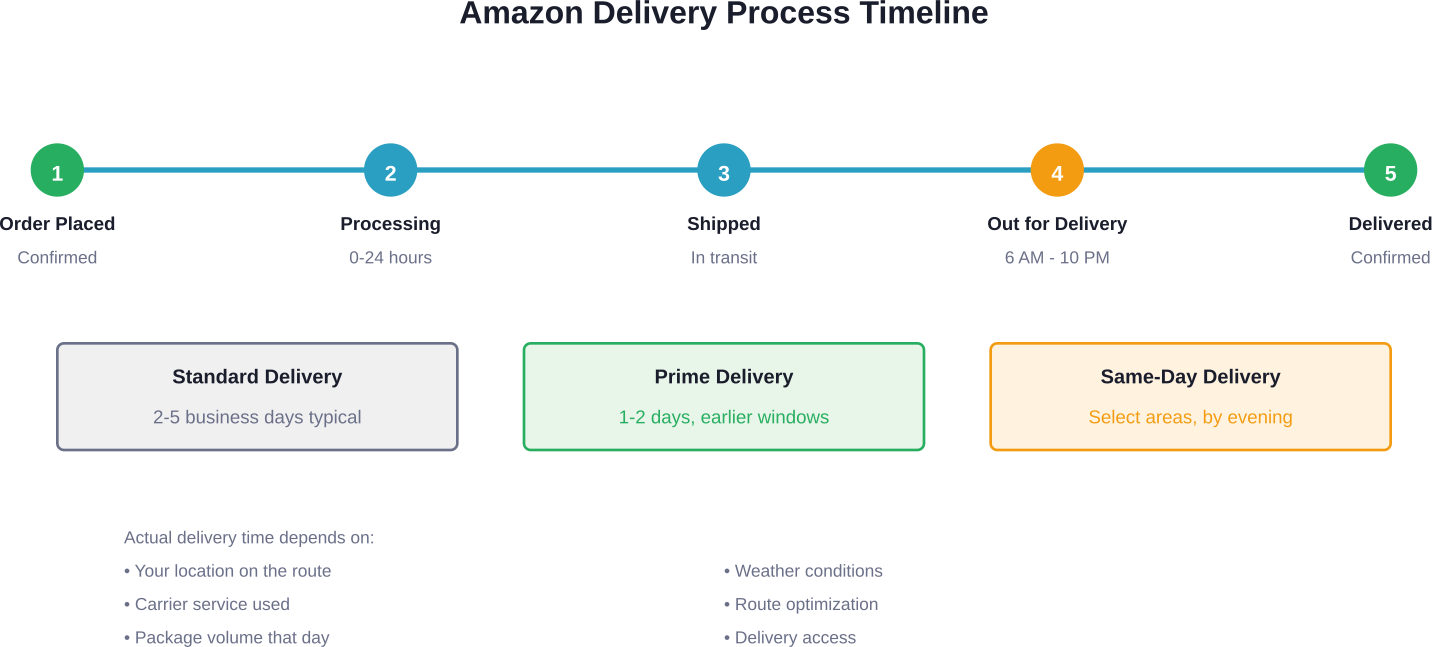
“Out for delivery” means the package is on a truck and will arrive sometime that day—anywhere within the delivery window. It doesn’t indicate whether you’re the first stop or the last.
Delivery Time Estimates
Some tracking pages show estimated delivery times like “by 9:00 p.m.” or “arriving by end of day.” These aren’t precise arrival times—they’re the outer boundary of when the package should arrive.
When Amazon provides a narrower window like “arriving between 2:00-4:00 p.m.,” that’s more reliable but still not guaranteed. Driver route changes, traffic, and package access issues can shift those windows.
Photo on Delivery
Many Amazon deliveries now include photo confirmation showing where the driver left the package. This happens automatically after delivery and provides verification without requiring signatures.
The photo feature works in most locations but depends on having Amazon Logistics handle the delivery. Third-party carriers typically don’t provide this service.
Managing Late Deliveries
If a package does not arrive by the promised delivery date, specific steps should be followed.
First, the delivery window should be allowed to fully close. If Amazon’s tracking says delivery by end of day, that technically extends until midnight. This extends the delivery window uncertainty.
Here’s what to do if the package genuinely misses its delivery date:
Check Tracking Status
Customers should verify the package is actually late. Look for updates showing delivery exceptions, delays, or status changes. Sometimes packages marked “out for delivery” get postponed to the next day without clear notification.
The delivery address should be confirmed to match the actual location. Address errors are a common cause of delivery problems.
Contact Customer Service
If 48 hours pass beyond the promised delivery date with no updates, customers should contact Amazon’s customer service. They can investigate the package location, file claims with carriers, and often provide refunds or replacements.
Prime members have protections for late deliveries.
File an A-to-Z Guarantee Claim
For marketplace purchases from third-party sellers, Amazon’s A-to-Z Guarantee may provide coverage for items that don’t arrive on time. This protection extends beyond standard Amazon.com purchases and includes refund options when sellers fail to meet delivery commitments.
| Time After Expected Delivery | Action to Take |
|---|---|
| Same day (before midnight) | Wait – delivery window may extend late |
| 1 day late | Check tracking for updates |
| 2 days late | Contact Amazon customer service |
| 3+ days late | Request refund or replacement |
Amazon Fresh and Grocery Delivery Hours
Grocery deliveries operate on completely different schedules. Amazon Fresh offers specific delivery windows that customers select at checkout—typically two-hour windows starting as early as 7:00 a.m.
These windows are much more precise than standard package delivery. When customers book a 10:00 a.m. to 12:00 p.m. slot for Amazon Fresh, deliveries are intended to arrive within that timeframe.
Same-day grocery delivery availability depends on location and service capacity.
Business Delivery Considerations
Businesses managing inventory or client deadlines face different challenges with Amazon’s delivery timing. The 6:00 a.m. to 10:00 p.m. window can create operational complications for businesses receiving supplies.
Delivery Access and Business Hours
Commercial addresses typically receive deliveries during business hours, but this isn’t guaranteed. Late afternoon and early evening deliveries are common even for business addresses.
Businesses may use Amazon Hub Locker locations or provide delivery instructions to coordinate package receipt with staff availability. This reduces theft risk and ensures proper handling of time-sensitive shipments.
Seller Fulfilled Prime Requirements
For businesses selling through Amazon, According to the latest Amazon Seller Central requirements (2024-2026), Seller Fulfilled Prime (SFP) participants must support a weekday order cut-off time of at least 4:00 p.m. local time and a weekend cut-off time (Saturday or Sunday) of at least 1:00 p.m. local time.
These requirements affect when orders get processed and shipped, which influences the delivery commitments shown to customers. Sellers operating with these constraints need efficient fulfillment workflows to meet Amazon’s delivery speed expectations.
Regional Variations in Delivery Hours
Not all locations receive the same delivery experience. According to Amazon’s official shipping information, their network reaches approximately 95% of the U.S. population, and remaining coverage gaps may face different service levels or limitations.
Metropolitan areas with high delivery density see the full range of delivery hours—early morning through late evening. Smaller cities and towns often receive deliveries during more traditional hours, with coverage varying by location.
Rural areas present the biggest challenges. Lower package density means fewer daily routes and longer distances between stops. Delivery frequency in rural areas may be lower, and coverage patterns may differ from urban service.
Can Delivery Preferences Change Timing?
For most standard deliveries, Amazon does not offer selection of specific delivery times. The delivery preferences section allows customers to provide instructions and access codes, but not to select specific time windows for standard deliveries.
One exception: Amazon Key In-Garage Delivery and similar services provide more precise timing because they require coordination with smart home systems. These deliveries typically happen during narrower windows.
For standard deliveries, actively tracking the package on delivery day and using available map features can provide real-time location information.
Why Late Deliveries Happen
Several systemic factors contribute to packages arriving at the outer edge of delivery windows or even late:
Route Optimization Algorithms
Amazon’s routing system prioritizes overall efficiency over individual delivery times. This means some addresses consistently receive later deliveries because that’s mathematically optimal for completing the full route.
The algorithm adjusts based on changing factors—traffic patterns, road closures, new delivery locations. Delivery times may shift if routes are recalculated based on changing conditions.
Driver Capacity and Package Volume
Each delivery vehicle has limited capacity. High-volume days can result in fuller trucks, more stops, and longer routes. This can extend delivery times as drivers complete extended stop lists.
During peak seasons, Amazon typically adds temporary drivers and vehicles, though capacity may not always match peak volume surges.
Access Issues and Delivery Exceptions
Gated communities, apartment complexes with restricted access, and businesses with limited receiving hours create delivery complications. Drivers might need to attempt delivery multiple times or wait for access, delaying subsequent stops on their routes.
Access complications can contribute to delivery delays throughout the day, shifting some afternoon deliveries into evening hours.
Frequently Asked Questions
Does Amazon deliver after 10 p.m.?
Amazon’s standard delivery window is 6:00 a.m. to 10:00 p.m. Deliveries after 10 p.m. are rare and usually occur only during high-demand periods in urban areas.
What’s the earliest Amazon delivers packages?
Deliveries can start as early as 6:00 a.m. in some areas, though most packages typically arrive from around 8:00 a.m. onward.
Does Amazon deliver on Sundays?
Yes, Amazon delivers seven days a week, including Sundays, in most locations.
Why is my Amazon package late?
Delays can be caused by weather, high order volumes, address issues, or carrier constraints. If your package is over 48 hours late, contact customer service.
Can I choose a specific delivery time for Amazon orders?
Standard deliveries don’t allow time selection. However, services like Amazon Fresh offer selectable delivery windows.
What should I do if I miss an Amazon delivery?
Most packages are left at your location. If a signature is required, the driver may attempt redelivery or leave instructions for pickup or rescheduling.
Does Amazon deliver earlier to Prime members?
Prime orders are often prioritized and may arrive earlier, but exact delivery times depend on logistics and location.
Key Takeaways for Amazon Delivery Timing
Amazon’s delivery window officially spans 6:00 a.m. to 10:00 p.m., but most packages arrive between 8:00 a.m. and 8:00 p.m. Location, carrier, package volume, and route optimization all influence specific delivery times.
The company operates a seven-day-a-week network covering approximately 95% of the U.S. population with 2-5 day transit times. Prime members typically experience faster delivery and earlier arrival times, though this varies by location.
Late deliveries—packages arriving after 8:00 p.m.—happen regularly in urban areas and during peak periods. Packages can technically arrive until midnight, though this is less common.
When packages are genuinely late beyond their promised delivery date, Amazon’s customer service provides refunds, replacements, or other resolution options. Waiting 48 hours after the expected delivery date before contacting support gives the system time to update for legitimate delays.
Understanding these patterns helps set realistic expectations and reduces the frustration of uncertainty when waiting for important deliveries. Amazon’s network continues evolving, with delivery speeds generally improving even as the company expands coverage to more challenging geographic areas.
Tracking packages on delivery day and using available map features can provide updated information about package location and estimated arrival within the delivery window.
 No credit card required