
 EN
EN  ES
ES  FR
FR  DE
DE  IT
IT  KO
KO  JA
JA  ZH
ZH  AR
AR  PT
PT  TR
TR PL
PL
Selling on Amazon can be a great way to grow your business, but to do so effectively, you need to understand the costs involved, especially Amazon FBA seller fees. These fees can vary based on your product’s size, weight, and the services you use, and they play a crucial role in determining your profit margins.
In this guide, we’ll break down what FBA seller fees include, how they work, and share tips on how you can minimize these costs to improve your bottom line. Whether you’re new to Amazon FBA or looking for ways to optimize your expenses, we’ve got you covered.
What Are Amazon FBA Seller Fees?
Before diving into strategies to minimize costs, it’s essential to know exactly what Amazon FBA seller fees include. These fees can vary depending on factors like product size, weight, and the types of services you use.
Fulfillment Fees
This is the fee Amazon charges to pick, pack, and ship your products to customers. It also covers handling customer service, returns, and other services associated with fulfilling orders.
Storage Fees
These are monthly fees based on the space your products occupy in Amazon’s fulfillment centers. Storage fees are usually charged per cubic foot, and the rate can change seasonally, with higher fees during the holiday months when demand for storage is at its peak.
Other Fees
Depending on your business needs, there are additional fees like those for removals (when you want your inventory returned to you), long-term storage (for items sitting in Amazon’s warehouse for an extended period), and optional services like inbound shipments.
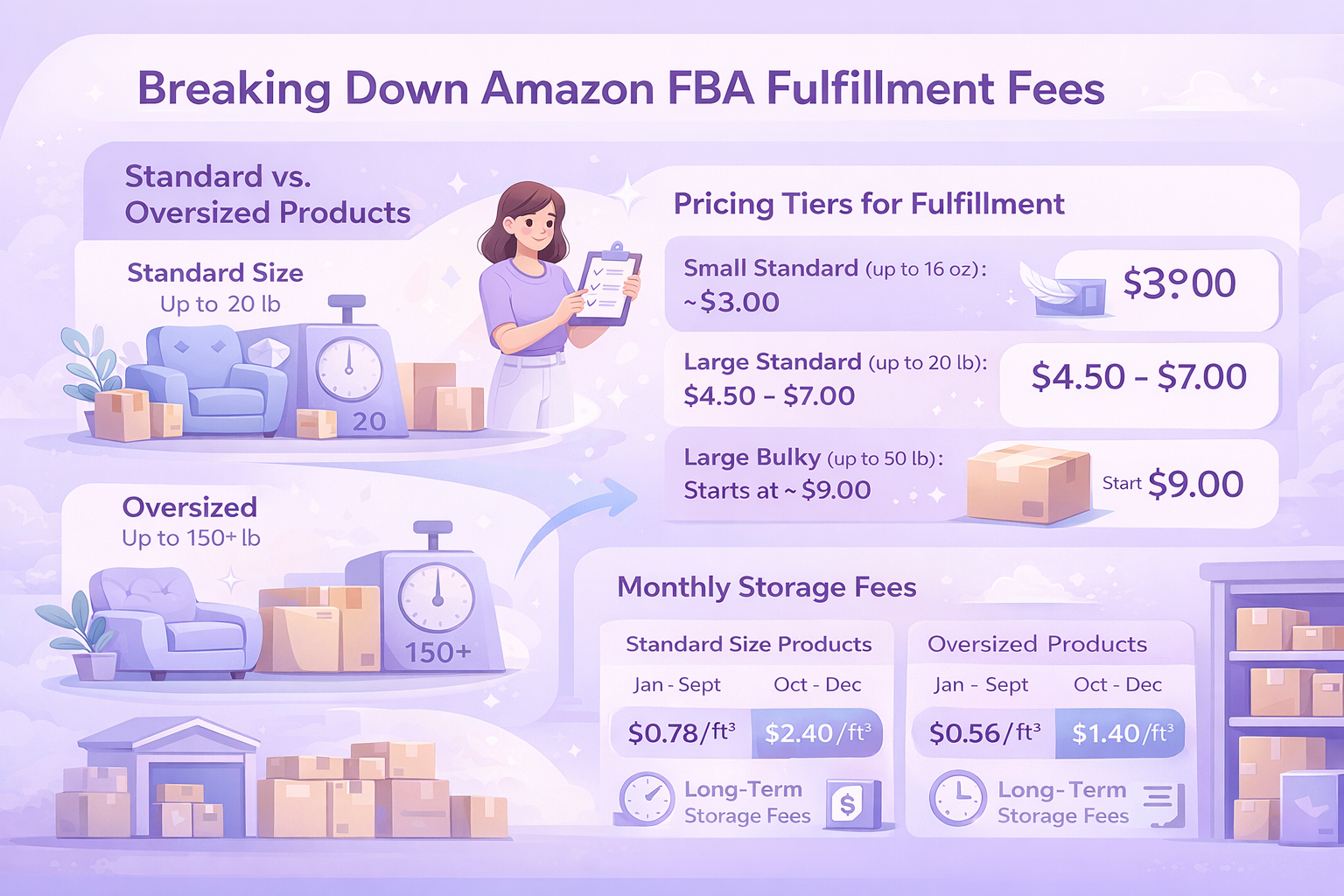
Breaking Down Amazon FBA Fulfillment Fees
Fulfillment fees are one of the most significant costs you’ll face as an FBA seller. These fees depend on the size and weight of your product. Here’s a breakdown:
Standard vs. Oversized Products
Amazon classifies products into two categories: standard-size and oversized products. The fees for standard-size products are typically lower, but they also depend on weight. For example:
- Standard-size products range from small items under 2 oz to larger products up to 3+ lb to 20 lb (large standard).
- Oversized products can be as large as 150 lb or more.
The cost increases as the product’s weight and size increase. While smaller items will cost less to ship, oversized products may incur higher fulfillment fees.
Pricing Tiers for Fulfillment
Here’s how the fulfillment fees typically break down based on product weight:
- Small Standard (up to 16 oz): Around $3.00 per unit.
- Large Standard (up to 20 lb): Between $4.50 and $7.00 per unit.
- Large Bulky (up to 50 lb): Starts at nearly $9.00 per unit.
These numbers are approximate and vary based on factors like seasonal demand, product dimensions, and special handling requirements.
Understanding Amazon FBA Storage Fees
Storage fees are another key element of FBA costs. Amazon charges monthly storage fees based on the cubic feet of space your inventory occupies in their warehouses. These fees differ depending on the time of year.
Monthly Storage Fees
Standard-size products are typically $0.78 per cubic foot from January to September, and $2.40 per cubic foot from October to December.
Oversized products are charged at $0.56 per cubic foot from January to September, and $1.40 per cubic foot from October to December.
Long-Term Storage Fees
Products that sit in Amazon’s fulfillment centers for over 365 days can incur additional long-term storage fees. These fees are typically higher and charged on top of regular monthly storage fees.
Minimizing FBA Fees: Tips and Strategies
While you can’t entirely avoid Amazon’s FBA fees, there are ways to minimize them and keep your profit margins intact.
1. Optimize Your Inventory Management
One of the most significant costs with FBA is storage fees, especially for products that don’t sell quickly. Overstocking inventory can lead to high storage fees and long-term storage penalties. So:
- Monitor sales trends regularly to avoid overstocking.
- Use Amazon’s FBA Dashboard to keep track of your inventory performance, including metrics like the Inventory Performance Index (IPI), which shows you how quickly your products are moving.
2. Reduce Shipping Costs with Amazon Partnered Carrier
If you plan on shipping products to Amazon’s warehouses, consider using Amazon Partnered Carrier to save money on shipping costs. Amazon’s carrier partnerships offer discounted shipping rates, which can significantly reduce your inbound costs.
3. Choose the Right Products
Selecting the right products to sell can have a huge impact on your overall FBA fees. Opt for products that are:
- Lightweight and small: These are cheaper to ship and store.
- High-demand: Products that sell fast will minimize storage time and reduce storage fees.
- Non-perishable: Non-perishable items avoid long-term storage fees and the risk of spoilage.
4. Watch Seasonal Storage Fees
Amazon’s storage fees may increase during peak months, particularly when the holiday shopping season hits. Plan ahead to ensure you’re not holding too much inventory during these months and:
- Offer discounts or run promotions to clear out slow-moving inventory before the seasonal fees kick in.
- Use Amazon Outlet for excess inventory, or choose removal services if you don’t want to store products over the long term.
5. Use Low-Price FBA Rates for Small Items
For products under $10, Amazon offers lower fulfillment fees through Low-Price FBA rates. This can be a great way to keep your fulfillment costs low while expanding your product offerings.
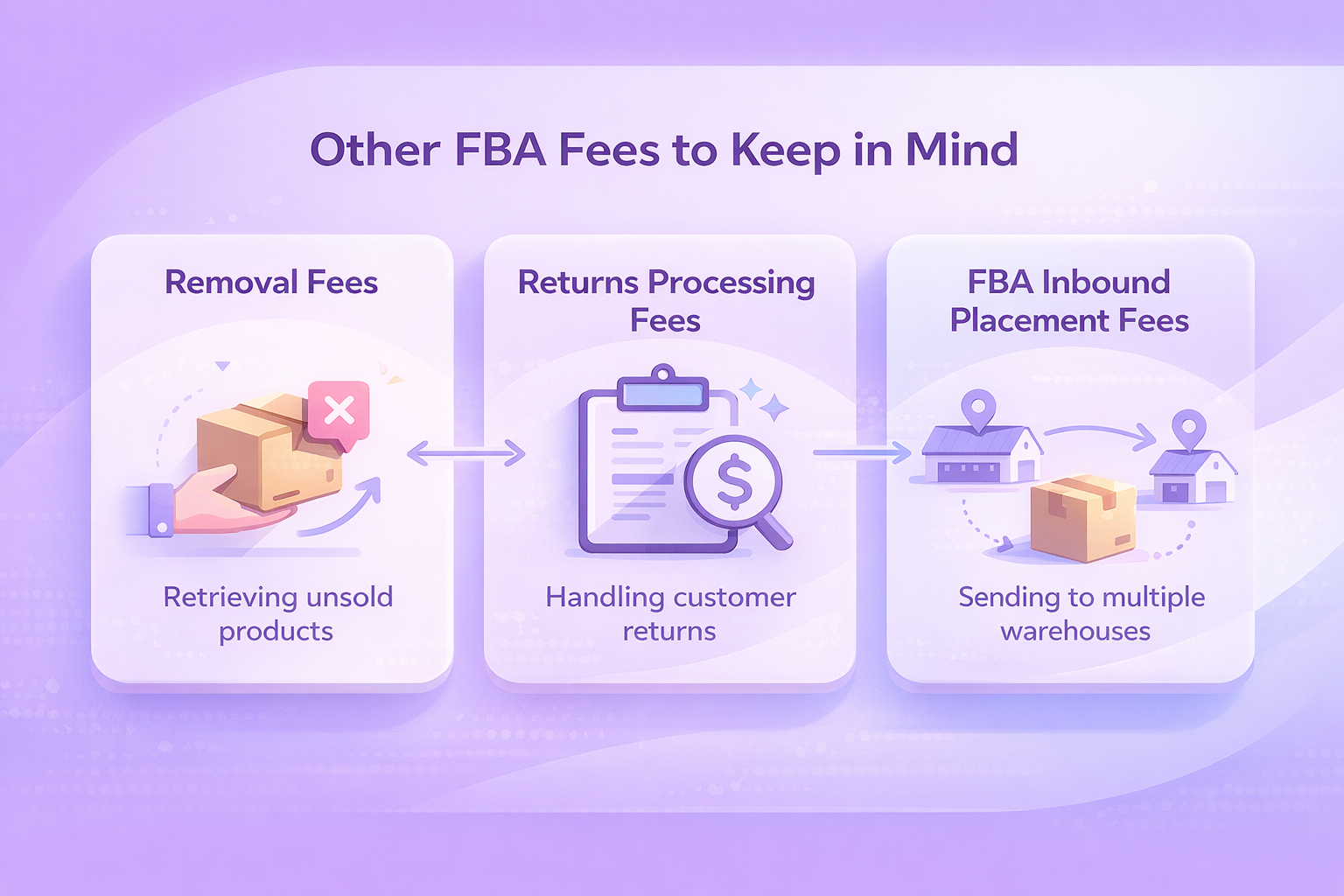
Other FBA Fees to Keep in Mind
In addition to fulfillment and storage fees, there are a few other costs associated with FBA that you should be aware of:
Removal Fees
If you want to retrieve products from Amazon’s fulfillment centers (for example, if they’re not selling), Amazon charges a removal fee per unit. This fee depends on the product’s size and weight. For standard-size items, the removal fee ranges from $1.04 to $2.89, while oversized or special handling items can cost significantly more.
Returns Processing Fees
If a customer returns an item, Amazon charges a return processing fee. This fee varies depending on the type of product and its price.
FBA Inbound Placement Fees
When you send inventory to multiple fulfillment centers, Amazon may charge you for using their FBA inbound placement service. The fee is based on the number of units and which fulfillment centers your products are placed in.
How to Estimate FBA Fees with the Revenue Calculator
To help you get a clear picture of your FBA costs, Amazon provides the FBA Revenue Calculator, which allows you to estimate fulfillment, storage, and other fees based on your product’s dimensions and weight. You can compare FBA costs with self-fulfillment costs to see which option is more cost-effective for your business.

How WisePPC Can Help You Navigate Amazon FBA Seller Fees
As you dive into the world of Amazon FBA, understanding the associated costs is essential to running a profitable business. At WisePPC, we understand the complexities of managing these fees. That’s why we’ve developed a powerful analytics platform that helps Amazon sellers gain visibility into their costs and optimize their advertising efforts to maximize returns.
Our WisePPC’s platform is designed to give you real-time performance tracking and insights into what’s really driving your sales. By integrating all your marketplace data, including Amazon ads, organic performance, and conversions, we help you get a comprehensive view of your business. This way, you can keep track of your FBA fees while making informed decisions on advertising spend, inventory management, and overall profitability.
What sets WisePPC apart is its ability to provide granular analytics. With our tool, you can track and compare key performance indicators across multiple marketplaces, including Amazon. This allows you to manage your Amazon FBA fees more effectively by optimizing your ad campaigns, targeting the right customers, and controlling costs. Whether you manage 10 or 100 products, our platform grows with you, offering actionable insights at every stage of your business.
Final Thoughts
Understanding Amazon FBA seller fees is essential for running a profitable Amazon business. While these fees can add up, FBA provides value in terms of convenience, access to Prime customers, and scalability. The key is to carefully track your expenses, optimize your inventory, and choose the right products to sell.
If you plan ahead, manage your inventory wisely, and use the tools Amazon provides, you can minimize your FBA fees and keep your business growing. It’s all about finding that balance between cost, convenience, and the services Amazon offers.
By implementing these strategies, you’ll be in a better position to scale your business while keeping costs under control.
FAQ
1. What are Amazon FBA seller fees?
Amazon FBA seller fees are charges that Amazon applies to cover the costs of storing, picking, packing, and shipping your products. These fees also include customer service and handling returns. They’re mainly broken down into fulfillment fees (based on product size and weight), storage fees (for holding your products in Amazon’s fulfillment centers), and additional costs for optional services like removal or disposal of inventory.
2. How are FBA fulfillment fees calculated?
Fulfillment fees are primarily determined by the size and weight of your products. For example, smaller items cost less to store and fulfill, while larger, heavier items incur higher fees. Amazon uses specific price tiers depending on whether your product is standard-size or oversized. These fees cover everything from picking your product in the warehouse to shipping it to customers.
3. Are FBA storage fees charged all year?
Yes, but they vary by season. Amazon’s standard storage fees are lower from January to September and increase during the peak holiday months of October to December. This seasonal shift is something to keep in mind when planning inventory, as storing products for extended periods during peak times can increase costs significantly.
4. How can I avoid long-term storage fees?
To avoid long-term storage fees, keep a close eye on your inventory. If products are sitting in Amazon’s warehouse for over 365 days, you’ll incur additional charges. Regularly review your sales data, use promotions or discounts to move slow-moving products, and consider using Amazon’s FBA Liquidations or Removal Services if you need to clear out old stock.
5. Can I reduce FBA fees with small and lightweight products?
Absolutely! Small and lightweight products not only cost less to fulfill but also incur lower storage fees. If you’re just starting out or expanding your product line, focusing on these kinds of products can help reduce your overhead costs while still providing good margins.
6. What are the hidden fees in FBA that I should be aware of?
While Amazon is transparent about most of its fees, some additional costs might catch sellers by surprise. These can include returns processing fees for customer returns, removal or disposal fees if you choose to remove unsold inventory, and fees for FBA inbound placement services if you send your stock to multiple fulfillment centers. It’s important to account for these extra charges in your overall cost structure.
7. How can I track and manage my FBA fees?
To keep track of your FBA fees, use Amazon’s Fee Preview and Revenue Calculator tools. These tools help you estimate your fees based on your product’s size, weight, and category. Additionally, you can monitor your costs and sales performance through the FBA Dashboard and Payments Dashboard on Seller Central to ensure you’re staying within budget.
 No credit card required