
 EN
EN  ES
ES  FR
FR  DE
DE  IT
IT  KO
KO  JA
JA  ZH
ZH  AR
AR  PT
PT  TR
TR PL
PL
Ecommerce is easier to start than it was a few years ago. At the same time, it’s much harder to grow without a clear plan. New tools appear constantly, competition keeps rising, and customers expect things to work instantly.
That’s why successful ecommerce brands don’t rely on tactics alone. They build a strategy that connects products, customers, marketing, sales channels, and operations into one system. Not something rigid, but something that evolves as the business grows.
This article breaks down how that system works, and how your approach should change depending on where your business is today.
What an Ecommerce Strategy Actually Is
An ecommerce strategy is not a launch checklist or a collection of growth hacks. It’s a set of decisions that explains how your business makes money online in a repeatable way.
It defines what you sell, who you sell to, how customers discover you, where purchases happen, and how orders are delivered. Most importantly, it keeps all of those pieces aligned. When one part changes, the others adjust instead of breaking.
Without a strategy, growth often feels reactive. With one, decisions become clearer, even when the business gets more complex.
Why Strategy Matters More Than Ever
Most ecommerce brands don’t fail because their product is bad. They struggle because different parts of the business pull in different directions.
Marketing brings traffic that doesn’t convert. Operations can’t keep up with demand. Discounts increase sales but quietly destroy margins. These problems usually point to a missing or unclear strategy.
A well-defined ecommerce strategy helps you focus on what actually moves the business forward. It keeps spending under control, improves customer experience, and makes growth more predictable over time. Just as importantly, it helps you decide what not to do.
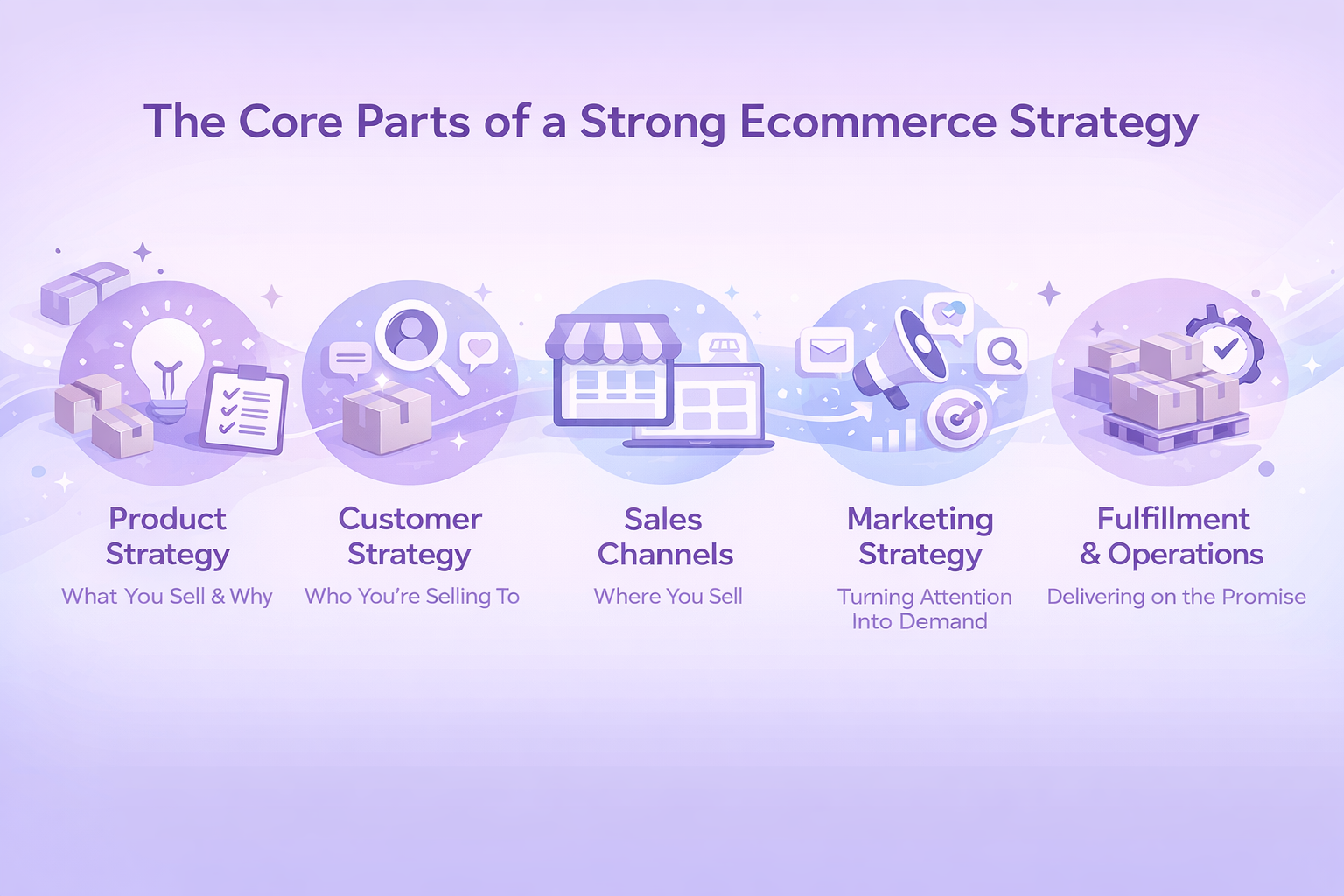
The Core Parts of a Strong Ecommerce Strategy
Every ecommerce strategy is built on a few connected pillars. Ignoring one of them almost always creates problems later.
1. Product Strategy: What You Sell and Why
Product strategy starts with understanding why your product exists in the first place. It’s not just about features, but about relevance.
Strong product decisions come from understanding customer needs, market demand, and long-term viability. This includes thinking about how your product will evolve, whether it has seasonal demand, and how easily it can be expanded with variations or related items.
Product strategy also needs flexibility. Customer feedback, trends, and supply chain changes should inform ongoing improvements instead of forcing reactive fixes.
2. Customer Strategy: Who You’re Really Selling To
Knowing your customer goes beyond basic demographics. It’s about understanding how people discover your product, what hesitations they have, and what makes them come back.
Mapping the customer journey helps here. From the first interaction to repeat purchases, every step reveals friction points and opportunities. Brands that invest in retention early often outperform those that focus only on acquisition.
Customer insights should shape everything from messaging and pricing to support policies and content.
3. Sales Channels: Where Transactions Happen
Where you sell affects how you grow. Some brands focus on direct-to-consumer stores. Others lean on marketplaces. Many do both.
Each channel plays a different role. Marketplaces can offer fast access to demand and built-in trust. Direct stores offer control, better margins, and customer data. The goal isn’t to be everywhere, but to use each channel intentionally.
As a business grows, channel decisions should be revisited. What worked at launch may not be optimal at scale.
4. Marketing Strategy: Turning Attention Into Demand
Marketing connects your product to the right audience. Effective ecommerce marketing balances organic and paid channels while staying grounded in data.
Search visibility, email, social media, advertising, and partnerships work best when they support each other rather than compete. Clear goals and consistent measurement help teams understand what’s driving results and what’s wasting budget.
Marketing strategies should evolve continuously. Customer behavior changes, platforms shift, and what worked last year may not work today.
5. Fulfillment and Operations: Delivering on the Promise
Fulfillment often gets less attention early on, but it becomes critical as volume increases. Shipping speed, inventory accuracy, returns handling, and customer support all shape the buying experience.
Operational decisions also affect pricing and margins. Offering fast shipping or free returns only works if the business can absorb the cost. Strategy helps set realistic expectations and avoid overpromising.
How These Pieces Fit Together
None of these areas exist in isolation. Decisions in one part of the business almost always affect the others.
- Product choices influence who your customers are and what they expect.
- Customer behavior shapes which sales channels make sense.
- Sales channels determine how you approach marketing and promotion.
- Marketing performance impacts inventory planning and fulfillment speed.
- Fulfillment capabilities set clear limits on delivery promises and pricing.
Strong ecommerce brands regularly step back and look at how these parts interact. Small misalignments often go unnoticed at first, but over time they compound and slow growth if they aren’t corrected early.

Turning Ecommerce Strategies Into Clear Decisions With WisePPC
At WisePPC, we see the same issue across growing ecommerce brands: strategy exists, but the data needed to manage it is scattered. Advertising performance, sales results, and historical insights live in different tools, making it harder to see how decisions in one area affect the rest of the business.
We built WisePPC to bring those pieces together. Our platform connects advertising and sales data into a single, clear view, helping teams understand how product choices, customer behavior, and marketing performance influence growth. Long-term data storage makes it possible to analyze seasonality and past performance that would otherwise be lost.
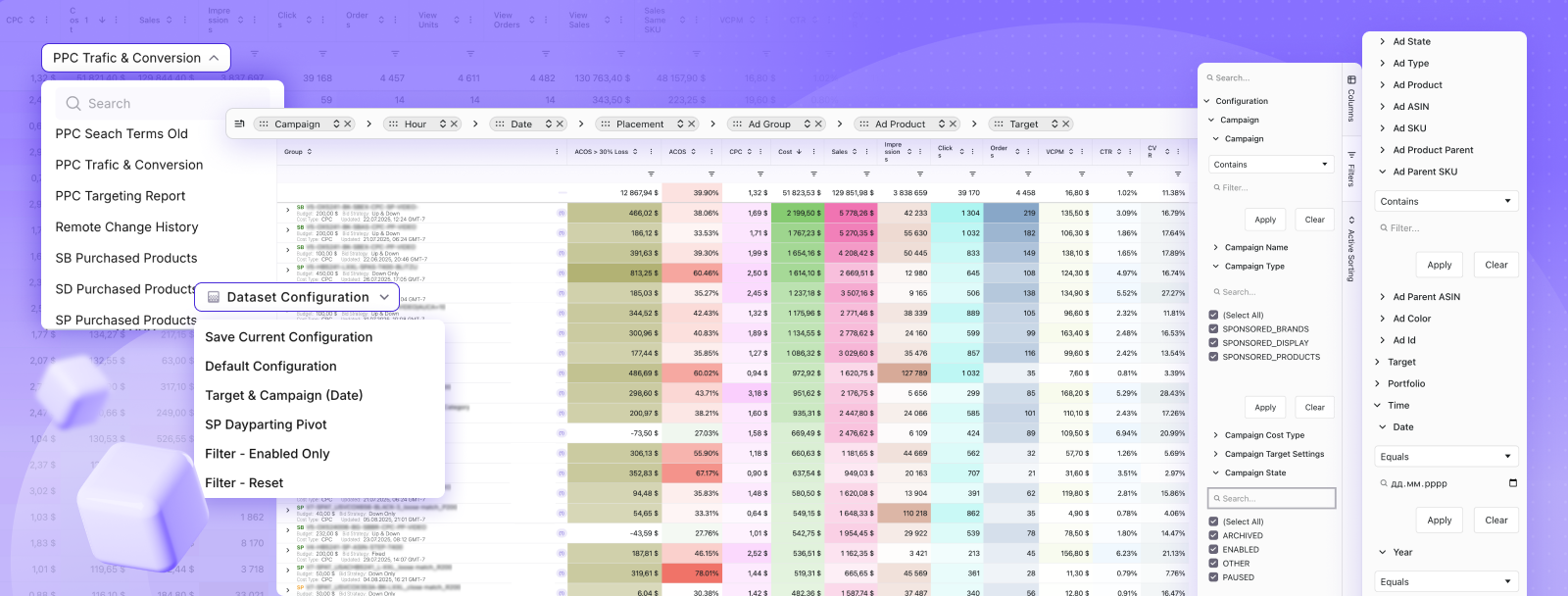
WisePPC is designed for action, not just reporting. Bulk updates, inline campaign editing, and real-time metrics allow teams to respond quickly, while visual highlights help surface issues and opportunities without digging through spreadsheets.
By clearly separating ad-driven sales from organic performance, we help brands make smarter decisions around budgets, pricing, and inventory planning. As an Amazon Ads Verified Partner, we work within Amazon’s best practices while giving sellers deeper visibility into what actually drives profitable growth.
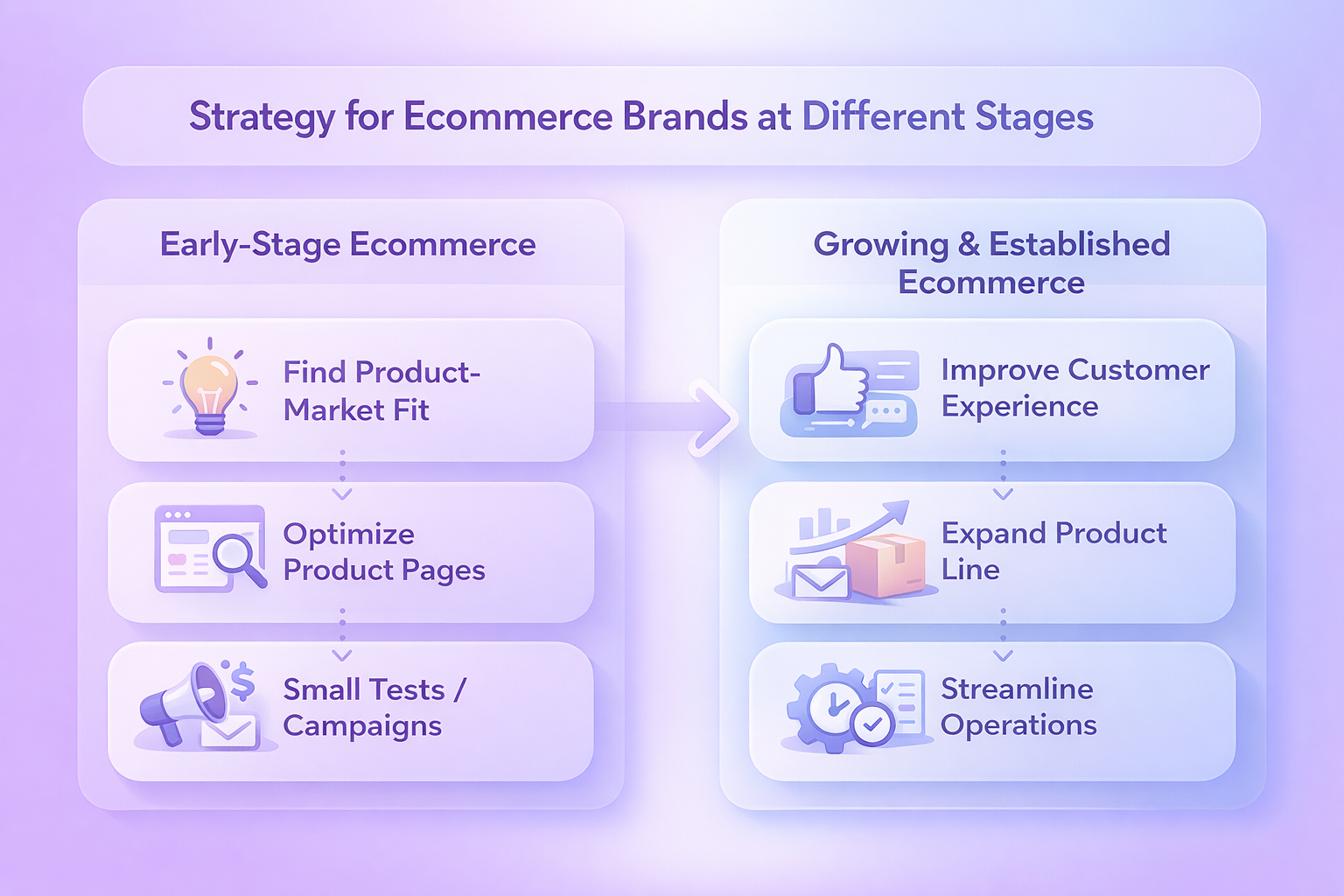
Strategy for Ecommerce Brands at Different Stages
Early-Stage Ecommerce Brands
Early-stage ecommerce is about learning quickly without overcommitting. At this point, the goal isn’t scale, it’s clarity.
Before launch, the focus should stay on fundamentals. Products need to solve a real problem. The buying process should feel simple and predictable. Product pages should be clear, honest, and easy to navigate. Even basic inventory tracking and customer support systems matter, as long as they work reliably.
Once the store goes live, early traction usually comes from a mix of personal networks, small paid campaigns, influencer partnerships, and search-friendly content. Email list building should start immediately, even before traffic grows, because those early subscribers often become your most valuable customers.
At this stage, testing matters more than polish. Every click, purchase, and question provides insight. The goal is to learn what resonates and adjust quickly, rather than chasing perfection.
Growing and Established Ecommerce Brands
Once sales become consistent, priorities shift from experimentation to optimization.
Customer experience becomes critical because friction scales with volume. Checkout speed, payment options, delivery reliability, and support response times all start to affect conversion and retention in a much bigger way.
Product expansion should be guided by data, not intuition. Sales history, customer feedback, and demand trends help determine which variations or new products are worth introducing. Limited runs and small tests reduce risk while still allowing growth.
Operational efficiency also takes center stage. Inventory planning, forecasting, and fulfillment processes need to keep up with demand without tying up unnecessary capital. At this stage, smooth operations often matter as much as marketing in sustaining growth.
Advanced Approaches to Sustainable Growth
Multichannel Selling Without Chaos
Selling across multiple channels can increase reach, but only if managed carefully. Centralized inventory, consistent branding, and unified support systems help prevent confusion.
Performance should be tracked by channel, and strategies adjusted accordingly. Not every channel needs to be optimized the same way.
Using Data to Guide Decisions
At scale, intuition stops working. Brands need visibility into contribution margins, acquisition costs, customer lifetime value, inventory turnover, and return impact.
These numbers guide smarter decisions about pricing, promotions, and growth investments. Without them, it’s easy to grow revenue while profitability quietly erodes.
Automation That Supports, Not Hides, Problems
Automation works best when processes are already understood. Inventory reordering, review collection, email segmentation, and returns workflows are common areas where automation saves time.
The goal is to reduce manual effort while keeping control. Automation should highlight issues early, not bury them.
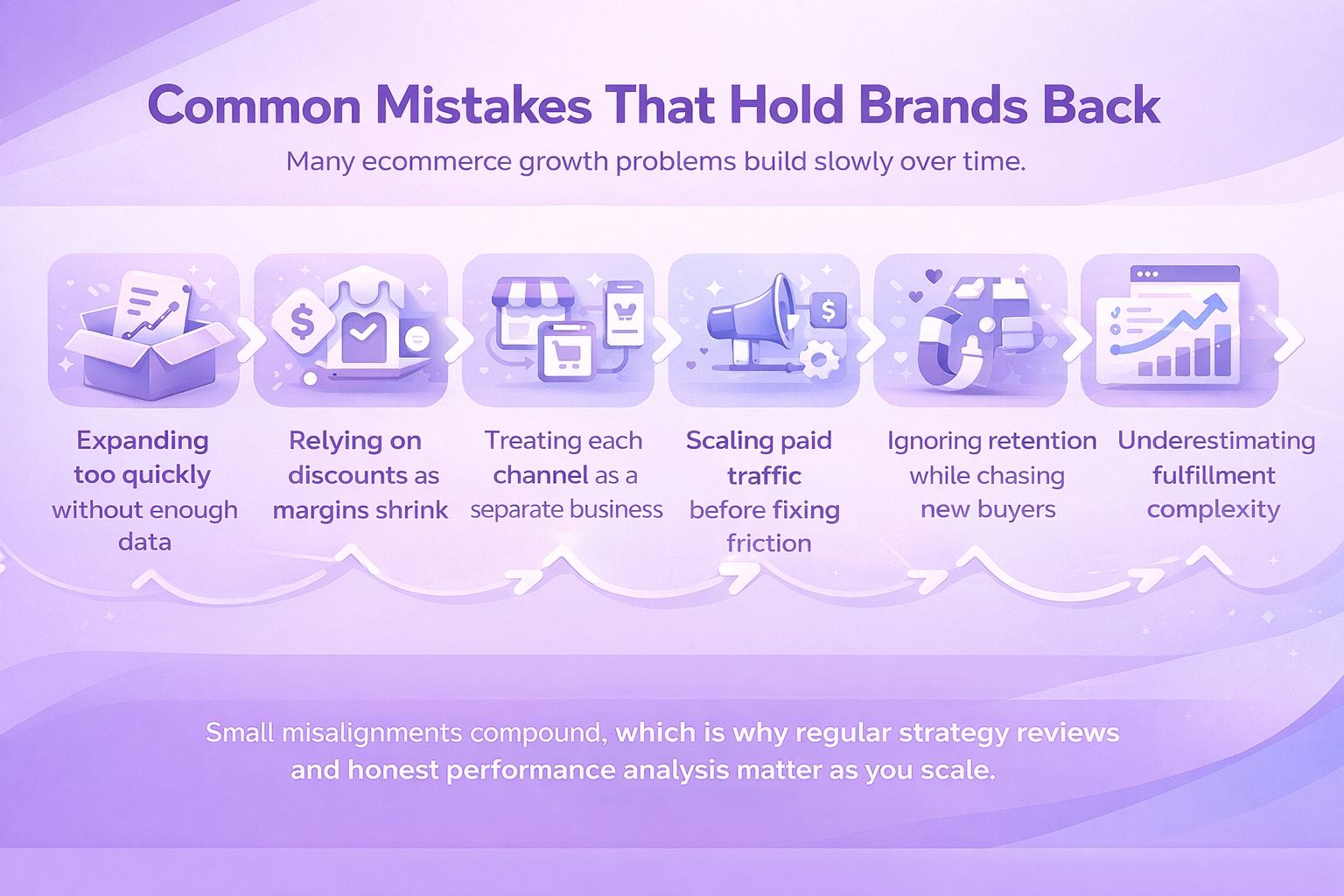
Common Mistakes That Hold Brands Back
Many ecommerce growth problems don’t come from a single bad decision. They build over time, often quietly, as small misalignments compound.
- Expanding product lines or channels too quickly without enough data to support the decision.
- Relying heavily on discounts to drive sales, while margins shrink in the background.
- Treating each sales channel as a separate business instead of part of one system.
- Scaling paid traffic before fixing conversion and checkout friction.
- Ignoring customer retention and focusing only on acquiring new buyers.
- Underestimating fulfillment complexity, especially as order volume increases.
- Letting inventory decisions lag behind marketing and demand changes.
- Making strategy decisions based on short-term spikes rather than long-term performance.
These issues rarely show up overnight. They tend to grow slowly, which is why regular strategy reviews and honest performance analysis matter as the business scales.
Conclusion
Ecommerce growth is rarely about one big breakthrough. It’s usually the result of many connected decisions made over time, and adjusted as the business changes. What works at launch won’t work forever, and what works at scale can easily break a younger brand.
The strongest ecommerce strategies evolve. They connect products, customers, marketing, sales channels, and operations into a system that makes sense together. When those pieces stay aligned, growth becomes easier to manage and easier to repeat.
Whether you’re testing your first product or optimizing a mature business, the goal stays the same: make decisions based on real data, review your strategy often, and fix small misalignments before they turn into big problems.
FAQ
What is an ecommerce strategy?
An ecommerce strategy is a plan for how an online business sells products, reaches customers, fulfills orders, and grows over time. It connects product decisions, marketing, sales channels, and operations into one system.
Why do ecommerce strategies need to change as a business grows?
Customer behavior, costs, and operational complexity change as a business scales. A strategy that works for early traction often breaks at higher volume, which is why regular adjustments are necessary.
What is the biggest mistake ecommerce brands make when scaling?
One of the most common mistakes is scaling too fast without enough data. This includes expanding products, increasing ad spend, or adding channels before fixing conversion, retention, or fulfillment issues.
How important is customer retention in ecommerce growth?
Customer retention is critical. It’s usually more cost-effective to sell again to an existing customer than to acquire a new one. Strong retention improves margins and stabilizes growth.
Should ecommerce brands sell on multiple channels?
Multiple channels can help reach more customers, but only if they’re managed together. Without centralized data and inventory, multichannel selling can create confusion and inefficiency.
When should a brand focus on operational efficiency?
Operational efficiency becomes especially important once sales are consistent. At that stage, inventory planning, fulfillment speed, and cost control directly impact profitability.
 No credit card required