
 EN
EN  ES
ES  FR
FR  DE
DE  IT
IT  KO
KO  JA
JA  ZH
ZH  AR
AR  PT
PT  TR
TR PL
PL
Quick Summary: Amazon’s best-selling books in 2026 span diverse genres from Mel Robbins’ self-help phenomenon “The Let Them Theory” to Freida McFadden’s thrillers and Virginia Evans’ literary fiction. Print book sales reached 762.4 million units in 2025, driven by romance, romantasy, and graphic novels. Amazon dominates the book market with 71% of U.S. readers purchasing through the platform, while genres like science fiction saw a 22.1% sales increase.
Amazon’s best-seller lists reveal what millions of readers are actually buying right now. And the landscape has shifted dramatically.
According to Publishers Weekly, print book sales hit 762.4 million units in 2025, marking a 0.3% increase over 2024. That’s the second consecutive year of growth, though sales haven’t reached the pandemic-era peak of 839.7 million copies in 2021.
But here’s what’s fascinating: the types of books dominating these charts tell us where reader preferences are headed.
Current Amazon Best Sellers: What’s Topping the Charts
Amazon’s best-seller list updates hourly, but certain titles have maintained their grip on top positions for weeks. The Let Them Theory” by Mel Robbins sold more than 2.8 million copies in 2025 (exactly 2,812,799 units per Circana BookScan), making it the #1 bestselling print book of the year in the US.
Right behind it, thriller queen Freida McFadden continues her dominance. Her latest ‘The Dinner Party: A Pick Your Poison Adventure’ currently sells for $11.69 in paperback and has garnered a 4.3 out of 5 stars rating from over 1,800 reviews.
Virginia Evans’ “The Correspondent: A Novel” sits at #5 with an impressive 4.6 out of 5 stars from 87,363 reviews and a $19.58 hardcover price point.
The diversity in pricing and formats tells an important story. Readers aren’t just gravitating toward budget options—they’re willing to pay premium prices for hardcovers when the content resonates.
Genre Breakdown of Top Sellers
Adult fiction saw a 5.4% sales increase in the first nine months of 2024, driven primarily by romance and romantasy titles. Science fiction posted the largest increase among adult fiction categories with a 22.1% jump in 2025 to just over six million units.
Graphic novels bounced back, rising 9.2% in 2025 to 25.9 million units sold.
| Genre | Sales Change (2025) | Units Sold |
|---|---|---|
| Science Fiction | +22.1% | 6 million+ |
| Graphic Novels | +9.2% | 25.9 million |
| Adult Fiction (Overall) | +5.4% | Data varies |
| Romance/Romantasy | Strong growth | Category leader |
Understand Amazon Campaign Performance With WisePPC
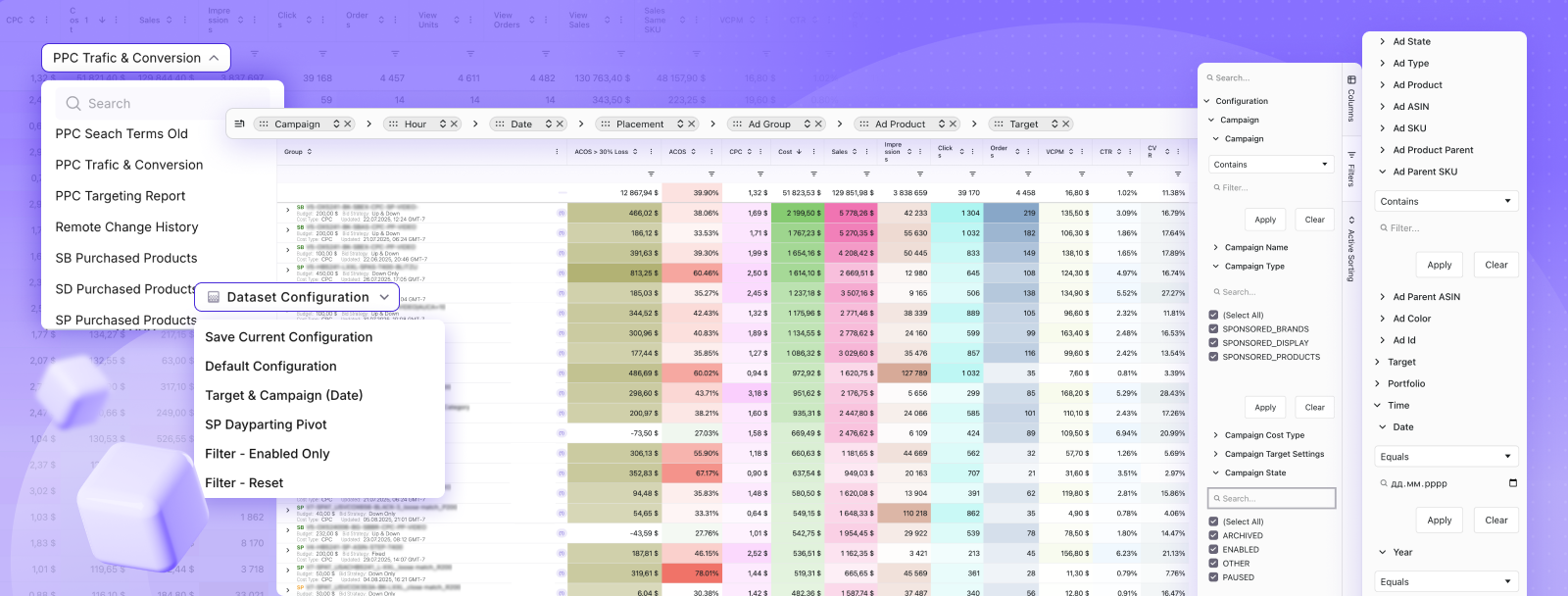
WisePPC helps sellers connect campaign activity with product sales and keyword data. Instead of checking separate reports, it brings performance into one view, making it easier to understand which ads support sales and which ones need closer attention.
Need a Clearer Way to Review Ad Results?
Use WisePPC to:
- analyze keyword and campaign performance
- track product sales alongside ad data
- separate paid and organic results more clearly
👉 Explore WisePPC to get a clearer view of your Amazon advertising data.
Amazon’s Market Dominance in Book Sales
According to Statista’s Consumer Insights survey, 71% of U.S. adults who bought books in the last 12 months purchased them from Amazon. That’s not just market leadership—that’s near-monopoly territory.
The platform’s dominance extends globally, though with varying intensity across markets. The data shows Amazon’s grip on book retail far exceeds its presence in other product categories.
What drives this concentration? Real talk: it’s the combination of pricing, Prime shipping, and the sheer breadth of selection. Independent bookstores and even major chains struggle to compete on these fronts simultaneously.
Book Sales Trends Shaping 2026
The data reveals several compelling trends beyond just individual titles. Romance and romantasy continue their meteoric rise, with authors like Colleen Hoover, Sarah J. Maas, and Rebecca Yarros consistently dominating the top 10 lists.
But wait. There’s a subplot here that matters.
According to research on BookTok’s impact, the book-focused corner of TikTok has significantly influenced the publishing landscape. Videos featuring book recommendations and reviews have rescued struggling bookstores and driven sales of specific titles into the millions.
This social media influence isn’t just marketing noise. It’s creating genuine bestsellers that traditional publishing gatekeepers never predicted.
The BookTok Effect on Sales
Community discussions on platforms like Reddit reveal how readers discover books differently now. Traditional advertising matters less. Authentic reader enthusiasm matters more.
Publishers Weekly noted that romantasy—a blend of romance and fantasy—rode this wave particularly well. The genre barely existed as a category five years ago. Now it’s driving significant portions of adult fiction growth.
Print vs. Digital: The Format Wars
Here’s something that surprises people: print isn’t dead. Not even close.
Print book sales consistently surpass 700 million units per year, and print remains the most popular book format among U.S. consumers. Yes, Kindle and digital formats have their place, but they haven’t replaced physical books the way many predicted.
Amazon’s Best Sellers list actually maintains separate rankings for print and Kindle eBooks, acknowledging that these function as distinct markets with different dynamics.
| Format | Key Advantages | Best For |
|---|---|---|
| Print (Paperback) | Lower price, collectible, no device needed | Budget readers, collectors |
| Print (Hardcover) | Durability, premium feel, gift-worthy | Collectors, gifts, first editions |
| Kindle eBooks | Instant delivery, portability, adjustable text | Travel, convenience, storage |
| Audiobooks | Hands-free, multitasking friendly | Commuters, busy schedules |
How Amazon’s Best Seller Lists Work
Not everyone understands how these rankings actually function. Amazon updates its best-seller lists hourly based on recent sales velocity, not cumulative totals.
That means a book can spike to #1 with a sudden sales surge, even if another book has sold more copies overall. This system rewards momentum and timely marketing pushes.
The platform also maintains category-specific lists—Literature & Fiction, Mystery & Thriller, Science Fiction & Fantasy, and dozens more. A book might rank #47 overall but hold the #1 spot in its specific category.
What Publishers Weekly Data Reveals
Publishers Weekly tracks book sales through Circana BookScan, which monitors approximately 85% of the print market. Their 2024 year-end data showed romance and romantasy titles consistently dominated top seller lists.
Middle grade graphic novel series, YA thrillers, and evergreen picture book favorites rounded out the children’s and YA bestsellers compilation. Among top-selling titles from Amazon’s Best Books of the Past 25 Years, several titles have captured significant reader attention.
Sound familiar? These patterns reflect broader cultural shifts. Readers increasingly gravitate toward series and familiar authors rather than taking chances on unknowns.
International Book Sales Trends
According to Publishers Weekly’s Frankfurt Book Fair 2023 coverage, international book trade has steadied despite economic turbulence. Many countries experienced growth in book sales, though challenges persist.
The global publishing market was reported at $119 billion according to IBISWorld, with over 16,000 businesses operating in the industry. According to data from 2019, U.S. book publishers saw a 6.9% year-over-year revenue increase.
But here’s the thing—Amazon’s dominance varies by region. While 71% penetration holds in the U.S., other markets show different patterns based on local retail infrastructure and reading habits.
FAQs About Amazon Best Sellers
How often does Amazon update its best-seller lists?
Amazon updates best-seller rankings hourly based on recent sales velocity. This means the lists reflect current purchasing trends rather than cumulative all-time sales. A book can move significantly in ranking within a single day based on marketing campaigns or viral social media attention.
What was the #1 best-selling book on Amazon in 2025?
According to Publishers Weekly, “The Let Them Theory” by Mel Robbins was the top-selling print book in the United States in 2025. The self-help title dominated charts for most of the year.
Do Kindle eBook sales count toward best-seller rankings?
Amazon maintains separate best-seller lists for different formats. Kindle eBooks have their own rankings distinct from print books. However, a title can appear on multiple lists simultaneously if it performs well across formats.
What percentage of book sales does Amazon control?
According to Statista’s Consumer Insights survey, 71% of U.S. adults who purchased books in the last 12 months bought them from Amazon. This represents significant market dominance over traditional bookstores and other online retailers combined.
Which book genres are growing fastest on Amazon?
Science fiction posted the largest increase among adult fiction categories with a 22.1% sales jump in 2025. Graphic novels bounced back with 9.2% growth. Romance and romantasy continue driving overall adult fiction growth at 5.4%.
How accurate is Amazon’s best-seller data?
Amazon’s internal sales data is proprietary and not fully disclosed. Third-party tracking through Circana BookScan covers approximately 85% of the print market, providing reasonably accurate insight into trends. Nielsen BookScan offers point-of-sale data but doesn’t capture the complete picture.
Can self-published books become Amazon best sellers?
Absolutely. Self-published titles regularly appear on Amazon’s category-specific best-seller lists, particularly in genres like romance, science fiction, and fantasy. The platform’s Kindle Direct Publishing democratized access to readers, allowing independent authors to compete directly with traditional publishers.
The Bottom Line
Amazon’s best-seller lists offer a real-time snapshot of reading culture. From Mel Robbins’ self-help dominance to Freida McFadden’s thriller reign, the data reveals what resonates with millions of readers.
Print sales remain strong at 762.4 million units. Romance and science fiction are surging. BookTok influences purchasing decisions as much as traditional reviews.
For anyone curious about current literary trends or looking for their next read, Amazon’s charts provide valuable guidance—just remember the rankings shift constantly based on the latest sales momentum.
Check Amazon’s best-seller lists directly for the most current rankings, as they update hourly and reflect real-time reader preferences across dozens of categories.
 No credit card required