
 EN
EN  ES
ES  FR
FR  DE
DE  IT
IT  KO
KO  JA
JA  ZH
ZH  AR
AR  PT
PT  TR
TR PL
PL
If you’ve spent more than five minutes looking into how to sell on Amazon, you’ve probably stumbled across an FBA course or two – usually with bold claims, a timer counting down, and testimonials promising passive income by next week. Tempting, sure. But also a little suspicious.
So let’s break it down. Are these Amazon FBA courses actually worth what they charge, or are you better off piecing it together yourself? This isn’t a pitch for or against, just a clear look at what these courses offer, what they leave out, and how to figure out if one fits your situation. Because spending $1,000 on a course that teaches you what a few blog posts could have told you for free? That’s not strategy, that’s a mistake.
Let’s sort the useful from the useless.
Let’s Start with the Obvious: Not All FBA Courses Are Created Equal
There are hundreds of Amazon FBA courses floating around. A handful are run by sellers who’ve actually built profitable stores. The rest? Well, let’s just say a lot of folks make more money teaching FBA than doing it.
So before anything else, here’s a filter to run every course through. Ask yourself:
- Does the instructor actively sell on Amazon?
- Are their results recent, not from 2017?
- Is the content regularly updated?
- Do they teach with substance or just repeat buzzwords?
If any of those answers are shaky, you’re probably looking at something that’s not worth your time, let alone your money.
What Do FBA Courses Actually Teach?
A solid course should walk you through the entire lifecycle of selling on Amazon. At a minimum, it should cover:
- How Amazon FBA works (and what it won’t do for you).
- Product research (finding things people want to buy that aren’t saturated).
- Sourcing products (usually from overseas).
- Branding and setting up your seller account.
- Listing creation and keyword strategy.
- PPC advertising on Amazon.
- Inventory and fulfillment strategy.
- Scaling and ongoing optimization.
Some courses break it down into stages with cutesy names. Others use a dry, corporate structure. Doesn’t really matter. What matters is that it covers everything from start to scale without leaving you with more questions than answers.
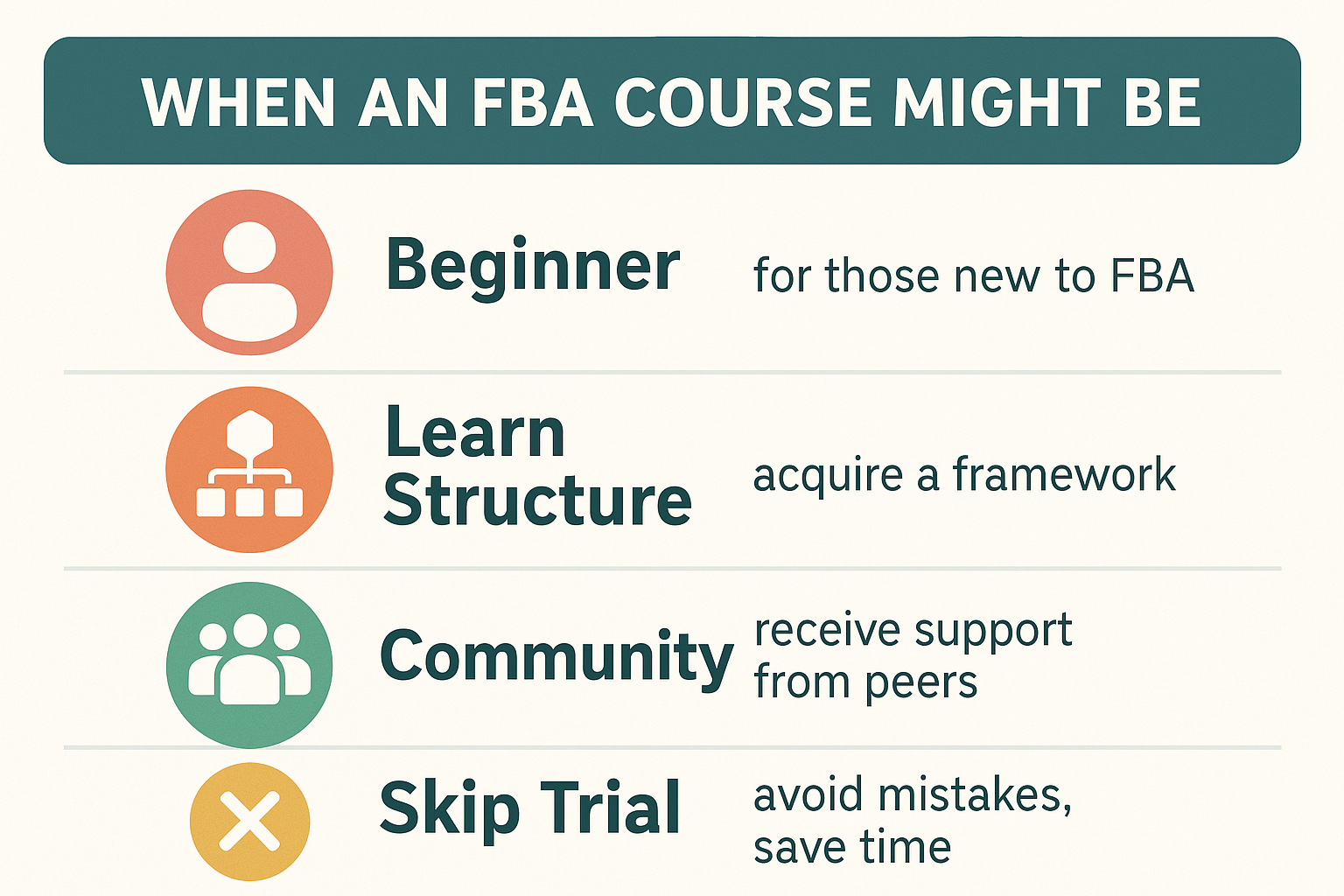
When an FBA Course Might Actually Be Worth It
There are times when buying a course makes sense. If you’re in one of these situations, the right course could actually save you time, money, and stress.
You’re a Total Beginner with Zero eCommerce Experience
Let’s be honest: selling on Amazon has a learning curve. You’ll have to figure out things like shipping logistics, product margins, PPC metrics, and how to avoid getting your account flagged by Amazon’s bots. You can piece that together yourself, but it’s going to take time, and you’ll likely pay for mistakes with real money. A well-made course can walk you through the basics, layer by layer, and prevent a lot of rookie errors before they happen.
You Learn Better with Structure
Some people thrive when they have a clear roadmap to follow – one module at a time, with action steps. If that’s you, a course might help keep you focused and avoid the overwhelm that comes from diving into Reddit, YouTube, blogs, and seller forums all at once. It’s not about hand-holding – it’s about reducing friction so you can actually make progress.
You Need Community or Mentorship
Selling online can get isolating fast, especially when you run into problems like listing rejections, bad reviews, or PPC campaigns that chew through your budget. A course with a legit support group or regular Q&A calls can be worth its weight in gold if you’re the kind of person who benefits from outside perspective or peer feedback. Just make sure the community is actually active, not one of those silent groups where no one replies unless it’s a moderator promoting the next upsell.
You Want to Skip Some Trial and Error
There’s something to be said for learning by doing. But there’s also something to be said for not learning the hard way when you don’t have to. A solid course will often give you frameworks, checklists, and tested strategies that compress months of trial and error into a weekend’s worth of learning. That doesn’t guarantee success, but it does reduce wasted effort and decision fatigue.
And When They’re Definitely Not Worth It
Not all FBA courses are a wise use of your budget. Some of them simply aren’t built for where you are in your journey. Others are outright fluff.
You’re Only Half-Interested
If you’re just poking around the idea of selling on Amazon, don’t sign up for anything yet. Paid courses are best for people who’ve already committed to the idea – who’ve looked into product categories, understand the startup costs, and are actively preparing to launch. If you’re still figuring out if eCommerce is even your thing, stick with free resources for now. You’ll get more out of a course when you’re ready to use what it teaches.
The Course Costs More Than Your Launch Budget
Let’s say your total startup budget is $4,000. If the course costs $3,000, you’re already in the red before you’ve sourced a single product. That’s not a good tradeoff. Courses should support your launch, not consume the bulk of your funds. Product photography, inventory, and PPC matter more at the beginning than a flashy course dashboard.
The Content Looks Like a Rehash of YouTube
It’s easy to spot this once you’ve been researching for a while. Some courses are just recycled advice: obvious tips, no real case studies, and the same vague strategies you’ve already heard for free. If the preview videos or syllabus look thin, they probably are. You’re not missing anything by skipping it.
It Promises You’ll Make Money Fast
Any course that claims you’ll be “cash flow positive in 30 days” or making “$10k/month in your first quarter” is either lying or cherry-picking the one student who got lucky. Amazon FBA is a serious business model, not a side hustle lottery. If a course is promising fast wins with minimal effort, that’s a red flag, not a selling point. Building a sustainable business takes time, testing, and adaptability.
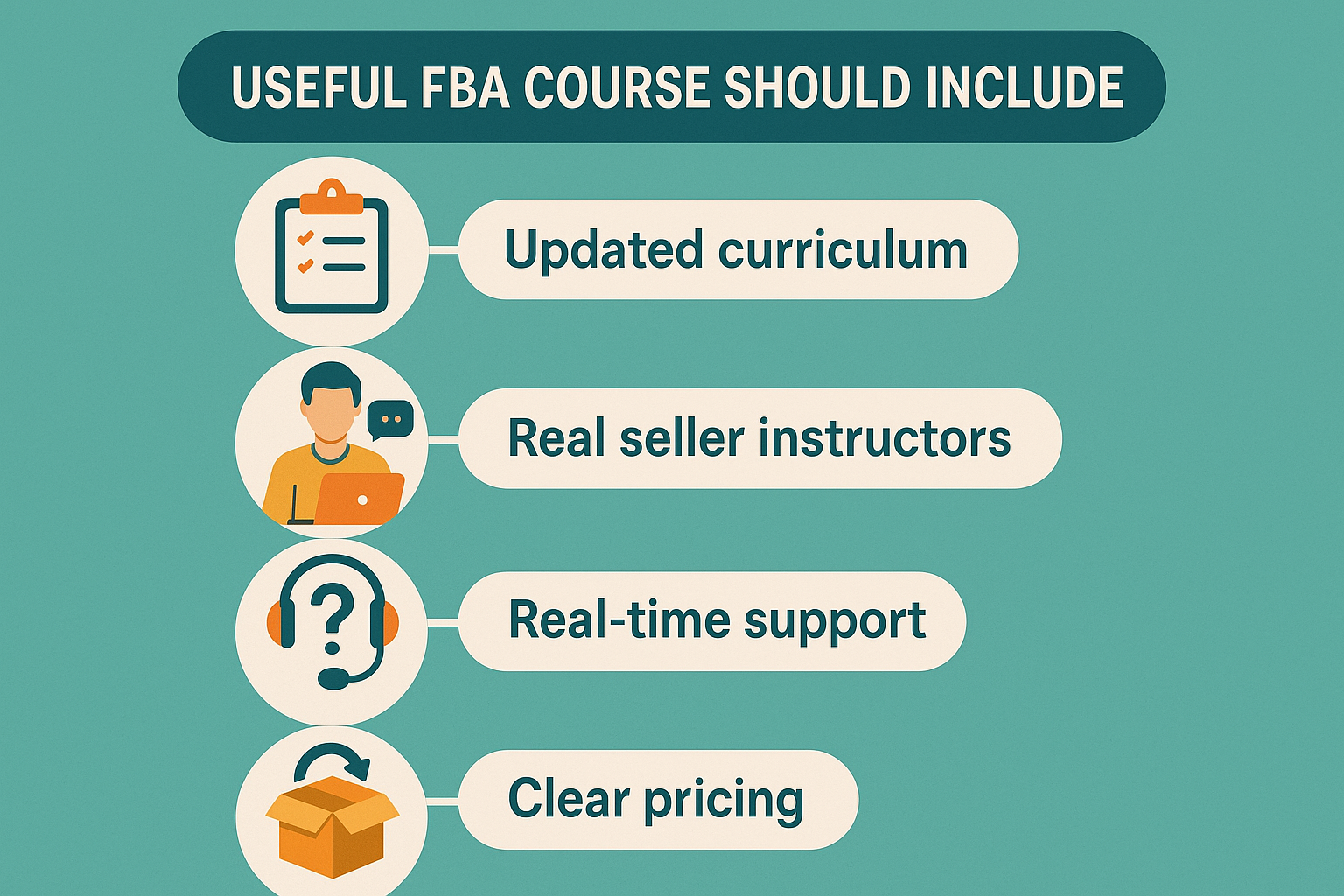
Here’s What a Useful FBA Course Should Include
Not all good courses are expensive. And not all expensive courses are good. But if you’re paying anything at all, these are the things you should expect:
- Updated curriculum. Amazon changes constantly. Your course should reflect 2025 rules, not 2019 strategies.
- Real seller instructors. Look for people with current storefronts, not just content portfolios. If they’ve sold six- or seven-figures on Amazon and show proof, you’re in better hands.
- Real-time support. Even if it’s not 1-on-1 coaching, there should be a forum, live chat, or regular office hours where someone actually answers your questions.
- Full lifecycle coverage. If the course ends right after listing your product, that’s a problem. You need help with ads, reviews, scaling, and handling slow sales, too.
- Clear pricing with no upsells. Beware the $997 course that turns into a $5,000 “inner circle” upgrade two weeks in. Transparency matters.
Should You Start With Free Resources Instead?
Honestly, yes. If you’re still getting a feel for the Amazon space or trying to figure out whether this business model suits your skills and mindset, there’s no reason to jump into a paid course right away. There’s a surprising amount of good, free content out there if you’re willing to spend a bit of time digging. You can learn the basics, understand how the FBA system actually works, and even get a pretty decent grip on things like product research, listing optimization, and early-stage advertising without spending a dime.
Plenty of sellers manage to launch their first product using free guides, videos, and podcasts, and while it might take a little more effort to piece everything together, it’s a solid way to build a foundation without the pressure of feeling like you’re wasting money. Once you’ve done your homework and you’re seriously preparing to launch, that’s when investing in something more structured or personalized can start to make sense. But in the beginning? You’re probably better off learning for free, testing ideas, and seeing if this is something you actually want to pursue before paying for anything.
But What About Consulting Instead?
If you’re more focused on execution than theory, hiring an Amazon FBA consultant might be smarter than taking a course.
Here’s when that makes sense:
- You already have a brand or product idea and need fast traction.
- You learn better through feedback than videos.
- You’re short on time and want to skip the guesswork.
- You’ve launched already but are stuck in a rut.
Consultants typically cost more than courses on a monthly basis but can deliver faster ROI if they help you fix what’s broken or scale what’s working.
The key is to vet them hard:
- Ask for client case studies.
- Look for transparency in pricing and scope.
- Avoid agencies that lock you into long-term contracts without results.
So… Are Amazon FBA Courses Worth It?
Sometimes. But not always. And definitely not for everyone.
If you:
- Learn best from structured, hands-on teaching
- Are committed to launching a real business
- Want to avoid common (and expensive) mistakes
- Have some budget left over after buying inventory
…then yes, a course can be a smart investment.
But if:
- You’re hoping to “get rich quick”
- You’re working with a shoestring budget
- You haven’t even opened Seller Central yet
- You expect the course to do the work for you
…then skip it for now. You’re better off with free resources and real-world experimentation.

What Comes After the Course? Data That Actually Moves the Needle
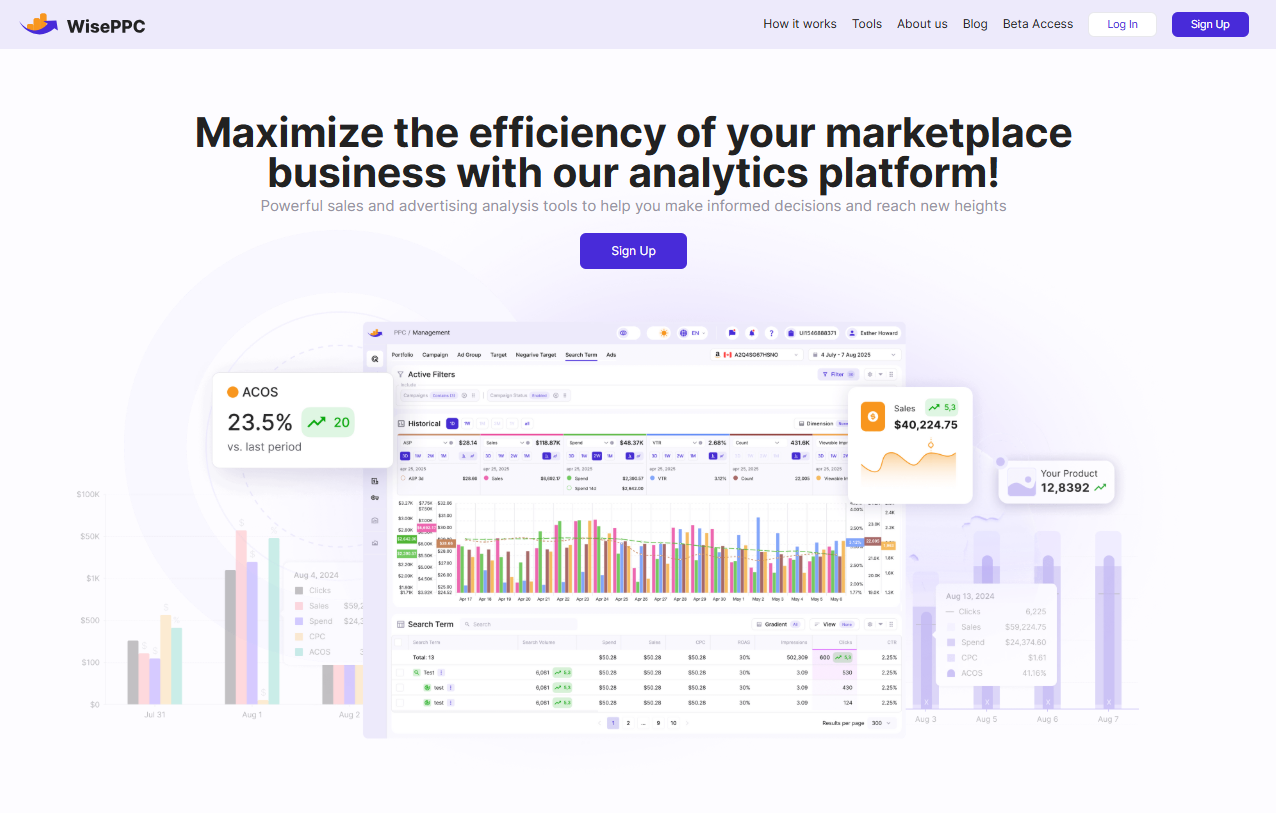
If you’re learning how to sell on Amazon, the right course might help you get started. But once you’re alive, success comes down to execution, and that’s where we come in. At WisePPC, we don’t teach theory. We give you the tools to understand what’s working, what isn’t, and what to do next. From advertising performance to sales breakdowns, we track the metrics that actually affect your bottom line.
FBA courses can give you a strong foundation, but they won’t show you how your campaigns behave in real time or help you react to changing trends. We built WisePPC to solve that. Whether you’re managing a single product or a large catalog, our platform helps you make smarter, faster decisions using real marketplace data. You’ll stop guessing and start optimizing, because once you’re out of learning mode, clarity and control are what drive growth.
Final Takeaway: There’s No Shortcut, But There Is a Smarter Way
No FBA course is going to build your business for you. At best, it gives you a roadmap, a few guardrails, and maybe a bit of encouragement when things get messy.
If you find one that’s credible, updated, and led by actual sellers, it can help you move faster and avoid the worst landmines. But no matter how good the course, it only works if you actually show up and do the work.
And that’s the part no one can sell you.
FAQ
1. Do I really need a course to start selling on Amazon?
No, not really. Plenty of sellers figure it out on their own using free resources and trial-and-error. But if you’re the type of person who values structure or wants to avoid wasting time and money on rookie mistakes, a good course can help you move faster and more confidently.
2. Why are some FBA courses so expensive?
Usually because they include extras like live coaching, community access, and extended support. The high price doesn’t always mean high quality though. Sometimes you’re paying for marketing. The real question is whether the course helps you launch and grow, not just fills up your inbox with upsells.
3. Can I succeed with just free content?
You can, but it’ll take more time and effort. Free content is scattered and inconsistent – you’ll have to sift through outdated videos, conflicting advice, and lots of fluff. If you’re patient and scrappy, it’s doable. Just expect a longer learning curve.
4. How do I know if a course is legit?
Start with the instructor. Have they actually sold on Amazon? Can they back it up with real numbers or recent case studies? Check reviews outside of their own website, and if the course makes wild promises about how fast you’ll make money, take that as a red flag.
5. What if I bought a course and still feel stuck?
It happens. Courses can only take you so far – execution is still on you. If you’re feeling stuck, consider joining a seller group, booking a coaching session, or using tools like WisePPC to help you better understand what’s going on under the hood. Sometimes you don’t need more information, just better visibility into what’s actually happening in your business.
6. Are FBA courses worth it in 2025, or is everything outdated?
Some courses age badly, especially ones that rely on tactics Amazon no longer allows. But the good ones keep their content fresh and update it regularly to reflect changes in the marketplace. Always check when the course was last updated, if it hasn’t been touched in over a year, move on.
7. What should I focus on after finishing a course?
Start implementing, quickly. The value of a course fades fast if you don’t apply what you’ve learned. Launch a test product, track your results, and get comfortable making decisions based on real data. That’s where the learning really begins.
 No credit card required