
 EN
EN  ES
ES  FR
FR  DE
DE  IT
IT  KO
KO  JA
JA  ZH
ZH  AR
AR  PT
PT  TR
TR PL
PL
Selling on Amazon has many entry points, but private labels stand out for one reason: you own the brand. Instead of chasing deals on someone else’s products, you shape the packaging, the listing, and the story. That control can be the difference between another side hustle and a business that scales. The path isn’t instant – it takes research, investment, and steady execution – but once the pieces fit, you’re not competing for scraps. You’re building something with your name on it, and the market responds to that clarity.
Why Amazon FBA Private Label Is Worth It in 2025
In 2025, private label on Amazon FBA is less about jumping on a quick trend and more about building something with staying power. Customer demand is still climbing, but buyers are picky – they want products that feel unique and trustworthy, not another copy of what’s already on the shelf. That’s where private label gives you an edge: you own the branding, control the pricing, and decide how your product shows up in the marketplace. Pair that with FBA’s logistics machine – fast shipping, customer service, and storage handled for you – and you get room to focus on what actually drives growth. The upfront work is heavier, sure, but the payoff is a business that scales beyond one product and keeps momentum as the market shifts.

Role of PPC in Amazon Private Label Growth (Wise PPC Integration)
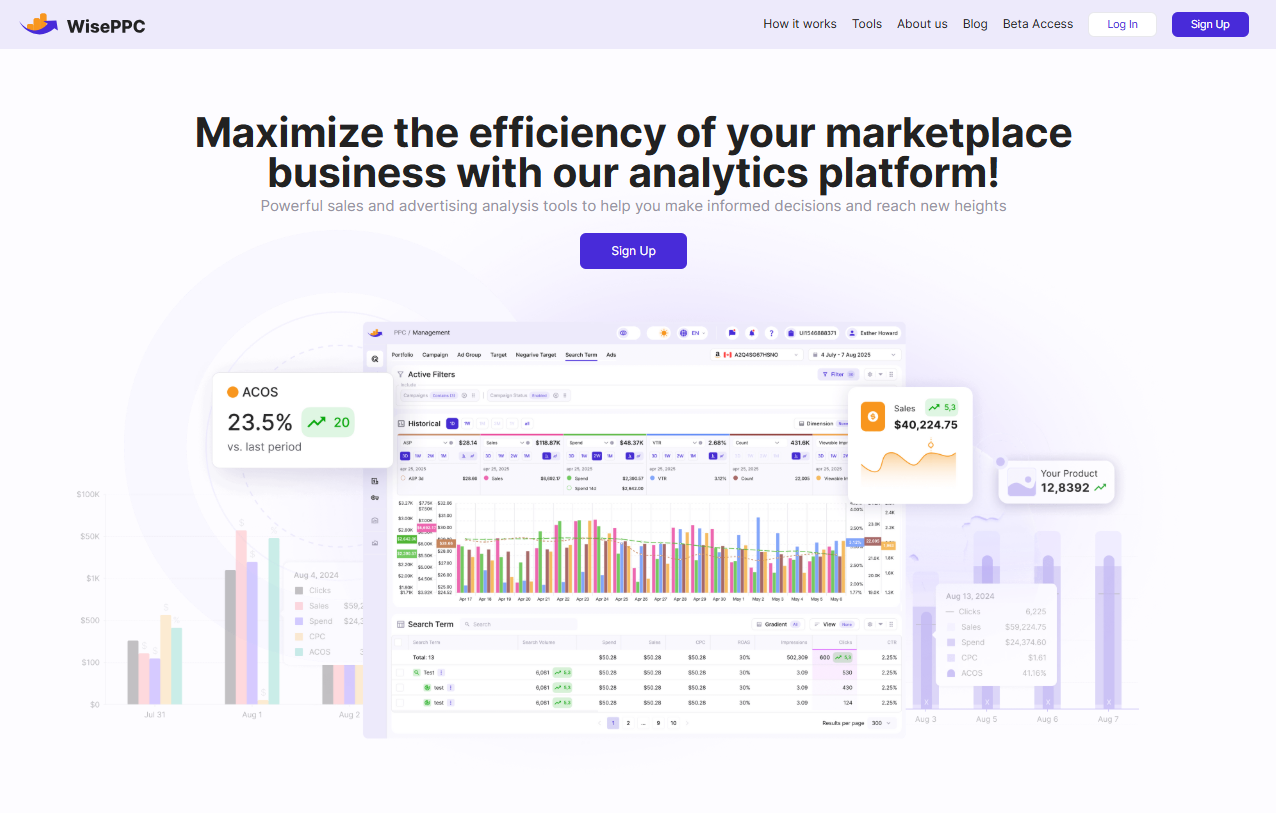
For private label sellers, PPC isn’t just advertising – it’s the engine that drives visibility, reviews, and ranking. You can have the best product and packaging, but without smart campaigns your listing won’t get the traction it needs. That’s why we built WisePPC around clear analytics and automation. We help you see exactly what’s fueling growth – ads or organic reach – so you can stop wasting budget and focus on bids, placements, and keywords that move the needle. Whether you manage ten products or a full catalog, our tools scale with you, showing performance in real time instead of leaving you to guess from last week’s numbers.
We keep it simple: better data, faster action, smarter growth. That’s the role PPC should play in any Amazon private label strategy, and it’s the role we help you master. If you want to see how other sellers use it day to day, follow us on LinkedIn, Facebook, or Instagram where we share updates, case studies, and practical insights. We know the marketplace changes fast, so staying connected matters as much as staying optimized.
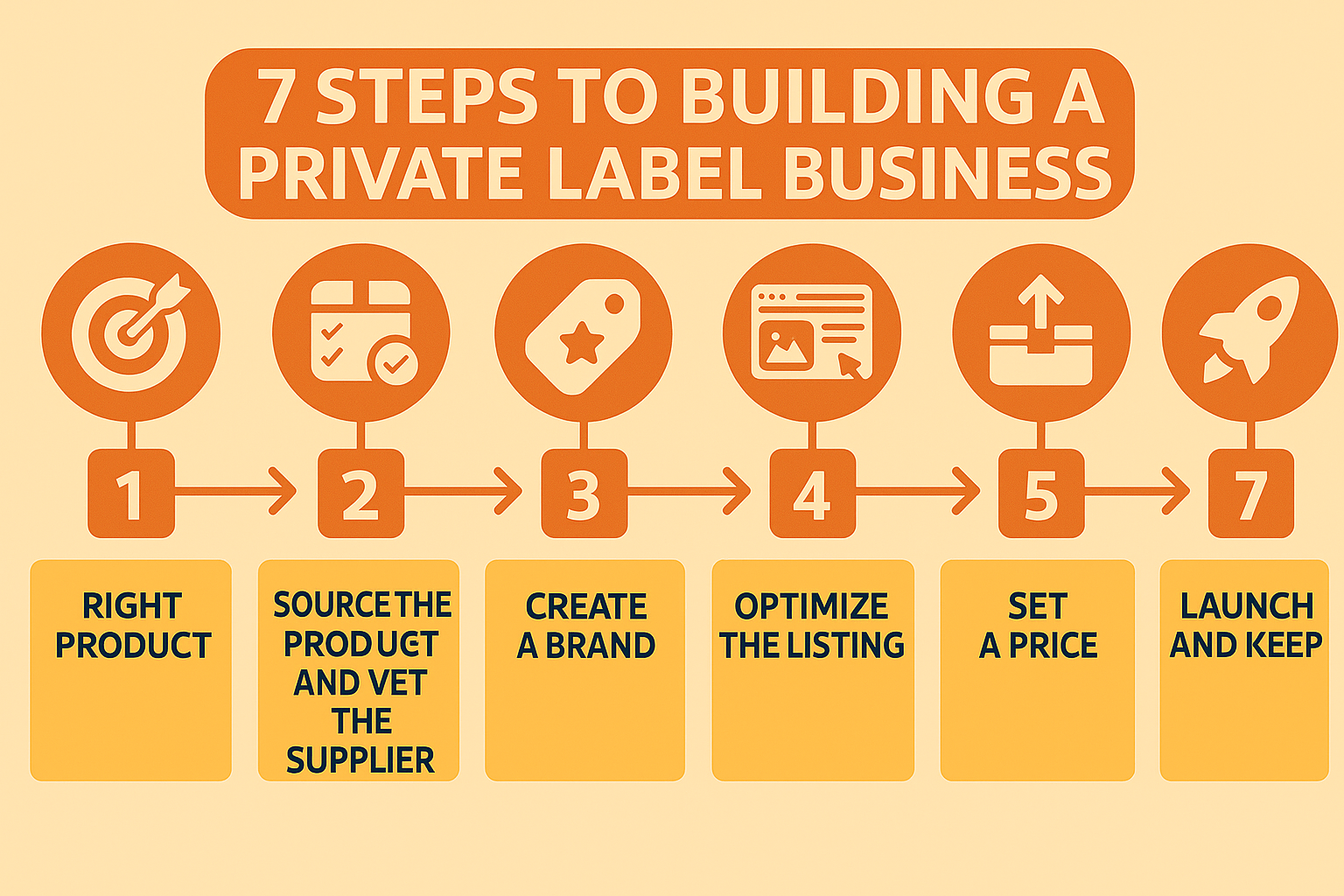
The 7 Steps to Building a Private Label Business on Amazon FBA
Starting a private label brand on Amazon isn’t just about listing a product and hoping for sales. Each step matters – and skipping one usually comes back to bite you later. Below is a clear, structured way to approach the process. It’s not flashy, but it works if you stick with it and make decisions based on real data, not gut feeling.
1. Find the Right Product (Without Guessing)
This is where most sellers stall – or worse, rush. Picking a product because it looks cool or “feels” profitable rarely ends well. You need to work with actual numbers:
- Use research tools like Helium 10, Jungle Scout, or Black Box to analyze demand and seasonality.
- Look for signs of life: 300+ sales/month, pricing between $15-$50, and listings with under 500 reviews.
- Watch for weaknesses in competitor listings – bad photos, vague descriptions, slow shipping. Those are cracks you can fill.
- Stay away from fragile, oversized, or heavily regulated categories unless you’re ready for the extra work.
Tip: Look for products rated under 4 stars. If reviews are complaining, you’ve just found your improvement roadmap.
2. Source the Product and Vet the Supplier
Once you’ve narrowed down a product, it’s time to find someone who can actually make it – and not screw up your first shipment.
- Start with Alibaba, 1688, or Global Sources.
- Order samples from at least 3 suppliers, even if one looks perfect on paper.
- Ask tough questions about lead time, packaging capabilities, quality control process, and minimum order quantities (MOQ).
- Negotiate, but don’t just chase the cheapest quote. Cutting corners early usually means bad reviews later.
Pro move: Build a backup supplier early. If your main one flakes, you won’t be left scrambling during peak season.
3. Create a Brand That Doesn’t Feel Generic
A brand isn’t just a name – it’s how your product stands out in a crowded search result. You want something that feels intentional, even if it’s simple.
- Choose a short, clean name that can stretch across multiple products if you scale later.
- Design a logo that still looks decent at tiny sizes (mobile thumbnails matter).
- Don’t overcomplicate the packaging – but make sure it looks like something you would buy.
- Add basic inserts (thank you cards, care instructions, QR code to support) to encourage reviews.
Don’t skip: Register your brand with Amazon Brand Registry. It gives you access to A+ Content and protects your listing from hijackers.
4. Build and Optimize the Listing
Your product page is your storefront. If it’s half-baked, your ad spend goes to waste and conversion tanks.
- Use keyword tools like Magnet, Cerebro, or even Amazon auto-suggestions to find what people are actually searching.
- Title: Lead with your main keyword, include brand name and key features.
- Bullets: Focus on benefits, not just specs. What problem does this solve?
- Description: Keep it structured, skimmable, and aligned with your brand tone.
- Images: Don’t settle for mockups. Show the product in real-world use, add infographics, and include a video if you can.
Bottom line: If your listing doesn’t answer buyer questions in 5 seconds, you’ll lose them.
5. Set a Price That Makes Sense
Pricing isn’t guesswork – it’s math plus positioning. You’re not the cheapest option on page one, but you’re not luxury either. Find the middle.
- Look at your landed cost (product + shipping + FBA fees + packaging + advertising).
- Aim for a 30-40% margin at your base price.
- Stay within ±20% of your main competitors’ pricing. Too low = looks sketchy. Too high = gets ignored.
You can test pricing later with coupons, lightning deals, or limited-time offers. But don’t launch with panic pricing – you can’t raise the price easily once people anchor to your discount.
6. Ship to FBA and Prep for Launch
Now that your product is ready to go, it needs to physically get to Amazon. This step involves logistics, customs, and some light headache-management.
- Use a freight forwarder, especially if it’s your first time importing. They handle port-to-warehouse, customs clearance, and prep.
- Choose sea shipping if you’re ahead of schedule. Go air freight if you’re late and can eat the cost.
- Prep includes: barcode labeling, polybags if required, and making sure the shipment meets Amazon FBA rules.
- Create a shipping plan in Seller Central, send inventory to multiple FBA warehouses if prompted.
Tip: Use this downtime to test your ads, polish your storefront, and plan your review strategy.
7. Launch and Keep Momentum
Launch week sets the tone. It’s when your product gets a temporary boost in visibility, so don’t waste it.
- Start with auto and manual PPC campaigns. Let Amazon gather data, then fine-tune.
- Target branded keywords and competitor ASINs.
- Use external traffic (Google Ads, influencers, niche forums) to diversify your reach.
- Offer a small discount or bonus to incentivize first-time buyers.
- Ask for reviews – but don’t break TOS. Use inserts and follow-up messages to encourage feedback.
Keep tracking everything. If something’s not working, tweak it early. The first 30-60 days are where winners break out and slow listings get buried.
Best Practices for Scaling Your Private Label Business
Getting to your first sale is one thing. Turning that sale into a predictable, growing business is something else entirely. Scaling doesn’t mean doing more of the same – it means doing it smarter, with tighter systems and fewer blind spots. Below are a few practices that can make the difference between a store that plateaus and one that builds momentum over time.
- Expand when your first product holds steady: One solid ASIN is better than five messy ones. Scale when performance is predictable, not just “good enough.”
- Use bundling to shift out of direct price fights: A smart bundle makes it harder for competitors to copy and gives you more control over perceived value.
- Track fewer metrics, but track them better: Focus on what actually moves your margins – TACOS, sell-through, refund rate. Everything else is noise if it’s not tied to profit.
- Stay flexible with fulfillment: Have a backup outside FBA. If limits hit or shipments stall, you’ll be glad you did.
- Automate what burns your time: If you’re doing the same ad adjustments every week, script it or systematize it. Scaling means working on the business, not in it.
- Treat your brand like infrastructure: Lock down assets. Keep visuals and messaging consistent. It builds trust quietly – and that stacks over time.
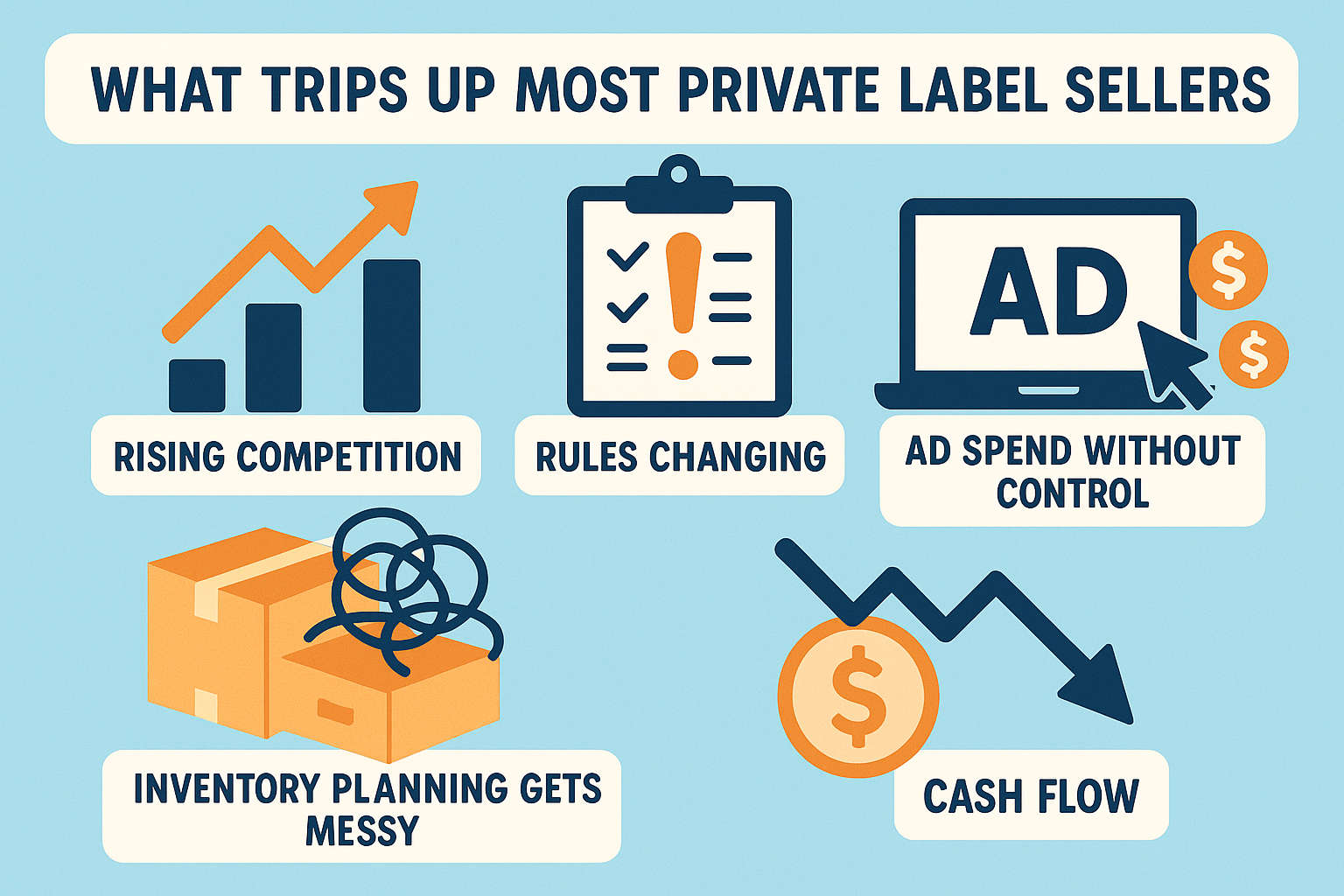
What Trips Up Most Private Label Sellers (and How to Stay Ahead)
Every business model has friction. Amazon private label gives you control, but it also comes with its own blind spots. These aren’t theoretical issues – they’re the things that creep in when you’re juggling suppliers, campaigns, inventory, and cash flow at once. Here’s what to watch for, and how to stay one step ahead.
Rising Competition and Product Clones
If your product starts doing well, someone’s going to notice – and sometimes that means getting copied. It could be other sellers duplicating your listing style, or even your supplier offering the same design to the next buyer. It’s not personal, it’s the marketplace. The key is to build in things they can’t swipe overnight: a stronger brand, better presentation, and listings that earn trust on the first scroll. If you’re visible and defensible, you stay ahead.
Amazon’s Rules Keep Changing
You can follow every rule today and still get flagged tomorrow. Amazon doesn’t always give sellers much notice when it rolls out new restrictions or changes how metrics are tracked. A listing that was compliant last week could suddenly get suppressed. Staying up to date isn’t optional – it’s part of the job. Make time for it. Talk to other sellers. Ask dumb questions. That’s how you avoid dumb problems.
Inventory Planning Gets Messy Fast
You don’t need to sell thousands of units a month to hit stock issues. All it takes is one delay in production or a misread on demand. Once you run out, it’s hard to regain the ranking you lost. But over-order and you tie up cash in slow-moving inventory. Forecasting needs to be treated like its own function, not just a checkbox before launch. A few small adjustments here can save months of stress down the line.
Ad Spend Without Enough Control
It’s one thing to run ads. It’s another to understand what those ads are actually doing. If your ad spend climbs but your profit margin doesn’t, you’re burning money. We’ve seen it too often – good products with decent listings just bleeding cash because there’s no feedback loop. You need visibility into what’s working, what’s not, and where to course-correct. Otherwise, PPC becomes a guessing game.
Cash Flow That Can’t Keep Up
Even if sales are solid, the money doesn’t always land where you think it will. Between Amazon’s payout delays, freight costs, PPC bills, and restocking cycles, cash flow can feel like a moving target. That’s when problems stack up – returns hit, your next order is due, and suddenly you’re short. Managing this isn’t just about spreadsheets, it’s about pacing your growth so you don’t stretch too thin too early.
Conclusion
A private label on Amazon isn’t a secret shortcut – it’s a build-it-yourself path that rewards clarity, consistency, and a bit of grit. The upside? You’re not just selling someone else’s product. You’re shaping what the customer sees, clicks, and remembers. And once you’ve gone through the seven steps – research, sourcing, branding, listing, pricing, fulfillment, and launch – you’re no longer just testing the waters.
You’re building an asset that scales on your terms. If you treat each step with intention and lean on the right tools, you’ll skip a lot of the pain that slows down most sellers. Don’t chase hacks. Build systems. And when in doubt – test, track, and tighten.
FAQ
1. Can I private label a product from Alibaba and sell it on Amazon?
Yes, but don’t just pick the first thing that looks popular. Always ask for samples, check quality, and make sure it’s not under a patent or trademark. Just because it’s listed doesn’t mean it’s fair game.
2. Do I need permission from the manufacturer to create a private label?
Not unless you’re trying to white-label a protected product. If it’s a generic item and you’re building your own brand around it, you’re good – as long as you’re not violating IP. Still smart to check before placing a bulk order.
3. How much money do I need to start an Amazon private label business?
Most sellers need between $3,000 and $10,000 to cover product development, inventory, shipping, ads, and FBA fees, with an average starting cost around $5,000. Can you do it for less? Maybe – but you’ll have to cut corners.
4. How long does it take to start seeing results?
It’s rarely overnight. If you’re launching with a solid plan, expect a few months to see traction. Sales might come faster, but profit and consistency usually take longer. The goal is momentum – not just a spike.
5. Do I need to design everything myself?
Nope. You don’t have to be a designer or copywriter to get this right. You can outsource branding, packaging, and listings without draining your budget. What matters is knowing what good looks like – and giving clear direction.
 No credit card required