
 EN
EN  ES
ES  FR
FR  DE
DE  IT
IT  KO
KO  JA
JA  ZH
ZH  AR
AR  PT
PT  TR
TR PL
PL
Starting a business on Amazon doesn’t always mean stocking your garage with boxes or juggling endless shipping labels. Dropshipping offers a way in without the upfront inventory, giving sellers the chance to focus on finding the right products and building a store customers trust. Still, it’s not as simple as throwing up a few listings and waiting for sales to roll in. Amazon has strict rules, margins can be thin, and the competition is real.
This guide breaks down what dropshipping on Amazon actually looks like in practice – what works, what doesn’t, and the first steps you’ll need to take if you want to give it a serious shot.
What Dropshipping Really Means on Amazon
At its simplest, dropshipping is about stepping into the role of a middleman. You set up the product listing, a customer places an order, and instead of boxing it up yourself, you pass the details to a supplier who takes care of storage, packaging, and delivery. On paper it sounds straightforward, but Amazon’s version of dropshipping has some very specific rules that shape how it actually works.
When you sell this way on Amazon, you’re not just passing orders along, you’re expected to stand as the official seller. That means every invoice, packing slip, and bit of paperwork must carry your name rather than your supplier’s. You’re also the one Amazon holds accountable for returns and customer service, even if the product never passes through your hands. And one thing Amazon is clear about: you can’t buy from another retailer like Walmart or Target and have them ship straight to the buyer. That falls into the category of retail arbitrage, which Amazon doesn’t allow.
In short, Amazon wants the customer experience to feel seamless. From the buyer’s perspective, they should always know they’re dealing with you, not a third party hidden in the background. If your supplier’s branding slips through, it breaks that chain of trust, and that can quickly put your selling privileges at risk.
Why People Choose Dropshipping
There’s a reason dropshipping keeps coming up in e-commerce conversations: it’s relatively easy to start. Let’s look at the upside.
- Low startup cost: No need to buy bulk inventory or rent storage space.
- Flexibility: You can test different products without committing thousands of dollars upfront.
- Scalability: Adding more items to your store doesn’t mean adding more physical work.
- Work from anywhere: As long as you have Wi-Fi and a reliable supplier, you can manage your business from anywhere.
For beginners, it’s one of the simplest ways to dip a toe into selling online.
The Challenges You Can’t Ignore
On the flip side, dropshipping is not the shortcut to overnight riches that some YouTube ads make it out to be.
- Thin profit margins: Most sellers report profits in the range of 5-20%. With Amazon fees on top, you need volume to make it worthwhile.
- Supplier risk: If your supplier ships late, sends the wrong product, or includes their branding, you’re the one who gets blamed.
- Competition: Popular products are often flooded with sellers offering the exact same thing.
- Limited control: You don’t get to design the packaging, add custom inserts, or build a strong brand presence unless you move into private label later.
The point here isn’t to scare you off but to set expectations. Dropshipping works, but only if you go in with eyes open.
How to Get Started with Amazon Dropshipping
If you’re serious about running a dropshipping business on Amazon, you’ll need to approach it like a real operation, not just a side hustle. That means setting up the right foundation, choosing products strategically, working with reliable partners, and learning how to market and support your store so it actually lasts. Let’s walk through the process step by step.
Step 1: Create Your Amazon Seller Account
Before you can start selling, you’ll need an Amazon Seller Central account. Amazon gives you two options, and the right one depends on how serious you are about your dropshipping plans:
- Individual plan: No monthly fee, but you’ll pay $0.99 for every product sold. It’s best for testing the waters or if you’re not expecting more than 40 sales in a month.
- Professional plan: A flat $39.99 per month, regardless of how much you sell. This plan comes with extra perks like bulk listing tools, advanced reports, and access to advertising features that can make scaling your store easier.
If you’re just dabbling, the Individual plan keeps things low-risk. But once you start moving at a steady volume, the Professional plan usually pays for itself quickly, and the added features can save you time and headaches as your business grows.
Step 2: Choose the Right Products
The product you choose will make or break your dropshipping business. Here’s how to think about selection:
- Look for categories with consistent demand, like home goods, pet supplies, and electronics accessories.
- Avoid products that require special handling, such as perishables or hazmat items.
- Check competition levels. If a product page already has 200 sellers, you’re unlikely to stand out without a pricing war.
- Pay attention to reviews. Products with thousands of negative reviews are red flags.
Third-party tools can help you filter by sales, competition, and keyword demand.
Step 3: Find Reliable Suppliers
This is the hardest part of dropshipping and the step most new sellers underestimate. A good supplier is one that:
- Ships quickly (ideally within 5-7 business days in the U.S.).
- Provides clean, unbranded packaging.
- Offers accurate inventory tracking.
- Is familiar with Amazon’s dropshipping requirements.
You can find suppliers through directories, trade shows, or multiple platforms. If you’re considering an overseas supplier, keep in mind shipping times may frustrate Amazon customers used to two-day Prime delivery.
Step 4: Build and Optimize Your Listings
Once you know what you’ll sell and who will ship it, the next job is creating listings that actually convert.
- Title: Use keywords naturally while making it clear what the product is.
- Images: High-resolution, multiple angles, and ideally lifestyle photos.
- Bullet points: Focus on benefits, not just features.
- Description: Answer customer questions and address pain points.
- Pricing: Aim for a margin of 15-30% after Amazon fees and supplier costs.
Remember, Amazon is a search engine as much as it is a store. The right keywords and formatting can make the difference between being buried on page 20 or showing up on the first page.
Step 5: Market Your Products
Listing your product isn’t enough. You’ll need to drive visibility. Amazon offers a few key tools for this:
- Sponsored Products Ads: Appear in search results when customers type in specific keywords.
- Sponsored Brands: Banner-style ads that showcase multiple products.
- Amazon Vine: A program that helps you gather early, trustworthy reviews.
Outside of Amazon, you can also use social media, influencers, or even SEO-driven blogs to drive traffic. Sellers who diversify their marketing often see better results than those who rely solely on organic Amazon searches.
Step 6: Handle Customer Service the Right Way
Amazon holds sellers to high standards for response times, refund processing, and issue resolution. Even if you never touch the product, you are the point of contact. That means:
- Responding to messages quickly.
- Offering refunds when necessary.
- Keeping customers updated on shipping status.
- Taking responsibility for mistakes, even if they came from your supplier.
Good service isn’t just about keeping one customer happy. It affects your seller rating, which in turn affects whether you win the Buy Box and show up in search results.

How Amazon Dropshipping Differs From Other Models
Many new sellers compare dropshipping to FBA, FBM, or retail arbitrage. Here’s the quick breakdown:
- Dropshipping: No inventory, low startup costs, but thin margins and less control.
- FBA (Fulfillment by Amazon): You send inventory to Amazon’s warehouses, they handle everything else. Higher upfront costs but often better customer experience.
- FBM (Fulfilled by Merchant): You hold inventory and handle shipping yourself. More work, but full control.
- Retail Arbitrage: Buying discounted products from retail stores and reselling. Easy to start, but not scalable.
- Private Labeling: Creating your own branded product. Highest cost and effort but best long-term potential.
Think of dropshipping as the training wheels version of e-commerce. It’s a way to learn the ropes, test product ideas, and decide whether to scale into something more sustainable like FBA or private label.
Common Mistakes New Dropshippers Make
One of the biggest traps new dropshippers fall into is putting all their trust in a single supplier. It seems convenient at first, but when that supplier suddenly runs out of stock, your listings take the hit and customers end up frustrated.
Another mistake is treating Amazon’s rules too casually. Something as small as letting your supplier’s name slip onto an invoice can flag your account, and Amazon doesn’t hesitate to suspend sellers over details like that. Many beginners also underestimate how much customer service matters. Even if you never see the product, you’re still the one buyers turn to with questions or complaints, and how you handle those moments directly shapes your ratings and future sales.
Finally, there’s the temptation to chase whatever product is trending on social media. Those quick fads might make a few sales, but they rarely lead to a sustainable business. Long-term success comes from choosing products with steady demand and building trust with your customers, not hopping from one craze to the next.
Tips for Long-Term Success
Making your first few sales with dropshipping is exciting, but turning those early wins into a business that lasts is a whole different game. It’s easy to get caught up in chasing quick profits or copying whatever strategy you just saw on YouTube, but long-term success takes a bit more thought. It’s not about being flashy; it’s about being consistent. The sellers who stick around are the ones who treat this like a real business from the start, not just a side hustle they hope will blow up overnight.
The truth is, dropshipping on Amazon can absolutely work, but only if you build it on solid habits. Test small, track everything, and focus on learning instead of just earning. Here are a few practical ways to set yourself up for the long run:
- Start small but think big: test a few products, then double down on what works.
- Track your margins closely. Even small fee changes can eat profits.
- Don’t be afraid to mix models: some sellers use dropshipping to test products, then switch winning items to FBA for scale.
- Invest in learning Amazon SEO. Visibility is often the hardest part.
- Treat it as a real business. Keep proper records, pay taxes, and build relationships with reliable partners.

How WisePPC Help Dropshippers Grow Smarter on Amazon
At WisePPC, we know that dropshipping isn’t just about listing products and hoping they sell – it’s about understanding what’s really working behind the scenes. That’s why we built a platform that helps sellers dig deep into performance data and actually do something with it. Whether you’re testing your first product or managing a full catalog, we give you the tools to see what’s driving sales, where money’s leaking out, and how your ads are actually performing. No guessing, no spreadsheets, just clean insights.
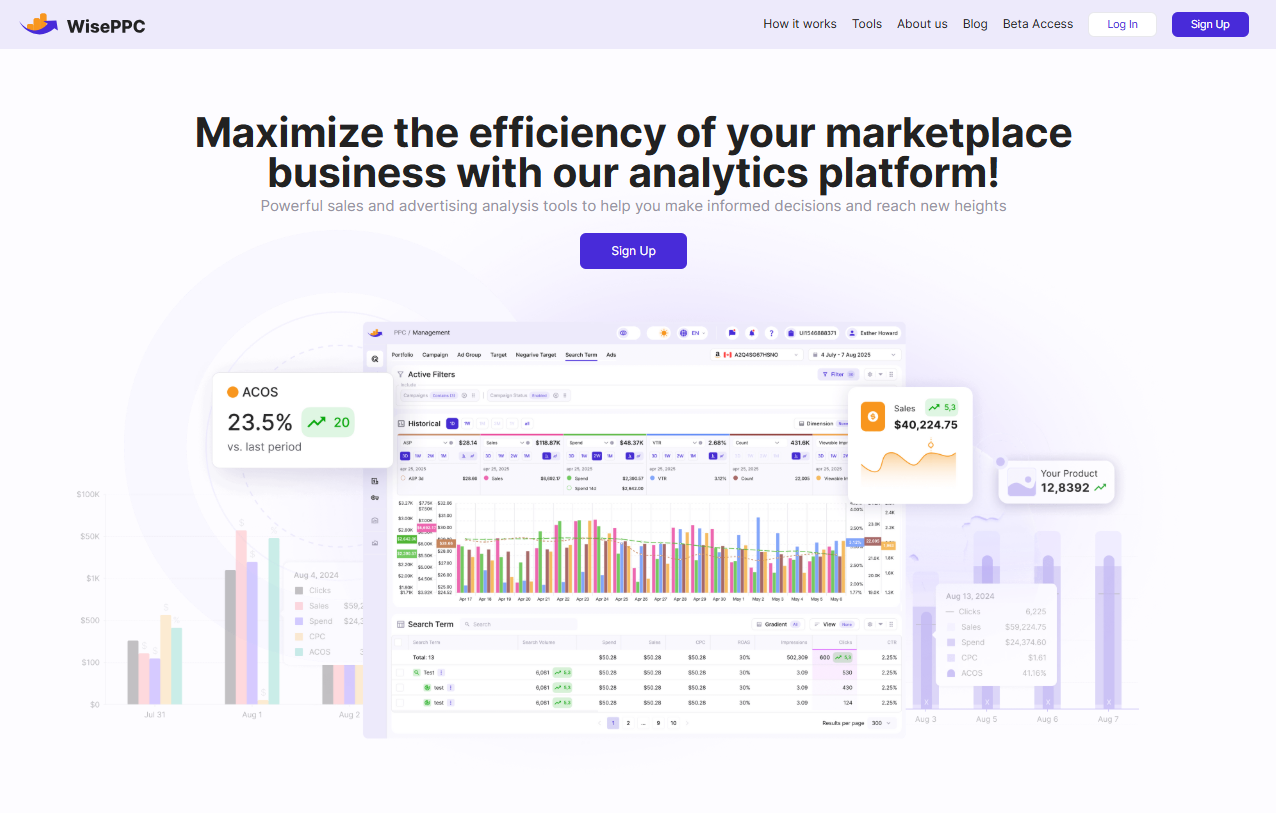
We’re not just another analytics tool – we’re an Amazon Ads Verified Partner, which means everything we build plays nicely with Amazon’s systems. From real-time tracking to automated campaign suggestions, our dashboard is built to help you make smarter, faster decisions. If you’re using dropshipping to test the waters before scaling with FBA or building a long-term strategy, we’ll help you optimize every step of the way. You focus on growth, we’ll take care of the clarity.
Final Thoughts
Dropshipping on Amazon isn’t effortless, but it can be a practical entry point into e-commerce if you approach it strategically. The low upfront investment makes it appealing, but the trade-offs are real: lower margins, dependence on suppliers, and strict compliance with Amazon’s rules.
If you’re serious, focus on building a strong foundation: choose products carefully, vet your suppliers, optimize your listings, and deliver great customer service. Over time, dropshipping can be more than just a side hustle. It can be a stepping stone to bigger opportunities like private label brands or scaling with FBA.
FAQ
1. Do I need a business license to start dropshipping on Amazon?
Not right away. Amazon doesn’t require a business license to open a seller account, but if you’re serious about staying compliant and scaling, it’s smart to set up a proper business structure sooner rather than later. It helps with taxes, supplier agreements, and keeping things legit.
2. Can I use multiple suppliers or do I have to stick with one?
You can (and probably should) work with more than one supplier. Relying on just one is risky, if they go out of stock or delay shipping, you’re the one who ends up with unhappy customers and potential account issues. Diversifying gives you more control.
3. What happens if a customer wants to return something?
Returns can be tricky with dropshipping, but not impossible. You’ll need to coordinate with your supplier about their return policy, and in most cases, you’ll still be responsible for handling the refund. Always make your return policy crystal clear to avoid headaches.
4. Is dropshipping allowed under Amazon’s rules?
Yes, but only if you follow their exact guidelines. That means you can’t ship orders with someone else’s branding or include third-party invoices. Everything has to look like it came from you. If Amazon sees you cutting corners, your account could be at risk.
5. How much money do I need to get started?
Technically, not much. You don’t need to buy inventory upfront, and the Individual seller plan has no monthly fee. But you’ll still need cash for tools, ads, shipping costs (sometimes), and returns. Starting with at least a few hundred dollars makes things smoother.
 No credit card required