
 EN
EN  ES
ES  FR
FR  DE
DE  IT
IT  KO
KO  JA
JA  ZH
ZH  AR
AR  PT
PT  TR
TR PL
PL
If you sell on Amazon, product condition is not a small technical detail. It is one of the first things buyers use to judge whether they trust a listing. For sellers, especially those working with used, refurbished, or returned inventory, getting condition right matters more than most people expect.
This guide explains how Amazon product condition guidelines work, why they matter, and how to apply them correctly when listing products today. The goal is simple: fewer problems, fewer returns, and clearer expectations on both sides.
What Product Condition Means on Amazon
On Amazon, product condition describes the actual physical and functional state of the item you ship to the customer. It is not about marketing language or how clean the listing looks. It is about reality.
Conditions range from brand-new, factory-sealed items to heavily used products that still function but show clear wear. Amazon uses standardized condition guidelines to keep listings consistent across millions of sellers and categories.
Before selecting a condition, sellers are expected to inspect each item carefully. Scratches, missing accessories, worn packaging, and signs of prior use all affect which condition applies. Combined with photos and accurate descriptions, condition selection helps customers understand exactly what they are buying.
Why Condition Accuracy Matters More Than You Think
Incorrect condition selection is one of the most common reasons for returns and negative feedback. When a buyer receives an item that does not match the listed condition, trust breaks immediately.
From Amazon’s side, repeated condition issues can impact:
- Order defect rate
- Return reasons marked as “not as described”
- Account Health Rating
- Listing eligibility in certain categories
On the positive side, sellers who consistently list condition accurately often see better conversion rates. Buyers are usually fine with wear or missing packaging when it is disclosed clearly upfront.
The Main Product Conditions You Can Use on Amazon
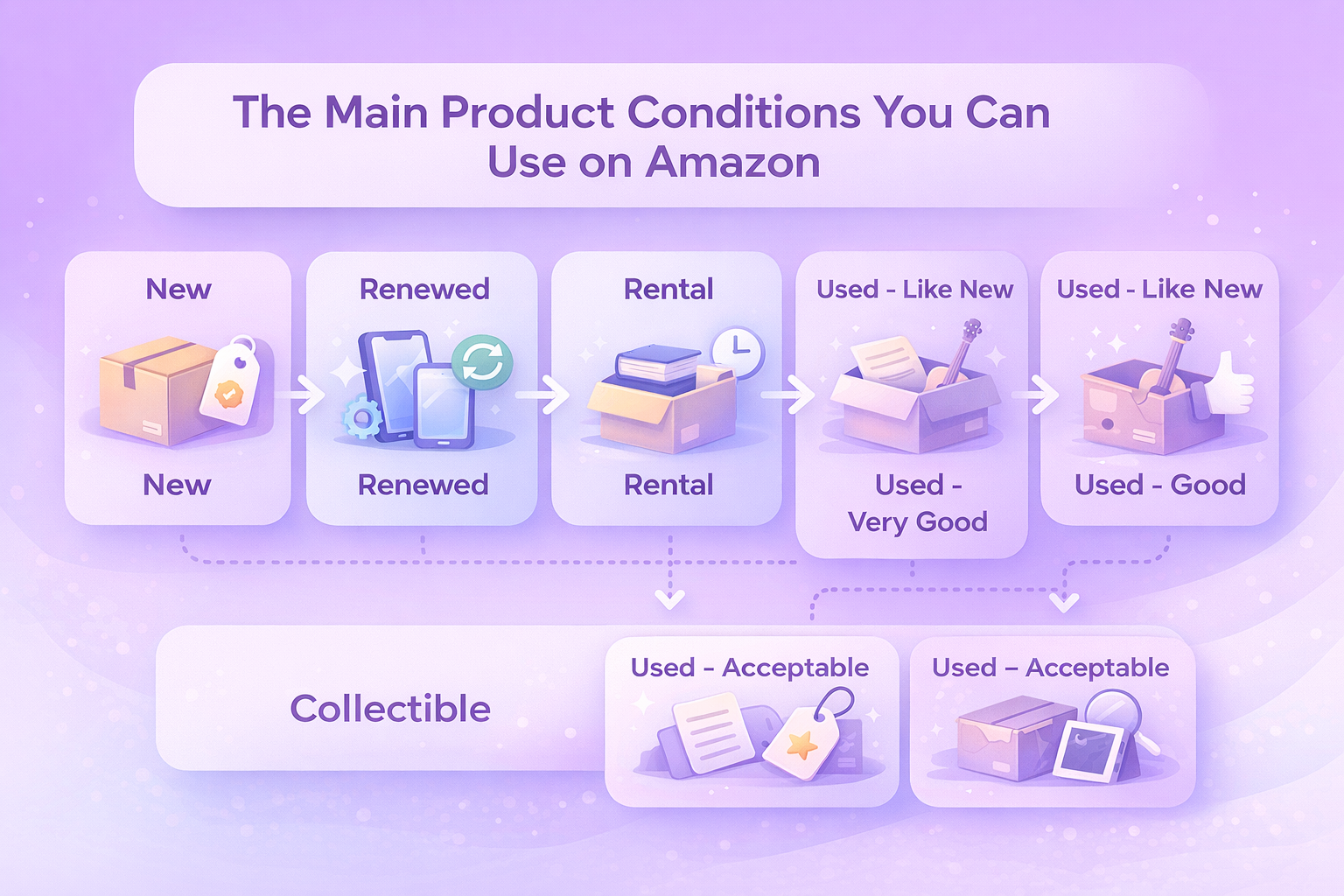
Amazon allows most products to be listed under the following condition types.
New
New items must be unused, unopened, and in original condition. Packaging should be intact, and all standard accessories and warranty information should be included if applicable.
Some categories require items to be New only. New condition is also required for Featured Offer eligibility in many cases.
Renewed
Renewed items are pre-owned but inspected and tested by an Amazon-qualified supplier or Amazon itself.
They must:
- Work like new
- Show minimal to no visible wear from 12 inches away
- Include a replacement or refund guarantee, typically 90 days
Many electronics and devices are sold through the Amazon Renewed program, which has additional eligibility requirements.
Rental
Rental products are previously used items that have been inspected and graded as fully functional.
Common rental categories include textbooks and musical instruments. Items may ship in generic packaging but must include all essential accessories.
Used – Like New or Open Box
These items are fully functional and very close to new condition. Packaging may be opened or slightly damaged, but the product itself should show little to no wear.
Used – Very Good
Very Good items show light signs of use but remain in solid working condition. Minor cosmetic blemishes are acceptable.
Any missing accessories or packaging issues must be clearly disclosed.
Used – Good
Good condition items show noticeable wear from regular use but still function properly. They may be repackaged and may be missing non-essential accessories.
Used – Acceptable
Acceptable items are clearly worn but still usable. Scratches, dents, worn edges, and missing accessories are common, as long as functionality remains intact.
Collectible
Collectible items must offer added value beyond normal use. This can include rarity, autographs, limited editions, or historical significance.
The collectible value must be explained clearly on the product detail page.
How Book Condition Guidelines Differ From Other Categories
Books follow their own condition rules alongside Amazon’s general guidelines.
Standard book conditions include:
- New
- Used – Like New
- Used – Very Good
- Used – Good
- Used – Acceptable
Books labeled Acceptable may show heavy wear, markings, or limited water damage, as long as the text remains readable.
Books that are missing pages, have unreadable text, or are advance reading copies are not allowed for sale.
Collectible Book Conditions
Collectible books have stricter grading rules. Most books in Acceptable condition do not qualify as collectible unless they are extremely rare.
Categories With Additional Condition Requirements
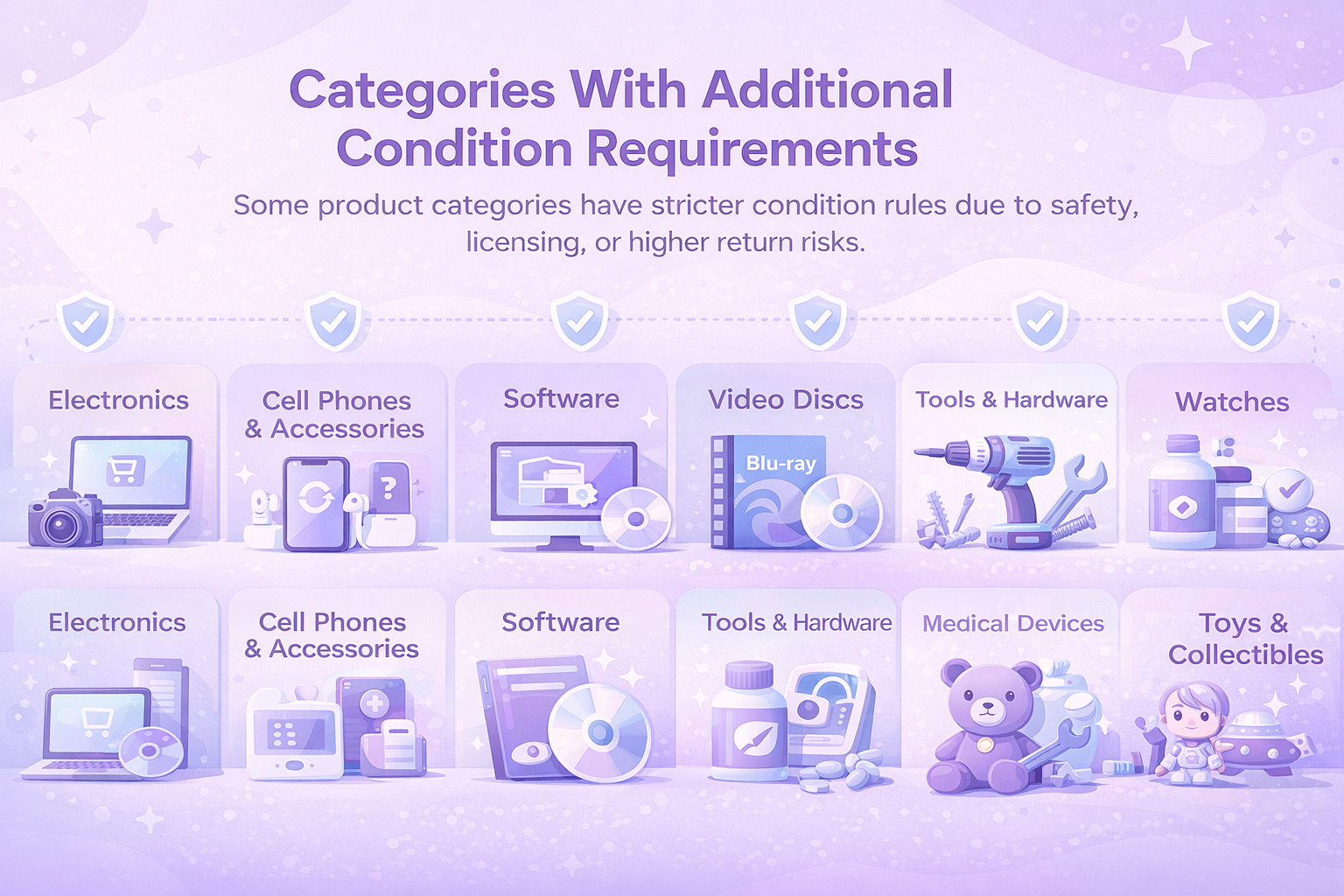
Some product categories on Amazon come with more detailed or stricter condition rules. These categories often involve safety, licensing, or higher return risk, which is why Amazon applies extra oversight.
Common examples include:
- Electronics and computers
- Cell phones and accessories
- Software and computer games
- Video, DVD, and Blu-ray discs
- Tools and hardware
- Watches
- Consumables and supplements
- Medical devices
- Toys and collectibles
In many of these categories, sellers may need to request approval before listing used or renewed items. Additional documentation, testing, or condition disclosures may also be required. Checking category-specific guidelines in Seller Central before listing helps avoid delays, listing removals, or account issues later on.
Conditions That Are Never Allowed on Amazon
Amazon has a strict list of item conditions that cannot be listed under any category. These rules exist to protect customers and maintain marketplace trust.
Amazon does not allow listings for items that:
- Are dirty, moldy, corroded, or heavily stained
- Are damaged to the point of limited usability
- Are missing essential parts
- Require repair or servicing
- Are counterfeit or not made by the original manufacturer
- Were distributed as promotional or advance copies
- Are expired or have altered expiration dates
- Were marked for disposal or destruction
- Are prohibited under Amazon’s restricted products policy
Listing items in these conditions can lead to listing removal, suppressed offers, or account enforcement actions. In repeated cases, it may also affect your Account Health Rating and selling privileges, so it’s important to screen inventory carefully before listing..
How to Select the Correct Condition When Listing
When creating or matching a listing in Seller Central:
- Go to Catalog → Add Products
- If matching an existing listing, select the appropriate condition from the results
- If creating a new listing, choose the condition on the Offer tab
Always base the condition on the specific unit you will ship, not an average or best-case scenario.
How To Sell The Same Product In Multiple Conditions
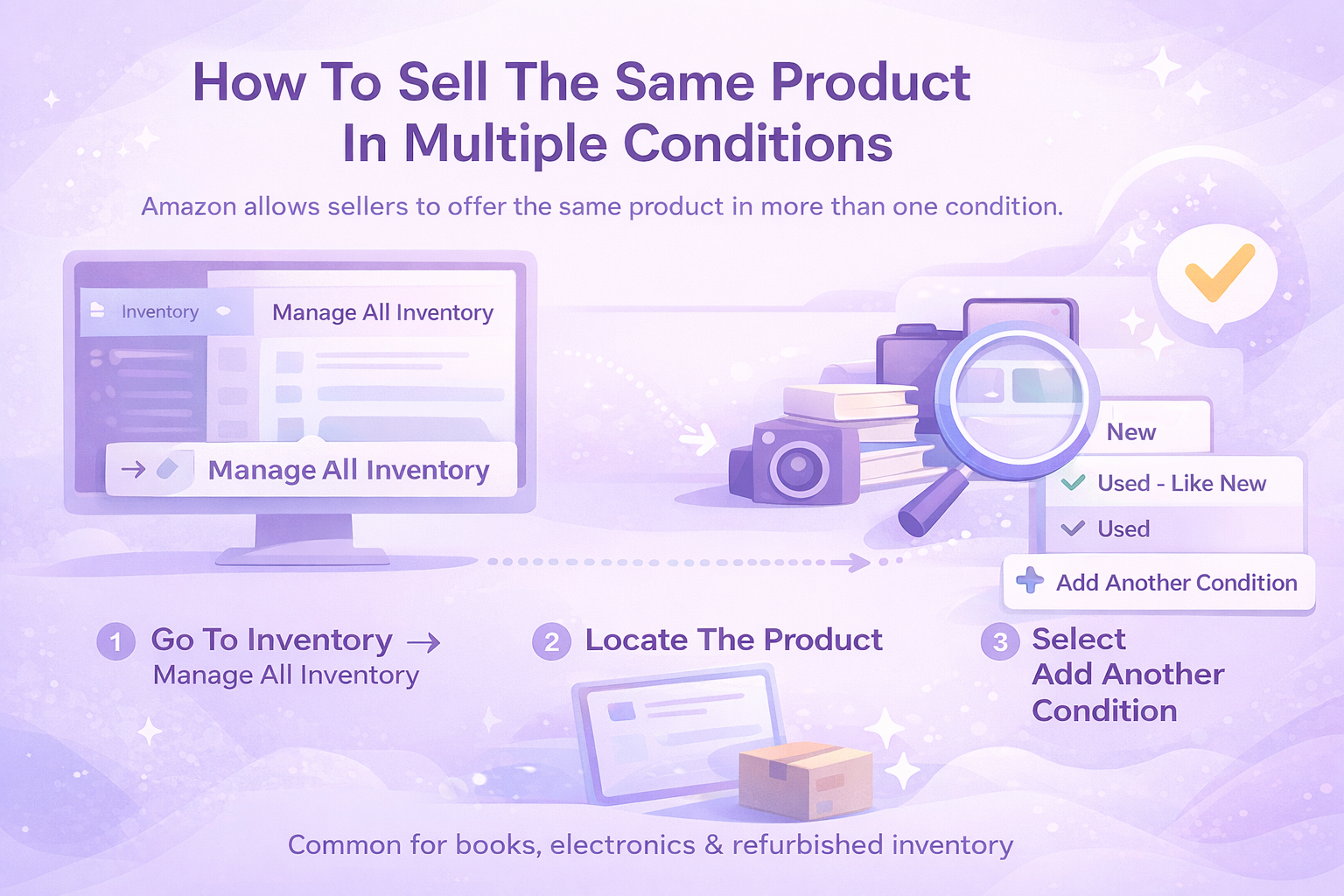
Amazon allows sellers to offer the same product in more than one condition.
To do this:
- Go to Inventory → Manage All Inventory
- Locate the product
- Select Add Another Condition from the options menu
This is common for books, electronics, and refurbished inventory and gives buyers more flexibility.
How Condition Choice Affects Pricing and Conversion
Condition plays a direct role in how buyers evaluate price and value. Many shoppers compare the same product across different condition tiers before making a decision, especially in categories like electronics, books, and tools.
Lower-condition items often convert well when:
- Price differences are clear
- Wear is described honestly
- Photos match the description
When expectations are set correctly, buyers are more likely to accept cosmetic flaws in exchange for a lower price. Offering the same product in multiple conditions can also help capture different buyer segments, all within a single listing, without increasing catalog complexity or creating duplicate product pages.

Making Better Decisions With WisePPC
At WisePPC, we work with sellers who manage complex catalogs, multiple product conditions, and constant shifts in pricing and demand. Product condition directly affects conversion, returns, and advertising efficiency, and we built WisePPC to help sellers see how those factors actually perform in real conditions, not just in theory. By combining sales and advertising data in one place, we make it easier to understand what drives results across different condition tiers.
Our platform gives sellers long-term access to historical performance data that goes far beyond Amazon’s default retention window. This makes it possible to analyze how pricing, condition, and demand change over time, spot seasonality, and compare past and present performance with confidence. Advanced filtering, segmentation, and visual highlights help teams quickly isolate what is working and where adjustments are needed, even when managing large inventories.
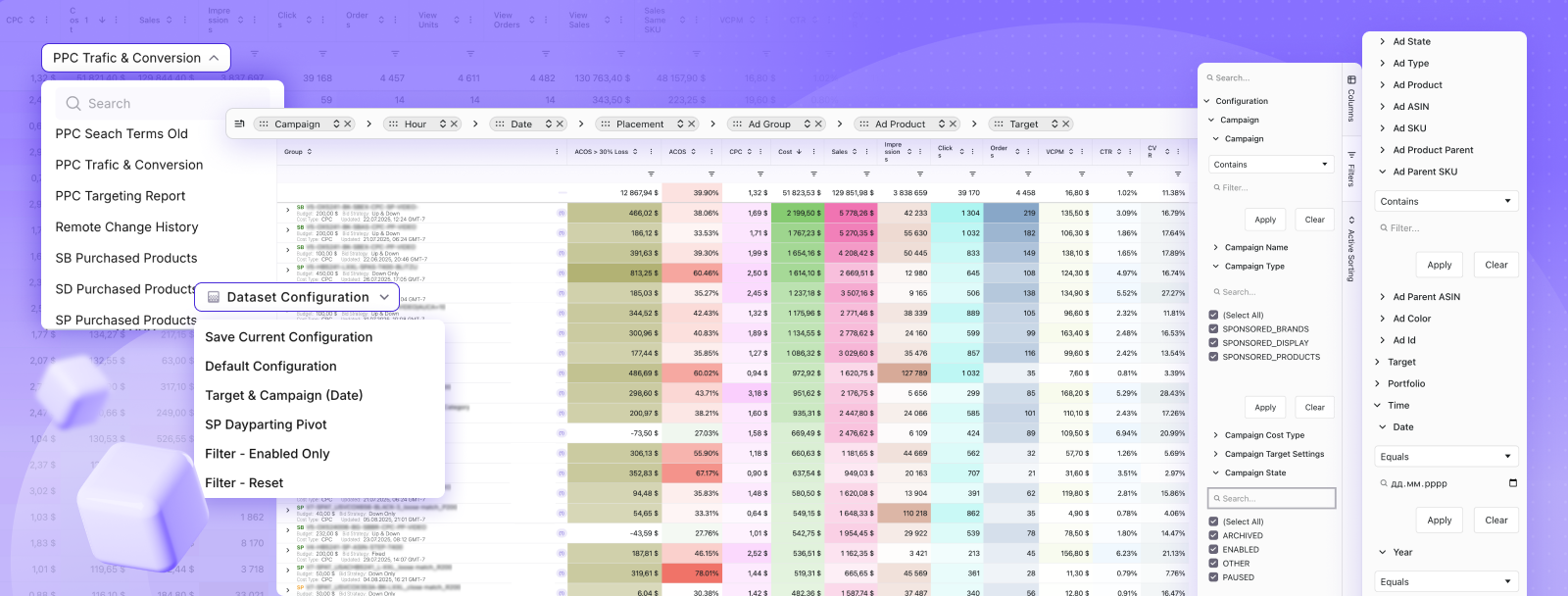
As an Amazon Ads Verified Partner, we rely on official integrations and follow Amazon’s best practices across analytics and campaign management. With tools like bulk actions, on-spot campaign editing, and placement-level performance analysis, sellers can react faster and stay in control without switching between multiple systems. The result is clearer decision-making around pricing, condition strategy, and advertising spend, all grounded in accurate, real-time data rather than guesswork.
Common Condition Mistakes Sellers Make
Even experienced sellers make mistakes when selecting product conditions, usually because of time pressure or assumptions about what buyers will accept. These issues tend to show up most often when handling returns, liquidation stock, or mixed-condition inventory.
Some of the most frequent issues include:
- Listing items as Like New when packaging is missing or damaged
- Forgetting to disclose missing accessories
- Underestimating cosmetic wear
- Reusing condition templates without inspecting each unit
These mistakes usually lead to returns and customer complaints rather than higher sales. In many cases, clearly listing an item under a lower condition with an honest description results in better outcomes than trying to stretch the condition category.
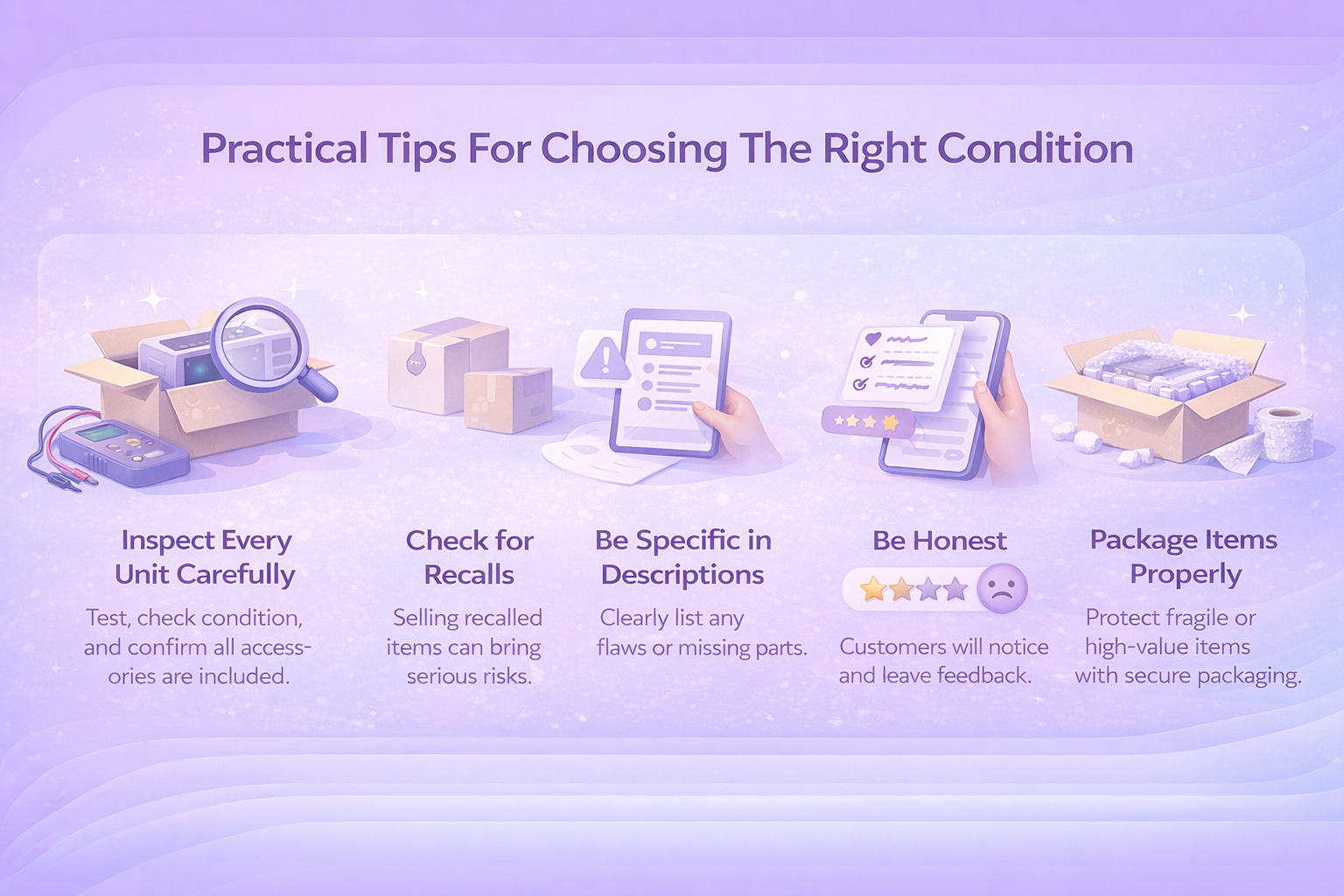
Practical Tips For Choosing The Right Condition
Selecting the correct condition is easier when you follow a consistent process and avoid shortcuts. These simple practices help reduce returns and protect your seller reputation over time.
- Inspect Every Unit Carefully. Do not rely on quick visual checks. Test functionality, review cosmetic condition, and verify that all required accessories are included.
- Check for Recalls. Selling recalled products can create serious compliance and safety issues, even if the item appears to work normally.
- Be Specific in Descriptions. If there is a scratch, say where it is. If something is missing, list it clearly so buyers know exactly what to expect.
- Be Honest. Customers see the product when it arrives. Mismatched condition descriptions almost always result in negative feedback or returns.
- Package Items Properly. Shipping damage can turn a correct condition listing into a return. Use appropriate packaging and protection, especially for fragile or high-value items.
Final Thoughts
Amazon product condition guidelines are not just a policy requirement. They shape how customers experience your listings and how Amazon evaluates your performance as a seller.
Taking the time to inspect items properly and choose the correct condition reduces problems later. It also builds trust, improves conversion, and protects your account over the long term.
Clear condition listings may take a few extra minutes, but they save far more time and money in the long run.
Frequently Asked Questions
What are Amazon product condition guidelines?
Amazon product condition guidelines define how sellers must describe the physical and functional state of items they list. They help ensure customers know what to expect and create consistency across listings.
Why is choosing the correct condition so important?
Condition accuracy affects customer trust, return rates, feedback, and account health. Incorrect condition listings are one of the most common reasons for returns marked as “not as described.”
Can I sell the same product in more than one condition?
Yes. Amazon allows sellers to list the same product under multiple conditions, such as New, Used – Very Good, or Used – Acceptable, as long as each listing accurately reflects the specific item being shipped.
What happens if I list an item under the wrong condition?
If customers receive an item that does not match the listed condition, it can lead to returns, negative feedback, suppressed listings, or account health issues if it happens repeatedly.
Are used and renewed products treated the same on Amazon?
No. Renewed products must be inspected and tested by an Amazon-qualified supplier and usually include a warranty. Used products do not require certification but must meet condition-specific guidelines.
 No credit card required