
 EN
EN  ES
ES  FR
FR  DE
DE  IT
IT  KO
KO  JA
JA  ZH
ZH  AR
AR  PT
PT  TR
TR PL
PL
If your Amazon sales feel stuck no matter how much you spend on ads, you’re not imagining things – the rules have changed. Amazon’s A10 algorithm is quietly reshaping how products get found, ranked, and bought in 2025. It’s no longer about who bids the most. It’s about who builds real trust, earns real clicks, and brings real value.
In this guide, we’re unpacking what the A10 algorithm actually looks for, what’s changed since A9, and what you can start doing today to improve your rankings without chasing your tail on ad spend. Whether you’re a brand owner, solo seller, or managing dozens of SKUs, this isn’t about hacks. It’s about strategy that works and lasts.
A10 Isn’t A9 with a New Coat of Paint
To understand how to win with A10, it helps to know what’s changed.
A9, Amazon’s previous algorithm, heavily favored sales velocity and ad spend. The more you sold and the more you spent on ads, the more Amazon would reward you with visibility. It wasn’t perfect, but it was straightforward.
A10 shifts the focus from who’s paying the most to who’s creating the best overall customer experience. It favors organic performance, external traffic, engagement metrics, and seller trustworthiness. In other words, Amazon wants to surface listings that aren’t just popular, but proven to be relevant, helpful, and consistent.
This isn’t about gaming the system anymore. It’s about showing Amazon you run a real business that brings value.

What A10 Actually Cares About
The A10 algorithm isn’t looking for flashy tricks or inflated ad budgets. It’s watching how your listing behaves in the wild – how real shoppers interact with it and whether it actually delivers what they’re searching for. Here’s how Amazon is quietly measuring your performance behind the scenes.
Are People Clicking?
Click-Through Rate (CTR) is one of the first signals Amazon looks at. When your product shows up in search results, do people click it? A high CTR tells the algorithm your listing looks appealing and relevant to the search term. A low CTR? That’s a red flag, even if your product is great. Your main image, title, and price all play a role here – it’s your first impression, and it matters more than ever.
Do Clicks Turn Into Sales?
Conversion Rate (CR) picks up where CTR leaves off. If shoppers click and then bounce, Amazon assumes your listing isn’t quite what they wanted. But if they buy? That’s a strong signal of quality and alignment with buyer intent. The higher your CR, the more likely you are to move up in rankings. This is where solid copy, helpful images, and clear answers to buyer concerns really pay off.
Are You Consistently Selling?
Sales history and organic velocity are still very much in play. A10 wants to see that your product isn’t just getting a few lucky wins but performing steadily over time. Organic sales, meaning those not driven by ads, matter more now than ever. If your listing consistently brings in traffic and closes the sale without constant PPC support, that’s gold in Amazon’s eyes.
Are You Bringing In Traffic from Outside Amazon?
External traffic has gone from “nice bonus” to “ranking booster.” Whether it’s from social media, Google, influencer content, or blog features, off-Amazon traffic shows demand and credibility beyond the marketplace. A10 treats these signals as proof that people are seeking you out, not just stumbling on your listing because of an ad.
Do You Have a Strong Seller Reputation?
Seller authority is a big one. Amazon wants to reward sellers it can trust, and trust is built on how well you serve customers. Low return rates, fast shipping, responsive support, positive reviews, and FBA usage all feed into your overall authority score. If you’re consistent, reliable, and play by the rules, A10 notices.
Do Shoppers Stick Around?
Listing engagement is a newer factor, but it’s growing fast. It’s not just about whether someone lands on your page – it’s what they do once they get there. Are they scrolling through your photos? Watching your product video? Clicking through your FAQ? Amazon tracks these micro-interactions because they hint at whether your listing is helping buyers make confident decisions. If people are engaging deeply, the algorithm takes that as a sign that your product is worth showing to more shoppers.
What Stayed the Same (Sort Of)
A10 didn’t throw everything out. Some key A9 factors still matter, but their weight has shifted:
- Keywords: Still important, but keyword stuffing will hurt you. A10 prefers natural, behavior-aligned relevance.
- Customer Reviews: Still critical. A steady flow of genuine, positive feedback improves both rankings and conversion.
- Fulfillment Type: FBA still gets preferential treatment for delivery speed and Buy Box visibility.
How to Optimize Your Listings for A10 in 2025
Now that we know what A10 is looking for, here’s how to shape your listings and strategy to give it what it wants.
1. Craft Listings for Humans First
A10 prefers listings that attract and convert real shoppers. That means writing for people, not bots.
- Use your primary keyword in the title, but don’t cram.
- Make your bullets readable and focused on benefits, not just features.
- Add answers to common questions in the description or FAQ to reduce buyer hesitation.
- Keep formatting clean and scannable.
2. Use High-Quality Visuals That Tell a Story
Images aren’t just eye candy. They drive engagement and conversions, both of which A10 rewards.
- Use high-res photos from multiple angles.
- Include lifestyle shots that show the product in context.
- Add infographics to highlight key specs or comparisons.
3. Level Up with A+ Content
If you’re brand registered, A+ Content is a must. It boosts trust, reduces bounce rate, and increases time on page.
Include:
- Rich visuals.
- Comparison tables.
- Branding elements.
- “Complementary Product Sets” to increase AOV.
4. Focus on Driving External Traffic
Amazon wants you to bring in outside demand. It sees external traffic as a sign that your product is sought-after, not just visible because of Amazon ads.
Great sources of external traffic:
- Influencer shoutouts on YouTube or TikTok.
- Blog reviews or niche newsletters.
- Google Ads or SEO.
- Pinterest or Instagram organic reach.
And don’t guess where your traffic is coming from – use Amazon Attribution links to track it.
5. Build Seller Authority Over Time
A10 doesn’t just rank listings. It ranks sellers. If your account consistently delivers great service, fast shipping, and reliable inventory, you’ll gain visibility across the board.
To improve your authority:
- Keep your order defect rate low.
- Respond to customer messages quickly.
- Resolve negative reviews with real support, not just canned apologies.
- Maintain healthy stock levels to avoid listing suppression.
6. Understand What A10 Wants from Your PPC Strategy
Here’s the twist: A10 doesn’t ignore ads, but it doesn’t overvalue them either. It’s more about how you use PPC than how much you spend.
Use PPC to:
- Launch new products with an initial boost.
- Test keyword performance and CTR.
- Drive visibility on long-tail terms with high intent.
- Support high-converting products that already have organic momentum.
What not to do: Rely on ads alone to maintain ranking. Without organic sales and good engagement, A10 will let you fade.
7. Make Use of Real Analytics (Not Just Gut Feel)
A10 is a behavior-based algorithm. If you’re not looking at data, you’re flying blind.
Track and improve:
- Click-through rate by keyword.
- Conversion rate by ASIN.
- Page engagement (especially if using A+ Content).
- Performance of external traffic channels.
Don’t just watch TACOS and ACOS. Go deeper.
8. Clean Up the Back End Too
Backend data isn’t glamorous, but it matters. Fill out every field in Seller Central, including:
- Search terms (no repeats, no punctuation).
- Intended use and target audience.
- Product type and subject matter (if applicable).
- Alt text for A+ images.
These help Amazon better understand your product and match it to relevant searches.
9. Avoid These Common A10 Mistakes
A lot of sellers are still optimizing like it’s 2019. Here’s what to avoid in 2025:
- Keyword stuffing your title or bullets.
- Depending solely on PPC to boost rank.
- Letting reviews pile up without responding.
- Ignoring external marketing opportunities.
- Using blurry or generic images.
- Neglecting to test CTR and CR at the keyword level.
The algorithm is watching more than just your ad spend.
You Don’t Need to Be a Big Brand to Win
Here’s the encouraging part: A10 doesn’t just favor massive brands. It favors well-optimized listings from sellers who know what their audience wants and serve it well. If you can build trust, attract organic traffic, and sell consistently, you can outrank bigger players who are still throwing money at PPC and hoping for the best.

How WisePPC Helps Sellers Adapt to the A10 Algorithm
At WisePPC, we’ve built our platform with one clear goal in mind: help marketplace sellers make smarter, faster decisions based on real data – not guesswork. As Amazon’s A10 algorithm continues to prioritize organic performance, engagement, and seller trust over raw ad spend, we’ve focused on giving businesses the tools they need to stay ahead of the curve.
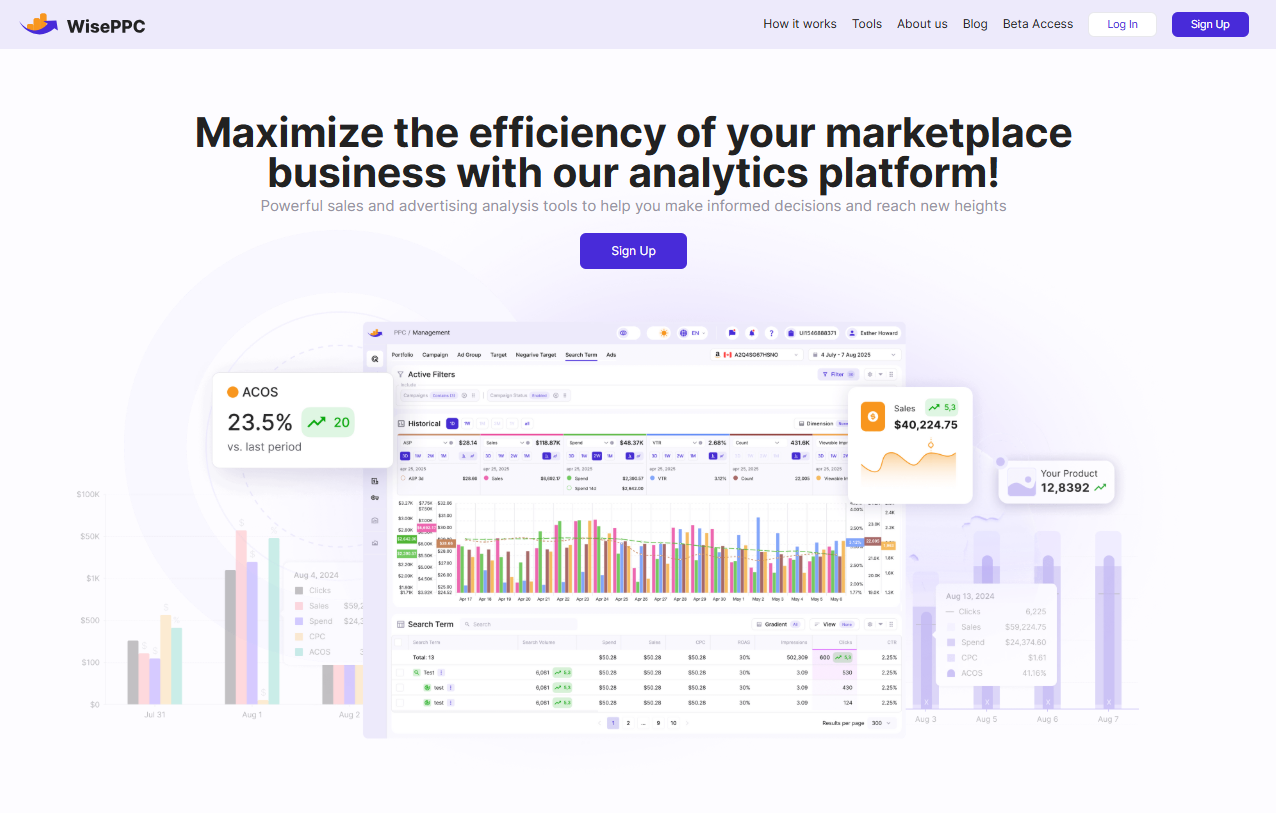
We track multiple performance metrics in real time, segment campaign data by placement, match type, and bid strategy, and store historical results for years – not just the 60 days Amazon gives you. This long-term visibility helps you uncover real trends, understand what’s truly driving your rankings, and fine-tune your strategy for better performance across both paid and organic channels. Whether you’re managing five products or five hundred, our advanced filtering, bulk actions, and campaign editing tools help you react quickly and scale with confidence.
With Amazon moving toward a quality-over-quantity approach, tools like WisePPC aren’t just useful – they’re essential. From isolating underperforming keywords to showing you exactly where your budget is wasted, we make it easier to align your ad strategy with what A10 actually rewards. And because we’re an Amazon Ads Verified Partner, you can trust that our system plays by the same rules Amazon does, just with more clarity.
Final Thoughts: Play the Long Game
The A10 algorithm rewards sellers who treat Amazon like a real business, not a vending machine. That means thinking beyond hacks and short-term wins.
When you focus on real metrics that matter – trust, engagement, traffic, and customer value – the rankings tend to follow. And when they don’t? At least you’re building something that lasts, not something that breaks the moment the algorithm shifts again.
So if you’re stuck on page 3 and wondering why ads aren’t working like they used to, it might be time to stop tweaking bids – and start rethinking your entire approach.
FAQ
1. How do I know if the A10 algorithm is affecting my listings?
If you’re seeing a drop in organic rankings even though your PPC campaigns are performing well, that’s usually the first red flag. A10 puts more weight on engagement and external signals, so if your click-through rate, conversion rate, or off-Amazon traffic is weak, your visibility might slip. Watch your metrics closely, especially impressions, CTR, and organic sessions.
2. Is Amazon PPC still important with A10?
Yes, but not in the same way it used to be. You can’t just throw money at ads and expect to rank anymore. PPC is now more of a support tool to help you gain traction, test keywords, or launch new products. What A10 really wants to see is whether you can turn that visibility into lasting, organic sales.
3. What’s the fastest way to improve rankings under A10?
There’s no instant win button, but tightening up your product listing is usually the best starting point. Clean up your title, improve your images, update your A+ content, and check your backend search terms. After that, bring in some external traffic, even a few blog links or influencer mentions can move the needle faster than you think.
4. Does FBA help with A10 rankings?
Definitely. Fulfillment by Amazon signals reliability, which feeds into seller authority – a major A10 factor. It also improves your shipping speed, return handling, and Buy Box eligibility. If you’re serious about ranking long-term, FBA is still worth it.
5. Can I succeed without external traffic?
Technically, yes, but it’s getting harder. A10 favors listings that attract buyers from beyond Amazon, so if you’re not running any off-platform campaigns, you’re probably leaving an opportunity on the table. Even small efforts like linking to your listing from a blog post or running a simple Google Ads campaign can give you a noticeable edge.
 No credit card required