
 EN
EN  ES
ES  FR
FR  DE
DE  IT
IT  KO
KO  JA
JA  ZH
ZH  AR
AR  PT
PT  TR
TR PL
PL
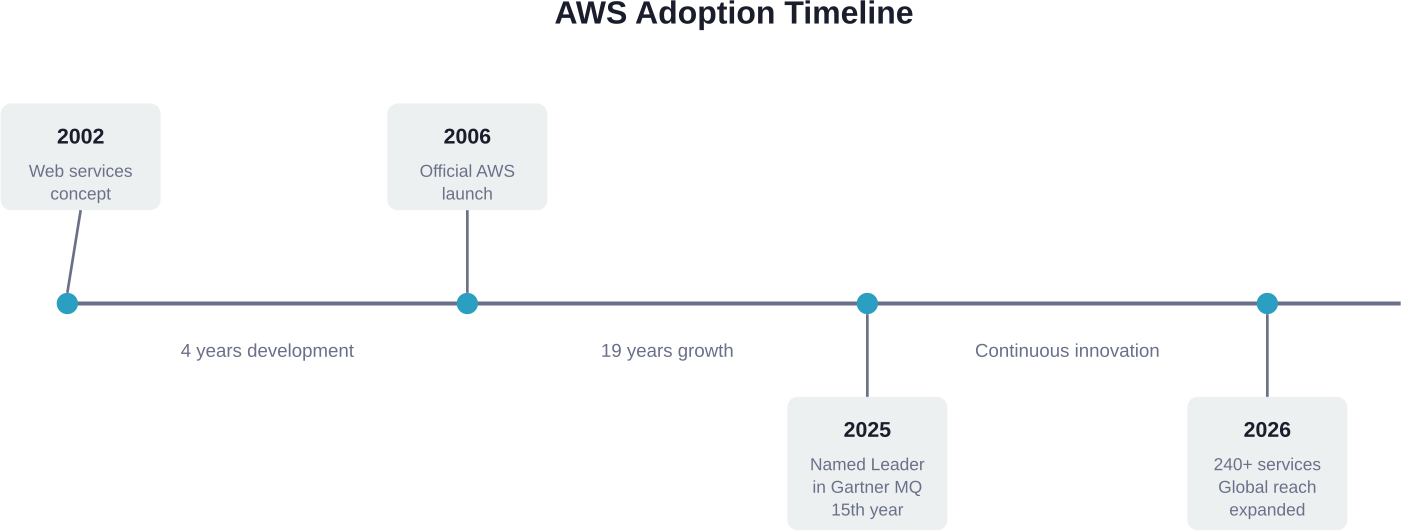
Quick Summary: Amazon Web Services (AWS) is a comprehensive cloud computing platform that provides over 240 on-demand services including computing power, storage, databases, machine learning, and networking. Launched in 2006, AWS operates globally and uses a pay-as-you-go pricing model, allowing businesses to scale infrastructure without owning physical servers.
When someone mentions “the cloud,” chances are they’re talking about Amazon Web Services—even if they don’t realize it. AWS powers everything from Netflix’s streaming service to NASA’s space missions. But what exactly is this platform that’s become synonymous with cloud computing?
AWS is the world’s most comprehensive and broadly adopted cloud platform. Instead of companies buying and maintaining physical servers, AWS offers technology services that you can access over the internet and pay for only what you use.
Started in 2006, AWS transformed how businesses think about IT infrastructure. The platform now offers over 240 fully featured services spanning computing power, storage options, databases, networking tools, artificial intelligence capabilities, machine learning frameworks, and Internet of Things solutions.
How AWS Actually Works
Think of AWS as a massive digital utility company. Just like you don’t need to own a power plant to turn on your lights, you don’t need physical servers to run your applications.
AWS operates from numerous global geographical regions, with nine regions in North America alone. Each region contains multiple data centers designed for redundancy and reliability. When you use AWS services, you’re essentially renting computing resources from these facilities.
The platform serves three primary customer groups: individual consumers using services through apps, sellers managing online businesses, and enterprises running complex operations. According to official AWS documentation, millions of customers—including fast-growing startups, large enterprises, and leading government agencies—rely on these services daily.
The Pay-As-You-Go Model
Here’s where AWS gets interesting. The pricing works like your electric bill—you pay only for what you consume.
According to the official AWS pricing page, the platform uses a pay-as-you-go approach for the vast majority of cloud services. There’s no minimum charge for most services. You pay for individual services only as long as you use them, without long-term contracts or complex licensing.
Once you stop using a service, there are no additional costs or termination fees. This model has helped companies save significant money compared to traditional IT infrastructure investments.
Core AWS Service Categories
AWS organizes its 240+ services into distinct categories. Let’s break down the most critical ones.
Compute Services
Amazon EC2 (Elastic Compute Cloud) provides virtual servers in the cloud. According to official pricing documentation, EC2 On-Demand Instances let you pay for compute capacity by the hour or second with a minimum of 60 seconds and no long-term commitments.
Lambda takes a different approach—it runs code without provisioning servers. You only pay for the compute time consumed.
Storage Solutions
Amazon S3 (Simple Storage Service) offers object storage for any amount of data. The official S3 pricing page states there’s no minimum charge, and you pay only for what you use.
Storage pricing varies based on object size, storage duration, and the storage class selected. Different tiers optimize for frequent access versus long-term archival.
Database Options
AWS provides multiple database services for different needs. RDS handles relational databases like MySQL and PostgreSQL. DynamoDB offers NoSQL capabilities. Aurora delivers MySQL and PostgreSQL-compatible databases with commercial-grade performance.
Real-World Applications
So who actually uses AWS? Pretty much everyone.
Pinterest drives visual discovery for 600 million monthly users building on Amazon EC2 and S3. Mercedes-Benz uses AWS AI to drive innovation in automotive technology. Condé Nast modernized its century-old publishing business with data and AI strategy built on AWS.
According to Amazon’s Q4 2025 financial results filed with the SEC, AWS segment operating income was $12.5 billion in Q4 2025, compared with $10.6 billion in Q4 2024. Net sales for AWS continue growing as more organizations migrate to cloud infrastructure.
Understanding AWS Pricing Models
AWS offers several pricing approaches beyond basic pay-as-you-go.
| Pricing Model | Best For | Key Benefit |
|---|---|---|
| Pay-as-you-go | Variable workloads | No upfront costs, maximum flexibility |
| Save when you commit | Steady-state usage | Up to 75% savings with Reserved Instances |
| Pay less by using more | High-volume users | Volume-based discounts |
| Free Tier | Testing and learning | 750 hours/month of EC2 for 12 months |
The Free Tier deserves special mention. According to official documentation, AWS offers 750 hours per month of EC2 t2.micro instances for the first 12 months, making it easy to experiment without financial commitment.
AWS Support Plans
AWS provides tiered support options. According to the official AWS Support pricing page, three premium tiers exist: Business Support+, Enterprise Support, and Unified Operations.
Business Support+ starts at $29 per month per account. Enterprise Support requires a minimum of $5,000 monthly. Unified Operations begins at $50,000 per month. Basic Support comes free for all AWS customers.
Each tier builds on the previous with enhanced features, faster response times, and deeper technical expertise to match evolving organizational requirements.
Why Organizations Choose AWS
What makes AWS the world’s leading cloud platform? Several factors stand out.
First, there’s the sheer breadth of services. With over 240 offerings, AWS provides solutions for virtually any computing need. Most competitors offer significantly fewer options.
Second, global infrastructure matters. AWS operates from numerous regions worldwide, enabling low-latency access regardless of geographic location. This distributed model enhances both performance and reliability.
Third, the pay-as-you-go model eliminates massive upfront capital expenditures. Organizations can experiment with new technologies without committing to expensive hardware purchases.
Industry Recognition
AWS consistently receives recognition from analyst firms. According to AWS’s official blog dated August 4, 2025, Gartner named AWS a Leader in the Magic Quadrant for Strategic Cloud Platform Services for the fifteenth consecutive year. Gartner placed AWS highest on the “Ability to Execute” axis.
A Forrester study on AWS Marketplace revealed organizations achieved 377% return on investment with payback within six months. The study also found 70% reduction in solution discovery time and 60% faster procurement processes.
Getting Started With AWS
Anyone can begin using AWS. The platform offers extensive free tier options for experimentation and learning.
The AWS Management Console provides a web interface for accessing services. For those preferring command-line tools, the AWS CLI offers terminal-based control. Software Development Kits support multiple programming languages.
Educational resources abound. AWS Academy courses teach cloud architecture fundamentals. Many colleges and universities now offer AWS certification programs in their curricula.

Turn AWS-Level Data Into Practical Decisions On Amazon
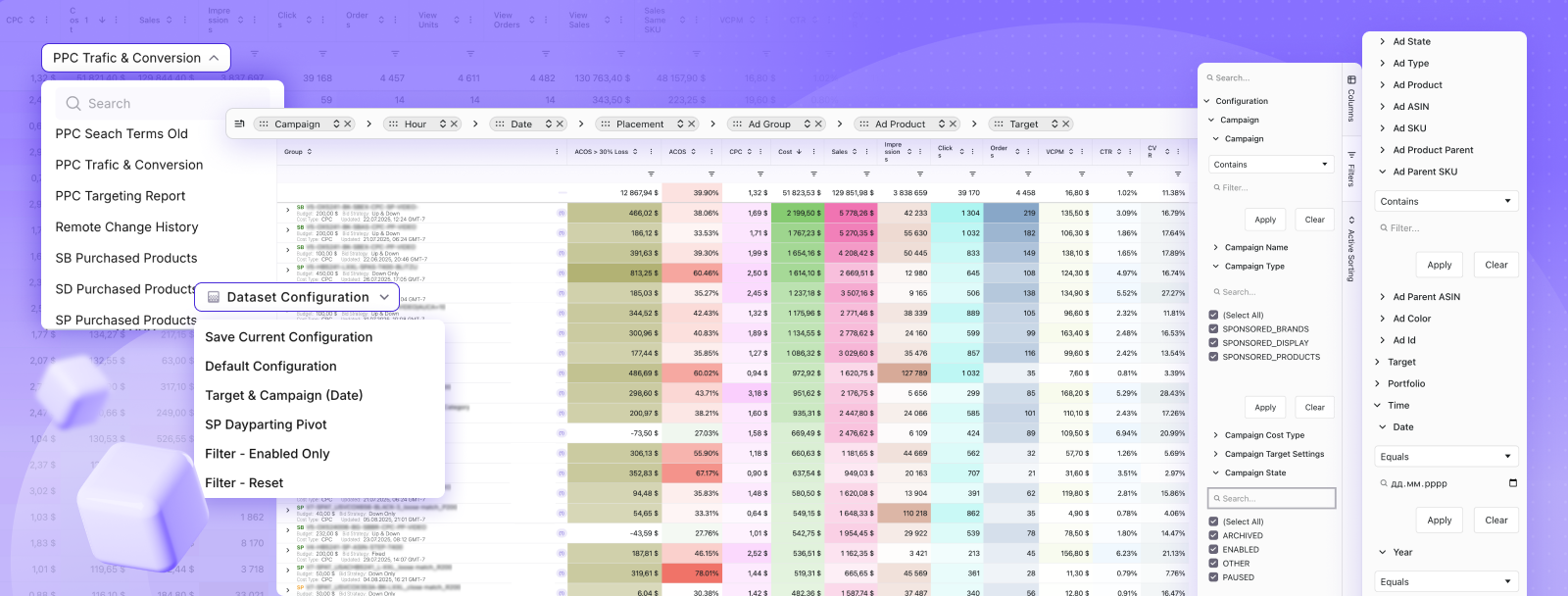
AWS shows how Amazon builds and runs systems at scale, but most sellers deal with a simpler version of that reality – ads, sales, and performance data that still need to be understood and managed properly. WisePPC works with that everyday layer.
It pulls your Amazon Ads and Seller Central data into one place and keeps it organized over time, so you can see how campaigns actually affect sales without rebuilding reports or relying on short-term snapshots. The data stays consistent, which makes it easier to track changes, review results, and adjust what you’re doing based on what’s already working.
Start using WisePPC to work with your Amazon data in a way that actually supports decisions.
Frequently Asked Questions
Is AWS actually free to use?
AWS offers a Free Tier with limited usage (e.g., 750 hours/month of certain instances for 12 months). Beyond those limits, standard pay-as-you-go pricing applies.
How does AWS differ from other cloud providers?
AWS provides a large range of services, global infrastructure, and long industry experience compared to many competitors.
What’s the minimum cost to run something on AWS?
There’s no fixed minimum. Costs depend on usage, though some services and support plans have minimum fees.
Can small businesses afford AWS?
Yes, AWS’s pay-as-you-go model allows small businesses to start small and scale as needed.
What happens to my data if I stop using AWS?
Data remains stored until you delete it, and storage charges may continue even if compute resources are stopped.
Do I need technical expertise to use AWS?
Basic services are easy to use, but advanced setups require technical knowledge.
How secure is AWS for sensitive data?
AWS offers strong security features, but customers are responsible for properly configuring and managing their own resources.
Final Thoughts
Amazon Web Services has fundamentally changed how organizations approach technology infrastructure. By offering 240+ services through a flexible pay-as-you-go model, AWS eliminates traditional barriers to innovation.
Whether you’re a developer experimenting with new ideas, a startup building your first product, or an enterprise migrating legacy systems, AWS provides the tools and infrastructure needed. The platform’s 20-year track record and continuous innovation make it the trusted choice for millions of customers worldwide.
Ready to explore what AWS can do for your projects? Start with the Free Tier and discover why leading organizations trust AWS to power their most critical applications. The cloud isn’t the future—it’s the present, and AWS leads the way.
 No credit card required