
 EN
EN  ES
ES  FR
FR  DE
DE  IT
IT  KO
KO  JA
JA  ZH
ZH  AR
AR  PT
PT  TR
TR PL
PL
Quick Summary: The top Amazon dropshipping niches for 2026 include pet wellness products, sustainable home goods, kitchen appliances, phone accessories, and health & beauty items. These categories combine consistent demand with manageable competition and profit margins of 20-40%, though sellers must navigate Amazon’s increasing fees that now consume significant portions of sales. Success requires careful product validation, supplier reliability, and understanding Amazon’s platform-specific challenges including high return rates and reduced seller tools.
Amazon isn’t just another marketplace. With over 2.6 billion monthly visits and shoppers who arrive with intent to buy, it’s fundamentally different from other platforms. But here’s the thing—the landscape for sellers has shifted dramatically.
According to seller discussions on Amazon Seller Central, some sellers report Amazon taking upward of 50% of sales when factoring in all fees including referral fees, FBA costs, advertising spend, and the new return processing fees introduced in 2024. One seller reported that after all calculations, they’re “pretty much working for free now.”
Does that mean dropshipping on Amazon is dead? Not exactly.
The global dropshipping market was valued at USD 365.67 billion in 2024 and is projected to reach USD 1,253.79 billion by 2030, growing at a CAGR of 22.0%, according to Grand View Research. The dropshipping model accounts for 23% of global ecommerce sales, representing $1.6 trillion in annual revenue. The opportunity exists, but only for sellers who choose their niches strategically.
This guide breaks down which Amazon dropshipping niches show structural demand in 2026, backed by market data and operational realities from actual sellers. These aren’t viral trend predictions—they’re categories where proper supplier relationships and margin discipline can still generate profit despite Amazon’s fee structure.
Understanding Amazon’s 2026 Marketplace Reality
Before diving into specific niches, it’s critical to understand what’s changed on Amazon as a selling platform.
The Fee Structure Challenge
Amazon has systematically increased costs across multiple dimensions. Sellers now face referral fees (typically 15% per category), FBA fulfillment fees, storage fees, advertising costs that have become virtually mandatory for visibility, and return processing fees for products with high return rates.
Based on seller discussions, return processing fees introduced June 1, 2024, charge additional fees for items with return rates exceeding category-specific thresholds. For toys, that threshold sits at 4.7%. For sports products, 8.7%. The platform’s lenient return policy—allowing customers to order multiple items, keep one, and return the rest at seller expense—makes this particularly painful.
One seller calculated their effective Amazon fee at 30% when checking line items, but noted “they’re actually charging closer to 50%” when all costs are totaled.

Get a Clear View of Performance With WisePPC
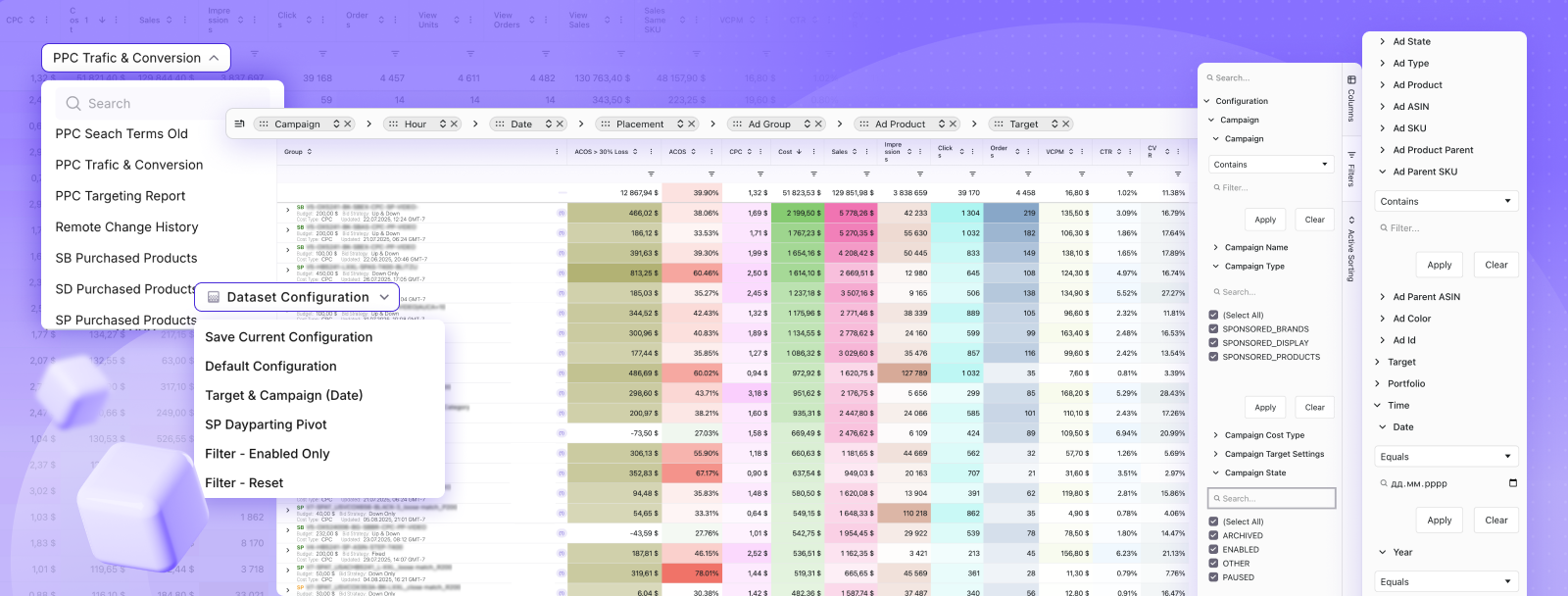
Managing campaigns across multiple products can get messy fast. WisePPC simplifies this by combining advertising and sales data into one place, making it easier to track performance and make decisions without switching between tools.
Need Better Visibility Across Campaigns?
- track ad spend alongside actual sales
- analyze campaign and keyword performance
- identify what drives revenue
👉 Explore WisePPC to understand your Amazon advertising data.
What Makes a Dropshipping Niche Viable on Amazon
Not all dropshipping niches translate well to Amazon’s specific ecosystem. Several factors determine viability.
Margin Requirements
Industry analysis suggests the 3x markup rule as the baseline: if your supplier charges $10, you need to sell at $30 to cover advertising, Amazon fees, and generate profit. That translates to a minimum target profit margin of 20-40% after all expenses.
Products with lower margins simply can’t survive Amazon’s fee structure. This immediately eliminates many electronics categories where retail prices are compressed and margins hover in the single digits.
Return Rate Considerations
High-return categories now carry penalty fees. Apparel and accessories, which typically see return rates of 15-30%, become significantly less attractive. The return processing fees apply when products exceed the category-specific threshold, which Amazon defines differently for each vertical.
Supplier Reliability and Branding Potential
Amazon customers expect fast shipping. FBA helps, but dropshipping requires suppliers who can meet 2-3 day delivery expectations without eating your margin. Additionally, categories where branding matters—where customers will pay premium prices for a recognized brand—perform better than pure commodity plays.
Top Amazon Dropshipping Niches for 2026
Based on market data, seller experiences, and structural demand patterns, these categories show the strongest combination of opportunity and manageable risk.
Pet Products and Wellness
The global pet care market was valued at $226.9 billion in 2023 and is projected to reach $340.7 billion by 2029, according to market research. Pet owners consistently invest in comfort, wellness, and convenience products for their animals, creating sustained demand regardless of economic conditions.
On Amazon specifically, pet products benefit from repeat purchase behavior. Consumables like supplements, grooming supplies, and specialty foods generate recurring revenue. Durable goods like beds, carriers, and training equipment command premium prices when positioned properly.
Margin potential sits comfortably in the 30-45% range for many pet accessories and wellness products. Return rates tend to be lower than fashion or electronics because pet owners research purchases carefully and products either work or don’t—there’s less subjective “I don’t like how it looks” returns.
- Specific opportunities: Orthopedic pet beds, anxiety-relief products, breed-specific accessories, eco-friendly pet toys, grooming tools for specific coat types.
Kitchen Appliances and Gadgets
The U.S. kitchen appliances market is projected to reach $115.15 billion by 2033, growing from $74.35 billion in 2024. What makes this space attractive is that buyers aren’t typically attached to brands for most kitchen gadgets—they’re solving specific problems.
Someone searching for “avocado slicer” or “garlic press” is looking for functionality, not a brand relationship. This creates opportunity for dropshippers who can source quality products and position them effectively.
Kitchen products also photograph well, which matters for Amazon listing optimization. Demonstrating use cases through images drives conversions. Return rates remain reasonable when product descriptions accurately set expectations.
- Specific opportunities: Specialty prep tools, space-saving storage solutions, small appliances for specific tasks (milk frothers, egg cookers), sustainable kitchen products, organization systems.
Sustainable Home Products
The global ethical fashion market was valued at $7.5 billion in 2023 and is expected to grow 9.1% annually through 2030, according to Market Research Future. This sustainability trend extends beyond fashion into home goods, where consumers increasingly seek eco-conscious alternatives.
Fast fashion backlash creates structural demand for sustainable products. Amazon shoppers specifically searching for “bamboo,” “eco-friendly,” or “sustainable” modifiers are signaling willingness to pay premium prices.
These products command higher margins because the sustainability positioning justifies premium pricing. A bamboo cutting board sells for 40-60% more than a plastic equivalent, and the cost difference to source it is only 20-30%.
- Specific opportunities: Reusable storage solutions, bamboo home accessories, organic bedding, eco-friendly cleaning tools, sustainable office supplies, zero-waste kitchen items.
Phone Accessories (MagSafe and Specialty)
Phone accessories represent a massive market with constant refresh cycles. Every new iPhone or Samsung release creates demand for updated cases, screen protectors, chargers, and mounts.
The category has challenges—intense competition and commoditization for basic items. But specialty accessories targeting specific use cases show better economics. MagSafe-compatible products for iPhone users, gaming-focused accessories, or profession-specific mounts (for healthcare workers, delivery drivers, etc.) create differentiation.
Margins vary widely. Generic phone cases struggle to hit 20% after Amazon fees. Specialty accessories positioned for specific audiences can reach 35-40% margins.
- Specific opportunities: MagSafe-compatible car mounts, professional-grade screen protectors, gaming triggers and controllers, specialty charging solutions, phone accessories for specific professions.
Health and Beauty Consumables
Consumable health and beauty products create the holy grail of ecommerce: repeat purchases. Customers who find a supplement or skincare product they like reorder monthly.
Amazon’s Subscribe & Save program amplifies this advantage, locking in customers and providing predictable revenue. The category requires careful navigation of Amazon’s restricted products policies—certain supplements need approval—but approved sellers enjoy strong unit economics.
The food and personal care segment is expected to grow at 23.6% CAGR over the forecast period through 2030, representing one of the fastest-growing dropshipping segments.
- Specific opportunities: Specialty vitamins and supplements (with proper approval), natural skincare products, men’s grooming consumables, hair care for specific hair types, dental care accessories.
Home Office and Productivity Tools
Remote work patterns have created sustained demand for home office optimization products. People aren’t returning to offices at pre-2020 rates, which means home workspace investment continues.
This category benefits from solution-based purchasing. Someone searching “standing desk converter” or “monitor arm” has already decided they need the solution—they’re comparing options, not browsing.
Ergonomic products, organization systems, and productivity tools command premium prices when positioned as investments in health and efficiency rather than mere accessories.
- Specific opportunities: Ergonomic desk accessories, cable management systems, monitor risers and arms, keyboard wrist rests, desk organization tools, lighting solutions for video calls.
Baby and Parenting Products (Non-Consumable)
Parents spend heavily on products they believe benefit their children. This willingness to invest creates margin opportunities, though the category requires careful risk management around safety and returns.
The key is focusing on non-essential items where parents express their values and preferences rather than safety-critical products. A specialty diaper bag or nursery organization system carries less liability than a car seat or crib.
Baby products also benefit from gift-giving occasions—baby showers, birthdays, holidays—which create demand spikes and reduce price sensitivity.
- Specific opportunities: Nursery organization systems, specialty diaper bags, bath accessories, baby-proofing tools, milestone cards and memory books, travel accessories for parents.
| Niche Category | Typical Margin | Return Rate | Repeat Purchase | Competition Level |
|---|---|---|---|---|
| Pet Products | 30-45% | 8-12% | High | Medium |
| Kitchen Appliances | 25-40% | 10-15% | Low | Medium-High |
| Sustainable Home | 35-50% | 8-12% | Medium | Low-Medium |
| Phone Accessories | 20-40% | 12-18% | Medium | High |
| Health & Beauty | 30-45% | 15-20% | Very High | Medium-High |
| Home Office | 30-45% | 10-14% | Low | Medium |
| Baby Products | 25-40% | 12-16% | Medium | Medium |
Validating Amazon Dropshipping Products Before Launch
Choosing a niche is step one. Validating specific products within that niche determines whether the business model actually works.
Demand Validation Without Product Opportunity Explorer
Since Amazon’s Product Opportunity Explorer was discontinued, sellers need alternative validation methods.
- Search suggestion analysis: Start typing product keywords into Amazon’s search bar and observe autocomplete suggestions. These reflect actual search patterns. If “stainless steel garlic press” autocompletes, there’s search volume.
- Best Seller Rank analysis: Best Seller Rank (BSR) analysis can indicate sales velocity, with lower rankings suggesting stronger sales activity.
- Review velocity: Review accumulation can indicate sales velocity, though review rate varies by product category and seller initiatives.
- Third-party tools: Services like Jungle Scout and Helium 10 still provide search volume estimates and demand forecasting, though accuracy has declined since Amazon restricted data access.
Competition Assessment
Look at the top 10 search results for target keywords. Count how many are Amazon’s Choice, have over 1,000 reviews, or are sold by Amazon directly. If 7+ of the top 10 hit these criteria, organic visibility will be nearly impossible without significant advertising spend.
Ideal competitive scenarios show 3-5 established sellers with 200-500 reviews each. This proves demand exists while leaving room for differentiation.
Margin Calculation
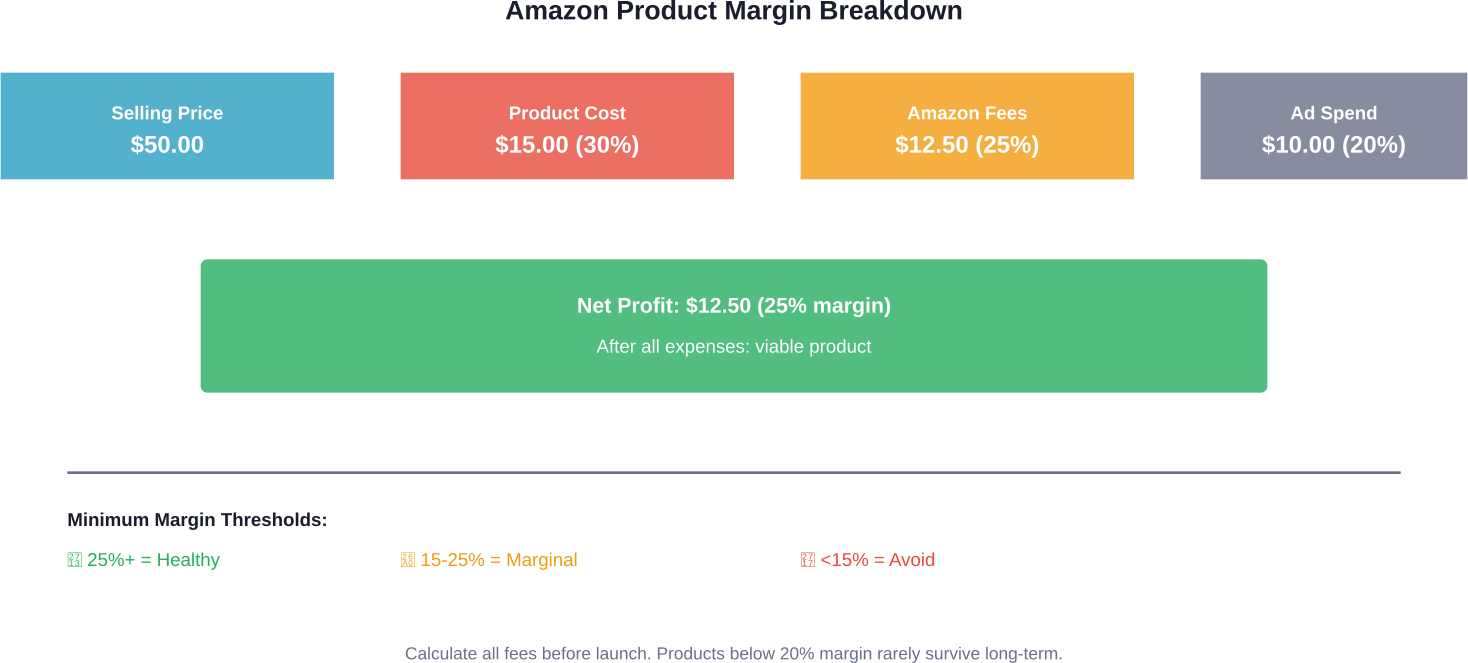
Before committing to a product, calculate actual margins using this framework:
- Supplier cost (including shipping to fulfillment center)
- Amazon referral fee (typically 15%)
- FBA fulfillment fee (varies by size/weight)
- Storage fees (estimate $0.50-2.00 per unit monthly)
- Advertising cost (estimate 15-25% of revenue for new products)
- Return processing fees (calculate based on category average)
If the remaining margin doesn’t exceed 20%, the product won’t survive Amazon’s ecosystem.
Navigating Amazon’s Operational Challenges
Choosing the right niche only matters if operational execution doesn’t destroy margins.
Managing the Fee Burden
Amazon’s fee structure is non-negotiable. Sellers can’t reduce referral fees or negotiate FBA rates. The only levers are optimization and strategic product selection.
Choose lighter, smaller products when possible. FBA fees scale with size and weight. Lighter items have substantially lower fulfillment costs than larger items.
Monitor storage fees closely. Products sitting in FBA warehouses for 6+ months incur long-term storage fees. Long-term storage can significantly impact profitability through accumulated FBA storage fees.
Advertising Dependency
Organic visibility on Amazon has declined as the platform prioritizes sponsored products. Sellers report that advertising is essential to generate visibility, with advertising costs consuming 15-25% of revenue for established products and potentially higher for new launches.
Budget for advertising as a permanent cost, not a temporary launch expense. Products that can’t maintain profitability with ongoing 20% advertising spend won’t work long-term.
Return Rate Management
Amazon’s customer-friendly return policy puts burden on sellers. The June 2024 return processing fees penalize products exceeding category thresholds.
Reduce returns through accurate product descriptions, detailed sizing charts for anything wearable, and clear expectation-setting in images. A customer who receives exactly what they expected rarely returns the item.
Avoid categories with inherently high returns. Fashion apparel sees 15-30% return rates industry-wide. Even perfect listings can’t overcome customers ordering multiple sizes.
Supplier Relationship Quality
Dropshipping success depends on supplier reliability. Late shipments generate negative reviews. Out-of-stock items create missed sales and ranking drops.
Vet suppliers thoroughly. Order sample products. Test their communication responsiveness. Confirm they can handle volume if a product takes off.
Diversify suppliers when possible. Relying on a single source for hot-selling products creates catastrophic risk if they can’t fulfill.
High-Ticket vs. Volume Play Strategy
Different niches support different business models. Understanding which strategy fits each category matters.
High-Ticket Approach
Products priced above $100 generate meaningful profit per transaction even after Amazon’s fees. A product with $200 revenue and 30% margin produces $60 profit. At volume, that’s $600 profit from 10 sales versus needing 60 sales of a $10 product with similar margin.
High-ticket products typically see lower return rates because customers research purchases more carefully. Someone spending $300 on a specialized product reads reviews and specifications thoroughly.
The challenge is conversion rate. Higher prices mean fewer impulse purchases and longer consideration periods. Advertising costs per sale increase proportionally.
- Best high-ticket niches: Home office furniture, premium pet products, specialized kitchen appliances, professional-grade tools.
Volume Play Approach
Products priced $15-40 convert more readily. Lower price points reduce purchase hesitation. Customers buy without extensive research.
The challenge is scale. Generating meaningful revenue requires moving hundreds or thousands of units monthly. Advertising efficiency becomes critical—customer acquisition cost must stay below $5-8 for products in this range.
- Best volume niches: Phone accessories, kitchen gadgets, organization tools, pet accessories.
| Strategy | Price Range | Units/Month Target | Key Success Factor | Primary Risk |
|---|---|---|---|---|
| High-Ticket | $100-300 | 30-100 | Trust signals & reviews | Low conversion rate |
| Mid-Range | $40-100 | 100-300 | Product differentiation | Competition |
| Volume Play | $15-40 | 300-1000+ | Advertising efficiency | Margin compression |
Seasonal vs. Evergreen Product Selection
Seasonal products create revenue spikes but complicate inventory management and create dead periods. Evergreen products provide stability but face year-round competition.
Seasonal Opportunities
Categories like outdoor recreation gear, holiday decorations, and seasonal apparel see 3-6x demand increases during peak periods. This creates massive revenue opportunities for sellers who time inventory correctly.
The risk is holding inventory after the season ends. FBA storage fees accumulate on unsold units. Products become stranded capital.
For dropshipping, seasonal products work when suppliers handle inventory risk. The seller doesn’t own unsold units after Christmas or summer.
Evergreen Stability
Pet products, kitchen basics, home office essentials, and health consumables maintain consistent demand year-round. This predictability enables better business planning.
Revenue won’t spike, but it won’t crash either. Monthly revenue within 15-20% of average creates sustainable business operations.
Competitive Differentiation Strategies
Amazon’s marketplace makes product differentiation challenging. Everything looks similar in search results. Price becomes the default differentiator, which destroys margins.
Bundling and Kits
Creating product bundles generates differentiation. Instead of selling a yoga mat, sell a yoga mat with alignment markers, a carrying strap, and a beginner’s guide. The bundle creates a unique ASIN that doesn’t compete directly on price.
Bundles also increase average order value, improving unit economics. The bundled products often cost only 20-30% more to source but sell for 50-70% more.
Niche-Specific Positioning
Instead of “phone mount,” sell “phone mount for delivery drivers” with features specific to that use case. The narrower positioning reduces competition and increases relevance for the target customer.
Research profession-specific Facebook groups, subreddits, and forums to understand pain points. Products solving specific problems command premium prices.
Sustainability and Values Positioning
Products positioned around sustainability, ethical sourcing, or social values attract customers willing to pay more. A bamboo kitchen utensil set priced 40% above plastic alternatives still sells when positioned correctly.
This positioning requires authentic sourcing. Greenwashing generates negative reviews and backlash.
Building Long-Term Amazon Business Value
Despite platform challenges, successful Amazon sellers build real business assets.
Review Accumulation as Moat
Products with 500+ reviews become increasingly difficult to displace. New competitors starting at zero reviews can’t match the social proof.
Invest in programs that encourage reviews while staying within Amazon’s terms of service. The Amazon Vine program, request review button, and product inserts (when compliant) all help.
Brand Registry Benefits
Amazon Brand Registry provides enhanced content options, better protection against hijackers, and access to advertising features unavailable to non-registered sellers.
For dropshippers working with private-label suppliers, brand registry becomes achievable. The investment in trademarking creates long-term platform advantages.
Customer List Building
Email list building strategies using compliant methods can help sellers build independent customer relationships.
Common Mistakes That Kill Amazon Dropshipping Businesses
Certain errors appear repeatedly in failed Amazon dropshipping ventures.
Ignoring the Math
Many sellers launch products without calculating actual margins including all Amazon fees. They discover too late that apparent 40% margins collapse to 10% after referral fees, FBA costs, advertising, and returns.
Calculate comprehensively before launch. Use Amazon’s FBA calculator. Budget conservatively for advertising. Account for returns when calculating margins, as return rates vary significantly by category.
Chasing Trends Too Late
By the time a product trend appears in YouTube videos or blog posts, competition has already saturated the category. Viral trend products typically experience rapid market saturation and competition.
Sustainable businesses build around structural demand, not viral moments.
Supplier Over-Reliance
Depending entirely on one supplier creates existential risk. If they raise prices, run out of stock, or disappear, the business collapses.
Maintain relationships with 2-3 suppliers per top-selling product. The redundancy costs nothing until it saves the business.
Neglecting Customer Service
Amazon penalizes sellers with poor metrics. Response time, order defect rate, and late shipment rate directly affect account health and Buy Box eligibility.
Respond to customer messages within 24 hours. Address negative reviews professionally. Process returns promptly. Account health matters more than individual product profitability.
Tools and Resources for Amazon Dropshipping
Despite Amazon’s restriction of native tools, third-party services still provide necessary functionality.
Product Research Tools
- Jungle Scout: Provides sales estimates, keyword data, and competitor analysis. Third-party tools continue to provide product research functionality despite Amazon’s API restrictions.
- Helium 10: Offers similar functionality with additional listing optimization tools. The Chrome extension shows product data directly on Amazon search results.
- Keepa: Tracks price history and sales rank over time. Essential for understanding seasonality and competitive pricing patterns.
Supplier Sourcing Platforms
- Alibaba/AliExpress: Primary source for most dropshippers. Quality varies significantly. Always order samples. Vet suppliers through multiple orders before scaling.
- Yakkyofy: Dropshipping-focused platform with emphasis on sustainable products and quality control. Higher per-unit costs but better reliability.
- Printful: Print-on-demand and dropshipping for custom products. Best for sellers creating differentiated offerings.
Automation and Management
- AutoDS: Automates product importing, price monitoring, and order fulfillment. Reduces manual workload for multi-product stores.
- Zendrop: Combines supplier sourcing with fulfillment automation. Claims faster shipping times than typical AliExpress dropshipping.
Future Outlook: Amazon Dropshipping Beyond 2026
Platform dynamics will continue evolving. Several trends appear likely.
Continued Fee Increases
Amazon has raised fees consistently year-over-year. Expect this pattern to continue. Sellers who survive are those who build margin cushion into their business models from day one.
Increased Brand Emphasis
Amazon increasingly favors brand-registered sellers with enhanced content and advertising options. Generic dropshipping of commodity products will become progressively less viable.
The opportunity shifts toward sellers who build actual brands—consistent product lines, recognizable names, customer loyalty—rather than pure arbitrage plays.
International Expansion Opportunities
While U.S. competition intensifies, international Amazon marketplaces (UK, Germany, Japan, Australia) show less saturation in many categories. Sellers willing to navigate international logistics and compliance find opportunities.
Frequently Asked Questions
Is Amazon dropshipping still profitable in 2026?
Amazon dropshipping remains viable but requires significantly better execution than in previous years. With fees consuming 40-50% of sales, only products with strong margins (30%+ before advertising) and reliable suppliers generate sustainable profit. The days of easy money from generic products are over. Success requires strategic niche selection, margin discipline, and operational excellence.
What profit margin should I target for Amazon dropshipping products?
Target minimum 20-25% net margin after all expenses, including Amazon referral fees (typically 15%), FBA fulfillment, advertising (15-25% of revenue), storage, and return processing fees. Many successful sellers aim for 30-40% margins to provide cushion against fee increases and unexpected costs. Products that can’t maintain 20% margin long-term won’t survive Amazon’s fee structure.
How do I find reliable dropshipping suppliers for Amazon?
Start with established platforms like Alibaba, but always order multiple samples to test quality. Vet suppliers by checking their transaction history, response time, and communication quality. Place small test orders before committing to large inventory. Maintain relationships with 2-3 suppliers per product to reduce dependency risk. Domestic suppliers cost more but often provide faster shipping and better reliability than overseas options.
Which Amazon dropshipping niche has the lowest competition?
Sustainable home products and specialized pet wellness items show lower competition relative to demand in 2026. However, “low competition” is relative—no viable Amazon niche is truly uncrowded. Focus on micro-niches within broader categories: specialty tools for specific hobbies, products for particular pet breeds, eco-friendly alternatives to common household items. Narrow positioning reduces direct competition even in crowded categories.
Can I dropship on Amazon without using FBA?
Technically yes, but merchant-fulfilled listings face significant disadvantages. Non-FBA products rarely win the Buy Box against FBA competitors, even at lower prices. Amazon’s algorithm strongly favors FBA for ranking and visibility. Most successful dropshippers use FBA or find suppliers who can ship quickly enough (2-3 days) to compete. Hybrid approaches—FBA for best-sellers, merchant fulfillment for slow movers—can optimize costs.
How much money do I need to start Amazon dropshipping?
Minimum realistic budget is $2,000-3,000: $500-1,000 for initial inventory samples and testing, $1,000-1,500 for advertising to launch products, and $500 buffer for Amazon fees and unexpected costs. Sellers starting with less than $2,000 typically struggle to properly test products and fund adequate advertising. That said, dropshipping requires less capital than traditional inventory models, which often need $10,000+ to start.
What are the biggest risks in Amazon dropshipping?
The primary risks are margin compression from rising Amazon fees, supplier reliability issues causing late shipments or stockouts, and account suspension from policy violations. Amazon’s customer-friendly return policies also create risk—high return rates trigger penalty fees while eating profit. Market saturation in popular niches makes it difficult for new sellers to gain visibility. Account health metrics require constant monitoring; poor performance can result in suspension and loss of all business.
Conclusion: Making Amazon Dropshipping Work in 2026
Amazon dropshipping in 2026 is fundamentally different from what it was even two years ago. Platform fees have increased to the point where margin discipline is non-negotiable. Seller tools have degraded, making research harder. Competition has intensified across nearly every category.
But the opportunity hasn’t disappeared—it’s evolved.
Sellers who succeed treat Amazon as a serious business requiring strategic planning rather than a side hustle. They choose niches with structural demand, not viral trends. They calculate margins conservatively, accounting for all fees before launch. They build relationships with multiple suppliers to reduce risk.
The winning categories for 2026—pet wellness products, sustainable home goods, kitchen appliances, and specialized accessories—share common characteristics: consistent demand, manageable competition, margins that survive Amazon’s fees, and opportunities for differentiation.
Amazon remains the largest online retail platform with unmatched customer intent. That fundamental advantage hasn’t changed. What’s changed is the execution standard required to capitalize on it.
Start with one niche. Validate products thoroughly using BSR analysis, review velocity, and margin calculations. Launch with adequate advertising budget. Monitor metrics obsessively. Scale what works.
The sellers who treat Amazon dropshipping as a professional operation rather than passive income will be the ones still profitably operating in 2027 and beyond.
 No credit card required