
 EN
EN  ES
ES  FR
FR  DE
DE  IT
IT  KO
KO  JA
JA  ZH
ZH  AR
AR  PT
PT  TR
TR PL
PL
Selling on Amazon.ca might look like a quick copy-paste from your US setup, but it’s not. You’re dealing with a different currency, bilingual rules, new tax responsibilities, and a whole set of logistics that don’t match 1:1 with what you’re used to.
But once you understand the flow – how to register, where to send your inventory, and what actually moves the needle – it’s a lot more straightforward. The Canadian market isn’t huge, but it’s solid. Loyal customers. High spending power. Less competition. Just enough friction to keep it interesting.
Selling on Amazon.ca Isn’t Copy-Paste
Expanding into Amazon Canada feels familiar until it isn’t. The interface looks the same. The listing flow works the same. But behind the scenes, things shift – quietly at first, then all at once. Suddenly you’re pricing in CAD, shipping across borders, and trying to figure out why your best US ad campaign isn’t converting north of the border.
There’s also the bilingual requirement, the GST/HST rules Amazon won’t handle for you, and the fact that “fast shipping” means something different when your fulfillment center is in Ohio and your customer’s in Quebec. It’s not complicated, but it’s not autopilot either.
The sellers who do well here are the ones who treat Canada like its own market. They track the data separately. They adjust the message. They plan around the quirks instead of ignoring them. That’s what makes the difference – not the product, not the price, but how tightly the operations fit the landscape.
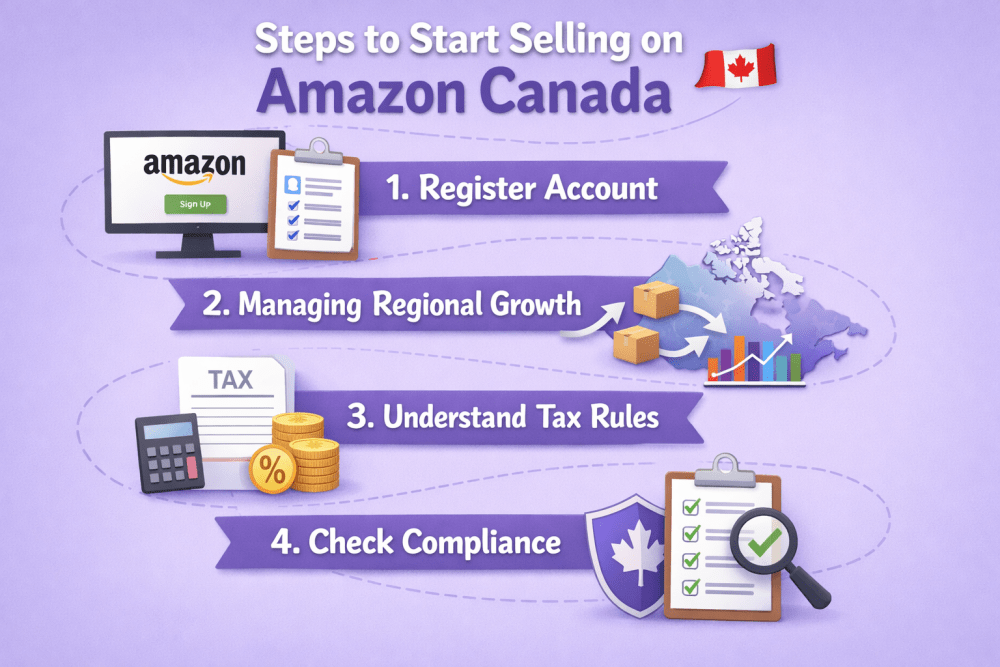
10 Steps to Start Selling on Amazon Canada
The mechanics of launching on Amazon.ca aren’t hard – but they’re not automatic either. You’ll need to handle some extra layers (taxes, compliance, fulfillment quirks), and it helps if you build things deliberately from the start instead of patching holes later. Here’s a practical breakdown of what to do – and what to avoid tripping over.
1. Register Your Account (the Right Way)
You can open a Canada-only account, or you can go with a North America Unified Account, which lets you manage the U.S., Canada, and Mexico from one place. If you’re already selling in the U.S., the unified account is the better move – it keeps everything under one login and lets you use cross-listing tools like BIL (Build International Listings). You’ll need:
- A valid government ID
- Business info and contact details
- A credit card
- A bank account (Canadian or international) for receiving payouts
- Tax registration info (more on that soon)
Even if you’re just testing the waters in Canada, it’s worth treating it like a proper business move from the start. It’ll save you time later.

2. Managing Regional Growth Without the Guesswork
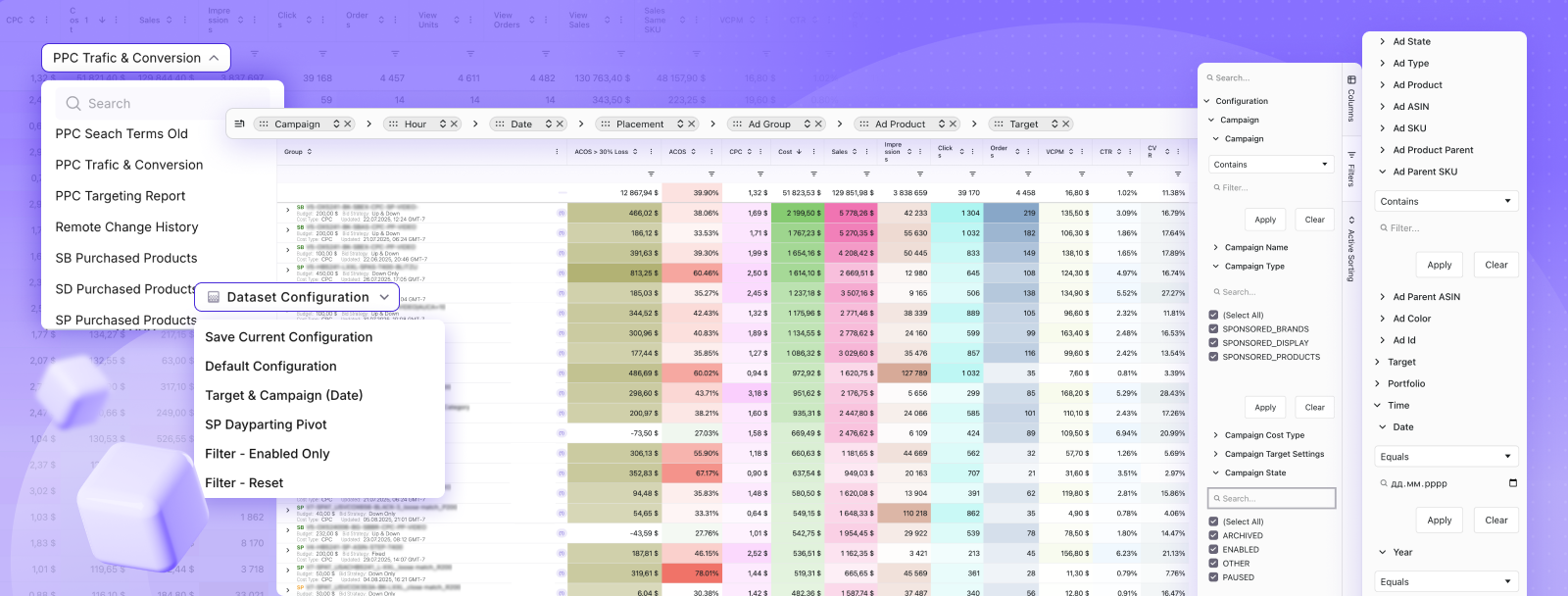
Expanding to Amazon Canada is more than just switching storefronts. New currency, new fulfillment rules, and a different customer base mean sellers need sharper visibility into what’s actually driving performance. That’s where a centralized, real-time system makes all the difference.
WisePPC is built to give marketplace sellers that clarity. We track advertising and sales data across regions in one clean dashboard, so you can see how campaigns perform in the U.S. versus Canada without switching tools. From keyword-level insights to bulk campaign edits and long-term historical data, everything is designed to replace guesswork with structured decisions.
We also stay connected beyond the platform. You’ll find us on Facebook, Instagram, and LinkedIn – sharing insights, product updates, and practical use cases from real sellers. Whether you’re testing Canada with NARF or scaling through domestic FBA, WisePPC helps you see what’s working and adjust with confidence.
3. Understand Canada’s Tax Rules (Before You Ship Anything)
This part throws off more sellers than it should. Amazon does collect GST/HST in most cases as a Marketplace Facilitator. But if your global sales exceed CAD $30,000 over four consecutive calendar quarters, you’re legally required to register for a GST/HST number and may need to handle your own filings, depending on how Amazon reports and remits tax on your behalf.
- Register for a GST/HST account with the Canada Revenue Agency
- Collect the correct sales tax (varies by province)
- File and remit those taxes quarterly or annually
It doesn’t matter if you’re based in the U.S. or Europe – if you’re storing goods in Canadian FBA warehouses or selling enough volume, you’re on the hook.
4. Don’t Just Copy Your U.S. Product Line – Check Compliance
Here’s the part most sellers skip: not everything that’s fine on Amazon.com is legal or approved on Amazon.ca. Some categories need special labeling, documentation, or French-language packaging – especially for Quebec. Before listing a product:
- Check if your category requires bilingual labeling
- Verify if it’s subject to Health Canada regulations
- Avoid assumptions – a product eligible in the U.S. can still get flagged in Canada
If you’re selling cosmetics, food, supplements, electronics, or baby items, double-check the local rules. Seriously.
5. Localize Your Listings Like You Mean It
When it comes to listings, the biggest mistake sellers make is thinking translation equals localization. It doesn’t. Sure, Amazon gives you tools like Build International Listings (BIL) to quickly copy over your product pages, and that helps – especially since many reviews and backend data can carry over. But if you’re serious about conversions, especially in Quebec, you’re going to need to go deeper.
That means rewriting your bullet points and titles with Canadian shoppers in mind, using the right spelling conventions, terminology, and even tone. French translations should be done properly – not by AI, and definitely not by plugins – because regional customers will spot a bad translation in seconds. People often overlook small details like metric units or phrases that don’t quite land in Canadian English. But these are the things that help your listing feel local instead of imported.
6. Price in CAD and Know What’s Behind the Numbers
It’s easy to forget you’re not pricing in USD anymore. But once you do, a bunch of small variables start to matter. Factor in:
- Fulfillment cost differences (NARF vs. FBA Canada)
- Exchange rate fluctuations (especially if you’re paid in USD)
- Import duties or brokerage fees if you’re the Importer of Record
- Ad performance differences – Canadian CPCs are usually lower, but volume’s smaller too
You can let BIL sync your prices automatically based on rules, or go manual if your margins need tight control.
7. Pick a Fulfillment Strategy That Fits How You Want to Scale
Choosing how you’ll fulfill orders in Canada is one of the most important operational decisions you’ll make. It affects delivery speed, conversion rate, tax obligations, and even how customers perceive your brand. You’ve got options here, and each one comes with trade-offs.
North America Remote Fulfillment (NARF)
Ships from your U.S. FBA inventory, so you don’t need to register for Canadian taxes or handle customs upfront. It’s a quick way to test demand, but comes with slower delivery compared to domestic FBA, Prime badge is available for eligible items, and cross-border fulfillment fees are higher.
Domestic FBA Canada
You send inventory directly to Amazon’s Canadian warehouses. Your products become Prime-eligible, fulfillment costs drop, and conversion usually improves. But it requires CRA registration and upfront coordination with customs.
Fulfilled by Merchant (FBM)
You ship orders yourself from your own warehouse. It gives you full control, but also means slower delivery and no Prime badge. Best for sellers with existing infrastructure or products that don’t fit well into FBA.
There’s no single “right” choice – just depends on where you’re at and how much you’re willing to manage.
8. Set Up Currency Conversion and Get Paid (Cleanly)
Getting paid sounds simple, but with Amazon.ca, you’re juggling CAD, international transfers, and fees you might not see until they hit your statement. By default, Amazon can convert your Canadian revenue and deposit it in your home currency using their built-in Amazon Currency Converter. It works – but you’re paying for the convenience through the exchange rate spread.
A better long-term option is opening a Canadian business bank account. It gives you cleaner control over cash flow, simplifies CRA tax filings, and avoids surprises tied to fluctuating exchange rates. That said, if you’re just testing the market or don’t want to go through extra paperwork up front, Amazon’s default payout method is perfectly serviceable. Just know what you’re giving up for the ease of setup.
9. Advertise – But Adjust the Strategy
You can run Sponsored Products, Sponsored Brands, and even Display Ads on Amazon.ca. But your U.S. campaigns won’t always translate cleanly. A few quick tips:
- Don’t just duplicate campaigns – rebuild them with localized keywords
- Use Canadian spellings where relevant (yes, it affects search)
- Check your targeting – some categories behave differently in Canada
- Don’t forget to localize coupon copy or offer text in French, too
Start with a small budget, then scale what’s working. Canada tends to reward patience and clean execution over aggressive tactics.
10. Track What’s Working and Where to Go Next
Once everything’s live – listings, ads, inventory – the day-to-day challenge becomes understanding what’s working and what isn’t. On the surface, Amazon’s Sell Globally dashboard gives you basic visibility into order flow and store-level metrics. But that won’t tell you why a product suddenly dropped off in Alberta, or whether a pricing change in the U.S. is tanking your CAD margins.
Canadian expansion works best when it’s tracked separately. Monitor returns. Keep an eye on regional performance. Look out for small signals – like reviews coming in French or questions about shipping speed – that might hint at bigger underlying issues. A lot of sellers treat Amazon.ca like a “lite” version of their U.S. business, but the ones that actually scale are usually the ones treating it like a standalone store. Same brand, different playbook.
What Actually Matters to Canadian Shoppers
Selling to Canadian customers isn’t just a matter of flipping on a new marketplace. There’s a different rhythm here. Expectations around delivery, pricing, language, and even customer service come with their own tone and shoppers are pretty quick to notice when something feels off.
Prime delivery still matters. But “fast” in Canada often means dependable rather than instant. A 2-4 day window with accurate tracking usually earns more trust than overpromising next-day and missing the mark. Pricing works the same way. People expect to pay in CAD, see tax-inclusive totals, and not get hit with surprise duties. Small gaps in this flow can lead to big drop-offs.
Bilingual listings also matter more than sellers think. If you’re listing in Quebec and your French copy reads like machine translation, people will spot it immediately. Natural, regionally fluent language goes a long way – just like using metric units and spelling that matches Canadian norms. These aren’t minor tweaks. They’re signals that you’re building for this market, not just copying things over.
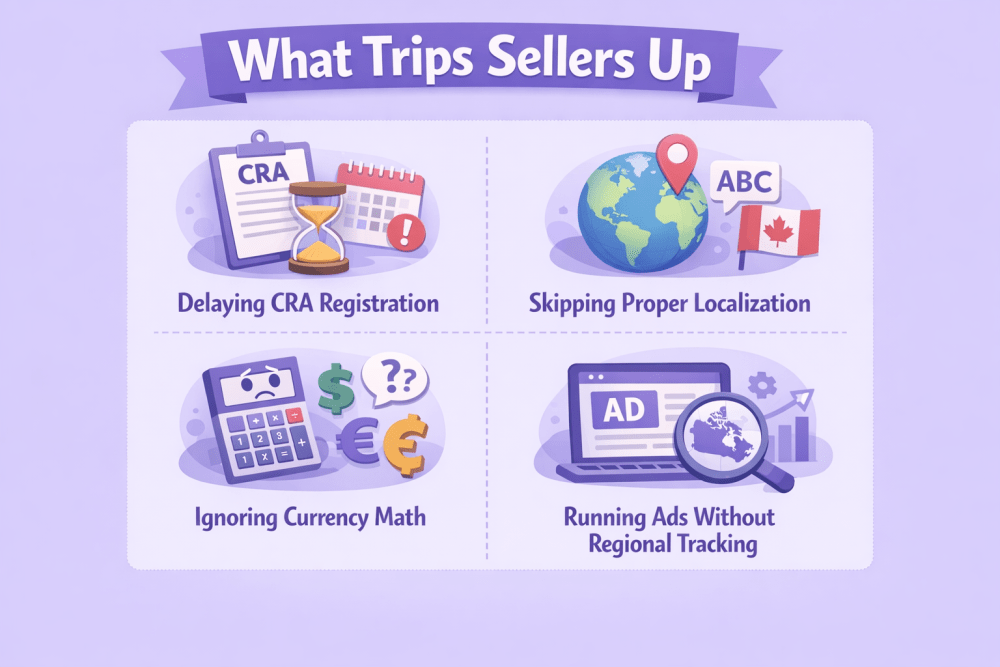
What Trips Sellers Up When Expanding to Amazon.ca
Canada feels familiar, which is exactly why it catches sellers off guard. It’s the same Seller Central, similar product categories, even the same ad formats. But under the surface, a few small missteps can quietly turn into bigger issues. Here’s where things tend to go wrong:
- Delaying CRA registration: Sellers often wait too long to register for GST/HST, assuming they’re under the CAD $30K threshold. But storing inventory in Canadian FBA centers can trigger tax obligations sooner than expected, and skipping this step creates compliance problems that are harder to fix later.
- Skipping proper localization: Copying U.S. listings and simply changing the currency isn’t enough. Quebec buyers expect real French, not machine translations, and even English-speaking provinces notice details like spelling or missing metric units.
- Ignoring currency math: U.S. pricing rarely converts cleanly into Canadian margins. Exchange rates, fulfillment differences, and built-in FX fees can quietly eat into profit if you don’t calculate the full landed cost.
- Running ads without regional tracking: Campaign performance in Canada behaves differently from the U.S., especially with lower traffic volume. Without isolating Amazon.ca data, sellers often misread results and overspend.
- Treating Canada like a side project: That mindset shows up in slower shipping, generic listings, and minimal support. Canadian customers respond better when they feel the store was built for them, not copied over as an afterthought.
Conclusion
Amazon.ca isn’t just a copy of your U.S. setup. It runs on the same backend, but the front-facing details – taxes, fulfillment, expectations – demand their own approach. Sellers who succeed here take the time to localize, to track things separately, and to make adjustments that fit the market. You don’t need to get everything right on day one. But you do need to treat it like more than just a test. That mindset – combined with clean execution – is what gives Canadian expansion real legs.
FAQ
1. Do I need a Canadian business to sell on Amazon Canada?
No, but you do need to register for a GST/HST account with the Canada Revenue Agency if you cross the CAD $30,000 sales threshold – or if you’re storing inventory in Canadian FBA centers. You can operate as a non-resident importer, but taxes and compliance still apply.
2. Can I just ship orders from my US warehouse using NARF?
Yes, and it works for testing the waters. But it comes with slower delivery times, no Prime badge, and usually lower conversion rates. For serious volume or brand trust, domestic FBA Canada tends to win out.
3. Do I need to list in both English and French?
Not always. For most Amazon.ca listings, English is enough – though French is recommended, especially for Quebec. But packaging and labels for regulated products (like food or cosmetics) must be bilingual by law, and Amazon enforces this for some categories.
4. Will Amazon handle Canadian sales tax for me?
Usually, yes. Amazon.ca acts as a Marketplace Facilitator and collects GST/HST on most orders. If you’re not registered or use a non-resident tax ID, Amazon remits it for you. But if you have a standard GST/HST number, you may still need to file and remit taxes yourself.
5. Are ad strategies different for Amazon.ca?
They are. Smaller traffic, different keyword behavior, and regional language quirks all shift how campaigns perform. Duplicating US ads rarely works cleanly. You’re better off building campaigns from scratch using localized search data.
 No credit card required