
 EN
EN  ES
ES  FR
FR  DE
DE  IT
IT  KO
KO  JA
JA  ZH
ZH  AR
AR  PT
PT  TR
TR PL
PL
Reselling on Amazon is one of those business ideas that sounds easy on paper. And in some ways, it is. You find products at the right price, list them on Amazon, and pocket the margin. But like most things, the devil’s in the details – picking products that’ll actually sell, dealing with fees, staying ahead of the competition, and not letting your profit get eaten alive by overhead.
When you do get it right, though, it can turn into a solid side income or even a full-on business. You don’t need to reinvent the wheel – just understand how the platform works and make smarter choices along the way.
So How Does Amazon Reselling Actually Work?
At the core, reselling is about buying low and selling higher – classic margin play. You source products at a cheaper price, list them on Amazon, and your profit is whatever’s left after all the Amazon fees (and there are plenty).
Amazon takes its cut through referral fees, fulfillment charges, storage costs, and a few other line items. If you go the FBA (Fulfilled by Amazon) route, you ship your stuff to Amazon and they take care of packing, delivery, returns, and customer service. Super convenient – but not cheap.
If you prefer more control, FBM (Fulfilled by Merchant) lets you handle shipping yourself. Fewer fees, but more work (and more chances to mess up logistics).
Also worth noting: Amazon’s Buy Box is basically the holy grail. If multiple sellers list the same product, only one gets that main “Add to Cart” spot. To win it, you’ll need competitive pricing, solid reviews, and reliable stock. Miss that, and your listing might never get seen.
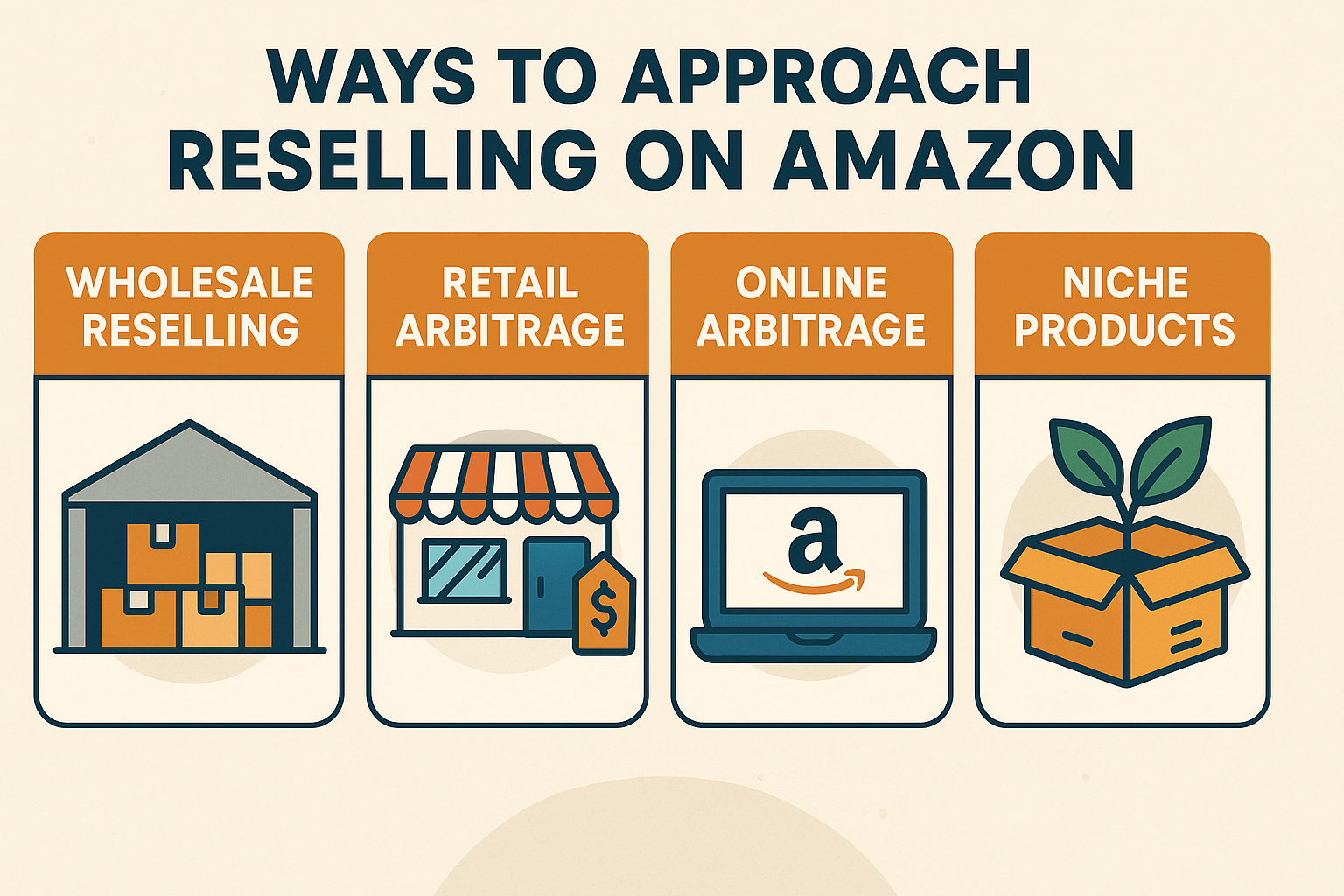
Different Ways to Approach Reselling on Amazon
Not all resellers follow the same playbook. How you run things depends a lot on how you want to source products and how much time or money you’re willing to invest up front.
Wholesale Reselling
You buy directly from manufacturers or authorized distributors in bulk. It’s predictable, clean, and Amazon usually likes the paperwork. The catch? You’ll need to buy bigger quantities and tie up more cash upfront to make the margins work.
Retail Arbitrage
This is the scrappy, hands-on version. You literally walk into stores, scan barcodes in the clearance section, and look for products you can flip. The thrill of the hunt is real. But inventory’s inconsistent, and it takes time.
Online Arbitrage
Same idea as retail arbitrage, but you’re scouring online deals instead of driving store to store. Easier to scale, less legwork, but you’ve gotta factor in shipping delays and costs when doing the math.
Seasonal & Niche Products
Some sellers go deep into timing or tight niches. Think Christmas lights in November or collector toys all year. If you hit the right window or community, margins can be great. But if demand dries up, you’re stuck holding unsellable stock.
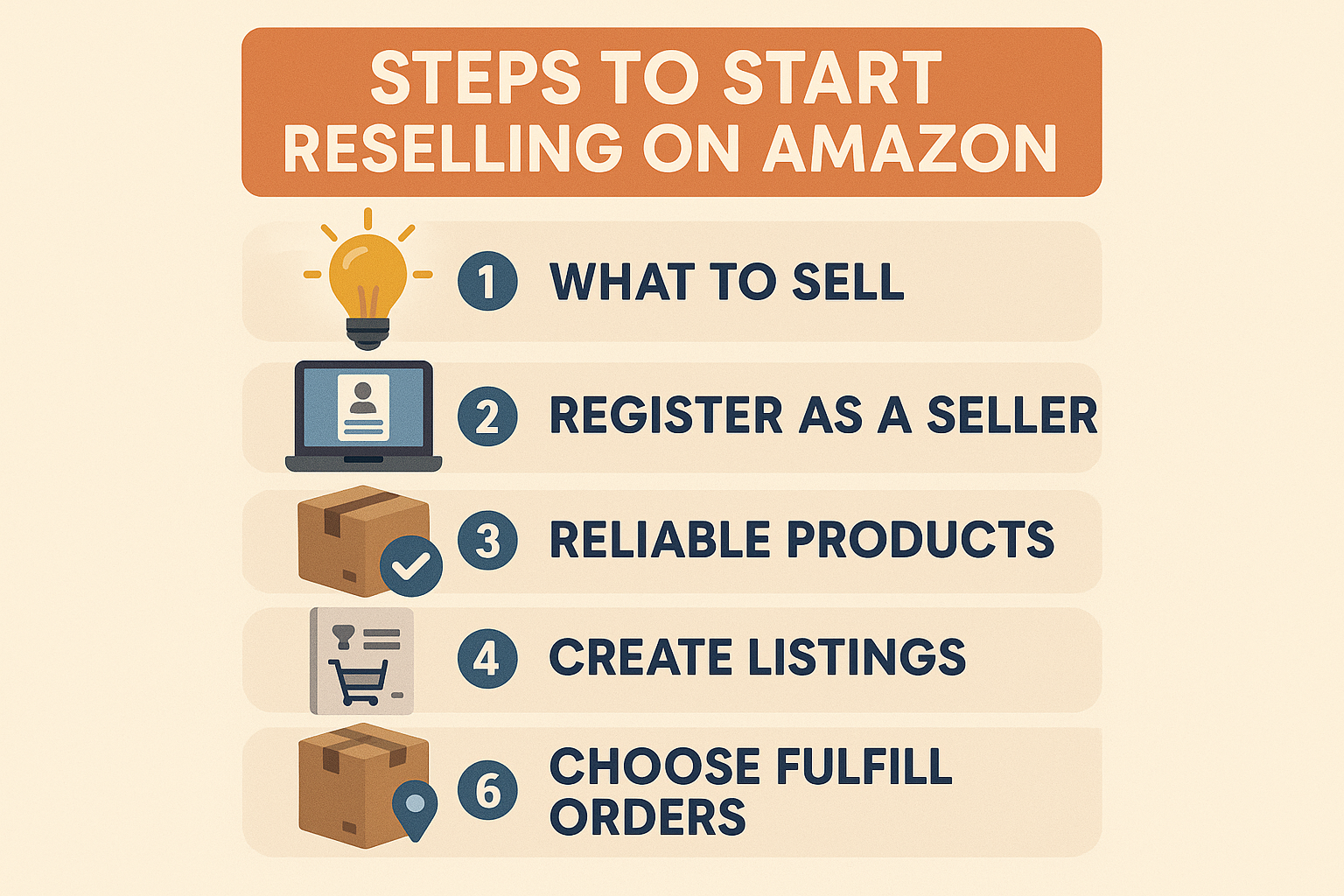
Practical Steps to Start Reselling on Amazon
Reselling can look overwhelming at first, but broken into steps it’s much more manageable. Think of it as setting up the foundation of any business: product choice, registration, sourcing, and scaling.
1. Figure Out What to Sell
Start by looking at what actually moves on Amazon. Browse the Best Seller lists, use product research tools, and dig into keyword trends. Don’t just chase hype.
A quick checklist:
- Track best seller rankings (BSR) for steady movers
- Compare competition levels with keyword tools
- Calculate potential profit after Amazon fees
- Test small batches before committing to volume
2. Register as a Seller
Amazon offers two selling plans:
- Individual – $0.99 per sale + fees (better for small volumes)
- Professional – $39.99 monthly + fees (ideal if you expect regular sales)
Setting up is straightforward. You’ll need your business info, tax details, and a bank account. Once verified, you’ll have access to Seller Central – your control panel for listings, orders, and reports.
3. Source Reliable Products
Your suppliers can make or break your reselling game. Go for sources that offer real invoices and consistent quality.
Key considerations:
- Always request invoices and keep them on file
- Order samples before large batches
- Verify safety standards and packaging requirements
- Avoid gray-market or unverifiable stock
4. Create Listings That Stand Out
Good listings sell. Focus on clear titles, detailed descriptions, high-quality images, and relevant keywords. Amazon lets you match existing listings, but building your own page gives you more control.
Tips that help:
- Use keyword tools to find search terms buyers use
- Upload images that show product details clearly
- Write descriptions that answer questions before they’re asked
5. Choose How You’ll Fulfill Orders
You’ve got two options:
- Fulfillment by Amazon (FBA): Amazon stores, packs, and ships for you. Easier to scale, but fees add up.
- Fulfillment by Merchant (FBM): you handle storage and shipping yourself. Lower cost per sale, more hands-on work.
FBA makes sense if you want Amazon Prime visibility and don’t want logistics stress. FBM suits sellers with their own storage and shipping setup.

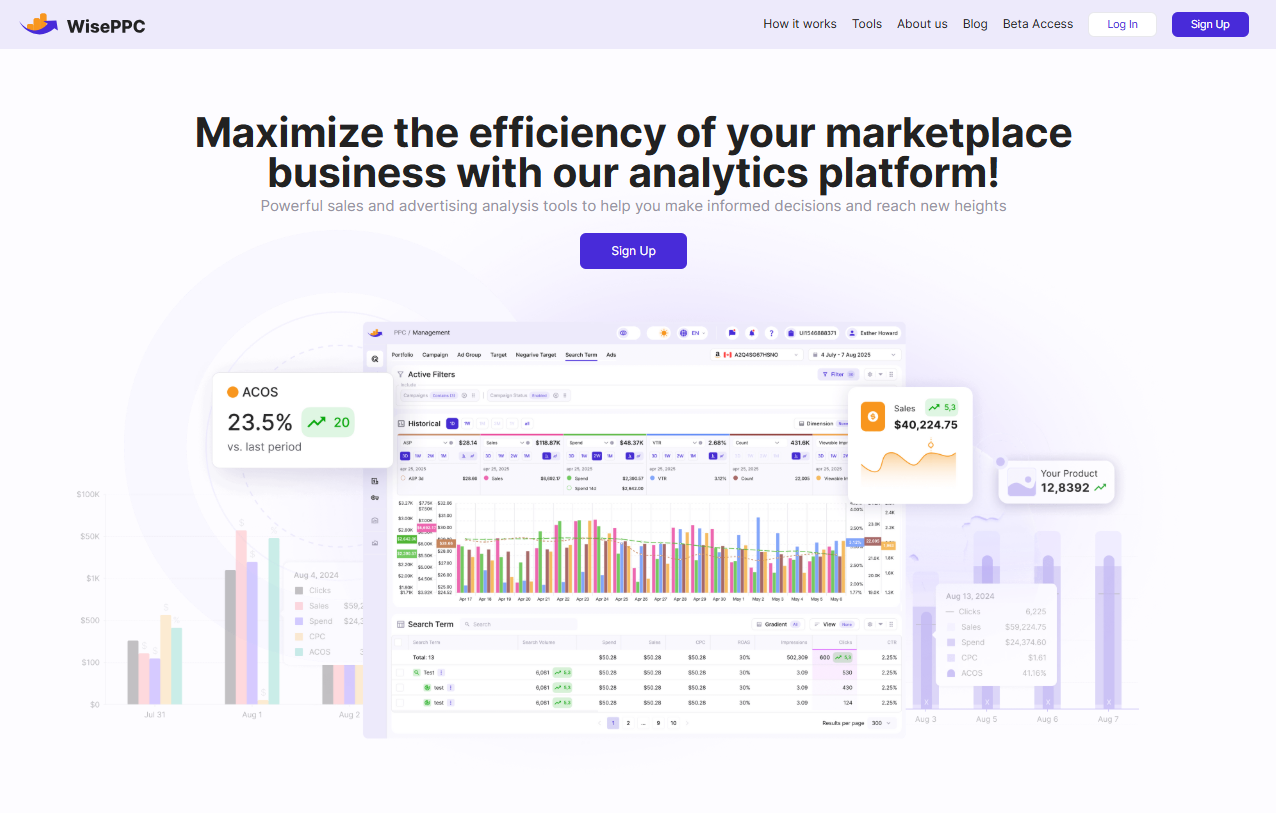
6. Monitor Performance and Scale Smarter (WisePPC Insight)
Once you’re up and running, data becomes your biggest lever. At WisePPC, we built our analytics platform for exactly this – helping sellers see what drives sales, whether ads or organic traffic, and where money is wasted. With real-time metrics, automated bid adjustments, and long-term data storage, you can scale decisions with confidence instead of guesswork.
We’ve seen users improve efficiency by up to 30% simply by replacing manual tracking with clear dashboards. If you’re serious about growth, tools like ours give you that edge. You can connect with us on Instagram, Facebook, or LinkedIn to follow updates and insights directly.
Smarter Ways to Keep Your Amazon Reselling Profitable
Margins are fragile on Amazon. A few missteps – like ignoring fees or pricing too low – can erase your gains. Profitability isn’t just about making sales; it’s about keeping enough of each sale after costs to build something sustainable.
Focus on Products With Healthy Margins
Not every product that sells well will make you money. Always run the numbers: purchase cost, Amazon referral fee, FBA or shipping costs, storage fees, and even returns. If the math leaves you with razor-thin margins, walk away.
Avoid the Race to the Bottom
Competing only on price usually ends badly. A cheaper price might win you the Buy Box today, but it eats into your margin long term. Instead, think about competitive – but not desperate – pricing. Use tools like automated pricing rules to stay flexible without undercutting yourself.
Build Around Quality, Not Just Quantity
High return rates or poor reviews will hurt your account more than slow sales. Selling solid, well-reviewed products lets you charge slightly more, keep fewer complaints, and hold your ground in competitive categories.
Track Data, Not Gut Feelings
Guessing what works is risky. Keep an eye on performance metrics – conversion rates, ad spend vs. sales, inventory turnover. The resellers who scale are usually the ones who treat data as part of their daily routine.
Mistakes That Can Sink Your Amazon Reselling Business
Even experienced sellers slip up when margins are tight and competition is high. Spotting the traps early helps you avoid expensive lessons.
- Ignoring Amazon’s restrictions: Listing branded or gated items without approval can get your account flagged fast. Always check category rules before sourcing.
- Underestimating fees: Referral fees, FBA charges, storage costs, and returns add up. Skipping the math upfront often means selling at a loss.
- Chasing bad products: Low-quality or counterfeit goods might look profitable on paper, but poor reviews and high return rates will bury your account.
- Overstocking or stockouts: Too much inventory racks up storage fees; too little means missed sales. Balance is critical.
- Competing only on price: Constantly undercutting others may win the Buy Box for a while, but you’ll burn through margins and train shoppers to expect discounts.
- Neglecting customer service: Slow responses, poor packaging, or ignoring returns push down your seller rating and visibility.
Moving From Reselling to Building Your Own Brand
Reselling is often the entry point. You learn how Amazon works, test categories, and build cash flow. But long-term, many sellers find that reselling alone keeps them locked in competition on the same listings as everyone else. That’s where brand-building comes in.
Creating your own branded line – whether private label or original products – shifts the game. Instead of fighting for the Buy Box on someone else’s listing, you own the page, the reviews, and the customer relationship. It takes more upfront effort: finding a manufacturer, designing packaging, building a brand story. But the payoff is greater control and higher margins. With Amazon’s Brand Registry, you also unlock tools that resellers don’t have access to:
- Enhanced content and A+ product pages
- Stronger protection against counterfeit sellers
- Advanced reporting and analytics
- Brand-focused advertising options
The shift doesn’t mean you have to stop reselling. Many sellers run both side by side: reselling to generate steady sales while gradually launching branded products. Done well, it moves you from just flipping inventory to building a business that stands on its own.
Conclusion
Reselling on Amazon isn’t complicated, but it’s also not something you can wing. The sellers who make it work understand their numbers, source with care, and treat data as a daily guide. Whether you stick with reselling or use it as a launchpad into building your own brand, the opportunity is there if you approach it with focus and patience. Start small, test what works, and refine along the way – profitability is more about consistency than quick wins.
FAQ
1. Is reselling on Amazon legal?
Yes, reselling is allowed as long as the products are genuine and in the right condition. Some brands and categories require approval, so always check before listing.
2. Do I need a business license to resell?
Not necessarily. Many start as individual sellers, but if you want to scale and work with wholesale suppliers, having a registered business often helps with trust and paperwork.
3. Which is better: FBA or FBM?
It depends. FBA makes life easier since Amazon handles storage, shipping, and returns. FBM gives you more control and can be cheaper if you already have logistics in place.
4. How much money do I need to start?
You can begin with just a few hundred dollars by testing retail or online arbitrage. Wholesale usually requires more capital upfront, often in the thousands, to buy bulk stock.
5. What’s the hardest part of reselling?
Margins. It’s easy to make sales but harder to keep enough profit after fees, shipping, and returns. Staying on top of numbers and avoiding low-quality products is key.
6. Can reselling turn into a full-time business?
Yes, many sellers build it into a steady income stream. For some, it’s a side hustle; for others, it’s the stepping stone toward launching their own private label brand.
 No credit card required