
 EN
EN  ES
ES  FR
FR  DE
DE  IT
IT  KO
KO  JA
JA  ZH
ZH  AR
AR  PT
PT  TR
TR PL
PL
If you’ve ever searched for a product on Amazon and found exactly what you wanted on the first page, you’ve already seen SEO in action. Most buyers never scroll beyond page two, so if your products aren’t ranking high, they’re probably invisible to most shoppers.
The good news is that improving your listing’s visibility isn’t about luck or expensive ads. It’s about understanding how Amazon’s search engine works and optimizing your product pages so they speak its language. This guide walks through the essentials of Amazon SEO, how the algorithm decides what to show, and practical ways to make your listings perform better.
Understanding How Amazon SEO Really Works
Amazon SEO (search engine optimization) is about helping your products appear higher in search results when customers type in keywords. Unlike Google, which tries to answer questions, Amazon’s search algorithm focuses on one thing: matching buyers with products they’re most likely to purchase.
Every product page on Amazon is indexed by keywords, sales data, and performance metrics. When a shopper types “wireless headphones,” Amazon’s algorithm (called A9 or its newer version A10) scans its database to decide which listings are most relevant.
Relevancy isn’t just about using the right words; it’s about proving through performance that customers trust your listing.
Here’s what Amazon looks for:
- Relevance: Do your title, bullets, and backend keywords match what the customer typed?
- Performance: Are people clicking on your product and actually buying it?
- Customer satisfaction: Do you have good reviews, solid ratings, and a low return rate?
Amazon’s algorithm connects all these signals to one main goal: maximize revenue per click. In other words, it wants to show products that convert well. Once you understand that, SEO stops feeling like guesswork and becomes a system you can influence with smart adjustments.
The Core Factors Behind Product Rankings
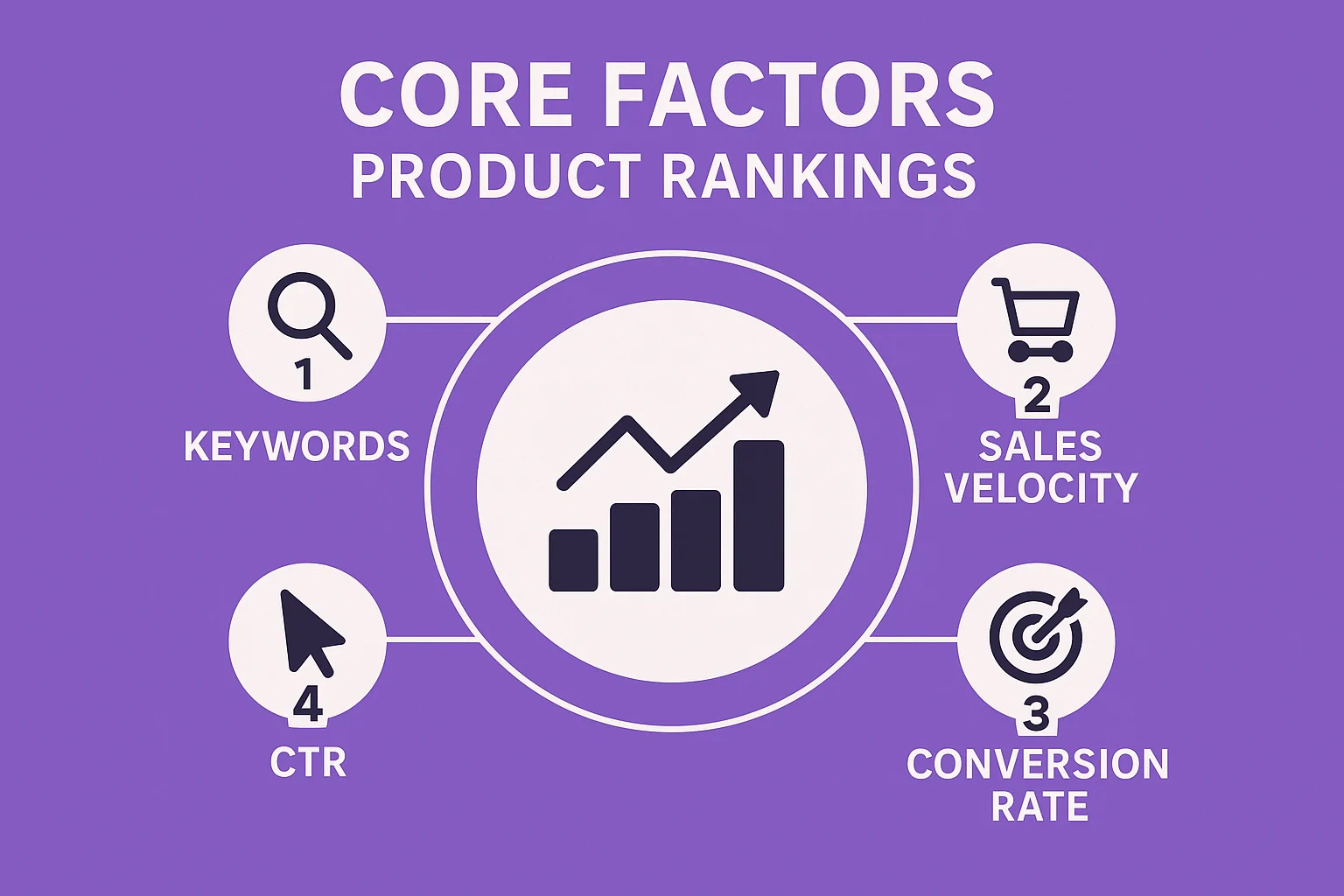
There’s no official Amazon manual for SEO, but after years of observing updates and patterns, sellers know which factors move the needle. Let’s look at the main ones and what you can actually control.
1. Keywords: Your Listing’s Foundation
Keywords tell Amazon what your product is. The platform doesn’t automatically know that your “soft bamboo sheets” belong in “bedding.” You have to feed it that context. Use a mix of broad and long-tail phrases, such as:
- “Bamboo bed sheets”
- “Soft breathable sheets”
- “Eco-friendly queen bedding set”
Avoid stuffing them everywhere. Instead, place them naturally in:
- The product title (your most important keyword spot)
- Bullet points (to describe features and benefits)
- Product description (to tell the story behind the item)
- Backend search terms (for extra visibility without affecting readability)
2. Sales Velocity
Amazon rewards listings that sell consistently. The faster your product sells compared to others in the same category, the higher it can rank. To improve sales velocity, consider running short-term discounts or coupons to drive a burst of quick orders. You can also use Amazon PPC ads to give new listings an initial push and attract early buyers. Just as important, maintain a steady stock level so you don’t run out of inventory, since a sudden gap in availability can slow momentum and lower your ranking.
3. Conversion Rate
Even if you attract visitors, your ranking will fall if they don’t buy. Conversion rate is calculated as total orders divided by page visits.
Boosting conversions usually comes down to:
- High-quality images
- Clear titles
- Competitive pricing
- Positive reviews
Each small improvement adds up, signaling to Amazon that your listing satisfies buyers better than others.
4. Click-Through Rate (CTR)
CTR measures how many people click your product when it appears in search results. If your title or image doesn’t grab attention, your CTR will drop. Think of your main image as your digital storefront. It should stand out against competitors with clean lighting, a white background, and accurate product representation.

How WisePPC Helps You Rank Higher and Sell Smarter
At WisePPC, we know that improving product rankings on Amazon takes more than keywords or lucky timing. It’s about understanding how every part of your business connects: ads, inventory, pricing, and analytics, and making them work together. That’s exactly what our platform was built for.
We designed WisePPC as an all-in-one system to simplify how sellers manage their performance across marketplaces like Amazon and Shopify. Instead of juggling separate tools for campaigns, sales, and stock levels, you get a single dashboard that brings it all together. You can see how your ads are performing, track which keywords are driving conversions, and forecast demand before stock runs low.
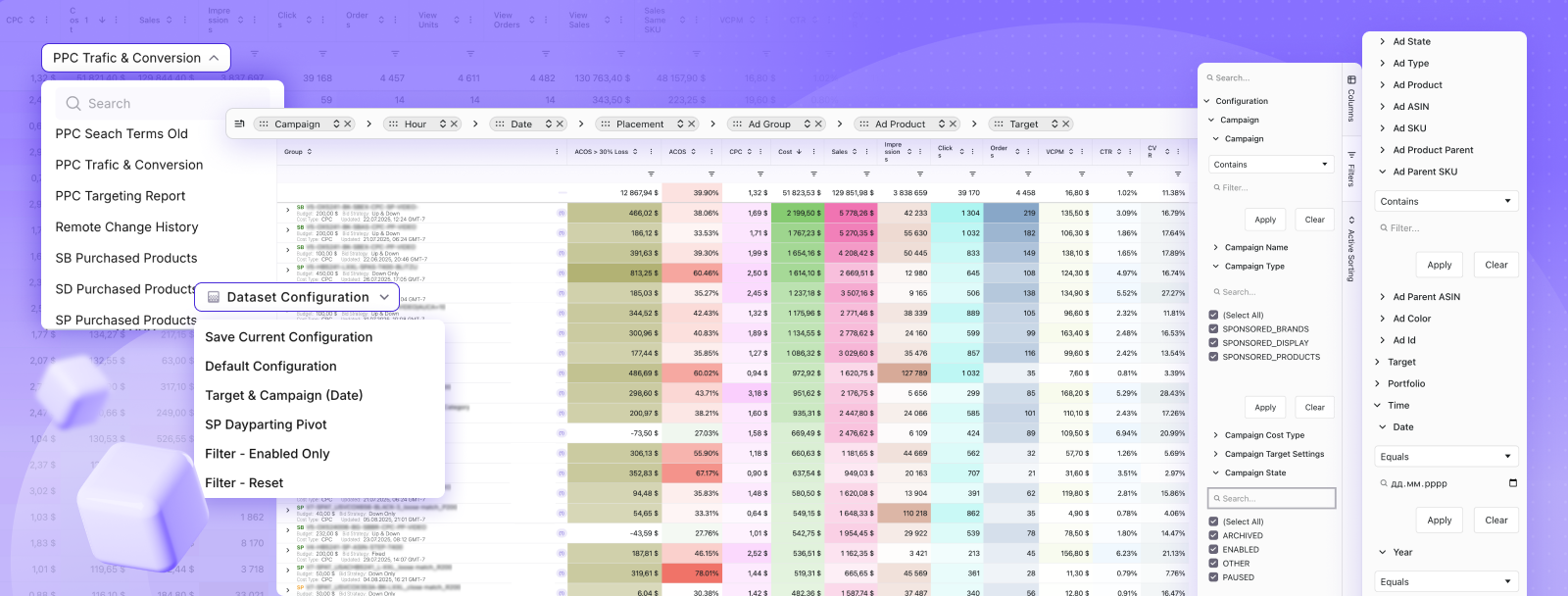
With WisePPC, you can:
- Automate ad campaigns so your promotions stay active and efficient without constant manual adjustments.
- Monitor keyword performance in real time and refine your listings based on what actually drives sales.
- Track inventory and pricing trends to stay competitive and avoid costly stockouts.
- Forecast demand with data-driven precision to plan ahead for seasonal shifts or product launches.
- Integrate analytics across channels like Amazon, Shopify, and others to get a complete view of your marketplace performance.
Because we’re an Amazon Ads Verified Partner, our integrations follow Amazon’s official best practices for optimization and reporting. That means the data you see in WisePPC is accurate, compliant, and ready to guide your next move. Whether you’re launching your first product or managing a global catalog, we help you scale efficiently with clarity, not guesswork.
In short, our goal is to make your Amazon SEO strategy stronger by giving you the tools to measure and improve it. When you can see every piece of your sales performance in one place, you’re not just reacting to rankings – you’re shaping them.
Building a Strong Amazon Listing from the Ground Up
Optimizing an Amazon listing isn’t about writing flowery descriptions. It’s about structuring the content the way Amazon’s interface and shoppers naturally process it.
Here’s a breakdown of what matters most, from top to bottom.
Above the Fold: First Impressions
Everything a shopper sees before scrolling: your images, title, price, rating, and Buy Box, decides whether they stay or click away.
- Product Title: Your title should blend clarity with search optimization. Start with the most relevant keyword, followed by key attributes like brand, color, or quantity. Example: “EcoSoft Bamboo Sheets – Queen Size, 4-Piece Set, Breathable and Hypoallergenic Bedding.”
- Images: Use all available slots (usually 7). Include lifestyle shots, close-ups, and infographics that show product details or benefits. People buy with their eyes first.
- Price and Prime Badge: A fair price paired with fast delivery can make or break conversions. If possible, use FBA to qualify for Prime shipping.
- Bullet Points: Your bullet points should act as a mini sales pitch. Each one should focus on one benefit, not just a feature.
Example:- Soft, eco-friendly bamboo fabric that keeps you cool all night.
- Deep-pocket design fits mattresses up to 18 inches.
- Machine washable and long-lasting quality.
Below the Fold: The Details That Close the Sale
If someone scrolls further, it means they’re interested but not convinced yet. This is where your description, A+ content, and reviews step in.
- Product Description or A+ Content: Tell your story, highlight the use cases, and answer potential buyer questions. If you have access to A+ Content, use visuals, comparison charts, and icons to make it engaging.
- Reviews: Encourage reviews through automated requests or Amazon’s “Request a Review” button in Seller Central. A consistent stream of honest reviews improves both rankings and trust.
Keyword Research: The Smart Seller’s Advantage
You can’t optimize for what you don’t understand. Keyword research is the foundation of Amazon SEO, and doing it right separates strong sellers from the rest.
Finding the Right Keywords
Start with the Amazon search bar. Type a few words related to your product and note the auto-suggestions that appear. These phrases reflect what real customers are typing every day. To dig deeper, use reliable keyword tools to analyze three things:
- Search volume: how many people look for the term
- Competition level: how many listings already target it
- Conversion intent: whether the keyword suggests purchase interest or just casual browsing
Balancing Short-Tail and Long-Tail Terms
A good strategy mixes broad “short-tail” keywords with specific “long-tail” ones.
For example:
- Short-tail: wireless earbuds
- Long-tail: noise-cancelling wireless earbuds with mic
Short-tail keywords help with visibility, while long-tail terms attract more qualified buyers who are closer to purchasing.
Organizing Keywords by Purpose
Once you’ve built your keyword list, sort it into three groups:
- Primary keywords belong in your product title and first bullet point.
- Secondary keywords fit naturally throughout the bullet points and description.
- Backend keywords cover alternative spellings, abbreviations, and related terms that don’t fit into the visible content.
Writing Naturally
Amazon’s algorithm recognizes relevance even when you don’t repeat the same keyword multiple times. Write naturally and focus on readability. Overusing keywords makes listings sound robotic and can reduce conversions. The best listings read smoothly, answer buyer questions, and make the product sound appealing without feeling forced.
Improving CTR and Conversion with Better Content and Design
Even the most keyword-optimized listing won’t perform if shoppers don’t click or buy. Presentation plays a huge role here – your visuals, messaging, and overall perceived value all influence results.
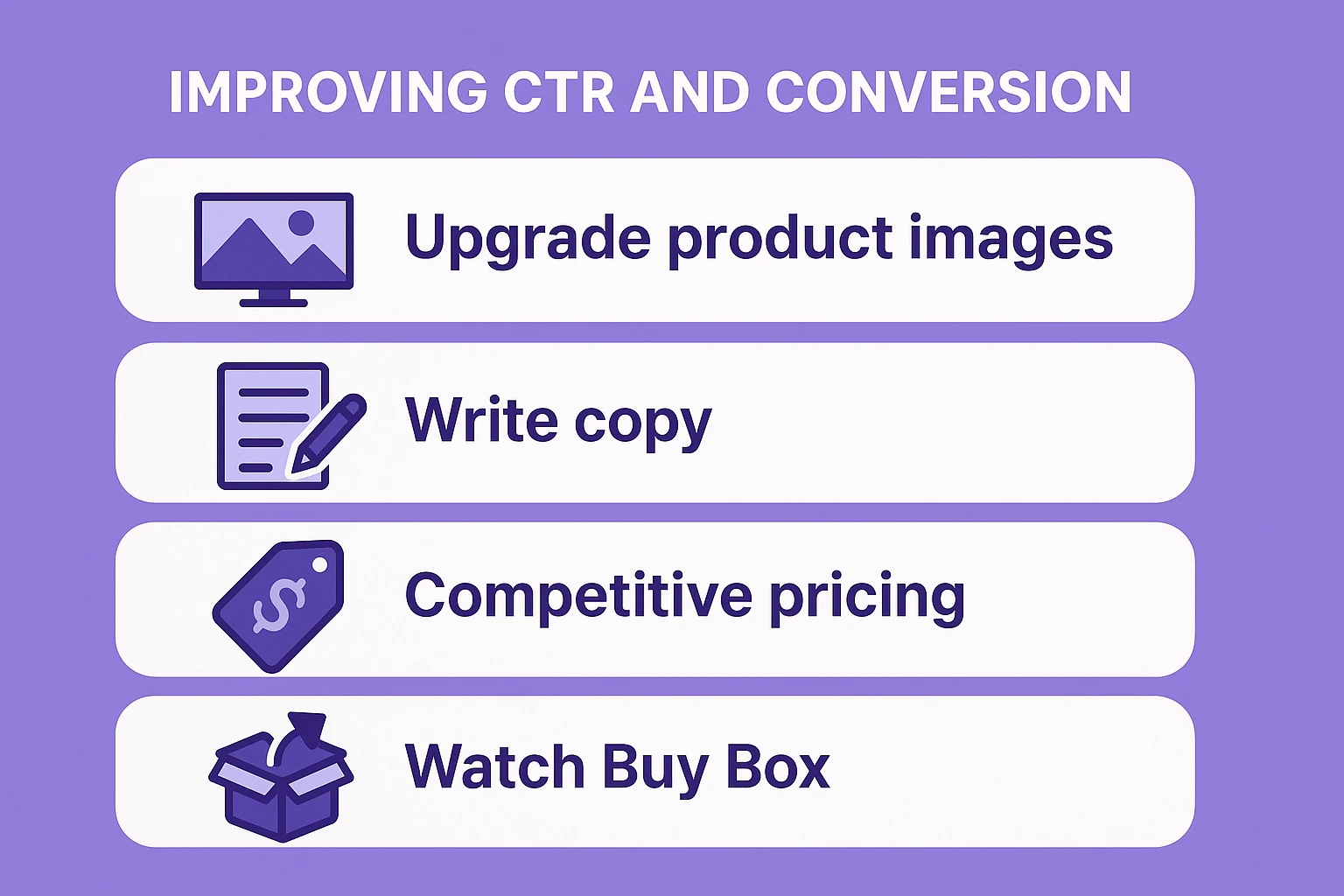
To improve click-through and conversion rates, focus on these key areas:
- Upgrade your product images: Use bright, professional photos that fill at least 85% of the frame. Include one or two lifestyle shots that show the product in use, and add an infographic highlighting dimensions, materials, or features. Avoid cluttered backgrounds or unnecessary text overlays.
- Write copy that converts: Your description should make sense to humans first, algorithms second. Aim for clarity and relevance instead of overusing keywords. Avoid robotic phrasing like “best quality premium product high performance durable,” and instead write naturally: “This phone stand holds your device steady during calls or streaming, with adjustable angles for the perfect view.”
- Set competitive pricing: Amazon shoppers compare options instantly. If your price is much higher than others in the same category, even a strong listing won’t save conversions. Use dynamic pricing tools or WisePPC analytics to monitor competitors and adjust when needed.
- Watch the Buy Box: Securing the Buy Box means your offer appears as the default when shoppers click “Add to Cart.” Factors like pricing, fulfillment method, stock availability, and seller rating all influence whether you win it.
A listing that looks trustworthy, reads clearly, and offers good value not only improves ranking signals but also helps build long-term customer confidence.
Beyond the Basics: Advanced SEO Tactics That Actually Work
Once your listing is properly structured and keyword-optimized, you can push further using advanced tactics that Amazon’s best sellers rely on.
1. Use A+ Content for Storytelling
A+ Content (available to Brand Registered sellers) lets you add modules with visuals, comparison tables, and brand narratives. It not only makes your page look professional but also helps with conversions. Products with A+ Content often see a sales lift of 5–10%.
2. Drive External Traffic
Amazon loves it when listings bring in visitors from outside. Social media posts, blog features, or influencer shoutouts can improve your ranking because Amazon sees this as growing demand. You can track the impact through Amazon Attribution links.
3. Run Amazon PPC Strategically
PPC ads can boost visibility, especially for new listings. Use automatic campaigns first to gather data, then switch to manual targeting with your best-performing keywords. Monitor your ACoS (Advertising Cost of Sale) and refine continuously.
4. Maintain Strong Account Health
Amazon tracks your entire seller performance. Late shipments, poor feedback, or listing errors can affect your ranking. Regularly review your account health dashboard to stay compliant.
5. Monitor Algorithm Updates
Amazon occasionally adjusts its ranking formula. Stay updated through Seller Central announcements or Amazon community discussions. Even small updates can shift how the system weighs keywords, pricing, or reviews.
Measuring Results and Keeping Momentum
SEO on Amazon isn’t a one-time task; it’s a continuous cycle of testing, tracking, and refining. The most successful sellers treat it like a regular health check for their business rather than a temporary campaign.
Start by monitoring key performance metrics such as keyword rankings, click-through rate (CTR), conversion rate (CVR), sales velocity, and customer reviews. Together, these numbers reveal how your listings are performing and where small changes might make a big difference.
It also pays to experiment. Use Amazon’s “Manage Your Experiments” to test different titles, main images, or descriptions. Often, subtle variations can deliver unexpected improvements in performance. The key is to keep learning and adapting instead of assuming your first setup will always stay effective.
Above all, stay focused on the customer. Amazon’s algorithm mirrors buyer behavior, rewarding listings that genuinely meet shopper expectations. Consistently offering quality products, clear details, and reliable service will always do more for your rankings than any quick SEO trick. Real success on Amazon comes from earning trust – both from your customers and from the platform itself.
Final Thoughts: Playing the Long Game with Amazon SEO
Improving your product listings with Amazon SEO isn’t about shortcuts or secret hacks. It’s about building strong, trustworthy pages that help customers make confident buying decisions. When your listings are well-written, visually appealing, and backed by solid data, Amazon’s algorithm naturally rewards them.
Start by tightening your basics: clear keywords, strong titles, and professional images. Then, build on that foundation with pricing strategies, reviews, and external traffic. Over time, these steps compound, lifting your products higher in search results and helping your business grow steadily.
The sellers who win on Amazon aren’t just chasing algorithms – they’re building experiences that convert visitors into long-term buyers. Keep refining, keep testing, and let the data guide your next move.
Frequently Asked Questions
What is Amazon SEO and why does it matter?
Amazon SEO is the process of optimizing your product listings so they appear higher in Amazon’s search results. It matters because most buyers never look past the first page. The higher your listing ranks, the more visibility, clicks, and sales you can generate.
How does the Amazon algorithm decide which products to show first?
Amazon’s algorithm (often called A9 or A10) looks at several factors: keyword relevance, sales performance, conversion rates, and customer satisfaction. Listings that sell well, include relevant search terms, and maintain good reviews are rewarded with better visibility.
Where should I use keywords in my product listing?
Place your main keywords in the title, bullet points, and product description. Secondary or related terms can go in the backend keyword field within Seller Central. Avoid keyword stuffing – it’s better to write naturally while still using relevant search phrases.
How can I improve my click-through rate (CTR)?
CTR depends on first impressions. Use clear, professional images and a descriptive title that matches what shoppers are searching for. Competitive pricing and visible Prime eligibility can also increase clicks.
What’s the best way to increase my conversion rate?
High-quality visuals, detailed descriptions, and positive reviews build trust and drive conversions. Make sure your product page answers every possible question a shopper might have before they buy.
Do reviews affect Amazon SEO rankings?
Yes. Reviews and star ratings signal to Amazon that customers trust your product. Listings with higher ratings and consistent review activity often rank better because they indicate strong buyer satisfaction.
 No credit card required