
 EN
EN  ES
ES  FR
FR  DE
DE  IT
IT  KO
KO  JA
JA  ZH
ZH  AR
AR  PT
PT  TR
TR PL
PL
On the surface, selling on Amazon seems easy enough: grab something people want, toss it on the site, and boom – sales start rolling in. But once you get into it, the cracks show fast. Fees sneak up on you, product research gets overwhelming, and suddenly you’re googling stuff like, “Do I need a barcode?” at 2 a.m.
This guide is for beginners who want to actually start selling without falling into every trap out there. Whether you’re just curious or seriously considering it as a business, we’ll walk you through what matters. No buzzwords. No fluff. Just the stuff that works.
Start With the Big Picture: What Are You Really Getting Into?
Before you start worrying about shipping labels or product images, take a breath and zoom out. Selling on Amazon basically means putting your store inside the world’s busiest online marketplace. Sounds cool, right? But it also means playing by Amazon’s rules and wrapping your head around things like seller fees, category restrictions, and customer expectations.
You’re not just uploading a product. You’re basically running a mini retail business on borrowed real estate.

Getting Started: From Picking a Model to Making Your First Sale
If you’re not careful in the early stages, it’s easy to waste money, time, and motivation. This part covers the beginning steps – the kind that actually matter if you want to get that first sale without pulling your hair out.
Step 1: Choose a Selling Model That Fits You
There’s no one-size-fits-all here. The best model for you depends on your goals, time, and how much cash you’re willing to risk upfront. Here’s a quick breakdown of the main options:
Private Label
This is the route for folks who want to build something of their own. With private label, you’re creating a branded product, usually sourced from somewhere like Alibaba, and selling it under your name. Think of it like launching your own mini brand inside Amazon.
It’s not the cheapest model to start with. You’ll likely need to invest upfront in inventory, packaging, and branding. But the upside? You control the product, the margins are better, and you’re not fighting other sellers for the same Buy Box spot.
Retail Arbitrage
Retail arbitrage is kind of like modern-day treasure hunting. You find discounted or clearance items at local stores – think Target, Walmart, or even dollar stores – and flip them on Amazon for a profit.
It’s fast and cheap to get started, which makes it super appealing to beginners. But it also takes time and hustle. You’re driving around, scanning barcodes, and hoping the store hasn’t changed the price since your last visit. Fun? Sometimes. Scalable? Not really.
Online Arbitrage
This one’s the cousin of retail arbitrage, but you’re doing all the sourcing online. Instead of driving around town, you’re scrolling through websites like Walmart, Walgreens, or eBay looking for underpriced products you can resell.
It’s convenient – you can do it in your pajamas – but you’ll face stiffer competition, and finding profitable products can take a lot of clicking and patience. Still, for people who want to ease into Amazon selling without leaving the house, it’s a solid intro.
Wholesale
Wholesale sellers buy inventory in bulk from authorized distributors or manufacturers, then resell those products on Amazon. You’re usually selling established brands that people already trust, which can make things easier in some ways.
It’s a more systemized model that can grow fast once it’s dialed in, but it takes some paperwork and effort to get going. For wholesale, you may need to establish relationships with authorized distributors, which could require a business license depending on the supplier and jurisdiction. Check specific requirements before starting.
Dropshipping
Dropshipping sounds simple on paper: you list a product, a customer buys it, and your supplier ships it straight to them. You never touch the inventory, which cuts down on overhead.
But here’s the catch, Amazon is very strict about dropshipping. If your supplier messes up or ships late, it’s your account that takes the hit. So while it’s tempting because of the low upfront cost, it comes with risk. You’ve got to be on top of your supplier relationships or things can spiral fast.
Handmade
If you’re the crafty type, Amazon Handmade gives you a way to sell your own creations, whether that’s jewelry, candles, woodwork, or something else entirely. It’s like Etsy, but inside Amazon’s ecosystem.
This model is perfect for artists and makers who want to get their work in front of more eyes. Just keep in mind it’s not easily scalable. Since everything is made by you, the business grows as fast as your hands can work.
If you just want to test things out, go with retail or online arbitrage. If you’re in it for the long haul, private label or wholesale might be worth the deeper dive.
Step 2: Set Up Your Seller Account
Head to Amazon Seller Central and walk through the signup. You’ll have two options:
- Individual Plan: No monthly fee, but Amazon takes $0.99 per item sold. Good for hobby-level sellers.
- Professional Plan: $39.99/month, but no per-item fee. You’ll need this if you plan to sell 40+ items/month or want more tools.
They’ll ask for the usual stuff – ID, credit card, tax info, bank account. Don’t overthink it. Just get the account open and you can tweak later.
Step 3: Find a Product That Won’t Flop
This is where most beginners get stuck. You’re not looking for what you like—you’re looking for something that actually sells.
Good starter criteria:
- Sells for $15–$50 (affordable and easier to move).
- Low competition (not flooded with sellers or reviews).
- Solid demand (aim for at least 300 sales/month).
- Small/light (cheaper to ship and store).
- Evergreen (not seasonal or trendy).
- Not gated (stick to unrestricted categories for now).
You don’t need every box checked, but the more, the better.
Step 4: Choose Your Fulfillment Method (FBA or FBM)
You’ve got two main ways to handle shipping:
- FBA (Fulfilled by Amazon): You send inventory to Amazon, and they handle storage, shipping, returns, and customer service. You also get the Prime badge, which helps with visibility. The downside? It ain’t cheap. But it’s way easier for beginners.
- FBM (Fulfilled by Merchant): You store and ship the products yourself. This can be cheaper, especially if you’ve got space or the items are oversized. But you’ve gotta handle shipping, tracking, and angry emails if something goes wrong.
If you’re just getting started and want fewer headaches, FBA is probably your best bet.
Step 5: Build Your Product Listing
If your product already exists on Amazon, just jump on the existing listing. If not, you’ll have to create one from scratch.
Key listing components:
- Title: Clear, keyword-rich, under 200 characters.
- Images: Clean, high-quality, include lifestyle shots.
- Bullets: Focus on benefits, not just features.
- Description: Use keywords, but write like a human.
- Backend Keywords: Stuff that helps with search but doesn’t belong in the front-facing text.
Make it look good and sound like it’s written for real people, not search engines.
Step 6: Ship Inventory to Amazon (FBA Only)
If you’re using FBA, here’s what to do next:
- Create a shipping plan in Seller Central.
- Label each product with its FNSKU.
- Pack securely (Amazon’s picky).
- Print and attach labels.
- Ship via UPS using Amazon’s discounted rates.
Bonus tip: snap a photo of the box contents before you seal it. If something gets lost, it could save you a huge headache.
Step 7: Launch and Start Getting Sales
Congrats, your listing’s live! But don’t expect sales to magically happen, you’ll need to give it a push.
Things that help:
- Run Amazon PPC ads: Start small, tweak as you go.
- Request reviews: Use Amazon’s built-in request tool.
- Optimize: Keep testing your listing content.
- Stay in stock: Running out can tank your ranking.
Don’t waste money on ads if your listing’s not solid. Get that right first.

What Can Go Wrong and How to Avoid the Mess
Selling on Amazon definitely has its perks, but that doesn’t mean it’s all smooth sailing. If you’re not careful, it’s surprisingly easy to trip over the same mistakes that sink a lot of new sellers. Here’s where things tend to fall apart, and what you can do to sidestep the drama.
Ordering Too Much, Too Soon
It’s tempting, right? You find a product you think will sell and figure, “Why not just order 500 units and go all in?” But unless you’ve actually tested the waters, you’re gambling more than you realize. That inventory could sit untouched for months or worse, never sell at all. Now you’re out the cash and stuck with boxes you can’t move.
Start with a small batch. Get a feel for how buyers respond, tweak your listing if needed, and collect real data before you start scaling. Playing it safe in the beginning isn’t being cautious, it’s being smart.
Underestimating How Much Amazon Takes
This one sneaks up on a lot of sellers. You make a sale and feel great, until you realize how much of that money is already spoken for. Between referral fees, storage charges, FBA fulfillment costs, and ad spend, your profit margin can disappear in a blink.
Don’t guess. Use a proper fee calculator and factor in every cost before you price your product. You’d be surprised how often sellers are technically losing money and don’t realize it until it’s too late. Know your numbers. Run the math. It’s not the fun part, but it’ll save your business.
Accidentally Breaking the Rules
Amazon has a whole ecosystem of restricted categories, like health products, beauty items, or electronics, that require approval before you can sell in them. And if you list something without realizing it’s gated? Well, Amazon doesn’t really do “gentle warnings.” You’ll get flagged, possibly suspended, and find yourself buried in appeal emails.
Always check the category rules before sourcing a product. It might take a few extra minutes upfront, but it’s way better than dealing with a suspended listing later on.
Picking the Wrong Supplier
If your supplier drops the ball, your business pays the price. It doesn’t matter if they ship late, send the wrong item, or stop answering emails altogether – your customers are going to blame you, not them. And so will Amazon.
A bad supplier can tank your reviews, wreck your seller metrics, and even get your account flagged. That’s why you never want to skip the vetting process. Order samples. Check references. Ask annoying questions. The cheapest option isn’t always the smartest one.
Getting Suspended Out of Nowhere
Here’s the harsh truth: Amazon won’t hesitate to suspend your account if they think you’ve broken a rule, even if it was an honest mistake. Maybe it’s a policy you missed, a delayed shipment, or a confusing return issue. Whatever the cause, once you’re suspended, it can take weeks (or longer) to get reinstated, and in the meantime, you’re cut off from sales and payouts.
Read the seller policies. Know what’s allowed and what’s not. Even if something seems minor, it could end up being a big deal in Amazon’s eyes. Don’t cut corners. Staying compliant is just part of the job.
Smarter Ads, Less Guesswork
Let’s be honest – Amazon ads can get messy fast. That’s why we built WisePPC. Our platform helps sellers make sense of what’s working (and what’s wasting money) without digging through spreadsheets all day.
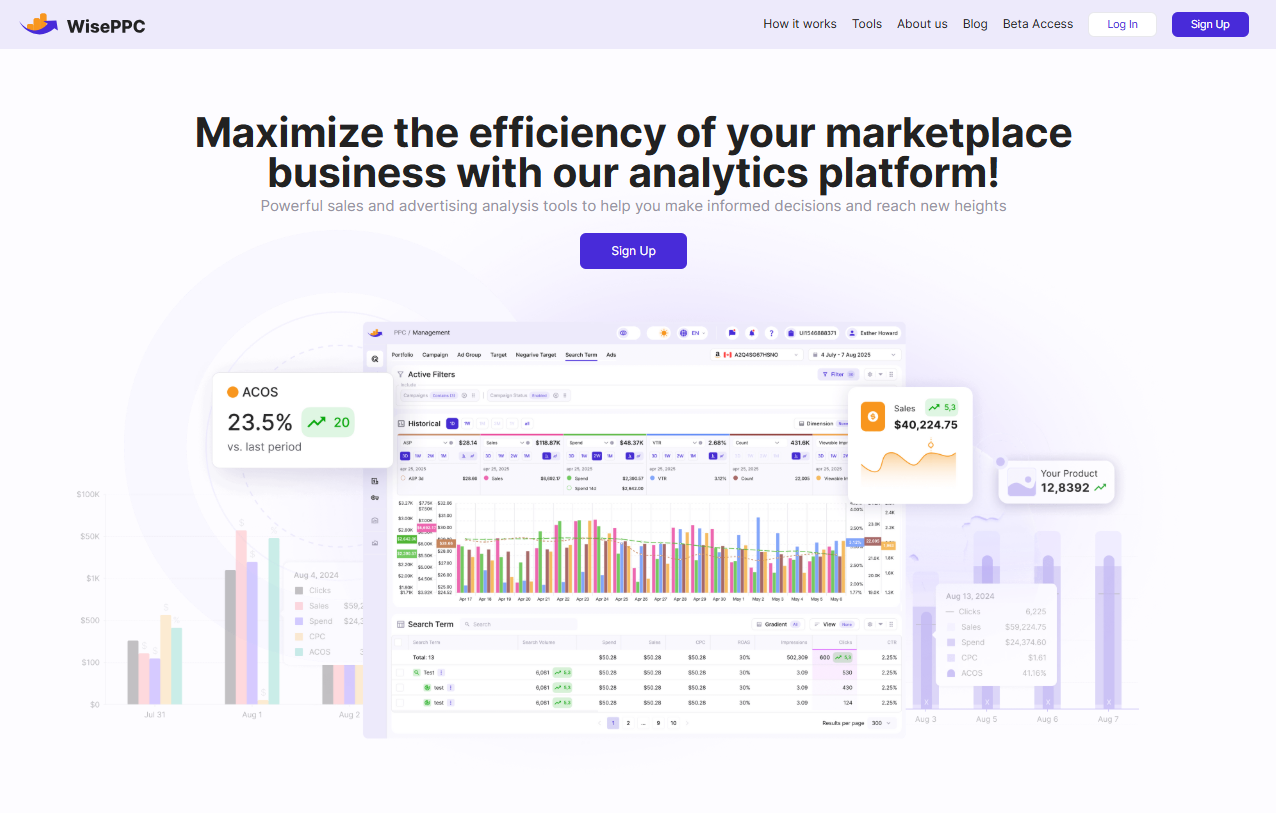
We track everything in real time, help you fine-tune campaigns, and give you actual insights – not just noise. Plus, we’re an official Amazon Ads Verified Partner, so you know we’re doing things the right way. If you’re serious about growing, we’re here for it.
Final Thoughts: Is Selling on Amazon Worth It?
Yep, if you treat it like a business.
You don’t need a warehouse or a full-time schedule to start. You just need a plan, some patience, and the willingness to learn as you go. Will it be perfect? Nope. Will you make mistakes? For sure. But if you stay flexible and take it one step at a time, it’s totally doable.
FAQ
1. Do I need a business to start?
Not right away. You can sign up as an individual using your personal info. Later, if things grow, you can switch to a business setup.
2. How much do I need to start?
Anywhere from $200 to $5,000 depending on your model. Arbitrage is cheapest, private label costs more.
3. Is it too late to start selling now?
Not at all. There’s more competition, sure, but also more tools and better info. The key is doing it smart, not fast.
4. What if my product doesn’t sell?
Worst case, you might have to discount it or pay storage fees. That’s why you test small first. Don’t bet the farm upfront.
5. Can I do this with a full-time job?
Absolutely. A lot of people start part-time. FBA handles the heavy lifting, so evenings and weekends are plenty to get rolling.
 No credit card required