
 EN
EN  ES
ES  FR
FR  DE
DE  IT
IT  KO
KO  JA
JA  ZH
ZH  AR
AR  PT
PT  TR
TR PL
PLHow to Make Money on Amazon Without Guesswork
Amazon isn’t just a place to shop – it’s one of the biggest platforms in the world for making money online. Whether you’re into selling your own products, flipping retail finds, designing t-shirts, or writing ebooks, there’s probably a way to turn that into income here. But let’s be real – there’s a lot of noise out there. Some advice sounds too good to be true, and a lot of it glosses over the effort it actually takes to succeed.
This guide strips things down to what really works. From the most hands-on selling models to completely passive income streams, we’ll break down the pros, the tradeoffs, and how to get started – no fluff, no weird hacks, and no hype. Just solid ways to build something real.
So, How Do You Actually Make Money on Amazon?
At its core, making money on Amazon comes down to one thing: offering something people want, and doing it better or at least more efficiently than the next person. That could mean selling physical products, creating digital ones, sharing affiliate links, or even delivering packages. There’s no one-size-fits-all approach here, which is exactly why it works for so many people.
Some folks go all-in with private label brands and data-driven strategies. Others just list a few used books or promote cool gadgets through social media and earn a little on the side. The point is, Amazon gives you the infrastructure – tools, traffic, trust – and then it’s on you to plug in where it makes sense.
It’s not passive magic. There’s usually a learning curve, and yeah, you might mess up a listing or overprice something in the beginning. But if you’re willing to experiment, track what works, and keep things customer-friendly, there’s room to grow. That’s the real secret – it’s less about hacking the system and more about staying in the game long enough to figure out what clicks.

Different Ways to Make Money on Amazon (and Which Might Work for You)
There’s no single blueprint for making money on Amazon, and that’s kind of the beauty of it. Some people build full-time businesses selling physical products. Others design t-shirts, self-publish books, or earn commissions just by sharing links. Whether you’re looking for something hands-on or a bit more passive, there’s probably a path that fits your skills and goals. Below are several approaches – some more effort-heavy, others more plug-and-play – so you can see what feels right for you.
1. Selling Products: A Starting Point for Many
One of the most common ways to earn is by selling products. But even within this lane, you’ve got different options depending on your budget, interests, and risk tolerance.
Retail Arbitrage
This is where you buy products locally (think clearance racks or outlet deals) and resell them on Amazon at a markup. It’s often how beginners get started because the barrier to entry is low. You don’t need a brand or manufacturer – just a sharp eye for deals. Just know that Amazon may ask for receipts to verify authenticity, and bargain-hunting takes time and hustle.
Wholesale Reselling
Instead of one-off deals, wholesale means buying inventory in bulk directly from brands or distributors. You get better pricing and a steady supply, but it does require upfront investment and sometimes approval from brands to resell their products. If you’re organized and want something more predictable than arbitrage, this might be a good fit.
Selling Used Items
Books, electronics, collectibles – there’s a surprising demand for secondhand stuff on Amazon. If you enjoy thrifting or have quality items gathering dust, this is a simple way to get started without a lot of risk.
Just a few things to keep in mind:
- Accuracy matters: You need to describe item condition honestly.
- Customer service still counts, even for used goods.
- Margins can vary wildly, so track costs carefully.
2. Build a Brand With Private Label Products
Private labeling is a bigger leap but offers long-term potential. Instead of selling generic items, you create your own branded version of an existing product. You might work with a manufacturer overseas, design custom packaging, and build a distinct presence on Amazon.
Most sellers doing this use Fulfillment by Amazon (FBA), which means Amazon stores your inventory and handles the shipping and customer service. Your listing is eligible for Prime, and that’s a trust signal many buyers look for.
Why private label can pay off:
- No one else is selling your product – you’re not fighting over the same listing.
- It scales easily. Once your first product succeeds, adding more is straightforward.
- You control pricing, packaging, and branding.
But it’s not passive. Researching products, dealing with suppliers, and managing quality control all take time and care. That said, the upside is real if you’re willing to put in the work.
3. Print-on-Demand: Creative and Low-Risk
If you’re the artsy type or just enjoy clever design, print-on-demand (POD) is worth a look. Amazon Merch on Demand lets you upload designs and sell them on t-shirts, hoodies, and other items, with Amazon handling production and shipping. Alternatively, platforms like Printify allow you to create print-on-demand products and integrate them with your Amazon Seller Central account for sales. When someone places an order, the platform prints and ships the item. You earn a royalty or margin on each sale.
Here’s why POD is appealing:
- No inventory or shipping to deal with.
- Great for creatives who want to test ideas quickly.
- You only produce when you sell – no wasted stock.
The challenge? Making designs that actually sell. You’ll still need to do keyword research, write good product descriptions, and market your listings to stand out.
4. Self-Publish With Kindle Direct Publishing
Writers, coaches, educators – if you’ve got something to say or teach, Amazon’s Kindle Direct Publishing (KDP) gives you a way to get it out there. You can publish eBooks or paperbacks and sell them in the Kindle store without going through a publisher.
KDP pays royalties up to 70% on eBooks (if priced between $2.99 and $9.99), and around 60% for paperbacks, minus print costs. You can publish as many books as you want and still keep all your rights.
KDP works well for:
- Novelists and nonfiction writers.
- Creators of journals, planners, or workbooks.
- Thought leaders building a platform or passive income stream.
It’s worth noting: your job doesn’t end at publishing. You’ll still need to promote your book, gather reviews, and optimize your listing.
5. Dropshipping: Minimal Upfront Cost, Maximum Vigilance
With dropshipping, you don’t keep any inventory. Instead, when someone buys from your Amazon listing, your supplier ships the item directly to the customer. You’re basically the middleman, but that doesn’t mean it’s hands-off.
Amazon has strict dropshipping policies, and to stay compliant, you must:
- Be the seller of record (not the supplier).
- Ship in packaging that doesn’t reference the supplier.
- Handle customer service and returns like any other seller.
To do dropshipping well:
- Pick suppliers who know how Amazon works.
- Order samples before listing anything.
- Keep some margin in your pricing to cover delays or returns.
It’s not the easiest model to maintain at scale, but it can work with the right partners.
6. Amazon Handmade: A Home for Crafters
If you’re making jewelry, art, home goods, or anything else handmade, Amazon Handmade is worth exploring. It’s a curated section of Amazon where buyers specifically look for unique, artisan-made items.
You’ll need to apply and be approved, and you’ll need a Professional Seller account (which is often free for Handmade sellers). Unlike regular Amazon selling, you’ll handle your own shipping and fulfillment, but the audience is large and willing to pay for one-of-a-kind products.
What helps you stand out:
- Sharp, well-lit product photos.
- Descriptions that tell the story behind your items.
- Consistent quality and timely fulfillment.
7. Make Money Without Selling Anything
Maybe physical products aren’t your thing. Amazon still offers ways to earn without touching inventory. These options work well for creators, influencers, or anyone with spare time and digital skills.
Amazon Associates (Affiliate Marketing)
You sign up, get unique links to Amazon products, and earn a commission when someone buys through your link. It’s ideal for bloggers, YouTubers, and social media content creators. Even if they don’t buy the exact product you linked to, you still earn on their total purchase.
Amazon Influencer Program
If you’ve got a solid following, you can take it a step further. Influencers get a custom storefront on Amazon to feature and recommend products. When followers buy from that page, you get paid.
Amazon Mechanical Turk
This is Amazon’s crowdsourced task marketplace. You’ll do small tasks like data labeling, surveys, or image analysis. It doesn’t pay much, but it’s flexible and good for casual side income.
Amazon Flex
If you have a car and want to earn locally, you can deliver packages through Amazon Flex. Pay averages $18–$25 per hour, and you choose your shifts. It’s basically gig driving, but for Amazon packages.
Tips to Improve Earnings (No Matter Which Route You Take)
Success on Amazon isn’t just about what you sell – it’s also how you run things behind the scenes. Here are a few practical tips that apply to nearly every model:
- Use Amazon’s tools: Track your performance metrics, check your seller health, and use ad dashboards or A/B testing where available.
- Register your brand: With Brand Registry, you get access to better marketing tools and protection against counterfeit sellers.
- Leverage automation: Tools like automated pricing and campaign management can help you stay competitive without micromanaging everything.
- Focus on reviews: Happy customers drive long-term success. Encourage honest feedback and handle complaints promptly.
- Stay in stock: Running out of inventory can tank your ranking and sales. Monitor your inventory levels carefully or use forecasting tools.
How WisePPC Help You Grow Smarter on Amazon
At WisePPC, we know that making money on Amazon isn’t just about listing a product and hoping for the best. It’s about understanding what’s working, what’s not, and where your money is really going. That’s where we come in. We’ve built a powerful analytics and ad management platform that gives marketplace sellers the tools they need to grow – faster, smarter, and with less guesswork.
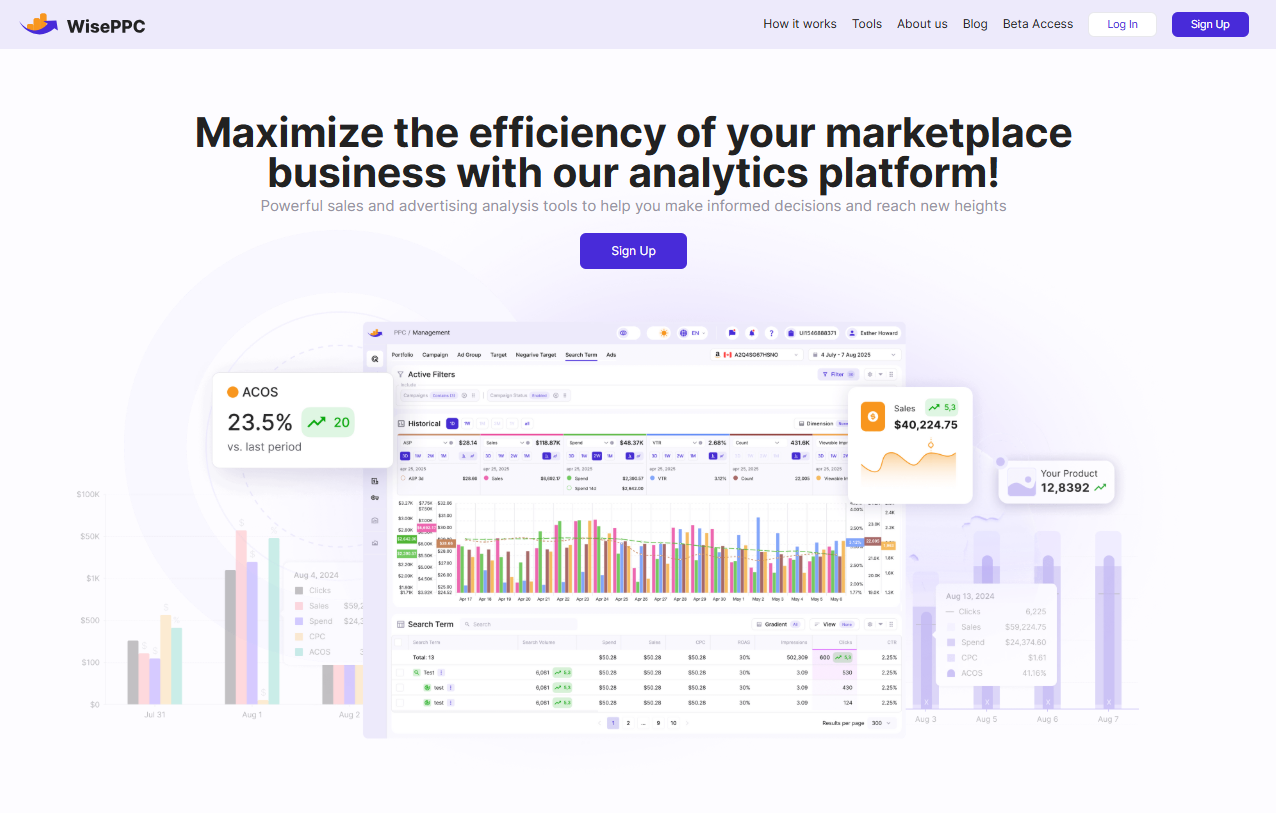
As an Amazon Ads Verified Partner, we help sellers track performance metrics, monitor campaign data in real time, and make decisions that actually move the needle. Whether you’re managing a handful of products or hundreds, we make it easier to spot what’s profitable, cut what’s wasting, and scale with confidence. Our platform was built for serious sellers who want more control, less chaos, and real insights that lead to better margins and long-term success. If you’re looking to make money on Amazon sustainably, we’re here to help you do it right.
Conclusion
Making money on Amazon takes time, research, and effort. Most people don’t get rich overnight, and anyone promising that probably isn’t being honest. But with the right approach and realistic expectations, it can be a solid way to earn extra income or even build a sustainable business.
Whether you’re selling handmade crafts, self-publishing a book, or just promoting cool stuff you love, there’s room to grow. The key is choosing a model that fits your skills, budget, and time, and then sticking with it long enough to see results.
FAQ
1. Can you actually make good money on Amazon, or is it all hype?
You can absolutely make good money on Amazon, but it’s not a plug-and-play cash machine. Some sellers earn six figures, but most folks start out slower and build up over time. The people who tend to do well are the ones who treat it like a business, not a lottery ticket. You’ve got to test, learn, and adapt constantly. So yes, it’s possible, but it’s not automatic.
2. How much do I need to get started?
It depends on the route you take. You could try retail arbitrage with just a couple hundred bucks or go all-in with a private label product that might cost a few thousand. Print-on-demand, affiliate marketing, and KDP are much cheaper entry points. The bigger investment usually comes in time – learning the system, building a strategy, and sticking with it long enough to see real results.
3. Is Fulfillment by Amazon (FBA) worth it for beginners?
If you’re planning to sell physical products, FBA can be a game-changer. It handles shipping, storage, and customer service, which frees you up to focus on growth. That said, it’s not free. There are storage fees, fulfillment fees, and some fine print you’ll want to read. But if you want to scale and offer Prime shipping without managing a warehouse, FBA is worth considering.
4. Do I need a registered business to sell on Amazon?
Technically, no, you can sell as an individual. But if you’re planning to take it seriously, registering a business (even a basic sole proprietorship or LLC) can help with taxes, credibility, and setting up things like a separate bank account. It’s not mandatory, but it’s something most full-time sellers eventually do.
5. How long does it take to start making money?
Some people get sales within days, others take months. If you already have a product or audience, that speeds things up. But for most beginners, it takes a while to learn the platform, get visibility, and start converting. Expect a learning curve and plan for it, because the people who treat this like a long game usually come out ahead.
Start Your Free 30-Day Trial Today
Start your 30-day free trial today. No credit card required. From an Amazon Ads Verified Partner you can trust.
 No credit card required
30-day free trial
Access metrics Amazon Ads won’t show you
No credit card required
30-day free trial
Access metrics Amazon Ads won’t show you