
 EN
EN  ES
ES  FR
FR  DE
DE  IT
IT  KO
KO  JA
JA  ZH
ZH  AR
AR  PT
PT  TR
TR PL
PL
If you’ve ever stared at Amazon’s endless product catalog wondering, “What should I sell?”, you’re not alone. Between the trending gadgets, kitchen organizers, and oddly specific fitness gear, figuring out what actually moves and makes money can feel like a guessing game. But it doesn’t have to be. The most successful Amazon sellers don’t rely on luck. They use a mix of data, observation, and tooling to cut through the noise and find opportunities with real sales potential and manageable competition. In this guide, we’ll walk through how to do just that, step by step. Whether you’re brand new to the platform or trying to scale smarter, the goal is simple: help you find products worth selling, not just products that look good on paper. Let’s get into it.
Why Product Selection Matters More Than Ever
With more than 60% of Amazon’s sales now coming from third-party sellers, competition is fierce. You’re not just trying to sell a product – you’re entering a space where margins are tight, reviews matter, and attention is hard to earn. That’s why choosing the right product upfront can make or break your entire business.
The wrong product can leave you with slow-moving inventory, negative reviews, and profit margins that vanish after fees. The right one, though, opens the door to compounding success: repeat customers, organic ranking, and scalable profits. It all starts with what you choose to sell.
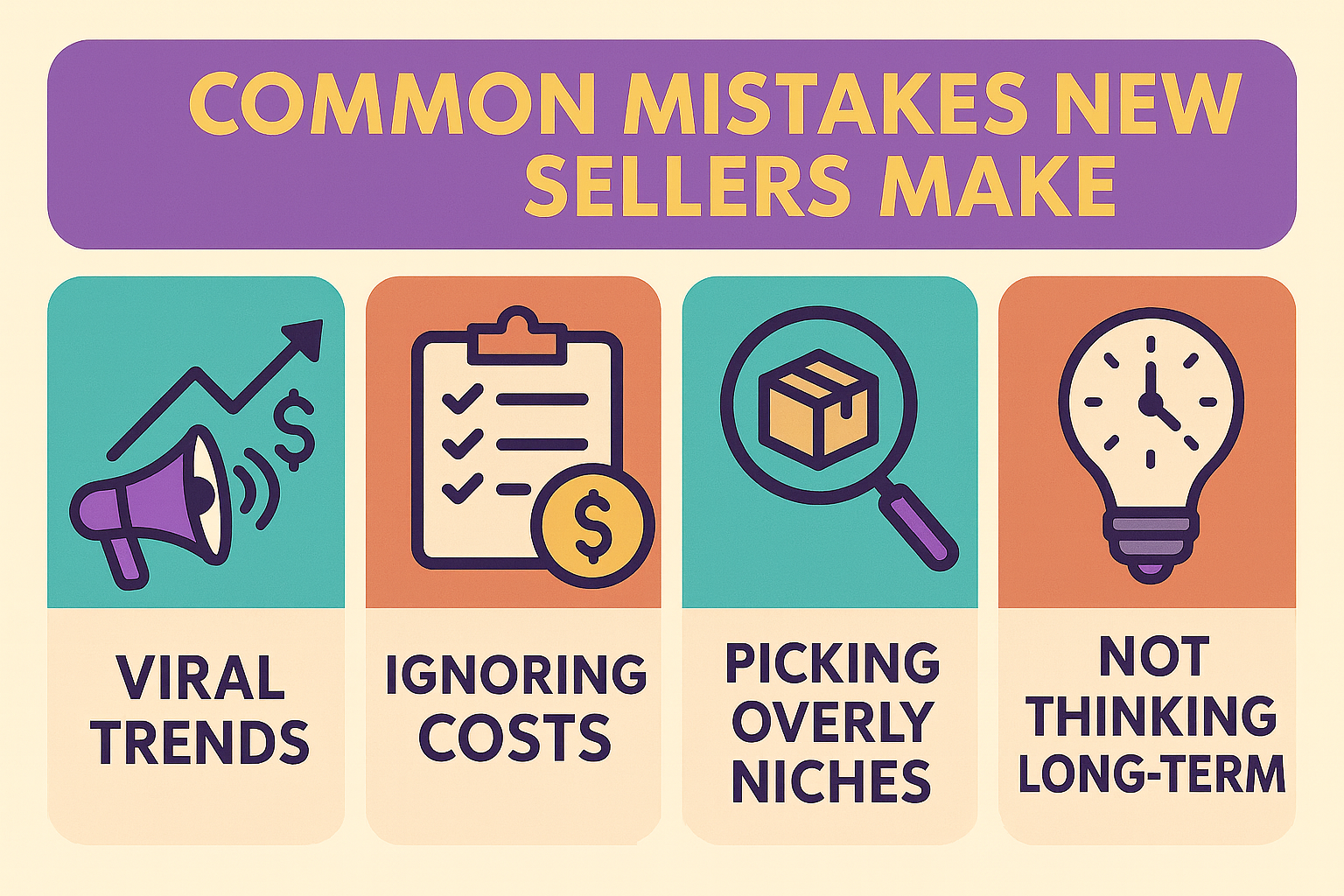
Common Mistakes New Sellers Make
Before we dive into the steps for finding great products, it’s worth highlighting a few traps many new sellers fall into. Avoiding these from the start can save you time, money, and a lot of frustration.
- Chasing viral trends blindly: Just because something’s popular doesn’t mean it’s profitable or sustainable. By the time you jump in, the market may already be saturated.
- Ignoring costs: Amazon’s fees, shipping, returns, and advertising eat into margins fast. What looks like a great seller on the outside may leave you with pennies after costs.
- Picking overly saturated niches: Some product categories are dominated by well-established sellers with thousands of reviews and high ad budgets. Without a strong differentiator, new sellers struggle to gain traction.
- Not thinking long-term: It’s easy to get excited about a product that sells, but can it scale? Does it lead to other complementary products? If not, you may find yourself stuck with a one-product store.
These mistakes are common, but also avoidable. That’s why understanding the process behind smart product research is so important before you commit to inventory or launch.

How WisePPC Helps You Validate Product Opportunities
At WisePPC, we’ve seen firsthand how critical data is to the product selection process. Finding a great idea is only half the battle, understanding how it performs once it’s live is where real strategy begins.
That’s where we come in.
Our platform was built to give sellers a clear, honest view of their product and ad performance across the entire lifecycle. From day one, you can:
- Track 30+ key metrics in one place, including TACoS, conversion rates, ASP, and profitability trends
- Dive into granular, hourly data by product, keyword, or placement to understand what’s driving actual sales
- Spot product opportunities based on long-term historical performance, not just last week’s trend
We also help you test and scale product launches smarter. With bulk actions, advanced filtering, and real-time anomaly detection, you can quickly identify which SKUs are worth doubling down on, and which are costing you more than they bring in.
And because we’re an Amazon Ads Verified Partner, you can trust that our insights are built on clean, compliant, Amazon-authorized data.
In short, once you’ve picked your product, WisePPC helps you prove it was the right move, and gives you the visibility to make the next one even better.
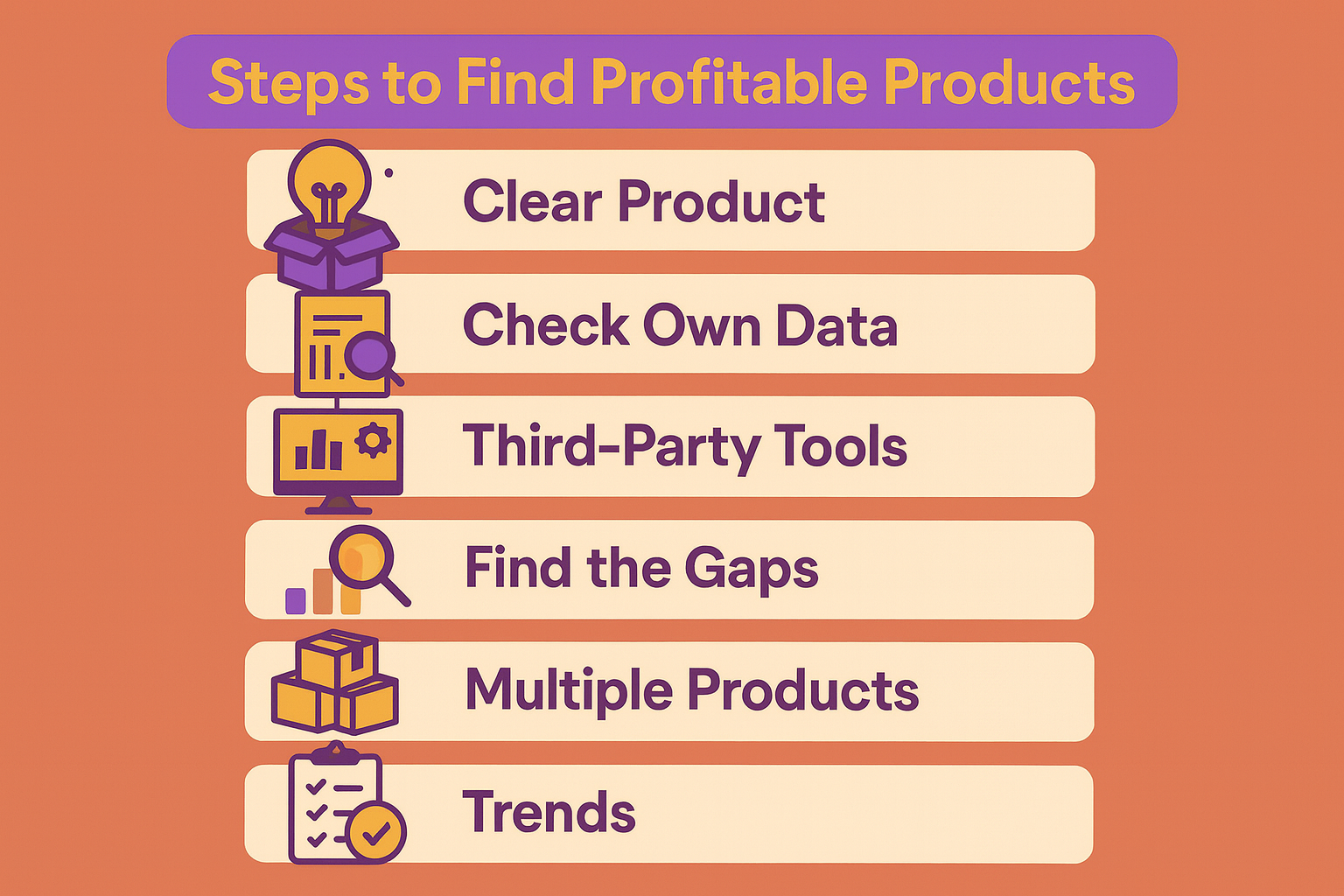
7 Smart Steps to Find Profitable Products on Amazon
Finding a winning product isn’t about luck, it’s about following a clear, repeatable process. Below, we’ve broken it down into 7 practical steps that walk you through everything from early research to final validation. Whether you’re launching your first product or refining your next pick, this framework helps you stay focused and avoid guesswork.
1. Start With a Clear Product Criteria
Before diving into the tools, set a few non-negotiables. Knowing what you want helps filter out what you don’t.
Here are a few baseline filters most sellers stick to:
- Lightweight and compact: Smaller items are cheaper to ship and store. This reduces FBA storage fees and shipping complications, especially for new sellers.
- Stable or evergreen demand: Avoid trendy one-hit wonders unless you have fast logistics.
- Low to moderate competition: Products with fewer than 400 reviews are easier to enter.
- Healthy profit margin: Aim for 25-30% minimum after fees, shipping, and ads.
- Simple to manufacture: Avoid complicated electronics or anything that breaks easily.
You’re not just picking something to sell. You’re choosing what kind of problems you’re willing to deal with.
2. Check Amazon’s Own Data First
You don’t need fancy software to start researching. Amazon’s built-in data sources are a goldmine if you know where to look.
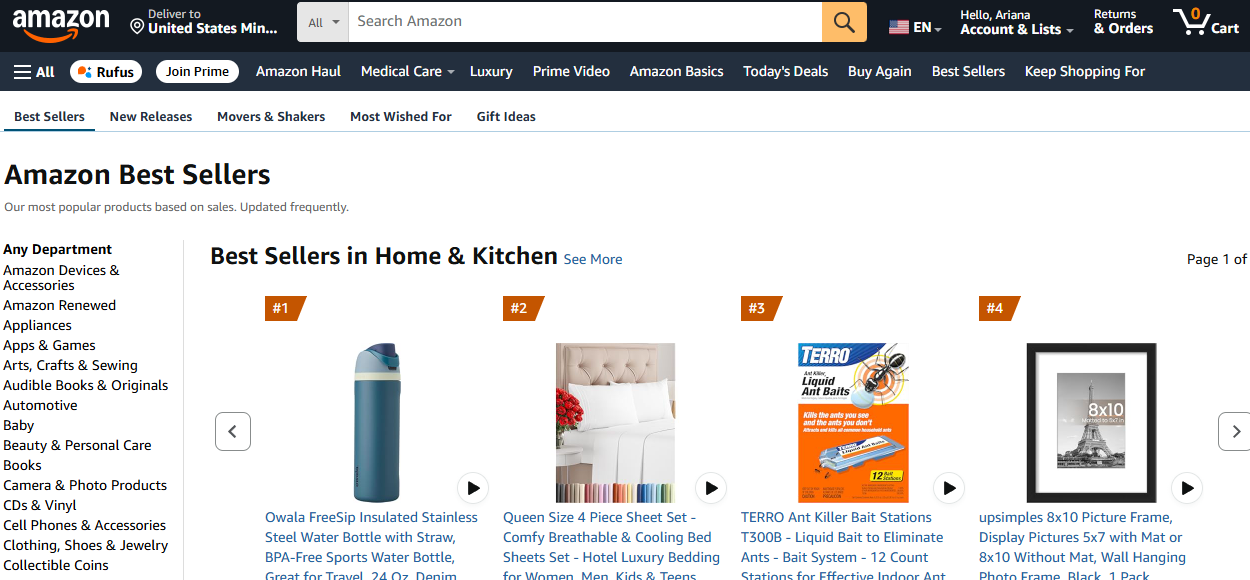
- Best Sellers Lists: Updated hourly, these show what’s selling well right now. Dive into categories and subcategories that interest you.
- Movers & Shakers: Focuses on products that have gained popularity fast. Great for spotting emerging trends.
- Hot New Releases: Useful if you’re considering launching something with a fresh spin.
- Most Wished For: Gives insight into what people are actively saving or gifting.
Explore listings with moderate review counts but high BSR (Best Seller Rank). These are often underdeveloped listings in high-interest niches.
3. Use Third-Party Tools to Go Deeper
Once you’ve narrowed down some ideas, this is where tools like Helium 10, Jungle Scout, and AMZScout come into play. They help you validate assumptions with real numbers.
Use Helium 10’s Chrome Extension:
- Run Xray on a product results page to see estimated sales, pricing, and review counts.
- Use Cerebro to reverse-engineer competitor keywords.
- Try Magnet to pull keyword suggestions with search volume.
Other tool features worth using:
- Review count filters to find low-competition listings
- Revenue trends to confirm seasonality or steady demand
- FBA fee calculators to double-check profit margins
These tools help you spot opportunities that look good on the surface but also check out behind the scenes.
4. Find the Gaps in Customer Reviews
If a product has hundreds of reviews but still sits at 3.9 stars, that’s a sign. Read through the negative feedback. People will tell you exactly what to improve.
Look for patterns like:
- Poor packaging or cheap materials
- Inaccurate sizing or vague instructions
- Missing features that buyers expected
This is how new sellers enter competitive spaces: by fixing what others missed.
You can also turn these review gaps into bullet points on your listing. Preempt concerns, and you’ll convert better.
5. Look for Multiple Products With Strong BSRs
A single product with a good rank might just be a lucky outlier. But if multiple variations of that product type all rank well? That’s a signal.
Example: Instead of going after a #1 BSR yoga mat, dig into categories where five or six items rank under #5,000. That shows consistent demand.
Also check if the product appears in more than one category with decent rankings. Cross-niche BSR strength = higher resilience.
6. Spot Emerging Trends Outside Amazon
Sometimes the best-selling products on Amazon started trending elsewhere. Social media platforms like TikTok and Instagram often spark demand before it reaches marketplaces.
Ways to tap in:
- Check trending hashtags like #amazonfinds or #tiktokmademebuyit
- Use Google Trends to validate rising interest over time
- Join niche Reddit communities where early adopters hang out
Trend chasing can be risky, but it’s also where big wins happen fast. Just don’t go all-in without backup.
7. Validate With the Product Opportunity Explorer
Amazon’s own Product Opportunity Explorer gives you access to niche-level analytics:
- Search volume over time
- Number of sellers in a niche
- Average price and unit count
- Seasonality trends
This is especially helpful if you want to avoid oversaturated markets before you commit. Unlike Best Seller lists, this tool gives you patterns, not just snapshots.
Use it to answer:
- Is this niche growing or shrinking?
- Can I price competitively and still make a profit?
- Are customers actually buying, or just browsing?
Sourcing: Match Product to Your Business Model
How you source your product isn’t just a back-end detail, it directly affects your pricing, profit margins, inventory management, and long-term growth. The sourcing route you choose should align with your budget, business goals, and how hands-on you want to be.
Here’s a breakdown of the most common sourcing methods and what they look like in practice:
- Print on Demand is a great option for low-risk experimentation. You don’t need to hold inventory, which makes it ideal for testing designs or niches with minimal upfront cost. The trade-off? Lower profit margins and less control over product quality or shipping times.
- Wholesale lets you tap into already-successful products. You buy in bulk from established brands and resell at a markup. It’s simpler than launching your own brand but can come with tighter competition and lower flexibility on pricing.
- Private Label is where you take a generic product and rebrand it as your own. This model requires more time and money upfront, including packaging design, manufacturer sourcing, and brand building, but offers more control over pricing, branding, and long-term customer loyalty.
- Retail Arbitrage involves buying discounted or clearance items from local stores and reselling them on Amazon. It’s quick to start and requires little capital, but it’s very hands-on and hard to scale sustainably over time.
- Direct from Manufacturers (especially overseas) gives you full customization power. If you want to create something unique or significantly undercut competition, this route makes sense, but it also means negotiating minimum order quantities, managing shipping logistics, and tying up more capital early on.
Ultimately, your sourcing model should reflect how much time you can commit, how much risk you’re willing to take, and what kind of business you’re trying to build. There’s no one-size-fits-all answer, but picking the wrong model for your goals can slow you down before you even get started.
Final Check: Can It Scale?
Before you pull the trigger on a new product, it’s worth stepping back to ask a bigger question: what happens if it actually works? A niche might look perfect on paper: low competition, healthy margins, consistent demand, but if it maxes out at $2,000 a month in revenue, you’ll hit a ceiling pretty fast. That’s fine if you’re building a side hustle, but not ideal if you’re aiming for something more sustainable or full-time.
Think about where the product fits within a broader ecosystem. Can it be the first of several related SKUs? Are there obvious upsell opportunities or bundle variations? Is this the kind of product that could attract repeat buyers, or are you stuck finding new customers every single time? These aren’t just hypotheticals, they’re indicators of whether your product has real room to grow.
In the long run, the most successful Amazon products don’t exist in a vacuum. They act as entry points into a brand, a catalog, or a buying habit. If your idea doesn’t lead anywhere beyond itself, you might want to keep looking.
Closing Thoughts
Finding profitable Amazon products to sell in 2025 isn’t about getting lucky. It’s about using the data that’s already available, paying attention to what buyers actually want, and being honest about what you’re capable of managing.
It’s work, yes. But it’s also learnable. And once you’ve done it right the first time, the next product gets easier.
Use the tools. Pay attention to the signals. And above all, pick something you’re okay building a business around.
More than ever, Amazon rewards the sellers who do their homework.
FAQ
What’s the easiest way to find a product to sell on Amazon?
There’s no single “easy” method, but using a product research tool like Helium 10 or Amazon Seller Central’s own reports can speed up the process. Look for products with consistent demand, low competition, and healthy margins, and always validate before jumping in.
How much money do I need to start selling a product on Amazon?
It depends on your sourcing method. Print-on-demand can cost under $100 to start, while private label or wholesale can range from $1,000 to $5,000 or more. Factor in inventory, Amazon fees, branding, and advertising.
Should I go for trending products or evergreen ones?
Both have pros and cons. Trends can bring quick wins but fade fast. Evergreen products offer more stability and long-term growth. If you’re just starting out, it’s usually safer to pick a product with steady demand year-round.
How do I know if a niche is too competitive?
If the top listings are dominated by big brands with thousands of reviews, and the first page of search results all look the same, it might be too saturated. Look for gaps, low-review listings with high sales, poor branding, or unoptimized keywords.
Can I sell products from AliExpress or other dropshipping sites?
You can, but it’s risky. Long shipping times, quality control issues, and customer service headaches can lead to negative reviews. Amazon is strict about fulfillment standards, so dropshipping is best avoided unless you’ve tested the supplier thoroughly.
Is retail arbitrage still worth it in 2025?
It can still work for some sellers, especially for short-term flips or clearance deals. But it’s time-intensive, hard to scale, and doesn’t build a brand. Many sellers move from arbitrage to wholesale or private label for long-term growth.
 No credit card required