
 EN
EN  ES
ES  FR
FR  DE
DE  IT
IT  KO
KO  JA
JA  ZH
ZH  AR
AR  PT
PT  TR
TR PL
PL
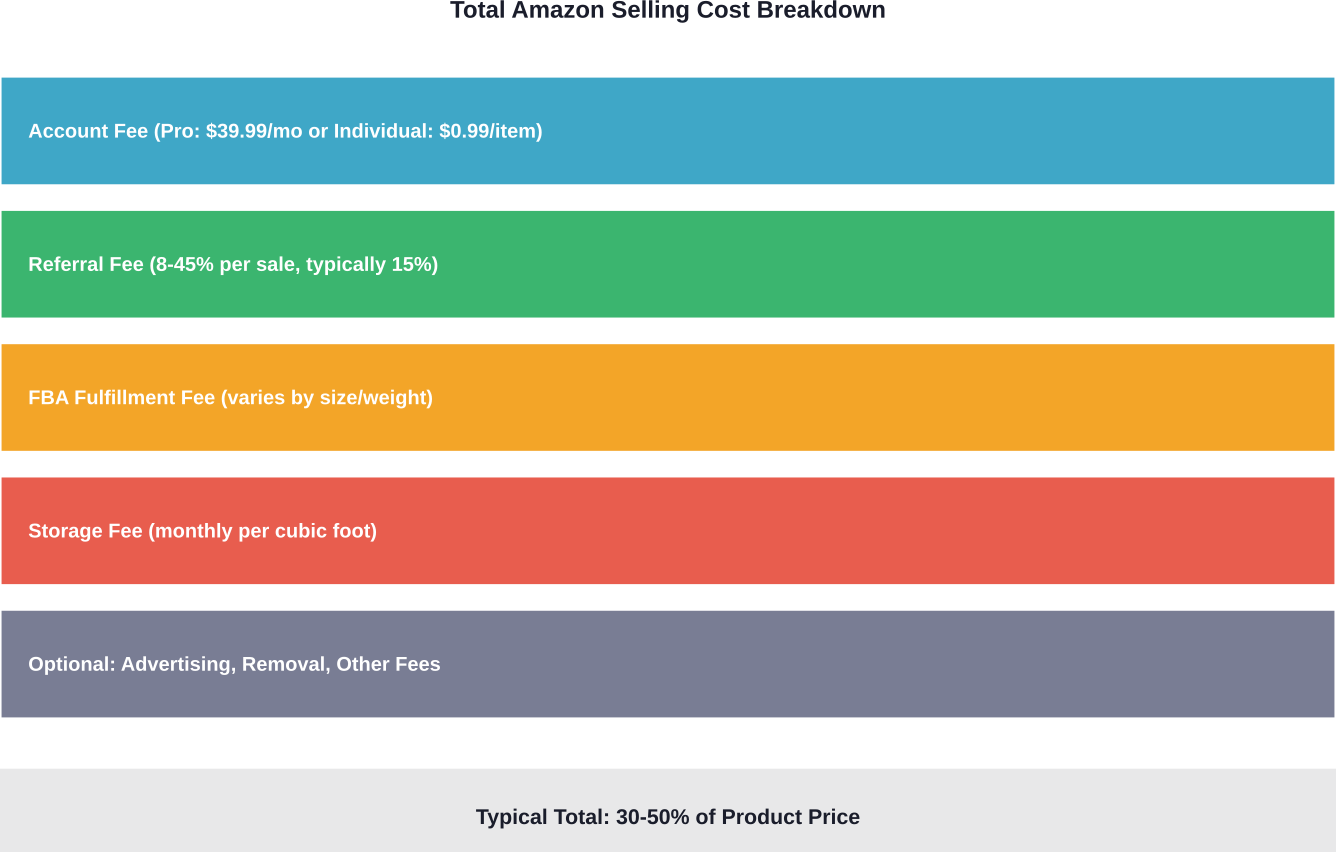
Quick Summary: Selling on Amazon costs $0.99 per item for Individual sellers or $39.99/month for Professional sellers, plus referral fees (8-45% per sale), FBA fulfillment fees (varying by size/weight), and potential storage charges. Total expenses typically range from 30-50% of product price depending on category, fulfillment method, and monthly volume.
Amazon controls 37.6% of US retail ecommerce sales, making it an attractive platform for online sellers. But understanding the full cost structure is critical before launching a store.
Here’s the thing though—Amazon’s fee structure isn’t straightforward. Between account subscriptions, referral percentages, fulfillment charges, and storage costs, sellers face multiple expense layers that can quickly erode profit margins.
This guide breaks down every fee category, reveals hidden costs, and shows how to calculate whether selling on Amazon makes financial sense for your business.
Amazon Selling Plan Fees: Individual vs Professional
The first decision impacts your baseline monthly expenses. Amazon offers two selling plan options with different pricing structures.
Individual Selling Plan
The Individual plan charges $0.99 per item sold with no monthly subscription fee. This pay-as-you-go model works for sellers moving fewer than 40 units monthly.
According to the official Amazon website, Individual sellers get access to essential listing and order management tools. But there’s a catch. This plan restricts access to bulk operations, advanced inventory management, and promotional tools.
The math is simple: if you sell 40 items monthly at $0.99 each, you’ve paid $39.60 in per-item fees.
Professional Selling Plan
Professional accounts cost $39.99 per month regardless of sales volume. There’s no per-item fee.
The Professional plan provides bulk listing capabilities, sales analytics reports, advertising eligibility, and access to Amazon’s API. Sellers can also compete for the Buy Box and create special promotions.
For anyone selling more than 40 units monthly, the Professional plan becomes the financially rational choice. The break-even point sits right at that 40-unit threshold.
| Plan | Monthly Fee | Per-Item Fee | Best For | Advanced Tools |
|---|---|---|---|---|
| Individual | $0 | $0.99 | Under 40 sales/month | No |
| Professional | $39.99 | $0 | Over 40 sales/month | Yes |
Sellers can switch between plans at any time without penalty. Community discussions suggest testing the Individual plan first, then upgrading once monthly volume justifies it.

Measure Amazon Ad Costs and Results
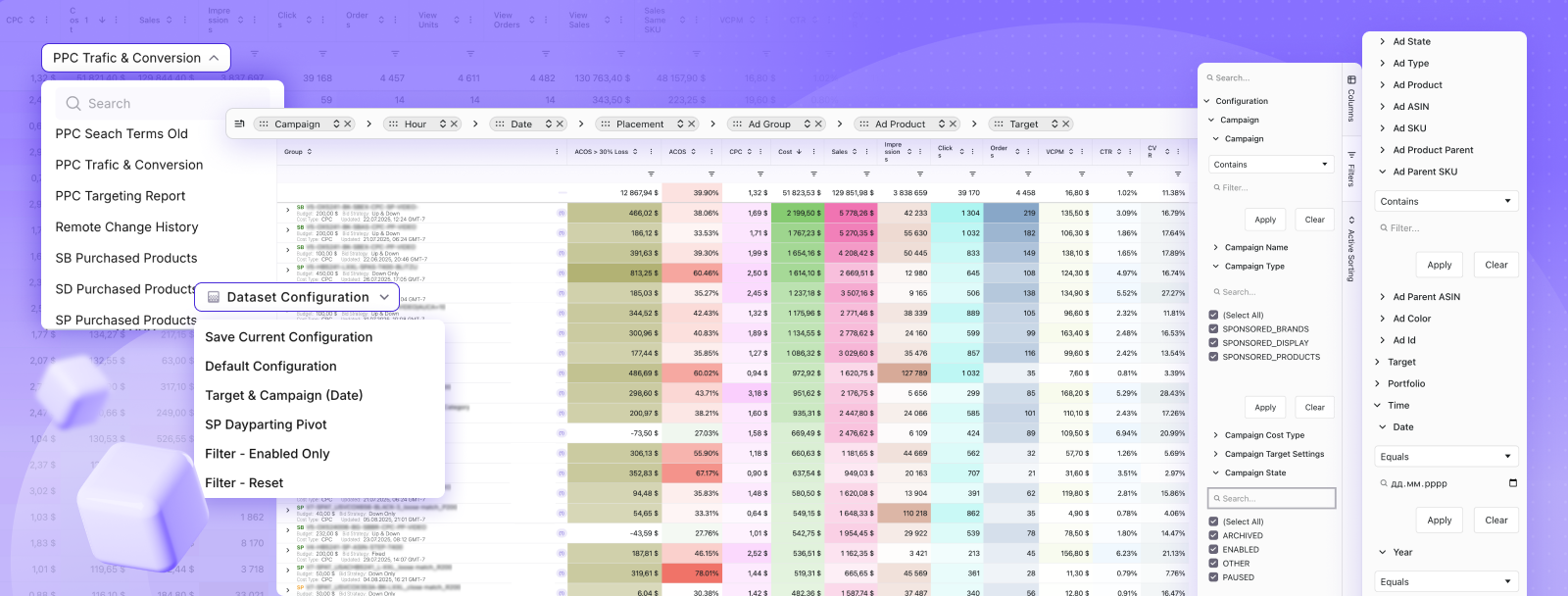
WisePPC gives a clearer view of how advertising spend on Amazon translates into sales. Instead of looking at ad costs separately, it connects spend with actual product performance, which helps evaluate whether campaigns are worth continuing. It also stores historical data for longer periods, so performance can be reviewed over time instead of relying on short reporting windows.
Want Clearer Data on Ad Spend?
Use WisePPC to:
- track ad spend alongside sales results
- see which campaigns generate revenue
- compare performance over longer time periods
👉 Explore WisePPC to understand your Amazon advertising data.
Referral Fees: Amazon’s Commission Structure
Every sale generates a referral fee—Amazon’s commission for facilitating the transaction. This represents one of the largest ongoing costs for sellers.
Referral fees vary by product category, ranging from 8% to 45% of the item’s selling price. Most categories fall between 8-15%.
Common Referral Fee Percentages
Electronics and cameras typically incur 8% referral fees. Books, music, and video products sit at 15%. Clothing and accessories range from 15-17%.
Amazon Device Accessories carry the steepest rate at 45%. Jewelry fees depend on price points, ranging from 20% for items under $250 to 5% for the portion above $250.
According to official Amazon seller updates from October 2025, the company implemented modest referral fee increases in 2026. Some categories in Egypt saw increases from 4% to 4.5-5% as of June 2025.
| Category | Referral Fee | Minimum Fee |
|---|---|---|
| Electronics | 8% | $0.30 |
| Books | 15% | $0.30 |
| Clothing | 17% | $0.30 |
| Jewelry (under $250) | 20% | $0.30 |
| Amazon Device Accessories | 45% | $0.30 |
Most categories also enforce a minimum referral fee of $0.30 per item. So even if 15% of your $1.50 product equals $0.23, Amazon charges the $0.30 minimum.
Fulfillment by Amazon (FBA) Fees
Sellers can fulfill orders themselves or use Amazon’s FBA service. FBA handles storage, packing, shipping, and customer service—but adds significant costs.
How FBA Fulfillment Fees Work
FBA charges per-unit fulfillment fees based on product size and weight. Small standard-size items (under 10 oz) cost less than large bulky products.
According to Amazon’s official 2026 fee updates published October 15, 2025, FBA fees will increase by an average of $0.08 per unit in 2026. This represented less than 0.5% of an average item’s selling price.
The fee structure follows dimensional weight calculations. A lightweight but oversized package might cost more than a compact heavy item.
FBA fulfillment fees vary significantly based on product size tier and weight. The exact amount depends on precise dimensions and weight classifications.
FBA Storage Fees
Amazon charges monthly storage fees for inventory sitting in their warehouses. Storage fees vary by time of year and storage volume; consult Amazon’s current fee schedule in Seller Central for precise rates.
Long-term storage fees apply to inventory stored over 365 days. These aged inventory charges incentivize sellers to move products quickly or remove slow-selling stock.
Real talk: storage fees can devastate margins for slow-moving inventory. Community discussions reveal sellers caught off-guard by accumulated storage charges eating quarterly profits.
FBA Removal and Disposal Fees
Removing inventory from Amazon warehouses triggers fees. Removal fees vary based on product size and weight.
Disposal fees allow Amazon to destroy unsellable inventory instead of returning it. According to 2026 updates, disposal fees for light items decreased slightly, though exact rates vary by product dimensions.
One seller concern raised in official forums: Amazon determines warehouse placement, yet charges storage and disposal fees when inventory ends up far from buyers. This creates frustration around FBA cost control.
Merchant Fulfilled Network (MFN) Costs
Sellers who fulfill orders themselves avoid FBA fees but incur different expenses. The Merchant Fulfilled Network requires handling shipping, customer service, and returns independently.
MFN sellers pay only the selling plan fee and referral fees. But they shoulder shipping costs, packaging materials, labor, and storage space rental.
For lightweight, high-margin products shipped via inexpensive methods, MFN can reduce total costs. For heavy items with complex logistics, FBA often proves more economical despite its fees.
The calculation depends on individual business circumstances. Shipping one book via USPS Media Mail costs $4-5. Amazon’s FBA fee for the same book might run $3.50 including storage. FBA wins on that comparison.
Hidden Amazon Seller Fees That Impact Profitability
Beyond the obvious costs, several lesser-known fees catch new sellers unprepared.
Advertising Costs
Amazon’s pay-per-click advertising isn’t technically mandatory. But achieving visibility in crowded categories often requires ad spend.
Sponsored Product campaigns charge per click, with costs varying by keyword competitiveness. Cost-per-click varies significantly depending on category competitiveness.
Sellers report varying advertising budgets depending on product type and competitiveness. Established listings with organic rankings can reduce or eliminate ad dependency.
High-Volume Listing Fees
Professional sellers can list unlimited products. Individual sellers pay the $0.99 fee only when items sell, not for creating listings.
However, sellers in certain categories face additional per-item fees beyond standard referral rates.
Refund Administration Fees
When customers return FBA orders, Amazon retains a portion of the original referral fee as a refund administration charge.
For a product with a $10 referral fee, Amazon retains a portion of that fee even after the customer return. The seller loses the sale but doesn’t recover the full referral cost.
Inventory Placement Fees
By default, Amazon distributes inventory across multiple fulfillment centers. Sellers can pay inventory placement fees to consolidate shipments to a single location, but this often costs more than it saves.
The distributed inventory model optimizes Amazon’s logistics but creates complexity for sellers managing replenishment.
Calculating Your Total Cost to Sell on Amazon
Sound familiar? Multiple fee layers make profit calculation complex. Here’s how to build an accurate cost model.
Step-by-Step Cost Calculation
- Start with your product’s selling price. Subtract the referral fee percentage for your category.
- If using FBA, subtract the fulfillment fee based on product dimensions and weight. Use Amazon’s Revenue Calculator tool for precise estimates.
- Add monthly storage costs by calculating your inventory’s cubic footage and multiplying by the current rate. Divide this by expected monthly sales volume to get per-unit storage cost.
- For Professional sellers, divide the $39.99 monthly fee by expected unit sales to get per-unit account cost. Individual sellers add $0.99 per unit directly.
- Include estimated advertising spend if running campaigns. Track actual ad spend monthly and divide by units sold for accurate per-unit costs.
- Now, this is where it gets interesting. The remaining amount after all Amazon fees represents gross profit before product costs, shipping to Amazon, and business overhead.
Example Calculation: $25 Book Using FBA
- Product selling price: $25.00
- Referral fee (15%): -$3.75
- FBA fulfillment fee: -$3.50
- Monthly storage ($0.75 ÷ 30 units): -$0.03
- Pro account fee ($39.99 ÷ 100 units): -$0.40
- Advertising (10% of price): -$2.50
- Total Amazon fees: $10.18
- Net after fees: $14.82
If the book costs $8 to source or produce and $1 to ship to Amazon, profit per unit equals $5.82. That’s a 23% net margin—acceptable but not spectacular.
How to Minimize Amazon Fees and Maximize Profit
Strategic decisions can reduce fee burden without compromising service quality.
Optimize Product Dimensions and Weight
FBA fees jump significantly at size tier boundaries. Reducing packaging by half an inch or a few ounces can drop fees by dollars per unit.
Design packaging specifically to fit within lower fee tiers. Test different configurations to find the most cost-effective approach.
Manage Inventory Turnover
Fast-moving inventory minimizes storage fees. Selling through stock in 30-60 days keeps storage costs negligible.
Avoid overstocking slow sellers. Use Amazon’s inventory performance metrics to identify aging stock and create promotions to clear it before long-term storage fees apply.
Strategic Use of FBA vs MFN
Not every product benefits from FBA. High-margin, lightweight items shipped affordably via MFN can preserve profits.
Consider hybrid approaches: use FBA for fast movers and Prime eligibility, handle slow movers as MFN to avoid storage fees.
Price Competitively But Strategically
Higher prices increase referral fee dollars but can improve margins if sales volume remains stable. Test price points to find the optimal balance between conversion rate and margin.
Amazon’s automated pricing tools can help, but monitor them closely. Aggressive price drops to win the Buy Box can sacrifice profitability unnecessarily.
Reduce Return Rates
Accurate product descriptions, high-quality images, and clear sizing information can help reduce returns and associated fees.
Is Selling on Amazon Worth the Costs?
More than 60% of Amazon sales come from independent sellers, most of whom are small and medium-sized businesses. The platform clearly works for many.
But profitability depends on product selection, pricing strategy, and cost management. Generic products with intense competition and razor-thin margins struggle to absorb Amazon’s fees.
Unique products, private label brands, and items with healthy margins can thrive despite costs. The massive customer base and built-in trust compensate for fees.
The math works when total Amazon fees consume less than 40% of the selling price, leaving room for product costs and profit. Products where fees exceed 50% of price rarely succeed unless volume is exceptionally high.
According to Shopify research, Amazon’s 37.6% share of US ecommerce makes it impossible to ignore for many sellers. The question isn’t whether Amazon charges fees—it’s whether your product can remain profitable while paying them.
Frequently Asked Questions
How much does it cost to start selling on Amazon?
Individual sellers pay $0 upfront and $0.99 per sale, while Professional sellers pay $39.99 per month. Total startup costs depend on inventory, shipping, and marketing, typically ranging from a few hundred to several thousand dollars.
What is the cheapest way to sell on Amazon?
The Individual plan with merchant fulfillment is the cheapest option, charging $0.99 per sale plus referral fees. It’s best for low-volume sellers but lacks advanced tools and Prime eligibility.
Do I have to use Fulfillment by Amazon (FBA)?
No, FBA is optional. Sellers can use merchant fulfillment to handle shipping, customer service, and returns themselves.
How much does Amazon take per sale?
Amazon charges referral fees of 8–45% depending on category, plus additional FBA fees if used. Total fees often range from 30–50% of the product price.
Are Amazon seller fees tax deductible?
Yes, most Amazon fees—such as subscriptions, referral fees, and advertising costs—are considered business expenses and are generally tax deductible.
Can I switch between Individual and Professional plans?
Yes, you can switch plans anytime through Seller Central. Changes apply in the next billing cycle.
How do I calculate if my product will be profitable on Amazon?
Use Amazon’s Revenue Calculator to estimate fees and profits. Subtract product costs, shipping, and advertising expenses to determine your net margin.
Making Amazon Fees Work for Your Business
Amazon’s fee structure is complex but predictable. Understanding every cost component allows accurate profit projections and informed business decisions.
The platform’s massive reach and logistical capabilities justify fees for many sellers. But success requires strategic product selection, disciplined cost management, and continuous optimization.
Calculate your specific costs using Amazon’s tools. Factor in all fees—not just the obvious ones. Test pricing strategies. Monitor metrics monthly.
Most importantly, treat Amazon as one sales channel within a diversified strategy. Relying exclusively on any single platform creates vulnerability to fee changes and policy shifts.
Ready to start selling? Sellers often begin with the Individual plan to test products with minimal commitment, then upgrade to Professional as volume increases. Sellers should check Amazon’s official Seller Central for current fee schedules and program details before launching their store.
 No credit card required