
 EN
EN  ES
ES  FR
FR  DE
DE  IT
IT  KO
KO  JA
JA  ZH
ZH  AR
AR  PT
PT  TR
TR PL
PL
Quick Summary: Amazon’s average hourly pay for U.S. fulfillment and operations workers exceeds $23 per hour, according to official company data. Software engineers earn significantly more, with base salaries ranging from $83,000 to $263,700 depending on level and location. Total compensation varies widely across positions, with warehouse roles earning around $37,000-$46,000 annually while corporate and tech roles can reach well into six figures when including stock grants and bonuses.
Amazon employs over a million workers in the United States alone, making it one of the country’s largest employers. But the question that keeps popping up—both from job seekers and curious outsiders—is straightforward: how much does Amazon actually pay?
The answer isn’t simple. Amazon’s compensation structure varies dramatically depending on the role, location, and employment type. A warehouse associate in Texas earns vastly different compensation than a software engineer in Seattle.
Here’s what the numbers actually show.
Amazon Warehouse Worker Pay: The Hourly Breakdown
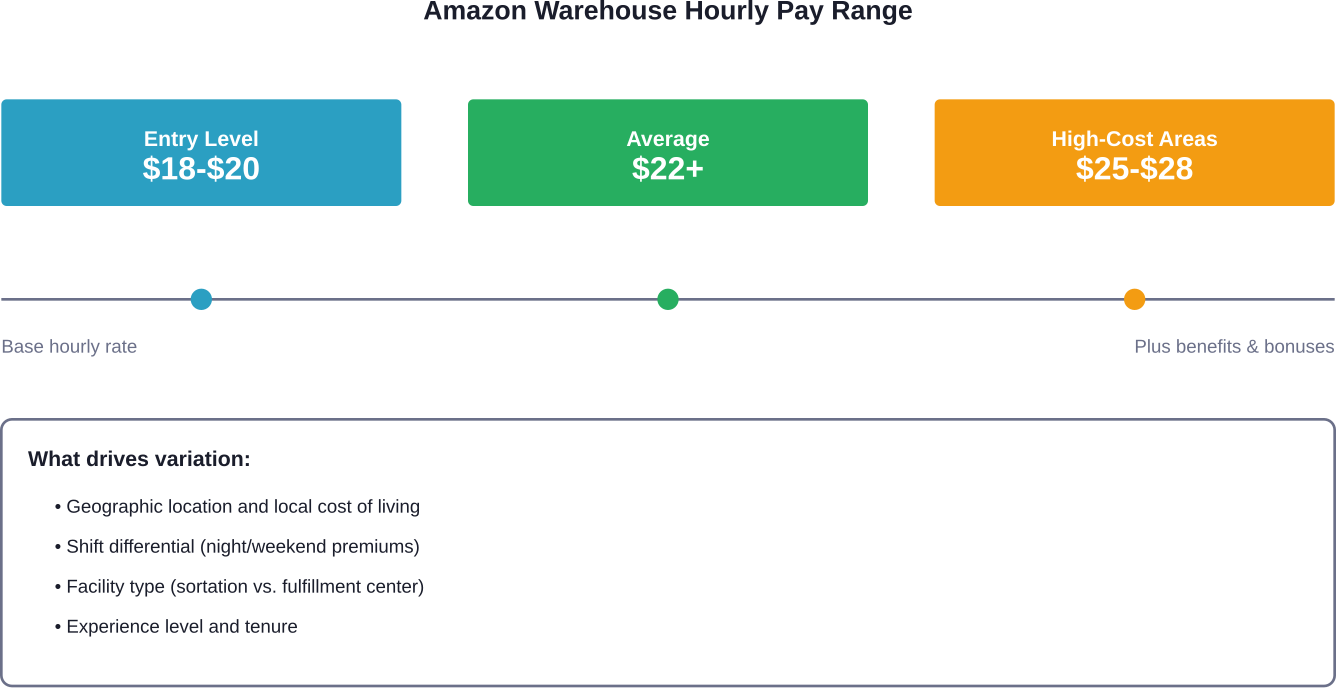
Amazon reports that average hourly pay for U.S. frontline customer fulfillment and operations roles exceeds $23 per hour. That figure represents base wages across the company’s massive fulfillment network.
Real talk: that $23 average doesn’t tell the complete story. According to Bureau of Labor Statistics data for warehousing and storage occupations, earnings vary significantly by region and facility type. Some fulfillment centers in high-cost areas pay considerably more than the national average, while others in rural locations may start closer to the minimum.
The median annual wage for all Amazon employees stood at $37,181 in 2024 according to federal filings. That figure includes both full-time and part-time workers, seasonal employees, and the full spectrum of hourly positions.
Annual Compensation for Fulfillment Roles
When hourly rates convert to annual salaries, full-time warehouse workers typically earn between $37,000 and $46,000 per year before bonuses. That calculation assumes 40-hour work weeks at the reported average rates.
But wait. Amazon offers additional compensation elements that push total earnings higher. Sign-on bonuses for new hires can range from $1,000 to $3,000 depending on location and hiring needs. Some facilities also offer attendance bonuses and performance incentives.
| Position Type | Hourly Range | Annual Estimate | Typical Benefits |
|---|---|---|---|
| Warehouse Associate | $18-$24 | $37,400-$49,900 | Health, 401k, stock |
| Sortation Associate | $17-$22 | $35,400-$45,800 | Health, 401k, stock |
| Operations Manager | Salary | $55,000-$75,000 | Full package + bonus |
| Area Manager | Salary | $60,000-$85,000 | Full package + stock |
Amazon Corporate and Tech Salaries: The High End
Here’s where Amazon’s compensation structure diverges dramatically. According to federal filing data, Amazon pays software engineers base salaries ranging from $83,491 to $263,700 depending on level. Amazon’s maximum base salary for corporate and tech employees may reach $350,000.
Levels.fyi reports that Amazon’s total compensation ranges from approximately $71,000 for entry-level marketing operations roles to $1,893,500 for senior software engineering managers. Those figures include base salary, stock grants, and bonuses.
The breakdown for key technical roles based on recent data:
- Applied Scientist: $83,491 to $260,000 base salary
- Business Analyst: $79,518 and up
- Software Engineer (various levels): Up to $263,700 base
- Software Engineering Manager: Total comp can exceed $1.3 million at senior levels
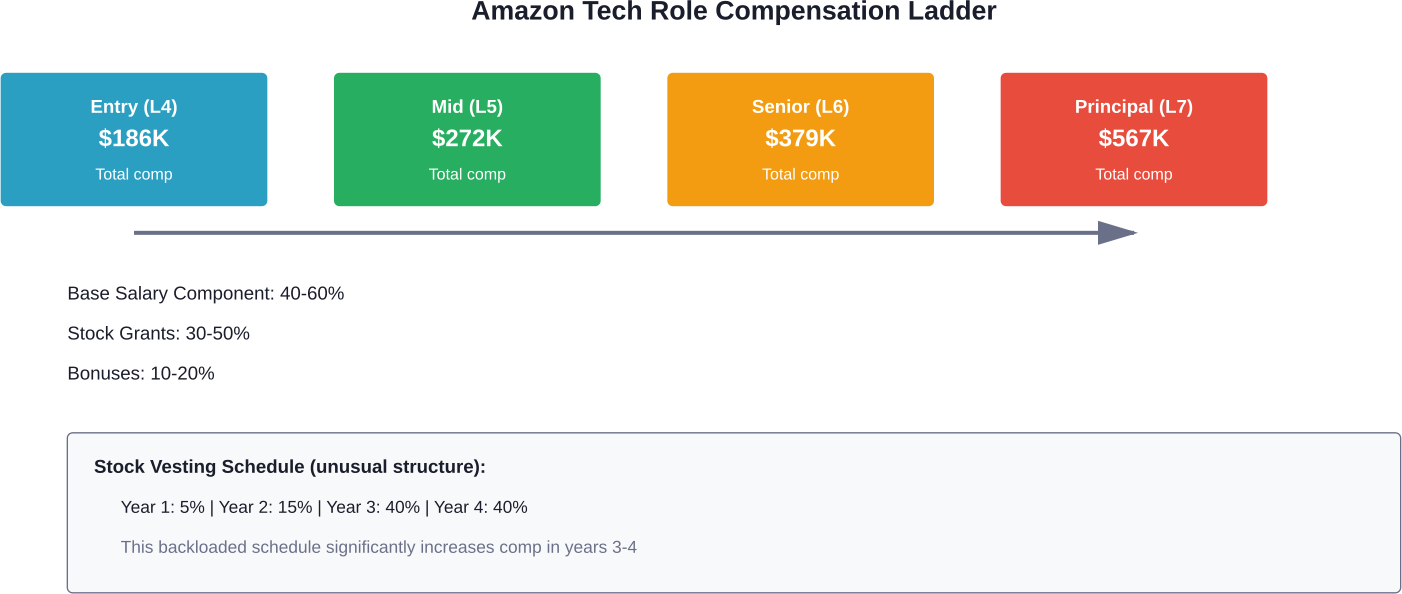
Stock grants at Amazon follow an unusual vesting schedule. Equity vests at 5% in year one, 15% in year two, then 40% in each of years three and four. This backloaded structure means total compensation grows significantly for employees who stay beyond the initial two years.
How Amazon Compares to Tech Competitors
Amazon’s software engineering compensation sits in the middle of big tech ranges. Meta pays $120,000 to $480,000 for similar roles, Google pays $109,180 to $340,000, and Microsoft pays $82,971 to $284,000 according to federal labor certification data.
The difference often comes down to total compensation packages rather than base salary alone. Stock grants and bonuses can double or triple base pay at senior levels.
Beyond Base Pay: Amazon’s Total Compensation Package
Amazon’s benefits package adds substantial value beyond hourly wages or salaries. All full-time employees receive health insurance coverage starting on day one—unusual in retail and logistics.
The company provides:
- Medical, dental, and vision insurance from day one
- 401(k) with company match
- Restricted stock units (RSUs) for eligible employees
- Employee discount programs
- Paid parental leave
- Career Choice education program (prepaid tuition)
The Career Choice program deserves special mention. Amazon prepays 95%-100% of tuition for courses in high-demand fields, whether those skills relate to Amazon careers or not. Thousands of employees have participated in the Career Choice program since its launch.
What Drives Amazon Pay Variations
Several factors create significant pay differences between Amazon employees in similar roles.
Geographic location matters enormously. A warehouse associate in San Francisco or Seattle earns substantially more than someone in rural Alabama, reflecting cost-of-living adjustments. Warehousing wages vary significantly by geographic location and metro area.
Position type and responsibilities create the next major divide. Area managers earn $60,000-$85,000 annually compared to $37,000-$46,000 for warehouse associates. Operations managers, shift supervisors, and specialized technical roles all command premiums over entry-level positions.
Shift differentials add $1-$3 per hour for overnight and weekend shifts. Many fulfillment centers operate 24/7, and Amazon pays premiums to staff less desirable hours.
Experience and tenure gradually increase pay through regular raises. Amazon has invested heavily in wage increases over recent years, though community discussions suggest raise timing and amounts vary by location.
The Reality Check: Is Amazon Pay Competitive?
According to Prof. James Baron from Yale School of Management, Amazon announced a $15 minimum wage in 2018. Baron notes this represented a significant step but “definitely does not provide financial security, particularly in the urban labor markets in which Amazon tends to operate.”
Research from Harvard’s Shift Project indicates Amazon delivery drivers earn an average of $19/hour compared to $35/hour for unionized UPS drivers. The study found stark disparities in wages, benefits, and job stability when comparing Amazon fulfillment and delivery roles against traditional logistics companies.
According to the Bureau of Labor Statistics, delivery truck drivers earned a median annual wage of $42,770 per year ($20.56 per hour) in 2024, while driver/sales workers earned a median of $37,130 in May 2024—right in line with Amazon’s warehouse worker compensation.
So Amazon pays roughly market rate for warehouse and fulfillment roles, significantly above rate for software engineering and technical positions, and uses its benefits package as a differentiator for hourly workers.

Start Earning More by Selling on Amazon
While researching Amazon’s pay structure is a great way to understand the 2026 job market, building your own brand on the platform offers even higher income potential. Transitioning from an employee to a seller requires more than just products; it demands precise control over your advertising and inventory to protect your margins. WisePPC simplifies this by automating the technical side of your business, replacing manual spreadsheets with real-time analytics and automated ad optimization.
The platform integrates directly with your seller account to identify high-performing keywords and track stock levels, ensuring you never lose revenue to inefficiency. By focusing on data-driven growth, you can scale your store across multiple marketplaces and turn Amazon from a source of salary into a scalable business. Sign up at WisePPC to explore how these tools can help you optimize your Amazon advertising and business strategy.
Frequently Asked Questions
What is Amazon’s starting pay for warehouse workers in 2026?
Amazon’s average starting pay for fulfillment roles exceeds $23 per hour, depending on location. Entry-level wages typically range from $18 to $25+ per hour.
Do Amazon warehouse workers get benefits?
Yes, full-time employees receive health insurance from day one, along with 401(k), paid time off, parental leave, and education support through Career Choice.
How much do Amazon software engineers make?
Base salaries range from about $83,000 to $263,700, with total compensation (including stock and bonuses) ranging from around $186,000 to over $1.3 million for senior roles.
Does Amazon pay weekly or biweekly?
Warehouse employees are typically paid weekly, while corporate employees are paid biweekly. Pay schedules may vary by role and location.
How does Amazon pay compared to Walmart or Target?
Amazon’s average hourly pay is generally higher, often exceeding $23 per hour, compared to $15–$18 at Walmart or Target for similar roles.
What is Amazon’s highest-paying position?
Senior engineering managers and principal engineers (L8–L10) are among the highest-paid roles, with compensation exceeding $1.3–$1.6 million annually.
Does Amazon give raises to warehouse workers?
Yes, Amazon provides wage increases based on tenure and performance, along with periodic company-wide pay adjustments.
The Bottom Line
Amazon’s compensation structure reflects its dual nature as both a massive logistics operation and a leading technology company. Warehouse workers earn competitive hourly wages that align with industry standards plus better-than-average benefits. Technical and corporate roles command high total compensation that rivals other tech giants.
The $23+ average for fulfillment workers represents real money—around $45,000 annually for full-time employees before bonuses. That’s livable in many markets but tight in high-cost cities where Amazon operates major hubs.
For tech talent, Amazon remains highly competitive, though its backloaded stock vesting schedule and total comp structure may favor those willing to commit for three to four years.
Anyone considering Amazon employment should evaluate total compensation—base pay plus benefits, bonuses, and stock—rather than hourly rates alone. Location matters enormously, both for cost of living and available positions. And the company’s size means opportunities for advancement exist, though competition is fierce.
 No credit card required