
 EN
EN  ES
ES  FR
FR  DE
DE  IT
IT  KO
KO  JA
JA  ZH
ZH  AR
AR  PT
PT  TR
TR PL
PL
Selling beyond your home market used to feel like something only big brands could pull off. That has changed. Today, even small and mid-sized sellers can reach customers across borders without building local teams or separate storefronts in every country.
Cross-border ecommerce is not just about shipping products overseas. It is about understanding demand, managing logistics, staying compliant, and keeping margins healthy while operating at a global scale.
This guide breaks down how international ecommerce works, why it is worth considering, and what to think about before you take the first step.
What Cross-Border Ecommerce Actually Means
At its core, cross-border ecommerce is selling products or services online to customers in other countries. Customers place orders through digital channels, pay in their local currency, and expect delivery, returns, and support to work just as smoothly as domestic purchases.
For sellers, this usually means handling international shipping, taxes, currency exchange, and localized listings. The complexity depends on how many markets you enter and how much of the process you handle yourself.
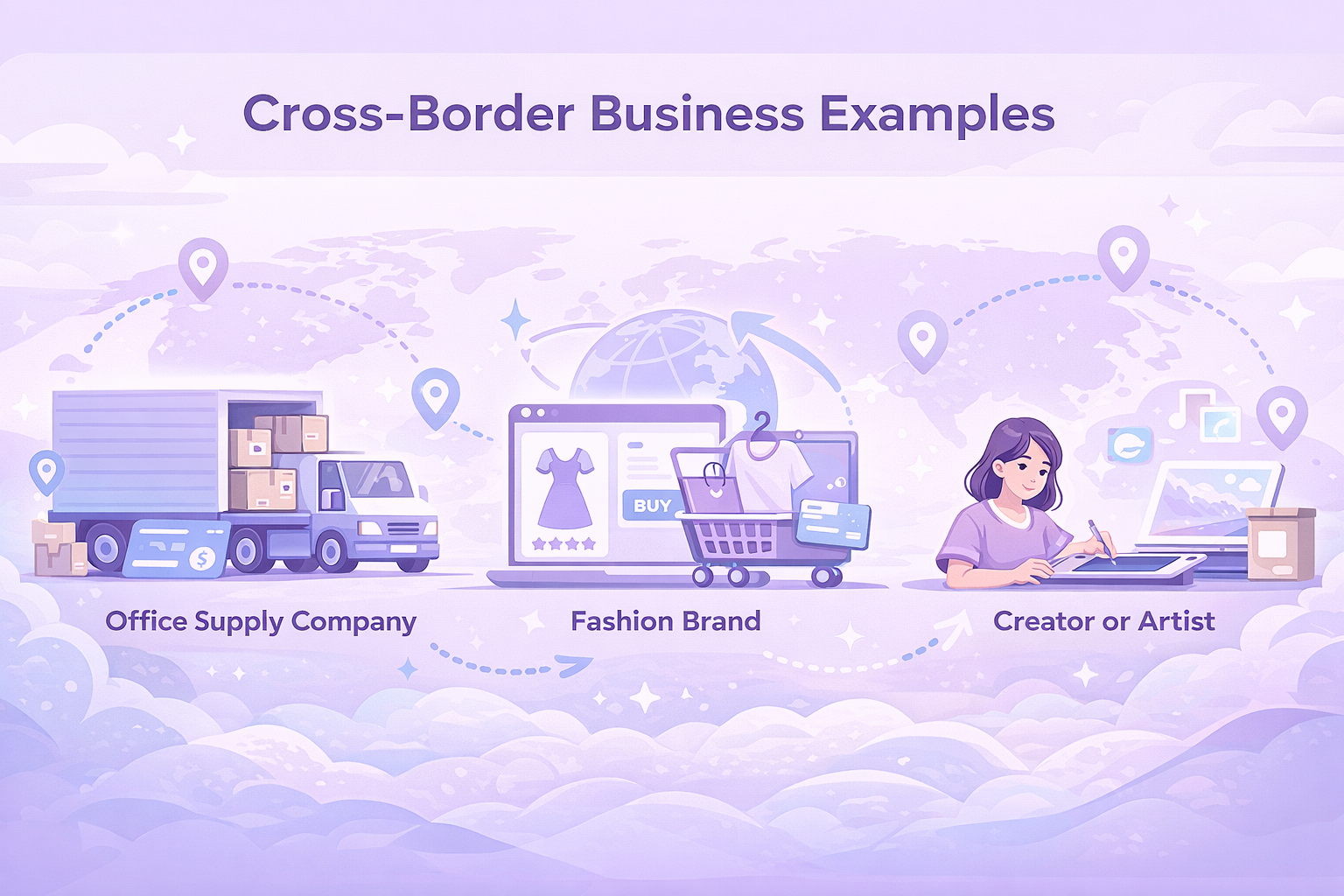
Real-World Examples of Cross-Border Businesses
Cross-border selling shows up in many forms, not just large export operations.
Some common examples include:
- A US-based office supply company shipping bulk orders to businesses in Europe and Asia.
- A fashion brand running one ecommerce site but accepting orders from dozens of countries.
- A creator or artist selling physical or digital products to an international audience through online platforms.
The size of the business matters less than the systems behind it. With the right setup, international reach is no longer limited to enterprise sellers.
Why Sellers Are Looking Beyond Their Home Market
International expansion often starts with one simple motivation. Growth.
Selling globally can help businesses:
- Reach new customers when domestic demand plateaus.
- Increase sales volume without launching new products.
- Take advantage of seasonal demand differences across regions.
- Build brand awareness in markets with less competition.
- Reduce reliance on a single economy or marketplace.
According to Amazon data, US-based sellers exported hundreds of millions of items to customers in more than 130 countries in recent years. That scale explains why global selling continues to grow.
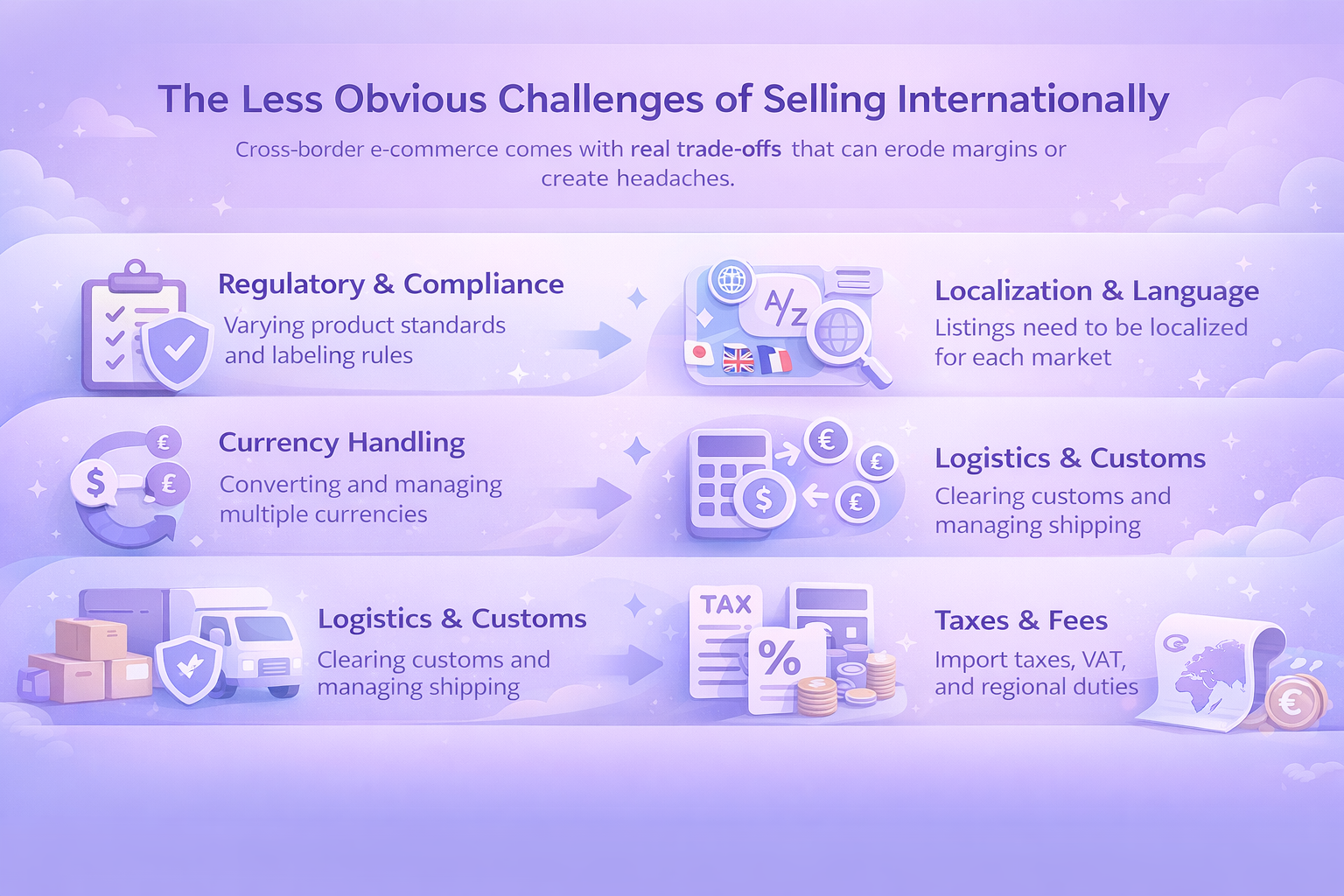
The Less Obvious Challenges of Selling Internationally
Cross-border ecommerce comes with real trade-offs. Ignoring them usually leads to margin erosion or operational headaches.
Some of the most common challenges include:
Regulatory and Compliance Requirements
Product standards, labeling rules, and sales regulations vary by country. Some products require certifications, safety documentation, or special approvals before they can be sold.
Localization and Language
Listings that perform well in one country may not translate directly to another. Localization goes beyond language. It includes units of measurement, cultural expectations, and shopping behavior.
Currency Handling and Payouts
Selling in multiple currencies often involves conversion fees and payout timing differences. Without planning, these costs can quietly eat into profits.
Logistics and Customs
International shipping involves customs clearance, import duties, and longer delivery timelines. Sellers may need help from logistics partners or fulfillment networks to keep operations predictable.
Taxes and Additional Fees
VAT, import taxes, and regional duties depend on product category, shipment value, and destination country. These costs must be accounted for upfront.
Amazon offers access to service providers that help with taxes, compliance, translation, and logistics, which can simplify these areas for sellers who prefer expert support.
Before You Expand: 3 Questions to Answer First
Before choosing a country or listing products, it helps to step back and answer a few practical questions.
Is There Proven Demand in That Market
Look beyond population size. Study buying trends, category performance, and local competition. Demand matters more than reach.
Can You Deliver Profitably
Shipping, fees, taxes, and returns all affect margins. If the math does not work at a conservative estimate, expansion will not fix it.
Can You Support Customers Properly
Returns, refunds, and customer questions do not disappear at the border. Decide early how support will be handled across regions and languages.
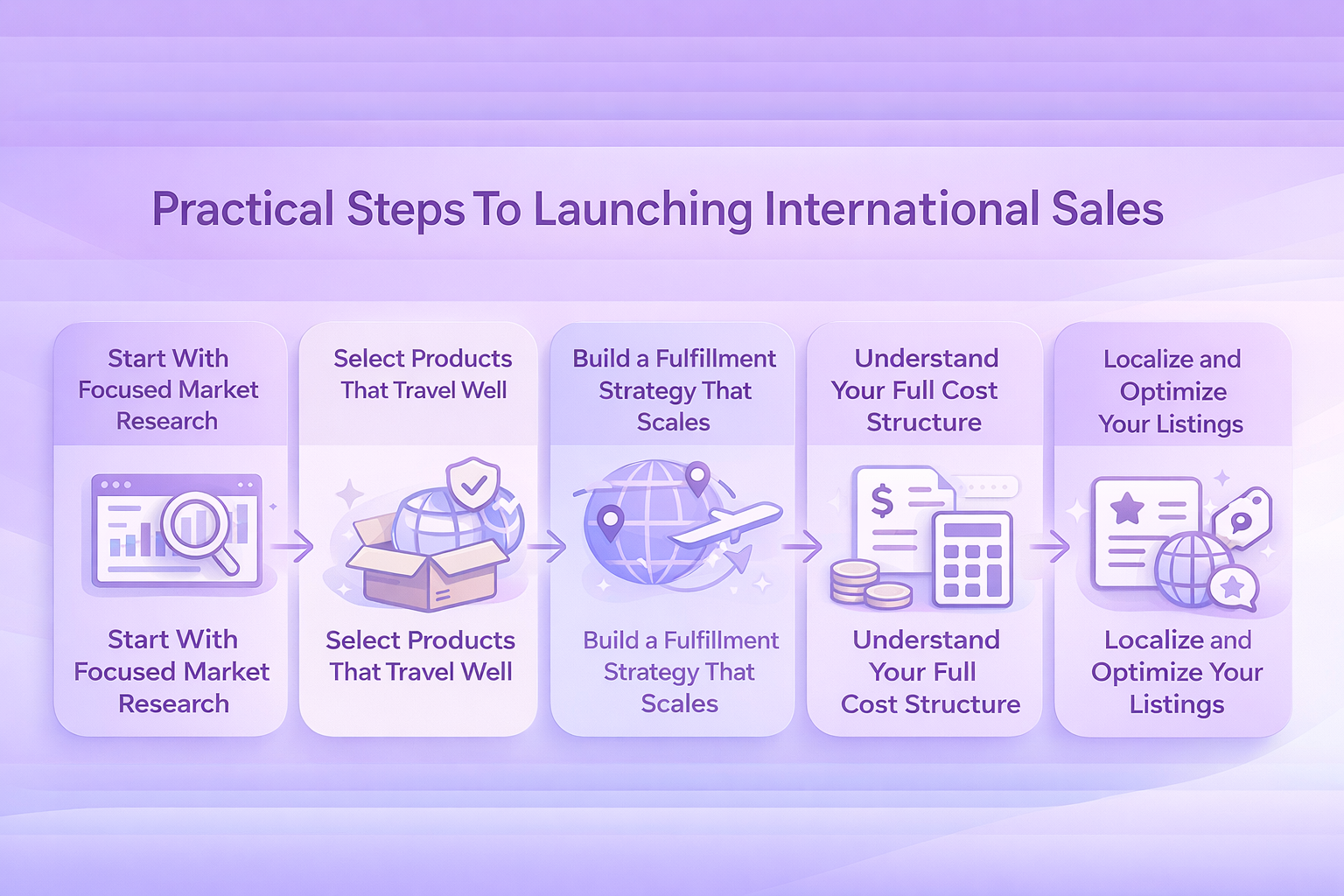
Practical Steps To Launching International Sales
1. Start With Focused Market Research
Choose one or two countries instead of trying to go global at once. Review economic indicators, category trends, and customer behavior. Combine external data with your own sales insights.
Amazon sellers can use Seller Central tools to explore regional demand and evaluate expansion opportunities across the Americas, Europe, Asia-Pacific, and the Middle East.
2. Select Products That Travel Well
Not every product is suited for cross-border sales. Size, weight, fragility, and regulatory complexity all matter.
Tools inside Seller Central help sellers assess global demand, identify catalog gaps, and understand how products may perform in different regions. Best Sellers lists in local Amazon stores can also provide direction.
Compliance checks should happen early. Some products require testing or documentation before they can be listed internationally.
3. Build a Fulfillment Strategy That Scales
International fulfillment can be handled in two main ways:
- Fulfillment by Amazon (FBA), where Amazon manages storage, shipping, customer service, and returns.
- Merchant fulfillment, where sellers ship orders themselves using approved carriers and tools like Amazon Buy Shipping.
Additional options include FBA Export, Remote Fulfillment with FBA, and Amazon Global Logistics for ocean freight. These services are part of Supply Chain by Amazon.
4. Understand Your Full Cost Structure
Profitability depends on more than product cost and shipping.
Be sure to include:
- Marketplace and fulfillment fees
- International shipping and handling
- Taxes, duties, and VAT where applicable
- Currency conversion costs
- Returns and customer service expenses
Tools like sales estimators and automated pricing help sellers model margins and adjust pricing dynamically.
5. Localize and Optimize Your Listings
Product listings are the entry point for international customers. Amazon allows sellers to create listings in one store and expand them to other countries using centralized tools.
The Build International Listings feature helps synchronize pricing, update content across regions, and handle currency adjustments. Listings and reviews can often be automatically translated, with manual localization available when needed.
SEO still matters internationally. Keywords, structure, and clarity should match how customers search in each market.
Handling Customer Experience Across Borders
A smooth, predictable customer experience often plays a bigger role in international success than pricing or advertising. When buyers order from another country, clarity and trust matter even more, especially around delivery and support.
Key considerations include:
- Clear delivery timelines and return policies. Customers should know upfront how long shipping will take, what return options are available, and who covers return costs. Transparent expectations help reduce disputes and negative reviews.
- Support in local languages where possible. Even basic customer support in a buyer’s native language can significantly improve satisfaction. It reassures customers and makes issue resolution faster and less frustrating.
- Consistent handling of refunds and exchanges. Refunds, replacements, and exchanges should follow the same clear rules across markets. Consistency helps protect your brand reputation and keeps operations manageable.
Sellers using Fulfillment by Amazon benefit from Amazon-managed customer service in local languages, including handling returns and refunds. Those managing fulfillment themselves can work with external providers through Amazon’s Service Provider Network to offer localized support without building in-house teams.
Scaling Gradually Instead of All at Once
One of the most common mistakes sellers make when going global is trying to expand everywhere at the same time. While the opportunity can be tempting, moving too fast often leads to operational strain, margin issues, and customer experience problems that are hard to fix later.
A more sustainable approach is to expand in phases. Start with a single new country and focus on getting the fundamentals right, from fulfillment and delivery times to customer support and returns. Once operations are stable, take time to review real performance data. Look closely at margins, shipping costs, customer feedback, and support workload to understand what is working and what needs adjustment.
Only after the first market is running smoothly does it make sense to move into the next one. This step-by-step approach reduces risk, keeps complexity under control, and allows you to scale international sales with confidence rather than guesswork.
Manage Global Expansion With WisePPC
As sellers expand into new markets, complexity increases fast. More countries mean more campaigns, more data, and more decisions that need to happen quickly. That is where we come in at WisePPC.
We built WisePPC to give sellers clear visibility and control as they scale internationally. Instead of switching between dashboards or relying on spreadsheets, we bring advertising and sales data into one unified system. This makes it easier to see what is driving results in each market and where adjustments are needed.
Our analytics provide access to real-time and long-term historical data that goes beyond Amazon’s default retention. Sellers can track key metrics like ACOS, TACOS, ROAS, profit, and performance by country, campaign type, or placement. Advanced filtering and multi-metric charts help identify what works in one region and apply it to others.
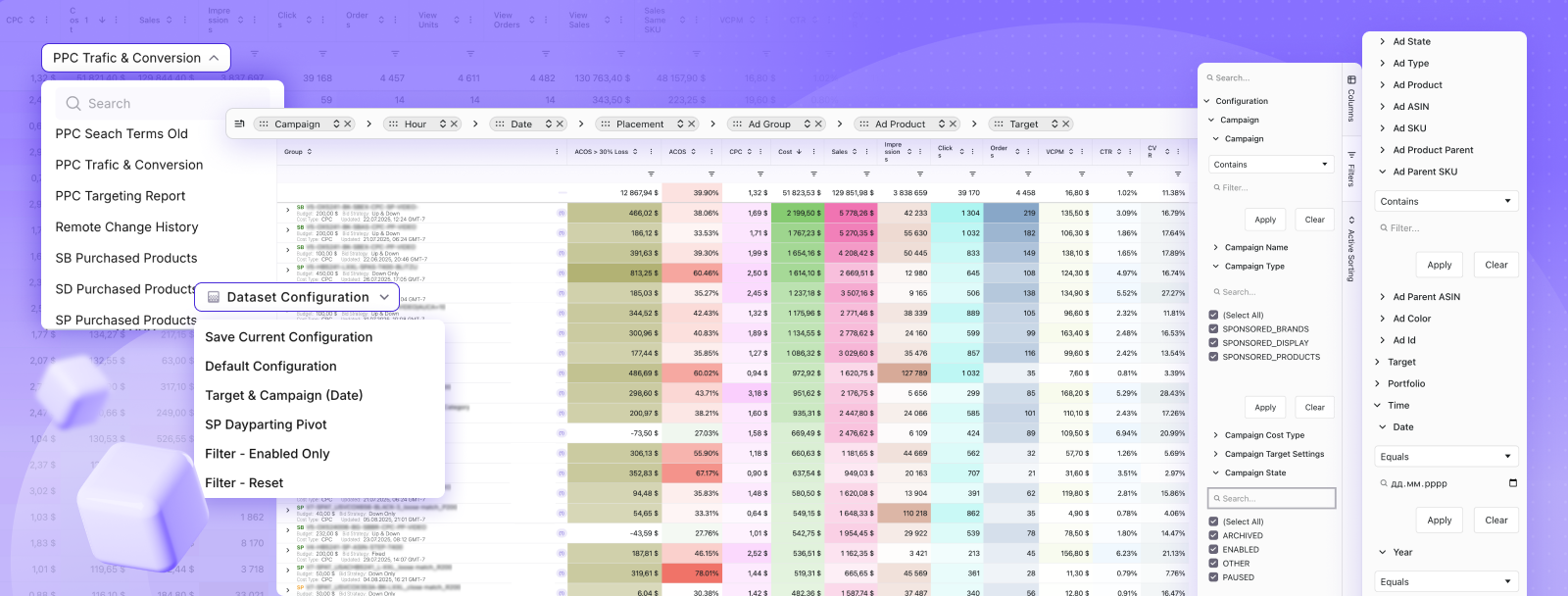
We also help teams move faster. Bulk actions and on-spot editing make it easy to manage large international accounts without slowing down. Visual performance indicators highlight issues and opportunities at a glance, even across multiple markets.
WisePPC supports a gradual, controlled expansion strategy. You can compare markets, monitor margins, and make data-driven decisions before scaling further. Our goal is to help sellers grow internationally with clarity, efficiency, and confidence.
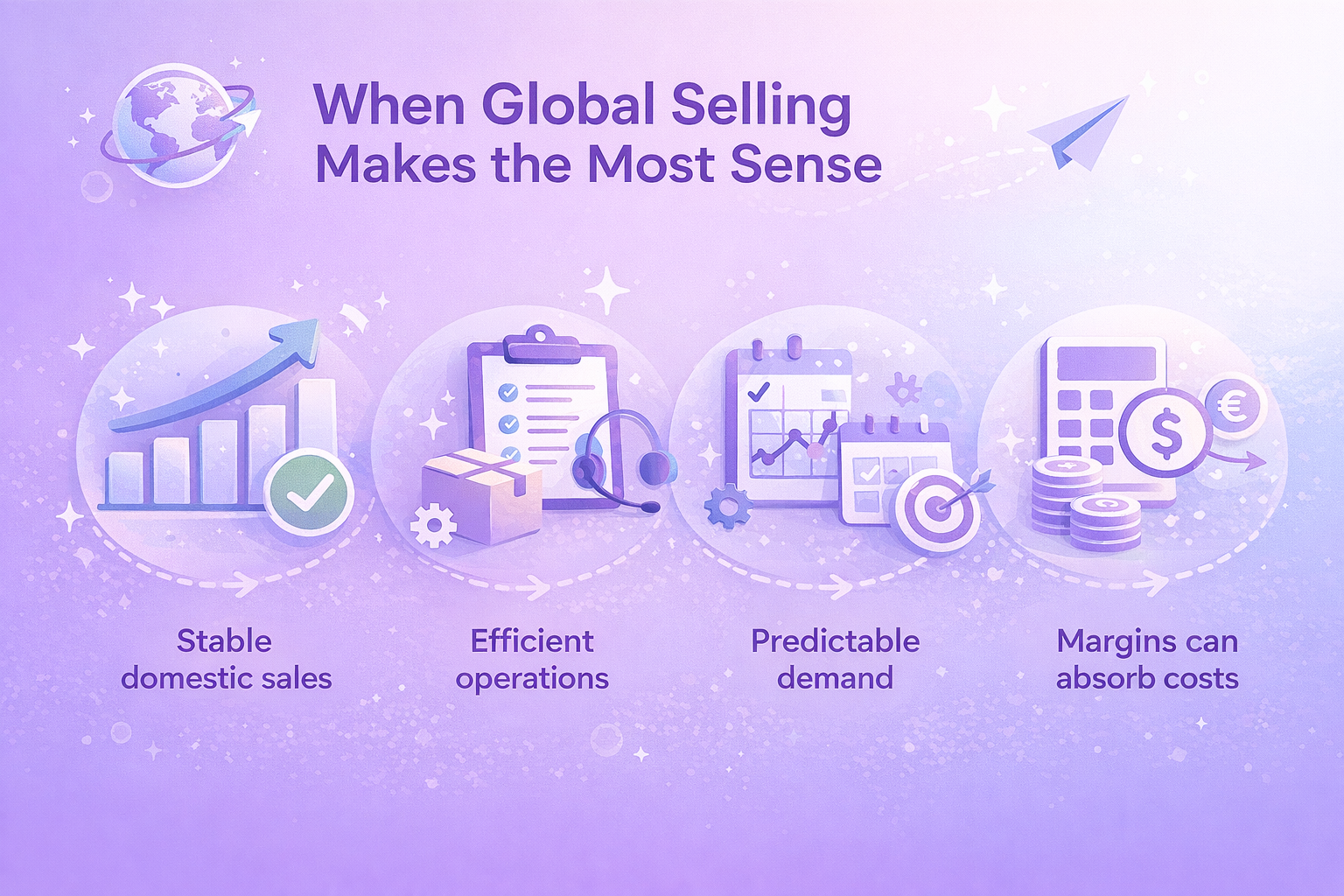
When Global Selling Makes the Most Sense
International expansion is not a universal solution, and it works best when a business has a solid foundation at home. Going global too early can add complexity without delivering meaningful growth.
Global selling tends to make the most sense when:
- Domestic sales are stable. Your core market is performing consistently, with predictable revenue and no major operational issues that still need fixing.
- Operations are already efficient. Fulfillment, inventory management, and customer support run smoothly, leaving room to handle the added complexity of cross-border sales.
- Products have predictable demand. Your products sell reliably, with clear demand patterns and low uncertainty around returns or quality issues.
- Margins can absorb additional costs. Pricing allows enough flexibility to cover shipping, taxes, duties, and currency conversion without eroding profitability.
If these conditions are not in place, focusing on improving internal processes and unit economics often delivers better results than expanding into new markets too soon.
Conclusion
Cross-border ecommerce opens real opportunities for businesses that are ready to think beyond their home market. With the right preparation, selling internationally is no longer reserved for large enterprises. Today, even small and mid-sized sellers can reach customers across multiple regions using centralized tools, flexible fulfillment options, and data-driven decision-making.
That said, global expansion works best when it is intentional. Understanding demand, planning for logistics and compliance, protecting margins, and maintaining a strong customer experience all matter more than speed. Sellers who take a phased, well-researched approach are far more likely to build sustainable international revenue instead of short-lived growth.
Frequently Asked Questions
What is cross-border ecommerce?
Cross-border ecommerce refers to selling products or services online to customers in other countries. It usually involves international shipping, currency conversion, taxes, and localized product listings.
Is cross-border ecommerce profitable for small businesses?
It can be profitable if margins are strong enough to cover additional costs such as shipping, duties, and currency conversion fees. Success depends on product selection, pricing, and fulfillment strategy.
Do I need to register a business in every country I sell to?
In many cases, no. Sellers can operate internationally through marketplaces without setting up a local legal entity in each country, although tax and compliance requirements still apply.
What are the biggest risks of selling internationally?
The main risks include regulatory compliance issues, unexpected logistics costs, currency exchange fees, and inconsistent customer experience. Most of these risks can be reduced with proper planning.
How long does it take to start selling internationally?
Timelines vary depending on the product category, target market, and fulfillment setup. Some sellers launch within weeks, while others take longer due to compliance or localization requirements.
 No credit card required