
 EN
EN  ES
ES  FR
FR  DE
DE  IT
IT  KO
KO  JA
JA  ZH
ZH  AR
AR  PT
PT  TR
TR PL
PL
It sounds like a perfect match – Amazon’s massive reach, your digital course, and a whole new stream of customers. But then you dig into the details, and things get a little… murky. Amazon isn’t Udemy, and it’s definitely not Teachable. So can you actually sell your online course there? Not exactly. But with a bit of creative repackaging, the answer turns into a yes – sort of.
In this article, we’ll break down what Amazon allows, what it doesn’t, and how course creators are working around the platform’s rules to get their content in front of more people. Whether you’re building your first course or already have a full library ready to go, here’s how to think about Amazon in your course-selling strategy.
What Amazon Does Not Let You Do
Amazon doesn’t allow third-party sellers to list traditional online courses directly. If your course is a collection of videos hosted on a learning platform or behind a paywall, Amazon won’t let you post a listing that sells access to it.
That includes:
- Direct links to gated course platforms.
- Access codes for private course websites.
- Any digital product that leads to an off-Amazon learning experience.
Why? Mostly for quality control and liability. Amazon would have to vet every course to maintain customer trust. They do sell some digital learning products, but only through direct partnerships with software and media companies.
So, if you were hoping to upload your course as-is and sell it like a textbook, that’s not going to happen.
What You Can Sell on Amazon
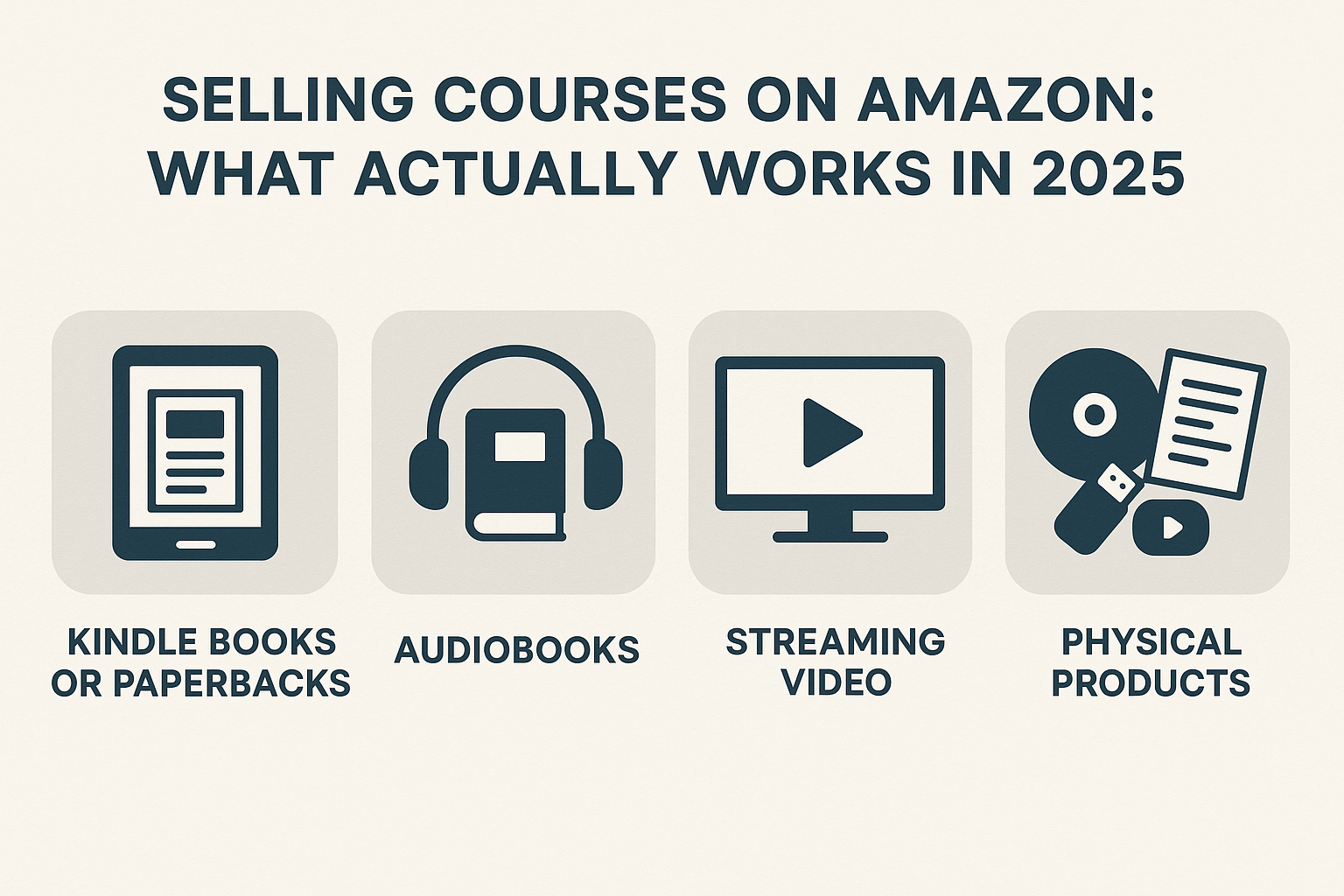
The good news? There are workarounds that still allow you to reach Amazon’s audience without violating their guidelines. They’re all based on one idea: repurposing your course into formats Amazon supports.
These include:
- Kindle books or paperbacks (via Kindle Direct Publishing).
- Audiobooks (via Audible and ACX).
- Streaming video (via Prime Video Direct).
- Physical products (DVDs, USBs, printed guides).
Each format has its own setup process, pros, and limitations.
Several Options to Sell Course Content on Amazon (Even If You Can’t Sell the Course Itself)
Just because you can’t sell a video course directly doesn’t mean you’re out of options. Amazon still offers several creative routes for getting your educational content in front of its audience. These methods revolve around transforming your course into an Amazon-approved format.
1. Repackage It Into a Book Using KDP
If your course has a clear structure and can be translated into text, Kindle Direct Publishing (KDP) is a strong option. You can publish your content as an eBook or paperback and start earning royalties immediately.
Why this works:
- Amazon supports KDP for self-published content.
- You can keep 70% of royalties (for ebooks priced $2.99-$9.99).
- You keep control of your pricing, layout, and distribution.
This method is ideal for creators with text-heavy courses or modules that don’t rely too much on visuals or interaction. You can also add QR codes in the book that lead to bonus materials or videos hosted elsewhere.
2. Create an Audiobook Version
If your course involves lectures or verbal walkthroughs, turning it into an audiobook is another smart option. Amazon owns Audible, and you can publish via the ACX platform.
Key points:
- You can narrate it yourself or work with a voice actor.
- Royalties range from 25% to 40%, depending on distribution rights.
- Great for people who want to learn on the go (commuting, exercising, etc.).
This is especially effective if you’ve already published a Kindle version. Some students prefer reading; others like to listen. With both options available, you cover more ground.
3. Prime Video Direct: Turning Courses into Streaming Content
For more visual or hands-on material, Amazon’s Prime Video Direct lets you upload video content. However, Prime Video Direct does not support tutorials, lectures, or broken-up lesson series; it is intended for other types of video content like films or documentaries, excluding instructional formats that resemble courses.
What you need:
- A complete, HD-quality video.
- Captions and proper formatting (Amazon has technical standards).
- A royalty model based on viewing time, rentals, or purchases.
This format works best for skill-based content: think cooking, photography, fitness, or anything you can show and explain clearly in one extended session.
4. Sell a Physical Copy (Yes, Really)
It might sound old school, but physical media still has a place. You can burn your course onto DVDs or load it onto USB drives and list it through Amazon Seller Central. You’ll need a seller account and either ship it yourself or use Fulfillment by Amazon (FBA).
Pros:
- Amazon allows you to sell tangible goods, even digital content in physical form.
- With FBA, you don’t have to handle logistics.
Cons:
- Higher production and shipping costs.
- Smaller, niche audience.
That said, some customers still prefer to have a physical copy they can keep or a gift.
5. Combine Formats for a Multi-Touchpoint Strategy
Many successful course creators use a mix of the above options to build a presence on Amazon:
- Book + Audiobook.
- eBook + DVD + bonus content via QR code.
- Streaming video + companion workbook.
Each format reinforces the other and widens your funnel. A buyer might discover your eBook, then end up on your full course site for advanced training.
What You’ll Need to Get Started
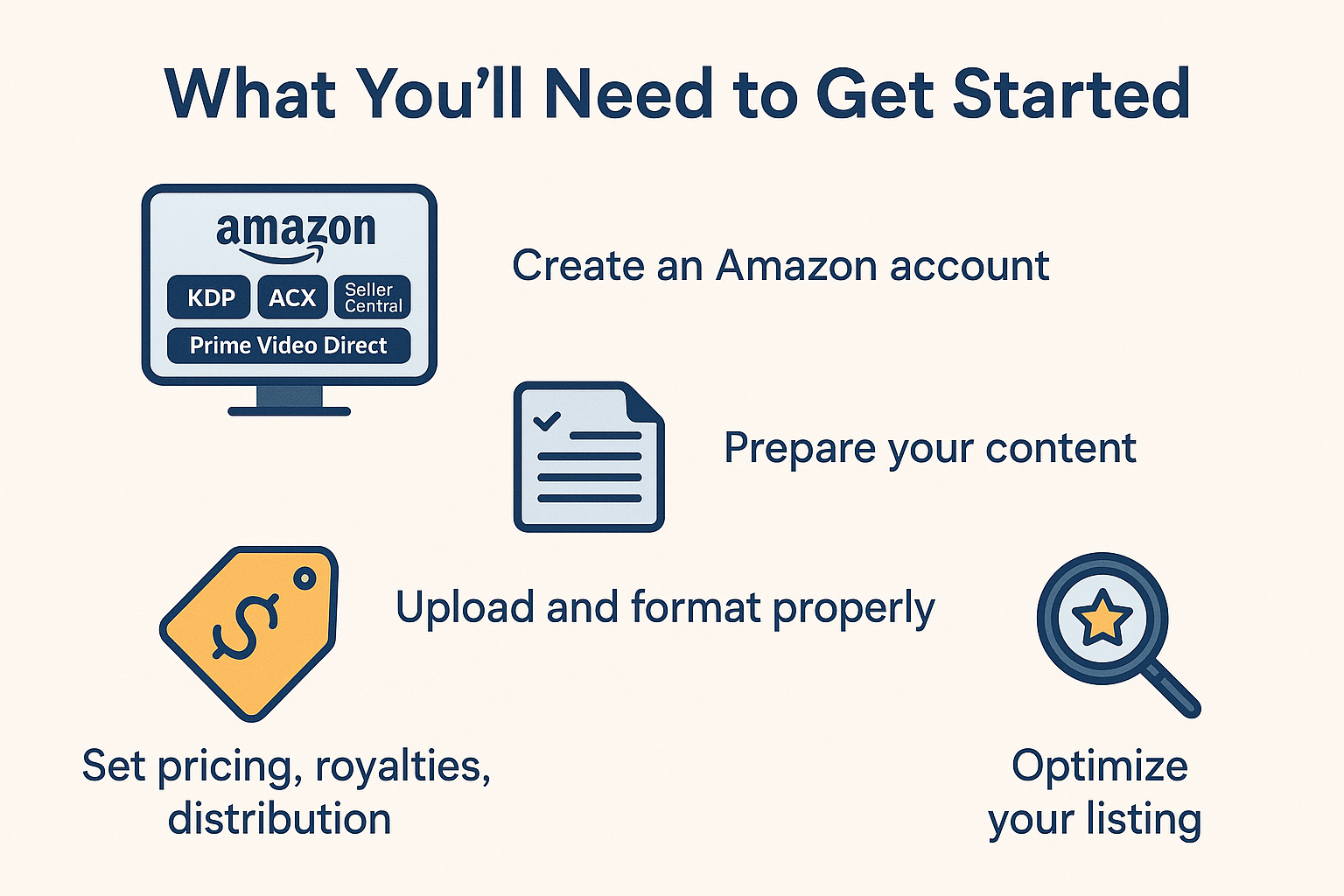
Regardless of format, here are the core steps you’ll follow:
- Create an Amazon KDP, ACX, Seller Central, or Prime Video Direct account.
- Prepare your content to meet Amazon’s technical standards.
- Upload and format everything properly (Amazon is strict about quality).
- Set pricing, royalties, and distribution options.
- Optimize your listing with keywords, titles, and professional visuals.
Pro tip: Always read the latest content guidelines from Amazon. These policies change, and what worked last year may get flagged today.
Alternatives to Amazon for Selling Courses
If your main focus is selling a video course and keeping full control over the user experience, Amazon probably isn’t the ideal home base. It was never built to host lessons, manage students, or drip content week by week. So if you’re serious about teaching online and want to offer a course that lives and breathes on your own terms – complete with progress tracking, embedded quizzes, and all the extras – there are better tools out there designed exactly for that kind of job.
That said, Amazon still has a place in the mix. Think of it less as the storefront for your course, and more like the magazine ad or entry point that gets someone curious. You can use it to publish a book version of your course, release a lecture series as a video, or put out a workbook that quietly funnels readers to your full offering. It’s not about replacing your main course platform, it’s about meeting people where they already shop, and giving them a natural path to go deeper if they want more.
Quick Recap: Can You Sell Online Courses on Amazon?
Not directly, no. But if you’re willing to get creative and package your content into formats that Amazon supports, the door is open.
What Works:
- eBooks (KDP)
- Audiobooks (ACX)
- Streaming video (Prime Video Direct)
- DVDs and USBs (Seller Central)
What Doesn’t:
- Direct digital course access
- Links or codes to gated platforms
Amazon doesn’t want to be a course host. But it’s still a great way to build visibility, generate leads, and earn from course-related content.
WisePPC: Smart Advertising Can Help Your Course Get Found
We know that getting a course on Amazon in a compliant format is just the beginning. What really drives results is visibility, and that’s where we come in.
At WisePPC, we help sellers understand exactly what’s working and what isn’t by giving them access to deep advertising and sales analytics. Whether you’re selling your course as a book, video, or bundle, we give you tools to track performance, spot missed opportunities, and adjust fast. Our platform is built to simplify complexity, so you spend less time guessing and more time growing.
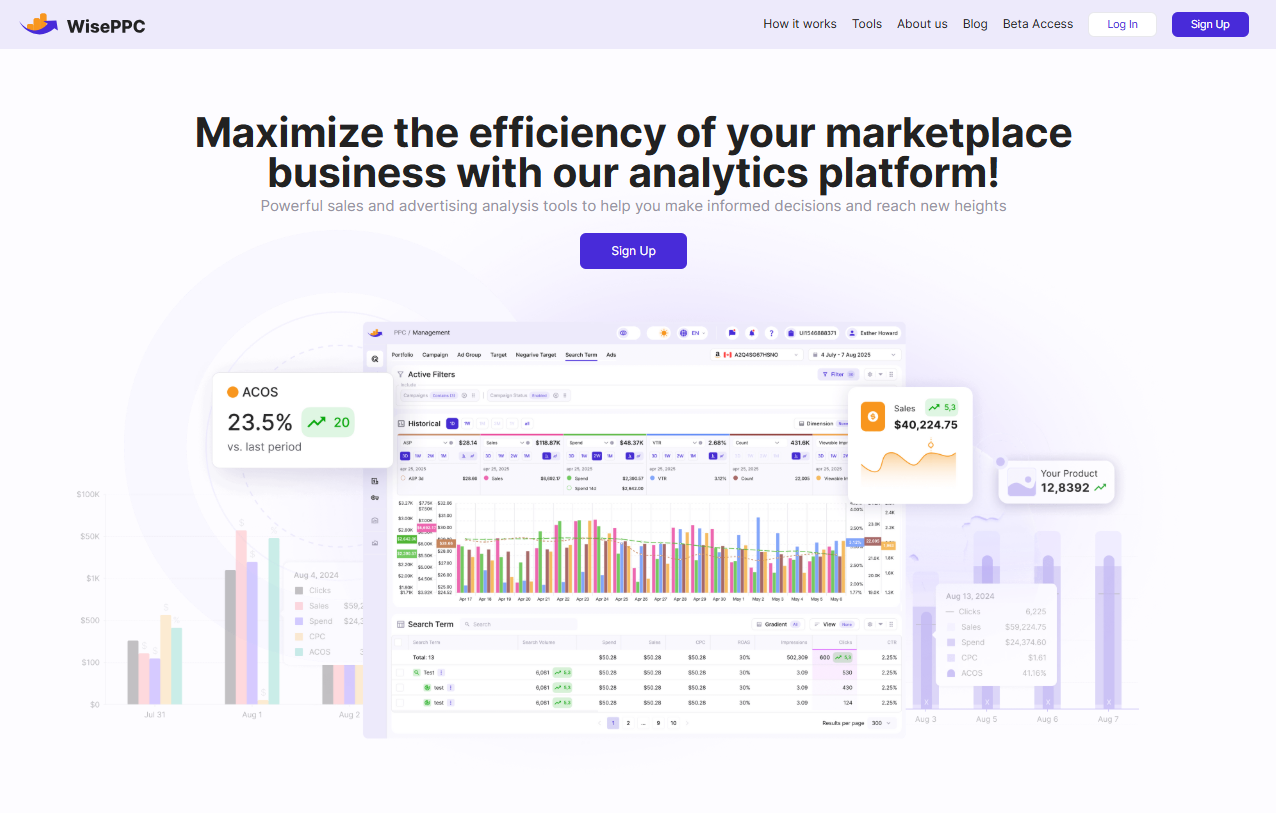
We offer real-time data, automated ad optimization, and insights into what actually drives your results – ads or organic reach. If you’re using Amazon to build awareness for your course content, we can help you do it smarter. Every campaign, every product listing, every keyword you target should be backed by data you can trust. And that’s what we deliver every day.
To Sum Up
If you’re already putting time and effort into creating a course, there’s no reason not to extract more value from it. Amazon is one of the most trusted marketplaces on the planet, and while it’s not built for online learning, it is built for distribution.
Meet your audience where they’re already buying. Give them multiple ways to access your knowledge. And treat Amazon as part of a larger ecosystem for your course business, not a one-size-fits-all solution.
It’s not the shortcut some people are hoping for. But with a smart repackaging strategy, it’s a solid addition to your revenue mix.
FAQ
1. Can I upload a course video directly to Amazon and charge for access?
Not in the way you might think. Amazon doesn’t allow traditional online courses from third-party sellers. But if you turn your course into a long-form video and meet their technical requirements, you can publish it using Prime Video Direct. It just has to feel more like a film or documentary, not a broken-up lesson series.
2. What’s the easiest way to get course content onto Amazon?
For most people, it’s turning the material into a book and publishing it through Kindle Direct Publishing. The process is relatively simple, and the format is flexible. Plus, it’s something Amazon fully supports.
3. Can I sell a workbook that includes a link to my course?
You can include links in your content, but you have to be careful not to make that link the main product. Amazon doesn’t want your listing to be a placeholder for access codes or off-platform sales. Keep the workbook valuable on its own.
4. Is Amazon a good place to launch a course business?
It’s a great place to build visibility or supplement your main course offering. But it’s not a course platform. If you’re looking to host video lessons, quizzes, and student dashboards, you’ll need to do that somewhere else. Think of Amazon as a support channel, not the destination.
5. What about selling a USB drive with course videos?
That’s allowed, as long as you follow Amazon’s policies for physical goods. It can be a smart move if your audience prefers offline access, or if you want to offer a bundle alongside your book or workbook.
6. Do I need a seller account to list these products?
Yes, depending on the format. For books and audiobooks, you’ll go through KDP or ACX. For physical items like DVDs or USBs, you’ll need an Amazon Seller Central account. Each has its own rules and fee structure, so read the fine print.
 No credit card required