
 EN
EN  ES
ES  FR
FR  DE
DE  IT
IT  KO
KO  JA
JA  ZH
ZH  AR
AR  PT
PT  TR
TR PL
PL
Driving traffic to Amazon used to mean higher ad costs with little visibility into what actually worked. That changed when Amazon introduced the Brand Referral Bonus.
The program rewards brands for sending shoppers to Amazon from outside channels by returning part of the referral fee as a credit. In practice, that means better margins on sales influenced by your own marketing efforts.
This article breaks down how the Brand Referral Bonus works, who can use it, how the bonus is calculated, and how sellers are using it as part of a broader growth strategy.
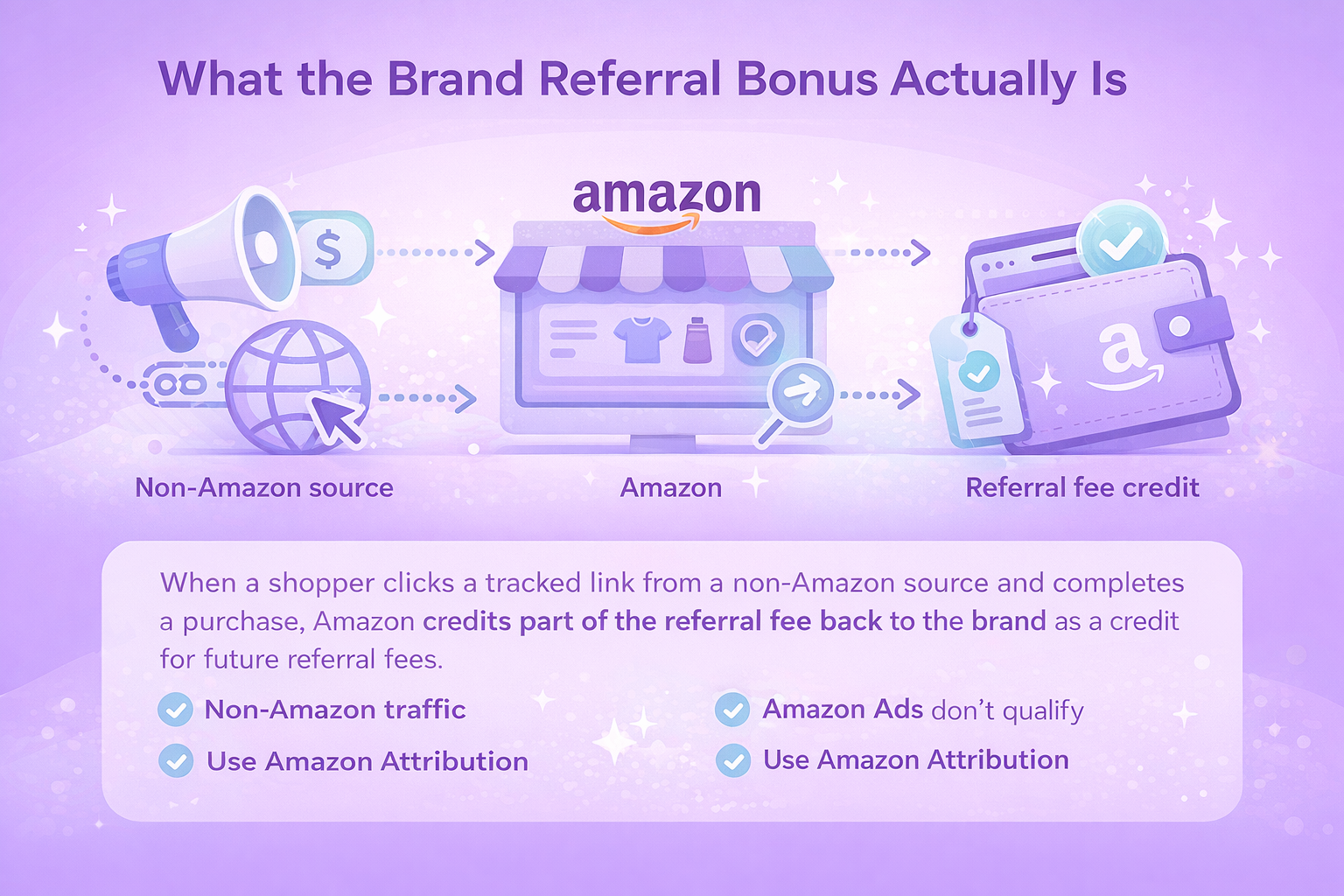
What the Brand Referral Bonus Actually Is
The Brand Referral Bonus is designed for brands that promote their Amazon listings beyond Amazon itself. When a shopper clicks a tracked link from a non-Amazon source and completes a purchase, Amazon credits part of the referral fee back to the brand.
The bonus is not paid out as cash. Instead, it appears as a credit that offsets future referral fees. Over time, this can materially improve profitability, especially for brands investing in paid traffic or content-driven acquisition.
A few important boundaries:
- The bonus applies only to non-Amazon traffic
- Amazon Ads campaigns do not qualify
- Tracking must be done through Amazon Attribution
If the sale happens without an Attribution tag, it does not count.
Why Amazon Created This Program
Amazon benefits when brands bring in net-new traffic. Instead of relying solely on internal ad auctions, the marketplace gains customers from search engines, social platforms, newsletters, and brand-owned channels.
For sellers, the program helps rebalance the economics of off-Amazon marketing. Sending traffic to Amazon no longer means absorbing the full referral fee without recognition. The bonus makes external acquisition more measurable and more defensible from a margin standpoint.
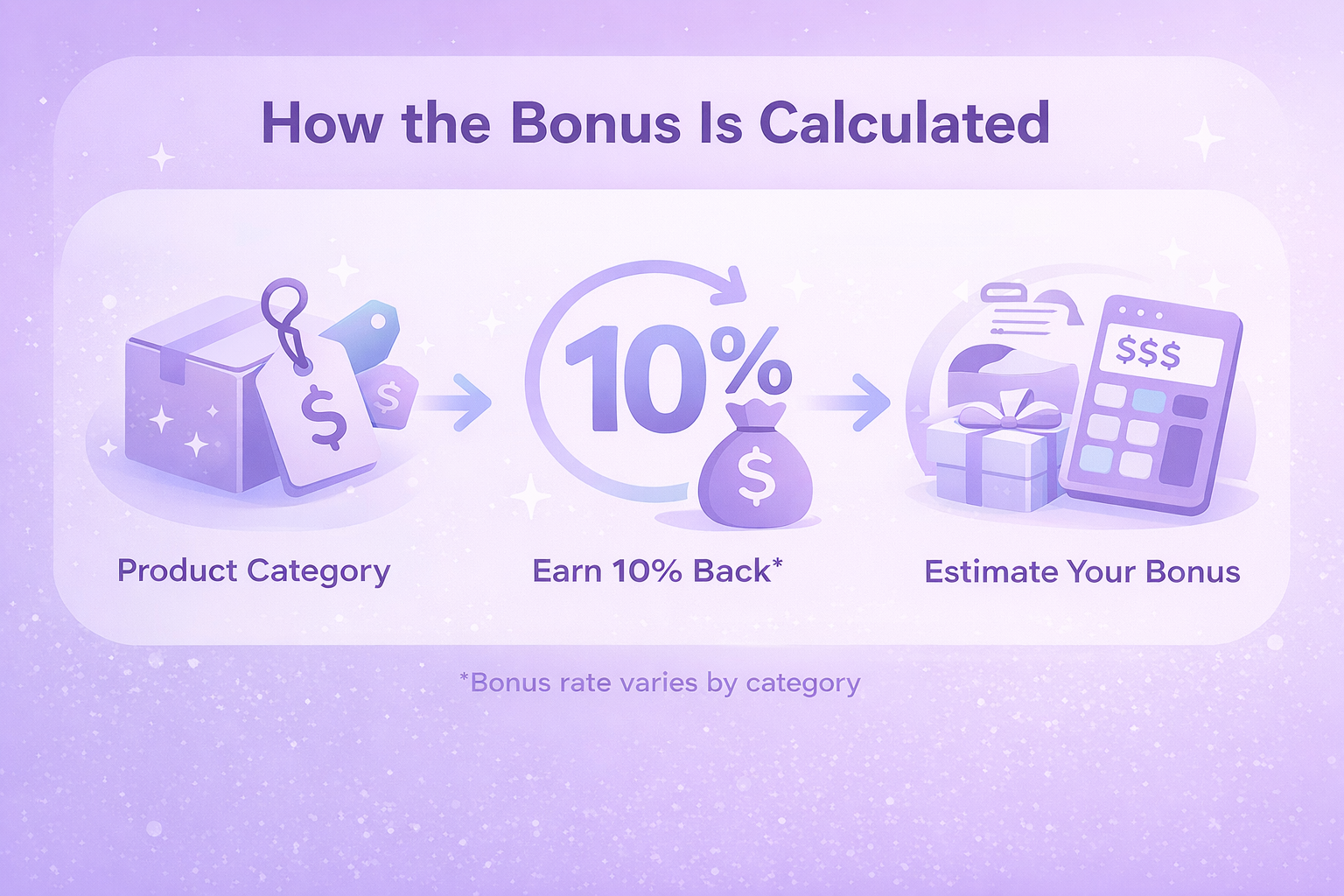
How the Bonus Is Calculated
The bonus rate depends on product category and, in some cases, order value. Across most categories, the average bonus is around 10% of qualifying sales, though actual rates vary.
On average, brands earn around 10% back from qualifying sales generated through external traffic. The exact bonus depends on the product category and, in some cases, the total order value.
To estimate your bonus, take your qualifying sales amount and apply the minimum bonus rate for the relevant category. The final credited amount may differ slightly due to factors like shipping fees, gift wrapping, cancellations, or returns. Your actual bonus is shown in the weekly Brand Referral Bonus report inside Seller Central.
Below is an overview of estimated bonus rates by category. These are reference values meant to help with planning, not guaranteed payouts.
Brand Referral Bonus – Estimated Bonus Rates by Category
| Category | Estimated Bonus Rate* |
|---|---|
| Amazon Device Accessories | 30% |
| Amazon Explore | 20% |
| Clothing & Accessories (including activewear) | 11% |
| Books (including Collectible Books), Music, Software, Video Games, Video & DVD, Home & Garden, Kitchen, Mattresses, Musical Instruments, Office Products, Outdoors, Sports (excluding Sports Collectibles), Pet Supplies, Toys & Games, Luggage & Travel Accessories, Shoes, Handbags & Sunglasses, Everything Else | 10% |
| 3D Printed Products; Industrial & Scientific (including Food Service and Janitorial & Sanitation) | 8% |
| Camera & Photo; Cell Phones; Consumer Electronics; Full-Size Appliances; Personal Computers; Video Game Consoles | 5% |
| Tools & Home Improvement | 10%, except 8% for base equipment power tools |
| Automotive & Powersports | 8%, except 7% for tires and wheel products |
| Baby Products (excluding Baby Apparel); Beauty; Health & Personal Care | 5% for products priced $10 or less, 10% for products priced above $10 |
| Collectible Coins | 10% up to $250, 7% from $250-$1,000, 4% above $1,000 |
| Compact Appliances (including parts and accessories) | 10% up to $300, 5% above $300 |
| Electronics Accessories | 10% up to $100, 5% above $100 |
| Entertainment Collectibles | 14% up to $100, 7% from $100-$1,000, 4% above $1,000 |
| Fine Art | 14% up to $100, 10% from $100-$1,000, 7% from $1,000-$5,000, 3% above $5,000 |
| Furniture (including outdoor furniture) | 10% up to $200, 7% above $200 |
| Grocery & Gourmet Food | 5% for products priced $15 or less, 10% for products priced above $15 |
| Jewelry | 14% up to $250, 3% above $250 |
| Sports Collectibles | 10% up to $100, 7% from $100-$1,000, 4% above $1,000 |
| Watches | 11% up to $1,500, 2% above $1,500 |
| Gift Cards | 14% |
*Estimated rates are provided for planning purposes. Actual bonus amounts may vary and are finalized in your weekly bonus report.
The final bonus can be adjusted by factors such as shipping charges, gift wrap, cancellations, or returns.
Because returns are part of the equation, Amazon applies a two-month delay before credits appear. This buffer allows the system to account for post-purchase changes.
A Simple Example
Imagine you sell a product for $100 and the standard Amazon referral fee for that category is 15%.
If your bonus rate is 10%, you earn a $10 credit.
In practice, the original $15 fee is effectively reduced to $5, which significantly increases your net revenue
When this happens consistently across dozens or hundreds of externally driven sales, the cumulative impact on margins becomes noticeable rather than marginal.
What Traffic Qualifies for the Bonus
Only traffic that comes from outside Amazon and is tracked with an Amazon Attribution tag is eligible for the Brand Referral Bonus. If a customer lands on Amazon without that tag, the sale will not qualify, even if it originated from your own marketing efforts.
In practice, this means every external campaign must use properly tagged links to be counted.
Common qualifying traffic sources include:
- Paid search ads on platforms like Google or Bing
- Paid social campaigns on networks such as Meta, TikTok, or LinkedIn
- Email marketing, including newsletters and promotional sends
- Influencer links and creator partnerships
- Content-driven traffic from blogs, reviews, or media sites
- Direct traffic from brand-owned websites or landing pages
The bonus is not limited to the first product a customer clicks on. If the shopper purchases additional products from the same brand within 14 days of the initial click, those sales can also qualify for the bonus, as long as the original visit was tracked correctly.
Who Is Eligible
To participate, a seller must:
- Sell in the US Amazon store
- Have a registered brand in Brand Registry
- Hold a Brand Representative role
- Use a Professional selling plan
Resellers are not eligible. Sellers without a registered trademark may look instead at the Amazon Associates program, which operates under a different commission model.
Getting Started: The Practical Steps
1. Enroll in the Program
Enrollment happens through Seller Central. If your brand is already registered and eligible, activation is straightforward.
If your brand is not registered, Brand Registry enrollment is required first. A trademark is necessary for that step.
2. Set Up Amazon Attribution
Amazon Attribution is the tracking layer behind the bonus.
Using the Advertising console, you create Attribution tags for:
- Individual ads
- Buttons or links
- Entire campaigns
Each tag is unique. One link equals one tag. This granularity allows you to see which channels and creatives actually convert.
3. Launch and Track Campaigns
Once tags are live, traffic can be sent from any qualifying channel. Performance data appears in the Attribution dashboard, showing:
- Clicks
- Product detail page views
- Purchases
- Bonus amounts earned
Credits are applied automatically after the waiting period.
How and When Credits Appear
Credits are applied to referral fees after a waiting period of roughly two months following a qualifying sale. This delay allows Amazon to account for order cancellations, refunds, and returns before the credit is finalized.
Once applied, the credit is used to reduce referral fees on future transactions. In some cases, it may partially reduce a fee. In others, it can fully cover the referral fee or be applied in the background without appearing as a separate line item, depending on tax treatment and transaction details.
A weekly bonus report is available in Seller Central, showing estimated earnings and applied credits. Reporting includes activity from the most recent 365 days, which helps track longer-term impact without relying on short reporting windows.

Turning Campaign Data Into Clear Decisions at WisePPC
At WisePPC, we help brands see what happens after shoppers arrive on Amazon from search, social, and other external channels. Instead of switching between Seller Central, Amazon Attribution, and spreadsheets, teams work from a single, centralized view that connects traffic, conversions, and sales.
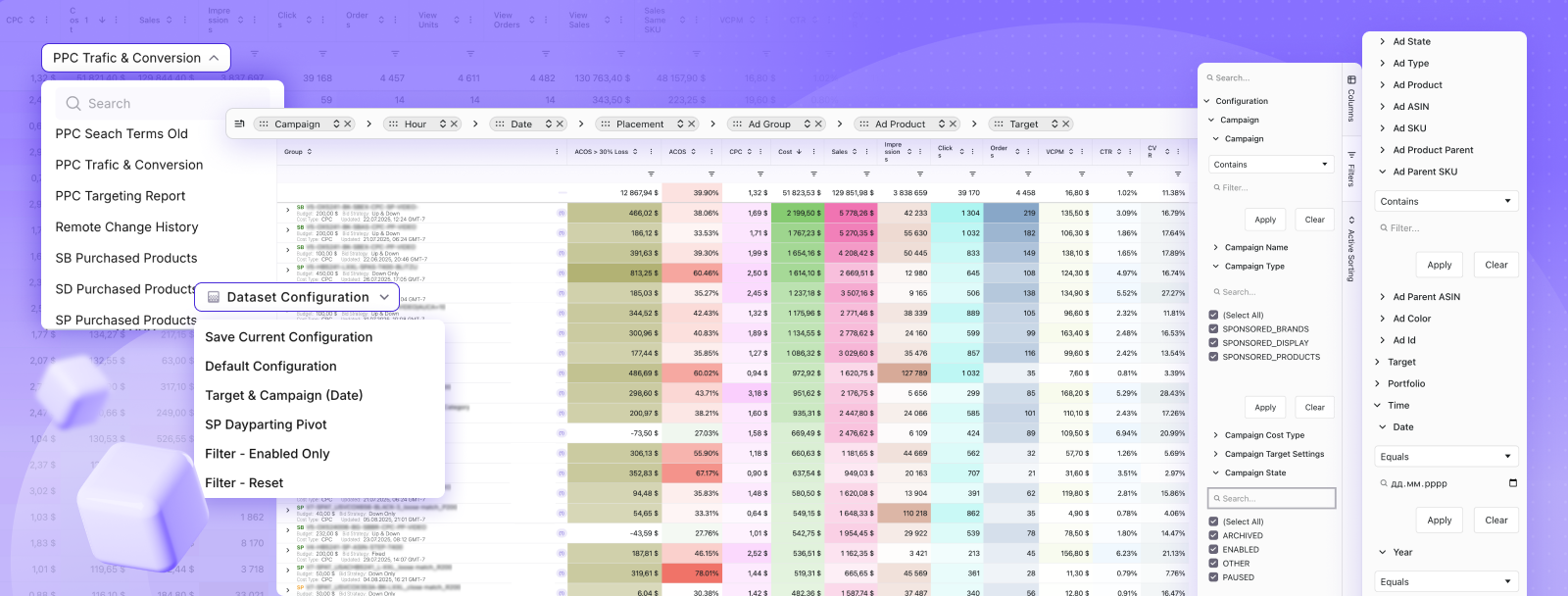
We focus on clarity and control. Long-term data storage makes it easier to spot patterns over time, while advanced filtering and visual highlights bring attention to what matters right now. Teams can quickly identify which campaigns are contributing to revenue and which ones need a closer look.
Speed matters when performance shifts. With bulk actions and inline editing, teams can adjust campaigns without slowing down their workflow. This keeps external traffic efforts aligned with real results and allows decisions to be driven by data rather than assumptions.
Taxes and Compliance Considerations
Participation requires submitting tax information specific to the program.
For US sellers, bonuses may be reported on Form 1099-NEC if thresholds are met. Non-US sellers must confirm that services related to the program are performed outside the United States to remain eligible.
Because tax treatment varies by country and structure, sellers are advised to consult a tax professional before enrolling.
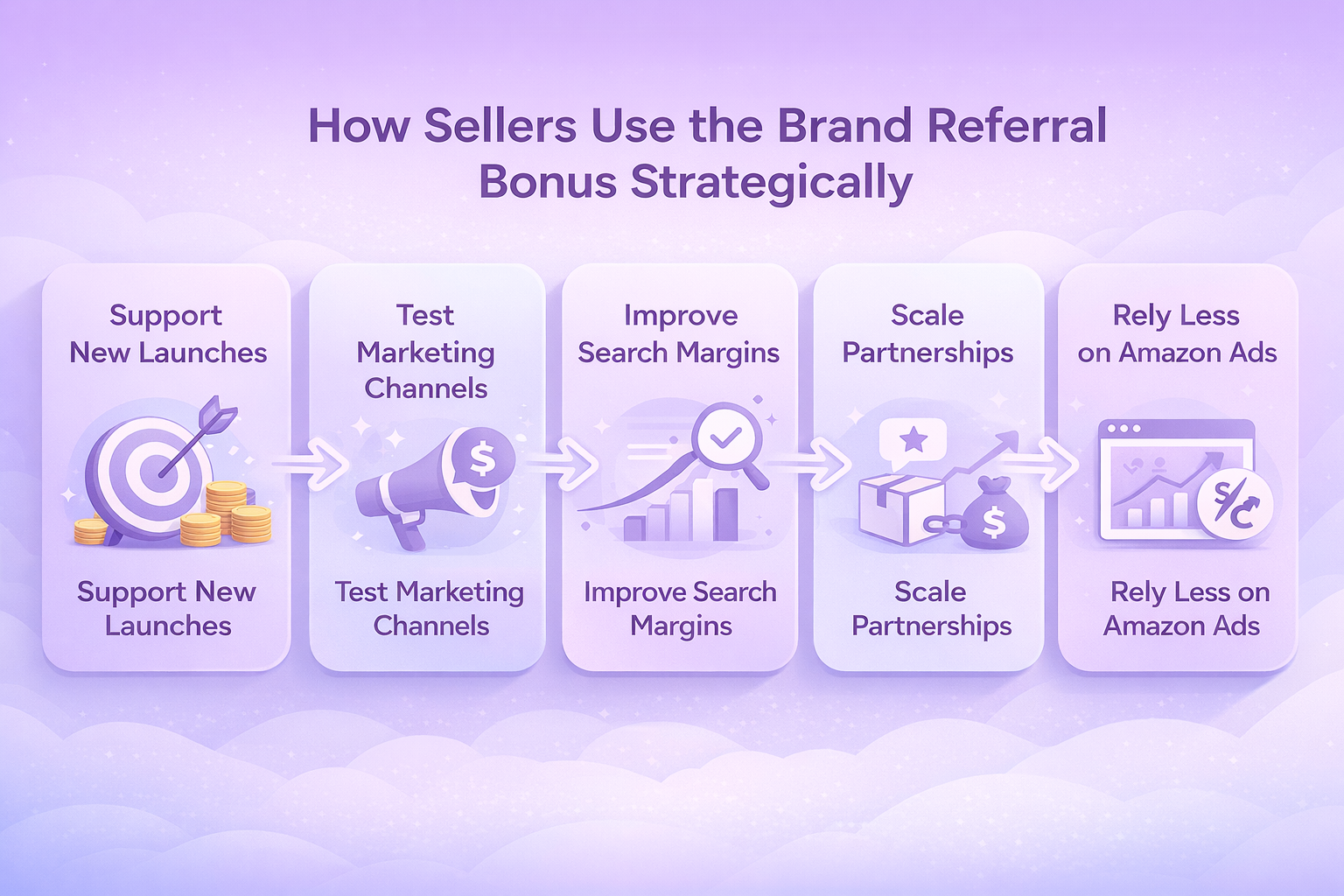
How Sellers Use the Brand Referral Bonus Strategically
Many brands do not treat the bonus as a one-off benefit or an isolated incentive. Instead, it is folded into a wider acquisition and measurement strategy that connects external marketing efforts with on-Amazon performance and profitability.
Common use cases include:
- Supporting product launches by sending targeted external traffic to new listings
- Testing new marketing channels with clearer visibility into return on investment
- Improving margins on branded search campaigns that already show strong intent
- Scaling influencer and content partnerships with better performance tracking
- Reducing dependence on internal Amazon ad auctions and rising CPCs
The real value usually comes from pairing Amazon Attribution insights with the earned credits. When sellers use both together, they gain a clearer picture of what drives sales and can make more confident decisions about where to invest next.
Final Thoughts
The Brand Referral Bonus does not replace Amazon Ads. It complements them.
For brands already investing in off-Amazon marketing, the program rewards behavior that was previously invisible inside Amazon’s ecosystem. For others, it lowers the barrier to experimenting with new traffic sources.
Used intentionally, it can turn external traffic from a cost center into a measurable, margin-aware growth lever.
Frequently Asked Questions
What is the Brand Referral Bonus?
The Brand Referral Bonus is a program from Amazon that credits part of the referral fee back to brands when they drive tracked external traffic to Amazon listings.
Who can participate in the program?
The program is available to brands selling in the US Amazon store that are enrolled in Brand Registry and have a Brand Representative role assigned in Seller Central.
Does Amazon advertising qualify for the bonus?
No. Traffic from Amazon Ads does not qualify. Only traffic coming from non-Amazon channels and tracked with Amazon Attribution tags is eligible.
What traffic sources are eligible?
Eligible sources include paid search, paid social, email marketing, influencer links, content sites, and brand-owned websites, as long as Amazon Attribution tags are used.
How much is the bonus?
Bonus rates vary by category, but most fall around an average of 10%. Some categories are higher or lower depending on product type and order value.
 No credit card required