
 EN
EN  ES
ES  FR
FR  DE
DE  IT
IT  KO
KO  JA
JA  ZH
ZH  AR
AR  PT
PT  TR
TR PL
PL
Black Friday and Cyber Monday come with more than just higher traffic – they bring pressure, expectations, and a ticking clock. Inventory needs to be in place, campaigns polished, pages tested, and tools ready to catch what breaks before it breaks you. The upside? It’s also the moment when well-prepared sellers pull ahead – not with gimmicks, but with solid execution. Here’s how to set up, scale, and stay calm through it.
What Makes BFCM 2026 Different (and What Hasn’t Changed)
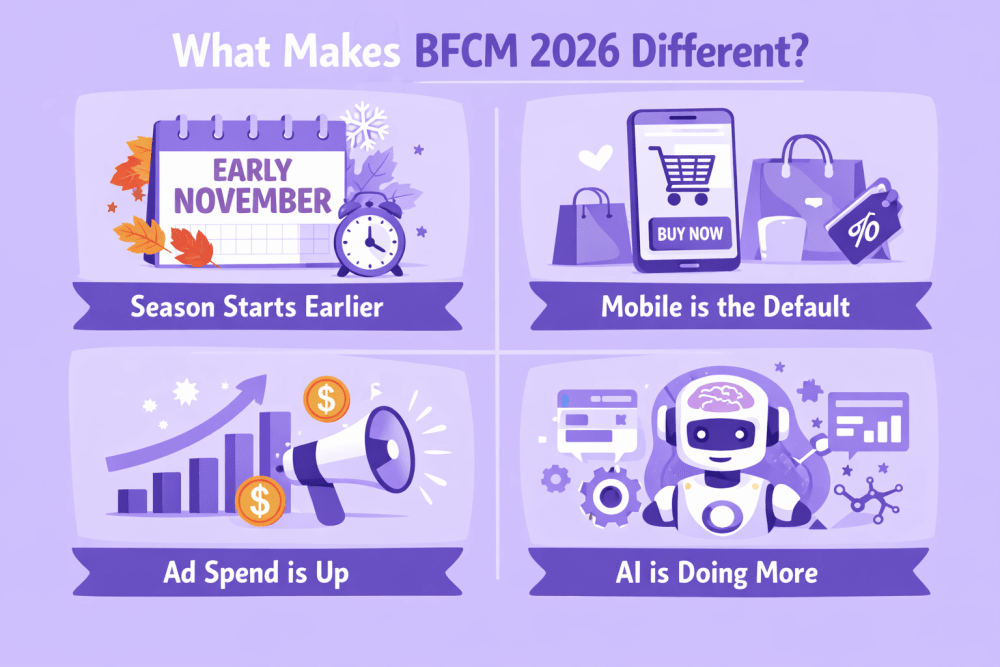
Some things stay the same – BFCM still delivers the year’s highest traffic spikes, shortest buyer attention spans, and most aggressive pricing. But 2026 is showing new signs of maturity. Shoppers are earlier. Ads are pricier. And backend mistakes get noticed faster. Here’s what’s shifted – and what sellers still need to get right, regardless of the year:
- The season starts earlier: Promotions don’t wait for Friday anymore. Many brands launch discounts two or three weeks ahead, which means customers are primed – but also pickier.
- Mobile is the default: The vast majority of shopping happens on phones now. If your product page stutters or your filters feel clunky on mobile, that’s game over.
- Ad spend is up, but so is noise: CPCs are climbing, especially on high-volume keywords. The winners are the ones who track what’s actually working – and shut off what’s not.
- AI is doing more heavy lifting: From dynamic pricing to predictive targeting, AI isn’t just a trend – it’s shaping campaigns in real time. But if your data’s a mess, the outputs won’t save you.
- Performance still wins: Pages that load fast, sites that don’t break, inventory that doesn’t run out – none of that’s new, but it’s still what separates solid sellers from scattered ones.
- Customer trust is fragile: Confusing discounts, broken links, or delayed shipping can burn a new buyer for good. Clean execution matters more than ever.
BFCM doesn’t give second chances. What changed in 2026 is that there’s less room to recover mid-flight. Smart prep is still the edge – just more so.
Plan Your BFCM 2026 Strategy Early
The sooner you start planning, the fewer surprises you’ll have to manage later. That applies to everything – discounts, inventory, landing pages, even support shifts. Once the sale starts, the last thing you want is to be fixing broken links or scrambling to restock a product you already advertised. The prep window is now, not mid-November.
Begin with your promo structure. Which products are you featuring? Are you offering a straight discount, bundle, or tiered deal? Set clear dates and test every rule ahead of time. A single conflicting code can wreck a margin or break the checkout flow entirely. It’s small stuff – until it’s not.
And don’t overlook the ripple effect. If your ad team builds campaigns without knowing what’s in stock, or your pages don’t reflect the live offers, it’s friction for the shopper and missed conversions for you. When planning starts early, coordination gets easier, and the whole system runs cleaner.

Smarter Campaigns, Less Waste: WisePPC for BFCM Prep
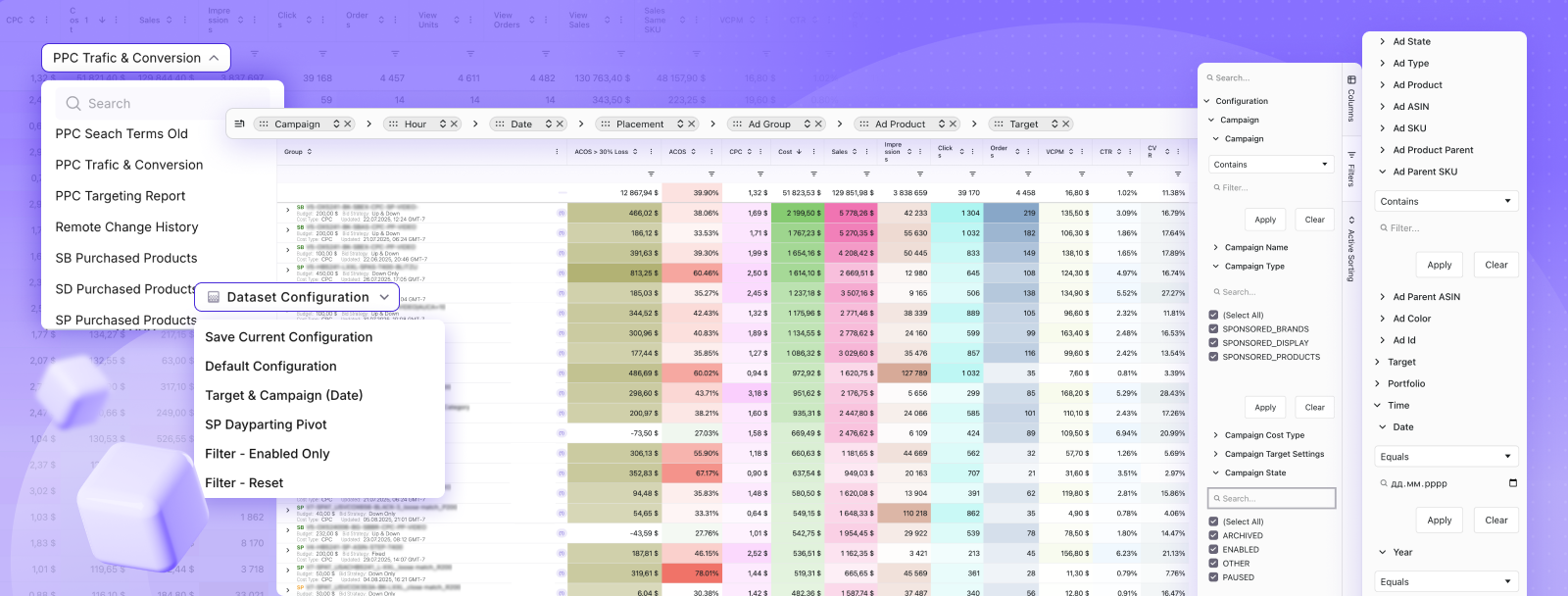
When BFCM traffic spikes, what usually breaks isn’t the offer – it’s the structure behind it. Sellers end up flying blind mid-campaign, toggling between reports, unsure what’s actually driving performance. That’s where visibility starts to matter more than ambition.
At WisePPC, we built the platform specifically to give sellers control before the pressure hits. You can see how ads impact both paid and organic sales, adjust bids without leaving your dashboard, and compare performance across key metrics without exporting a single file. We separate real signals from noise – so when it’s time to scale, you’re not guessing. Campaigns, placements, even keyword-level trends – everything’s centralized and built for speed.
We also stay connected across channels. You’ll find us on Facebook, Instagram, and LinkedIn, where we share platform tips, updates, and practical ways to squeeze more clarity out of your data. Whether you’re prepping for BFCM or reviewing what worked after, we’re here to help you run smarter, not just louder.
Prepare Your Amazon Storefront and Listings
You don’t need a full redesign for BFCM – but everything the shopper sees should be cleaned up, synced up, and built to handle pressure. The goal is simple: no confusion, no dead ends, and no extra clicks between curiosity and purchase. Here’s where to focus.
1. Check the Basics First
Make sure every product you plan to promote is fully updated: titles, images, bullet points, and pricing. If your listing was last edited six months ago, it probably needs a refresh. Fix any inconsistencies across variants – size, color, price – and double-check inventory is linked to the correct ASINs. Out-of-date listings don’t just look sloppy – they drive bounce.
2. Optimize for Mobile
Most buyers are shopping from their phones. If your A+ Content doesn’t stack well or your images take too long to load, they’re gone before the carousel even scrolls. Stick to clean layouts, clear images, and short-form copy that works on a 6-inch screen. If something feels clunky on mobile, assume it costs you sales.
3. Use Your Brand Store Wisely
Your Amazon Brand Store should feel like a calm, well-organized landing zone – not a homepage crammed with everything at once. During BFCM, shoppers don’t have time to hunt. Create a separate BFCM collection page or highlight deal categories up top. The layout doesn’t need to impress. It needs to help people find what they’re looking for, fast.
4. Sync Creative and Campaigns
If you’re running ads to a product or Brand Store page, it needs to match what the shopper expects. Use consistent language, pricing, and visuals across your creative. A banner saying “25% off” needs to be reflected immediately on the page – not buried in the fine print. Every mismatch adds friction. And BFCM traffic isn’t patient.
Get this part right, and your backend work – campaign structure, budgets, bids – actually has a chance to convert. Get it wrong, and you’ll be paying for clicks that bounce.
Technical Readiness Checklist (Based on FPWD)
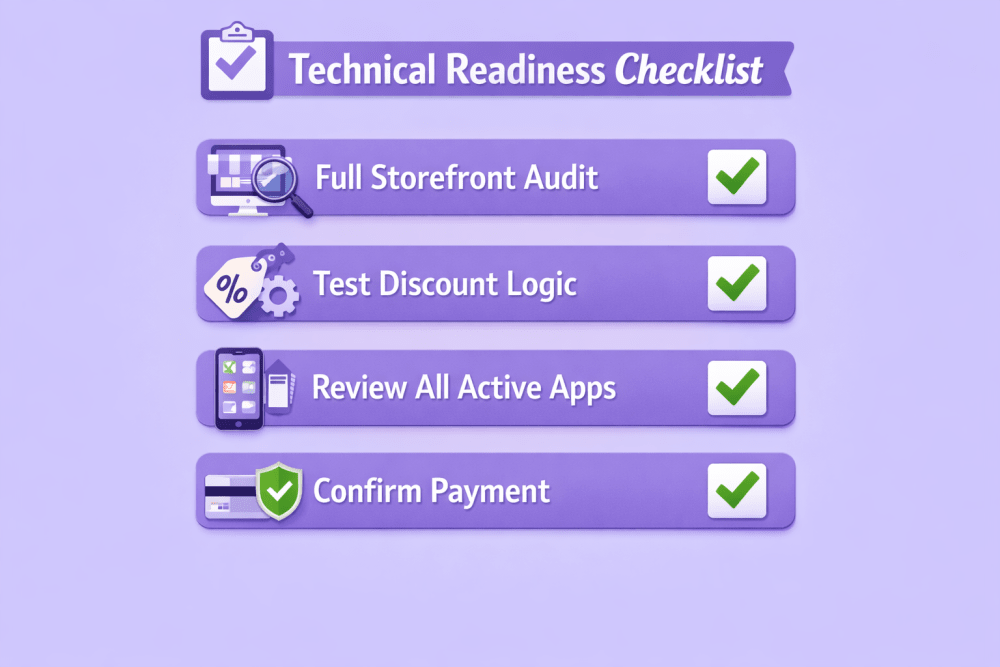
A great BFCM offer won’t matter if your site crashes or your promo code doesn’t fire. These are the details that don’t show up in campaign reports – but they’re exactly what sink conversions when traffic spikes. Here’s a no-fluff checklist to pressure-test your setup before it’s too late:
- Run a full storefront audit: Check page load speed and performance metrics. Remove old scripts and apps that don’t serve a clear purpose. Clean setups move faster, crash less, and convert better.
- Test discount logic ahead of time: Trial your promotions like a customer would – from landing page to checkout. Watch for overlapping codes, broken timers, and anything that sounds good but doesn’t apply cleanly.
- Review all active apps and extensions: Some third-party tools inject heavy scripts or conflict with recent platform updates. If it’s not helping you convert or fulfill, consider removing it for the season.
- Confirm payment and certificate validity: Expired SSLs or broken payment credentials can quietly block sales. Recheck domain renewals, Apple Pay certs, Stripe/Shopify keys – the invisible stuff that has very visible consequences.
- Don’t launch updates last minute: Any theme changes, new app installs, or DNS edits should happen well before the sale. Deploying changes on BFCM weekend is a gamble you don’t need.
- Stress-test integrations under load: If you’re syncing with CRMs, custom APIs, or fulfillment partners, simulate high-volume flows. Missed webhook calls and rate-limit errors don’t show up until the rush hits.
- Track real conversions, not test noise: Make sure analytics filters out bots and staging data. If you’re feeding AI systems or dashboards with junk, the recommendations won’t help – and might mislead.
This is the stuff people skip. But it’s what keeps the lights on when orders start stacking up. Clean, predictable systems beat last-minute scrambles – every single time.
Stay in Stock, Ship on Time: Smart Inventory Moves for BFCM
Running out of your best-selling item on Day 2 of BFCM isn’t just lost revenue – it’s momentum you won’t get back. Once shoppers move on, they usually don’t circle back. That’s why inventory planning isn’t just about stocking up – it’s about forecasting demand, watching lead times, and knowing what can break if things move faster than expected.
Start with your historicals. What sold last year? What trended upward last quarter? Use that data to build a reorder strategy that doesn’t lean on guesswork. If you’re using FBA, check deadlines early and build in buffer time for delays. And if you’re fulfilling yourself, make sure your packaging, labels, and team can scale under pressure – because same-day pickups won’t wait for a print queue.
Also worth doing: spot-check your listings for stock sync issues. If you’re using third-party tools or syncing across channels, make sure quantity tracking is live and stable. A product that shows “In Stock” but isn’t actually available is one of the fastest ways to kill trust during high-volume weeks. Clean inventory data keeps things moving and helps your ad spend land where it should – on products that can actually ship.
BFCM Campaign Execution: Ads, Coupons, and Urgency
Once the prep is done, it’s time to go live – and that’s where timing, clarity, and pressure all start working together. Your campaigns don’t need to be flashy. They need to work, load fast, and land the message before the scroll gets swiped away. Here’s how to approach it.
Build Ad Campaigns That Don’t Waste Spend
Start with your high-intent products and work outward. Don’t spread budget across your full catalog unless you’ve got the data to back it. Pull in performance metrics from past sales cycles – if certain targets ate spend and didn’t convert last year, cut them loose.
Track ACOS, CTR, and blended ROAS in real time. Adjust in bulk where needed, pause underperformers fast, and don’t get sentimental about low-volume SKUs during a peak week.
Use Coupons and Deals with a Clear Hook
Coupons, Lightning Deals, and Prime Exclusive Discounts all work – if shoppers can see the value right away. Keep it clean: percentage off, stackable if needed, and visible in the first two lines of the product detail page. Avoid promo copy that makes people hunt for the actual offer.
Also, test your discount logic ahead of time. A misfiring coupon on Black Friday will not be forgiven.
Don’t Fake Urgency – Use It Where It Helps
Urgency tools like countdown timers, “limited stock” labels, and flash deal overlays still work – but only when they’re honest and minimal. If everything’s urgent, nothing is. Use these tactics on your key deals or seasonal bundles.
And make sure they’re synced across your campaigns. If the ad says “Ends in 2 hours,” the landing page better match. Shoppers notice. So does the algorithm.
Execution is what turns clicks into orders. You don’t need dozens of campaigns – you need a few that are sharp, tested, and monitored in real time. Let the metrics guide what stays running and what gets turned off. Keep the pressure where it counts.
Post-BFCM Follow-Up: Don’t Waste the Momentum
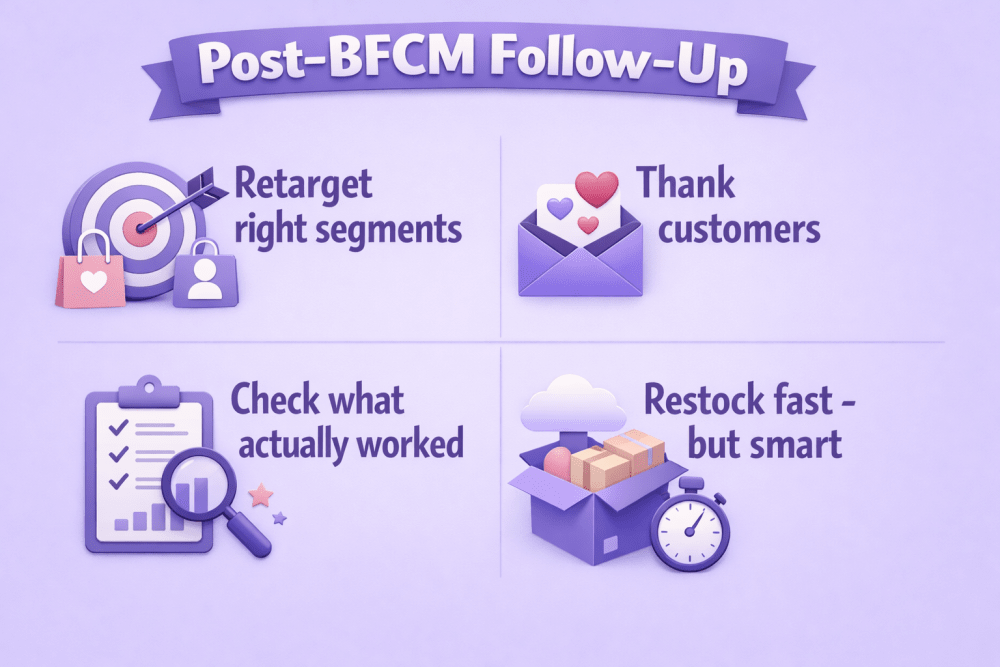
BFCM might be over, but the real value often comes after the rush. You’ve got fresh traffic, new buyers, and data that’s still warm. What you do next decides whether that spike was a one-off or the start of repeatable growth. Here’s how to keep the momentum rolling:
- Retarget the right segments: Not every buyer needs a full-funnel campaign. Split audiences by behavior – first-time customers, high spenders, coupon users – and build tailored follow-ups that actually make sense.
- Thank customers like a human would: A simple follow-up email with clear order info, delivery expectations, and maybe a small bonus offer builds trust. If they had a good experience, they’re more likely to come back before Q4 ends.
- Check what actually worked: Run a clean post-mortem. Which campaigns drove revenue, not just clicks? What offers converted best? Where did inventory fall short? Use this data to adjust the rest of your holiday strategy – not just next year’s.
- Restock fast – but smart: If something sold out during BFCM, check whether it was promo-driven or truly high-demand. Reordering just because it moved quickly can backfire if the volume came from a one-time discount.
- Keep ad pressure on top performers: Don’t kill your campaigns too early. If a product performed well and inventory’s solid, let the ads keep running into December – especially for giftable or winter-relevant items.
- Clean up your backend: Deactivate expired promos, archive BFCM-specific creative, and check your integrations. A clean system now avoids headaches when Q1 hits and you’re already thinking about spring.
You did the hard part – now it’s about using that spike to shape smarter decisions going forward. Don’t just close the tab and move on. There’s still revenue on the table.
Conclusion
BFCM doesn’t reward chaos – it rewards preparation that feels invisible when it works. Clean listings, synced campaigns, tested flows, and decisions grounded in real data. That’s what gives sellers breathing room during the rush and clarity after it. The brands that win aren’t always the loudest – they’re the ones that know what’s working, why it’s working, and when to pivot.
If you’ve done the work – planned early, kept your systems tight, and tracked the right signals – the weekend won’t feel like a scramble. It’ll feel like execution. And that’s when growth starts to feel repeatable.
FAQ
1. How early should I start preparing for BFCM?
Honestly, as early as Q3. Good campaigns take time to plan and test. Inventory planning and promos should be locked in by early November at the latest.
2. Do I really need a Brand Store for BFCM?
You don’t need it, but if you’re brand registered, it’s one of the easiest ways to centralize your offers and give shoppers a cleaner path to browse. Just keep it focused – don’t overload it.
3. How do I know if my ads are actually driving profit?
Track TACOS and blended ROAS, not just clicks or ACOS. You need visibility into how advertising impacts total revenue, including organic sales. That broader view is what shows whether your campaigns are scaling profitably or just increasing spend.
4. What if I don’t use FBA?
You can still win BFCM, but fulfillment becomes a bigger variable. Make sure your logistics are airtight. Buyers will bounce if delivery estimates look shaky.
5. Should I pause campaigns after BFCM ends?
Not necessarily. If certain products are still converting and inventory is solid, keep them running. Just shift the messaging – urgency might drop, but intent often lingers.
 No credit card required