
 EN
EN  ES
ES  FR
FR  DE
DE  IT
IT  KO
KO  JA
JA  ZH
ZH  AR
AR  PT
PT  TR
TR PL
PL
Quick Summary: The best items to start selling on Amazon in 2026 include clothing and accessories, beauty products, kitchen gadgets, electronics, and home goods. New sellers should focus on categories with high demand but lower barriers to entry, avoiding restricted products that require approval. Success depends on researching Amazon Best Sellers lists, analyzing profit margins, and understanding fulfillment options like FBA.
Starting an Amazon business sounds straightforward until the reality hits: what exactly should someone sell? With millions of products already listed, finding the right niche can feel overwhelming.
Here’s the thing though—Amazon provides massive opportunities for new sellers. According to Amazon’s official guidance, independent sellers in the US averaged more than $290,000 in annual sales in the Amazon store in 2024. But that success doesn’t happen by accident.
The key isn’t just picking popular products. It’s about identifying items that balance high demand with reasonable competition and low entry barriers. Some categories require approval processes that can delay or prevent new sellers from getting started. Others have razor-thin margins that make profitability nearly impossible.
This guide breaks down the best items for beginners to start selling on Amazon, backed by data from Amazon Best Sellers lists and real market analysis. Whether someone’s looking to build a side income or launch a full-scale business, understanding which products work—and why—makes all the difference.
Understanding Amazon’s Selling Categories
Not all Amazon categories are created equal. Some welcome new sellers with open arms. Others have gates that require approval, documentation, or proof of brand ownership.
The Amazon marketplace divides products into restricted and unrestricted categories. Unrestricted categories let anyone start selling immediately after creating a seller account. Restricted categories require approval before listing products.
Open Categories for New Sellers
These categories don’t require special approval and represent the best starting points for beginners:
- Clothing, Shoes & Jewelry
- Beauty & Personal Care (most items)
- Kitchen & Dining
- Home & Kitchen
- Sports & Outdoors
- Toys & Games (seasonal considerations apply)
- Pet Supplies
- Cell Phone Accessories
- Office Products
- Arts, Crafts & Sewing
These categories consistently appear on Amazon Best Sellers lists and offer diverse product opportunities. The clothing category alone generated substantial revenue, with the United States being Amazon’s biggest market at 489.7 billion dollars in net sales in 2025, according to Statista.
Restricted Categories Requiring Approval
Several categories require Amazon’s approval before selling. New sellers should avoid these initially:
- Grocery & Gourmet Food
- Health & Household (certain items)
- Professional medical equipment
- Collectible items
- Fine jewelry
- Automotive parts (certain categories)
The approval process can take weeks and often requires invoices from authorized distributors, business licenses, or other documentation. For someone just starting out, it’s smarter to focus on open categories first.

Understand What Drives Product Sales
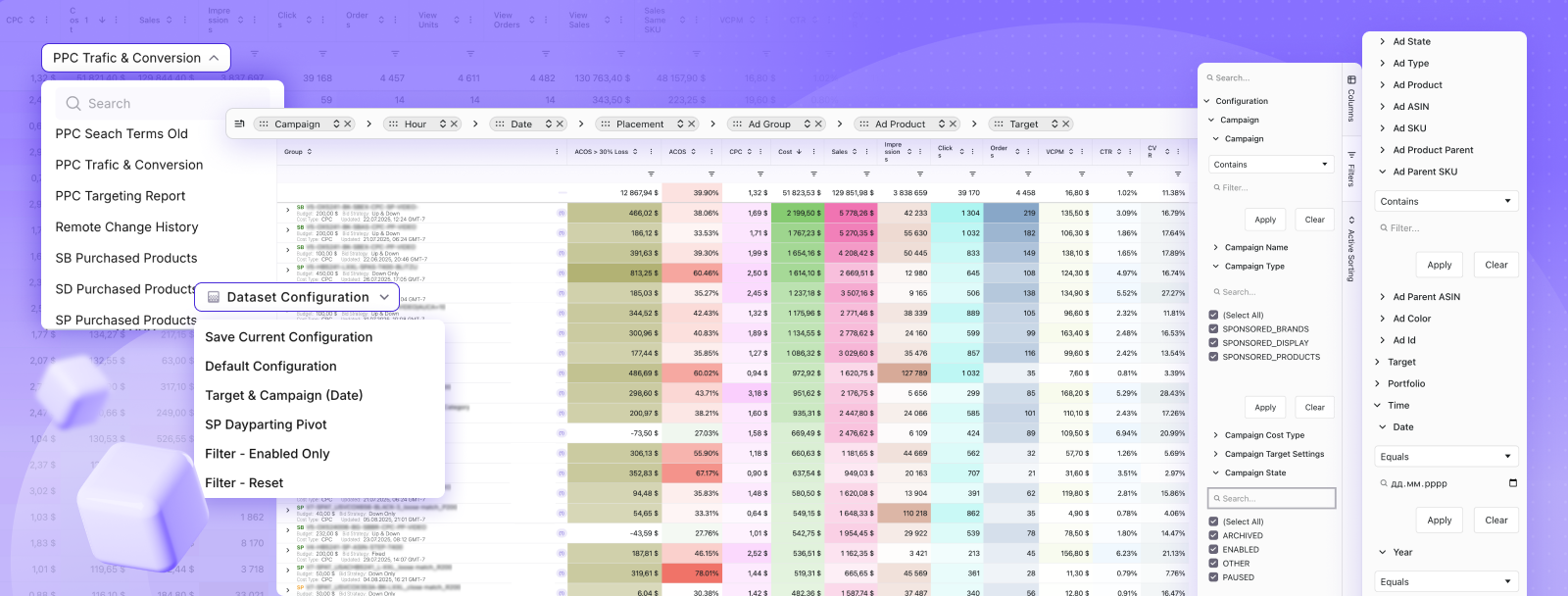
WisePPC brings together advertising and product performance into a single view. Instead of relying on isolated reports, it shows how campaigns influence sales and where results are coming from. This helps focus on products that actually generate revenue.
Want to See What’s Driving Sales?
Use WisePPC to:
- analyze keyword and campaign performance
- track product sales alongside ad data
- separate paid and organic results more clearly
👉 Explore WisePPC to get a clearer view of your Amazon advertising data.
Top Product Categories for Amazon Beginners
Real talk: the best category depends on budget, interests, and business goals. But certain categories consistently perform well for new sellers based on demand patterns and entry barriers.
Clothing, Shoes & Jewelry
This category dominates Amazon Best Sellers lists for good reasons. Fashion items have high turnover, repeat customers, and diverse price points.
Successful approaches include:
- Print-on-demand apparel through services like Printful
- Wholesale basics (socks, underwear, t-shirts)
- Fashion accessories (scarves, belts, jewelry)
- Seasonal items (swimwear, winter accessories)
The Hanes men’s underwear boxer briefs pack ranks among top items in Best Sellers, showing consistent demand for quality basics. This demonstrates that boring essentials often outperform trendy items.
Profit margins on clothing vary widely. Print-on-demand offers lower upfront costs but smaller margins. Wholesale requires more capital but can yield 30-50% margins on popular items.
Beauty & Personal Care
Beauty products represent another high-volume category with strong repeat purchase rates. Customers who find products they like often reorder monthly.
Popular subcategories include:
- Skincare tools and accessories
- Hair care products
- Makeup brushes and applicators
- Personal care items
- Beauty tools and gadgets
This category works well because products are consumable. A customer who buys face wash or moisturizer will need replacements, creating recurring revenue opportunities.
But there’s a catch. Some beauty products require FDA compliance or approval to sell. Stick with tools, accessories, and items that don’t make medical claims when starting out.
Kitchen & Dining
Kitchen gadgets and dining accessories maintain steady demand throughout the year, with spikes during holiday seasons and wedding registries.
High-performing items include:
- Kitchen organization tools
- Cooking utensils and gadgets
- Food storage containers
- Coffee and tea accessories
- Dining table items
The kitchen category benefits from problem-solving products. Items that make cooking easier, save space, or organize cluttered drawers tend to generate strong sales with positive reviews.
Many kitchen items are lightweight and compact, reducing shipping costs and FBA fees. A silicone spatula set costs far less to ship than a cast-iron skillet.
Electronics Accessories
While electronics themselves often require significant capital and face heavy competition, accessories represent a sweet spot for new sellers.
Profitable accessory niches include:
- Phone cases and screen protectors
- Charging cables and adapters
- Headphone accessories
- Computer peripherals
- Cable management solutions
Electronics accessories sell because devices constantly evolve. Each new iPhone release creates demand for compatible cases, chargers, and screen protectors. According to Amazon’s Best Sellers data, electronics accessories consistently rank among top-selling items.
The challenge? Competition is fierce, and prices can race to the bottom. Success requires differentiation through design, quality, or bundling.
Home & Garden Products
Home improvement and organization products appeal to homeowners and renters alike, creating a broad customer base.
Strong performers include:
- Storage and organization solutions
- Cleaning tools and accessories
- Home decor items
- Small furniture pieces
- Garden tools and accessories
These items often solve specific pain points—drawer organizers for cluttered spaces, non-slip rug pads for sliding rugs, or closet systems for cramped apartments. Problem-solving products typically earn better reviews and command higher prices than generic alternatives.
Finding Profitable Products: Research Strategies
Picking a category is just the start. The real work involves identifying specific products that balance demand, competition, and profitability.
Using Amazon Best Sellers Lists
Amazon Best Sellers lists update hourly and show the top 100 products in each category. These lists provide instant visibility into what’s selling right now.
Amazon’s official guidance indicates sellers can explore Best Sellers lists to discover product ideas and spot trends. The lists break down into subcategories, allowing deep dives into specific niches.
For example, instead of browsing all of Kitchen & Dining, narrow down to “Coffee & Tea Accessories” or “Food Storage” to find less obvious opportunities.
But don’t just copy what’s #1. The top seller usually faces brutal competition. Look for products ranked #20-100 in their category—still strong demand but with more room for differentiation.
Analyzing Best Sellers Rank
Each product listing shows its Best Sellers Rank (BSR) in relevant categories. BSR indicates how well a product sells compared to others in the same category.
Lower numbers mean better sales. A BSR of #500 in Kitchen & Dining outsells a product ranked #50,000 in the same category.
Tools exist to estimate monthly sales from BSR, though exact formulas vary by category. Generally speaking, products with BSRs under 10,000 in major categories move significant volume.
Monitoring Movers & Shakers
The Movers & Shakers list highlights products with the biggest gains in sales rank over the past 24 hours. This helps identify trending items before they become oversaturated.
Seasonal patterns often appear here first. A surge in camping equipment in early spring or Halloween decorations in late August signals opportunity windows for prepared sellers.
Timing matters. Jumping on a trend too late means competing with dozens of sellers. Too early, and inventory sits while demand builds. The sweet spot is catching trends 2-3 months before peak season.
Checking Competition Levels
High demand means nothing if 500 sellers offer identical products. Competition analysis prevents costly mistakes.
Search for potential products and examine the results page. Look for:
- Number of sellers offering the same product
- Mix of FBA versus FBM (Fulfilled by Merchant) sellers
- Review counts and ratings on top listings
- Price variation among sellers
- Presence of Amazon as a seller
Products where Amazon itself sells as a first-party vendor face tough competition. Amazon can undercut prices and win the Buy Box through sheer volume advantages.
Listings with 1,000+ reviews present barriers for new sellers. Building review velocity from zero to competitive levels takes months and significant advertising spend.
Product Sourcing Models for Beginners
Where products come from matters as much as what products to sell. Different sourcing models require different capital levels and skill sets.
Retail Arbitrage
Retail arbitrage involves buying discounted products from retail stores and reselling them on Amazon at higher prices.
This model requires minimal upfront investment—just enough to buy initial inventory from clearance racks at Target, Walmart, or local stores. The Amazon Seller app helps scan products in-store to check profitability before purchasing.
Advantages include low entry barriers and minimal risk. If a product doesn’t sell, the loss is limited to a few units.
Downsides? It’s time-intensive and hard to scale. Driving to multiple stores, scanning hundreds of products, and processing small batches doesn’t build a sustainable business. It works as a learning tool but rarely as a long-term strategy.
Online Arbitrage
Online arbitrage applies the same concept but sources products from online retailers instead of physical stores. Sellers find deals on websites, buy products, and resell them on Amazon.
This model scales better than retail arbitrage since anyone can shop multiple sites simultaneously without leaving home. Software tools help identify price discrepancies across retailers.
The challenge involves managing cash flow. Money gets tied up in inventory waiting to sell, and margins can disappear if other sellers find the same deals.
Wholesale
Wholesale involves buying products in bulk directly from manufacturers or distributors at wholesale prices, then selling them at retail prices on Amazon.
This model requires more capital—wholesale orders often have minimum quantities—but offers better margins and more predictable inventory.
Successful wholesale sellers build relationships with suppliers, negotiate better terms over time, and develop systems for inventory management and reordering.
The barrier? Many brands restrict Amazon sales or require authorization letters. Research brand policies before investing in wholesale inventory.
Private Label
Private label means finding generic products, branding them with custom packaging and logos, and selling them as unique products.
This model offers the highest profit margins and the most control. Instead of competing with 50 sellers on the same listing, sellers create their own listings and own the Buy Box.
But it requires significant upfront investment. Manufacturing minimums often start at 500-1,000 units. Custom packaging, product photography, and brand registry add costs before the first sale.
Private label works best for sellers who’ve already learned Amazon’s systems through simpler models. Jumping straight to private label without understanding advertising, inventory management, and customer service often leads to expensive failures.
Print-on-Demand
Print-on-demand services like Printful handle production and shipping of custom-designed products. Sellers create designs, upload them to products like t-shirts or mugs, and the service fulfills orders as they come in.
This eliminates inventory risk. No upfront purchasing, no storage costs, no unsold stock. The seller’s only investment is time creating designs and marketing.
Margins are lower since the fulfillment service takes a cut. But for testing product ideas or building a brand without capital, it’s hard to beat.
| Sourcing Model | Startup Cost | Profit Margin | Scalability | Best For |
|---|---|---|---|---|
| Retail Arbitrage | $500-$1,000 | 15-30% | Low | Learning Amazon basics |
| Online Arbitrage | $1,000-$3,000 | 15-35% | Medium | Part-time sellers |
| Wholesale | $3,000-$10,000 | 20-40% | High | Established sellers |
| Private Label | $5,000-$15,000 | 30-60% | Very High | Brand builders |
| Print-on-Demand | $0-$500 | 10-25% | Medium | Designers, low budget |
Understanding Amazon FBA vs FBM
Fulfillment strategy affects every aspect of an Amazon business, from costs to customer experience to time investment.
Fulfillment by Amazon
FBA means sending inventory to Amazon’s warehouses. When orders come in, Amazon picks, packs, and ships products to customers. Amazon also handles customer service and returns.
FBA products qualify for Prime shipping, which dramatically increases conversion rates. Prime members expect free two-day shipping and often filter search results to Prime-eligible products only.
Costs include storage fees (monthly charges based on cubic feet) and fulfillment fees (per-unit charges for picking and shipping). Storage fees increase during Q4 to discourage excess inventory during peak season.
The math works for small, lightweight products with fast turnover. A phone case costing $0.50 in storage and $3.00 in fulfillment fees on a $19.99 sale makes sense. A large, heavy product with slow sales can rack up storage fees that eliminate profits.
Fulfillment by Merchant
FBM means handling fulfillment independently. Sellers store inventory, process orders, pack shipments, and manage customer service themselves.
This model offers more control and potentially lower costs for certain product types. Large, heavy items often cost less to ship directly than through FBA. Fragile products benefit from careful, custom packaging that Amazon warehouses might not provide.
The tradeoff? No Prime badge, which reduces visibility and conversion rates. Customer service and shipping become the seller’s responsibility, requiring time and systems.
Many sellers use hybrid approaches—FBA for fast-moving, Prime-eligible products and FBM for oversized or slow-moving items where FBA fees don’t make sense.
Compliance and Legal Considerations
Selling on Amazon means navigating federal regulations, Amazon policies, and tax obligations. Ignorance isn’t an excuse, and violations can result in account suspension.
The INFORM Consumers Act
According to the Federal Trade Commission, the INFORM Consumers Act became effective as of June 27, 2023. The law requires online marketplaces to obtain information from certain high-volume third-party sellers and ensure that information about those sellers is clearly disclosed.
The law defines a ‘high-volume third party seller’ as a seller in an online marketplace that, in any continuous 12-month period with 200 or more discrete sales resulting in $5,000 or more in gross revenues.
Sellers meeting these thresholds must provide Amazon with bank account information, tax identification numbers, and contact information. This information gets verified and partially disclosed to customers.
The purpose? Reducing stolen goods and counterfeit products on online marketplaces by increasing seller accountability.
Product Safety and Liability
Selling physical products creates potential liability for defects or safety issues. Products that injure customers or damage property can result in lawsuits naming both the manufacturer and the seller.
Product liability insurance provides protection but costs money—typically $300-$500 annually for basic coverage. Many sellers skip this expense until they scale, which is risky but common.
Certain product categories carry higher risk. Children’s toys, electronics, and anything worn on the body or consumed face stricter safety standards and higher liability exposure.
Taxes and Sales Tax Collection
Amazon collects sales tax on behalf of sellers in most states, but sellers remain responsible for income taxes on profits.
Setting up a business entity (LLC or corporation) provides liability protection and potential tax benefits. Costs vary by state but typically run $100-$500 for initial formation plus annual maintenance fees.
Under the Mail or Telephone Order Merchandise Rule enforced by the FTC, sellers must comply with requirements regarding shipment promises and delivery, which requires shipping products when promised or providing refunds.
Avoiding Common Beginner Mistakes
New sellers consistently make predictable mistakes that drain capital and motivation. Learning from others’ failures is cheaper than repeating them.
Ignoring Product Restrictions
Buying inventory without checking category restrictions leads to stock that can’t be listed. Amazon’s policies on category and product restrictions are extensive and change periodically.
Always verify selling eligibility before purchasing inventory. The worst-case scenario involves thousands of dollars in products gathering dust because they can’t be sold.
Underestimating Total Costs
Many beginners calculate profitability based on product cost and selling price alone, forgetting Amazon fees, shipping costs, advertising, and other expenses.
A realistic profit calculation includes:
- Product cost (including shipping from supplier)
- Amazon referral fee (8-15% depending on category)
- FBA fees (if applicable)
- Storage fees
- Advertising costs (PPC campaigns)
- Return and refund rate
- Promotional discounts
Running the numbers before buying inventory prevents unpleasant surprises when the first sales generate smaller profits than expected.
Poor Inventory Management
Running out of stock tanks search rankings and loses momentum. Excess inventory incurs storage fees and ties up capital.
Successful sellers develop reorder systems based on sales velocity. When daily sales hit certain levels, reorders trigger automatically to maintain 30-60 days of stock.
Seasonal products require special attention. Halloween items still in inventory on November 1st become worthless until next year, incurring 11 months of storage fees.
Neglecting Product Photography
Amazon is visual. Shoppers can’t touch or examine products, so images carry enormous weight in purchase decisions.
Listings need multiple high-quality images showing products from various angles, demonstrating use cases, and highlighting features. Lifestyle images showing products in context outperform plain white background shots.
Professional photography costs $200-$500 per product but can double conversion rates. It’s rarely the place to cut corners.
Marketing and Visibility Strategies
Getting products listed doesn’t guarantee sales. Amazon’s algorithm prioritizes products with strong sales velocity, reviews, and conversion rates. New listings start with zero history.
Amazon PPC Advertising
Pay-per-click advertising on Amazon puts products in front of shoppers actively searching for related items. Sponsored Products ads appear in search results and on product pages.
New listings benefit dramatically from PPC. Advertising generates initial sales, which improve organic rankings, which generate more sales. It’s a flywheel that needs a push to start spinning.
Budget expectations vary by category, but $10-$20 daily for the first month gives sufficient data to optimize campaigns. Lower budgets spread too thin across keywords don’t generate enough clicks to learn what works.
Automatic campaigns let Amazon’s algorithm match products to searches. Manual campaigns give sellers control over specific keywords. Most successful sellers run both simultaneously.
Optimizing Product Listings
Amazon’s A9 algorithm considers multiple factors when ranking products in search results:
- Sales velocity (recent sales volume)
- Conversion rate (percentage of views that buy)
- Price competitiveness
- Reviews and ratings
- Availability and stock levels
- Fulfillment method (FBA ranks higher)
Sellers can’t directly control the algorithm, but they can optimize the inputs. Better titles, images, and descriptions increase conversion rates. Competitive pricing improves click-through rates. Maintaining stock prevents ranking drops.
Titles should include primary keywords, brand names, and key features. Amazon allows up to 200 characters, but front-loading the most important information works best since mobile screens truncate longer titles.
Building Reviews
Products without reviews face serious disadvantages. Shoppers trust social proof, and algorithms favor products with review history.
Amazon’s terms of service prohibit buying reviews or offering incentives for positive reviews. Violations result in account suspension.
Legitimate review generation strategies include:
- Amazon Vine program (invitation-only for brand-registered sellers)
- Request a Review button in Seller Central
- Follow-up emails through Amazon’s messaging system
- Excellent customer service that naturally encourages reviews
Review velocity matters more early on. Getting the first 10 reviews makes a bigger impact than adding reviews to a listing with 500. Focus efforts on new products.
Tracking Performance and Scaling
Data drives decisions. Amazon provides extensive metrics through Seller Central, but understanding which numbers matter takes experience.
Key Metrics to Monitor
Several metrics indicate listing health and business performance:
- Session Percentage: The percentage of Amazon sessions that view this product. Higher is better and indicates strong visibility.
- Unit Session Percentage: The percentage of sessions that result in purchases. This is the conversion rate. Typical rates range from 10-20% for well-optimized listings.
- Buy Box Percentage: How often a seller wins the Buy Box when eligible. For products with multiple sellers, Buy Box percentage directly affects sales volume.
- IPI Score: Inventory Performance Index measures inventory management efficiency. Scores below 400 can result in storage limits.
- ACoS: Advertising Cost of Sales shows advertising spend as a percentage of sales from ads. Lower is generally better, but acceptable ACoS varies by margin and business goals.
Monitoring these metrics weekly helps identify problems before they become crises. A sudden drop in conversion rate might indicate a competitor lowered prices or negative reviews appeared.
When to Expand Product Lines
Adding products too quickly spreads attention and capital too thin. Adding too slowly leaves money on the table.
The right time to expand depends on several factors:
- First product achieving consistent daily sales
- Review count reaching 15-20 or more
- Positive cash flow covering operating expenses
- Systems in place for inventory management
- Understanding of advertising and optimization
Most successful sellers add products methodically—one every 1-2 months—rather than launching 10 products simultaneously. Sequential launches allow focused attention on each product’s optimization.
Real-World Examples of Successful Product Choices
Understanding theory matters, but seeing practical applications brings concepts to life.
The Kitchen Organizer Success
One seller identified a problem: kitchen junk drawers. Everyone has them, and they’re universally frustrating. The solution? A bamboo drawer organizer with customizable compartments.
The product cost $4.50 to source wholesale, sold for $24.99, and generated $8 profit after all fees. Not spectacular margins, but the volume made up for it. The item consistently ranked in the top 1,000 of Kitchen & Dining.
Success factors included solving a specific pain point, using quality materials that justified the price, and excellent product photography showing the organizer in actual kitchen drawers.
The Phone Case Brand
Another seller entered the crowded phone case market but differentiated through design. Instead of generic cases, they created licensed artwork from independent artists, giving each case a unique aesthetic.
The private label approach meant higher upfront costs—$2,000 for the first order of 500 cases—but complete control over the listing and Buy Box.
Print-on-demand services handled fulfillment, eliminating inventory risk for new designs. Successful designs got reordered through traditional manufacturing for better margins.
Within six months, the brand offered 40+ designs and generated $15,000 monthly revenue. The differentiator? Unique designs that couldn’t be copied without infringing copyright.
The Seasonal Decoration Play
A third seller focused exclusively on Christmas decorations, accepting that 80% of annual sales would happen in Q4.
The strategy required careful inventory planning. Too little stock meant missing peak season. Too much meant storing unsold inventory for 12 months.
By specializing in one category, the seller developed expertise in trends, customer preferences, and optimal advertising strategies. Year two doubled year one sales because the seller knew exactly what worked.
The lesson? Seasonal products aren’t necessarily bad if planned properly and capitalized aggressively during peak periods.
Industry Trends Affecting Product Selection
The e-commerce landscape evolves constantly. Trends from 2024-2026 reshape which products succeed and how to sell them.
Sustainability and Eco-Friendly Products
Consumer preference for sustainable products continues growing. Reusable alternatives to disposable items—metal straws, silicone food bags, bamboo utensils—see strong demand.
These products often command premium prices because buyers accept higher costs for environmental benefits. Marketing emphasizes the product’s eco-credentials prominently.
Smart Home Integration
Products compatible with Alexa, Google Home, or Apple HomeKit carry advantages. Smart home adoption continues increasing, creating demand for compatible accessories and devices.
Even traditional products can integrate smart features. Smart plant sensors, WiFi-enabled pet feeders, and app-controlled lighting represent hybrid opportunities.
Health and Wellness Focus
Post-pandemic, health-conscious products maintain elevated demand. Air purifiers, water filtration systems, fitness equipment, and nutritional tracking tools all benefit from ongoing wellness trends.
Products that make health management easier or more visible to users tend to generate loyalty and repeat purchases.
Work-from-Home Essentials
Remote work created lasting demand for home office products. Ergonomic accessories, desk organizers, webcam covers, and background lights for video calls remain popular.
According to Census Bureau data, fourth quarter 2025 e-commerce sales increased 5.3 percent from the fourth quarter of 2024, indicating sustained growth in online purchasing habits developed during the pandemic.
Tools and Resources for Amazon Sellers
The right tools accelerate research, automate tasks, and provide competitive advantages.
Product Research Tools
Several software platforms help identify profitable products:
- Jungle Scout: Comprehensive product research showing estimated sales, revenue, and competition levels for products and niches.
- Helium 10: Suite of tools covering research, listing optimization, and analytics. The free tier provides limited functionality; paid plans start around $129 monthly.
- AMZScout: Chrome extension and web app for product validation and market analysis.
- These tools estimate sales from BSR data, helping sellers gauge demand before investing in inventory. No tool offers perfect accuracy, but they provide directional guidance that beats guessing.
Listing Optimization Tools
Creating effective listings requires keyword research and competitive analysis:
- Helium 10 Cerebro: Reverse ASIN lookup showing what keywords competitors rank for.
- MerchantWords: Amazon keyword database with search volume estimates.
- SellerApp: Listing quality score and optimization recommendations.
These tools identify relevant keywords that might not be obvious. Finding long-tail keywords with decent volume but lower competition helps new listings gain traction.
Inventory Management Software
As product lines expand, manual inventory tracking becomes unsustainable:
- RestockPro: Forecasts reorder quantities based on sales velocity and lead times.
- InventoryLab: Combines inventory management with accounting and profitability analysis.
- SoStocked: Prevents stockouts through sales forecasting and supplier management.
Proper inventory management prevents the two biggest inventory mistakes: stockouts that tank rankings and excess inventory that incurs storage fees.
Frequently Asked Questions
What’s the minimum budget needed to start selling on Amazon?
The absolute minimum is around $500-$1,000 for retail or online arbitrage. This covers the Professional Seller account ($39.99 monthly), initial inventory purchases, and product photography. More realistic budgets for sustainable businesses start at $2,000-$3,000 for wholesale or $5,000+ for private label. Print-on-demand models can start with minimal investment since products are created as orders come in.
Do all products require approval to sell on Amazon?
No. Most categories are open to all sellers without approval. Categories like Kitchen & Dining, Pet Supplies, Office Products, and Sports & Outdoors allow immediate selling after creating an account. Restricted categories including Grocery, certain Beauty items, and Professional products require approval with documentation like invoices or certificates. Always check category restrictions before purchasing inventory.
Is FBA required for success on Amazon?
FBA isn’t required but provides significant advantages. Products fulfilled by Amazon qualify for Prime shipping, which increases visibility and conversion rates. FBA handles storage, shipping, and customer service, freeing sellers to focus on growth. However, FBM works for oversized items, slow-moving inventory, or sellers who can provide comparable shipping speeds. Many successful sellers use both methods strategically.
How long does it take to make the first sale?
Timeline varies by product, competition, and marketing efforts. Products with FBA, good listings, and advertising campaigns often make first sales within 24-48 hours of going live. Products relying solely on organic ranking might take 2-4 weeks to gain visibility. Seasonal items may sit longer if launched during off-peak periods. Advertising accelerates initial sales significantly.
Can someone sell name-brand products on Amazon?
Yes, but with important restrictions. Selling authentic products purchased from authorized distributors is legal and common in wholesale and arbitrage models. However, many brands restrict who can sell their products on Amazon and require authorization letters. Selling counterfeit or unauthorized products violates Amazon policies and can result in account suspension. Brand Registry also allows trademark owners to control who sells their products.
What profit margin should sellers target?
Target margins depend on sourcing model and business goals. Arbitrage sellers often work with 15-30% margins due to lower barriers and faster turnover. Wholesale sellers target 20-40% margins with volume compensating for moderate percentages. Private label sellers should aim for 30-60% margins since they control pricing and branding. After accounting for advertising, returns, and other costs, net margins often end up 10-20 percentage points lower than gross margins.
How important are product reviews for new listings?
Reviews significantly impact sales and rankings. Products without reviews convert poorly because shoppers trust social proof. Amazon’s algorithm also considers review count and ratings when ranking products. Getting the first 10-15 reviews is critical for gaining momentum. Legitimate review generation through the Request a Review feature, excellent customer service, and programs like Amazon Vine helps new products build credibility.
Conclusion
Finding the best items to start selling on Amazon comes down to balancing opportunity with realistic assessment of resources and capabilities.
The categories offering the easiest entry—Kitchen & Dining, Pet Supplies, Office Products, and certain Clothing items—provide solid foundations for learning Amazon’s systems without major capital requirements or approval delays.
Success requires more than picking popular products. Understanding sourcing models, calculating true profitability including all fees, optimizing listings for conversion, and managing inventory effectively separate thriving businesses from failed experiments.
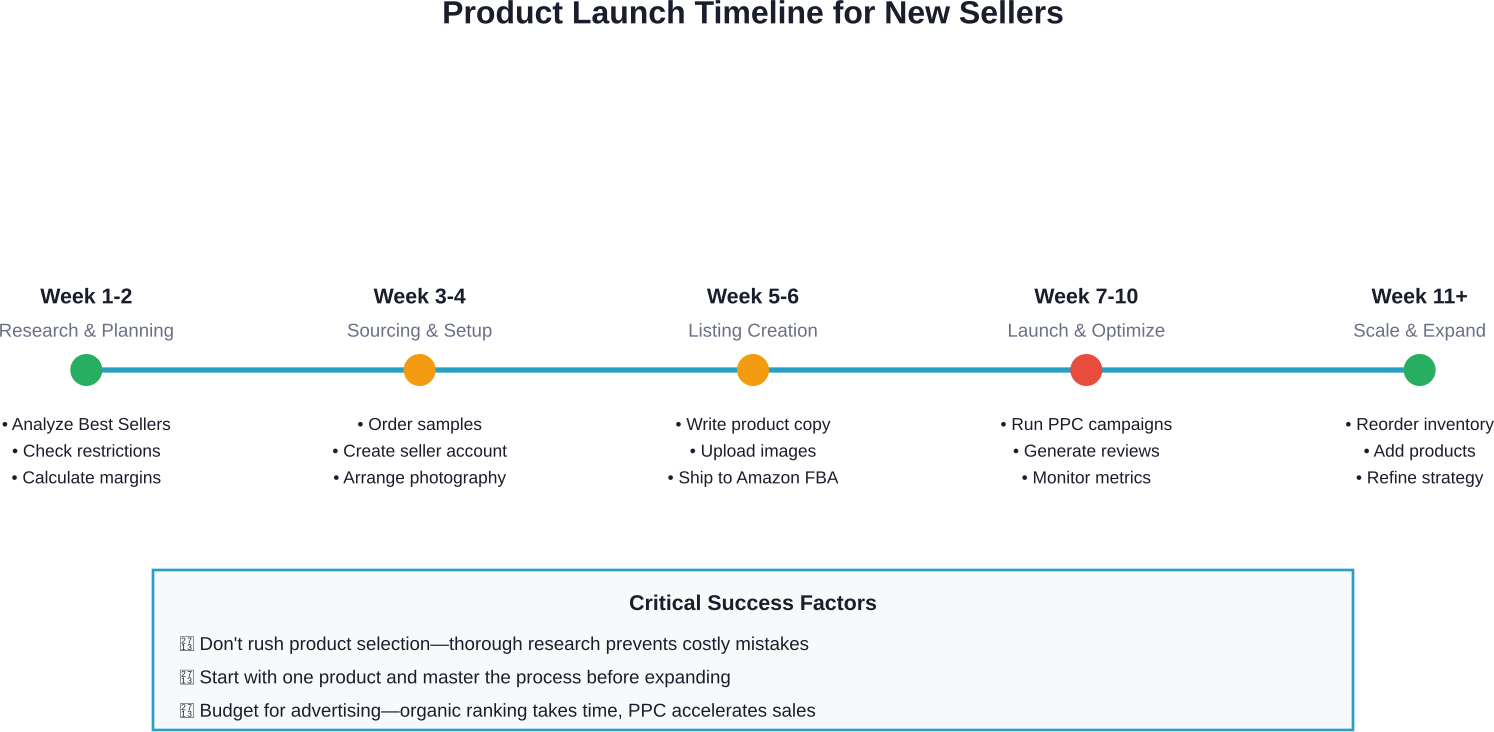
Start with thorough research using Amazon’s own Best Sellers lists and tools. Verify category restrictions before purchasing inventory. Calculate margins conservatively, accounting for all costs. Launch with focused attention on one or two products rather than spreading resources across too many.
The $290,000 average annual sales that independent sellers achieved in 2024 didn’t happen by accident. Those sellers tested products methodically, optimized relentlessly, and scaled strategically based on data.
The Amazon marketplace offers genuine opportunities for sellers willing to approach it as a real business requiring research, planning, and consistent execution. The best time to start? After finishing research. The second-best time? Today.
Ready to launch an Amazon business? Begin by exploring Amazon Best Sellers in your areas of interest, checking category restrictions, and calculating potential margins on specific products. The data exists—the question is whether someone will act on it.
 No credit card required