
 EN
EN  ES
ES  FR
FR  DE
DE  IT
IT  KO
KO  JA
JA  ZH
ZH  AR
AR  PT
PT  TR
TR PL
PL
Amazon Best Sellers lists serve as a primary resource for spotting products with proven sales performance. These rankings update frequently and cover numerous categories, offering insights into what customers purchase regularly. Sellers use this data to generate ideas for inventory that aligns with market demand. The process involves examining top items, understanding category dynamics, and applying research methods to refine selections. This approach ensures selections remain grounded in actual sales data rather than assumptions.
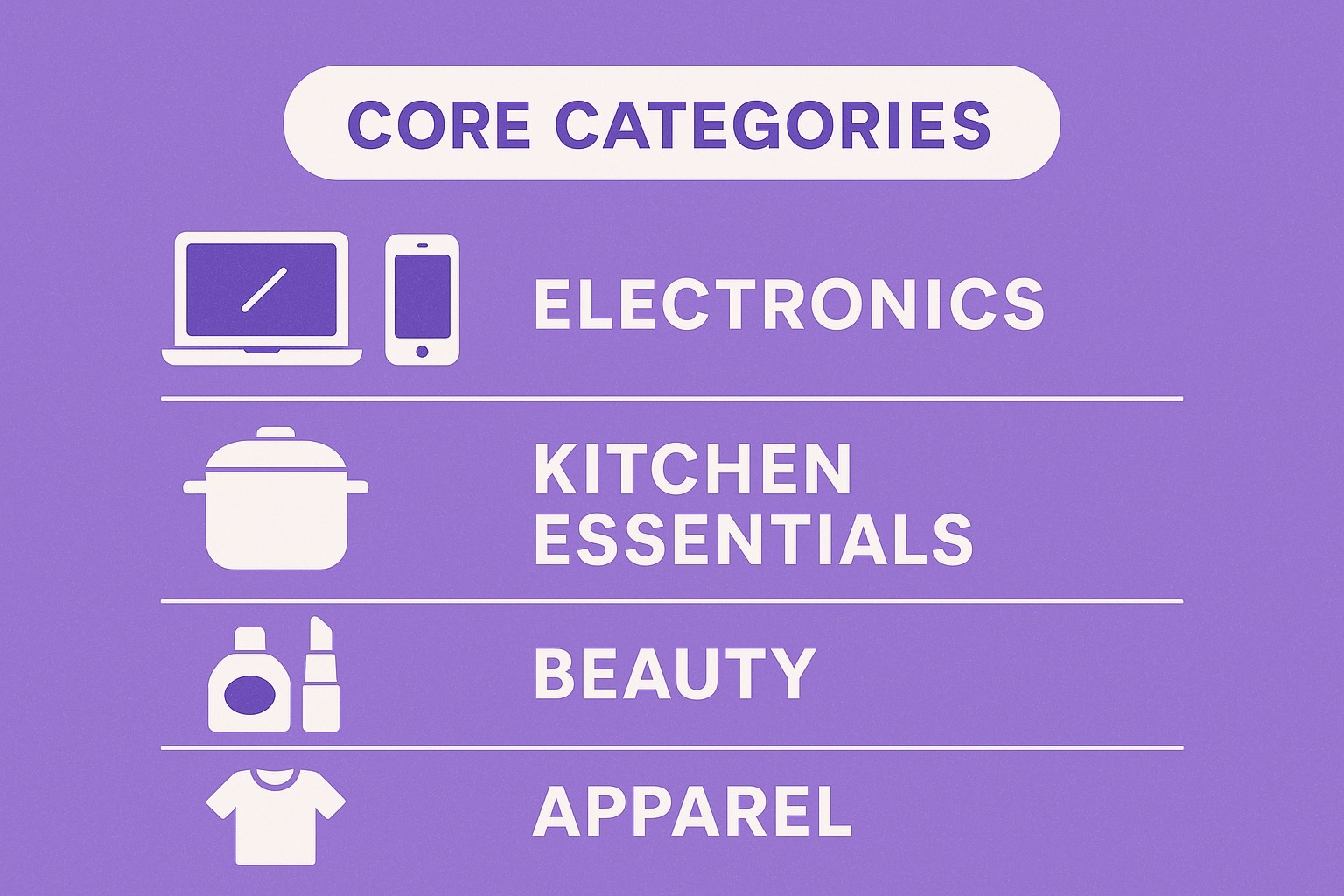
Core Categories Driving Sales on Amazon
Certain categories consistently appear in Best Sellers due to steady consumer needs. Electronics stands out with accessories like wireless earbuds and chargers that see frequent replacements. Home and kitchen items, including storage solutions and small appliances, maintain year-round appeal through practical utility. Beauty and personal care products gain traction from trends in skincare and grooming. Apparel, shoes, and jewelry include basics such as leggings and hoodies that benefit from seasonal shifts. Pet supplies and health items round out key areas where repeat purchases occur. These categories form the foundation for idea generation because they reflect ongoing buyer behavior across diverse demographics.
Electronics and Accessories
Wireless devices and charging solutions rank high because of device upgrades and portability demands. Items like power banks and screen protectors fit into daily routines, leading to consistent turnover. Sellers note that lightweight electronics reduce shipping complexities. Variations in compatibility expand market reach without major redesigns. This category supports both entry-level and premium positioning based on feature sets.
Home and Kitchen Essentials
Kitchen organizers and reusable containers address organization needs in households. Small appliances such as blenders or ice makers provide functionality without large footprints. These products often bundle well for increased order values. Material choices influence durability perceptions in customer decisions. Subcategories allow specialization in areas like meal preparation or storage efficiency.
Beauty and Personal Care Trends
Skincare items like moisturizers and serums respond to wellness focuses. Hair care oils and grooming kits target specific user concerns. Compliance with safety standards remains essential in this regulated space. Packaging impacts shelf appeal and usability during application. Niche formulations cater to varying skin types or hair textures.
Apparel and Related Items
Activewear and casual clothing maintain positions through comfort and style updates. Accessories like bags or jewelry add variety. Sizing accuracy helps manage returns in this category. Fabric technologies enhance performance claims for athletic lines. Seasonal collections refresh inventory without overhauling core offerings.
Strategies for Generating Product Ideas
Effective idea generation starts with targeted improvements to existing top sellers. Analyze customer feedback on listings to identify gaps. Focus on demand levels versus competition by checking review counts on high-ranking items. Monitor performance metrics to validate potential. Use Amazon’s internal tools for real-time data on sales ranks and trends. This methodical review prevents pursuit of unviable concepts.
Improving on Established Products
Examine reviews for common complaints about durability or features. Develop variations with better materials or added functionality. Ensure the new version stands out in searches without direct duplication. Test small batches to gauge reception before scaling. Refinements based on feedback loops strengthen market fit over time.
Assessing Demand and Competition
High sales with fewer reviews signal entry opportunities. Track rank stability over periods to avoid fleeting trends. Tools provide estimates on units moved monthly. Seller counts reveal saturation levels in subcategories. Balanced metrics guide resource allocation toward promising niches.
Incorporating Seasonality and Trends
Some items peak during specific times, like heaters in colder months. Evergreen products offer stability. Cross-reference external trend indicators for broader context. Timing launches aligns inventory with predictable demand cycles. Adjustments account for regional variations in purchasing patterns.
Top Seasonal vs. Evergreen Ideas for 2025 Launches:
- Winter Peaks (Nov–Feb): Heated blankets, humidifiers, or thermal activewear-launch 60 days early for Q4 surge.
- Evergreen Staples: Reusable kitchen containers or wireless chargers-steady year-round with minor trend tweaks (e.g., eco-materials).
- Summer Trends (May–Aug): Portable fans, sunscreen bundles, or lightweight apparel-use Google Trends for regional spikes.
- Holiday Bundles (Oct–Dec): Gift-ready sets like beauty kits or tech accessories-time for Black Friday with promo testing.
- Niche Adjustments: For EU markets, focus on energy-efficient items (e.g., low-watt heaters) due to regional efficiency demands.
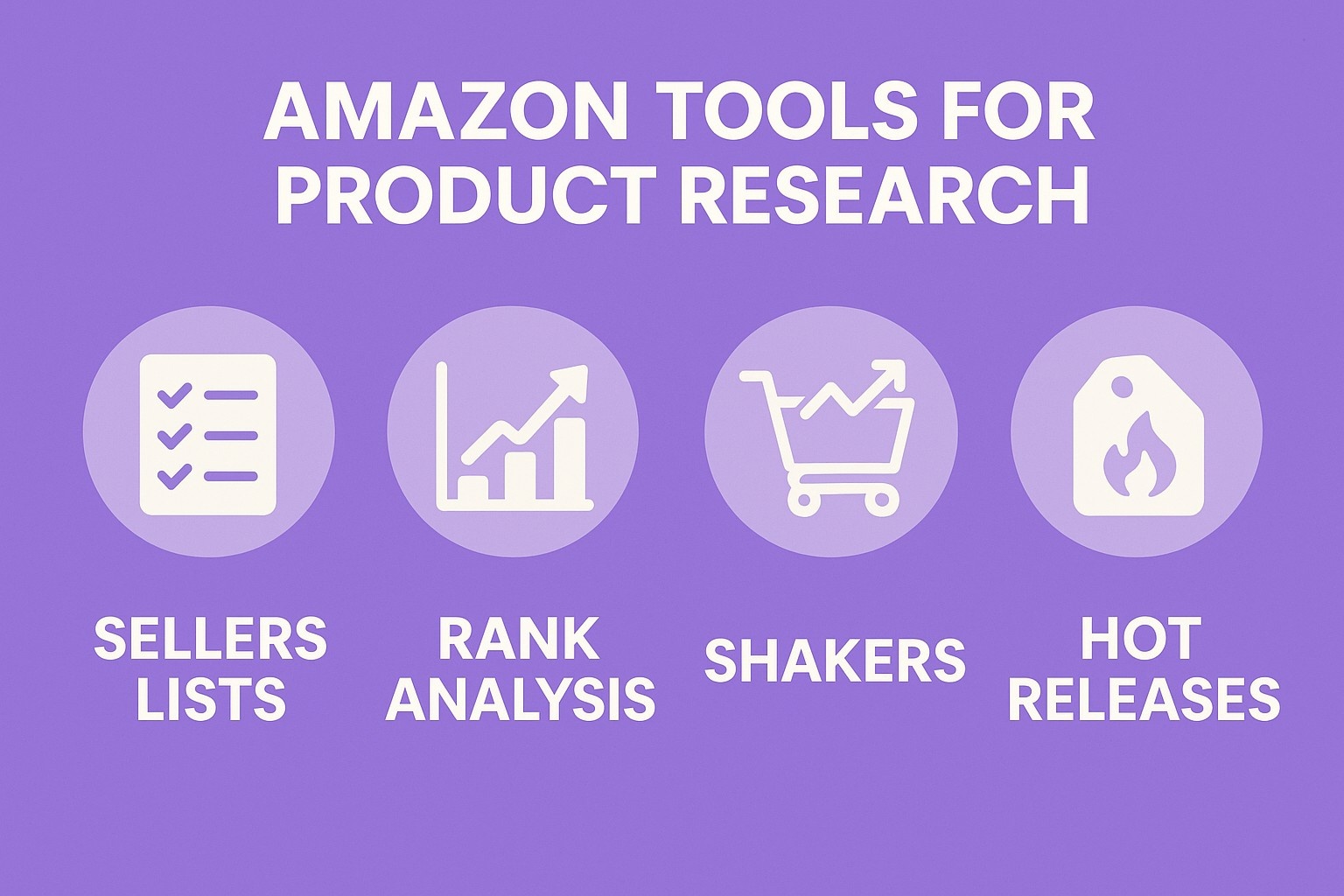
Amazon Tools for Product Research
Amazon provides built-in resources in Seller Central to support research. These include lists that rank items by performance metrics. Integration of multiple tools yields comprehensive insights. Regular consultation keeps strategies current with market shifts.
Best Sellers Lists
These compile top performers across departments. Access them publicly or through seller dashboards for category-specific views. Rankings reflect recent sales activity. Subcategory drilling uncovers specialized opportunities. Consistent monitoring tracks evolution in consumer preferences.
Best Sellers Rank Analysis
Each product carries a rank indicating relative performance. Lower numbers point to stronger velocity. Multiple ranks appear for items in various subcategories. Historical patterns inform long-term viability assessments. Rank thresholds vary by category size and depth.
Interpreting Rank Data
Consistent low ranks suggest reliable demand. Sudden changes may indicate promotions or stock issues. Comparative analysis across similar items highlights outliers. Data interpretation requires context from category norms. Thresholds adjust for main versus niche classifications.
Movers and Shakers
This section highlights products with significant rank gains in short periods. It reveals emerging interests before they dominate main lists. Hourly updates capture rapid shifts. Category filters isolate relevant movements. Early detection enables proactive sourcing.
Examples of Current Movers & Shakers (November 2025 Trends):
- Electronics: Portable neck fans (jumped 500+ spots in 24h due to holiday gifting)
- Home & Kitchen: Collapsible travel mugs (up 300% in searches for eco-travel)
- Beauty: Overnight lip masks (gained traction from viral TikTok routines)
- Apparel: Heated insoles (seasonal spike for winter prep)
- Health: Portable humidifiers (rising with cold/flu season alerts)
Hot New Releases
Focuses on recently launched items gaining traction. Useful for benchmarking new entries against established ones. Launch windows influence initial rankings. Performance trajectories predict sustained interest. Competitor launches provide indirect validation points.
Product Opportunity Explorer
Offers detailed niche reports including search volumes and seller counts. Analyze seasonality patterns and average pricing here. Data exports facilitate custom modeling. Niche scoring prioritizes exploration efforts. Integration with other tools refines opportunity selection.
Key Metrics in Explorer
Review growth rates and unit sales averages. Identify niches with balanced demand and limited sellers. Pricing benchmarks set competitive baselines. Seasonality charts inform inventory planning. Seller distribution indicates entry barriers.

WisePPC: Our Tool for Deeper Best Sellers Insights
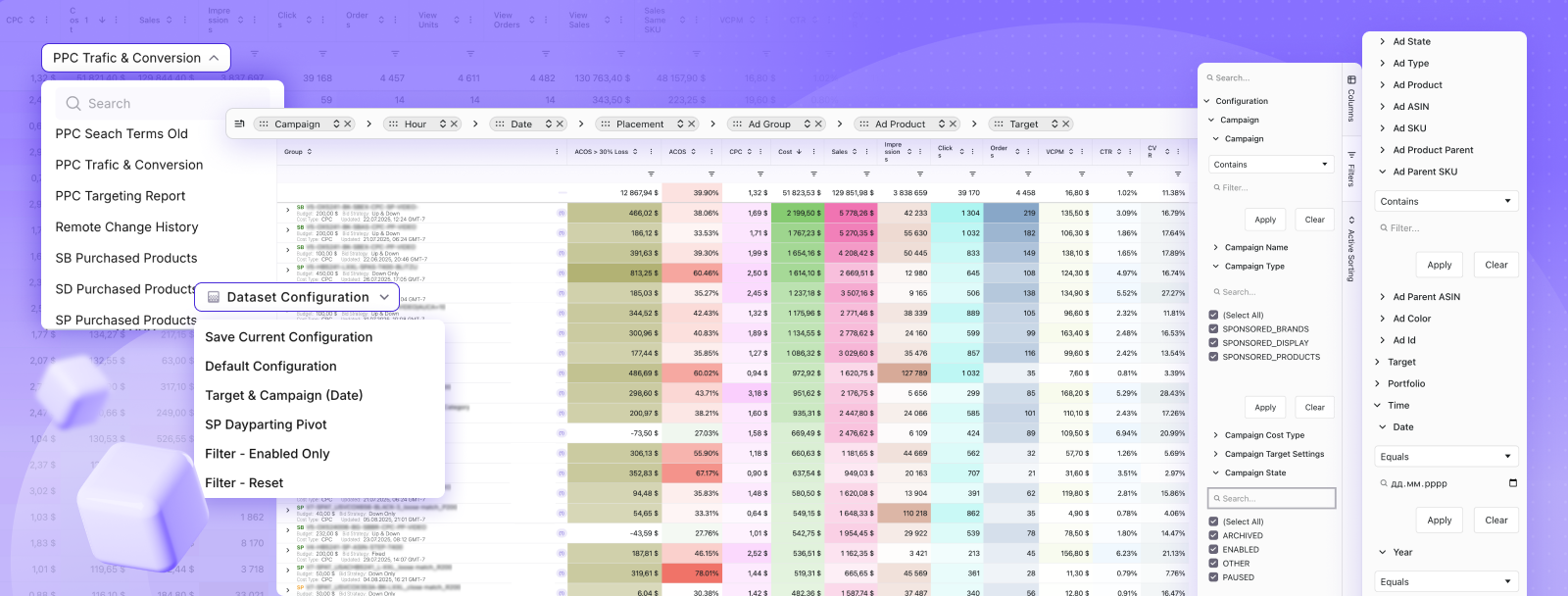
We built WisePPC to give sellers like us a clearer edge when digging into Amazon Best Sellers for product ideas. The platform pulls in real-time ad data, sales metrics, and keyword performance, letting us spot which top-ranked items drive actual profits through advertising – not just organic views. We use it to filter high-velocity products, track placement effectiveness, and see historical trends that native tools limit to recent windows. This helps us validate Best Sellers picks faster and avoid chasing items with inflated ranks but weak conversion potential. Bulk actions let us tweak campaigns across thousands of targets in one go, while advanced filters segment everything from match types to bid strategies.
On top of that, we rely on long-term data storage to compare seasons year over year, something Amazon caps at a couple months. Charts stack up to six metrics at once, so we see how ACOS ties into sales velocity for a Best Sellers item without jumping between reports. Gradient highlights flag outliers in tables, making it quick to drop underperformers or scale winners. All this ties back to turning Best Sellers research into actionable inventory – we analyze ad impact on specific ASINs, forecast demand shifts, and optimize bids to keep margins solid on proven top sellers.
Sourcing Methods Aligned with Best Sellers
Sourcing strategies must align with the selected sales model. Wholesale excels for bulk, stable products, while arbitrage thrives on opportunistic individual deals. Choosing the right method influences capital needs and risk exposure. Leveraging Best Sellers data ensures optimized results.
Wholesale for Volume
Acquire inventory from distributors to maintain consistent stock levels. Prioritize replenishable items from Best Sellers to capitalize on economies of scale. Secure brand authorizations for gated access. Negotiate bulk pricing to enhance per-unit profitability. Cultivate supplier relationships for long-term reliability.
Arbitrage Approaches
Retail arbitrage entails purchasing discounted goods from physical stores for resale. Online arbitrage scans e-commerce platforms for pricing discrepancies. Deal velocity drives inventory turnover. Margin calculations must account for acquisition timing. Scalability hinges on efficient sourcing processes.
Single-Unit Sourcing
Validate concepts with minimal upfront inventory. Ideal for trending or seasonal opportunities from Movers lists. High flexibility enables rapid pivots. Strong per-unit profits compensate for lower volumes. Contained risk makes it perfect for early-stage exploration.
Private Label Development
Source unbranded versions of proven top sellers and apply custom branding. Establish manufacturer partnerships for product customization. Incorporate unique design elements to stand out. Implement rigorous quality controls to uphold standards. Build brand equity for recurring value beyond one-off sales.
Validation and Profitability Checks
Prior to full commitment, compute all costs-including fees and shipping. Order samples to confirm quality meets Amazon benchmarks. Prepare documentation for compliance verification. Conduct iterative testing to refine product selections.
Metric Evaluation
Assess demand through sales velocity estimates. Evaluate competition via seller counts and Buy Box control. Analyze fee impacts on net profitability. Use scenario modeling to test sensitivities. Apply viability thresholds to screen viable candidates.
Profit Calculations
Account for every expense to calculate true margins. Target sustainable returns post-fulfillment costs. Perform break-even analysis to establish minimum sales volumes. Detailed cost breakdowns highlight optimization opportunities. Fine-tune inputs to achieve desired ROI targets.
Risk Assessment
Screen for category restrictions or hazmat requirements. Steer clear of high-return items like fragile products. Address intellectual property risks to avoid listing suspensions. Identify supply chain weaknesses and develop contingencies. Proactive mitigation protects overall account health.
Listing and Optimization Basics
Develop listings that align with or expand upon existing ASINs. Provide detailed, accurate information to improve discoverability. Use high-quality images to boost click-through rates. Strategically integrate keywords for maximum search visibility.
Fulfillment Options
FBA manages storage, picking, and shipping to qualify for Prime. Merchant fulfillment provides greater control for niche requirements. Hybrid approaches combine benefits as needed. Compare costs to inform decisions. Service quality directly influences customer satisfaction and reviews.
Category-Specific Product Examples
Draw from observed top performers to illustrate viable ideas. Examples span multiple departments. Adaptations suit various models. Implementation varies by resources.
Electronics Ideas:
- Charging accessories with multiple ports
- Protective cases for popular devices
- Portable audio solutions
- Mounting hardware for screens
- Cable management organizers
Kitchen and Home Ideas
Storage systems for pantry organization dominate due to meal prep routines. Reusable items align with sustainability preferences. Small tools like slicers or thermometers aid precision tasks. Countertop appliances fit compact spaces. Bundling related items boosts average order size.
Beauty Product Variations
Serums targeting specific skin types build on base formulas. Bundles increase perceived value. Grooming tools address maintenance needs. Eco-friendly packaging appeals to conscious buyers. Multi-packs encourage repeat purchases.
Apparel Examples:
- Compression wear for activities
- Basic undergarments in packs
- Seasonal outerwear layers
- Footwear with cushioning
- Accessories like belts or socks

Integrating Tools into Workflow
Combine multiple resources to gain comprehensive insights. Start with broad lists and refine using Explorer data. Perform routine checks to ensure ongoing relevance. Data-driven decisions consistently outperform intuition.
Mobile Research
Scan items in real time via the seller app. Instantly compare offers during sourcing trips. Barcode scanning accelerates verification. On-site analysis enables immediate, informed actions. Portability extends research capabilities beyond the desk.
Common Pitfalls in Product Selection
Overlooking gated categories can cause approval delays. Ignoring product weight affects FBA fees. Price volatility quickly erodes margins. Insufficient sample testing risks quality issues and returns.
Competition Missteps
Entering a dominated Buy Box lowers win probability. Monitor price stability to prevent erosion. Overlooking product variations fragments demand. Review age signals market maturity. New entrants face barriers from established review counts.
Conclusion
Amazon Best Sellers provide a structured path to product ideas backed by sales evidence. Core categories offer starting points, while tools and strategies refine selections. Sourcing and validation ensure practicality. Consistent application of these methods supports informed inventory decisions.
FAQ
What do Amazon Best Sellers lists show?
They rank products by sales performance within categories, updating hourly to reflect current demand.
How does Best Sellers Rank help in research?
It provides a numerical indicator of sales velocity, with lower ranks signaling higher volumes.
What is Product Opportunity Explorer used for?
It delivers niche analytics on search trends, seller competition, and seasonal patterns.
How to source for wholesale from Best Sellers?
Identify stable high-rank items and contact distributors for bulk pricing and authorization.
Why check reviews when generating ideas?
Reviews reveal customer pain points, guiding improvements for differentiated products.
What fulfillment method suits beginners with Best Sellers items?
FBA simplifies logistics for top-selling goods, handling picking, packing, and shipping.
 No credit card required