
 EN
EN  ES
ES  FR
FR  DE
DE  IT
IT  KO
KO  JA
JA  ZH
ZH  AR
AR  PT
PT  TR
TR PL
PL
Amazon Prime Day is one of the biggest sales events of the year, offering unparalleled opportunities for sellers to boost sales and visibility. To succeed, you need a solid strategy. In this article, we will provide you with tips and actionable steps to create a profitable and reliable Amazon Prime Day strategy. Let’s dive into the key steps for turning this event into a massive success.
What Is Amazon Prime Day?
Amazon Prime Day is an annual event created by Amazon, exclusively for Prime members, offering massive discounts across a wide range of products. Launched in 2015 to celebrate Amazon’s anniversary, Prime Day has become a major global shopping event, comparable to Black Friday or Cyber Monday. The event typically lasts for 48 hours, but in 2025, Amazon has extended the sale to four days (July 8–11), providing even more opportunities for sellers and buyers alike.
During Prime Day, millions of shoppers flock to Amazon, looking for exclusive deals and discounts. Sellers have a unique chance to showcase their products, increase sales, and grow their customer base. However, the competition is fierce, and without a proper strategy, you risk losing out on the event’s potential.

What Does an Amazon Prime Day Strategy Mean?
An Amazon Prime Day strategy is a comprehensive plan that outlines how you will prepare for, execute, and follow up during and after the event to maximize sales, visibility, and long-term growth. It’s more than just slashing prices and hoping for the best; a well-thought-out strategy involves understanding your products, knowing your target audience, optimizing your listings, managing your inventory, and utilizing Amazon’s advertising tools to ensure your products stand out from the competition.
In short, a solid Prime Day strategy is the key to turning the heightened traffic during the event into sustained sales and long-term brand growth.
Key Stages for Crafting a Profitable Amazon Prime Day Strategy
Creating a successful Amazon Prime Day strategy requires careful planning and execution across several key stages. Each stage plays an important role in ensuring that your brand is well-positioned to take full advantage of the Prime Day sales event. From preparation to post-event follow-up, here’s how to structure your strategy for maximum success.
1. Laying the Groundwork for Amazon Prime Day
Proper preparation is essential for making the most of Prime Day. Without early planning, you risk being unprepared when the event starts. Let’s look at how you can set yourself up for success before Prime Day even begins.
a) Managing Inventory
Proper inventory management is one of the most critical aspects of your Prime Day strategy. Running out of stock or having too much of an underperforming product can hurt your chances of success. Here’s how to manage your inventory efficiently:
- Stock up early: ensure your inventory is prepared ahead of time. Send inventory to Amazon Warehousing & Distribution (AWD) to ensure your products are Prime-eligible and ready for the event.
- Diversify your offerings: along with your best-sellers, include some new or seasonal products to attract a wider audience.
- Fulfillment by Amazon (FBA) compliance: Adhere to FBA deadlines to ensure smooth logistics and timely availability of your inventory during Prime Day.
b) Deal Submission
Prime Day shoppers expect to find exclusive deals, so getting your products featured in Amazon’s Prime Day deals is crucial. Here’s how to make sure your deals stand out:
- Submit Lightning Deals early: Lightning Deals create a sense of urgency and drive higher conversion rates.
- Prime exclusive discounts: offer discounts that are exclusive to Prime members. These deals tend to perform well and attract more attention during Prime Day.
c) Optimizing Product Listings
Your product listings are your first impression on Prime Day shoppers. Ensure they’re optimized to convert visitors into buyers. Here’s how to get it right:
- Clear titles & bullet points: craft concise titles that clearly describe your product. Use bullet points to highlight the key benefits that matter most to shoppers.
- High-quality images: include multiple high-resolution images showing your product from various angles. Lifestyle images that show the product in use can significantly boost conversion rates.
- A+ Content: if you’re enrolled in Amazon Brand Registry, use A+ Content to enhance your listings with rich images and detailed descriptions. This helps build trust and differentiate your brand.
2. Driving Traffic and Increasing Visibility with Ads
Once your products are ready and your inventory is in place, it’s time to focus on driving traffic. Amazon’s advertising tools are essential for making sure your products are visible during the event. Here’s how to maximize the effectiveness of your ads.
a) Sponsored Products and Sponsored Brands
To get your products in front of the right customers, use Amazon’s Sponsored Products and Sponsored Brands ads. These ad types help drive targeted traffic to your listings:
- Sponsored products: these are the most common ad type on Amazon. Focus on promoting your best-sellers and top-rated products. These ads will help increase visibility and drive traffic to your product listings.
- Sponsored brands: use these ads to promote your brand and multiple products at once. Sponsored Brands ads appear at the top of search results and are perfect for increasing brand awareness and driving traffic to your Amazon Storefront.
b) Display Ads and Retargeting Campaigns
Retargeting is an effective strategy to re-engage customers who have shown interest in your products. Use Display Ads and retargeting techniques to bring back potential buyers who didn’t purchase on their first visit:
- Sponsored Display Ads: use these ads to retarget customers who previously viewed your product but didn’t purchase to recover abandoned carts and increase conversions.
- Dynamic bidding: use dynamic bidding to automatically adjust your bids and help you win top ad placements, ensuring your products appear at the right time.
c) Utilize Amazon DSP for Broad Reach
If you want to reach a broader audience, Amazon’s DSP (Demand-Side Platform) is a great tool to help you scale your advertising efforts. This platform allows you to run display ads both on and off Amazon. It’s particularly useful for building brand awareness and expanding your reach beyond just the Amazon website, helping you engage shoppers across a wider range of digital platforms.
3. Pricing and Deals: Striking the Right Balance
Pricing is a crucial factor during Prime Day. While discounts are expected, it’s important to balance competitive pricing with maintaining your profit margins. Here’s how to manage your pricing and deal structure effectively:
a) Competitive Pricing
While it’s tempting to offer deep discounts, it’s important to offer value in ways that protect your margins. Consider these pricing strategies to attract customers without compromising your profitability:
- Offer value beyond discounts: rather than drastically cutting prices, try bundling products or offering additional benefits like free shipping.
- Price anchoring: use price anchoring to highlight your deals. By showing the original price alongside the discounted price, you help customers recognize the value of the savings.
b) Virtual Product Bundles
Bundling products together can increase your average order value and make shopping more convenient for customers. Here’s how to leverage bundles effectively:
- Bundle complementary products: group related items together. This not only increases your AOV but also offers a more convenient shopping experience for your customers.
- Offer time-sensitive deals: flash deals and time-limited promotions work well during Prime Day. They create urgency, encouraging shoppers to act quickly and make a purchase.
4. Fine-Tuning During Prime Day: Real-Time Strategy
Once Prime Day starts, it’s time to actively monitor and adjust your strategy in real time. The preparations you made will set the foundation for success, but staying agile and responsive is crucial to capturing opportunities as they arise. Here’s what you need to focus on during the event to ensure ongoing success:
a) Monitor Performance in Real Time
It’s essential to track your ad campaigns and inventory continuously during Prime Day. This enables you to make quick adjustments to maximize performance and ensure that you don’t miss out on potential sales.
- Track ad performance: regularly check your ad campaigns to see which keywords and products are performing well. Increase bids on high-performing keywords to capture more traffic, and pause campaigns that aren’t bringing in results to conserve your budget.
- Stay on top of inventory: keep a close watch on your stock levels. Running out of stock during Prime Day can negatively impact both your sales and your product ranking.
b) Price Adjustments
During Prime Day, the competitive landscape can shift quickly. It’s essential to remain adaptable with your pricing strategy to maintain competitiveness and maximize your sales opportunities.
Pricing adjustments are often necessary during Prime Day due to increased competition. Stay on top of competitor pricing and adjust your own prices accordingly to ensure you remain competitive and maintain the Buy Box. If your price is too high compared to your competitors, you might lose out on sales, so keep adjusting as needed.
5. Post-Prime Day: Leveraging the Momentum
Prime Day doesn’t end when the sale does. The real opportunity lies in how you capitalize on the momentum you’ve gained. Post-Prime Day is your chance to continue driving sales, maintain customer engagement, and refine your strategy for future events.
a) Analyze Your Results
Once Prime Day ends, it’s time to dive into your performance data and gain insights that will help you improve your strategies moving forward.
- Review metrics: take the time to analyze key metrics such as sales data, PPC performance, and customer engagement. By understanding what worked and what didn’t, you can refine your approach for future campaigns.
- Assess what worked: identify the top-performing products, keywords, and ad campaigns. This analysis will give you valuable insights into which strategies to keep for future events, as well as areas where you can improve.
b) Retarget Interested Shoppers
Not all customers will convert during Prime Day. Retargeting offers a great way to re-engage potential buyers and encourage them to complete their purchases.
- Retargeting ads: use retargeting ads to re-engage these customers, reminding them of your products and encouraging them to follow through with a purchase.
- Email marketing: if you have an email list, follow up with customers who showed interest but did not complete their purchases. Offering a second chance at a deal or additional incentives can help you capture sales that might otherwise slip away.
c) Leverage Customer Reviews
Prime Day typically results in a significant number of customer reviews, and you can use these to enhance your credibility and boost future sales.
- Gain credibility with reviews: use this valuable feedback to improve your product listings and increase conversion rates by showcasing positive reviews on your product pages.
- Address negative feedback: address feedback promptly to resolve any issues and show potential buyers that you are committed to providing excellent customer service.
By following these stages and optimizing each aspect of your strategy, you can ensure that your Amazon Prime Day 2025 is a success. Proper preparation, real-time monitoring, and post-event follow-up are essential to maximizing your results and leveraging the event’s full potential.

WisePPC: Optimizing Your Amazon Strategy for Prime Day Success
At WisePPC, we provide advanced tools designed to help businesses unlock the full potential of their marketplace presence, especially during major events like Amazon Prime Day. Our platform offers a robust suite of analytics and optimization tools, enabling you to make data-driven decisions that maximize visibility and sales during Prime Day. Whether you sell on Amazon or other marketplaces, WisePPC simplifies campaign management, ensuring that you’re always ahead of the competition.
For Prime Day, the stakes are high, and the ability to monitor performance in real time is critical. We equip businesses with powerful analytics to track key metrics, optimize ad campaigns, and manage inventory effectively. By providing granular insights and automating critical tasks, our platform ensures you’re not just participating in Prime Day but dominating it with efficiency and precision.
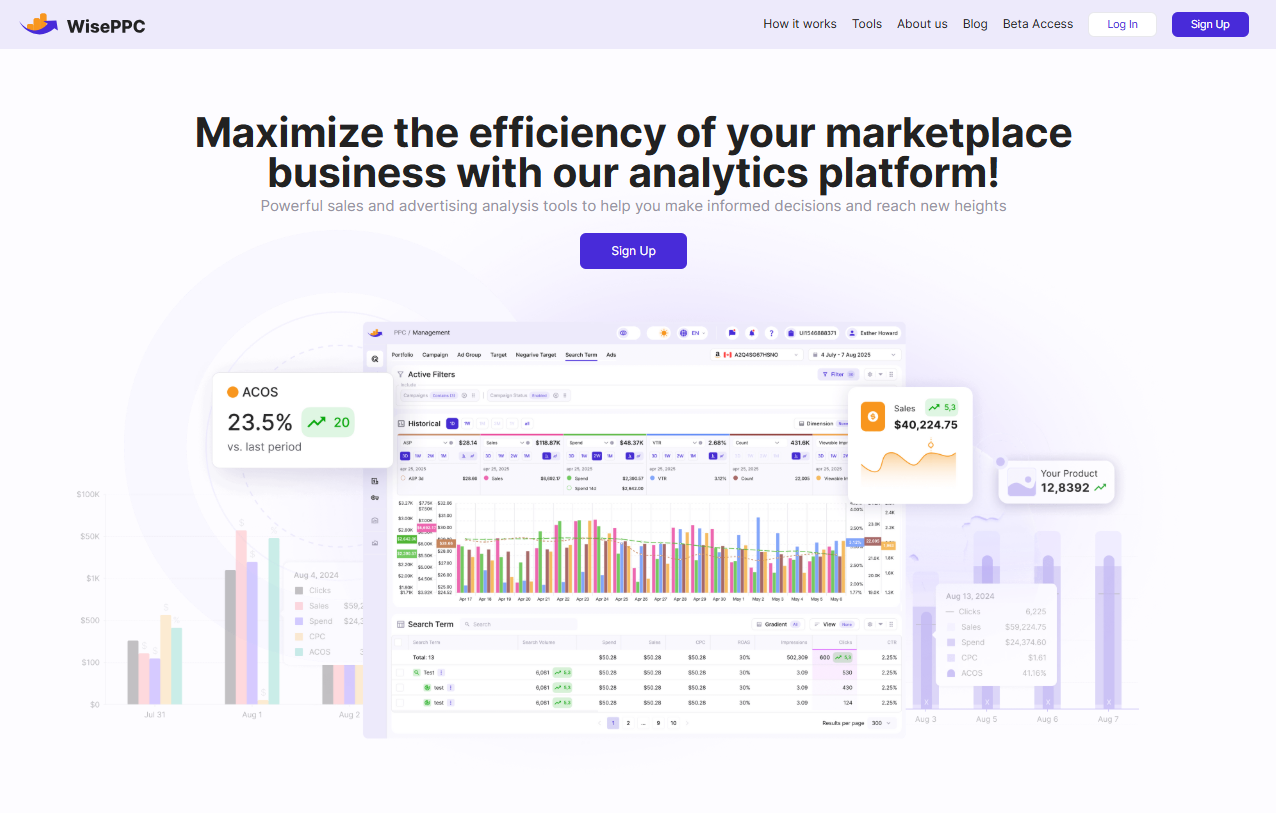
WisePPC Features to Support Your Business Goals
Advanced Analytics
Gain visibility into performance metrics, including ROAS, conversion rates, and more. Use these insights to understand the impact of each campaign and optimize your strategy accordingly.
Bulk Actions
Save time with the ability to apply changes to multiple campaigns, targets, or ad groups at once. This feature allows you to scale campaign management and make faster, data-driven decisions.
Real-Time Campaign Adjustments
Adjust bids and budgets directly in the interface, without switching screens. This on-the-spot editing feature helps you stay agile during Prime Day.
Performance Tracking Across Placements
Identify profitable ad placements with detailed performance analysis, allowing you to optimize bidding strategies and improve campaign efficiency.
Historical Data Storage
With WisePPC, you can access long-term historical data beyond Amazon’s short retention period, helping you track trends and make better marketing decisions for future events.
By leveraging these powerful features, WisePPC helps businesses like yours craft an optimized, successful strategy for Prime Day 2025, enabling you to maximize your sales potential and reach new heights.
Conclusion
Amazon Prime Day represents one of the most significant sales events for sellers on Amazon, offering a unique opportunity to boost visibility, acquire new customers, and drive sales. Crafting a well-rounded and effective strategy is essential for success. From preparing your inventory, optimizing listings, and submitting deals to running targeted ad campaigns and pricing your products competitively, every stage of your strategy plays a crucial role. Real-time monitoring and adjustments during Prime Day ensure that you are staying on top of your campaigns and inventory, while post-event strategies like retargeting ads and leveraging customer reviews can help maintain momentum well after the event ends.
By following the key stages outlined in this article and utilizing tools like WisePPC, you can ensure that your strategy is not only effective during Prime Day but also positions you for long-term growth. With careful planning, execution, and optimization, Prime Day can become a stepping stone for ongoing success on Amazon.
FAQ
1. When is Amazon Prime Day 2025?
Amazon Prime Day 2025 will take place from July 8th to July 11th. Sellers should begin their preparation well in advance to maximize their success during the event.
2. How do I prepare my inventory for Prime Day?
To prepare your inventory for Prime Day, make sure you send your stock to Amazon Warehousing & Distribution (AWD) to ensure your products are Prime-eligible. You should also monitor stock levels closely during the event to avoid running out of inventory.
3. What are the best types of deals to submit for Prime Day?
Lightning Deals and Prime Exclusive Discounts tend to perform well during Prime Day. These types of deals help create urgency and attract Prime members, which are key to driving high conversion rates.
4. How do I optimize my ads for Prime Day?
To optimize your ads for Prime Day, focus on Sponsored Products and Sponsored Brands ads to drive traffic to your listings. Additionally, use Sponsored Display Ads and Amazon DSP for retargeting and reaching a broader audience both on and off Amazon.
5. Should I adjust my prices during Prime Day?
Yes, it’s essential to monitor competitor pricing and adjust your prices accordingly. Staying competitive helps maintain your position in the Buy Box and ensures you don’t miss out on sales opportunities.
6. How can I leverage customer reviews after Prime Day?
After Prime Day, use the influx of customer reviews to improve your product listings and enhance your credibility. Positive feedback can help attract new customers, while addressing any negative reviews quickly demonstrates excellent customer service.
7. What should I do after Prime Day?
Post-Prime Day, it’s important to analyze your results, retarget interested shoppers who didn’t convert, and continue your promotional efforts to keep the momentum going. Additionally, keep track of customer feedback to refine your strategies for the next event.
 No credit card required