
 EN
EN  ES
ES  FR
FR  DE
DE  IT
IT  KO
KO  JA
JA  ZH
ZH  AR
AR  PT
PT  TR
TR PL
PL
Freight forwarding isn’t the flashiest part of selling on Amazon, but it’s one of the most important. If you’ve ever dealt with delayed shipments, unexpected customs issues, or extra fees at the fulfillment center, you already know how much a bad shipping setup can hurt your bottom line. That’s where freight forwarders come in. These aren’t just middlemen, good Amazon freight forwarders help sellers navigate the maze of international logistics, from pickup at your supplier to final delivery at FBA warehouses. They know the ins and outs of Amazon’s requirements, understand customs on both ends, and can keep your shipments compliant, cost-effective, and on time. In this article, we’ll break down how freight forwarding works for Amazon sellers, what to look for in a forwarding partner, and how to avoid common pitfalls when shipping inventory across borders.
What Is a Freight Forwarder, Exactly?
A freight forwarder is a logistics partner that arranges the movement of your inventory from point A (usually your supplier) to point B (Amazon FBA, if you’re selling through Fulfillment by Amazon). That includes picking up goods from your supplier, managing transportation by sea, air, rail, or truck, and dealing with customs on both sides.
But not every freight forwarder is built for Amazon. Specialized Amazon FBA freight forwarders understand the platform’s strict delivery rules, labeling standards, and check-in appointments. Without that know-how, a shipment that looks good on paper can still get rejected at the dock.
What Do Amazon Freight Forwarders Actually Handle?
Amazon FBA shipments are complex. There are boxes to label, customs to clear, delivery windows to hit, and requirements to follow. Missing just one of those pieces can create bottlenecks, delays, or even get your shipment refused at the warehouse.
Here’s what a reliable Amazon freight forwarder typically manages from end to end:
- Pickup from your manufacturer or supplier: Coordination starts at the factory level, with the forwarder arranging collection based on production schedules and readiness.
- Quality and packaging checks: Before export, many forwarders inspect for proper labeling, packaging, and carton conditions to meet Amazon’s FBA compliance.
- Export customs documentation in the origin country (e.g. China): This includes export declarations, commercial invoices, and licenses where applicable.
- International shipping (sea, air, or rail): Based on your urgency and budget, they manage the full route, often offering door-to-door or port-to-door services.
- Import clearance at the destination port: They handle duties, taxes, and work with customs brokers to release the goods quickly and legally.
- Delivery appointment scheduling with Amazon: Amazon doesn’t accept unscheduled deliveries. Forwarders book slots through Amazon’s Carrier Central system.
- Final-mile delivery to the fulfillment center: The shipment is delivered to the exact warehouse Amazon assigns, on time and with full tracking.
Some forwarders also offer warehousing, consolidation (combining shipments), and insurance. All of this means less stress on your end and fewer chances of something going sideways.
Why It Matters for Amazon FBA Sellers
When you’re importing inventory from another country, there are a lot of things that can go wrong. A shipment delayed in customs, a missed appointment at an Amazon warehouse, or non-compliant packaging can result in serious penalties or missed sales.
Here’s why working with an Amazon-ready freight forwarder makes a difference:
- They know FBA rules. From carton dimensions to FNSKU labeling, they keep you compliant.
- They prevent delays. Professional forwarders help you avoid common customs and delivery bottlenecks.
- They consolidate shipments. Lower shipping costs by combining multiple suppliers into one load.
- They reduce communication gaps. One partner can handle both international transport and domestic delivery.
- They save time. You can focus on growing your brand instead of learning global logistics.

Once Your Freight Arrives, What’s Next?
Getting your shipment to Amazon is only half the battle. Once your inventory lands at the fulfillment center, the next challenge begins: managing ad campaigns, tracking performance, and making sure your products move efficiently. That’s where we come in.
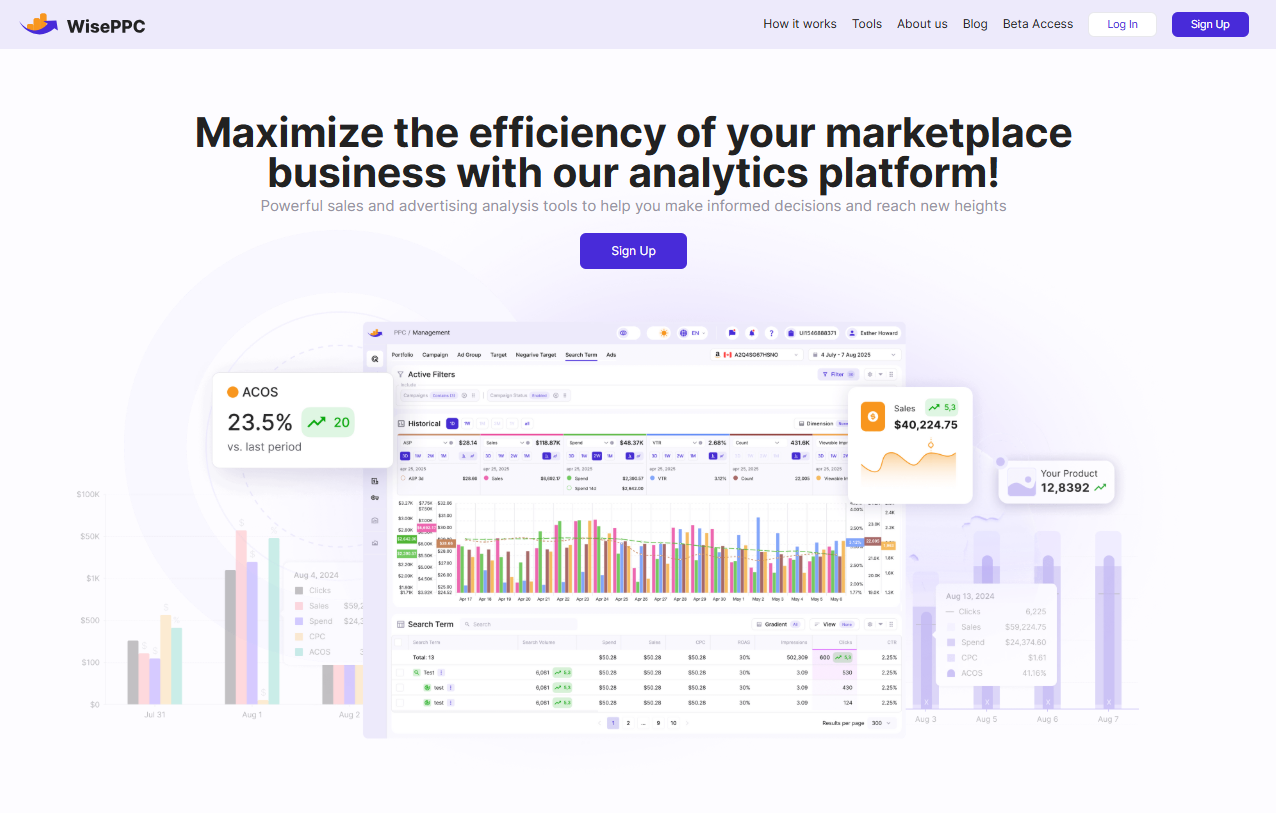
At WisePPC, we’ve built an advanced analytics and advertising optimization platform specifically for sellers on Amazon and other marketplaces. As an Amazon Ads Verified Partner, we give you the kind of data visibility that helps you move quickly and confidently. Whether you’re managing 30 ASINs or 1,000, our tools are built to help you spot problems early, control ad spend, and fine-tune your strategy in real time.
What You Can Do With WisePPC:
- Track 30+ performance metrics like TACOS, ACOS, CTR, and profit in a single dashboard
- Compare up to 6 KPIs at once using customizable charts
- Make bulk changes to campaigns or keywords based on filtered criteria
- Analyze performance across placements, match types, or bid strategies
- Edit campaigns directly from the dashboard,no more clicking through Amazon layers
- Access historical performance data for months or even years, well beyond Amazon’s 60-90 day limits
If your freight forwarder gets your product into Amazon, we help make sure it actually sells. From identifying wasted ad spend to showing whether sales come from ads or organic traffic, WisePPC ties it all together, giving you the clarity to scale with fewer headaches.
And if you’re managing multiple ASINs or marketplaces, we make scale feel manageable, without the spreadsheets, guesswork, or hiring a full-time analyst.
Choosing the Right Shipping Method (and What Incoterms Actually Mean)
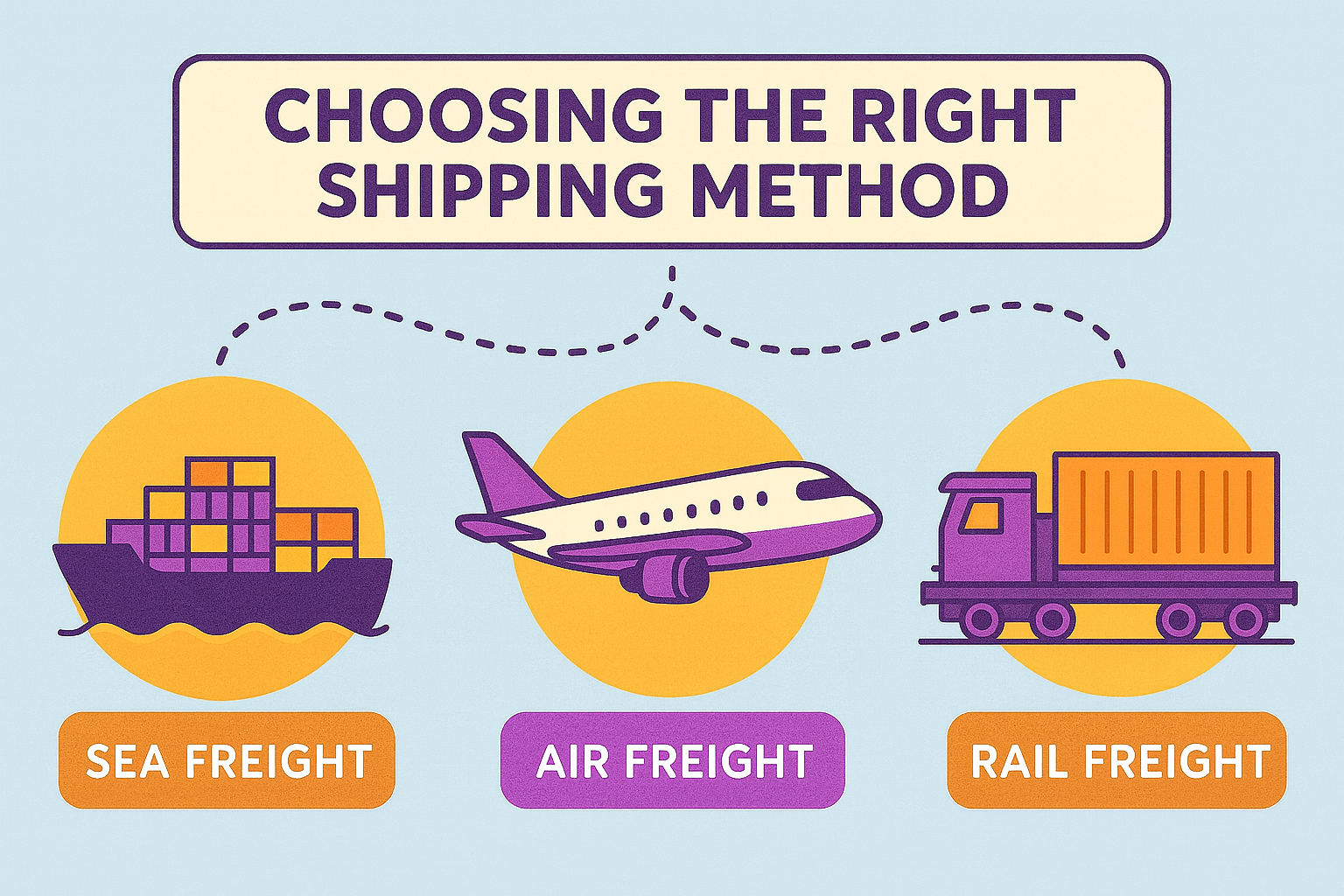
When working with an Amazon freight forwarder, you’ll usually have three main transport options: sea, air, or rail. The best choice depends on how fast you need the goods, how much you’re shipping, and how much you’re willing to spend.
- Sea Freight is the most cost-effective for large shipments. It’s slow (typically 30-40 days from China to the US or EU), but if you’re not in a rush, it’s a solid choice.
- Air Freight works best for urgent or high-value items. You’ll pay more, but get delivery in about 5-10 days.
- Rail Freight is a decent middle ground for shipping to the EU, with transit times around 18-25 days and pricing that sits between sea and air.
Some forwarders also offer door-to-door delivery with customs and taxes handled upfront. This is where Incoterms come into play.
Incoterms are international rules that define responsibilities between buyer and seller during shipping. For Amazon sellers, the two most common are:
- EXW (Ex-Works): You’re responsible from the supplier’s warehouse to Amazon. More control, potentially cheaper, but higher risk if you don’t have a solid freight partner.
- DDP (Delivered Duty Paid): The forwarder takes care of everything and delivers straight to Amazon. It’s easier and safer for newer sellers, though more expensive.
If you’re just starting out, DDP can save you from logistical headaches. If you’ve got some experience and a freight partner you trust, EXW might save you a few bucks per shipment.
What Documents Will You Need?
Freight forwarding isn’t just about transport, it’s also about getting the paperwork right. Missing or incorrect documents can lead to delays, fines, or shipment rejection. Most forwarders help prepare these, but here’s what you’ll typically need:
- Commercial Invoice: Lists the products, quantities, values, and parties involved. Customs uses it to calculate duties and taxes.
- Packing List: Shows how goods are packed: box counts, weights, dimensions, and contents. Useful for both customs and Amazon.
- Bill of Lading (BOL) or Air Waybill (AWB): The official shipping contract and proof of shipment. Required to release goods at the destination.
- Export License (if needed): Needed for certain restricted or regulated products, depending on the country and product type.
- Inspection Certificate: Confirms the goods passed quality or safety checks. Sometimes required based on category or destination.
- Special Certificates (e.g. MSDS): For hazardous or sensitive items like batteries or liquids. Ensures proper handling during transit.
Having these documents in order keeps your shipment moving and helps avoid surprises at customs or with Amazon FBA.
Freight Forwarding Costs: What to Expect
There’s no one-size-fits-all price when it comes to freight forwarding. Your total cost will depend on several variables, including how much you’re shipping, how far it’s going, and how fast you need it delivered. Air freight is the fastest but also the most expensive. Sea freight is slower but much more affordable for larger shipments. Rail can be a middle ground if you’re shipping into the EU. Customs duties, VAT, and handling charges will also factor in, especially for DDP shipments where taxes are prepaid.
Freight quotes usually aren’t just a single number. They often come with several line items, including pickup fees, documentation, insurance, customs brokerage, delivery to Amazon, and sometimes even packaging services. If you’re not used to reading freight quotes, it can feel a bit overwhelming. That’s why it helps to ask for a full breakdown, and make sure it includes everything from door to door if that’s what you’re expecting.
While it’s tempting to go with the lowest quote, that can backfire. Some forwarders cut costs by skipping details that matter for FBA, like proper labeling or on-time delivery appointments. Others tack on hidden charges later. A forwarder who communicates clearly, knows Amazon’s requirements, and helps you avoid costly mistakes is usually worth a bit more upfront.
What to Look for in an Amazon Freight Forwarder
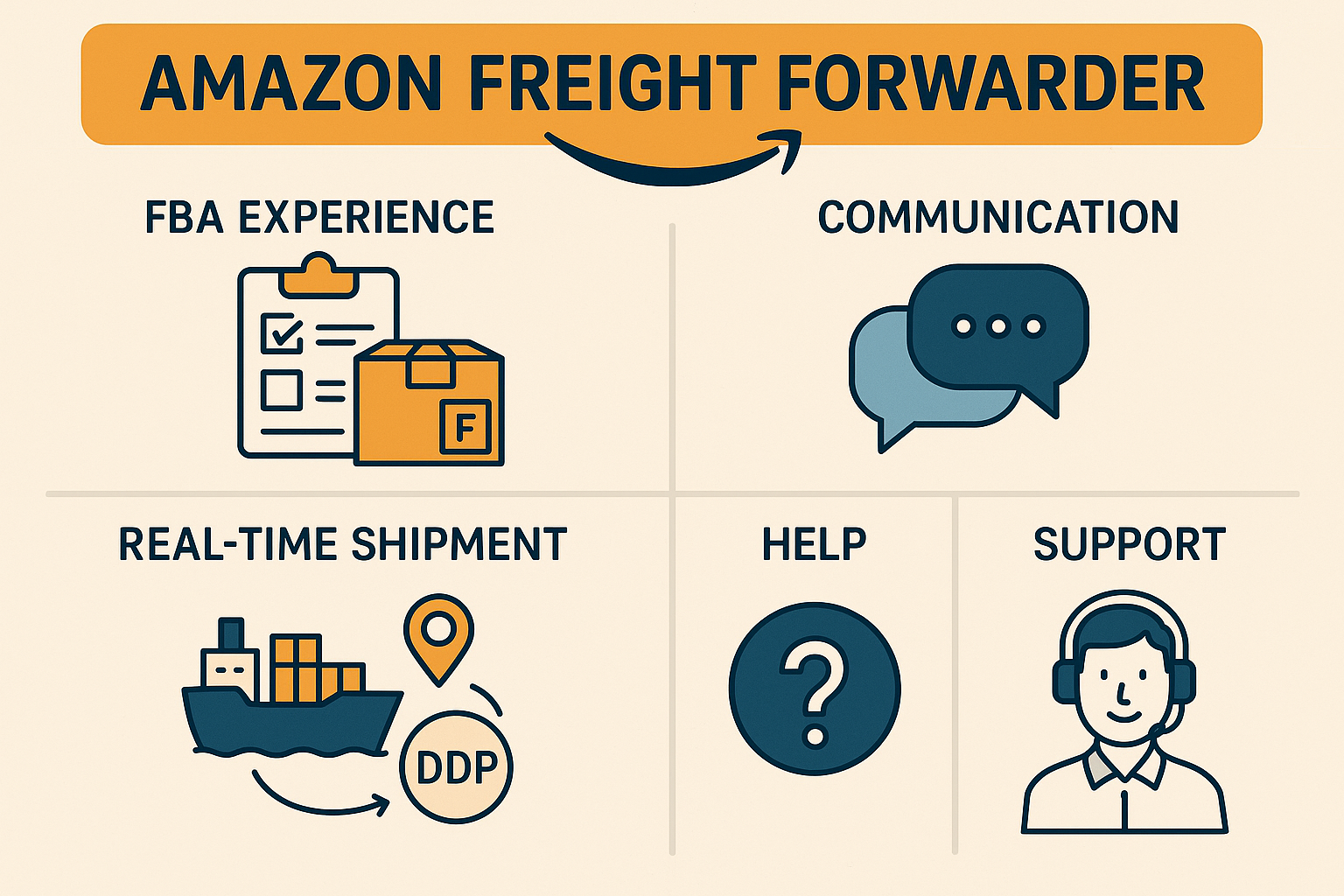
Choosing a freight forwarder for Amazon FBA isn’t something you want to rush. This isn’t just about comparing prices or picking someone who “ships from China.” A good forwarder can save you time, reduce risk, and help you grow. A bad one can derail your entire supply chain. Here’s what you should pay attention to.
1. Proven Amazon FBA Experience
Make sure they’ve actually handled Amazon shipments before. Amazon has strict requirements for delivery windows, labeling, packaging, and appointment scheduling. A forwarder with real FBA experience knows how to navigate those systems and avoid issues that first-timers often overlook.
2. Responsive Communication
Freight delays happen. Customs can get tricky. What matters most during those moments is whether you can reach someone, not just an automated system. Look for forwarders who are reachable by email, phone, or live chat and who reply in a timely, clear manner.
3. Real-Time Shipment Tracking
You shouldn’t have to guess where your goods are. A reliable forwarder will offer tracking tools or regular updates that let you see your shipment’s progress from pickup to final delivery. That’s especially important when you need to coordinate PPC campaigns or restock timing.
4. Route Familiarity and DDP Options
It helps if your forwarder regularly ships along your preferred route. Whether you’re importing from Shenzhen to Los Angeles or Yiwu to a German FBA warehouse, experience with that corridor means fewer surprises. Bonus points if they offer Delivered Duty Paid (DDP) service, it’s often the easiest option for Amazon sellers who’d rather not manage customs and tax compliance themselves.
5. Transparent Pricing and No Hidden Fees
Ask for a detailed quote upfront. It should clearly outline all charges: pickup, customs clearance, freight, delivery, and any extras. If a forwarder avoids specifics or glosses over potential add-ons like port fees or warehouse handling, consider that a red flag.
6. Help With Labeling, Packaging, and Compliance
Amazon has rules about everything from how boxes are labeled to what size pallets you can send. Some freight forwarders help you prep inventory to meet these standards, which can save you from costly rejections or delays at the fulfillment center.
7. Local Support or Warehousing
If you’re doing regular shipments or need more flexibility, see if the forwarder has warehousing options near your origin or destination. That can help with consolidation, delayed dispatch, or storage if Amazon’s delivery windows don’t align with your freight arrival.
Final Thoughts
Freight forwarding for Amazon FBA is more than shipping – it’s about getting your products where they need to go without nasty surprises. A good freight forwarder acts like a logistics partner, helping you stay compliant, on time, and profitable.
Whether you’re sourcing from China, expanding into Europe, or just tired of customs headaches, investing in a trusted Amazon freight forwarder can make a real difference.
It’s not the most glamorous part of the business. But done right, it’s one of the most valuable.
FAQ
What exactly does a freight forwarder do for Amazon sellers?
A freight forwarder helps move your products from your supplier (often overseas) to an Amazon FBA fulfillment center. They manage logistics like pickup, customs clearance, international shipping, and final delivery. Some even handle packaging, labeling, and booking Amazon delivery appointments, so you don’t have to juggle multiple vendors or deal with surprise issues along the way.
What’s the difference between EXW and DDP shipping terms?
EXW (Ex Works) means you’re responsible for the shipment starting from your supplier’s door. DDP (Delivered Duty Paid) means your freight forwarder handles everything, including customs and taxes, until the goods arrive at Amazon. EXW gives you more control and might be cheaper, but DDP is simpler and reduces the risk of errors, especially for beginners.
How much does Amazon freight forwarding cost?
Costs vary based on shipment size, delivery speed (air vs sea), and destination. Expect to see fees for transportation, customs clearance, delivery to Amazon, and possibly extras like warehousing or insurance. Always request a full quote breakdown, the cheapest option isn’t always the most reliable.
How do I choose a good Amazon freight forwarder?
Look for a company with FBA experience, transparent pricing, responsive communication, and services tailored to your route. Ask questions like how many Amazon shipments they’ve handled recently, whether they offer DDP, and what support they provide if something goes wrong in transit.
What happens if my shipment is delayed or stuck in customs?
If you’re working with a solid freight forwarder, they’ll usually be on top of it, coordinating with customs brokers, providing updates, and helping resolve the issue. But not all forwarders offer the same level of support. That’s why it pays to vet them carefully before you commit.
 No credit card required