
 EN
EN  ES
ES  FR
FR  DE
DE  IT
IT  KO
KO  JA
JA  ZH
ZH  AR
AR  PT
PT  TR
TR PL
PL
Amazon’s dynamic pricing strategy is a powerful tool that enables the e-commerce giant to constantly adjust product prices based on market demand, competitor activity, and inventory levels. This flexible approach helps Amazon stay competitive, increase sales, and optimize profits in an ever-changing online marketplace. In this article, we explore how dynamic pricing works on Amazon and why it’s a critical part of their success.
What Is Amazon Dynamic Pricing?
Dynamic pricing, also known as real-time pricing, is the process of continuously changing product prices based on various factors such as demand, competition, inventory, and market trends. On Amazon, prices may shift multiple times within a single day to optimize sales and profitability.
Unlike fixed pricing, where a product’s price remains the same for an extended period, dynamic pricing adjusts in near real-time. This flexibility enables Amazon to stay competitive and respond swiftly to changes in the market.

How Amazon’s Dynamic Pricing Works
Amazon’s dynamic pricing system is one of the most sophisticated in the e-commerce world. It relies heavily on automation, big data, and machine learning to adjust prices in real time, ensuring that both Amazon and its sellers stay competitive while maximizing profits.
At the heart of this system are complex algorithms that continuously analyze massive amounts of data points. Let’s break down the key components Amazon monitors to decide when and how to change prices.
Key Data Inputs for Dynamic Pricing
Amazon’s pricing engine constantly scans and processes data from multiple sources. These include:
- Competitor Prices: Amazon tracks prices set by other sellers offering the same or very similar products. This includes third-party sellers on the Amazon marketplace as well as external competitors outside Amazon. By knowing competitor prices, Amazon can adjust its own prices to remain competitive or capitalize on market gaps.
- Supply and Demand Fluctuations: The system monitors changes in consumer demand for products. If demand rises, Amazon can raise prices to reflect scarcity and willingness to pay. If demand drops, prices may decrease to encourage sales and clear inventory.
- Customer Browsing and Buying Behavior: Amazon analyzes user activity such as how often a product is viewed, added to wish lists, or purchased. Patterns like increased interest can trigger price adjustments to maximize conversion rates.
- Inventory Levels and Sales Velocity: Amazon looks at how much stock is available and how fast it’s selling. A fast-selling item with limited inventory may see price increases. Conversely, if a product sits unsold for a long time, prices may drop to reduce stock.
- Seasonal Trends and Special Events: Amazon adjusts prices based on predictable shopping spikes around holidays, Prime Day, Black Friday, Cyber Monday, and other events. Prices might be lowered to attract more buyers or raised in anticipation of higher demand.
How the Pricing Algorithm Uses This Data
Amazon’s pricing algorithm synthesizes all the above inputs to make pricing decisions in real time. Here’s how the process generally works:
- Data Collection: The system continuously gathers data from Amazon’s internal databases and external sources.
- Market Analysis: Algorithms analyze market conditions, identifying patterns and trends that impact pricing.
- Price Adjustment Decision: Based on analysis, the system calculates an optimal price that balances competitiveness and profit goals.
- Automatic Price Update: Prices are updated on the product listings instantly or within minutes without human intervention.
Real-Life Examples of Dynamic Pricing in Action
- Responding to Competitor Price Drops: If a competitor suddenly lowers the price of a high-demand product, Amazon’s system quickly detects this change. To protect its market share and maintain Buy Box eligibility, Amazon may reduce its own price accordingly.
- Increasing Prices During Demand Surges: When a product becomes very popular – for instance, a new tech gadget or a trending toy – demand can outpace supply. Amazon’s system raises prices to reflect scarcity and capitalize on customers’ urgency to buy.
- Clearing Overstocked Inventory: If Amazon has excess stock of a product that isn’t selling well, the algorithm may lower the price to attract more buyers and avoid storage costs.
- Adjusting Prices for Seasonal Events: During Prime Day or holiday seasons, Amazon might offer discounts to boost volume but can also increase prices on highly sought-after items where demand is expected to surge.
Why Automation Is Essential for Amazon’s Pricing Strategy
Managing millions of product listings manually is impossible. Here’s why automation matters:
- Speed: Price changes can occur multiple times per day or even hourly. Automated systems allow Amazon to react faster than any human team could.
- Precision: Algorithms can analyze vast amounts of data points simultaneously, enabling highly targeted price changes.
- Scalability: Automation allows dynamic pricing across millions of products in diverse categories without manual oversight.
Key Benefits of Amazon Dynamic Pricing
Amazon’s dynamic pricing system is far more than a simple price adjustment tool. It plays a critical role in helping Amazon and third-party sellers stay ahead in a highly competitive environment. By continuously responding to real-time market signals, it offers a range of strategic advantages that drive profitability, efficiency, and customer satisfaction.
Staying Competitive in a Saturated Marketplace
Amazon hosts millions of sellers offering similar or identical products. This level of competition makes price positioning vital. Dynamic pricing ensures sellers don’t fall behind when other vendors change their prices.
How it helps sellers stay competitive:
- Matches or undercuts competitor prices within minutes
- Helps sellers secure the Buy Box by keeping pricing optimal
- Protects market share by responding to underpricing strategies from rivals
Winning the Buy Box is especially important. Most Amazon customers purchase from the seller featured in the Buy Box without comparing other options. Dynamic pricing greatly increases a seller’s chances of holding that spot.
Maximizing Both Sales Volume and Profit Margins
One of the core strengths of dynamic pricing is its ability to fine-tune the balance between sales velocity and profitability. Amazon can raise or lower prices depending on consumer demand, time of day, and even weather patterns in certain regions.
Strategic pricing leads to:
- Higher sales volume during peak traffic times by offering better deals
- Better profit margins during low-competition periods
- Improved conversion rates by identifying the ideal price point for each product
For sellers, this means more predictable revenue streams and the ability to scale their business while maintaining profitability.
Rapid Response to Market Changes
Markets shift constantly. New sellers enter, consumer demand fluctuates, promotions begin, and inventory levels drop. Static pricing models often fail to keep up with these changes. Amazon’s dynamic system allows prices to evolve instantly in response.
Advantages of real-time reaction:
- Adjusts to sudden demand spikes or drops
- Avoids being undercut by aggressive competitors
- Captures opportunity pricing during trends or viral spikes
This responsiveness not only protects profit but also enables Amazon and its sellers to act faster than competitors in a volatile marketplace.
Efficient Inventory Management
Inventory management is a critical area where pricing plays a direct role. Too much stock can lead to storage fees and aging inventory. Too little stock at the wrong price can mean missed revenue opportunities. Dynamic pricing acts as a control lever to manage this balance.
How pricing supports inventory control:
- Raises prices as inventory becomes scarce to slow sales and preserve stock
- Lowers prices when there is excess inventory to encourage turnover
- Helps sellers avoid long-term storage fees or unsold merchandise
Dynamic pricing makes inventory more fluid, helping sellers keep stock moving while protecting against overstocking or stockouts.
Delivering a Better Customer Experience
Customers on Amazon expect value and speed. Dynamic pricing contributes to both. By adjusting to current market conditions, prices stay relevant, fair, and competitive. Customers benefit from deals during promotional periods or when demand is low.
Why customers appreciate dynamic pricing:
- Offers timely discounts and deals without waiting for sales events
- Reflects real-time value based on availability and demand
- Builds trust in Amazon as a platform that consistently delivers competitive prices
This adaptability reinforces Amazon’s customer-first reputation, encouraging repeat visits and higher lifetime value.

How Sellers Can Use Dynamic Pricing on Amazon
Dynamic pricing is not just a tool Amazon uses internally – it’s also available to third-party sellers who want to stay competitive and profitable. Understanding how to implement this strategy effectively can be the difference between a struggling storefront and a high-performing one. Sellers who embrace dynamic pricing can optimize their listings, improve their chances of winning the Buy Box, and respond to market shifts with agility.
Here are some of the most effective ways sellers can leverage dynamic pricing on Amazon:
- Automate Price Adjustments: Relying on manual price updates is time-consuming and inefficient. Sellers can use Amazon’s built-in automated repricing tools or connect third-party software that tracks competition and adjusts prices automatically. This ensures prices remain competitive around the clock without constant oversight.
- Set Pricing Rules: Smart sellers define floor and ceiling prices to maintain control over profit margins. These guardrails allow for dynamic adjustments while ensuring that pricing doesn’t fall below cost or become unreasonably high.
- Focus on Buy Box: Winning the Buy Box significantly boosts visibility and conversions. Dynamic pricing tools can be configured to slightly undercut competitors or match the lowest acceptable price within your margin range, increasing your Buy Box win rate.
- Analyze Competitors: Keeping an eye on similar product listings, pricing changes, and promotional patterns gives sellers the insight needed to adjust their own pricing strategy proactively rather than reactively.
For sellers operating in Amazon’s fast-paced marketplace, dynamic pricing is a must-have strategy. It allows them to compete effectively, protect profit margins, and grow their business by making real-time decisions rooted in market data. By automating pricing, setting smart rules, and constantly analyzing the competition, sellers position themselves to thrive in one of the most competitive e-commerce ecosystems in the world.
Common Dynamic Pricing Strategies on Amazon
Dynamic pricing on Amazon is driven by sophisticated systems, but sellers have access to a range of actionable strategies that can be tailored to their business needs. These approaches vary in complexity, but all serve the same purpose: to help sellers remain competitive, respond to market shifts, and optimize profits. Understanding these pricing models is crucial for building an agile, data-informed sales strategy.
Let’s explore the most common dynamic pricing strategies that third-party sellers use on Amazon and how each one works.
Rule-Based Pricing
Rule-based pricing is the most straightforward form of dynamic pricing. It involves setting predefined rules that automatically trigger a price change when certain conditions are met. Sellers using this method do not rely on predictive algorithms but instead use logical if-then scenarios to guide pricing behavior.
How it works:
- You define specific pricing rules in advance
- Rules are based on competitor pricing, sales performance, or inventory levels
- The system monitors the marketplace and applies changes when a rule is triggered
Common examples of rule-based pricing:
- If a competitor lowers their price, reduce yours by 1 percent
- If inventory drops below 10 units, raise the price by 5 percent
- If the product has not sold in 7 days, lower the price by 3 percent
Benefits:
- Easy to set up and understand
- Provides complete control over price floors and ceilings
- Prevents over-discounting by enforcing minimum profit margins
Rule-based pricing is ideal for sellers just starting with dynamic pricing or for those managing a smaller catalog of products.
Algorithmic Pricing
Algorithmic pricing is a more advanced and automated approach. It uses artificial intelligence and machine learning to calculate the most effective price point based on real-time data inputs from across the marketplace.
Key data points used by algorithmic tools:
- Competitor prices and historical pricing trends
- Customer behavior and product page engagement
- Inventory levels and sales velocity
- Marketplace demand and external market trends
Advantages of algorithmic pricing:
- Automatically identifies optimal price points without manual rules
- Reacts instantly to changes in competitor activity or market conditions
- Increases Buy Box win rates by staying competitive while protecting margins
- Scales easily for sellers managing hundreds or thousands of SKUs
Algorithmic pricing is best suited for high-volume sellers looking to maximize efficiency and competitiveness through data-driven automation.
Time-Based Pricing
Time-based pricing involves changing prices depending on the time of day, week, or year. This strategy is useful for sellers who observe consistent patterns in consumer behavior and want to capitalize on these trends.
When to use time-based pricing:
- During peak shopping hours when demand is highest
- In slower periods to incentivize purchases
- Around holidays, weekends, or key sales events
Examples of time-based pricing strategies:
- Raising prices slightly during evening hours when customer activity peaks
- Offering lower prices in early morning hours to capture deal-seekers
- Adjusting pricing in real time during high-traffic shopping events like Prime Day
This strategy allows sellers to optimize conversion rates and sales volume based on consumer shopping habits tied to specific timeframes.
Promotional Pricing
Promotional pricing is a short-term strategy used to create urgency, clear excess inventory, or boost product visibility. Unlike the other strategies, promotional pricing is often tied to specific campaigns, inventory triggers, or event-driven goals.
Key promotional pricing tactics:
- Flash sales with limited-time price reductions
- Discounts triggered by inventory aging or slow sales
- Price drops coordinated with Amazon events like Lightning Deals or coupons
- Bundled pricing to encourage higher order values
Benefits of promotional pricing:
- Drives traffic and conversions in the short term
- Helps liquidate older stock before long-term storage fees apply
- Enhances product visibility and improves ranking on Amazon search results
While powerful, promotional pricing should be used carefully to avoid training customers to wait for discounts or eroding perceived product value.
Challenges of Amazon Dynamic Pricing
Dynamic pricing is a powerful tool that helps sellers stay competitive, boost sales, and adapt to changing market conditions. However, this strategy also comes with its own set of obstacles. Sellers need to be aware of the potential downsides in order to manage them effectively. Without proper planning and the right tools, dynamic pricing can quickly become a liability rather than an asset.
Here are the main challenges sellers may face when using dynamic pricing on Amazon:
- Price Wars: In highly competitive categories, sellers may constantly lower prices to undercut each other. This race to the bottom can severely erode profit margins and lead to unsustainable pricing models over time.
- Customer Trust: Shoppers may become frustrated or skeptical when they see prices changing frequently. Sudden increases can lead to cart abandonment, while inconsistent pricing can damage brand credibility and customer loyalty.
- Margin Management: If pricing rules or algorithms are not set carefully, prices may drop below a seller’s cost or profit threshold. Without safeguards in place, dynamic pricing can lead to financial losses instead of gains.
- Complexity: Successfully managing dynamic pricing involves analyzing large volumes of data, monitoring competitors, and adjusting to real-time conditions. Doing this manually is impractical for most sellers and requires robust software tools that come with their own learning curves and costs.
Dynamic pricing can drive growth, but only if it’s implemented strategically and monitored closely. Sellers must strike a balance between competitiveness and profitability, while maintaining customer trust and avoiding pricing pitfalls. With the right systems in place and a clear understanding of the risks, dynamic pricing can be a sustainable advantage rather than a risky gamble in Amazon’s fast-moving marketplace.
Best Practices for Dynamic Pricing on Amazon
Dynamic pricing can be a powerful growth strategy for Amazon sellers, but it requires thoughtful execution. Without a clear framework, sellers risk damaging margins, confusing customers, or triggering price wars. To make the most of dynamic pricing while avoiding common pitfalls, sellers need to follow proven best practices that are rooted in data, automation, and customer awareness.
By applying the following guidelines, sellers can enhance profitability and long-term stability while staying competitive in Amazon’s rapidly evolving marketplace:
- Monitor competitor prices regularly but avoid engaging in destructive price wars.
- Use automated repricing tools with well-defined rules to protect minimum margins.
- Analyze sales data and customer behavior to set strategic price points.
- Stay informed about market trends and events that may affect demand.
- Communicate transparently if prices change, such as during promotions, to maintain customer trust.
The key to successful dynamic pricing is not just automation, but smart strategy. Sellers who combine competitive insights with customer data and use tools to manage changes efficiently will see stronger results. By following these best practices, you can maintain profitability, protect your brand reputation, and position your store for sustained success in the Amazon marketplace.

How WisePPC Helps Sellers Optimize Dynamic Pricing and Performance
At WisePPC, we understand that success on Amazon is driven by data, speed, and adaptability. As an Amazon Ads Verified Partner, we’ve built our platform specifically to support marketplace sellers who want to optimize performance and scale efficiently. Dynamic pricing is only one piece of the puzzle – what matters is how it connects with your broader advertising, sales, and inventory strategy. That’s where we come in.
Our analytics and automation toolkit provides sellers with real-time access to key metrics like TACOS, ACOS, CTR, profit, and conversion trends. These insights empower sellers to monitor performance on a granular level and make smarter pricing decisions based on actual campaign data. Whether you’re adjusting bids or responding to market shifts, our platform ensures your pricing strategies are aligned with your sales and advertising objectives.
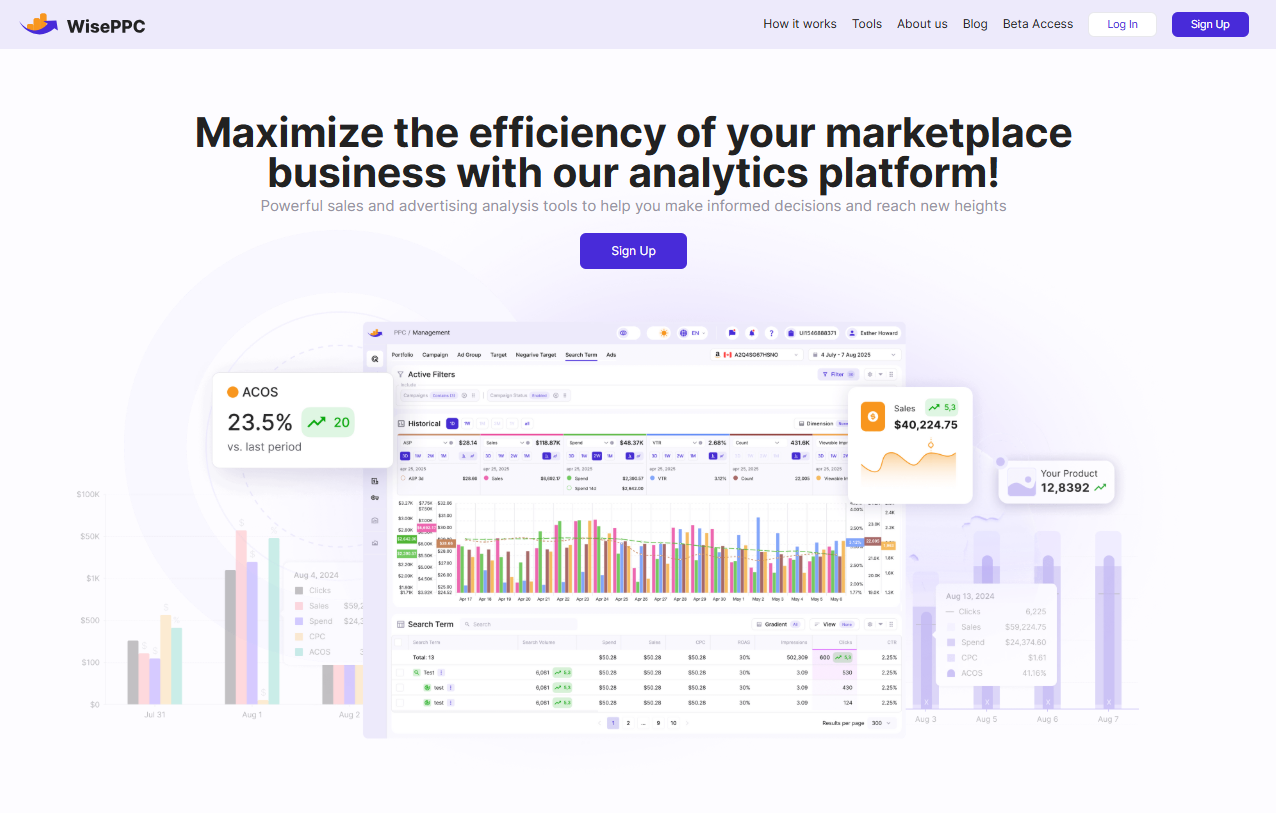
We offer bulk actions, advanced filtering, historical trend charts, and AI-driven suggestions to simplify campaign and pricing adjustments across thousands of SKUs. Sellers can segment historical data, edit campaigns on the spot, and analyze ad placement performance – all from a single dashboard. Upcoming features like dynamic repricing based on market trends and automated inventory forecasting will give sellers even more control over their operations in an increasingly competitive environment.
By integrating your marketplace accounts with WisePPC, you gain more than just visibility – you get a unified system designed to drive profitable decisions at scale. Whether you’re fine-tuning your dynamic pricing rules or identifying which campaigns need budget shifts, we give you the tools and insights to grow faster, smarter, and with full confidence in your data.
Conclusion
Understanding Amazon’s dynamic pricing strategy is essential for any seller aiming to thrive in today’s competitive e-commerce landscape. This pricing model is more than just automated price changes – it’s a data-driven approach that helps Amazon and its sellers react in real time to market shifts, customer behavior, and competitor actions. From maximizing profits and improving inventory turnover to increasing Buy Box visibility, dynamic pricing creates powerful advantages when used correctly.
However, success with dynamic pricing requires more than just plugging into a tool. It demands strategic thinking, continuous monitoring, and the discipline to avoid common pitfalls like price wars or margin erosion. Whether you’re just getting started or looking to refine your pricing tactics, embracing the core principles of dynamic pricing – flexibility, automation, and data analysis – can position your business for long-term success on Amazon.
FAQ
What is dynamic pricing on Amazon and how does it work?
Dynamic pricing on Amazon refers to the automated adjustment of product prices based on real-time data, such as competitor pricing, demand trends, inventory levels, and customer behavior. The system continuously analyzes these variables and updates prices to help sellers stay competitive and maximize revenue.
Why does Amazon use dynamic pricing?
Amazon uses dynamic pricing to respond quickly to market changes, optimize product visibility, and drive more conversions. It allows the platform to offer competitive prices to customers while helping sellers manage margins, sales velocity, and inventory performance efficiently.
How does dynamic pricing affect the Buy Box?
Price is a major factor in winning the Amazon Buy Box. Sellers who use dynamic pricing tools are more likely to maintain optimal pricing and react to competitor changes instantly, increasing their chances of being featured in the Buy Box and capturing more sales.
Can sellers control how their prices change dynamically?
Yes, sellers have full control over how dynamic pricing is implemented. They can set rules, define minimum and maximum price limits, and choose whether to use Amazon’s repricing tools or third-party software. These settings ensure that pricing stays within profitable boundaries.
What are the risks of using dynamic pricing?
Some of the challenges include entering price wars with competitors, losing customer trust due to frequent price fluctuations, and unintentionally setting prices below cost if rules are not clearly defined. Sellers need to monitor their strategies carefully and use smart automation.
Do all Amazon sellers need dynamic pricing tools?
While not mandatory, dynamic pricing tools are highly recommended for sellers who want to stay competitive in high-volume or fast-moving product categories. Even small sellers can benefit from basic rule-based tools to keep up with market dynamics.
What’s the difference between algorithmic and rule-based pricing?
Rule-based pricing uses specific triggers and if-then rules set by the seller, while algorithmic pricing relies on advanced algorithms that evaluate multiple data points and automatically find the most effective price. Algorithmic systems are more flexible and scalable.
 No credit card required