
 EN
EN  ES
ES  FR
FR  DE
DE  IT
IT  KO
KO  JA
JA  ZH
ZH  AR
AR  PT
PT  TR
TR PL
PL
Quick Summary: Amazon’s best-selling products span essential categories like electronics, beauty and personal care, home and kitchen items, clothing, and health products. Top performers include Hanes underwear, Crocs Classic Clogs, Apple AirTags, COSRX Snail Mucin essence, and portable chargers. According to Amazon’s official Best Sellers page, these rankings update frequently based on actual sales data, making them reliable indicators of current consumer demand and market trends.
Amazon processes billions of dollars in sales quarterly, making its Best Sellers list one of the most watched retail barometers in the world. According to the company’s SEC filings, net sales reached $213.4 billion in Q4 2025, representing a 14% increase year-over-year compared with $187.8 billion in Q4 2024.
But what exactly are shoppers buying?
Amazon’s official Best Sellers page indicates rankings update frequently based on actual purchase data, not reviews or ratings. This makes it fundamentally different from trending lists or editorial picks. When a product hits the top 100, it means thousands of customers are actively clicking “Buy Now.”
Understanding these patterns matters whether someone’s looking to spend money wisely, researching market trends, or considering what products might succeed in online retail. The data reveals consumer behavior at scale.
How Amazon’s Best Seller Rankings Actually Work
Amazon doesn’t publish the exact algorithm behind Best Seller rankings, but the company states clearly on its official page: rankings are based on sales and update frequently throughout each day.
Here’s what that means in practice.
Sales velocity matters more than cumulative sales. A product that sells 1,000 units today will outrank one that sold 10,000 units last month but only 100 today. The algorithm heavily weights recent transactions.
Returns likely factor into the calculation. Products with high return rates may see ranking adjustments even if initial sales numbers look strong.
Categories matter significantly. The #1 Best Seller in “Beauty & Personal Care” might sell far more units than #1 in “Musical Instruments,” but both hold top positions in their respective categories. Comparing rankings across different categories doesn’t provide direct sales comparisons.

Get a Complete View of Ads and Sales
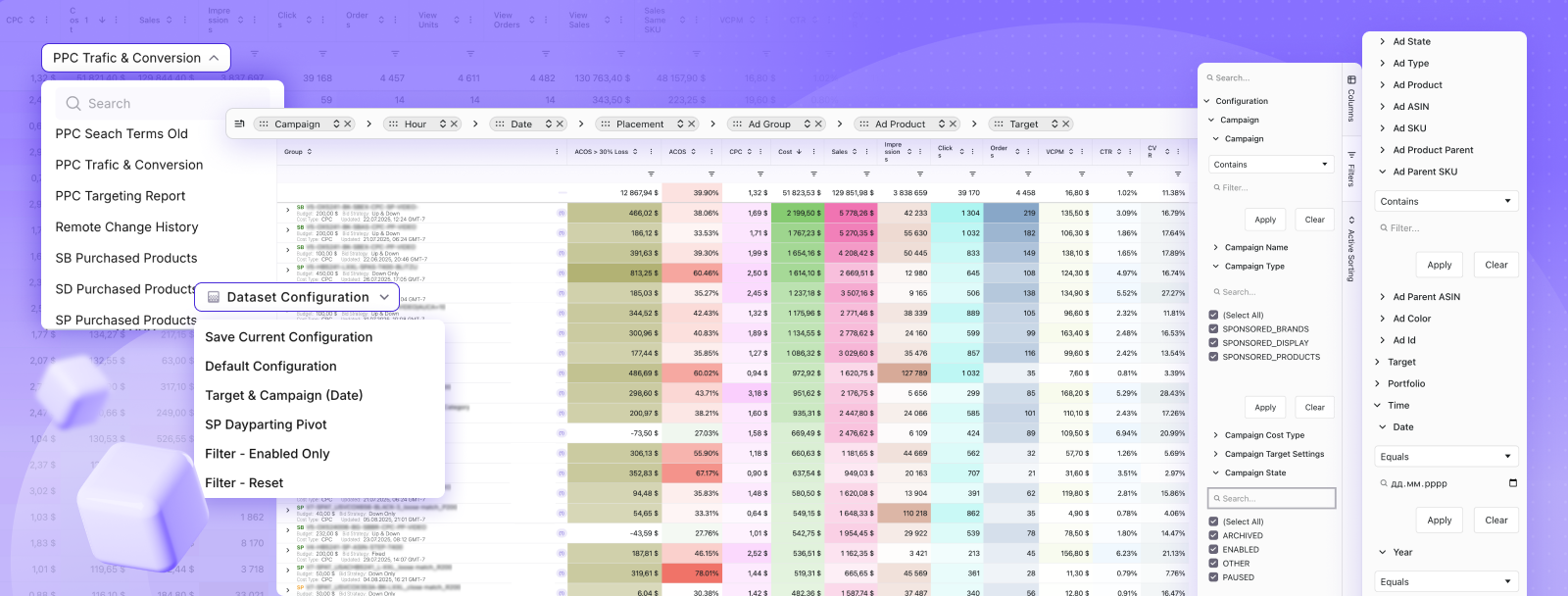
Looking at ads, orders, and listings separately makes it harder to see the full picture. WisePPC combines these into a single view, helping track performance without switching between tools or guessing what’s connected.
Need a More Complete View of Your Data?
- track ad spend alongside actual sales
- analyze campaign and keyword performance
- identify what drives revenue
👉 Explore WisePPC to understand your Amazon advertising data.
Top Selling Products Across All Amazon Categories
According to Amazon’s official Best Sellers page, these products consistently dominate the overall rankings:
| Product | Category | Key Feature | Review Count |
|---|---|---|---|
| Hanes Men’s Underwear Boxer Briefs Pack | Clothing | Moisture-wicking cotton | 128,327 |
| Crocs Unisex-Adult Classic Clog | Shoes | Comfortable casual wear | 393,171 |
| Gildan Men’s Crew T-Shirts Multipack | Clothing | Value pack basics | 327,952 |
| Apple AirTags 4-Pack | Electronics | Item tracking | Extensive |
These aren’t flashy products. They’re essentials.
The pattern reveals something important about Amazon’s customer base: people use the platform for reliable basics they’ll purchase repeatedly. Underwear, comfortable shoes, plain t-shirts. Products that solve everyday problems without drama.
Electronics: The High-Volume Category
Electronics consistently claim significant positions in Amazon’s sales rankings. The category encompasses everything from charging cables to smart home devices.
Apple AirTags dominate the tracking device segment. The 4-pack regularly appears in overall Best Sellers, not just electronics subcategories. Shoppers attach them to luggage, keys, wallets, and bags.
Portable chargers represent another consistent performer. The INIU 10000mAh Portable Charger appears frequently in best-selling lists, addressing the universal problem of dead phone batteries.
Wall chargers and charging accessories outsell many flashier electronics. The QINLIANF Wall Charger demonstrates how solving a simple problem (not enough outlets, need for fast charging) creates sustained demand.
Smart home devices continue growing. According to industry data, electrical products maintain strong sales shares on Amazon, with forecasts suggesting steady growth through 2027.
Why Electronics Sell So Well
Several factors drive electronics to the top of Amazon’s rankings. Prices often beat brick-and-mortar retailers, especially during sales events. Product selection exceeds what most physical stores can stock.
But here’s the thing: convenience trumps both.
Replacing a lost charging cable at a physical store means driving, parking, searching shelves, and waiting in line. Ordering on Amazon means clicking a button and finding the package at the door tomorrow. For low-stakes purchases under $30, that convenience overcomes nearly every objection.
Beauty and Personal Care Best Sellers
Beauty represents one of the most profitable categories for Amazon sellers worldwide. A 2024 survey found beauty and personal care ranked as the most profitable category, tied with home and kitchen products.
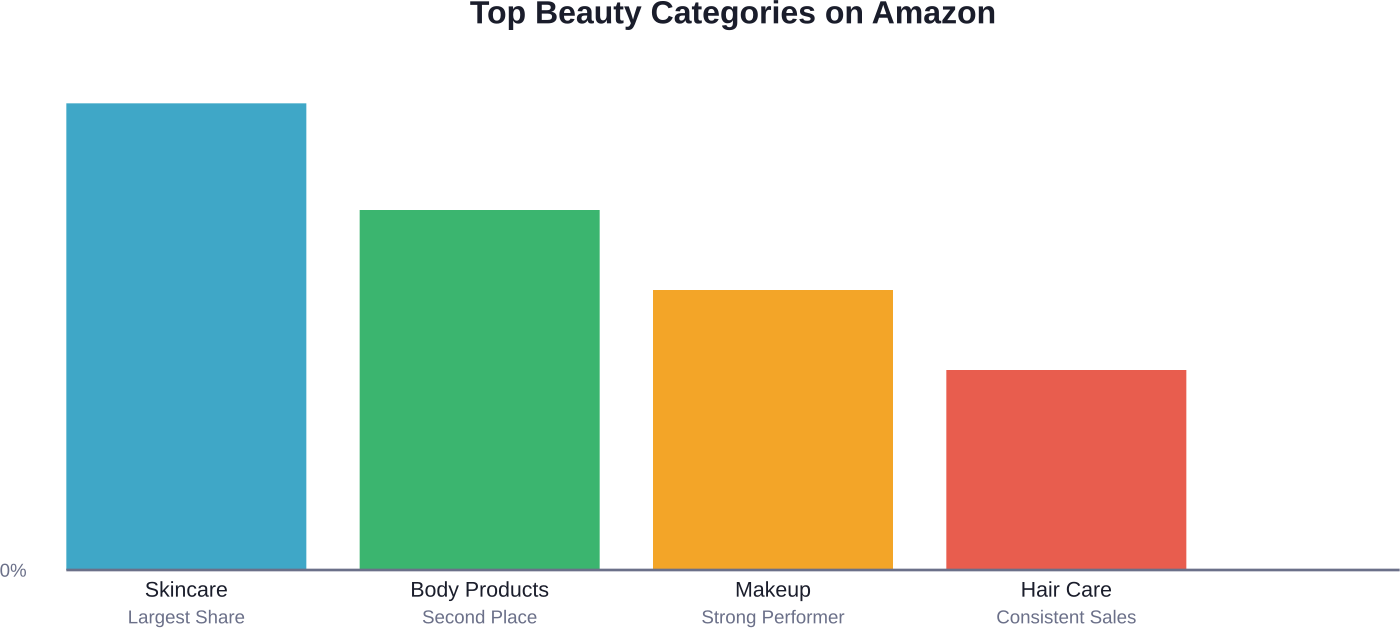
According to Amazon’s official Beauty & Personal Care Best Sellers page, skincare dominates the top positions. Data from Q2 2025 revealed that skincare items accounted for the largest share of the top 25 beauty products sold on the platform.
The COSRX Snail Mucin 96 Power Repairing Essence consistently ranks in the top positions. This Korean skincare product generates massive sales despite its unconventional main ingredient. Reviews play a crucial role here.
The Essence Lash Princess False Lash Effect Mascara holds the distinction of being the most reviewed product among top-selling beauty items in Q2 2025. High review counts signal sustained popularity over time, not just temporary spikes.
Crest 3D Whitestrips maintain year-round best-seller status. Teeth whitening products benefit from both practical results and visible before-after differences that shoppers can share in reviews.
The Social Media Effect on Beauty Sales
TikTok dramatically influences Amazon beauty sales. The platform even maintains an official “TikTok made me buy it” storefront on Amazon, curating products that trended on the social media app.
When a beauty product trends on TikTok, Amazon sales spike within days. The COSRX Snail Mucin essence exemplifies this pattern. Korean skincare enthusiasts shared application videos and results, driving the product to best-seller status despite being relatively unknown in Western markets previously.
This creates a feedback loop. High sales push products up the Best Sellers list. The Best Sellers badge attracts more shoppers. More purchases generate more reviews. Higher review counts build trust with new customers.
Home and Kitchen: The Everyday Essentials
Home and kitchen products tie with beauty as the most profitable category for Amazon sellers. The category covers massive range: from storage containers to slow cookers to cleaning tools.
According to Amazon’s official Home & Kitchen Best Sellers page, practical items dominate luxury goods. Shoppers prioritize function over form.
Rubbermaid Brilliance Food Storage Containers consistently rank in top positions. These aren’t the cheapest storage containers available, but they solve multiple problems: leak-proof seals, clear visibility, stackable design, and dishwasher safety.
The Crock-Pot 7-Quart Oval Manual Slow Cooker represents another category leader. Slow cookers sell year-round because they simplify meal preparation. Set it in the morning, come home to dinner.
Cleaning tools like the Bissell Little Green Mini Portable Carpet Cleaner address specific pain points. Pet owners, parents with young children, and apartment dwellers need spot-cleaning solutions. This product solves that problem at a reasonable price point.
| Product Type | Why It Sells | Target Customer |
|---|---|---|
| Food Storage Containers | Meal prep, organization, leftovers | Home cooks, busy families |
| Slow Cookers | Convenient meal preparation | Working professionals |
| Carpet Cleaners | Spot cleaning, pet messes | Pet owners, parents |
| Kitchen Thermometers | Food safety, cooking precision | Home cooks, grill enthusiasts |
| Vegetable Choppers | Meal prep speed | Health-conscious shoppers |
The Fullstar 4-in-1 Vegetable Chopper demonstrates how solving time problems drives sales. Chopping vegetables by hand takes minutes. This tool reduces it to seconds. That efficiency matters to people cooking dinner after work.
Clothing, Shoes, and Jewelry
Apparel represents a tricky category for online retail. Sizing inconsistencies, fabric quality concerns, and fit variations create hesitation. Yet clothing consistently appears in Amazon’s overall best sellers.
The secret? Basics.
Hanes men’s underwear boxer briefs claim the #1 overall position according to Amazon’s official Best Sellers page. Over 128,000 reviews provide social proof that the sizing, comfort, and durability meet expectations.
Gildan crew t-shirts multipack follows a similar pattern. These aren’t fashion statements. They’re foundational wardrobe items people replace regularly.
Crocs Classic Clogs defy traditional footwear marketing. They’re not attractive by conventional standards. But comfort and durability create fierce customer loyalty. Nearly 400,000 reviews signal that millions of people made this purchase.
The OEAK Women’s Deep V Bras appear in top rankings by solving a specific problem: comfortable wireless support. Customer reviews consistently mention all-day wearability without underwire discomfort.
Why Basics Dominate Apparel Sales
Fashion items face significant challenges on Amazon. Trends change quickly. Sizing varies dramatically between brands. Return rates run high for anything requiring precise fit.
Basics sidestep most of these problems. A pack of white t-shirts looks the same from every angle in product photos. Slight sizing variations matter less for loose-fit everyday wear. Quality issues reveal themselves clearly in thousands of reviews.
The volume matters too. Someone might buy one trendy jacket per year but replace underwear and basic tees multiple times annually. Repeat purchases compound sales velocity.
Health and Household Products
Health and household items represent steady, unglamorous sales drivers. These products solve daily problems, creating consistent demand regardless of trends or seasons.
Batteries consistently rank in best sellers. Amazon Basics AA batteries compete directly with name brands at lower prices. The Amazon Basics branding carries enough trust to overcome brand loyalty for commodity products.
Vitamins and supplements generate substantial sales. Products offering 30-day supplies create built-in repurchase cycles. Subscribe & Save options lock in recurring revenue.
Cleaning supplies maintain year-round demand. Laundry detergent, dish soap, paper towels, trash bags—every household consumes these products continuously.
First aid supplies and over-the-counter medications benefit from Amazon’s convenience advantage. Running to the pharmacy for bandages or pain relievers at 10 PM is annoying. Ordering them for next-day delivery costs less time and effort.
Sports and Outdoors Equipment
The sports and outdoors category encompasses enormous range, from yoga mats to camping gear to fitness equipment. According to Amazon’s Best Sellers data, practical fitness items outperform specialized equipment.
Resistance bands consistently rank high. They’re inexpensive, compact, versatile, and suitable for beginners through advanced users. Low barriers to entry mean high sales volume.
Water bottles represent another steady seller. The market fragments across features: insulation, size, spout type, material. But demand remains constant as people replace lost or worn bottles.
Yoga mats benefit from home fitness trends. The pandemic accelerated home workout adoption, creating sustained demand for basic equipment.
Outdoor items like camping chairs and coolers sell seasonally but generate significant volume during peak months. Weather patterns directly influence these sales cycles.
Baby Products: The High-Stakes Category
Baby products carry unique sales dynamics. Parents prioritize safety and quality over price for items touching their children. Reviews carry enormous weight.
Diapers dominate sales volume in this category. Subscribe & Save programs work perfectly for diapers since consumption rates are predictable and continuous.
Baby wipes follow similar patterns. Parents use hundreds of wipes weekly, creating constant replenishment needs.
Bottles, pacifiers, and feeding accessories benefit from the need to buy multiples. Parents don’t purchase one bottle; they buy six or eight to rotate through washing cycles.
Safety items like baby monitors and gates generate research-heavy purchases. Parents read dozens of reviews, compare features extensively, then commit to specific products based on peer recommendations.
Pet Supplies: The Passion Category
Pet owners spend enthusiastically on their animals. The pet supplies category benefits from emotional purchasing decisions combined with practical necessity.
Pet food and treats create subscription-friendly recurring purchases. Automatic deliveries ensure pet owners never run out of essentials.
Toys and enrichment items see impulse buying behavior. A $12 interactive toy for a beloved pet faces minimal purchase friction.
Grooming supplies sell consistently. Nail clippers, brushes, shampoos, and dental care products address ongoing maintenance needs.
Pet beds and furniture occupy an interesting niche. Prices range from budget to premium, but best sellers tend toward mid-range options balancing quality and value.
What Makes Products Become Best Sellers
Analyzing patterns across categories reveals common characteristics among Amazon’s top-selling products. These factors separate consistent performers from one-time spikes.
Problem-solving capability ranks first. Every best-selling product addresses a specific, common problem. Dead phone batteries. Uncomfortable underwear. Food storage. Pet mess cleanup. The more universal the problem, the larger the potential market.
Price accessibility matters significantly. Most best sellers fall between $15 and $50. This range sits below the threshold where shoppers conduct extensive research or seek alternatives. Impulse purchases and problem-solving convenience overcome price sensitivity.
Review quantity provides social proof. Products with 50,000+ reviews signal safety to new shoppers. That many purchases mean the product probably works as described.
Repeat purchase potential creates sustained velocity. Consumables, basics that wear out, and items people need multiples of generate continuous sales rather than one-time purchases.
Clear product photography eliminates confusion. Best sellers typically feature multiple high-quality images showing the product from various angles, in use, and with size references.
The Subscribe and Save Advantage
Amazon’s Subscribe & Save program dramatically impacts best-seller rankings for eligible products. The program offers discounts (typically 5-15%) in exchange for scheduled recurring deliveries.
This benefits both shoppers and sellers. Customers save money and never run out of essentials. Sellers gain predictable recurring revenue and improved sales velocity metrics.
Products like diapers, vitamins, pet food, coffee, and household supplies see substantial portions of sales through subscriptions. Once a customer subscribes, they’re unlikely to switch brands unless problems arise.
Seasonal Patterns in Best Sellers
While some products maintain year-round best-seller status, many categories see dramatic seasonal shifts. Understanding these patterns reveals consumer behavior cycles.
January and February favor fitness equipment, organizational products, and health items. New Year’s resolutions drive purchases of resistance bands, yoga mats, storage containers, and vitamins.
Spring brings gardening tools, outdoor furniture, and cleaning supplies. The Grampa’s Weeder exemplifies seasonal gardening items that spike during planting season.
Summer pushes camping gear, coolers, outdoor games, and sun protection products to best-seller positions. Water bottles and portable chargers see increased demand.
Back-to-school season in August and September drives sales of organizational items, electronics, and clothing basics. Parents stock up on supplies and replace outgrown clothes.
Holiday shopping dominates November and December. Electronics, toys, and gift items flood the best-seller lists. Products positioned as gifts see enormous velocity increases.
How to Use Best Seller Data
Understanding Amazon’s best sellers serves multiple purposes depending on the audience. Shoppers, sellers, and market researchers each extract different value from this data.
For shoppers, best-seller lists function as pre-vetted recommendations. High sales volume combined with strong reviews reduces purchase risk. If 100,000 people bought a product and 85% left positive reviews, it probably works as advertised.
For potential sellers, best-seller data reveals market opportunities and competition levels. High-demand categories with lower review counts might indicate newer markets with room for entry. Conversely, products with 200,000+ reviews signal saturated markets requiring differentiation.
Independent sellers in the US averaged more than $290,000 in annual sales in the Amazon store in 2024, according to Amazon’s official data. But those success stories concentrate in specific niches and categories.
For market researchers, trending products signal broader consumer behavior shifts. The rise of Korean skincare products in best-seller lists reflects changing beauty preferences. Sustained demand for home fitness equipment indicates lasting pandemic-era habit changes.
Finding High-Demand Products to Sell
Sellers looking to identify products with strong sales potential can follow systematic approaches using Amazon’s native tools and publicly available data.
Start with Amazon Best Sellers lists across categories. Look for products ranking in the top 10,000 overall or top 100 in specific categories. These generate substantial sales volume.
Check the “Movers & Shakers” list showing the biggest sales rank improvements in the past 24 hours. This reveals emerging trends before they saturate.
Analyze review counts and ratings. Products with 1,000-10,000 reviews indicate strong sales without complete market saturation. Above 50,000 reviews suggests intense competition.
Examine price points. Products between $20 and $60 balance profit margins with accessibility. Below $15 faces thin margins after Amazon fees. Above $100 requires more purchase consideration.
Look for Subscribe & Save badges. This indicates consumable or repeat-purchase products with built-in recurring revenue potential.
| Metric | What to Look For | Why It Matters |
|---|---|---|
| Sales Rank | Top 10,000 overall or top 100 in category | Indicates strong demand |
| Review Count | 1,000-10,000 reviews | Sweet spot between proven and saturated |
| Rating | 4.0+ stars | Shows customer satisfaction |
| Price Point | $20-$60 | Balance between margin and volume |
| Subscribe & Save | Eligible for subscription | Recurring revenue potential |
The Impact of Amazon’s Private Label Brands
Amazon Basics and other Amazon-owned brands increasingly appear in best-seller rankings. This creates competitive dynamics that affect third-party sellers.
Research from Duke University examined how Amazon’s private labels impact markets. According to their findings, when Amazon places its own products in prominent sponsored ad slots at the top of search results, it often reduces price competition and can hurt consumers.
Amazon Basics batteries, charging cables, and household items consistently rank as best sellers. The company leverages sales data to identify high-volume, commodity-like products worth creating private-label versions of.
This strategy works because Amazon controls distribution, search placement, and customer data. Third-party sellers who pioneered certain product types on the platform find themselves competing directly with Amazon’s lower-priced alternatives.
But opportunities remain. Amazon Basics focuses on commodity products where brand loyalty is low and price sensitivity is high. Products requiring differentiation, branding, or specialized features face less private-label competition.
The Role of Reviews in Best Seller Success
Amazon’s review system fundamentally shapes best-seller dynamics. Reviews influence purchase decisions, search rankings, and sales velocity.
Research from UCLA examined how fake reviews distort markets on Amazon. Their findings revealed that consumers understand fake reviews exist but struggle to identify them accurately. This leads to poor buying decisions as shoppers trust inflated ratings.
Products with fake positive reviews saw unit sales increase an average of 27.2% while raising prices. Honest sellers lost market share to lower-quality products using fake reviews.
Amazon continuously fights review manipulation through verified purchase badges, machine learning detection, and seller penalties. But the problem persists because the incentives are powerful.
For legitimate products, accumulating reviews requires time and strategy. Early reviews matter enormously for gaining initial traction. Products with zero reviews face massive purchase friction compared to items with hundreds of ratings.
Building Review Velocity Legitimately
Sellers can encourage honest reviews through several approaches that comply with Amazon’s policies.
Amazon Vine invites trusted reviewers to receive free products in exchange for honest reviews. This costs money but generates initial verified reviews.
Product inserts asking for reviews remain acceptable if they don’t offer compensation or incentives. Simple “We’d love your feedback” cards work.
Follow-up emails through Amazon’s Buyer-Seller messaging system can request reviews if they don’t offer incentives or push for positive ratings specifically.
High-quality products that exceed expectations naturally generate more reviews. Customers motivated to leave feedback typically had exceptional experiences (positive or negative).
Emerging Trends in Amazon Best Sellers for 2026
Current best-seller data reveals several trends likely to strengthen throughout 2026 based on sustained sales patterns and market research.
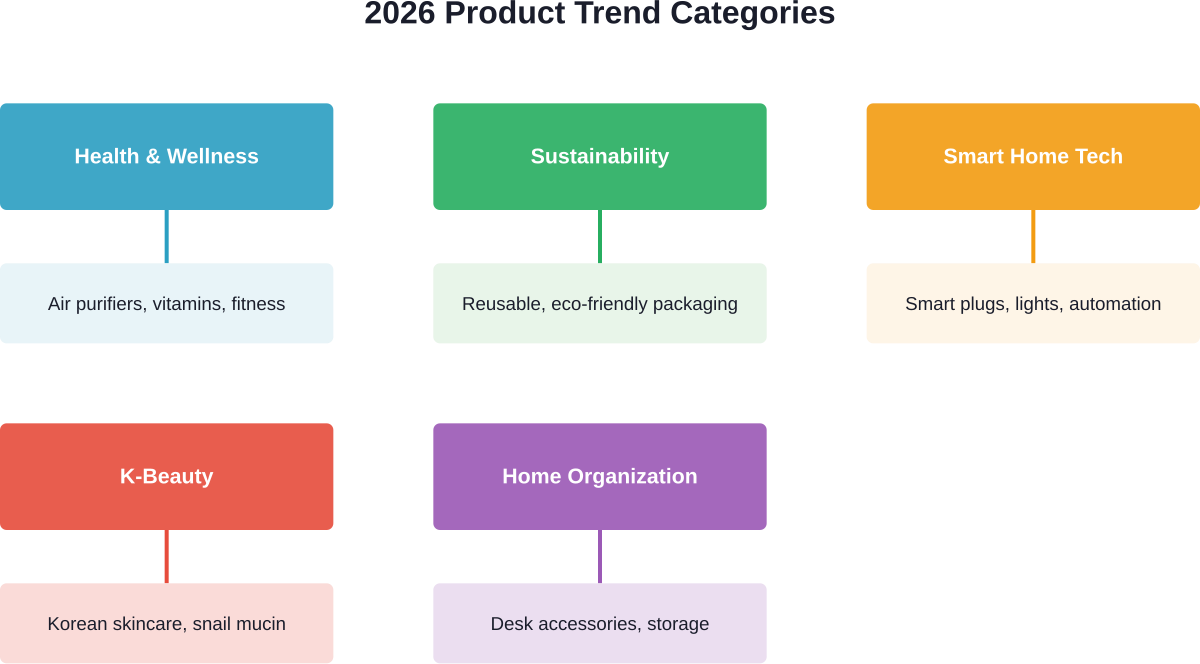
Health-conscious products continue gaining ground. Air purifiers, water filters, vitamins, and fitness equipment maintain strong positions across categories.
Sustainability claims influence purchases increasingly. Reusable products, eco-friendly packaging, and “green” certifications appear more frequently in best-seller descriptions.
Smart home integration expands beyond tech enthusiasts. Smart plugs, lights, and basic automation devices see mainstream adoption as prices fall and compatibility improves.
Korean beauty and skincare products demonstrate staying power beyond trend status. K-beauty brands established distribution and customer loyalty, creating sustained demand.
Home organization products reflect ongoing work-from-home impacts. Desk accessories, storage solutions, and space-optimization products maintain elevated sales compared to pre-pandemic levels.
Understanding Amazon’s Financial Performance
Amazon’s massive scale makes its best-seller data particularly significant. According to the company’s SEC filings, net sales reached $213.4 billion in Q4 2025, up 14% from the previous year.
Net income reached $21.2 billion in Q4 2025, or $1.95 per diluted share. These figures represent substantial growth even as the company maintains aggressive expansion.
AWS (Amazon Web Services) generated $12.5 billion in operating income during Q4 2025, compared to $10.6 billion in Q4 2024. Cloud services subsidize aggressive retail pricing, enabling Amazon to undercut competitors.
Operating cash flow increased 15% to $113.9 billion for the trailing twelve months ending Q1 2025. This financial strength allows Amazon to invest heavily in logistics, enabling faster delivery that drives purchase decisions.
The company’s market value held by non-affiliates was approximately $2 trillion as of June 30, 2025, according to SEC filings. This positions Amazon as one of the world’s most valuable companies.
Comparing Amazon to Walmart in Retail Dominance
Amazon’s best-seller rankings must be understood in the context of broader retail competition, particularly with Walmart.
Walmart reported $681 billion in revenue for its latest fiscal year, while Amazon reported $638 billion. But if sales trends continue, Amazon could overtake Walmart in 2026 to become the largest domestic retailer by revenue.
Amazon long ago passed Walmart in market capitalization. Investors value Amazon’s growth potential and profit margins higher than Walmart’s despite Walmart’s larger current revenue.
The competition shapes both retailers’ strategies. Walmart invested billions in e-commerce infrastructure and marketplace capabilities. Amazon expanded physical retail through Amazon Fresh and Whole Foods acquisition.
Best-seller patterns differ between platforms. Walmart’s top sellers skew toward groceries and household essentials purchased in-store. Amazon’s lean toward electronics, specialty items, and products benefiting from customer reviews.
International Best Seller Variations
Amazon operates marketplaces in numerous countries, each with distinct best-seller patterns reflecting local preferences and market conditions.
Amazon.co.uk best sellers feature many identical products to the US marketplace, but with regional variations. British shoppers favor different food brands, and sizing standards differ for clothing.
Amazon.de (Germany) sees strong sales of tools, automotive products, and home improvement items reflecting German DIY culture.
Amazon.co.jp (Japan) showcases distinctive best sellers in beauty, snacks, and electronics that rarely appear in Western marketplaces.
Amazon.in (India) features price points dramatically lower than Western markets, with best sellers optimized for value rather than premium features.
Amazon.com.mx (Mexico) shows cross-border shopping patterns, with many US-based products shipping to Mexican customers despite language and currency barriers.
The Future of Amazon Best Sellers
Several factors will shape Amazon’s best-seller landscape in coming years based on current trajectories and market forces.
Voice shopping through Alexa devices will influence best sellers as friction-free reordering favors established brands and previous purchases over competitive shopping.
Same-day delivery expansion makes Amazon competitive for categories previously requiring immediate gratification from physical stores. This threatens convenience store and pharmacy sales.
Climate considerations may shift purchasing patterns. Products with carbon-neutral shipping or sustainable materials could gain preference as younger shoppers prioritize environmental impact.
AI-powered recommendations will personalize shopping experiences more deeply, potentially fragmenting “universal” best sellers into niche category leaders.
Subscription bundling like Amazon Prime continues creating ecosystem lock-in. Prime members spend significantly more annually than non-members, and best-seller eligibility for fast shipping influences rankings.
Frequently Asked Questions
How often do Amazon best seller rankings update?
Amazon best seller rankings update hourly based on recent sales data. According to Amazon’s official Best Sellers page, the rankings reflect current sales velocity rather than cumulative all-time sales. A product selling strongly today will rank higher than one with more total sales but lower recent velocity.
What is the number one best selling product on Amazon overall?
According to Amazon’s official Best Sellers page, Hanes men’s underwear boxer briefs frequently hold the #1 overall position, with over 128,000 customer reviews. However, rankings change constantly throughout each day based on sales velocity. Other consistent top performers include Crocs Classic Clogs and Gildan men’s t-shirt multipacks.
Which product categories are most profitable for Amazon sellers?
A 2024 survey found that beauty and personal care, along with home and kitchen, ranked as the most profitable categories for Amazon sellers worldwide. These categories benefit from repeat purchases, reasonable profit margins, and strong customer engagement. Clothing, shoes, and jewelry followed as the third most profitable category.
Do best seller rankings mean the same thing across different categories?
No, best seller rankings are relative within each category. The #1 product in Beauty & Personal Care likely sells many more units than the #1 product in Musical Instruments, but both hold top positions in their respective categories. Rankings cannot be directly compared across categories because sales volumes differ dramatically.
Can new sellers compete with established best sellers?
Competing directly with products that have 100,000+ reviews presents enormous challenges. However, opportunities exist in underserved niches, improved variations of existing products, and emerging trend categories. New sellers who averaged more than $290,000 in annual sales typically found specific market gaps rather than competing head-to-head with dominant best sellers.
How do fake reviews affect best seller rankings?
Research from UCLA found that products using fake positive reviews saw unit sales increase an average of 27.2% while raising prices. This distorts best seller rankings by elevating lower-quality products above honest competitors. Amazon uses machine learning and verification systems to detect and remove fake reviews, but the problem persists due to strong financial incentives.
What role does Amazon’s Subscribe & Save play in best sellers?
Subscribe & Save significantly impacts best seller rankings for eligible products. Subscription deliveries generate predictable recurring sales that boost velocity metrics. Products like diapers, vitamins, pet food, and household supplies see substantial portions of total sales through subscriptions, helping maintain consistent best seller positions.
Conclusion: What Amazon Best Sellers Reveal About Consumer Behavior
Amazon’s best-seller rankings provide a real-time window into consumer priorities at massive scale. The patterns are clear: shoppers favor practical solutions over flashy innovations, value consistency over novelty, and trust peer reviews over marketing claims.
The dominance of basics like underwear, t-shirts, and storage containers reveals that Amazon functions primarily as a utility for most customers. People solve everyday problems efficiently rather than browsing aspirationally.
But here’s what makes the data valuable: it represents actual purchase decisions, not survey responses or stated preferences. When people spend their own money, revealed preferences emerge. And those preferences consistently favor products that work reliably, arrive quickly, and cost reasonably.
For shoppers, best-seller lists reduce decision paralysis through social proof. For sellers, they reveal market demand and competition intensity. For researchers, they map evolving consumer behavior across hundreds of product categories simultaneously.
The specific products holding top positions will change. Korean skincare might give way to Brazilian beauty trends. Smart home devices will add new capabilities. Sustainability claims will grow more sophisticated. But the underlying pattern remains: Amazon’s best sellers succeed by solving common problems better than alternatives, at accessible prices, with enough social proof to overcome purchase hesitation.
Want to find the latest best sellers? Visit Amazon’s official Best Sellers page, which updates hourly with current rankings across all categories. The data is free, comprehensive, and reveals exactly what millions of shoppers are buying right now.
 No credit card required