EN
EN  ES
ES  FR
FR  DE
DE  IT
IT  KO
KO  JA
JA  ZH
ZH  AR
AR  PT
PT  TR
TR  PL
PL Amazon Subscribe and Save: How It Works and When Sellers Should Use It

Repeat purchases are what turn an Amazon business from unpredictable to stable. One-time sales help, but steady growth usually comes from customers who come back without being reminded. That’s exactly what Amazon Subscribe and Save is designed to support.
The program allows shoppers to schedule recurring deliveries for everyday products while receiving a discount for sticking with a subscription. For sellers, it creates more predictable demand, stronger customer retention, and clearer inventory planning. In this guide, we’ll break down how Subscribe and Save works, who it’s best suited for, and what sellers should consider before enrolling their products.
What Amazon Subscribe and Save Actually Is
Amazon Subscribe and Save lets customers schedule recurring deliveries for eligible products. Instead of reordering manually, they choose how often they want the item delivered and Amazon takes care of the rest.
Customers can adjust delivery frequency, skip shipments, or cancel at any time. Nothing is locked in. That flexibility is a big part of why people are willing to subscribe in the first place.
In return for committing to repeat deliveries, customers receive a discount. Depending on the setup, total savings can reach up to 15 percent. For shoppers, it’s convenience and savings. For sellers, it’s consistency.
Why Customers Use Subscribe and Save
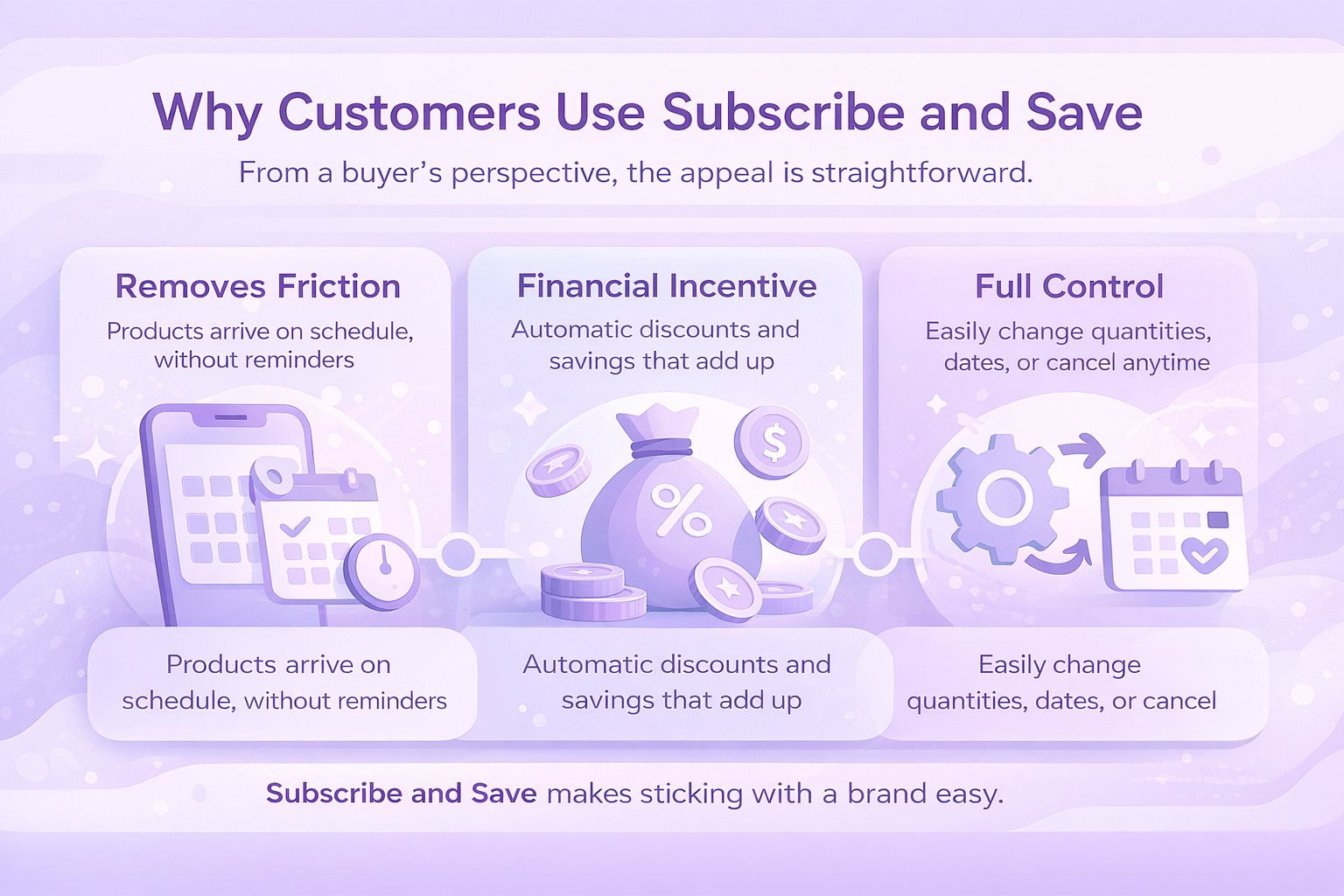
From a buyer’s perspective, the appeal is straightforward.
- First, it removes friction. Customers do not need reminders or shopping lists for products they already know they need. Everything shows up on schedule.
- Second, there is a clear financial incentive. Discounts apply automatically, and for households buying multiple subscribed items, the savings add up over time.
- Third, there is full control. Customers can change quantities, delivery dates, or cancel without penalties. That sense of control lowers hesitation and increases signups.
When customers find a product that fits their routine, Subscribe and Save makes sticking with that brand easy.
Why Subscribe and Save Works for Sellers
For sellers, the biggest advantage is predictability.
Subscriptions make revenue easier to forecast. When you know how many active subscribers you have, planning inventory becomes far less stressful. It also reduces the volatility that comes with one-off purchases.
Visibility is another benefit. Subscribe and Save products often appear in dedicated searches and filters, which can surface your listings to buyers already looking for subscription options.
There is also a loyalty effect. Once customers subscribe, they are less likely to shop around every month. That creates longer customer lifecycles and more stable sales over time.
Finally, subscriptions often introduce customers to your broader catalog. A single subscribed product can lead to repeat exposure to other items you sell.
Who Is Eligible to Use Subscribe and Save
Not every seller or product qualifies.
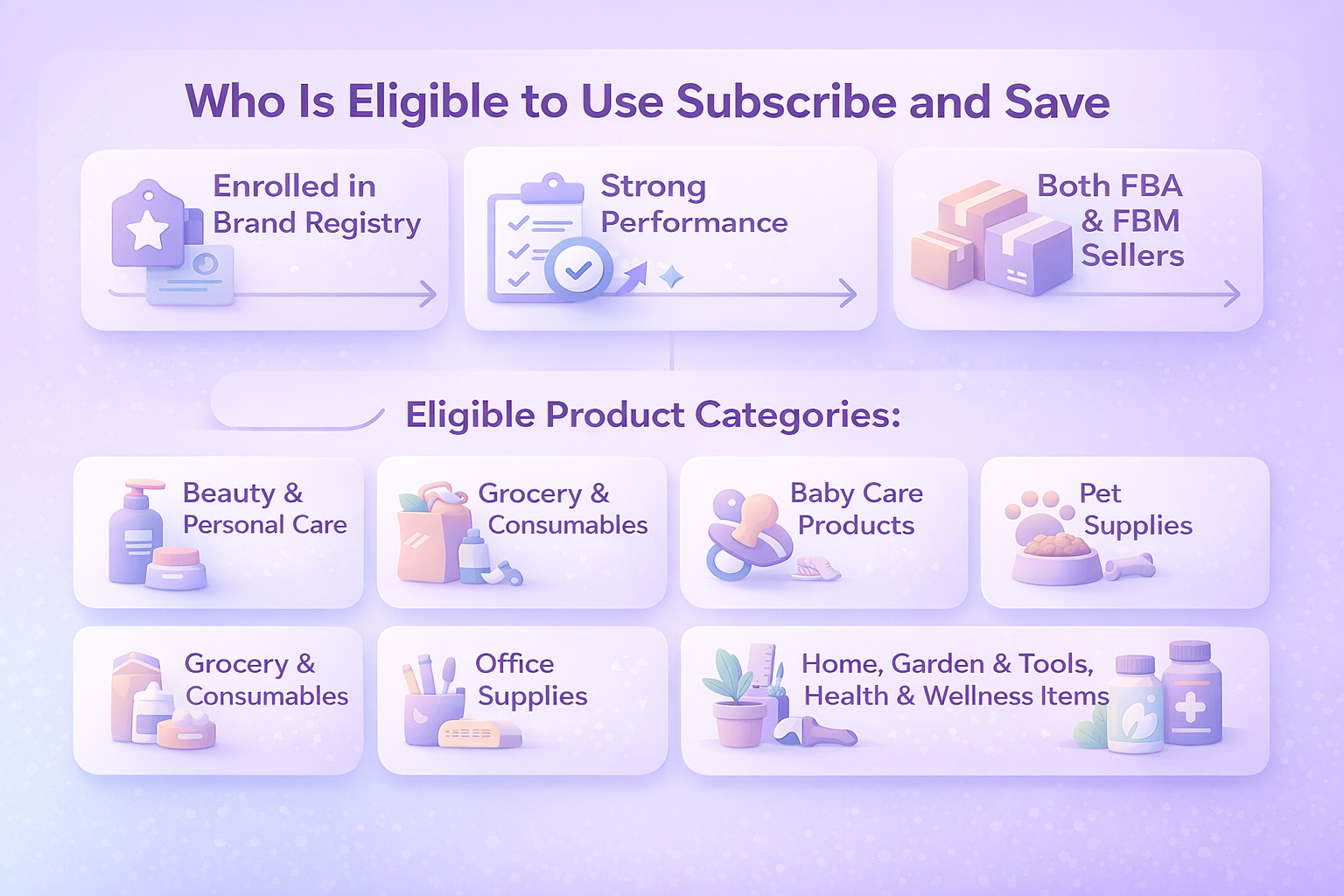
To participate, sellers need to represent a brand enrolled in Amazon Brand Registry and maintain strong operational performance. This includes reliable inventory levels, competitive pricing, and solid fulfillment metrics.
Eligible product categories include common repeat-purchase segments such as:
- Beauty and personal care
- Grocery and consumables
- Baby care products
- Pet supplies
- Office supplies
- Home, garden, and tools
- Health and wellness items
Both Fulfillment by Amazon and Fulfilled by Merchant sellers can participate, as long as performance standards are met.
Merchant-fulfilled offers must also meet stricter shipping and reliability thresholds over a sustained period. Amazon wants subscriptions to feel dependable, and fulfillment performance plays a major role.
Fulfillment Options and Enrollment Basics
If you use Fulfillment by Amazon, eligible products are often enrolled automatically. Amazon applies your default discount settings and makes the product available for subscription.
For merchant-fulfilled listings, enrollment is manual. Each product must be submitted through Seller Central and reviewed for eligibility.
In both cases, sellers can manage discount levels, review enrollment status, and make adjustments through the Subscribe and Save tools inside Seller Central.
How Discounts and Funding Work
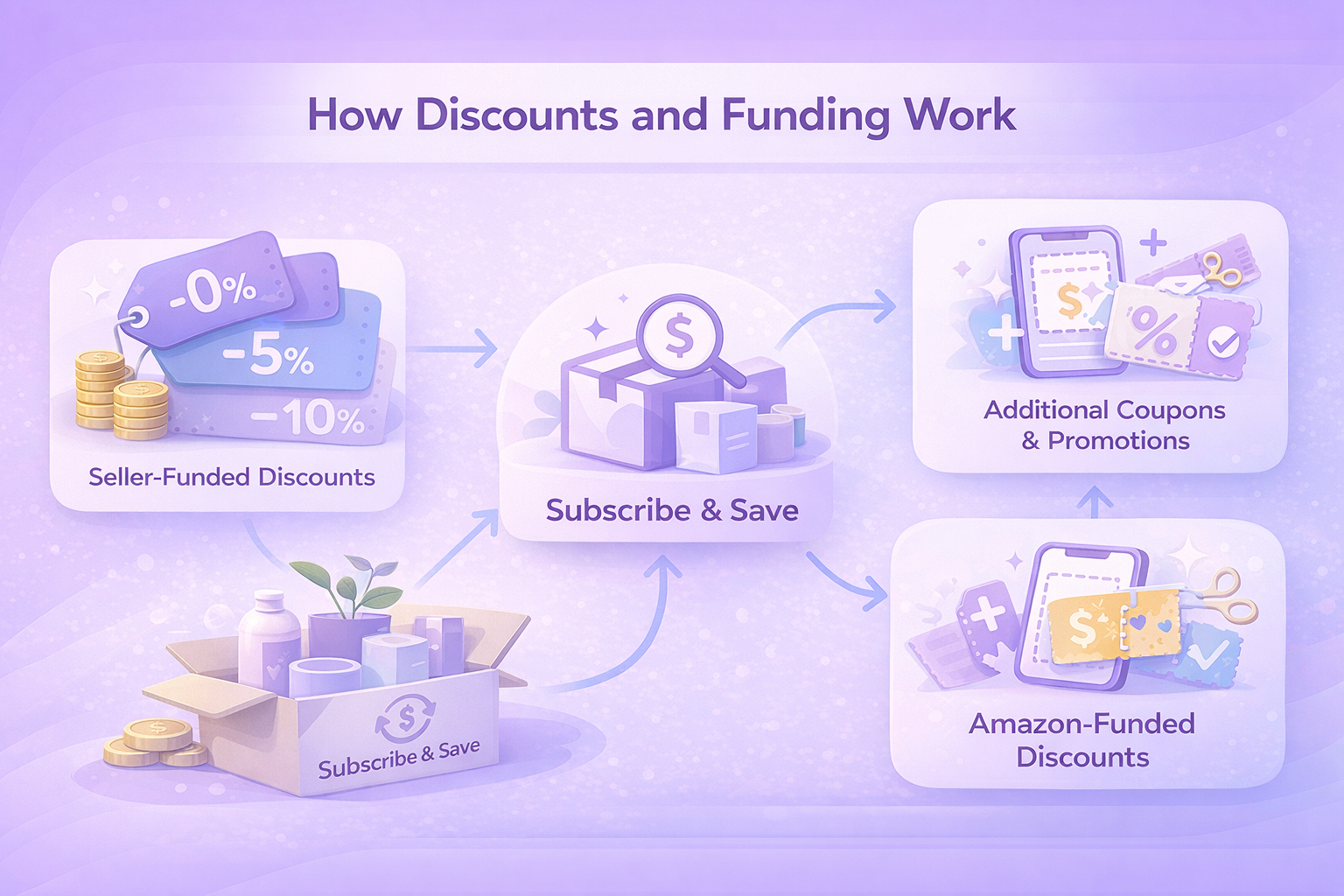
Subscribe and Save pricing is built around a mix of seller-funded incentives and Amazon-backed discounts. Understanding how the two work together is key to using the program without eroding margins.
Seller-Funded Subscription Discounts
Sellers control the base Subscribe and Save discount. There are three standard options: 0 percent, 5 percent, or 10 percent off the regular price.
A 0 percent option still allows the product to appear in Subscribe and Save, but it relies entirely on Amazon-funded incentives to create savings for the customer. A 5 percent or 10 percent seller-funded discount, on the other hand, provides an immediate price benefit and typically increases subscription sign-ups.
Higher discounts often lead to better conversion rates, but they also reduce per-order profit. That tradeoff is why most sellers start conservatively, monitor performance, and adjust over time rather than committing to the highest discount upfront.
Amazon-Funded Volume Discounts
Amazon adds an extra incentive when customers subscribe to multiple products at once. If a customer receives five or more Subscribe and Save items in a single delivery, Amazon may apply an additional discount on top of the seller-funded offer.
This extra discount is funded by Amazon, not the seller. It rewards customers for consolidating subscriptions while allowing sellers to benefit from higher order values without sacrificing additional margin.
Combining Subscribe and Save with Promotions
Subscribe and Save discounts can be stacked with other pricing strategies. Sale prices, limited-time offers, and promotional discounts can run alongside subscription pricing when set up correctly.
This flexibility allows sellers to run short-term campaigns without removing products from Subscribe and Save or disrupting existing subscribers. The key is to watch margin impact carefully, especially during high-volume promotional periods.
Using Coupons to Drive Subscriptions
Coupons add another layer of incentive, particularly for new subscribers. Sellers can create Subscribe and Save–specific coupons that apply to the first delivery of a subscription.
These coupons are often used to lower the entry barrier for first-time subscribers or to re-engage customers who have purchased a product before but never subscribed. Because coupons can be targeted and time-limited, they offer a controlled way to test demand without permanently lowering prices.
Adding Products to Subscribe and Save
For most sellers using Fulfillment by Amazon, eligible products are enrolled in Subscribe and Save automatically once all requirements are met. Amazon applies your default subscription discount and makes the product available for recurring orders without extra setup. You can review which products are enrolled and manage their settings directly in the Subscribe and Save section of Seller Central.
If a product is not enrolled, Seller Central usually explains why. Common reasons include pricing that falls outside Amazon’s thresholds, category limitations, or performance metrics that do not yet meet the program’s standards. In many cases, these issues can be resolved by adjusting price, improving fulfillment performance, or waiting until enough sales history is established.
Sellers also have flexibility when it comes to discounts. Subscription discounts can be set at a global level or adjusted for individual products. This makes it easier to test different discount strategies, compare results, and fine-tune pricing without making broad changes across the entire catalog.
Tracking Subscribe and Save Performance
Amazon provides detailed reporting tools that help sellers understand how Subscribe and Save is performing over time. Reviewing this data regularly makes it easier to spot trends, catch issues early, and adjust pricing or inventory before problems grow.
Key areas to monitor include:
- Subscription-driven sales volume. Shows how much revenue is coming specifically from subscribed orders versus one-time purchases.
- Active subscriber count and retention. Helps track how many customers are currently subscribed and whether they continue receiving deliveries over time.
- Revenue by discount tier. Breaks down how different subscription discount levels affect sales and overall performance.
- Coupon-driven subscription growth. Measures how effective coupons are at attracting new subscribers or reactivating existing customers.
- Missed shipments caused by stockouts. Highlights lost revenue and canceled deliveries when inventory levels are not sufficient to meet subscription demand.
In addition to historical reporting, Amazon offers forecasting tools that estimate future shipment volume based on active subscriptions. These projections are especially useful for inventory planning, budgeting, and preparing for seasonal demand changes.
All reports can be accessed directly in Seller Central and downloaded for deeper analysis or internal reporting.

Practical Tips for Growing a Subscribe and Save Program
If you want to grow subscription sales without putting pressure on margins, these principles tend to work consistently:
- Start with a moderate discount. A 5 percent discount is often enough to test demand. Measure performance before increasing it, since not every product needs the maximum incentive.
- Keep inventory stable and shipments reliable. Subscribers expect consistency. Stockouts and late deliveries matter more here than with one-time purchases.
- Use coupons with a clear purpose. First-delivery coupons can drive new subscriptions, while reorder coupons help convert repeat buyers who haven’t subscribed yet.
- Review performance data regularly. Look for trends in subscriber growth, retention, and discount effectiveness. Pay attention to products that perform better with subscriptions than without.
- Think long term, not short term. Subscribe and Save works best as a steady growth channel. The real value comes from predictable demand and repeat customers, not quick spikes in sales.

Making Subscribe and Save More Profitable with WisePPC
Subscribe and Save works best when sellers clearly understand what drives repeat orders and how discounts, ads, and pricing affect profit. That’s where we help.
At WisePPC, we give sellers a clear view of their marketplace performance in one place. Our analytics connect advertising, sales, and pricing data, so you can see how subscriptions perform over time and make decisions based on real numbers, not assumptions.
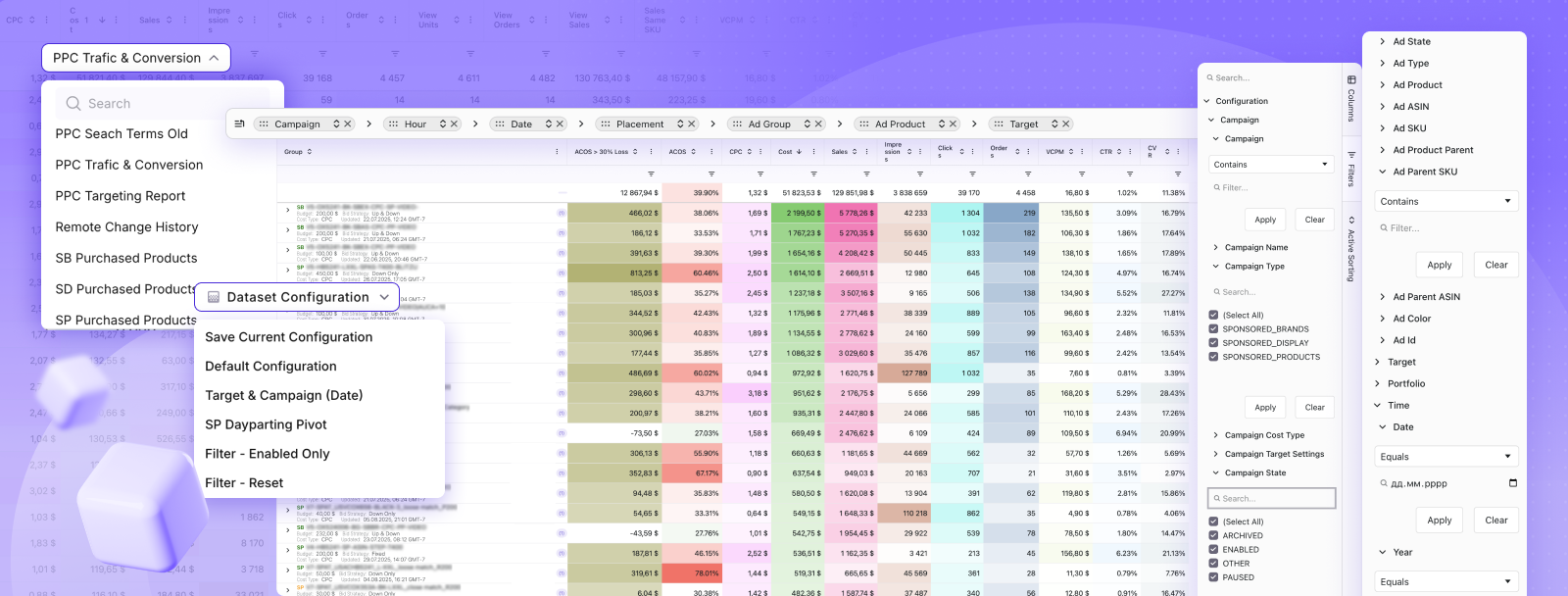
With real-time metrics, long-term historical data, and powerful filtering, you can spot trends early, adjust campaigns faster, and understand which strategies actually support recurring sales. Bulk actions make it easy to scale changes across campaigns without manual work.
The result is more control, better visibility, and smarter optimization for sellers who want Subscribe and Save to contribute to steady, predictable growth.
Conclusion: Is Subscribe and Save Right for Your Business?
Amazon Subscribe and Save is not a shortcut to instant growth, but for the right products, it can become one of the most reliable sales channels on your account. It works best for items customers buy regularly and trust enough to reorder without thinking.
For sellers, the real value lies in predictability. Subscriptions smooth out demand, improve inventory planning, and reduce reliance on constant customer acquisition. At the same time, the program requires discipline. Pricing needs to be tested carefully, inventory must stay stable, and performance metrics matter more than ever.
When approached strategically, Subscribe and Save can strengthen customer relationships and turn routine purchases into long-term revenue. It’s not about chasing quick wins. It’s about building a more stable Amazon business over time.
Frequently Asked Questions
Can you use Subscribe and Save without Fulfillment by Amazon?
Yes. Sellers who use Fulfilled by Merchant can participate in Subscribe and Save, but the requirements are stricter. Merchant-fulfilled offers must meet high standards for delivery speed, accuracy, and reliability, and each product must be enrolled manually through Seller Central.
How long does it take for a product to qualify for Subscribe and Save?
There is no fixed timeline. Eligibility depends on factors like sales history, category, pricing, and fulfillment performance. Some products are enrolled automatically once requirements are met, while others may need adjustments before becoming eligible.
Do higher discounts always lead to more subscriptions?
Not always. While higher discounts can improve conversion rates, they also reduce margins. Many sellers see strong results starting at 5 percent and only increase discounts after reviewing performance data. Testing is essential.
Can customers cancel Subscribe and Save at any time?
Yes. Customers can skip deliveries, change frequencies, or cancel subscriptions whenever they choose. This flexibility makes the program more appealing but also means sellers need to focus on product quality and reliability to retain subscribers.
What happens if a subscribed product goes out of stock?
If inventory runs out, scheduled deliveries may be missed, which can lead to canceled subscriptions and lost revenue. That’s why inventory planning is especially important for Subscribe and Save products.
Join the WisePPC Beta and Get Exclusive Access Benefits
WisePPC is now in beta — and we’re inviting a limited number of early users to join. As a beta tester, you'll get free access, lifetime perks, and a chance to help shape the product — from an Amazon Ads Verified Partner you can trust.
 No credit card required
Free in beta and free extra month free after release
25% off for life — limited beta offer
Access metrics Amazon Ads won’t show you
Be part of shaping the product with your feedback
No credit card required
Free in beta and free extra month free after release
25% off for life — limited beta offer
Access metrics Amazon Ads won’t show you
Be part of shaping the product with your feedback