EN
EN  ES
ES  FR
FR  DE
DE  IT
IT  KO
KO  JA
JA  ZH
ZH  AR
AR  PT
PT  TR
TR  PL
PL Best Amazon Pet Day Deals for 2026

Amazon Pet Day has turned into one of those events that people don’t exactly plan for but somehow end up participating in every year. Maybe it’s the mix of useful upgrades, small indulgences, and the quiet hope that a discounted gadget might solve an annoying daily chore. Whatever the reason, the sale keeps growing, and it’s starting to resemble a seasonal moment instead of a one off promotion.
If you’re trying to sort out where the real value sits in 2026, this guide walks through what usually matters, what tends to repeat each year, and where you can expect the strongest deals. Nothing fluffy here. Just a grounded look at the categories that actually help you save money or make pet care easier.
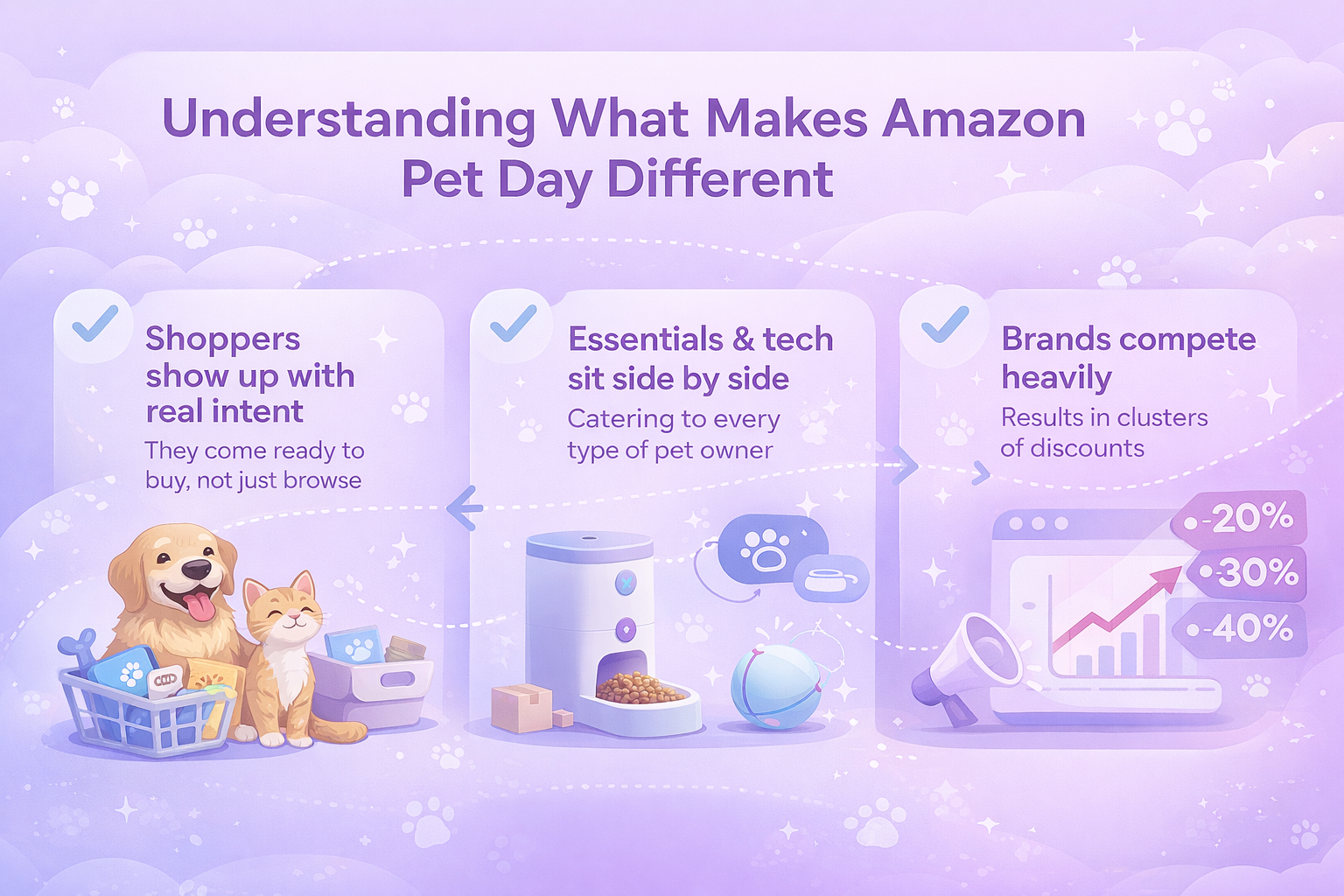
Understanding What Makes Amazon Pet Day Different
Pet Day works because it hits an intersection most people rarely think about: practicality and affection. Pet owners buy food because they have to, but they also pick up new feeders, fountains, or enrichment toys because it feels nice to treat their pets. The combination of need and want keeps the event interesting.
There are a few patterns that surface almost every year:
- Shoppers show up with real intent. They’re not casually scrolling.
- Tech and essentials sit side by side, which makes the sale feel relevant to every type of pet owner.
- Brands compete heavily, so discounts appear in clusters rather than in isolation.
These patterns give a decent sense of what 2026 will bring, especially since Amazon rarely changes what’s already working.

How We at WisePPC Help Sellers Win Amazon Pet Day
For sellers, Amazon Pet Day isn’t just a surge in traffic. It’s a chance to capture visibility that can shape rankings for weeks. At WisePPC, we help you use that momentum instead of watching it pass by. With real-time analytics, clear performance insights, and quick bulk actions, you can adjust bids, pause wasted spend, and highlight the campaigns that actually convert while shoppers are most active.
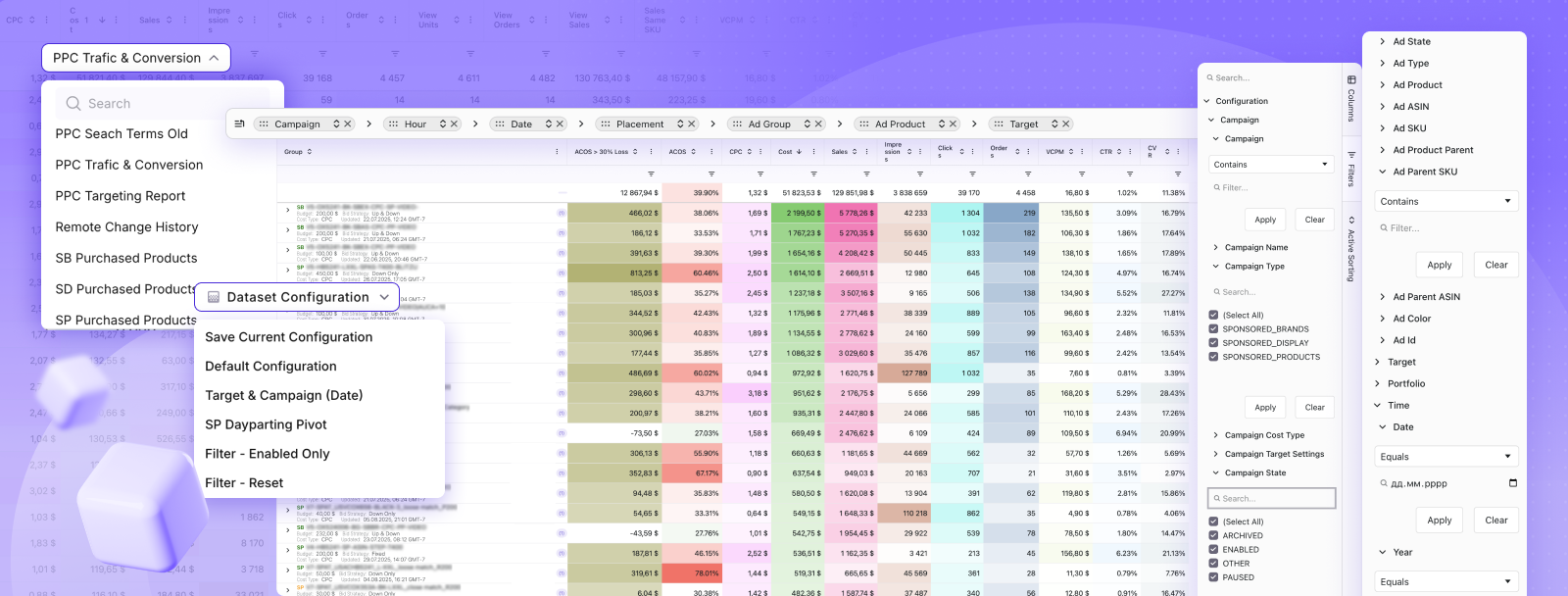
Because we store years of historical data, we can show you how past Pet Days behaved, which categories spike first, and where your ad spend delivers the strongest return. And with automated optimization guiding you toward high-impact changes, you don’t have to guess your way through the event.
Pet Day moves fast, but with WisePPC you move faster. Our goal is simple: give you the clarity and control to turn a busy 48 hours into long-term growth.

The Big Categories to Watch in 2026
Not all categories behave the same. Some almost always get strong deals, while others stay modest but steady. Based on past years, the areas most worth your attention are:
- Smart litter boxes
- Smart feeders and water fountains
- Pet cameras
- DNA testing kits
- Everyday staples like treats and food
- Grooming and hygiene items
- Toys and enrichment gear
Each category below includes what typically goes on sale, why people gravitate toward it, and what the likely discounts look like this year.
1. Smart Litter Boxes: A Reliable Best-Seller Every Year
Automatic litter boxes keep stealing the spotlight during Pet Day. It’s not surprising. They solve a daily problem that most cat owners are tired of dealing with, and they’re expensive enough that a discount feels like a treat for the human, not just the cat.
Why This Category Always Performs
- Convenience. A cleaning cycle that runs on its own is hard to resist.
- Visibility into your cat’s health. Sensors and usage logs help spot changes in behavior.
- Good return on investment for multi-cat homes.
2026 Deal Expectations
You can expect a mix of price cuts across different tiers:
- Premium models with cameras or app dashboards
- Mid tier boxes with odor control and smart sensors
- Entry level automatic models that keep things simple
The range will likely fall somewhere between $50 and $250 off, depending on how aggressively brands decide to compete.
If you’re new to these devices, Pet Day is usually the moment people finally make the jump. The discount softens the learning curve, and the convenience often pays for itself quicker than expected.
2. Smart Feeders and Water Fountains: Everyday Tools With Strong Discounts
This category consistently sees deep discounts, partly because the products solve real issues and partly because competition is fierce.
What Usually Goes on Sale
- Refrigerated wet food feeders
- App connected dry food feeders
- Bluetooth or RFID water fountains
- Feeders with built in cameras
- Bowls with consumption tracking
Why These Are Crowd Favorites
People want predictable routines. A feeder that covers breakfast when you’re running late or a fountain that keeps track of hydration is more appealing than it might sound at first. Once you try these tools, you don’t go back easily.
Trends for 2026
Because so many brands compete in this space, deals tend to be aggressive. Expect:
- 20 to 40 percent discounts
- Extra coupons on select models
- Lightning deals on color variants
- Upgrades to feeding schedules or app features
This is one of the easiest categories for saving money without taking much risk.
3. Pet Cameras: Mostly for Peace of Mind, Sometimes for Entertainment
People love seeing what their pets do when left alone. Pet cameras have been popular for a while, but Pet Day usually pushes them into impulse buy territory.
What Makes These Deals Popular
- Two way audio helps owners feel connected when away from home.
- Treat dispensers add a fun element.
- Most models double as simple home cameras.
- Prices drop enough to feel like a low risk purchase.
What to Expect in 2026
Brands often use Pet Day to make room for newer releases. This means:
- Steep discounts on last year’s models
- Lower but still meaningful cuts on newer versions
- App updates that improve tracking and notifications
If you work long hours or travel occasionally, this category is worth watching.
4. DNA Testing Kits: A Growing Curiosity With Real Health Benefits
DNA kits are not essential, but they fall into the “interesting enough to try once the price is right” bucket.
Why Shoppers Like Them
- Insight into breed history
- Early detection of potential genetic risks
- Fun comparison charts and ongoing updates
- Great for multi pet homes
Expected Discounts
Deals usually fall between $40 and $70 off, and some brands may bundle cat and dog kits together. These often sell out earlier than expected, simply because the base price is high and the discount feels generous.
5. Food, Treats, and Grooming Staples: Reliable Value Every Year
Pet owners buy these items regularly, so Pet Day becomes a convenient stock up moment. The savings aren’t always dramatic, but they add up.
Common Deals
- Large bags of food
- Bulk packs of treats
- Ear and eye wipes
- Dental chews
- Grooming tools
- Training pads
- Washable pet beds
The appeal here is simplicity. You’re buying things you need anyway, so grabbing them at a discount feels like smart budgeting rather than shopping for the sake of it.
6. Toys and Enrichment Gear: Lighthearted Add-ons With 6. Surprising Value
This category is where many people end up adding one or two extra items to the cart. Toys wear out, and enrichment puzzles get more creative every year
What Sells Fast
- Tall scratching towers
- Puzzle toys that slow down fast eaters
- Motion activated toys for active cats
- Sturdy chew toys for dogs
People love these deals because the stakes are low and the payoff is immediate. A new toy that keeps your dog busy for twenty minutes or your cat entertained for an hour can feel priceless.

How Past Pet Days Shape What to Expect in 2026
Small shifts have been happening each year, and they help predict what brands will highlight next.
1. The Growth of Mid Range Tech
Not everyone wants the priciest model, but they don’t want the bare minimum either. Mid tier tech strikes a balance between useful features and reasonable prices, and Pet Day is the perfect moment for these models to shine.
2. More Health Tracking Built Into Everyday Items
Water fountain logs, feeding history graphs, and litter box usage charts are becoming normal features. Consumers are warming up to the idea of small data helping with long term health.
3. Stronger Messaging Around Adoption and Responsible Ownership
Amazon has been pairing Pet Day with awareness campaigns. Expect more themed banners, support for shelters, and subtle reminders that Pet Day isn’t just about shopping.
4. The Influence of Editorial Lists
Shoppers trust curated lists from reviewers and journalists. Brands know this and often tune their pricing to match how these lists highlight products.
How to Shop Smarter During Amazon Pet Day 2026
Even though the deals can be overwhelming, a few simple habits help you avoid being pulled in by flashy numbers.
Practical Tips
- Check the price history: Some discount percentages are inflated.
- Look for coupons: They often hide the best offers.
- Buy essentials first: Food and litter savings add up more than people expect.
- Read consistent reviews: One bad review doesn’t mean much, but patterns do.
- Think ahead: Replacement filters, extra pads, and backup toys are smart buys.
Pet Day gets chaotic once the deals start rotating. Knowing what you actually need prevents that late night spiral where a DNA kit, a camera, and ten bags of treats somehow end up in your cart.

What Sellers Should Know (And Why It Helps Shoppers Too)
Even though this article focuses on the buying side, it’s useful to understand what’s happening on the seller’s end. It explains why some deals feel generous while others are more conservative, and why certain products suddenly appear everywhere during the event.
1. Sellers Use Pet Day as a Benchmark
Pet Day functions almost like a stress test for listings. High traffic exposes weak product pages quickly, especially if the images aren’t clear enough or the description feels vague. Sellers watch how people interact with their listings hour by hour, and those insights shape future updates. If something converts well under pressure, it’s usually a sign that the product page is in good shape. If not, you’ll often see a revision shortly after the event.
2. Algorithm Benefits
A strong performance during Pet Day doesn’t end when the sale ends. Amazon’s ranking system tends to reward listings that attract a surge of clicks, add to carts, and conversions within a short window. That means a product that does well during Pet Day often floats higher in organic results for weeks, sometimes even longer. This is partly why brands try to be aggressive with pricing during the 48 hour window.
3. Bundles Are Strategic
When you see a listing with an oddly perfect mix of accessories, that’s intentional. Sellers use bundles to test which combinations feel useful to buyers and which ones get ignored. It’s also a way for brands to show the product in a complete context. A litter box bundled with liners and odor filters looks more appealing than buying everything separately. You’re not imagining it if the bundle feels well thought out. It probably is.
4. Rising Competition
The pet category keeps expanding. New brands enter the space every year with feeders, fountains, grooming tools, subscription packs, and smart devices. More competition usually pushes prices down, especially during big sales. Everyone wants to be featured in curated lists or Amazon’s top results, so shoppers end up benefiting from the competition without having to think about it.
These dynamics shape not just the deals you see but also how long those deals remain relevant. When brands compete hard, the shopper usually wins.
What to Expect From Amazon Pet Day 2026
Looking at the patterns from previous years, Pet Day 2026 will likely feel familiar but a little more polished. The mix of tech upgrades, staple items, and curiosity driven buys is still the backbone of the event, but the refinement of product pages and the broader push toward health focused features will probably influence the deals you see.
In practical terms, shoppers can expect:
- More smart tech than ever: New feeder models, smarter litter boxes, and cameras with stronger tracking features tend to appear each year. Pet tech is evolving quickly, so discounts here are almost guaranteed.
- Strong food and treat discounts: Bulk buys and subscription friendly items often get reliable markdowns. These aren’t dramatic discounts, but they’re steady and easy wins.
- Health tracking built into more devices: Expect feeders, fountains, and litter boxes to highlight more detailed usage logs and analysis. Brands are leaning into “daily health insights” as a selling point.
- Better bundles for multi pet households: With more households owning multiple pets, brands are adjusting their offers. Bundles that once felt optional now look more like the default option.
- A bigger push toward rescue and adoption support: Amazon has been building this theme gradually. More banners, more mentions of shelters, and more callouts that frame Pet Day as a chance to support responsible pet ownership.
- Cleaner product pages due to editorial influence: As more people rely on curated deal lists, brands polish their pages to increase their chances of being featured. Better images, tighter descriptions, and clearer benefits help buyers make decisions faster.
Altogether, 2026 looks set to be a practical and genuinely helpful sale. It’s less about clearing out forgotten inventory and more about presenting deals that actually fit the way people care for their pets today.
Final Thoughts
Amazon Pet Day keeps evolving, but the core appeal stays the same. It’s a chance to refresh essentials, explore upgrades you’ve been curious about, and save money on things that actually improve everyday life with pets. The mix of practicality and small bits of joy makes the event feel less like a shopping frenzy and more like a well timed opportunity.
If 2026 follows the usual rhythm, expect solid deals, a few surprises, and plenty of reasons to check in at least once during the 48 hour window. Whether you’re restocking treats or finally picking up that smart feeder you’ve been eyeing, the best approach is simple: compare thoughtfully, stay realistic, and choose the deals that make caring for your pets a little easier.
FAQ
When is Amazon Pet Day 2026?
Amazon hasn’t officially shared the 2026 dates yet, but based on previous years, it will likely fall in early to mid May. Early deals typically appear a week or two beforehand, so it’s worth checking Amazon toward the end of April.
Are Amazon Pet Day deals available to everyone or only Prime members?
Most Pet Day deals are open to all Amazon shoppers. Prime members sometimes get extra perks like faster shipping or early access to select items, but the majority of discounts are available without a subscription.
What categories usually get the biggest discounts?
Automatic litter boxes, smart feeders, pet cameras, DNA testing kits, and water fountains tend to receive the steepest price drops. Food, treats, grooming supplies, and training pads also get reliable discounts, but they’re usually smaller percentage wise.
Do the tech products on Pet Day actually offer good value?
In most cases, yes. The event is known for featuring real discounts on mid and high tier tech. Brands often use Pet Day to compete for visibility, which leads to better pricing on smart feeders, fountains, and litter boxes than you’ll see during regular sale windows.
How can I tell if a Pet Day deal is genuinely good?
Check the product’s price history if you can and look for listings that include an additional clip coupon. A fair Pet Day deal usually offers a noticeable drop compared to the past 30 to 60 days, not just a temporary price adjustment.
Join the WisePPC Beta and Get Exclusive Access Benefits
WisePPC is now in beta — and we’re inviting a limited number of early users to join. As a beta tester, you'll get free access, lifetime perks, and a chance to help shape the product — from an Amazon Ads Verified Partner you can trust.
 No credit card required
Free in beta and free extra month free after release
25% off for life — limited beta offer
Access metrics Amazon Ads won’t show you
Be part of shaping the product with your feedback
No credit card required
Free in beta and free extra month free after release
25% off for life — limited beta offer
Access metrics Amazon Ads won’t show you
Be part of shaping the product with your feedback