EN
EN  ES
ES  FR
FR  DE
DE  IT
IT  KO
KO  JA
JA  ZH
ZH  AR
AR  PT
PT  TR
TR  PL
PL Amazon Seller Forums: Where Sellers Actually Talk About What Works

Selling on Amazon comes with questions. Some are simple. Others can affect your listings, ads, or even your account health. When you need clarity, it helps to hear from people who’ve already been through it.
Amazon Seller Forums bring together experienced sellers and Amazon community managers in one place. It’s where practical answers, real examples, and current updates come together so you can make smarter decisions and move forward with confidence.
What Are Amazon Seller Forums?
Amazon Seller Forums are an official community space inside the Amazon ecosystem where sellers and Amazon community managers interact.
It’s not just sellers talking to sellers. Amazon moderators and community managers actively monitor conversations, provide clarifications, and sometimes step in with policy guidance. That structure keeps discussions productive and generally accurate.
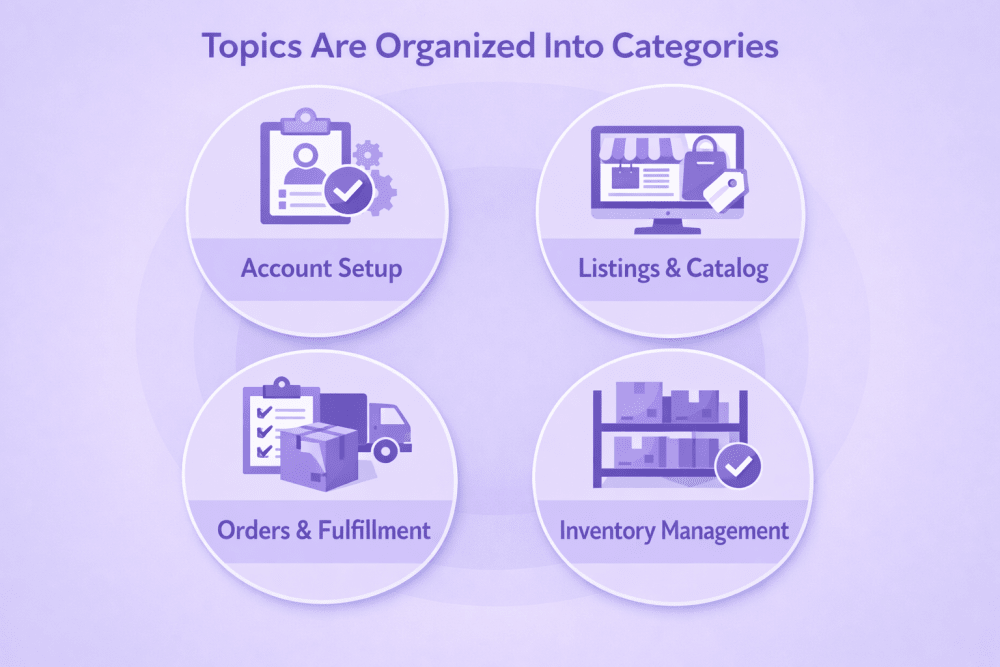
Topics Are Organized Into Categories
- Account Setup
- Listings and Catalog
- Orders and Fulfillment
- Inventory Management
- Product Safety and Compliance
- Branding and Growth
- Buyer Experience
- Account Health
- News and Announcements
- Community Connections
You’ll find everything from quick “why was my listing suppressed?” questions to deep strategy threads about scaling Sponsored Products or managing seasonality.
For many new sellers, it becomes the first place they go when something feels unclear.
Forums vs. Help Content vs. Seller Support
Amazon gives you several ways to get help. The mistake many sellers make is using the wrong one for the problem they’re facing. When you understand what each resource is designed for, you stop bouncing between tabs and start finding answers faster.
Here’s how they differ in practice.
Amazon Seller Forums
The forums are where theory meets reality. Help pages might explain a policy, but sellers in the forums often explain how that policy actually affects day-to-day operations.
You’ll see threads where someone breaks down how they recovered from a listing suppression, adjusted bids after ranking drops, or dealt with a sudden spike in returns. That perspective is hard to get from official documentation alone.
Think of it as shared field experience. Not always perfect, but often practical.
Forums are not ideal for urgent account emergencies. Responses depend on community activity. But for learning, context, and strategy, they’re often the most useful place to start.
Best For
- Learning from other sellers’ real experiences
- Strategy discussions around ads, listings, and scaling
- Clarifying policies through community context
- Non-urgent operational questions
- Hearing how others handled similar situations
- Understanding how new updates are playing out in real time
Seller Central Help Content
Help content is the official source of truth. When you need to know exactly what Amazon’s policy says, how to submit documentation, or how to create a variation listing properly, this is where you go.
It’s structured, consistent, and written from Amazon’s perspective. If you’re learning the basics or confirming compliance details, Help content is usually the fastest way to get accurate instructions.
What it doesn’t provide is discussion. You won’t see debate, interpretation, or shared workarounds. It tells you what the system expects. It does not tell you how other sellers are adapting.
When you need the “official version,” this is the place.
Best For
- Step-by-step instructions
- Official documentation
- Definitions and processes
- Structured training materials
- Seller University videos
- Clear explanations of rules and requirements
Selling Partner Support
If something directly impacts your ability to sell or receive funds, this is not a forum situation. It’s a Support ticket situation.
Selling Partner Support is Amazon’s formal help desk. They can access your account details, review case history, and escalate issues when needed. Forums cannot do that.
It’s also the right choice when you need documented communication. For example, submitting an appeal, resolving a compliance block, or addressing a performance notification.
If it’s urgent or account-specific, go straight to Support.
Best For
- Account suspensions or deactivations
- Payment or disbursement issues
- Technical errors affecting your account
- FBA shipment discrepancies
- Time-sensitive problems tied specifically to your account
How to Choose the Right Path
A simple way to decide:
- If you’re learning, exploring, or comparing experiences, use the forums.
- If you’re looking for official instructions, use Help content.
- If your account is at risk or money is involved, contact Support.
The key thing to remember is that forums are not a replacement for Support. They are a complement. One gives you community perspective. The other gives you official resolution.
Used together, they can save you a lot of trial and error.
Why Forums Often Lead to Faster Clarity
Official documentation tells you what should happen. Sellers in the forums tell you what actually happened.
That gap is where clarity usually lives.
A Help page might outline the return policy, but a seller in the forums might explain how they handled repeated return abuse in a way that protected their metrics. Someone else might describe how they adjusted ad spend after a sudden ranking drop and what signals they watched before scaling back up. Another thread might break down how a new policy update affected listings during the first few weeks, including small details that weren’t obvious at first glance.
That kind of real-world context shortens the learning curve. Instead of experimenting blindly, you’re seeing what others tested and what the outcome was.
And when several experienced sellers point toward a similar solution, it adds a layer of confidence. You’re not guessing in isolation. You’re learning from patterns.
Hidden Value: Events and “Ask Amazon” Sessions
Throughout the year, the forums host:
- “Ask Amazon” live Q&A sessions
- Topic-focused engagement events
- Direct update threads on policy changes
- Announcements tied to new features
These threads often contain clarifications you won’t find summarized anywhere else.
If you stay active, you’ll catch updates early, sometimes before they ripple across blogs and YouTube channels.
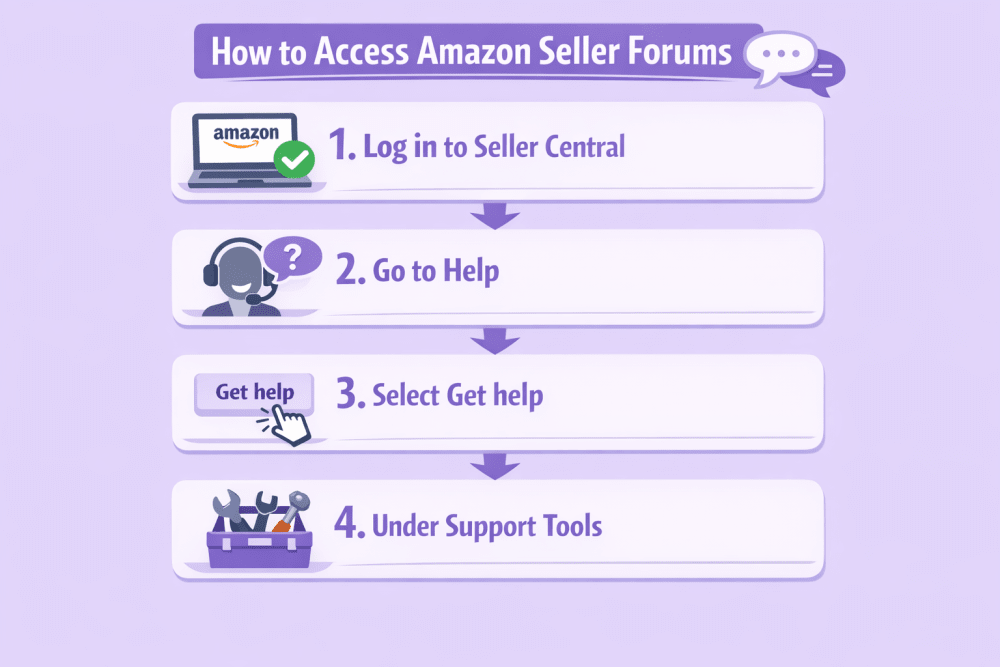
How to Access Amazon Seller Forums
Most public threads can be viewed without posting.
To participate:
- Log in to Seller Central.
- Go to Help in the upper-right corner.
- Select Get help and resources.
- Under Support tools, choose Forums.
You can also access discussions from the Amazon Seller mobile app on iOS and Android, which makes it easy to check threads while away from your desk.
To post or comment, you’ll need an active selling account.
How to Get Real Value (Not Just Scroll)
Like any community, what you get out depends on how you use it. It’s easy to skim threads, nod at a few comments, and move on. But if you approach the forums with a bit of intention, they become much more useful.
1. Search Before Posting
There are millions of archived discussions. In many cases, your exact issue has already been asked and answered, sometimes multiple times.
Searching first does two things. It saves you time, and it gives you immediate access to a range of perspectives instead of waiting for new replies. You might even find follow-up posts that explain what worked long term, not just the first fix.
Often, the fastest answer is already sitting in a thread from six months ago.
2. Be Specific
Vague posts get vague answers.
Instead of writing “My listing is down.”
Try something like: “ASIN suppressed due to compliance issue, error code X, category Y. Documentation submitted yesterday. No response yet.”
Details matter. Include what you’ve already tried, what the notification said, and what outcome you’re hoping for. The clearer your post, the easier it is for experienced sellers to give useful input instead of guessing. Specific questions attract specific answers.
3. Stay Professional
Frustration happens. Suspensions happen. Unexpected fees happen. But emotional posts rarely lead to productive discussions.
Avoid sharing personal information, financial details, or anything tied directly to sensitive account data. Keep the tone clear and respectful. Sellers are more likely to help when the conversation stays focused on the issue, not the emotion behind it.
Professional communication tends to get professional responses.
4. Contribute When You Can
You don’t need to be a seven-figure seller to add value. If you solved a listing issue, tested a pricing adjustment, or navigated a tricky compliance situation, someone else may benefit from hearing how you approached it.
Sharing your experience strengthens the community and builds credibility over time. It also helps you think more clearly about your own processes. Sometimes explaining what worked for you reveals patterns you hadn’t noticed before.
The forums work best when sellers both ask and answer.
5. Watch Patterns
One isolated complaint might not mean much. But if multiple sellers start reporting the same issue, such as a sudden drop in impressions, unexpected fee adjustments, or unusual reporting delays, that’s a signal.
Forums can act like an early warning system. When you see recurring themes, it may indicate a broader system change or policy update. That awareness gives you time to adjust before it impacts your performance too deeply.
Pay attention not just to answers, but to trends.
Used thoughtfully, the forums become more than a place to scroll. They become a tool for staying sharp in a marketplace that doesn’t stay still for long.
When Forums Help Most
Forums are especially useful when:
- You’re navigating your first few months selling. The early stage is full of small uncertainties. Listing errors, unexpected fees, confusing notifications. Reading how others handled similar issues can shorten the learning curve and help you avoid beginner mistakes.
- Policies feel confusing or unclear. Sometimes the Help page explains the rule, but not how it plays out in real life. In the forums, sellers often share how a policy update affected their listings, ads, or account health in practice.
- You want perspective before making a strategic decision. Maybe you’re considering switching fulfillment methods, raising prices, or restructuring campaigns. Seeing how other sellers approached similar decisions gives you context you can’t get from a dashboard alone.
- You’re testing new ad structures. Sponsored Products changes. Bid strategies shift. Placement behavior evolves. Forums often contain real examples of what’s working right now, not just what worked last year.
- You’re managing account health signals. Performance notifications can feel stressful. In the forums, you’ll find discussions from sellers who’ve already gone through appeals or performance reviews and can explain what mattered most.
Even experienced sellers say they still learn something new regularly. That’s the nature of Amazon. It shifts, updates, and evolves. Staying connected to other operators helps you stay steady when things move.

From Insights to Action: Why We Built WisePPC
Seller forums are great for perspective. You see what others tested, what worked, what failed. But insight alone doesn’t optimize campaigns. Execution does. That’s where we come in.
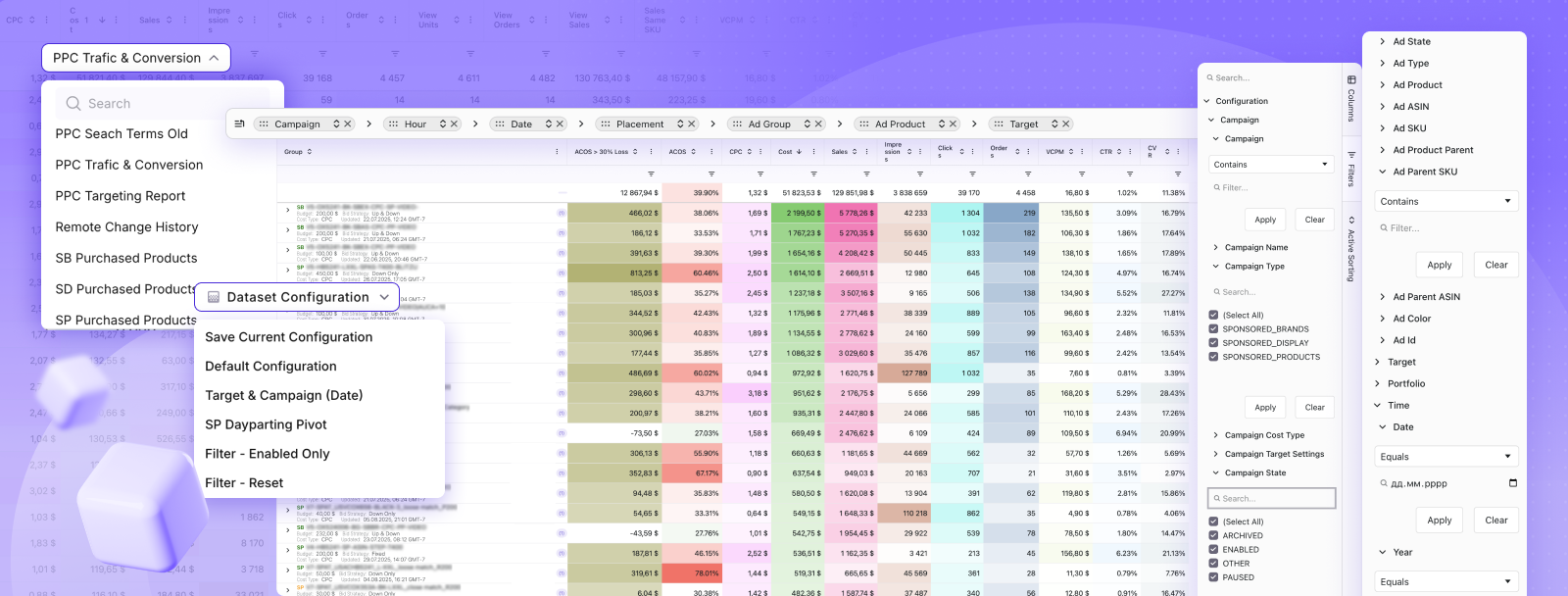
We built WisePPC to turn scattered data into clear decisions. As an Amazon Ads Verified Partner, the platform connects through official integrations and give you visibility far beyond standard reports. You can track 30+ key metrics, compare up to six KPIs on one chart, and access years of historical data, not just 60–90 days.
Bulk edits, advanced filtering, placement-level performance, inline bid changes, long-term trend tracking. Everything is designed to help you spot wasted spend fast and act on it without friction.
Forums help you learn. WisePPC helps you move.
Final Thoughts
Selling on Amazon isn’t static. Policies shift. Competition evolves. New features roll out.
Having access to a space where sellers share practical experience, backed by Amazon oversight, can reduce uncertainty.
You won’t find magic shortcuts in the forums.
But you will find patterns, warnings, smart workarounds, and clarity that only comes from people who are in the trenches.
And sometimes, that’s exactly what you need.
Frequently Asked Questions
What are Amazon Seller Forums?
Amazon Seller Forums are an official community space where sellers discuss issues related to selling on Amazon. Discussions are organized by topic and monitored by Amazon community managers to keep conversations accurate and productive. Sellers can ask questions, share experiences, and learn from others operating in different marketplaces.
Do I need a selling account to use the forums?
Most public discussions can be read without posting. However, to start a new thread, comment, or participate fully, you need an active Seller Central account.
Are answers in the forums official Amazon guidance?
Not always. Many responses come from other sellers sharing personal experience. However, Amazon community managers do participate in discussions and may provide clarifications. For official policies and account-specific decisions, Seller Central Help content or Selling Partner Support is the final authority.
When should I contact Selling Partner Support instead of posting in the forums?
If your issue involves account suspension, payment delays, disbursement problems, technical errors tied to your account, or anything urgent, contact Selling Partner Support directly. Forums are better suited for discussion and perspective, not time-sensitive account actions.
Can I trust advice shared by other sellers?
Seller insights can be extremely helpful, especially when multiple experienced sellers point to similar solutions. That said, every business is different. It’s wise to compare advice with official documentation before making major decisions.
Join the WisePPC Beta and Get Exclusive Access Benefits
WisePPC is now in beta — and we’re inviting a limited number of early users to join. As a beta tester, you'll get free access, lifetime perks, and a chance to help shape the product — from an Amazon Ads Verified Partner you can trust.
 No credit card required
Free in beta and free extra month free after release
25% off for life — limited beta offer
Access metrics Amazon Ads won’t show you
Be part of shaping the product with your feedback
No credit card required
Free in beta and free extra month free after release
25% off for life — limited beta offer
Access metrics Amazon Ads won’t show you
Be part of shaping the product with your feedback