EN
EN  ES
ES  FR
FR  DE
DE  IT
IT  KO
KO  JA
JA  ZH
ZH  AR
AR  PT
PT  TR
TR  PL
PL  ID
ID  VI
VI What Makes a Good Brand About Us Page (and How to Write One That Works)

If someone’s reading your About page, they’re curious. They’ve already made it past the product shots and price tags – they want to know who you are and why you’re doing this. It’s not a pitch. It’s a quiet moment where trust is either built or lost. A good About page doesn’t try too hard. It just makes sense. It’s clear, grounded, and lets people see what matters to your brand – without making them dig for it.
Why Your About Us Page Deserves More Attention
It’s easy to treat the About Us page like an afterthought – just another tab to check off. But here’s the thing: customers actually read it. Not all of them, sure. But the ones who do? They’re often the ones on the fence – deciding whether they trust you, whether your brand feels real. And when they land there, they’re not looking for marketing fluff or over-polished language. They’re scanning for signs of life. A signal that someone’s behind the curtain who knows what they’re doing – and cares enough to show up.
From a business perspective, the About page carries more weight than it gets credit for. It’s often the first place where tone, values, and credibility click into place. It shapes perception, builds trust, and can quietly push someone from browsing to buying – especially on platforms like Amazon, where attention spans are short and storefronts are crowded. It doesn’t need to be long. It just needs to be honest. Tell them who you are, why you started, and what keeps you going. That kind of clarity? It’s what makes people stay.
WisePPC as the Operational Layer of Your Storefront
Writing a strong About page is one thing. Knowing if it’s doing anything is another. Most brands never check. They add a few paragraphs, maybe a photo, and call it done – no feedback loop, no idea if it’s pulling its weight.
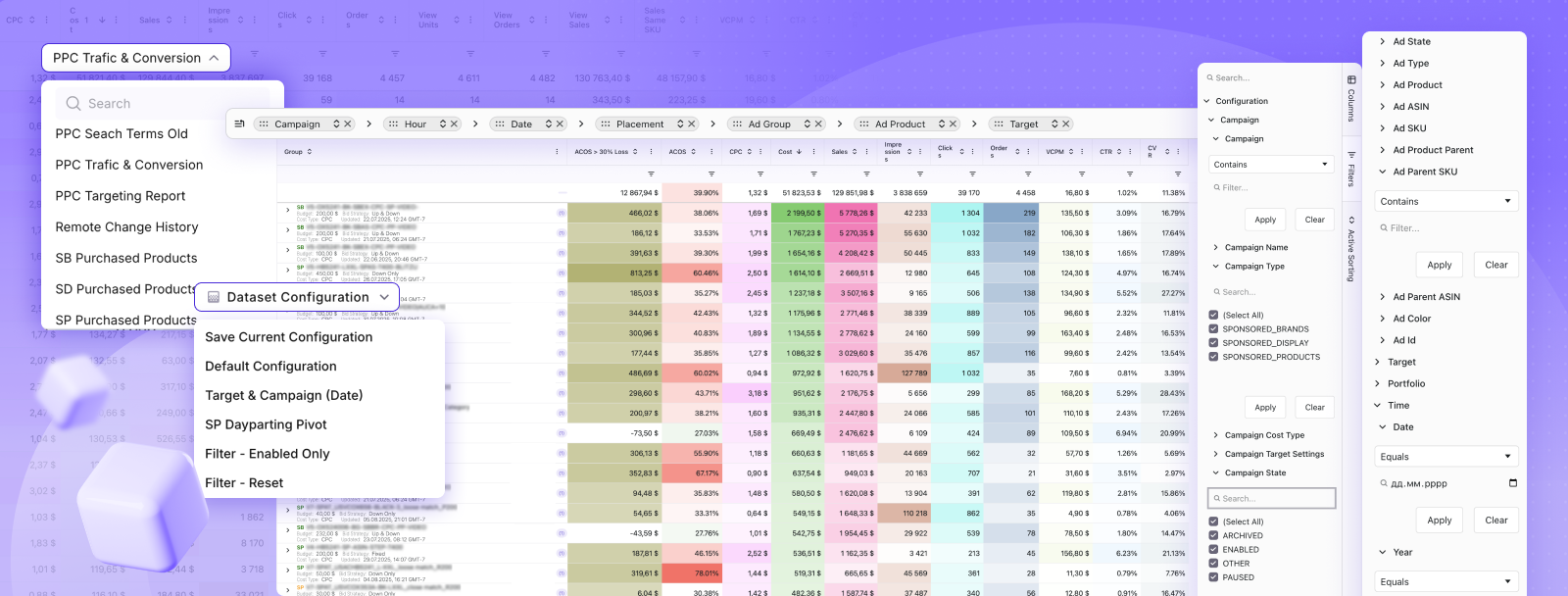
At WisePPC, we don’t track storytelling, but we do track what happens after. If you’re driving traffic to your Amazon storefront or product pages, we show you how that attention behaves – where it goes, what converts, and what stalls out. It’s not about judging your copy. It’s about giving you the clarity to connect the dots between message and momentum.
We’re built to help marketplace brands grow smarter, not louder. If your About page is part of a larger storefront or funnel, we help you see what’s working – across ad placements, organic flow, and even cross-platform activity. You’ll find us where your customers already are: on Amazon, in your analytics, and occasionally sharing small updates over on Facebook, Instagram, and LinkedIn.
What to Include: Core Elements That Make a Difference
Your About page isn’t a dumping ground for generic blurbs – it’s a tool. Treat it like one. A well-built page gives people the right context, clears up confusion, and quietly nudges them toward trust. No big gestures. Just a clean, intentional layout with the right pieces in the right order. Here’s what actually matters.
1. A Quick, Clear Origin Story
Not your life story – just the part that makes someone go, “Okay, I get why this exists.”
Share when and why the brand started. Focus on the moment something clicked: a gap you noticed, a problem you kept seeing, or a reason you knew you had to build this. If it was born out of frustration or curiosity, say that. The goal isn’t drama. It’s honesty.
2. What You Actually Do (And Who It’s For)
It sounds obvious, but you’d be surprised how many brands bury this. Spell out what you offer and who benefits from it. Not as a pitch – just as facts. Imagine someone new clicks the page and thinks, “Cool backstory, but what am I even buying here?” Answer that, clearly and quickly. If you have a niche, name it. If your products solve a specific pain point, say how. This is the section where people either connect – or click away.
3. Mission, But Make It Make Sense
Avoid the sentence salad of “We believe in delivering excellence with passion and integrity.” Nobody remembers that. If you care about something – quality, access, sustainability, real data, whatever – write it plainly. One or two lines is enough. And skip the word “passionate” unless you’re talking about coffee.
4. The People Behind the Brand
Even if it’s just you in a spare room with a laptop, show your face. Or name. Or something that proves this isn’t a ghost operation. Larger team? Great. Show a few team members, with roles or a short line about what they do. Doesn’t have to be formal – just real. Humans trust humans. Especially in a feed full of logos and stock images.
5. Credibility Signals
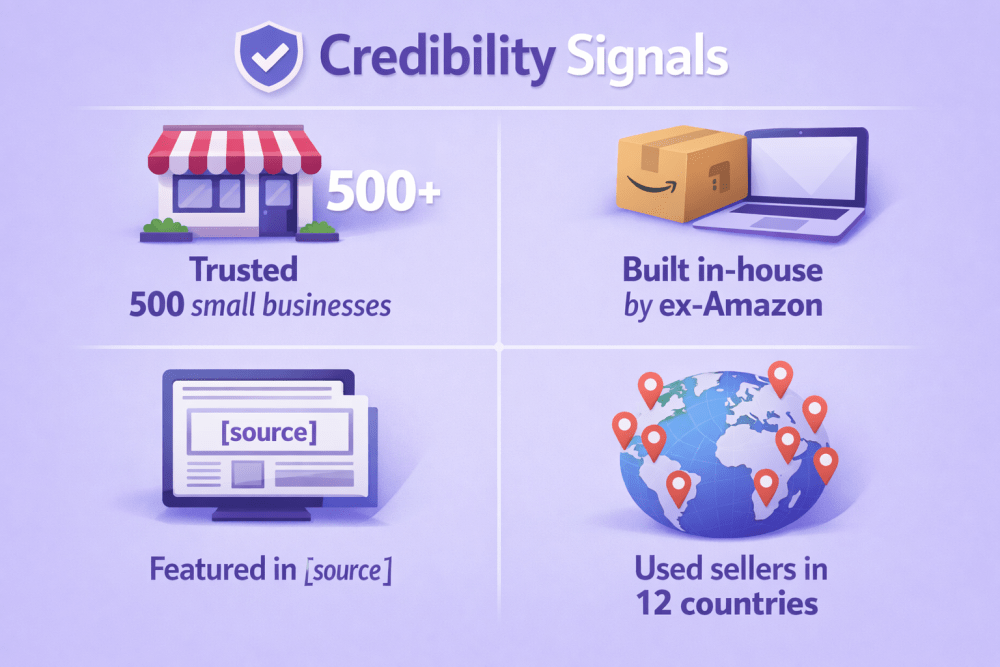
If you’ve got press mentions, testimonials, milestones, or data points – this is where they live. But don’t stack them like trophies. Pick the ones that give a clearer picture of progress or value. Examples that work:
- “Trusted by over 500 small businesses”
- “Built in-house by ex-Amazon ad specialists”
- “Featured in [source]”
- “Used by sellers in 12 countries”
Even one or two solid signals beat ten vague ones.
6. Visuals That Add Clarity, Not Clutter
Photos, timelines, product shots, or short video clips can help break up text and give your message more depth. But only if they support the copy. Avoid filler visuals or lifestyle clichés. If it feels like it could be anyone’s brand, it’s not helping yours.
Keep the layout clean. Keep the copy honest. And remember: people don’t need everything – they just need enough to trust that you’re not wasting their time.
Speak to Customers, Not Just About Yourself
It’s easy to treat the About page like a spotlight. But if the whole thing reads like a monologue, people tune out fast. Customers don’t show up wondering how impressive you are – they’re wondering what this has to do with them. If they don’t see themselves reflected anywhere, they leave.
That doesn’t mean turning your brand story into a sales pitch. It means writing like you’re in conversation with someone who has a need, a question, or a problem they’re trying to solve. You can still talk about your mission, your values, your team – but frame it in a way that connects. Why does it matter? Who benefits? What’s in it for them?
The strongest About pages feel like a mirror, not a resume. If someone reads yours and thinks, “Yep, that’s what I’ve been looking for”, you’re doing it right.
SEO Tips Without Killing the Vibe
You want your About page to be discoverable, but not at the expense of sounding robotic. The goal is to stay findable and human. Here’s how to thread that needle:
- Use natural phrasing in your headers and intro: “About our brand” or “Who we are” works just fine if it actually sounds like you.
- Include relevant terms where they fit: Keywords like “brand story,” “ecommerce About Us,” or “founder-led business” help, but only if they make sense in context.
- Optimize your page title and meta description: They show up in search results, so make sure they’re clear, useful, and match the tone of your page.
- Link to key pages inside your site: Mention a flagship product or service? Drop a link. It helps SEO and keeps users moving naturally.
- Use descriptive alt text for images: Team photos, behind-the-scenes shots, timeline graphics – Google can’t “see” them without alt tags.
- Make sure it’s clean on mobile: Layout, fonts, load time – Google cares, and so does everyone scrolling on a phone.
Don’t overthink the algorithm. Keep the experience honest, and search visibility usually follows.
What Strong About Pages Consistently Get Right
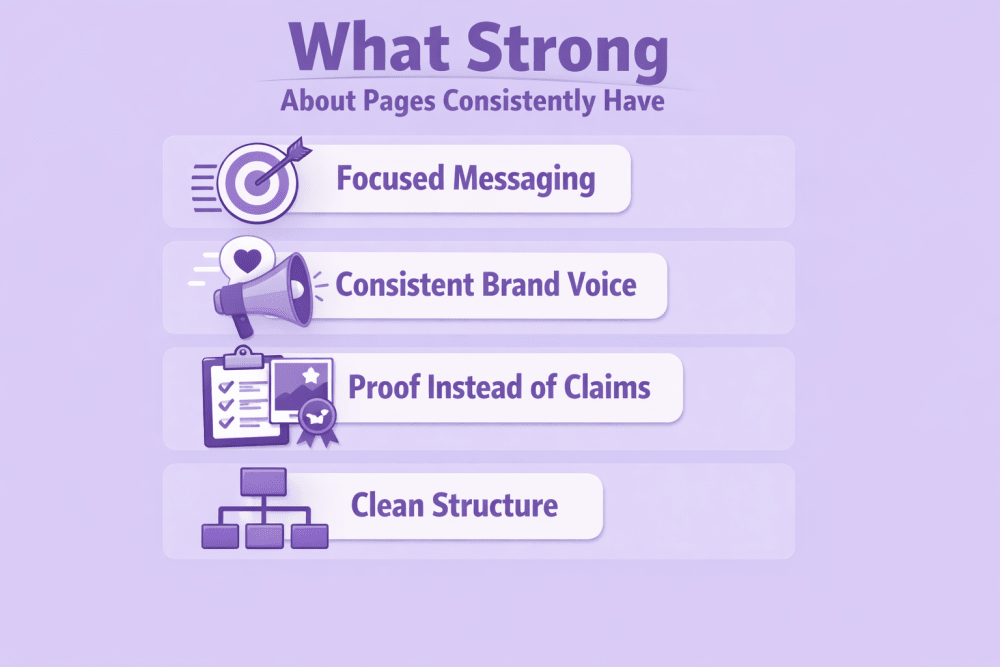
There’s no single template for a great About page. But when you strip away design trends and brand style differences, you start to see patterns. The pages that work are usually structured with intention. They’re clear, consistent, and built around what actually helps a visitor decide whether to trust the brand. Here’s what they consistently get right.
1. Clear and Focused Messaging
Strong About pages don’t wander. They avoid long autobiographies and unnecessary detail. Instead, they answer three practical questions: who the brand is, what it does, and why it exists. Every section supports that clarity. If something doesn’t add context or credibility, it’s removed. Focus builds trust faster than volume.
2. Consistent Brand Voice
The tone on the About page matches the rest of the site. If the brand is direct and data-driven, the page reflects that. If the brand is warm and community-oriented, the language supports it. What doesn’t work is switching into stiff corporate language just because the page feels “official.” Consistency signals stability. Stability builds confidence.
3. Proof Instead of Claims
Saying you value transparency is easy. Showing it is different. High-performing About pages include signals that back up their statements. That might mean real metrics, team photos, years in business, customer feedback, certifications, or specific milestones. They don’t rely on vague promises. They provide evidence. Even a small, concrete detail can carry more weight than a paragraph of polished language.
4. Clean Structure and Readable Layout
Design supports the message, not the other way around. Clear headings, short paragraphs, and logical sections make the page easy to scan. Visitors should be able to understand the brand in under a minute if they need to. Overdesigned pages with too many effects tend to distract. Simplicity performs better.
5. A Logical Next Step
Strong About pages don’t end abruptly. They guide the visitor forward. That might be a link to products, a team page, a case study, or a contact form. The transition feels natural. Not pushy. Just clear. When the structure makes sense, people stay longer. And when they stay longer, trust has room to build.
Conclusion
A strong About page doesn’t need to be long or dramatic but it does need to feel real. It’s your chance to step out from behind the product and say, “Here’s who we are. Here’s why this matters.” When a customer clicks that tab, they’re not looking for polished marketing speak. They’re looking for something human. A reason to believe you’re worth their trust, their time, or their money.
The most effective About pages don’t ramble. They don’t oversell. They say just enough – with clarity, personality, and intent. If yours sounds like a conversation you’d have with someone genuinely curious about your brand, you’re doing it right. And if it helps one more person feel like they’re in the right place, that’s more than worth the effort.
FAQ
1. How long should an About Us page be?
There’s no magic word count, but one to two scrolls is plenty. Get to the point, add proof where it helps, and cut anything that feels like filler.
2. Can I write it in first person?
If your brand is personal or founder-led, first person can work well. “I started this company because…” feels natural. For larger brands, “we” usually makes more sense.
3. What if I don’t have a big story to tell?
That’s fine. Just be clear about what you do and what you care about. It’s better to be honest and direct than to stretch a story that isn’t there.
4. Do I really need to show my team or face?
You don’t have to, but people trust people. Even a single name or photo makes the brand feel more grounded.
5. Should I include SEO keywords on the page?
Yes, but lightly. Use relevant terms in your headings and copy where they naturally fit. Don’t jam them in – it’s obvious when you do.
6. Is it okay to link to products or other pages?
Absolutely. Internal links help with SEO and make it easier for visitors to explore more once they’ve got a sense of who you are.
Join the WisePPC Beta and Get Exclusive Access Benefits
WisePPC is now in beta — and we’re inviting a limited number of early users to join. As a beta tester, you'll get free access, lifetime perks, and a chance to help shape the product — from an Amazon Ads Verified Partner you can trust.
 No credit card required
Free in beta and free extra month free after release
25% off for life — limited beta offer
Access metrics Amazon Ads won’t show you
Be part of shaping the product with your feedback
No credit card required
Free in beta and free extra month free after release
25% off for life — limited beta offer
Access metrics Amazon Ads won’t show you
Be part of shaping the product with your feedback