快速总结: Amazon’s best-selling categories include Home & Kitchen (35% of sellers), Beauty & Personal Care (26%), Clothing, Shoes & Jewelry (20%), and Health & Household products. These categories consistently generate high sales volumes, with sellers averaging over $290,000 in annual revenue. Success depends on understanding Best Sellers Rank (BSR), choosing the right category niche, and optimizing product listings for competitive advantage.
The Amazon marketplace isn’t just big. It’s enormous.
With hundreds of product categories and millions of sellers competing for customer attention, choosing where to focus can make or break an ecommerce business. According to Amazon’s official data, independent sellers in the US averaged more than $290,000 in annual sales in the Amazon store in 2024.
But here’s the thing—that success isn’t distributed evenly across categories.
Some product categories consistently outperform others in terms of profitability, demand, and seller success rates. Understanding which categories dominate Amazon’s Best Sellers lists and why certain niches generate better returns helps sellers make smarter inventory decisions.
This guide breaks down Amazon’s most profitable categories based on actual sales data, seller surveys, and marketplace trends heading into 2026. Whether launching a first product or expanding an existing catalog, these insights reveal where opportunities exist right now.
Amazon organizes products into a hierarchical category system that serves multiple purposes. Categories help customers navigate the massive product catalog, and they determine how Amazon calculates Best Sellers Rank (BSR) for each item.
The marketplace contains over 20 main departments, from Amazon Devices & Accessories to Video Games. Within each main category exist dozens or hundreds of subcategories and sub-subcategories, creating a tree structure that can go several levels deep.
According to Amazon’s official seller guidance, getting specific with product categories improves BSR performance. A product listed in a more specific, relevant subcategory can rank higher and gain more visibility than the same product dumped into a broad, competitive category.
Category choice affects three critical factors:
Some categories require approval before sellers can list products. These “gated” categories exist to maintain quality standards and protect customers from counterfeit or unsafe products.
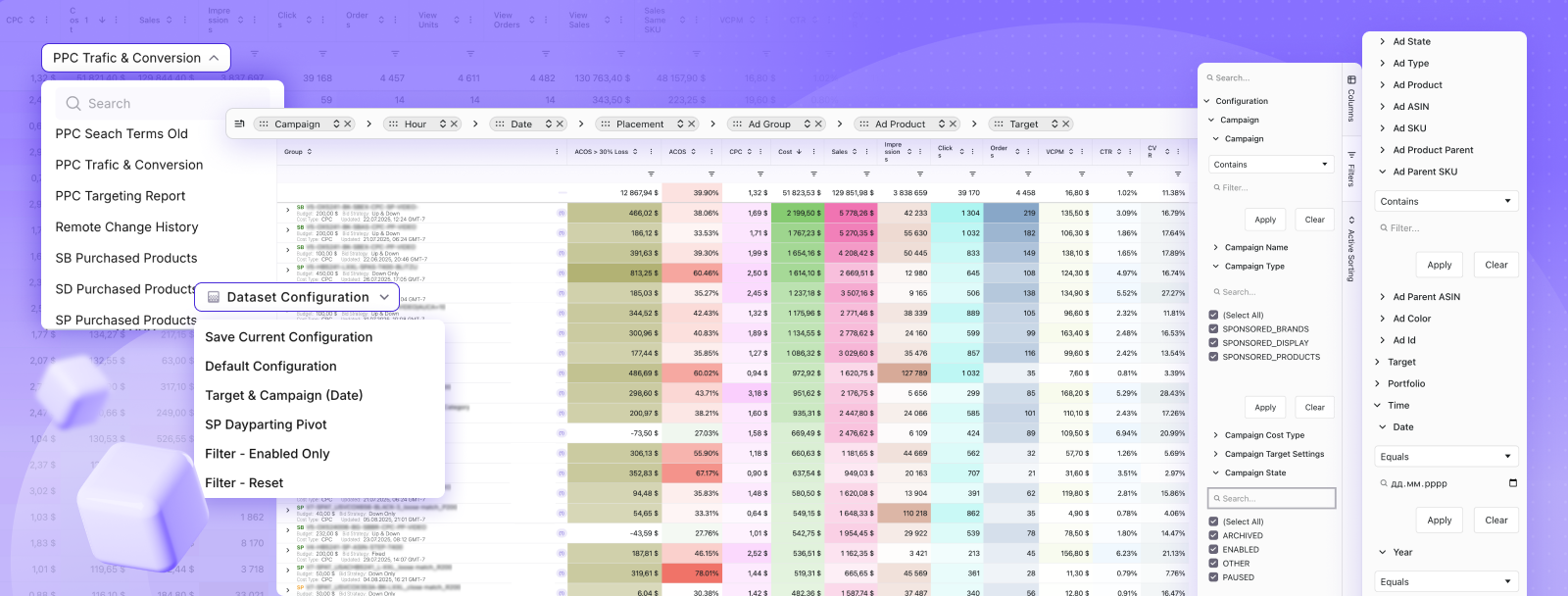
WisePPC connects campaign data with real product performance. Instead of guessing which products or categories work, it shows how ads, keywords, and listings contribute to sales over time. This makes it easier to focus on what consistently brings results.
使用 WisePPC:
👉 探索 WisePPC 以更清晰地查看您的亚马逊广告数据。.
According to a 2024 seller survey that gathered data from over 2,000 Amazon sellers, certain categories dominate seller activity. Understanding what other sellers choose reveals both opportunity and competition.
| Amazon Category | Percentage of Sellers |
|---|---|
| 家庭与厨房 | 35% |
| 美容与个人护理 | 26% |
| 服装、鞋类和珠宝 | 20% |
| 玩具与游戏 | 18% |
| 健康、家居和婴儿护理 | 17% |
| Baby | 16% |
| 电子产品 | 15% |
| Sports & Outdoors | 14% |
Home & Kitchen leads by a significant margin, with more than one-third of sellers maintaining product listings in this category. This popularity reflects both strong consumer demand and relatively accessible entry points for new sellers.
Beauty & Personal Care claims the second spot at 26%, showing consistent growth as consumers increasingly purchase cosmetics, skincare, and personal care items online. The category’s consumable nature creates repeat purchase opportunities that many sellers find attractive.
High seller concentration in these categories isn’t random. Several factors drive sellers toward Home & Kitchen and Beauty & Personal Care:
Product variety enables sellers to find niches without massive capital investment. Kitchen gadgets, organizers, and home decor items can be sourced at relatively low cost while maintaining healthy margins.
Consumable products in Beauty & Personal Care generate recurring revenue. Customers who find skincare or haircare products they like reorder regularly, building predictable sales patterns.
Lower barriers to entry compared to electronics or automotive categories make these categories accessible to new sellers without specialized technical knowledge.
Popularity doesn’t always equal profitability. While Home & Kitchen attracts the most sellers, profit margins vary significantly across categories based on competition, pricing pressures, and operational costs.
According to available data, the most profitable merchants concentrate sales in Beauty & Personal Care and Home & Kitchen categories, with 30% of top earners focused in each area.
This category generates exceptional profitability for several reasons. Products often carry high perceived value relative to production costs, enabling strong margins even with competitive pricing.
The consumable nature creates recurring revenue streams. Customers who find effective skincare serums, hair treatments, or cosmetics reorder monthly or quarterly, building lifetime customer value that far exceeds initial acquisition costs.
Private label opportunities abound in Beauty & Personal Care. Sellers can work with manufacturers to create branded formulations without the massive R&D investments required in categories like electronics or appliances.
According to available market data, health and personal care represents one of the fastest-growing segments of Amazon’s US e-commerce market share, with projected increases showing growth.
Home & Kitchen’s 35% seller concentration reflects genuine opportunity alongside competition. The category’s breadth creates countless niches where sellers can establish authority without battling marketplace giants.
Product diversity ranges from kitchen gadgets under $20 to furniture and appliances exceeding $1,000. This range accommodates sellers at different capital levels and risk tolerances.
Kitchen & Dining subcategories particularly attract sellers because many products solve specific pain points. Customers actively search for solutions to cooking, storage, and organization problems, creating high-intent traffic that converts efficiently.
Seasonal opportunities emerge throughout the year. Holiday entertaining drives sales of serving ware and kitchen tools, while New Year resolutions boost organization and meal prep product demand.
Health & Household products benefit from both consumable advantages and growing consumer focus on wellness. Vitamins, supplements, first aid supplies, and household essentials generate steady demand regardless of economic conditions.
The category includes products customers need rather than want, creating more predictable demand patterns. Cleaning supplies, paper products, and personal care essentials sell consistently throughout the year.
That said, certain Health & Household subcategories face regulatory requirements and gating. Topical treatments, dietary supplements, and medical devices require approvals and compliance documentation.
Fashion categories present both massive opportunity and unique challenges. The market size is enormous—clothing ranks among Amazon’s largest revenue categories globally.
But fashion demands different skills than other categories. Size and fit issues create higher return rates, impacting profitability. Trend sensitivity means inventory can lose value quickly if styles shift.
Successful fashion sellers often focus on specific niches—activewear, plus-size clothing, or specific style aesthetics—rather than attempting broad catalogs. Jewelry subcategories allow for higher margins on smaller, easier-to-ship items.
Each major category presents distinct advantages and obstacles that impact seller success. Understanding these dynamics helps match business capabilities with category requirements.
Electronics attract sellers with high average order values and strong consumer demand. Computer accessories, cell phone cases, and charging cables represent accessible entry points without the complexity of major electronics.
The challenges? Rapid product obsolescence, warranty expectations, and fierce price competition. Technology categories on Amazon experience constant price pressure as multiple sellers compete on identical products.
Private labeling works in accessories and peripherals but requires staying current with device compatibility as manufacturers release new models.
Toy categories show extreme seasonality, with Q4 representing the majority of annual sales for many products. This concentration creates opportunity for sellers comfortable managing inventory surges and marketing during peak periods.
Safety regulations add complexity. Toys require testing and certification to meet Consumer Product Safety Commission (CPSC) standards, increasing the barrier to entry compared to categories without regulatory oversight.
Trend sensitivity affects toy sales significantly. Products tied to popular entertainment properties can generate explosive sales temporarily, then crash when consumer interest shifts.
Sports & Outdoors categories offer niches for every seasonal activity and fitness trend. Yoga accessories, camping gear, fishing equipment, and fitness tools all maintain dedicated customer bases.
The category benefits from passion-driven purchases. Enthusiasts invest in quality gear for activities they love, often prioritizing features and reviews over lowest prices.
Seasonal patterns require planning. Camping gear sells strongest in spring and summer, while fitness equipment spikes in January as New Year resolutions drive demand.
Baby categories attract sellers because parents prioritize quality and safety, creating opportunities for premium-priced products with strong reviews. Consumable items like diapers, wipes, and feeding supplies generate recurring purchases.
Safety concerns make this category heavily regulated. Many baby products require safety certifications and testing before listing on Amazon. The platform gates certain subcategories to maintain quality standards.
Parents research extensively before purchasing, making product reviews and Q&A sections critical for conversion. Building review velocity takes time in baby categories.
| 类别 | 优势 | Challenges |
|---|---|---|
| 电子产品 | High AOV, strong demand | Rapid obsolescence, price pressure |
| 美容与个人护理 | High margins, repeat purchases | Some gating, formulation complexity |
| 家庭与厨房 | Diverse niches, accessible entry | High competition in popular items |
| 玩具与游戏 | Q4 volume, passionate buyers | Extreme seasonality, safety regs |
| 健康与家庭 | Consistent demand, consumables | Regulatory requirements, gating |
| Baby | Quality-focused buyers, repeat orders | Safety certifications, gating |
Amazon’s Best Sellers Rank system determines which products appear on category-specific Best Sellers lists. BSR represents a product’s sales performance relative to other products in the same category.
According to Amazon’s official seller guidance, BSR is calculated based on recent sales and historical sales data. The algorithm updates frequently—sometimes hourly for fast-moving products—reflecting current marketplace dynamics.
Here’s what matters: BSR is category-specific. A product can hold different ranks in its main category and each subcategory where it appears. A kitchen gadget might rank #5,000 in Home & Kitchen but #50 in a specific Kitchen Gadgets subcategory.
BSR appears in the Product Information section of any Amazon product detail page. Look for “Best Sellers Rank” followed by the rank number and category name.
Products often show multiple BSR numbers if listed in several categories. The most specific subcategory rank typically provides the most useful competitive intelligence.
BSR differs fundamentally from search ranking. Search results depend on keyword relevance, listing optimization, customer reviews, and other factors determining which products appear when customers search specific terms.
BSR strictly measures sales velocity. A product can rank poorly in search but maintain excellent BSR through external traffic sources, repeat purchases, or effective advertising.
Both metrics matter, but they serve different purposes. Search ranking drives discovery and new customer acquisition. BSR validates product-market fit and sales momentum.
Category selection requires balancing opportunity, competition, and business capabilities. The “best” category depends on individual business goals, resources, and risk tolerance.
Amazon’s Best Sellers lists showcase top-performing products in each category, updated frequently. According to Amazon’s official guidance, sellers can use these lists to identify trends and evaluate category dynamics.
Movers & Shakers lists reveal products with the biggest BSR gains over the past 24 hours. These lists highlight emerging trends before they become oversaturated.
Research should examine several factors:
Brand Analytics, available to brand-registered sellers, provides search volume data and market basket analysis revealing what customers buy together.
High competition doesn’t automatically disqualify a category. Popular categories attract sellers because genuine demand exists. The key is finding specific niches within competitive categories where differentiation is possible.
Look at the top 20 products in target subcategories. If they’re all from major brands with thousands of reviews, breaking in will require significant investment in advertising and review acquisition.
But if the top 20 includes smaller sellers with modest review counts, opportunity exists for well-optimized products with strong value propositions.
Different categories demand different operational capabilities. Fulfillment by Amazon (FBA) works brilliantly for small, durable goods but becomes expensive for oversized or heavy products.
Fragile items require careful packaging and generate higher damage rates. Consumables need expiration date management. Clothing demands size and color inventory complexity.
Match category choice to existing strengths or willingness to develop new capabilities. Operational excellence matters more than category selection for long-term success.
Regardless of category, certain strategies consistently improve Best Sellers Rank. Amazon’s official seller guidance outlines five primary approaches.
Listing products in the most specific relevant subcategory improves BSR performance. A product that ranks #500 in a broad category might rank #20 in a targeted subcategory, gaining visibility on that subcategory’s Best Sellers list.
Navigate Amazon’s category tree to find the most precise classification. Kitchen gadgets shouldn’t list simply in “Home & Kitchen”—they belong in specific subcategories like “Garlic Presses” or “Pizza Cutters.”
Search visibility drives traffic, and traffic drives sales that improve BSR. Listing optimization includes keyword research, compelling titles, bullet points that communicate value, and detailed descriptions.
High-quality images showing product features and use cases improve conversion rates. More conversions from the same traffic level means better sales velocity and improved BSR.
Pricing strategy directly impacts conversion rates and sales volume. While racing to the lowest price rarely builds sustainable businesses, pricing must fall within the range customers expect for the product category and quality level.
Research competitor pricing thoroughly. Products priced significantly above market averages need clear value differentiation to justify the premium.
Amazon’s advertising platform includes Sponsored Products, Sponsored Brands, and Sponsored Display ads. According to Amazon’s official guidance, advertising solutions help improve product visibility and drive sales that boost BSR.
Sponsored Products ads appear in search results and on product detail pages, capturing high-intent customers actively searching for specific items. Strategic advertising investment during product launch accelerates BSR improvement by driving initial sales velocity.
Reviews, ratings, and customer questions all influence conversion rates. Products with strong review profiles convert traffic more efficiently, driving the sales volume that improves BSR.
Amazon’s Vine program help new products gain initial reviews. Excellent customer service reduces negative feedback and increases the likelihood of positive reviews.
Marketplace dynamics shift continuously as consumer preferences evolve and new products emerge. Several trends are reshaping category opportunities heading into 2026.
Eco-friendly and sustainable products gain traction across categories. Reusable alternatives to single-use items, products made from recycled materials, and energy-efficient appliances all see growing demand.
Amazon’s Climate Pledge Friendly badge highlights sustainable products, potentially improving visibility for items meeting environmental criteria.
Health, wellness, and personal care categories continue expanding beyond traditional boundaries. Fitness technology, mental wellness tools, and ergonomic home office equipment reflect ongoing consumer focus on health optimization.
According to available market data, health and personal care showed growth in Amazon’s US e-commerce market share among featured product categories.
Products with smart home connectivity or app integration command premium pricing and attract tech-forward customers. Smart lighting, connected appliances, and IoT-enabled devices penetrate categories previously dominated by traditional products.
Electronics and Home Improvement categories particularly benefit from smart home trends, but connectivity features appear increasingly in unexpected categories like pet supplies and garden tools.
Amazon Brand Registry enables sellers to build distinctive brands within the marketplace. Successful sellers increasingly focus on brand building rather than generic product reselling.
According to Duke University research published in April 2025, Amazon’s placement of its own products in prominent ad slots can reduce price competition and affect consumer pricing. This underscores the importance of building strong brands that compete on value rather than just placement.
Amazon restricts certain categories to protect customers and maintain marketplace quality. Gated categories require approval before sellers can list products.
Common gated categories include:
Requirements vary by category but typically include proof of product authenticity, invoices from authorized suppliers, and sometimes safety certifications or compliance documentation.
The ungating process starts in Seller Central. Navigate to the category restrictions and request approval. Amazon typically requires:
Invoices from manufacturers or authorized distributors showing purchase of authentic products. Invoices must include specific details like supplier contact information, product quantities, and dates.
For categories with safety requirements, certification documents proving products meet applicable standards. Children’s toys need CPSC certification. Food products require FDA compliance.
Some sellers report that established selling history and positive account health metrics improve approval odds. New sellers sometimes face additional scrutiny in restricted categories.
Successful category selection relies on data rather than assumptions. Multiple tools provide insights into category performance and opportunity.
Best Sellers lists rank products by sales performance within each category. These lists update hourly, revealing current marketplace dynamics.
Movers & Shakers highlight products with the biggest BSR improvements over 24 hours. According to Amazon’s official guidance, these lists help sellers identify emerging trends before categories become saturated.
Brand Analytics provides registered brand owners with search volume data, conversion metrics, and market basket analysis. This tool reveals what customers search for and what they buy together.
Several third-party platforms offer enhanced product research capabilities. These tools typically provide sales estimates, revenue projections, and competitive analysis beyond what Amazon publicly displays.
Features to look for include historical BSR tracking, keyword search volume data, and profit calculators that account for Amazon fees and advertising costs.
Manual research still provides valuable insights. Examining top products in target categories reveals successful positioning strategies, common price points, and feature combinations that resonate with customers.
Look beyond the top 10. Products ranking 50-200 often reveal opportunities where established sellers succeed without dominant market positions. These products demonstrate that category entry remains viable despite competition.
Initial category selection matters, but successful Amazon businesses evolve their catalog over time. Starting in one category doesn’t preclude expansion into others as capital and experience grow.
Many established sellers maintain products across multiple categories to reduce risk. Seasonal category exposure becomes less problematic when other categories compensate during slower periods.
Diversification also captures cross-selling opportunities. Sellers in Kitchen & Dining might expand into Home & Kitchen with complementary products that appeal to the same customer base.
Rather than spreading across many categories, some sellers go deep in one area. Building comprehensive product lines within specific subcategories establishes brand authority and captures more customer lifetime value.
A seller starting with yoga mats might expand to yoga blocks, straps, bags, and apparel, becoming a destination for yoga practitioners rather than a single-product vendor.
Category performance shifts as consumer trends evolve and competition intensifies. Regular review of category data helps identify when to double down on successful categories or pivot away from declining opportunities.
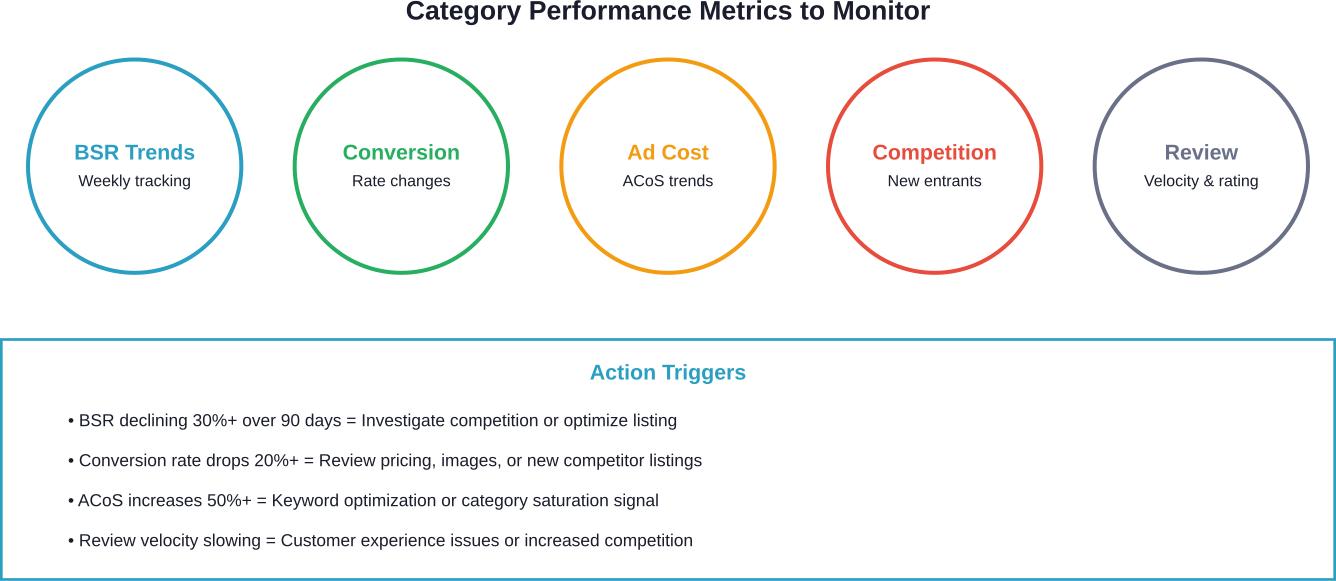
Track BSR trends for existing products. Consistently declining ranks despite stable operational performance often signal increasing category competition or shifting consumer preferences.
Beauty & Personal Care and Home & Kitchen represent the most profitable categories according to seller data, with 30% of top-earning merchants focused in each area. These categories offer high margins, repeat purchase opportunities, and accessible entry points. However, profitability depends more on product selection, differentiation, and execution within a category than category choice alone.
New sellers typically succeed by focusing on one category initially, building expertise and establishing systems before diversifying. Experienced sellers often maintain products across 2-5 categories to balance seasonal variations and capture cross-selling opportunities. The optimal number depends on business resources, capital availability, and management capacity.
Gating refers to Amazon’s practice of restricting certain product categories to approved sellers only. Gated categories require sellers to apply for approval and provide documentation like invoices from authorized suppliers or safety certifications. Categories including Grocery, Jewelry, and certain Health & Personal Care subcategories commonly require approval before listing products.
According to Amazon’s official seller guidance, BSR is calculated based on recent sales and historical sales data. The algorithm updates frequently—sometimes hourly for products with strong sales velocity. BSR is category-specific, meaning products hold different ranks in their main category and each subcategory where they appear. Higher sales volume relative to category competitors produces better (lower number) BSR.
Sellers can request category changes through Seller Central, though Amazon must approve changes to restricted or gated categories. Strategic category changes can improve BSR visibility by placing products in more specific, relevant subcategories. However, changing categories resets some listing metrics, so research the impact before requesting changes for established products.
Competition levels vary by specific subcategory rather than main category. Generally, Industrial & Scientific, Musical Instruments, and certain subcategories within Tools & Home Improvement show lower seller concentration than Home & Kitchen or Beauty & Personal Care. However, lower competition often correlates with smaller market size, requiring thorough demand validation before entering.
Seasonal categories like Toys & Games generate the majority of annual sales during Q4, while other categories maintain more consistent year-round demand. Sellers should match category seasonality to their cash flow capabilities and risk tolerance. Diversifying across categories with different peak seasons creates more stable revenue throughout the year than concentrating in highly seasonal categories.
Category selection represents one of the most important decisions Amazon sellers make. The difference between launching in a saturated category with thin margins versus finding an underserved niche can determine business viability.
Start with thorough research. Use Amazon’s Best Sellers and Movers & Shakers lists to understand category dynamics. Examine products ranking 20-100 in target subcategories to identify opportunities where competition exists but doesn’t completely dominate.
Validate demand before committing capital. A profitable niche needs sufficient search volume and customer interest to generate sales without massive advertising investment.
Match category requirements to business capabilities. Gated categories require extra documentation. Fragile products need careful fulfillment planning. Seasonal categories demand cash flow management for inventory surges.
The best category depends on individual circumstances—available capital, existing expertise, risk tolerance, and long-term business goals. A category that works brilliantly for one seller might prove challenging for another with different strengths.
Ready to start selling on Amazon? According to Amazon’s official data, independent sellers in the US averaged more than $290,000 in annual sales in the Amazon store in 2024. Success in Amazon’s best-selling categories requires strategic planning, quality products, and consistent optimization.
Begin by identifying 3-5 potential categories that align with your resources and interests. Research top products in each category’s subcategories. Calculate realistic profit margins accounting for Amazon fees, advertising costs, and fulfillment expenses.
Then choose one category and launch. Test. Learn. Optimize. Expand from there.
The sellers succeeding on Amazon in 2026 aren’t necessarily those who started in the “perfect” category. They’re the ones who chose strategically, executed consistently, and adapted as they learned what worked.
WisePPC现已进入测试阶段,我们诚邀少数早期用户加入。 作为测试版用户,您将获得免费访问权、终身福利以及帮助塑造产品的机会,包括 亚马逊广告认证合作伙伴 值得信赖。
我们将尽快回复您。