EN
EN  ES
ES  FR
FR  DE
DE  IT
IT  KO
KO  JA
JA  ZH
ZH  AR
AR  PT
PT  TR
TR  PL
PL How To Sell Furniture Online: A Step-by-Step Guide For Sellers

Selling furniture online is no longer limited to professional retailers. Whether you are decluttering your home, upgrading a few pieces, or planning to turn furniture sales into a business, ecommerce makes it easier to reach buyers than ever before.
This guide walks through the full process of selling furniture online, from preparing your items and creating strong listings to choosing the right sales channels and improving long-term results. The approach works whether you are selling one piece or managing a growing inventory.
1. Prepare to Sell Your Furniture
Before listing furniture online, preparation is essential. Furniture buyers are detail-oriented, and even small issues can influence whether someone clicks “buy” or moves on.
Prep Your Furniture
Start by cleaning each piece thoroughly. Remove dust, stains, and odors. If possible, handle small repairs such as tightening loose joints, fixing wobbly legs, or touching up visible scratches. These small improvements often increase perceived value and buyer confidence.
Take Measurements
Accurate measurements are non-negotiable. Record height, width, depth, and weight for every item. If the furniture is large or bulky, include notes about disassembly, door clearance, or whether tools are required. Buyers rely on this information to decide if the item fits their space.
Research Pricing
Look at similar items that have sold recently, not just active listings. Condition, brand recognition, and demand will heavily affect pricing. Secondhand furniture often sells far below retail, so realistic expectations help avoid long delays.
Set Up Your Inventory
If you are selling more than a few pieces, create a simple inventory system. Track condition, age, materials, original price if known, and any defects. Staying organized saves time and keeps listings consistent across platforms.
2. Creating Compelling Listings
Strong listings do most of the selling for you. Furniture buyers want clarity, honesty, and visual confirmation before committing.
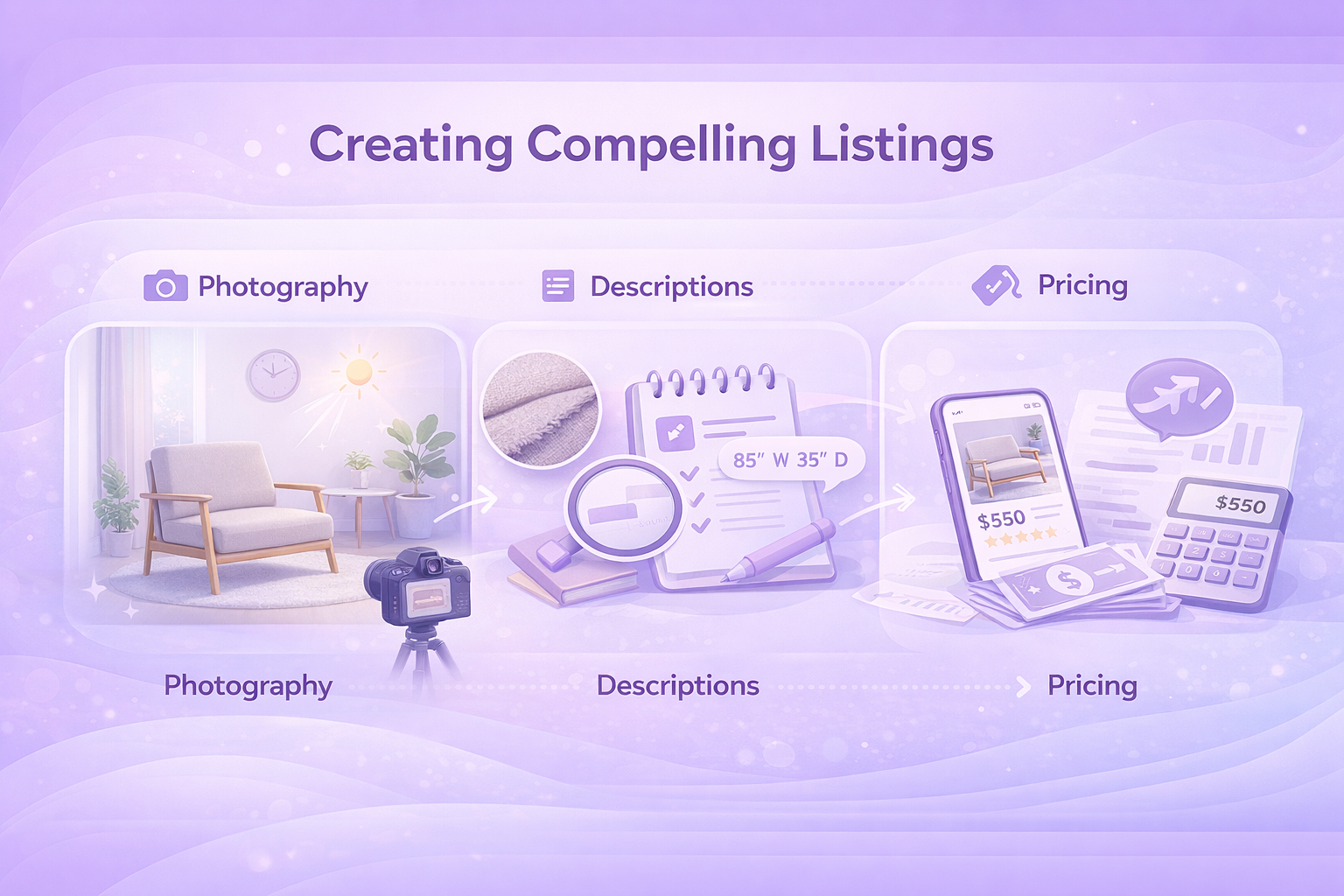
Photography
Good photos are critical. Use natural light whenever possible and photograph each piece from multiple angles. Include wide shots, close-ups of materials, and clear images of any wear or damage. Staging the furniture in a clean, neutral space helps buyers imagine it in their own home.
Descriptions
Write descriptions that are detailed but straightforward. Explain what the piece is, how it has been used, and what condition it is in. Include dimensions, materials, brand information, and notable features. Be upfront about flaws. Transparency builds trust and reduces returns or disputes.
Pricing
Set prices based on market research, not guesswork. Competitive pricing helps listings move faster, but underpricing is not always necessary. Factor in condition, demand, and delivery costs. Seasonal timing can also influence what buyers are willing to pay.
3. Choosing the Right Channel to Sell Furniture Online
Different selling platforms serve different purposes. Many sellers use more than one channel depending on the type of furniture and target audience.
Social Media Platforms
These are well-suited for local sales. Listings are quick to post, communication is direct, and there are usually no fees. They work best for pickup-based transactions.
Classified Advertising Websites
Classified sites remain popular for furniture sales, especially locally. They are easy to use, free to list, and ideal for cash transactions.
Online Marketplaces and Storefronts
Marketplaces provide broader reach, secure payments, and shipping options. They work well for sellers targeting national or international buyers.
Specialized Furniture Platforms
High-end, vintage, or designer furniture often performs better on niche platforms. These sites attract a more specific audience but may charge higher commissions.

4. Optimize Furniture Sales Performance With Data-Driven Insights
Once your furniture listings are live across marketplaces, the next step is understanding what actually drives sales. Pricing, visibility, ad spend, and seasonality all play a role, but without clear data, it’s easy to rely on guesswork. That’s where we come in.
At WisePPC, we help sellers turn raw marketplace data into clear, actionable decisions. Whether you sell furniture on Amazon, Shopify, or across multiple channels, we give you full visibility into performance so you can adjust faster and sell more efficiently.
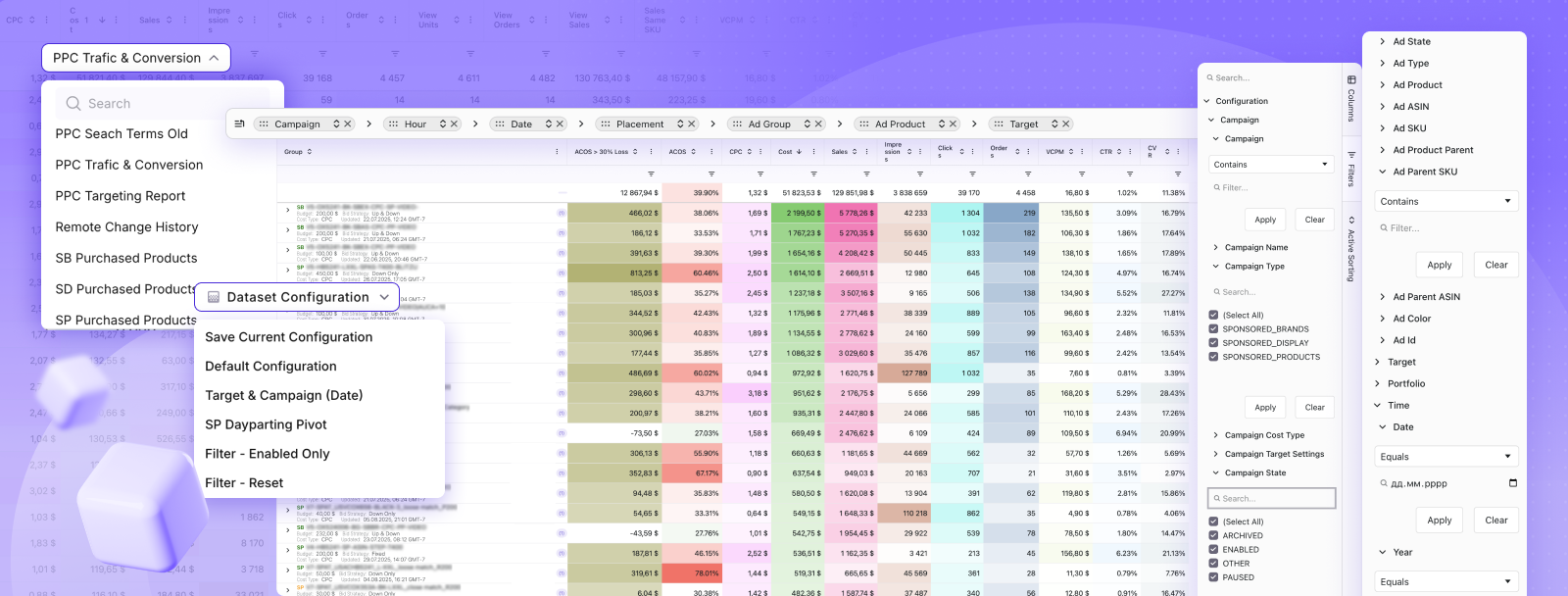
Our platform brings advertising and sales analytics into one place. You can track key metrics in real time, review historical performance beyond Amazon’s standard limits, and see how ads influence actual sales results. Instead of juggling spreadsheets or switching between tools, everything lives in a single dashboard built for scale.
How We Help Furniture Sellers Stay In Control
- Centralized Analytics Across Channels. We combine advertising data, organic performance, and sales metrics into one view, helping you understand which furniture listings convert and which need adjustment.
- Bulk Actions for Faster Optimization. Update bids, budgets, or pause underperforming campaigns across multiple listings at once. This is especially useful when managing seasonal furniture demand or large catalogs.
- Advanced Filtering and Segmentation. Filter performance by campaign type, placement, match type, or cost type to uncover patterns and spot opportunities you might otherwise miss.
- Long-Term Historical Data Access. While Amazon keeps limited history, we store performance data for years. That makes it easier to identify trends, seasonality, and long-term pricing or advertising patterns.
- Clear View of Ad Impact on Sales. We separate what drives revenue through ads versus organic sales, so you can allocate budgets more confidently and avoid wasted spend.
As furniture catalogs grow and sales expand across platforms, having clear data becomes essential. Our goal is simple: reduce manual work, highlight what matters, and give you the confidence to scale without losing control.

Selling Across Multiple Channels With Fulfillment Support
Managing orders across several sales platforms can quickly become complicated, especially as volume grows. Each channel may have different order flows, delivery expectations, and inventory updates, which increases the risk of delays or mistakes. To avoid that complexity, many sellers rely on centralized fulfillment solutions.
Multi-channel fulfillment allows sellers to store their inventory in a single location while shipping orders placed across multiple channels. Instead of splitting stock or managing separate logistics providers, orders are fulfilled from one unified system. This setup reduces manual work, keeps inventory levels consistent, and makes it easier to scale without adding unnecessary operational strain.
3 Essential Tips For Successful Furniture Sales
Selling furniture consistently requires more than posting listings. These fundamentals make a measurable difference.
- Timing. Furniture demand often peaks during moving seasons, especially in spring and early fall. Tax refund periods can also increase buyer activity. Higher-priced items may take longer to sell, so patience is important.
- Communication. Respond quickly and clearly to inquiries. Confirm details around pickup, delivery, and payment upfront. Written confirmation helps avoid misunderstandings.
- Customer Service. Be honest about condition and limitations. Address issues professionally if they arise. Positive experiences encourage repeat buyers and referrals.

Advanced Furniture Selling Strategies
Once you have the fundamentals in place, more strategic steps can help you grow consistently and improve long-term results. These strategies focus on visibility, differentiation, and operational efficiency rather than quick wins.
Build a Brand
Creating a recognizable presence helps buyers trust you over time. Consistent photos, clear descriptions, and reliable service all contribute to a cohesive look and feel. Even small sellers benefit from a defined style, whether it’s how listings are written or how furniture is staged and photographed.
Offer Additional Services
Providing services like delivery, assembly, or light restoration can set you apart from other sellers. These extras add convenience for buyers and often justify higher pricing. They also reduce friction for customers who might hesitate due to logistics or setup concerns.
Network and Source Inventory
Building relationships with estate sale organizers, interior designers, and local resellers can open the door to steady inventory and unique pieces. Strong connections often lead to better pricing, early access, and items that are harder to find through public listings.
Market Effectively
Cross-posting listings across multiple platforms increases exposure without significant extra effort. Targeted advertising can help highlight high-value items, while local search optimization improves visibility for nearby buyers looking for pickup or delivery options.
Conclusion
Selling furniture online takes preparation, consistency, and patience. Focus on quality photos, clear descriptions, and professional communication. Choose platforms that match your items, price realistically, and stay responsive throughout the process.
Furniture sales are often seasonal, and not every listing will sell immediately. Learning from each transaction helps refine your approach. Over time, you will better understand pricing, demand, and which channels perform best.
Whether you are selling a single piece or building a furniture business, online marketplaces offer flexibility and reach. Start small, stay organized, and improve with each sale.
Frequently Asked Questions
Is it better to sell furniture locally or ship it?
It depends on the size, weight, and value of the item. Larger or heavier furniture usually works best for local pickup or delivery, while smaller or higher-value pieces may be worth shipping if buyers are willing to cover the cost.
How do I price used furniture online?
Start by researching similar items that have sold recently, not just active listings. Condition, brand, and demand all affect pricing, and most secondhand furniture sells for less than its original retail price.
What information should every furniture listing include?
Each listing should include accurate dimensions, materials, condition details, clear photos, and pickup or delivery options. Providing this information upfront helps avoid unnecessary questions and builds buyer confidence.
How long does it usually take to sell furniture online?
Some items sell quickly, while others may take weeks or longer. Timing, pricing, and demand all play a role, especially for higher-priced or niche pieces.
Do I need professional photography to sell furniture?
Professional photography can help, but it is not required. Well-lit photos taken in natural light that clearly show the furniture and its condition are often enough to attract buyers.
Join the WisePPC Beta and Get Exclusive Access Benefits
WisePPC is now in beta — and we’re inviting a limited number of early users to join. As a beta tester, you'll get free access, lifetime perks, and a chance to help shape the product — from an Amazon Ads Verified Partner you can trust.
 No credit card required
Free in beta and free extra month free after release
25% off for life — limited beta offer
Access metrics Amazon Ads won’t show you
Be part of shaping the product with your feedback
No credit card required
Free in beta and free extra month free after release
25% off for life — limited beta offer
Access metrics Amazon Ads won’t show you
Be part of shaping the product with your feedback