EN
EN  ES
ES  FR
FR  DE
DE  IT
IT  KO
KO  JA
JA  ZH
ZH  AR
AR  PT
PT How to Manage Amazon Seller-Fulfilled Returns (2026)

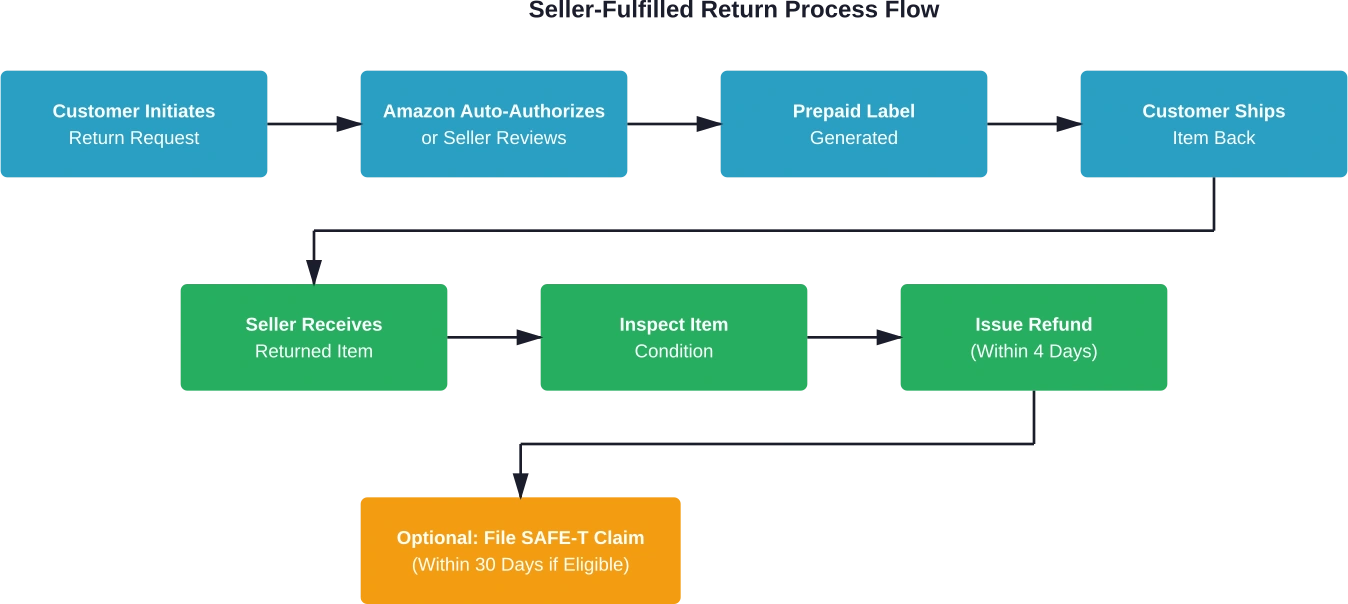
Quick Summary: Managing seller-fulfilled returns on Amazon involves using the Manage Returns tool in Seller Central to process requests within 4 calendar days, authorize returns, and issue refunds. The process includes handling prepaid return labels (automatic for US sellers), addressing special situations like damaged or wrong items, and filing SAFE-T claims within 30 days when eligible. Following Amazon’s Return Policy while maintaining efficient processes helps preserve seller metrics and customer satisfaction.
Returns are an unavoidable part of selling on Amazon. When fulfilling orders independently rather than using FBA, the responsibility for handling returns falls directly on the seller. This means processing return requests, issuing refunds, and managing the logistics of getting products back.
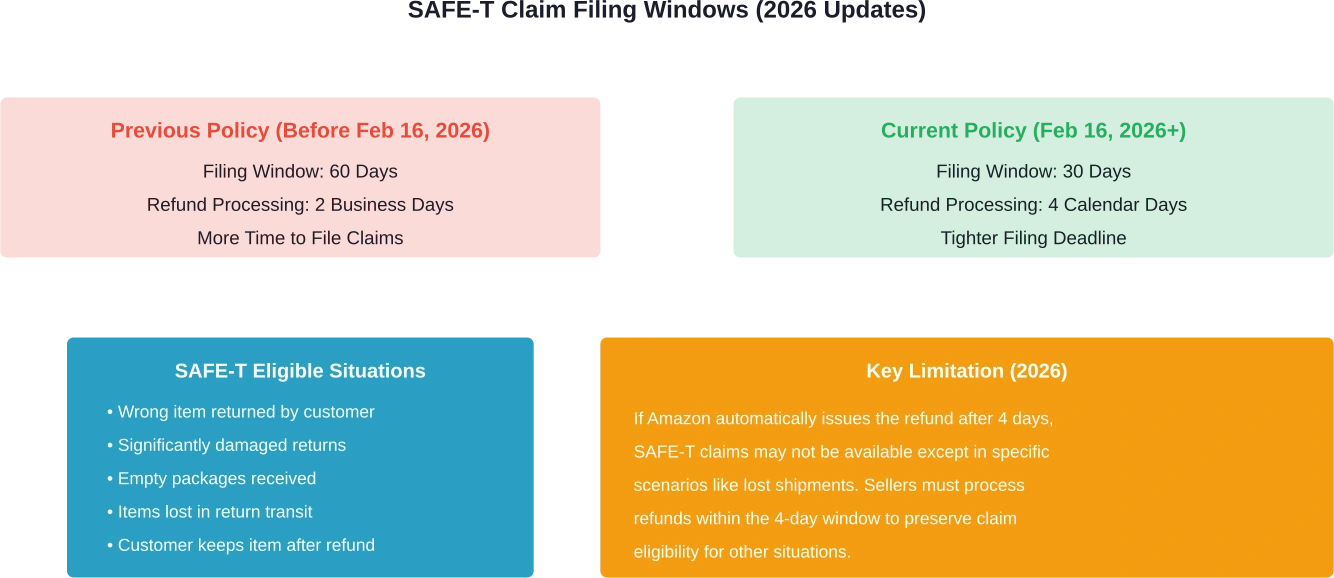
The system has changed significantly. As of January 26, 2026, sellers now have 4 calendar days to process refunds before Amazon automatically issues them (previously 2 business days). And starting February 16, 2026, the window to file SAFE-T claims drops from 60 days to 30 days. These updates demand tighter operations.
But here’s the thing: efficient return management protects seller metrics, maintains customer satisfaction, and can even reduce costs through strategic approaches like returnless refunds. Understanding the tools, policies, and best practices makes the difference between returns becoming a costly burden or a manageable aspect of operations.
Understanding Amazon’s Return Policy for Seller-Fulfilled Orders
Amazon allows customers to return most items within 30 days of the estimated delivery date. This applies regardless of whether the order was fulfilled through FBA or by the seller directly. When a seller fulfills the order, the returned item comes back to that seller’s location.
The Return Policy covers situations where customers receive defective items, products that don’t match the listing description, or simply change their minds. Not all returns qualify for prepaid labels or automatic authorization, though. Certain categories have restrictions.
What the Federal Trade Commission Requires
Beyond Amazon’s internal policies, federal regulations apply. The FTC’s Mail or Telephone Order Merchandise Rule covers online sales, establishing baseline requirements for order fulfillment and refunds.
According to the FTC, businesses must ship orders within the timeframe stated in their advertisements or within 30 days if no timeframe is specified. When items can’t be shipped on time, sellers must notify customers and offer the option to cancel for a full refund.
The rule exempts certain sales including magazine subscriptions, seeds and plants, and COD orders. But for standard e-commerce transactions, these federal protections apply regardless of the platform used.
Key Differences from FBA Returns
With Fulfillment by Amazon, the company handles the entire return process. Customers ship items back to Amazon facilities, and Amazon processes refunds and handles customer service.
For seller-fulfilled orders, sellers manage everything. This includes providing return addresses, authorizing requests, inspecting returned items, and issuing refunds. The seller also bears the cost of return shipping in most cases, unless enrolled in specific programs.
The trade-off? More control over the process but also more operational responsibility.
The Amazon Prepaid Return Label Program
US sellers are automatically enrolled in the prepaid returns program. This program issues prepaid return labels on behalf of sellers for eligible returns through Amazon Buy Shipping.
When a customer initiates a return that qualifies, Amazon automatically generates a prepaid shipping label. The customer prints this label, attaches it to the package, and ships the item back. The return shipping cost is then deducted from the seller’s account.
How the Program Works
Amazon automatically authorizes return requests when they’re covered by the Return Policy. Most returns receive instant authorization without requiring seller action.
The prepaid label appears in the customer’s account immediately after the return is authorized. Customers can print it at home or, in some cases, receive a QR code to present at carrier locations.
For returns outside the US, sellers might need to provide their own return shipping method. International returns don’t automatically receive prepaid labels through the Amazon program.
Costs and Exemptions
The cost of prepaid return shipping gets deducted from seller payments. Rates vary based on package size, weight, and destination but typically align with commercial shipping rates through Amazon’s carrier partnerships.
Some US sellers can request exemptions from the prepaid returns program under specific circumstances. The exemption process requires demonstrating that particular products or business models make prepaid returns impractical.
Categories like large appliances or items requiring special handling may qualify for exemptions. Sellers need to submit a request through Seller Central for evaluation.
Using the Manage Returns Tool in Seller Central
The Manage Seller Fulfilled Returns tool serves as the central hub for processing all return requests. Located in Seller Central under Orders, this tool displays pending requests, return statuses, and refund processing.
Every return request appears here with customer-provided reason codes, order details, and required actions. The interface shows which requests need seller authorization versus those automatically approved.
Navigating the Interface
The main dashboard shows return requests organized by status: pending authorization, awaiting return, return received, and completed. Filters help sort by date range, product category, or return reason.
Each request displays the order ID, product details, customer return reason, request date, and deadline for action. Clicking into a specific request reveals the full conversation history and available actions.
Sellers can authorize returns, deny requests (when policy allows), communicate with customers, and issue full or partial refunds directly from this interface.
Response Timeframes That Matter
When requests require seller authorization, responding within 24 hours is essential. Delayed responses frustrate customers and can negatively impact seller metrics.
The critical timeline change: sellers now have 4 calendar days from authorization to issue a refund before Amazon automatically processes it. Previously, this window was just 2 business days. The extension provides more time for return transit and inspection.
But that 4-day window is absolute. Miss it, and Amazon issues the refund automatically, potentially before the item returns. This makes tracking return shipments essential.
Processing Return Requests Step-by-Step
Most return requests receive automatic authorization when they align with Amazon’s Return Policy. These appear in the Manage Returns tool with prepaid labels already issued.
For requests requiring manual review, the process involves several decisions. Should the return be authorized? Does it qualify for a prepaid label? Is a full refund appropriate, or should restocking fees apply?
Authorizing or Declining Returns
When a request appears as pending authorization, sellers must evaluate it against the Return Policy. Returns within 30 days for defective items, wrong products, or items not as described must be authorized.
Declining returns is only appropriate when requests fall outside policy parameters—items beyond the return window, products in non-returnable categories, or clear policy violations.
Even when declining seems justified, responding professionally matters. Explanation messages should reference specific policy language and remain courteous.
Issuing Refunds Properly
Refunds should be issued promptly once the returned item is received and inspected. The 4-calendar-day window starts from either the return delivery scan or the refund date, whichever comes later.
Full refunds include the item price and original shipping costs (if the return reason is seller fault). Partial refunds may apply when items return damaged due to customer handling or when restocking fees are appropriate.
The refund interface in Manage Returns allows selecting full or partial amounts and adding explanatory notes that customers see. Clear communication prevents disputes.
Communicating with Customers
The Manage Returns tool includes messaging functionality. Use it to request additional information, clarify return reasons, or explain refund decisions.
Messages should be concise and professional. Avoid confrontational language even when dealing with suspected abuse. Document concerns through proper channels rather than customer-facing communications.
Response time matters here too. Quick replies demonstrate attentiveness and can de-escalate frustrated customers before they leave negative feedback.
Special Return Situations and How to Handle Them
Not every return follows the standard path. Some situations require different approaches or additional steps beyond the typical process.
Wrong Item Returned
Sometimes customers return items that don’t match the original order. This might be an honest mistake—multiple orders confused—or intentional switching.
When receiving the wrong item, document it thoroughly with photos showing the item received versus the order details. Contact the customer through the return request to clarify.
If the customer acknowledges the error, they may need to return the correct item. If they insist they sent the right product, escalate through proper seller support channels rather than engaging in arguments.
Damaged or Incomplete Returns
Items that return significantly damaged (beyond original condition) or with missing parts present another challenge. Partial refunds may be appropriate in these cases.
Amazon’s Return Policy allows restocking fees up to 50% of the item price when products return damaged due to customer handling or missing components. Apply these fees by selecting partial refund options and documenting the reason.
Photo evidence is crucial. Capture the packaging condition, item damage, and any missing accessories before issuing partial refunds.
Lost Return Shipments
Occasionally, return shipments go missing in transit. The tracking shows the customer shipped the item, but it never arrives at the seller’s location.
For lost shipments, SAFE-T claims provide potential reimbursement. The 30-day filing window starts from the last tracking scan event. File promptly when shipments appear lost.
However, recent policy changes limit SAFE-T eligibility. If Amazon issues the automatic refund after 4 days, SAFE-T claims may not be available. This makes tracking returns and processing refunds quickly even more critical.
Potentially Hazardous Materials
Products containing batteries, chemicals, or other regulated materials require special handling for returns. Special handling requirements may apply to returns of items containing batteries, chemicals, or other regulated materials.
When selling products in these categories, the return settings should reflect the special requirements. Some sellers offer returnless refunds for low-cost hazardous items rather than managing complex return logistics.
For higher-value items, providing specific return instructions with appropriate shipping labels and documentation becomes necessary.

Track Amazon Ad Performance With WisePPC
Seller-fulfilled orders often require more operational control, especially when handling returns and customer service. While logistics and returns are part of the process, understanding how advertising affects sales performance is equally important. WisePPC gives sellers a detailed view of campaign performance, keywords, and product-level metrics so they can understand how ads contribute to overall sales results.
Managing Orders and Ads at the Same Time?
Use WisePPC to:
- analyze keyword and campaign performance
- track how advertising affects product sales
- adjust Amazon PPC campaigns more efficiently
Understanding SAFE-T Claims for Return Reimbursement
The Seller Assurance for E-commerce Transactions (SAFE-T) program provides reimbursement for certain return-related losses. This includes situations where customers abuse the return system or items get lost in return transit.
As of February 16, 2026, the filing window is just 30 days from either the return delivery scan or the refund date, whichever comes later. For lost shipments, the 30-day window starts from the last scan event.
When SAFE-T Claims Apply
SAFE-T covers situations where the seller followed all policies correctly but still suffered a loss. Examples include customers returning empty boxes, wrong items, or significantly damaged products beyond what the customer reported.
Claims for items lost in transit also qualify, provided tracking shows the customer shipped the return but it never arrived.
One critical limitation: if Amazon issues the automatic refund after the 4-day window expires, SAFE-T claims may not be available except for specific situations like items lost in transit. This policy change effectively requires sellers to process refunds promptly to preserve claim rights.
Filing Process and Documentation
SAFE-T claims are filed through Seller Central under the Orders menu. The claim requires detailed information about the return, including order ID, tracking numbers, and description of the issue.
Strong documentation dramatically improves approval rates. Photos of damaged items, images showing wrong products received, weight discrepancies from shipping labels—all strengthen the case.
Claims receive review within several business days. Approvals result in reimbursement credited to the seller account. Denials can be appealed with additional evidence.
Common Denial Reasons
Many SAFE-T claims get denied due to insufficient documentation. Vague descriptions or missing evidence lead to rejections.
Claims filed outside the 30-day window automatically fail. The system strictly enforces this deadline with no exceptions.
Another common issue: claims for situations that fall outside SAFE-T’s scope. Normal wear and tear, minor packaging damage, or situations where seller error contributed don’t qualify for reimbursement.
Returnless Refunds: When and How to Use Them
Returnless refunds allow issuing refunds without requiring customers to ship items back. This approach works well for low-value items where return shipping costs exceed the product value.
For international returns, if a seller does not provide a valid return address in the US or a prepaid return label, Amazon will issue a returnless refund to the customer regardless of the item value.
Setting Up Returnless Refund Rules
Sellers can configure returnless refund rules in their return settings. These rules specify conditions under which refunds are issued without requiring returns.
Common criteria include item price thresholds (such as products under $10), specific product categories, or particular return reasons like “item arrived damaged.”
The strategy reduces operational costs by eliminating inbound shipping expenses, receiving labor, and restocking efforts for low-value items.
Benefits and Considerations
Returnless refunds improve customer satisfaction. Customers receive immediate refunds without packaging and shipping hassles.
The approach also protects seller metrics. Faster resolution times and improved customer experiences can positively impact feedback ratings and order defect rates.
The trade-off is absorbing the product cost. For items with thin margins, even low-value returnless refunds add up. Calculate the break-even point where return processing costs exceed the product cost plus refund.
Best Practices for Return Management
Efficient return operations require both reactive and proactive strategies. Handling individual returns promptly is essential, but analyzing patterns and preventing returns reduces overall volume.
Monitor Returns Metrics
Track return rates by product, category, and reason codes. Products with unusually high return rates signal potential issues with descriptions, quality, or sizing.
The Manage Returns tool provides basic reporting, but exporting data to spreadsheets enables deeper analysis. Look for patterns in return reasons—if “not as described” appears frequently, listings may need better photos or details.
Return rates directly impact seller performance metrics. High return rates can trigger account reviews or restrictions on certain product categories.
Improve Product Listings to Reduce Returns
Many returns stem from unmet expectations. Customers order based on listings, then return products when reality doesn’t match.
High-quality images showing products from multiple angles help. Size charts for apparel, dimension diagrams for furniture, compatibility lists for accessories—these details prevent misunderstandings.
Accurate, detailed descriptions matter more than marketing copy. Specify materials, dimensions, capabilities, and limitations clearly. Better to lose a sale upfront than gain a return later.
Package Products Securely
Items damaged in transit generate returns and negative feedback. Protective packaging reduces damage rates significantly.
Use appropriately sized boxes with adequate cushioning material. Fragile items need extra protection. Electronics should be sealed in anti-static bags.
The few cents spent on better packaging materials pay for themselves through reduced return rates and damage claims.
Respond to Returns Quickly
The 4-day refund window leaves little room for delays. Establish processes to inspect returned items and issue refunds within 24-48 hours of receipt.
Consider setting up alerts for return deliveries. Track return shipments actively rather than waiting for items to appear in inventory.
Quick refund processing preserves SAFE-T claim eligibility and demonstrates professionalism to customers who may order again despite the return.
Train Staff on Policies
Anyone handling returns needs to understand Amazon’s Return Policy, SAFE-T claim requirements, and proper documentation procedures.
Create standard operating procedures documenting how to inspect returns, when partial refunds apply, and how to photograph issues for SAFE-T claims.
Consistent processes reduce errors that can lead to policy violations or missed reimbursement opportunities.
Managing Return Fraud and Abuse
Return fraud exists in e-commerce. Some customers deliberately abuse return policies—keeping products while claiming they never arrived, returning used items as new, or switching products.
While Amazon acknowledges return abuse occurs, seller responses must remain professional and policy-compliant. Accusations without evidence harm seller standing more than the fraud itself.
Recognizing Potential Abuse
Patterns often indicate fraud better than individual incidents. Customers with multiple returns for the same reason across different orders warrant attention.
Weight discrepancies between outbound and return shipments sometimes reveal problems. A package shipped at 5 pounds that returns weighing 1 pound suggests missing contents.
Returns of expensive electronics with cheap replacements, empty boxes, or items showing clear signs of use beyond inspection also raise concerns.
Documenting and Reporting
Never confront customers directly about suspected fraud. Instead, document everything thoroughly with photos, weights, and detailed descriptions.
File SAFE-T claims for situations that qualify. Include all documentation and let Amazon investigate.
For serial abusers, report patterns through Seller Support with compiled evidence. Amazon’s fraud prevention teams handle enforcement, not individual sellers.
Balancing Protection and Customer Service
The vast majority of returns are legitimate. Treating every customer with suspicion damages relationships and can result in negative feedback.
Focus on clear policies, documentation, and following proper channels. Let Amazon’s systems handle fraud detection and account enforcement.
Protecting the business from abuse matters, but maintaining positive customer experiences matters more for long-term success.
Tools and Automation for Efficient Return Management
Manual return processing works for small operations but becomes unsustainable as order volumes grow. Several tools help automate and streamline the process.
Third-Party Return Management Software
Various software solutions integrate with Amazon Seller Central to automate return workflows. These tools can auto-approve qualifying returns, trigger refunds when tracking shows delivery, and generate SAFE-T claim documentation.
Features vary by platform but often include automated customer communications, return tracking dashboards, and analytics reporting on return patterns.
The trade-off is additional cost. Evaluate whether automation savings in time and labor justify the software expense based on return volumes.
Inventory Management Integration
Returned items need to flow back into inventory systems accurately. Integrating return management with inventory software prevents stock count errors and enables quick restocking of sellable items.
Some systems automatically categorize returns by condition—immediately resellable, needs refurbishing, or unsellable—and route them to appropriate processes.
Accurate inventory accounting from returns prevents overselling and stockouts while providing better data on actual product performance.
Tracking and Alerts
Setting up automated tracking alerts for return shipments helps meet the 4-day refund deadline. Notifications when returns deliver enable immediate inspection and processing.
Shipment tracking APIs from carriers can feed directly into dashboards showing all pending returns, expected delivery dates, and approaching refund deadlines.
These systems prevent refunds from slipping past the deadline and triggering automatic Amazon refunds that limit SAFE-T eligibility.
| Return Management Task | Manual Process Time | With Automation | Efficiency Gain |
|---|---|---|---|
| Authorize return request | 2-3 minutes | Instant (auto-approved) | 100% |
| Generate return label | 3-5 minutes | Automatic with authorization | 90% |
| Track return shipment | 5-10 minutes daily | Automated alerts on delivery | 85% |
| Inspect and document issues | 10-15 minutes | 5-10 minutes (template photos) | 40% |
| Issue refund | 3-5 minutes | Auto-triggered on delivery scan | 100% |
| File SAFE-T claim | 15-20 minutes | 8-10 minutes (pre-populated data) | 50% |
Impact of Returns on Seller Performance Metrics
Returns directly affect several key performance indicators that Amazon uses to evaluate seller accounts. Understanding these connections helps prioritize return management efforts.
Order Defect Rate
The Order Defect Rate (ODR) includes negative feedback, A-to-Z Guarantee claims, and credit card chargebacks. Returns can contribute to all three.
Poor return handling frequently generates negative feedback. Slow refunds, denied returns without proper justification, or poor communication frustrate customers.
A-to-Z claims often follow when customers believe they’re not receiving proper refunds. These claims directly increase ODR and can lead to account suspension if ODR exceeds 1%.
Late Shipment and Valid Tracking Rates
While returns don’t directly affect shipping metrics, the same operational discipline that ensures fast return processing typically correlates with better fulfillment performance.
Sellers who struggle with return management often have broader operational issues affecting multiple metrics simultaneously.
Customer Service Responsiveness
Responding to return requests within 24 hours contributes to customer service metrics. Delayed responses lower these scores and can affect account standing.
The automated authorization system helps here, but requests requiring manual review still need prompt attention.
Taking Control of Your Return Operations
Managing seller-fulfilled returns effectively requires understanding Amazon’s policies, using the available tools efficiently, and maintaining operational discipline. The recent policy changes—4 calendar days for refund processing and 30 days for SAFE-T claims—make timing more critical than ever.
Focus on the fundamentals: respond to requests within 24 hours, process refunds within 2 days of receiving returns when possible, and document everything thoroughly for potential SAFE-T claims. Use returnless refunds strategically for low-value items to reduce costs and improve customer experiences.
Track return patterns to identify product issues early. Better listings with accurate descriptions and quality images prevent many returns before they happen. Secure packaging reduces damage-related returns.
The goal isn’t eliminating returns entirely—that’s unrealistic in e-commerce. The goal is managing them efficiently enough that they don’t drain profitability or damage seller metrics. With proper processes and attention to deadlines, returns become a manageable operational task rather than a constant crisis.
Review your return settings in Seller Central regularly. Make sure returnless refund rules align with current product costs and shipping rates. Stay informed about policy updates that affect filing windows and reimbursement eligibility.
Efficient return management protects both customer relationships and business profitability. Master these processes, and returns transform from a liability into a competitive advantage over sellers who struggle with this essential operational component.
Frequently Asked Questions
How long do I have to refund a seller-fulfilled return on Amazon?
Sellers have 4 calendar days from the return authorization to issue a refund before Amazon automatically processes it. This window starts from either the return delivery scan at the seller’s warehouse or the refund date, whichever comes later. The extension from 2 business days to 4 calendar days took effect January 26, 2026, providing more time for return transit and inspection.
What is the SAFE-T claim filing deadline for returns?
The SAFE-T claim filing window is 30 days starting from either the return delivery scan, the refund date (whichever comes later), or the last scan event for lost shipments. This deadline was reduced from 60 days effective February 16, 2026. Claims filed after 30 days are automatically denied regardless of circumstances. Additionally, if Amazon issues an automatic refund after the 4-day processing window, SAFE-T claims may not be available except for lost shipment situations.
Can I decline a return request as a seller-fulfilled merchant?
Declining returns is only appropriate when requests fall outside Amazon’s Return Policy parameters. This includes returns beyond the 30-day window, products in non-returnable categories, or clear policy violations. Most return requests within policy must be authorized. Inappropriate denials can lead to negative feedback, A-to-Z claims, and potential account penalties. When declining, provide clear, policy-based explanations to customers.
How much does Amazon charge for prepaid return labels?
The cost of prepaid return shipping through Amazon Buy Shipping is deducted from seller payments and varies based on package dimensions, weight, and destination. Rates typically align with commercial shipping rates through Amazon’s carrier partnerships. US sellers are automatically enrolled in the prepaid returns program. Some sellers may request exemptions for specific products or situations, but these require approval through Seller Central.
When should I use returnless refunds for seller-fulfilled orders?
Returnless refunds work best for low-value items where return shipping costs exceed the product value. Many sellers set thresholds like $10 or less for automatic returnless refunds. Amazon also automatically issues returnless refunds for orders under $25 on non-US returns. Configure returnless refund rules in return settings based on price thresholds, product categories, or specific return reasons. This approach reduces operational costs and improves customer satisfaction while protecting seller metrics.
What happens if a customer returns the wrong item?
When receiving an item that doesn’t match the original order, document it thoroughly with photos showing the received item versus order details. Contact the customer through the return request messaging to clarify the situation. If the customer acknowledges the error, they may need to return the correct item. File a SAFE-T claim with documentation if the customer insists they sent the correct product. Never issue full refunds for wrong items without attempting to resolve the situation and documenting it properly for potential reimbursement.
How do returns affect my Amazon seller metrics?
Returns impact several performance metrics. High return rates by product category can trigger account reviews or restrictions. Poor return handling generates negative feedback and A-to-Z claims, both of which increase the Order Defect Rate. If ODR exceeds 1%, account suspension becomes possible. Delayed responses to return requests lower customer service metrics. However, efficiently managed returns with quick refund processing and professional communication can actually improve customer satisfaction scores and reduce negative impacts.
Join the WisePPC Beta and Get Exclusive Access Benefits
WisePPC is now in beta — and we’re inviting a limited number of early users to join. As a beta tester, you'll get free access, lifetime perks, and a chance to help shape the product — from an Amazon Ads Verified Partner you can trust.
 No credit card required
Free in beta and free extra month free after release
25% off for life — limited beta offer
Access metrics Amazon Ads won’t show you
Be part of shaping the product with your feedback
No credit card required
Free in beta and free extra month free after release
25% off for life — limited beta offer
Access metrics Amazon Ads won’t show you
Be part of shaping the product with your feedback