EN
EN  ES
ES  FR
FR  DE
DE  IT
IT  KO
KO  JA
JA  ZH
ZH  AR
AR  PT
PT 3 Amazon Sellers Who Conquered Challenges in 2026

Quick Summary: Three inspiring Amazon sellers overcame significant challenges to build thriving businesses: Angela Stephens recovered from a $12,500 phishing scam, Moisture Love’s founder pivoted during the pandemic, and Numa Foods successfully rebranded their product. Their stories demonstrate resilience, adaptability, and strategic thinking in the face of business disruptions.
Building a successful Amazon business sounds straightforward until reality hits. Then come the challenges that test every seller’s resolve—phishing scams, global pandemics, trademark disputes, and branding nightmares.
But here’s the thing: some sellers face these obstacles head-on and emerge stronger. Their stories aren’t just inspiring—they’re packed with practical lessons for anyone selling online.
According to the U.S. Small Business Administration, e-commerce sales contributed more than $770 billion to the U.S. economy in 2022, representing about one-fifth of total annual retail sales. Behind these numbers are thousands of individual sellers who’ve navigated their own unique challenges.
Real talk: success on Amazon isn’t about avoiding problems. It’s about how sellers respond when things go wrong.
Angela Stephens: Recovering from a $12,500 Phishing Scam
Angela Stephens runs RE-FOCUS THE CREATIVE OFFICE, and she learned a brutal lesson about cybersecurity the hard way. When placing a product order with a manufacturer, she followed what seemed like standard procedure—wiring $12,500 to the account details provided in an email.
Except those weren’t the real account details.
“They said, ‘You haven’t sent the money.’ I said, ‘Yes, we have,'” Angela recalled. After showing the manufacturer the wire details from her bank, the truth became clear. Scammers had intercepted their communications and sent fake banking information.
The manufacturer threatened to sell the product to other clients. Angela faced losing both her money and her inventory. She ended up sending another $12,500 from her personal funds to secure the order while trying to recover the stolen amount.
The Recovery Strategy
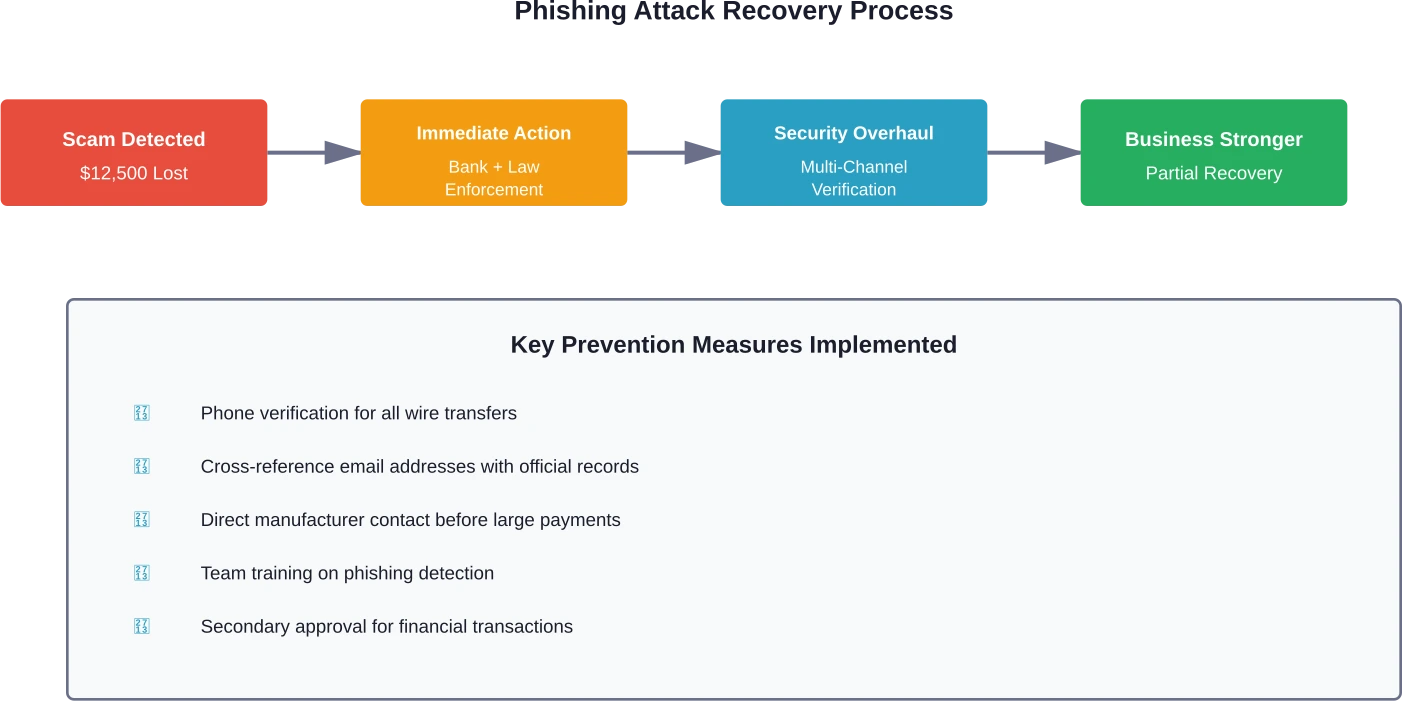
Angela didn’t let this setback define her business. She implemented stronger verification protocols for all financial transactions. Before wiring money, her team now confirms account details through multiple channels—phone calls, verified email addresses, and direct manufacturer contacts.
She also worked with her bank and law enforcement to track the fraudulent transaction. While recovery took time, she eventually recouped a portion of the lost funds.
The experience made her business stronger. She now advocates for other Amazon sellers to implement security measures before they become victims.
Moisture Love: Pivoting During the Pandemic
When COVID-19 hit, many Amazon sellers watched their businesses crumble. Supply chains broke. Shipping delays stretched from days to weeks. Customer behavior shifted overnight.
Moisture Love’s founder faced all these challenges while running a beauty and skincare business that relied on consistent product availability and customer trust.
According to source material about Moisture Love’s founder, the pandemic forced a complete operational rethink. Suppliers became unreliable. Fulfillment centers faced capacity limits. Customers worried about product safety and delivery times.
Strategic Adaptation
Instead of waiting for things to return to normal, Moisture Love’s founder made proactive changes. She diversified her supplier base, reducing dependence on any single manufacturer. When Amazon warehouses faced restrictions, she explored alternative fulfillment options.
Communication became critical. She updated product listings with realistic shipping expectations. Customer service responses addressed pandemic-related concerns directly and honestly.
The business also adjusted its product focus. Some skincare items saw increased demand as people invested more in self-care during lockdowns. She prioritized inventory for these high-demand products while scaling back others.
According to the U.S. Small Business Administration, nearly two-thirds of small businesses have gone digital, with e-commerce becoming essential rather than optional. Moisture Love was already online but had to become more agile.
Numa Foods: The Product Naming Challenge
Sometimes the biggest obstacle isn’t money or logistics—it’s finding the right name for a product.
Based on Numa Foods’ story, the company faced challenges with product naming as part of their product launch process. The formulation was perfect. The packaging looked professional. Everything was ready for launch.
Except they couldn’t legally use their original product name.
Trademark conflicts stopped them cold. Another company held rights to their first choice. Their second option had similar issues. Each delay meant lost momentum and additional costs.
The Branding Solution
The team went back to basics. They researched competitor names, analyzed trademark databases, and tested new options with focus groups. They learned that a name needed to be more than available—it had to resonate with target customers.
Numa Foods worked to find a product name that resonated with customers and had proper legal clearance. Before committing, they thoroughly vetted it for trademark issues across multiple jurisdictions.
This process taught them that brand identity matters more than speed to market. A strong, legally sound name protects the business long-term.
Common Patterns in Seller Success
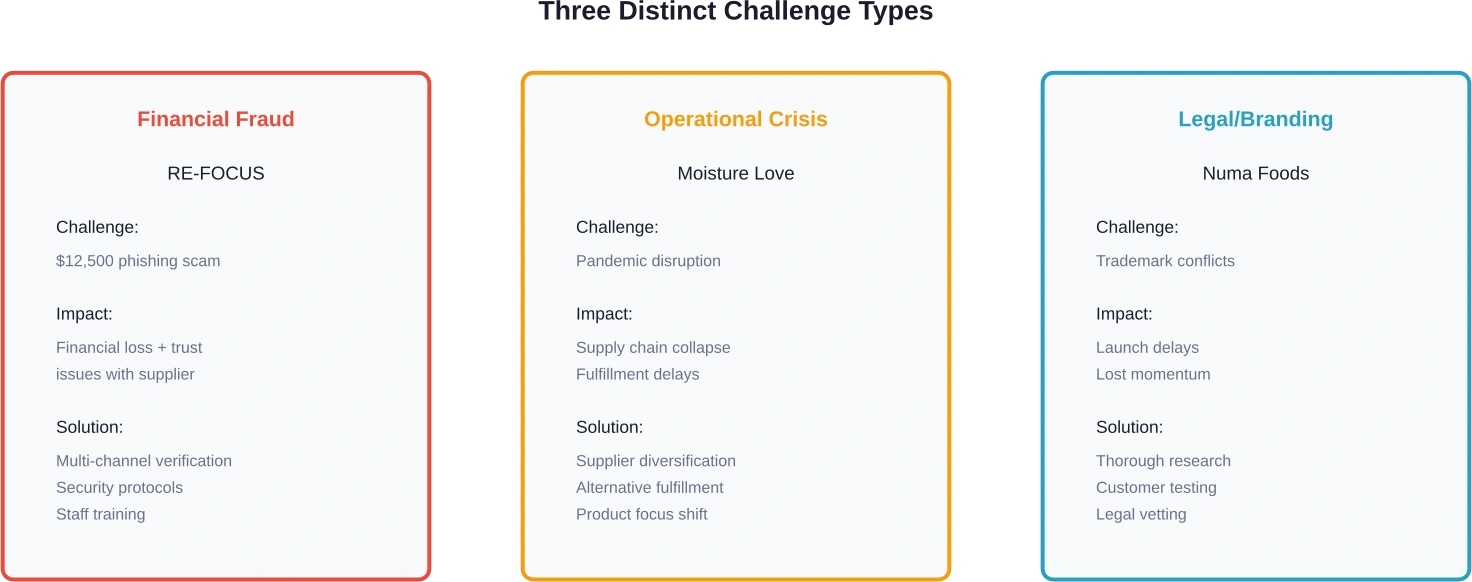
These three stories reveal consistent patterns. Successful Amazon sellers don’t avoid challenges—they develop frameworks for handling them.
First, they act quickly. Angela didn’t wait weeks to address the phishing scam. Moisture Love’s founder adapted during the pandemic, not after it ended. Numa Foods pushed through naming issues rather than abandoning their product.
Second, they learn from setbacks. Each challenge became a teaching moment that strengthened their operations. Angela’s security protocols protect against future scams. Moisture Love’s supply chain diversification creates resilience. Numa Foods’ branding process ensures legal compliance.
Third, they maintain perspective. A $12,500 loss could have shut down a business. Instead, it became an investment in better systems. Pandemic disruptions could have ended Moisture Love. Instead, the founder saw opportunities to improve.
| Success Factor | Angela Stephens | Moisture Love | Numa Foods
|
|---|---|---|---|
| Response Time | Immediate action with bank and law enforcement | Quick pivot to alternative suppliers | Thorough research before next attempt |
| System Changes | Multi-channel verification protocols | Diversified supply chain | Legal vetting process |
| Mindset | Problem as learning opportunity | Adaptation over waiting | Quality over speed |
| Long-term Impact | Stronger security prevents future fraud | More resilient operations | Protected brand identity |
Practical Lessons for Amazon Sellers
What can other sellers take from these experiences?
Verify everything financial. Before wiring money, confirm details through multiple channels. Phone calls, verified contacts, and secondary approvals prevent costly mistakes.
Build redundancy into operations. Single suppliers, single fulfillment methods, and single points of failure create vulnerability. Diversification costs more upfront but saves businesses during disruptions.
Invest in proper legal foundations. Trademark searches, brand registration, and compliance checks seem tedious until they prevent disasters. Numa Foods learned this the expensive way.
Communicate transparently with customers. When problems arise, honest updates build trust. Silence creates suspicion.
Document processes. Angela’s team now has written protocols for financial transactions. When challenges occur, documented procedures ensure consistency.

Want to Avoid the Same Mistakes Other Amazon Sellers Made?
Many successful Amazon sellers talk about the same turning points – learning how to manage ads properly, understanding their data, and adjusting campaigns based on real performance. Without that visibility, it is easy to waste budget or miss growth opportunities.
WisePPC is built to help sellers see what is actually happening inside their Amazon business. The platform connects with Seller Central and Amazon Ads accounts to track campaign performance, sales data, and inventory signals in one place, helping sellers make clearer decisions instead of guessing.
If you are building your own Amazon success story, WisePPC can help you:
- analyze Amazon PPC campaigns and performance metrics
- identify what drives sales and what wastes ad spend
- manage campaigns and marketplace data from a single dashboard
See what your Amazon data is really telling you. Explore WisePPC.
The Broader Amazon Seller Landscape
These success stories reflect broader trends in e-commerce. According to the U.S. Small Business Administration, the U.S. ecommerce market brought in more than $504 billion in revenue in 2018, with projections to exceed $735 billion by 2023. The market keeps growing, but so does competition.
Many manufacturers don’t want to handle Amazon’s complex compliance and logistics rules. This creates opportunities for sellers who specialize in these areas. Geneva Supply, an SBA loan success story, built an entire business helping manufacturers sell through Amazon’s marketplace.
Founded in 2009, Geneva Supply provides logistics, packaging, and e-commerce marketing support. They used a $1.6 million SBA-backed loan in 2017 to purchase their building, leveraging the 25-year term and low fixed interest rate to maintain cash flow for growth.
But wait. Not everyone needs seven-figure loans. Many Amazon businesses start with minimal investment. The U.S. Small Business Administration notes that online store costs can run under $50 monthly for the selling platform, plus transaction fees and inventory.
Moving Forward as an Amazon Seller
The stories of Angela Stephens, Moisture Love, and Numa Foods demonstrate that challenges don’t determine success—responses do.
Every Amazon seller will face obstacles. Supply issues, financial problems, legal complications, or marketplace changes all happen eventually. The sellers who thrive build systems that handle these disruptions.
They verify financial transactions, diversify suppliers, protect their brands legally, and communicate honestly with customers. They treat setbacks as education rather than defeat.
Most importantly, they take action. Problems don’t solve themselves through hope or waiting. The three sellers profiled here acted decisively when challenges emerged.
That’s the real lesson: Amazon success comes from resilience, not perfection. Build strong foundations, expect challenges, and respond strategically when they arrive. The marketplace rewards sellers who persist through difficulties, adapt to changing conditions, and learn from every obstacle.
Ready to start or grow an Amazon business? Study these success stories, implement their lessons, and prepare for the inevitable challenges ahead. The path won’t be smooth, but with the right approach, obstacles become stepping stones rather than roadblocks.
Frequently Asked Questions
What’s the biggest challenge new Amazon sellers face?
Cash flow management tops the list. Between inventory costs, Amazon fees, and marketing expenses, sellers need sufficient capital to sustain operations before profits arrive. Many underestimate the time between investment and returns.
How can sellers protect themselves from phishing scams?
Implement multi-channel verification for all financial transactions. Confirm wire transfer details through phone calls to known contacts, never rely solely on email. Use two-factor authentication on all accounts and train staff to recognize phishing attempts.
Should Amazon sellers have backup suppliers?
Absolutely. Single-supplier dependence creates massive risk. Even reliable manufacturers face disruptions—natural disasters, equipment failures, or capacity issues. Having at least two qualified suppliers for critical products protects business continuity.
How long does trademark registration take for Amazon products?
The trademark registration process typically takes 12-18 months through the USPTO as of 2024-2026. Sellers should begin this process before product launch, not after. Conducting comprehensive trademark searches early prevents costly rebranding later.
What’s the best way to handle customer communication during disruptions?
Proactive transparency works best. Update product listings with realistic expectations. Send direct communications explaining delays or issues. Customers tolerate problems far better when kept informed rather than left wondering.
Do Amazon sellers need business insurance?
Product liability insurance protects against claims related to products sold. As businesses grow, additional coverage for property, cyber liability, and business interruption becomes important. Insurance costs less than the lawsuits or losses it prevents.
How much capital do sellers need to start on Amazon?
Initial investment varies widely based on product type and business model. Some sellers start with a few thousand dollars for inventory and fees. Others need substantially more for product development, branding, and marketing. Adequate cash reserves for 6-12 months of operations increase success odds.
Join the WisePPC Beta and Get Exclusive Access Benefits
WisePPC is now in beta — and we’re inviting a limited number of early users to join. As a beta tester, you'll get free access, lifetime perks, and a chance to help shape the product — from an Amazon Ads Verified Partner you can trust.
 No credit card required
Free in beta and free extra month free after release
25% off for life — limited beta offer
Access metrics Amazon Ads won’t show you
Be part of shaping the product with your feedback
No credit card required
Free in beta and free extra month free after release
25% off for life — limited beta offer
Access metrics Amazon Ads won’t show you
Be part of shaping the product with your feedback