EN
EN  ES
ES  FR
FR  DE
DE  IT
IT  KO
KO  JA
JA  ZH
ZH  AR
AR  PT
PT  TR
TR  PL
PL Amazon FBA Dangerous Goods Rules Every Seller Should Know

At some point, most Amazon sellers run into this question: Is my product considered hazmat?
It might be a simple cleaning spray. A supplement. A power bank. Nothing dramatic. But on Amazon, everyday products can fall under “dangerous goods” rules, and that changes everything.
If you use Amazon FBA, you’re not just shipping inventory. You’re entering a tightly regulated system with strict storage, labeling, and transport requirements. Get it right, and you’re fine. Get it wrong, and you’re dealing with shipment rejections, stranded inventory, or worse, account issues.
Let’s break down what actually matters so you can avoid expensive surprises.
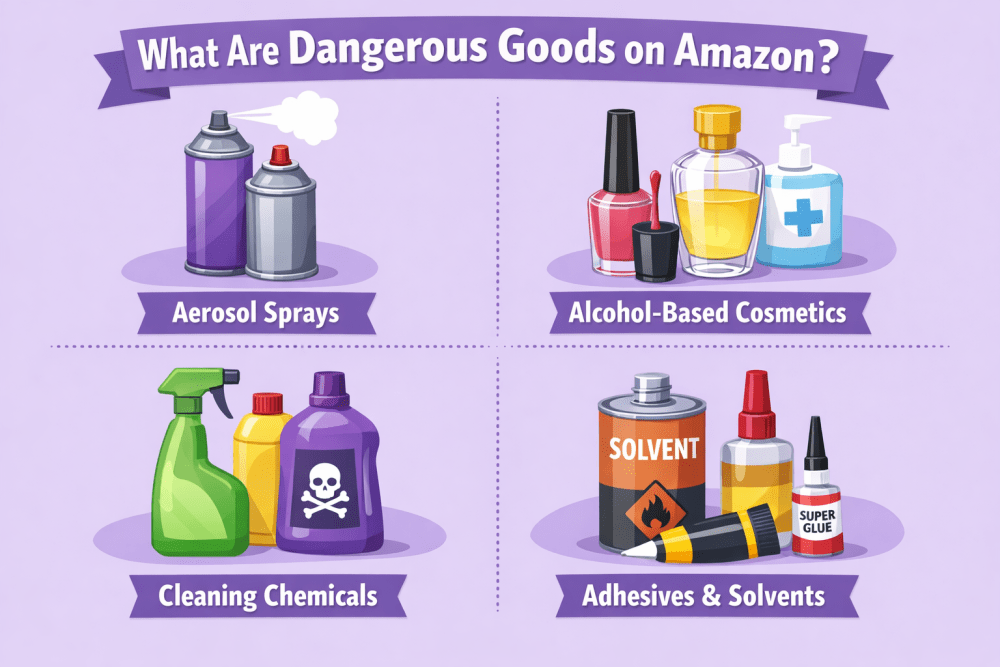
What Are Dangerous Goods on Amazon?
Dangerous goods, also called hazmat, are products that could pose a risk during storage or transportation. The risk might be fire, chemical reaction, leakage, pressure build-up, toxicity, or environmental harm.
That does not mean the product is illegal. It simply means it must be handled under specific rules.
Some common examples include:
- Aerosol sprays such as deodorants or cooking sprays
- Alcohol-based cosmetics and fragrances
- Cleaning chemicals and disinfectants
- Adhesives and solvents
- Paints and coatings
- Lithium-ion batteries and power banks
- Supplements containing restricted ingredients
- Certain automotive fluids
- Pest control products
Many sellers are surprised to learn that a simple power bank or a bottle of cologne can trigger dangerous goods classification. The reason is transport risk. Air carriers, ground carriers, and warehouses must comply with safety regulations. Amazon enforces those standards inside its fulfillment network.
If your product is flammable, pressurized, corrosive, reactive, oxidizing, or battery-powered, you should assume it needs review.
Why Dangerous Goods Matter in FBA
When you use FBA, your products enter Amazon’s regulated logistics system, where safety rules are strictly enforced. Standard items are stored in general areas, while dangerous goods are kept in designated zones with special handling procedures.
Because of this, accurate classification is critical. If a product is misdeclared, shipments can be rejected, inventory can be blocked from sale, listings may be suppressed, and Amazon can request urgent compliance documents. Repeated issues may even lead to account warnings or suspension.
This is about operational safety and liability. As a seller, your responsibility is simple – classify your products correctly and provide accurate information before sending them to FBA.

Turn Approved Products Into Revenue With WisePPC
Compliance is one side of the business. Sales are the other. Once your product is approved for FBA, it still needs traffic, visibility, and consistent performance to grow. That is where we come in.
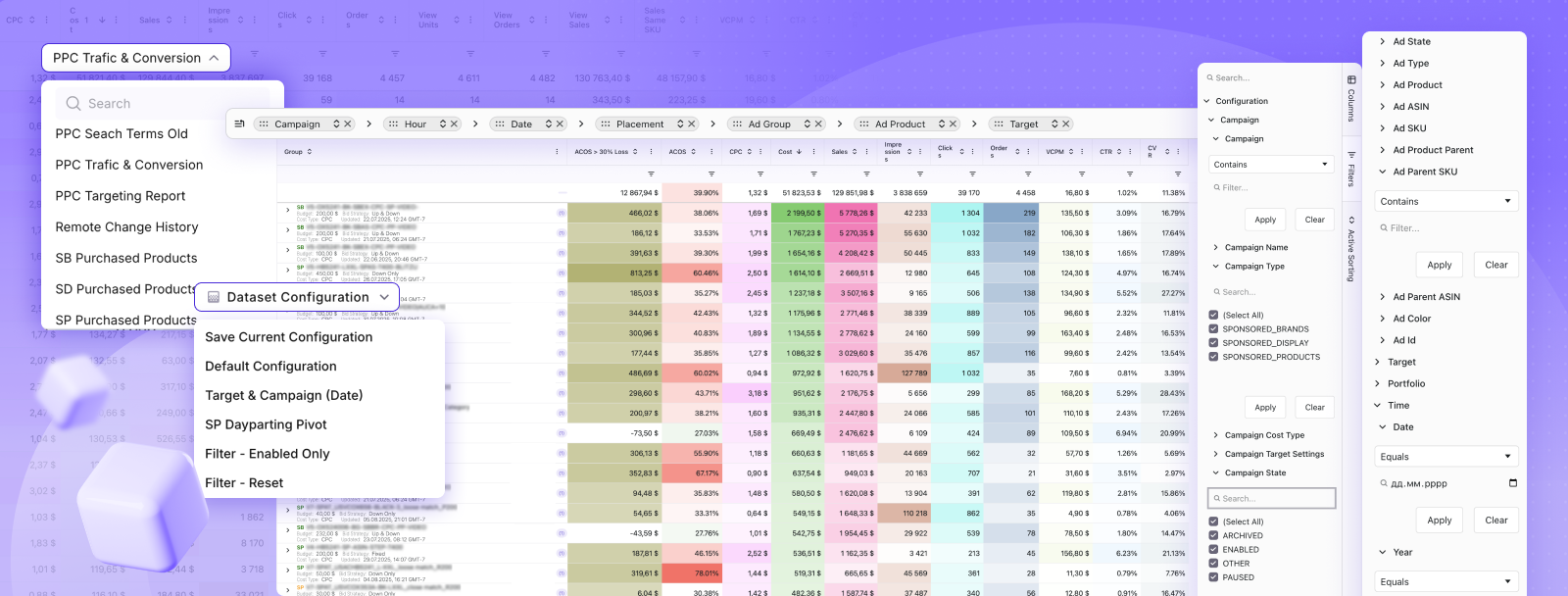
WisePPC is a performance advertising platform built around pay per click campaigns. We give sellers the tools to launch, manage, and optimize ads with clear performance data in one place. Our service combines campaign automation, analytics, and reporting so you can see exactly where your budget goes and what it generates.
This matters even more for hazmat products. When storage limits, higher fees, or stock restrictions are part of your reality, every click needs to count. WisePPC helps you align ad spend with inventory levels, monitor performance trends, and scale campaigns without overspending.
You stay focused on compliance and operations. Our platform helps you turn approved products into predictable revenue.
The Nine Hazard Classes – What They Actually Mean
Dangerous goods are divided into internationally recognized hazard classes. You do not need to memorize all of them, but having a general understanding helps you spot potential compliance issues early.
Here is a simplified overview:
| Class | Category | Examples | FBA Status |
| 1 | Explosives | Fireworks, flares | Generally prohibited |
| 2 | Gases | Flammable, toxic, or compressed gases, aerosols | Restricted |
| 3 | Flammable liquids | Paint, alcohol, solvents, some cosmetics | Restricted |
| 4 | Flammable solids | Matches, self-reactive materials | Restricted |
| 5 | Oxidizers and organic peroxides | Bleaching agents, reactive chemicals | Restricted |
| 6 | Toxic and infectious substances | Regulated toxic chemicals | Highly restricted |
| 7 | Radioactive materials | Radioactive products | Prohibited |
| 8 | Corrosives | Acids, strong cleaning agents | Restricted |
| 9 | Miscellaneous dangerous goods | Lithium batteries, eco-hazardous items | Restricted |
Most FBA sellers deal with Class 2, 3, 8, or 9 products. Lithium batteries, in particular, are extremely common and often misclassified.
Even small changes in formulation or battery specifications can shift a product into a different hazard class. That is why accurate documentation is not just paperwork. It directly affects how your product is stored, shipped, and approved for FBA.
How Amazon Identifies Dangerous Goods
Amazon does not rely only on what you declare. Its system evaluates multiple data points, including product titles and bullet points, ingredient information, SDS documentation, regulatory keywords, carrier requirements, and internal review checks.
If your listing includes terms such as flammable, aerosol, battery, solvent, or alcohol, it may be flagged automatically for review.
When that happens, the ASIN can be temporarily blocked until classification is completed.
Before sending inventory, check your product status in Seller Central using the Manage Dangerous Goods Classification tool. It takes minutes and can prevent weeks of delay.
Dangerous Goods Documentation and Review Process
If your product is classified as dangerous goods, Amazon requires proper documentation before it can be stored in FBA.
Safety Data Sheet
In most cases, you must submit a Safety Data Sheet (SDS). This document includes chemical composition, hazard identification, first aid measures, firefighting guidance, handling and storage instructions, transport details, and regulatory classification. It must comply with international standards such as the Globally Harmonized System.
The SDS must usually be issued within the last five years, match the exact product formulation, and come directly from the manufacturer. Generic or outdated documents are commonly rejected. If the information does not align with your listing, the review resets and delays approval.
Exemption Sheet
Some battery-powered products or items without hazardous chemicals may qualify for an exemption sheet instead of a full SDS.
This Amazon form requires accurate technical details such as battery type, watt-hour rating, packaging format, and chemical confirmation. Incorrect or estimated data can lead to rejection.
Review Process
After submission, Amazon reviews the documentation to verify hazard class, confirm packaging requirements, assign storage category, and determine FBA eligibility.
The review can take several days. If additional information is requested, provide complete and precise responses to avoid delays. Once approved, the product is cleared for FBA under assigned handling conditions.
Check Status Before Shipping
Before sending inventory, check your ASIN in the Manage Dangerous Goods Classification tool in Seller Central. Review the status and upload required documents if needed.
If creating a new listing, answer dangerous goods questions accurately during setup. This prevents shipment holds and listing blocks later.
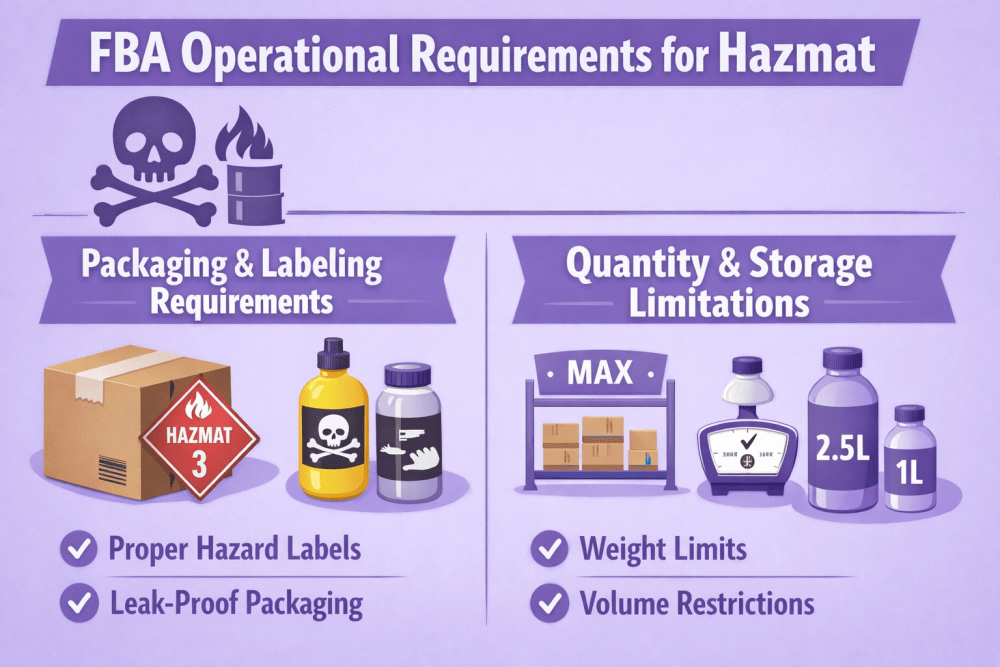
FBA Operational Requirements for Hazmat
Once your product is approved as dangerous goods, compliance does not stop at documentation. FBA has specific operational requirements that affect how your inventory is packed, shipped, and stored.
Packaging and Labeling Requirements
Hazmat products must be packaged according to strict safety standards. This is not flexible.
Packaging:
- Durable outer packaging that can withstand transport
- Leak-proof containers for all liquids
- Secondary containment when required to prevent damage if the primary container fails
- Absorbent material inside the box for flammable liquids
Labeling:
- Clear and visible hazard labeling when applicable
- Fully scannable FNSKU barcodes
- Full compliance with carrier regulations, including weight and dimension limits
Not every shipping provider accepts dangerous goods. Always confirm that your carrier is authorized to transport hazmat items before creating a shipping plan.
If packaging does not meet Amazon’s standards, the shipment can be refused or repackaged at your expense.
Quantity and Storage Limitations
Approval does not mean unlimited storage. Some dangerous goods, especially flammable liquids and aerosols, must be shipped in limited quantities.
FBA sellers may face storage caps, hazmat waitlists, longer processing times, and higher storage or fulfillment fees. Dangerous goods inventory is stored in designated areas within fulfillment centers, and capacity can change.
If you are placed on a waitlist, you must wait until space becomes available. Because of these limits, inventory planning is more critical when selling hazmat products.
International Shipping and Customs Risks
If you ship products internationally, compliance becomes even more critical.
Customs authorities require:
- Correct UN numbers
- Accurate hazard class declarations
- Transport documentation
- Proper labeling
If product information is misdeclared:
- Shipments can be held at customs
- Carriers may refuse transport
- Additional fees may apply
- Products may be returned
International sellers often underestimate this layer of regulation. Hazmat rules do not stop at Amazon’s warehouse door.
Work closely with freight forwarders who understand dangerous goods transport. Do not assume standard shipping methods apply.
The Financial Side of Hazmat
Selling dangerous goods can be profitable, and many high-demand categories fall under hazmat rules. However, the cost structure is often different from standard products.
You may face higher FBA storage fees, additional fulfillment handling charges, documentation costs related to compliance, and increased freight rates for hazardous transport. These factors can directly affect your margins.
Before launching a hazmat product, include these expenses in your pricing model. Profit margins that work for standard goods may shrink under hazmat fee structures, so it is better to calculate everything in advance rather than adjust under pressure later.
Risk Management and Long-Term Compliance
Selling dangerous goods is not just about getting initial approval. It is about avoiding preventable mistakes and maintaining control over your compliance process.
Common Mistakes Sellers Make
Certain errors appear repeatedly. Sellers ignore hazmat classification until Amazon flags the listing. They upload outdated SDS documents or submit incomplete exemption sheets. Some ship inventory before approval, mislabel products to avoid review, or fail to update documentation after formula changes. Battery specifications, especially watt-hour ratings, are often overlooked. Storage limits are sometimes ignored.
Amazon cross-checks listing data, documentation, and shipment details. Small inconsistencies are rarely overlooked. Shortcuts usually create bigger delays later.
Ongoing Compliance Is Not Optional
Dangerous goods compliance is not a one-time event.
Formulas change. Suppliers switch manufacturers. Regulations update. Amazon revises policies.
Stay proactive:
- Keep SDS files updated
- Monitor Seller Central notifications
- Review policy updates
- Train your team on packaging standards
- Recheck classification if product details change
A single oversight can block a well-performing listing.
Consistency protects momentum.
Should You Avoid Selling Hazmat?
Not necessarily. Many successful brands operate in categories that fall under dangerous goods rules, including cosmetics, supplements, cleaning products, electronics, and automotive items.
The difference between smooth operations and constant friction is preparation. When you understand classification, maintain accurate documentation, follow operational requirements, account for additional costs, and monitor compliance, hazmat becomes manageable.
It requires discipline, not avoidance.
Final Thoughts
Dangerous goods are not a problem if you handle them correctly. The issues usually come from assumptions, not from the product itself.
If you understand how classification works, submit accurate documents, follow packaging rules, and check your ASIN status before shipping, most risks are avoidable. Hazmat products simply require more attention to detail.
Treat compliance as part of your operations, not a last-minute task. That mindset alone prevents most disruptions.
FAQ
1. Do all battery products count as dangerous goods?
Not all, but many lithium-ion and lithium-metal batteries are reviewed. Classification depends on battery type and specifications. Always check your ASIN status before shipping.
2. Can I send inventory before hazmat approval?
No. If you ship before approval, your inventory can be rejected or held. Approval should come first.
3. What if Amazon reclassifies my product later?
Your listing may be blocked until you provide updated documentation. Sales can pause during the review.
4. Are hazmat products more expensive to sell?
Often yes. Storage, handling, and freight costs can be higher, so plan your margins carefully.
5. Can I sell dangerous goods internationally through FBA?
Yes, but you must meet carrier and customs regulations. Incorrect documentation can delay or stop shipments.
6. How often should I review my documentation?
Any time you change formulation, supplier, packaging, or battery specs. If something changes, recheck classification.
Join the WisePPC Beta and Get Exclusive Access Benefits
WisePPC is now in beta — and we’re inviting a limited number of early users to join. As a beta tester, you'll get free access, lifetime perks, and a chance to help shape the product — from an Amazon Ads Verified Partner you can trust.
 No credit card required
Free in beta and free extra month free after release
25% off for life — limited beta offer
Access metrics Amazon Ads won’t show you
Be part of shaping the product with your feedback
No credit card required
Free in beta and free extra month free after release
25% off for life — limited beta offer
Access metrics Amazon Ads won’t show you
Be part of shaping the product with your feedback