EN
EN  ES
ES  FR
FR  DE
DE  IT
IT  KO
KO  JA
JA  ZH
ZH  AR
AR  PT
PT  TR
TR  PL
PL  ID
ID  VI
VI Top Amazon Conferences in China for 2026

Amazon-related events in China tend to revolve around one thing – performance at scale. Most conferences are built around cross-border ecommerce, where sellers, manufacturers, and operators are already dealing with real volume, real logistics, and real margins. The conversations reflect that. Less theory, more execution.
This list highlights the main conferences and industry events happening across China this year that are relevant to the Amazon ecosystem. Some are large expos, others are more focused gatherings, but all of them are tied to how sellers build, optimize, and grow marketplace operations. If the goal is to understand what is actually working – these are the places where that gets discussed openly.

Need Better Visibility Into Amazon Ad Performance?
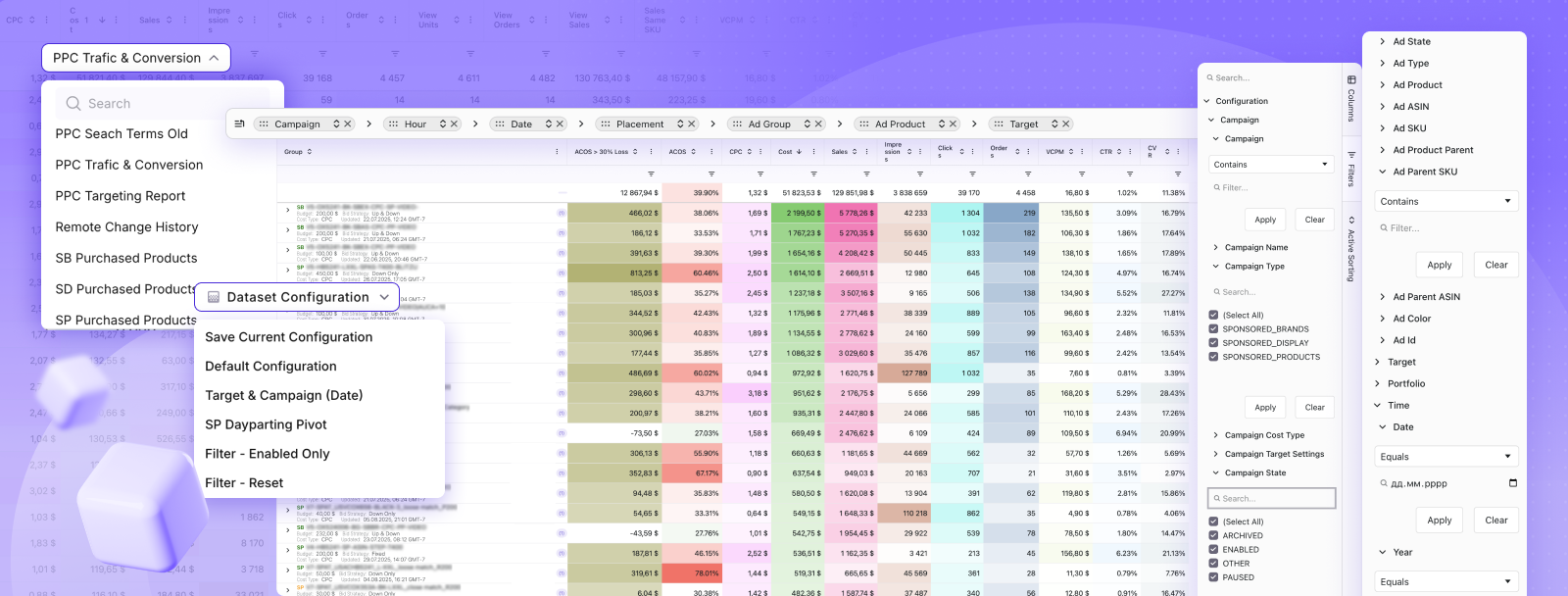
After attending a conference and gathering market insights, sellers often need a clear way to track and understand how Amazon campaigns are actually performing. WisePPC is built for Amazon sellers who need clearer analytics across advertising and sales, not just surface-level campaign data. It pulls performance data into one place and makes it easier to see what is actually happening across campaigns, keywords, placements, and product sales.
The platform is centered on practical analysis – long-term data tracking, bulk edits, placement-level reporting, multi-metric charts, and a clearer view of ad-driven versus organic results. That makes it relevant for sellers who come back from conferences with ideas but still need a better way to read performance and make decisions inside their Amazon account.
Want a Clearer View of Your Amazon Ads?
Use WisePPC to:
- track campaign and keyword performance
- compare ad results with product sales
- spot trends over time and act faster
Explore WisePPC to understand your Amazon advertising data.
1. AWS Summit Hong Kong 2026
AWS Summit Hong Kong is scheduled for June 17, 2026. It runs as a one-day, in-person event where cloud technologies are discussed in a fairly applied way, not just at a conceptual level. The structure mixes keynote sessions, technical talks, and interactive workshops, so participants can move between broader ideas and more detailed discussions without much friction.
Sessions are usually organized around themes like AI, infrastructure, and application development. The audience tends to be a mix of engineers, product teams, and business roles, which shapes the tone of the conversations. Instead of staying theoretical, most discussions lean toward implementation – how systems are built, how teams handle scaling, and how newer technologies are used in real environments.
Key Highlights:
- Date: June 17, 2026
- One-day in-person format
- Mix of keynotes, workshops, and technical sessions
- Focus on AI, cloud infrastructure, and applications
- Networking across technical and business roles
Services:
- Technical sessions and deep-dive workshops
- Live demonstrations and use case discussions
- Peer networking and knowledge exchange
- Access to cloud and AI implementation insights
Contacts:
- Website: aws.amazon.com
- Instagram: www.instagram.com/amazonwebservices
- LinkedIn: www.linkedin.com/company/amazon-web-services
- Twitter: x.com/awscloud
- Facebook: www.facebook.com/amazonwebservices
2. AWS Summit Taipei 2026
AWS Summit Taipei takes place on July 15-16, 2026. It runs over two days, which gives more space for sessions to unfold without feeling compressed. The agenda typically includes keynote presentations, breakout sessions, and hands-on learning blocks, spread across different tracks. This setup makes it easier to follow a specific topic over time rather than jumping between unrelated sessions.
Participants usually include teams working across development, infrastructure, and operations. Content tends to balance introductory material with more advanced sessions, so it does not lean too heavily in one direction. Conversations often move toward practical challenges – managing workloads, improving performance, and organizing systems in a way that holds up over time.
Key Highlights:
- Dates: July 15-16, 2026
- Multi-day conference structure
- Wide range of session formats and tracks
- Coverage of cloud, infrastructure, and application topics
- Combination of beginner and advanced content
Services:
- Breakout sessions and technical presentations
- Hands-on learning opportunities
- Peer and expert discussions
- Exploration of cloud architecture and workflows
Contacts:
- Website: aws.amazon.com
- Instagram: www.instagram.com/amazonwebservices
- LinkedIn: www.linkedin.com/company/amazon-web-services
- Twitter: x.com/awscloud
- Facebook: www.facebook.com/amazonwebservices
3. Best of AWS re:Invent
Best of AWS re:Invent is available as an on-demand virtual event, without a fixed date tied to a specific location. It is built around a curated set of sessions from a larger global conference, organized into tracks such as AI, databases, developer tools, and infrastructure.
The format is more flexible compared to in-person events. Content can be accessed at any time, which allows participants to move through sessions at their own pace. Even without a live setting, the material stays consistent with other AWS events – focused on real systems, practical use cases, and how teams are adapting their infrastructure over time.
Key Highlights:
- On-demand virtual format
- No fixed event dates
- Curated sessions across multiple tracks
- Coverage of AI, databases, and development tools
- Flexible access without schedule constraints
Services:
- On-demand technical sessions
- Structured learning tracks
- Recorded keynotes and talks
- Exploration of cloud and development topics
Contacts:
- Website: aws.amazon.com
- Instagram: www.instagram.com/amazonwebservices
- LinkedIn: www.linkedin.com/company/amazon-web-services
- Twitter: x.com/awscloud
- Facebook: www.facebook.com/amazonwebservices

4. AWSome Day
AWSome Day is delivered as a one-day online event, with sessions available on scheduled dates depending on the region. It is structured as a guided introduction to cloud computing, built around a training-style format rather than a typical conference agenda. The content follows a clear progression, starting with core concepts and moving toward how systems are deployed and managed in practice.
The event is led by technical instructors, which shapes the overall tone. Instead of broad discussions, sessions stay focused on explaining how things work and how to get started without overcomplicating the setup. The audience usually includes a mix of technical and business roles, so the material stays accessible while still covering practical aspects like infrastructure automation and service usage.
Key Highlights:
- One-day online conference format
- Delivered on scheduled dates depending on region
- Training-focused structure based on core cloud concepts
- Covers topics like infrastructure, automation, and services
- Suitable for both technical and business roles
Services:
- Instructor-led training sessions
- Introduction to cloud architecture and services
- Practical guidance on deployment and automation
- Q&A with technical instructors
- Certificate of attendance after completion
Contacts:
- Website: aws.amazon.com
- Instagram: www.instagram.com/amazonwebservices
- LinkedIn: www.linkedin.com/company/amazon-web-services
- Twitter: x.com/awscloud
- Facebook: www.facebook.com/amazonwebservices
Conclusion
Looking across these events, a pattern becomes pretty clear. The focus is not on big statements or abstract trends, but on how things actually run – systems, workflows, decisions that have to hold up under real pressure. Some conferences stay closer to strategy, others go deep into technical details, but they all circle around the same idea – making complex setups work in a predictable way.
The format also shifts depending on the goal. Larger summits feel more open, with space to explore different tracks. Smaller sessions narrow things down and keep discussions tighter. Online formats add flexibility, especially for those who prefer to move through content at their own pace. In the end, it is less about picking the “right” event and more about matching it to the kind of questions that need answers right now.
Join the WisePPC Beta and Get Exclusive Access Benefits
WisePPC is now in beta — and we’re inviting a limited number of early users to join. As a beta tester, you'll get free access, lifetime perks, and a chance to help shape the product — from an Amazon Ads Verified Partner you can trust.
 No credit card required
Free in beta and free extra month free after release
25% off for life — limited beta offer
Access metrics Amazon Ads won’t show you
Be part of shaping the product with your feedback
No credit card required
Free in beta and free extra month free after release
25% off for life — limited beta offer
Access metrics Amazon Ads won’t show you
Be part of shaping the product with your feedback