EN
EN  ES
ES  FR
FR  DE
DE  IT
IT  KO
KO  JA
JA  ZH
ZH  AR
AR  PT
PT  TR
TR  PL
PL  ID
ID  VI
VI When Did Amazon Become Popular? The Rise Explained

Quick Summary: Amazon became truly popular between 1997-1999, transitioning from an online bookstore to a major e-commerce player during the dot-com boom. Its 1997 IPO brought mainstream attention, while aggressive expansion into new product categories drew millions of customers. The 2005 launch of Amazon Prime cemented its dominance, creating unprecedented customer loyalty that transformed it into the global giant we know today.
Amazon didn’t become the behemoth we know today overnight. The company’s journey from a scrappy online bookstore to the world’s most influential retailer took years of strategic moves, calculated risks, and a few lucky breaks along the way.
But when exactly did Amazon shift from interesting startup to cultural phenomenon? The answer isn’t as simple as pointing to a single date.
The truth is Amazon’s popularity grew in distinct waves, each building on the previous one. Understanding these waves reveals not just when Amazon became popular, but why it managed to stay that way for more than three decades.
The Garage Startup: 1994-1995
Jeff Bezos founded Amazon on July 5, 1994, initially naming it Cadabra—a play on the magic word “Abracadabra.” He left a stable Wall Street investment firm after discovering that web usage in the spring of 1994 was growing at 2,300 percent a year. That statistic convinced him the internet represented a once-in-a-generation opportunity.
Bezos chose Seattle as his headquarters specifically because software engineers were plentiful there, thanks largely to Microsoft’s presence. He started the company out of his garage on Northeast 28th Street in Bellevue, Washington, with programmer Shel Kaphan as his first employee.
The website officially launched as Amazon.com in July 1995. Why “Amazon”? Bezos wanted a name starting with “A” to appear early in alphabetical directories, and he liked that the Amazon River was the world’s largest—a fitting metaphor for his ambitions.
During this period, Amazon was far from popular. It was a niche online bookstore competing with established giants like Barnes & Noble and countless local bookstores. Most Americans hadn’t even made their first online purchase yet.
But the company had something special: selection. Amazon offered access to millions of books that physical stores simply couldn’t stock.
The First Wave of Popularity: 1997-1999
Here’s where things get interesting. Amazon’s first real surge in popularity came during the dot-com boom, specifically after its initial public offering in May 1997.
Going public transformed Amazon from a startup into a recognized brand. Suddenly, ordinary people saw Amazon mentioned in newspapers and financial news programs. The IPO occurred in May 1997, and within months, investors and consumers alike were paying attention.
Between 1997 and 1999, Amazon experienced explosive growth. The company aggressively expanded beyond books. This wasn’t just a gradual product line expansion—it was a full-scale assault on multiple retail categories simultaneously.
The strategy worked. By 1999, Bezos received significant mainstream media recognition for his role in pioneering e-commerce. That kind of mainstream media recognition doesn’t happen to companies on the fringes—it happens to cultural forces.
During these years, Amazon also perfected something that would become its trademark: customer obsession. The company pioneered features like one-click ordering, customer reviews, and personalized recommendations. These innovations sound obvious now, but they were revolutionary at the time.
Brand recognition played a huge role in this early popularity. As one early observer noted, “Brand names are more important online than they are in the physical world.” Amazon understood this and invested heavily in building trust when most people were still skeptical about entering credit card information online.
The Dot-Com Bubble and Survival
Not everything went smoothly during this period. The dot-com bubble burst in 2000, wiping out countless internet companies. Amazon’s stock plummeted, and critics openly questioned whether the company would survive.
But Amazon did survive, largely because—unlike many dot-com failures—it had built a real business with actual revenue and a loyal customer base. That customer base, cultivated between 1997 and 1999, provided the foundation for everything that came next.
The Third-Party Marketplace: 2000 and Beyond
In 2000, Amazon launched its third-party marketplace, allowing other sellers to list products on its platform. This move fundamentally changed the company’s business model.
Previously, Amazon was a retailer that bought inventory and sold it to customers. Now, it was becoming a platform—more like a digital mall where other businesses could reach Amazon’s growing customer base.
The marketplace made Amazon more popular for two reasons. First, it massively expanded product selection without requiring Amazon to invest in inventory. Second, it created a network effect where more sellers attracted more customers, and more customers attracted more sellers.
This strategic shift also introduced Fulfillment by Amazon (FBA), where third-party sellers could store inventory in Amazon’s warehouses and let Amazon handle shipping. FBA turned thousands of small businesses into Amazon evangelists, further expanding the platform’s reach.

WisePPC – Find What Actually Sells
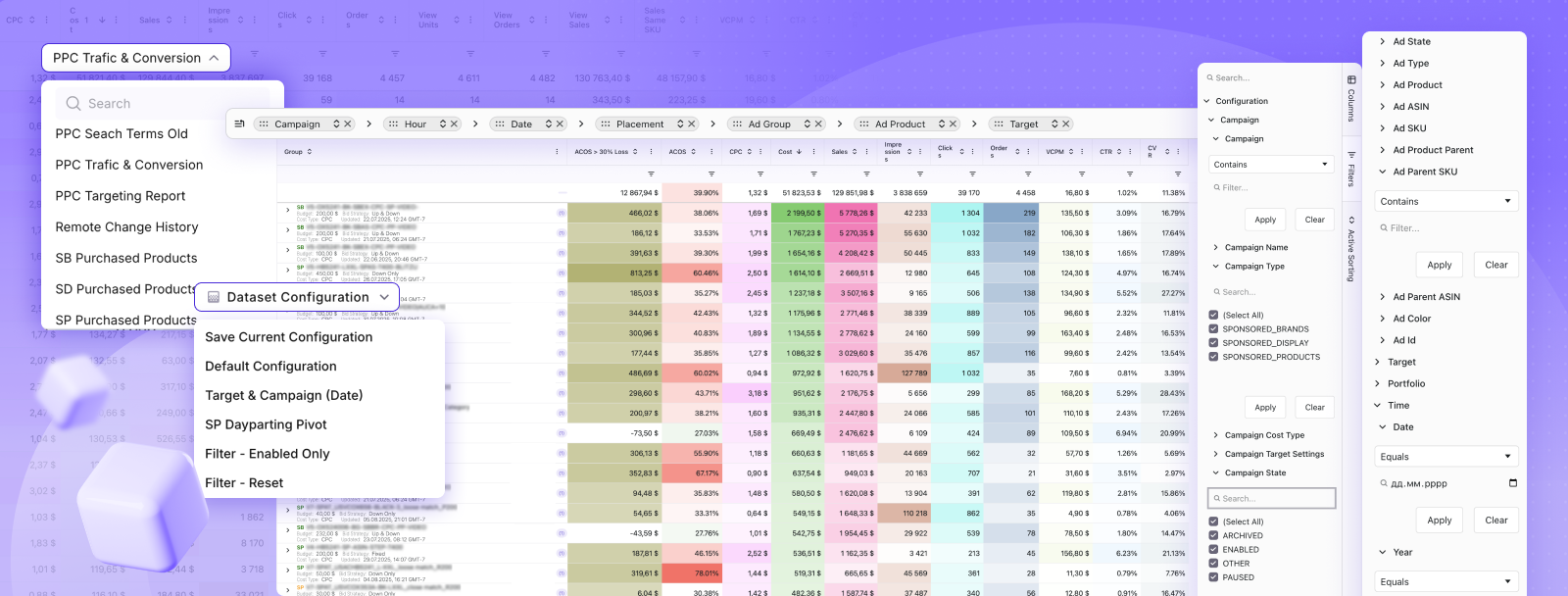
Not every trending idea turns into real results. WisePPC helps you see which products and campaigns are actually working, not just getting attention. That makes it easier to focus on what’s worth scaling.
Need Better Insight Into Your Campaigns?
Use WisePPC to:
- track performance across campaigns and products
- connect ad activity with real sales
- identify what’s worth scaling
👉 Explore WisePPC to get a clearer view of your data.
Amazon Web Services: The Hidden Engine
Most people don’t realize that Amazon Web Services (AWS), launched in 2002, played a critical role in the company’s sustained popularity. AWS started as a way for Amazon to monetize its excess server capacity, but it quickly became something much bigger.
By offering cloud computing services to other businesses, Amazon created an entirely new revenue stream that eventually became more profitable than its retail operations. AWS powers huge portions of the internet today, from Netflix to countless startups.
But here’s what matters for Amazon’s popularity: AWS generated massive profits that allowed the retail side to operate with razor-thin margins. Amazon could undercut competitors on price because it had AWS cash subsidizing its e-commerce ambitions.
This competitive advantage accelerated Amazon’s retail growth throughout the 2000s and beyond, making it impossible for traditional retailers to compete on price alone.
Amazon Prime: The Game-Changer of 2005
If you had to pick one single moment when Amazon became truly dominant—not just popular, but culturally embedded—it would be February 2005, when Amazon launched Prime.
Prime started simple: pay $79 annually and get unlimited two-day shipping on eligible items. The offer seemed almost too good to be true, and analysts questioned whether Amazon could make the economics work.
They were asking the wrong question. Prime wasn’t about immediate profitability. It was about locking in customer loyalty.
And it worked spectacularly. Once customers paid for Prime, they started consolidating their online shopping with Amazon to “get their money’s worth.” This behavioral shift turned occasional Amazon shoppers into habitual ones.

Over time, Amazon added more benefits to Prime: streaming video, music, e-books, exclusive deals, and even grocery delivery. Each addition made the membership stickier and harder to cancel.
By 2026, Prime has evolved far beyond shipping. Food delivery through partnerships, early access to deals, and a content library rivaling Netflix make Prime an all-encompassing lifestyle subscription. According to recent analyses, this ecosystem approach has created customer loyalty unprecedented in retail history.
The Numbers Behind Prime’s Success
While specific current membership numbers aren’t publicly disclosed in real-time, Prime’s impact on Amazon’s business is undeniable. Prime members shop more frequently, spend more per transaction, and rarely comparison shop—exactly what Amazon intended.
The program essentially created a two-tier internet: people with Prime who default to Amazon for everything, and people without it who still shop around. That division has been incredibly profitable for Amazon and problematic for its competitors.
The Kindle and Digital Content: 2007
In 2007, Amazon released the first Kindle e-reader, marking another turning point in its popularity. The Kindle wasn’t just a new product—it was Amazon’s attempt to control the entire book ecosystem, from publishing to reading.
The strategy worked. By 2012, the Kindle constituted around 50 percent of all Android-operated tablet sales. More importantly, Kindle owners bought more books, both digital and physical, from Amazon.
The Kindle ecosystem allowed Amazon to become a major player in e-book distribution and content, which impacted traditional publishers but provided authors new distribution options. This move into content creation foreshadowed Amazon’s later expansion into original video content and other media.
The relatively low-cost handheld tablets made reading more accessible and convenient, invigorating the e-book market and further cementing Amazon’s position as the go-to destination for readers.
Whole Foods and Physical Retail: 2017
Amazon’s acquisition of Whole Foods, which it purchased for $13.7 billion in 2017, shocked the retail world. An online giant was buying a premium grocery chain? It seemed counterintuitive.
But the move made strategic sense. Whole Foods gave Amazon instant physical presence in affluent neighborhoods, valuable real estate for package pickup locations, and a foothold in the massive grocery market. It also provided data about food shopping habits that Amazon could leverage for its online grocery offerings.
The acquisition signaled that Amazon wasn’t content to dominate online retail—it wanted to reshape physical retail too. Grocery represents one of the last major categories where online shopping hasn’t fully taken over, and Amazon clearly sees opportunity there.
| Year | Key Milestone | Impact on Popularity |
|---|---|---|
| 1994 | Founded by Jeff Bezos | Unknown startup |
| 1995 | Launched as online bookstore | Niche recognition |
| 1997 | IPO and expansion beyond books | First major popularity wave |
| 1999 | Mainstream media recognition | Mainstream cultural recognition |
| 2000 | Third-party marketplace launched | Massive selection expansion |
| 2002 | Amazon Web Services begins | Revenue diversification |
| 2005 | Prime membership introduced | Customer loyalty transformation |
| 2007 | Kindle e-reader released | Content ecosystem creation |
| 2017 | Whole Foods acquisition | Physical retail presence |
| 2021 | Bezos steps down as CEO | Transition to Andy Jassy |
Why Amazon Stayed Popular
Plenty of companies experience surges in popularity. Few maintain it for decades. So what’s different about Amazon?
First, relentless innovation. Amazon continuously launches new products, services, and experiments. Most fail, but the ones that succeed—like Prime, AWS, and Kindle—create entirely new markets or reshape existing ones.
Second, customer obsession. This isn’t marketing fluff. Amazon genuinely prioritizes customer convenience over short-term profits. That focus builds trust and loyalty that competitors struggle to match.
Third, infrastructure investment. Amazon built a massive logistics network that now serves as an almost insurmountable competitive moat. Competitors can’t match Amazon’s delivery speed without making similar billion-dollar investments.
The Flywheel Effect
Amazon famously operates on a “flywheel” model: lower prices attract more customers, which attracts more sellers, which increases selection, which attracts even more customers, allowing Amazon to lower prices further.
This self-reinforcing cycle explains why Amazon’s dominance has only increased over time. Each improvement makes the flywheel spin faster, creating momentum that’s nearly impossible to stop.
The Dark Side of Popularity
Amazon’s popularity hasn’t come without controversy. Labor practices at warehouses have drawn significant criticism. According to Brookings Institution analysis, employment in warehouse and fulfillment center industries surged from 2010 to 2016 by 372,000 workers, representing a 48 percent increase.
That rapid expansion has raised questions about working conditions, wages, and job quality. Critics argue that Amazon’s drive for efficiency creates grueling workplace conditions that prioritize speed over worker wellbeing.
Antitrust concerns also loom large. Some argue that Amazon has become too dominant, using its marketplace power to favor its own products over third-party sellers and leveraging data from sellers to compete against them.
Environmental impact is another concern, though Amazon has committed to achieving net-zero carbon emissions by 2040, a decade ahead of the Paris Agreement’s target. The company achieved its goal of matching 100% of the electricity consumed by its global operations with renewable energy in 2024.
Amazon’s Cultural Impact
Beyond business metrics, Amazon has fundamentally changed consumer behavior and expectations. Two-day shipping used to seem impossibly fast. Now, customers get frustrated when it takes that long.
Amazon has trained consumers to expect endless selection, easy returns, detailed reviews, and instant gratification. These expectations now apply to all retailers, online and offline, forcing the entire industry to adapt or die.
The phrase “I’ll just get it on Amazon” has become part of everyday language, similar to “Google it.” That kind of linguistic penetration represents peak cultural influence.
The Current State: 2026 and Beyond
As of 2026, Amazon operates at a scale that’s difficult to comprehend. The company’s reach extends into cloud computing, artificial intelligence, healthcare, entertainment, logistics, and countless other sectors.
Recent developments show Amazon continuing to push boundaries. Partnerships with AI companies and investments in emerging technologies suggest the company isn’t resting on past success. The integration of advanced AI tools into Amazon Web Services represents the next frontier of competitive advantage.
Andy Jassy, who took over as CEO when Bezos stepped down in 2021, came from AWS. That background signals Amazon’s priorities: technology infrastructure, platform dominance, and long-term thinking over quarterly profits.
Emerging markets represent another growth area. While Amazon has fulfillment centers in only 9 percent of countries, these countries represent 74 percent of global GDP. The other 91 percent of countries, representing $22 trillion of global GDP, present massive expansion opportunities.
Lessons from Amazon’s Rise
What can we learn from Amazon’s journey from garage startup to global dominance?
First, timing matters, but execution matters more. Amazon launched at the right moment to capitalize on internet growth, but so did thousands of other companies that no longer exist. Bezos’s relentless focus on customer experience and willingness to sacrifice short-term profits for long-term position made the difference.
Second, diversification creates resilience. Amazon survived the dot-com crash and every subsequent economic downturn because it continuously expanded into new areas. When one business faces headwinds, others provide stability.
Third, infrastructure is everything. Amazon’s massive investments in warehouses, data centers, and logistics networks now serve as nearly insurmountable barriers to competition. Building similar infrastructure would cost competitors billions and take years.
Fourth, never stop innovating. Amazon’s corporate culture encourages experimentation and accepts failure. That approach has produced numerous game-changing innovations alongside countless flops.
Frequently Asked Questions
When exactly did Amazon become popular?
Amazon first gained major popularity in the late 1990s after its IPO, but its influence expanded dramatically after launching Prime in 2005.
Was Amazon immediately successful after launching?
No, Amazon began as a small online bookstore in 1995 and gradually expanded before becoming widely recognized.
What made Amazon more popular than other online retailers?
Key factors included massive product selection, low prices, customer reviews, Prime membership benefits, and fast delivery innovation.
How did Amazon Prime change the company’s popularity?
Prime increased customer loyalty by encouraging shoppers to use Amazon more frequently for convenience and added benefits.
Did Amazon face any major challenges to its popularity?
Yes, Amazon faced the dot-com crash, criticism over labor practices, antitrust scrutiny, and competition, but continued growing.
When did Amazon become profitable?
Amazon became consistently profitable in the 2010s, largely driven by the success of AWS.
Is Amazon still growing in popularity today?
Yes, Amazon remains one of the world’s largest companies and continues expanding into new markets and industries.
Conclusion: From Bookstore to Global Force
So when did Amazon become popular? The honest answer is: gradually, then suddenly.
The company spent 1994-1996 building foundations. It experienced its first popularity wave from 1997-1999 during the dot-com boom. It survived and strengthened through the 2000s with smart strategic moves like the third-party marketplace and AWS. Then Prime, launched in 2005, transformed it from popular to dominant.
Each phase built on the previous one, creating momentum that became nearly unstoppable. Today, Amazon isn’t just popular—it’s a fundamental part of modern consumer culture, business infrastructure, and the global economy.
What made Amazon different wasn’t genius in any single area. It was the combination of good timing, customer obsession, willingness to invest for the long term, relentless innovation, and strategic diversification. That combination turned a garage startup selling books into one of the most influential companies in human history.
Whether you love Amazon or worry about its dominance, one thing is clear: its rise from obscurity to ubiquity represents one of the defining business stories of our time. Understanding that journey helps us understand how the digital economy works and where it might be heading next.
Ready to dive deeper into e-commerce history and strategy? Explore how other tech giants rose to prominence and what lessons their journeys offer for understanding our digital future.
Join the WisePPC Beta and Get Exclusive Access Benefits
WisePPC is now in beta — and we’re inviting a limited number of early users to join. As a beta tester, you'll get free access, lifetime perks, and a chance to help shape the product — from an Amazon Ads Verified Partner you can trust.
 No credit card required
Free in beta and free extra month free after release
25% off for life — limited beta offer
Access metrics Amazon Ads won’t show you
Be part of shaping the product with your feedback
No credit card required
Free in beta and free extra month free after release
25% off for life — limited beta offer
Access metrics Amazon Ads won’t show you
Be part of shaping the product with your feedback