EN
EN  ES
ES  FR
FR  DE
DE  IT
IT  KO
KO  JA
JA  ZH
ZH  AR
AR  PT
PT  TR
TR  PL
PL  ID
ID  VI
VI How to Dropship on Amazon in 2026: Complete Guide

Quick Summary: Dropshipping on Amazon is allowed when sellers identify themselves as the seller of record, remove third-party supplier branding from all shipments, and handle customer returns directly. In 2024, independent sellers in the US averaged more than $290,000 in annual sales, according to Amazon, with more than 55,000 sellers generating over $1 million. Success requires creating an Amazon seller account, finding profitable products, partnering with compliant suppliers, and following Amazon’s strict dropshipping policy to avoid account suspension.
Dropshipping continues to attract entrepreneurs looking for low-barrier entry into e-commerce. But here’s the thing—Amazon’s dropshipping rules are strict, and many sellers get suspended for violations they didn’t even know existed.
More than 60% of sales in the Amazon store come from independent sellers, most of which are small and midsize businesses. The opportunity is real. The question is whether you can navigate Amazon’s policies while building a profitable operation.
This guide breaks down exactly how dropshipping works on Amazon, what the platform allows, and the specific steps to start without risking account suspension.
What Is Dropshipping and How Does It Work on Amazon?
Dropshipping is a fulfillment method where sellers list products without holding inventory. When a customer places an order, the seller purchases the item from a third-party supplier who ships directly to the customer.
The seller never touches the product. They act as the middleman between supplier and customer.
On Amazon, dropshipping operates under the Merchant Fulfilled Network (MFN). Sellers list products, manage orders through Seller Central, and coordinate with suppliers to fulfill shipments. The profit comes from the margin between the supplier’s wholesale price and the retail price on Amazon.
Sound simple? It is conceptually. But Amazon’s execution requirements are precise.
The Key Difference Between FBA and Dropshipping
Fulfillment by Amazon (FBA) requires sellers to purchase inventory upfront and ship it to Amazon’s warehouses. Amazon then handles storage, packing, shipping, and customer service.
Dropshipping eliminates upfront inventory costs. Sellers only pay suppliers after customers purchase products. This reduces financial risk but also means sellers have less control over shipping times and product quality.

Get Clarity on Your Campaign Results

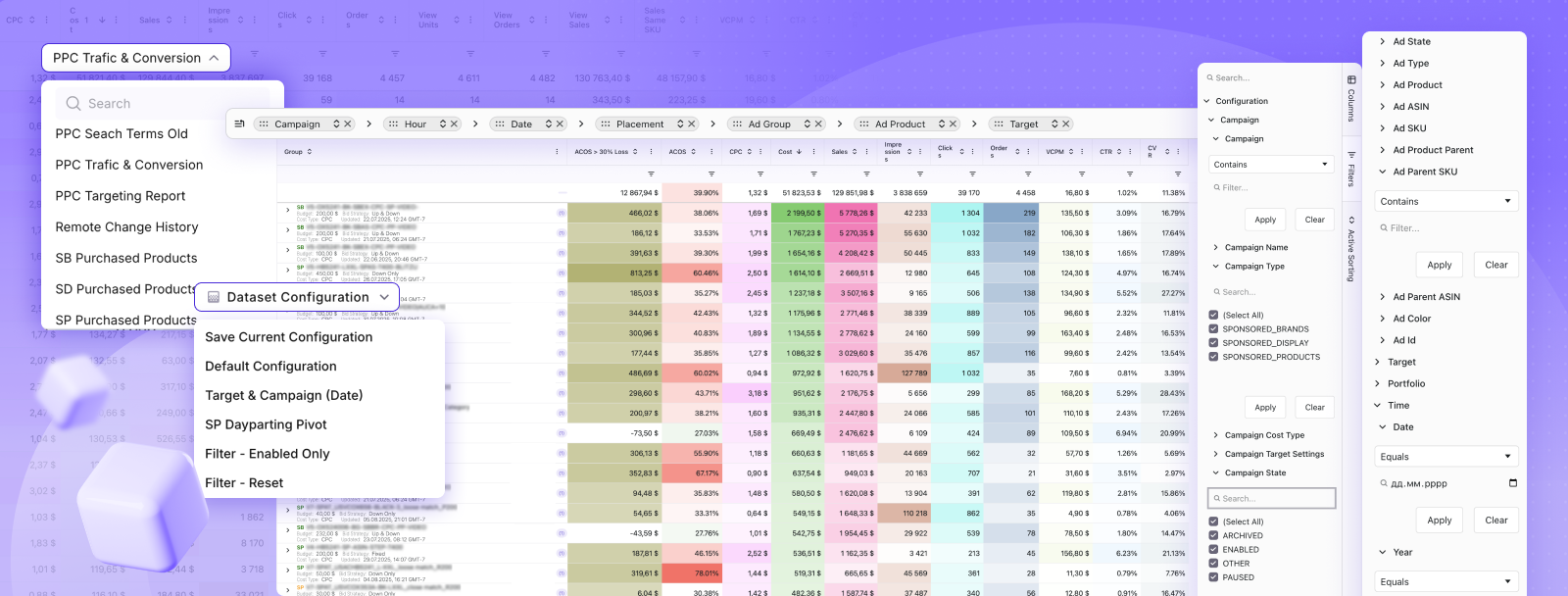
WisePPC gives a more detailed look at how campaigns and keywords perform. It connects advertising data with product-level results, making it easier to understand which parts of your strategy are working. This helps reduce wasted budget and improve targeting.
Trying to Improve Campaign Results?
Use WisePPC to:
- analyze campaign and keyword performance
- connect ads with product sales
- identify what is driving results
👉 Explore WisePPC to understand your Amazon advertising data.
Is Dropshipping Allowed on Amazon?
Yes, but with conditions.
Amazon permits dropshipping under its Drop Shipping Policy, but violations lead to account suspension. According to community discussions, approximately 95% of sellers attempting dropshipping get their accounts suspended.
The policy is clear: sellers must always be the seller of record. This means the customer must see only the seller’s name and information—never the supplier’s.
Amazon’s Drop Shipping Policy Requirements
Amazon’s official Drop Shipping Policy mandates three core requirements:
First, sellers must identify themselves as the seller of record on all packing slips, invoices, and external packaging. The customer should never see another company’s branding or contact information.
Second, sellers must remove any information identifying the third-party supplier before shipping. Supplier logos, return addresses, and promotional materials cannot appear on what the customer receives.
Third, sellers remain responsible for accepting and processing customer returns. Even though the supplier ships the product, the seller handles all customer service issues.
What Dropshipping Methods Are Strictly Prohibited
Amazon explicitly prohibits purchasing products from another retailer and having that retailer ship directly to customers if the shipment doesn’t identify the seller as the seller of record.
This means ordering from Walmart, Target, or even another Amazon seller and shipping directly to customers violates the policy. The packaging from these retailers will show their branding, not yours.
Additionally, any packing slips, invoices, or external packaging showing a seller name or contact information other than yours is prohibited. Suppliers must use blank packaging or packaging with your business information only.
How Much Does It Cost to Start Dropshipping on Amazon?
Starting costs remain relatively low compared to traditional retail. Amazon charges no specific fees for dropshipping itself, but sellers pay standard Amazon selling costs.
The Individual selling plan costs $0.99 per item sold. The Professional selling plan costs $39.99 per month regardless of sales volume. Most serious dropshippers choose the Professional plan because it unlocks bulk listing tools and removes per-item fees.
Referral fees range from 8% to 15% depending on product category. These apply to all sellers, whether using FBA or dropshipping.
Beyond Amazon fees, sellers need capital for initial product orders. While dropshipping eliminates bulk inventory purchases, sellers still purchase products after customers order. This requires enough working capital to cover orders before customer payments clear.
Is Amazon Dropshipping Profitable?
Dropshipping on Amazon can be very profitable when executed properly. More than 60% of sales in the Amazon store come from independent sellers, and in 2024, independent sellers in the US averaged more than $290,000 in annual sales, according to Amazon.
More than 55,000 independent sellers generated over $1 million in sales during 2024.
That said, profitability depends entirely on product selection, supplier relationships, and operational efficiency. Margins are typically tighter in dropshipping compared to private label products because suppliers charge higher per-unit prices for individual orders rather than bulk purchases.
Successful dropshippers focus on products with strong demand, limited competition, and healthy profit margins after all fees. They also maintain excellent supplier relationships to ensure fast shipping and quality control.
How to Start Dropshipping on Amazon: 5 Steps
Starting requires careful planning and strict adherence to Amazon’s policies. These five steps provide the foundation for a compliant, profitable dropshipping operation.
Step 1: Create an Amazon Selling Account
Visit Amazon Seller Central and register for a selling account. Choose between Individual and Professional plans based on expected sales volume.
The registration process requires business information, tax identification numbers, bank account details for payments, and identity verification. Amazon takes account security seriously, so expect verification steps.
Once approved, familiarize yourself with Seller Central’s interface. This dashboard manages listings, orders, customer messages, and performance metrics.
Step 2: Find Products to Dropship on Amazon
Product selection determines success or failure. The goal is finding products with high demand and manageable competition.
Start by researching product categories. Use Amazon’s Best Sellers lists to identify popular categories. Look for products priced between $20 and $50—high enough for decent margins but low enough for impulse purchases.
Analyze competition by examining existing listings. How many sellers offer the product? What are their prices? What do customer reviews reveal about quality expectations?
Avoid highly competitive categories dominated by established brands. Also avoid products requiring approval or gatekeeping, at least initially. Categories like grocery, jewelry, and certain electronics require brand authorization or approval.
Consider using product research tools to identify opportunities. These tools analyze sales data, competition levels, and profit potential across thousands of products.

Step 3: Establish Relationships with Dropshipping Suppliers
Finding reliable suppliers is critical. The supplier’s performance directly impacts customer satisfaction and account health.
Look for wholesale suppliers willing to work with dropshippers. Many traditional wholesalers prefer bulk orders, but some accommodate dropshipping arrangements. Be upfront about your business model.
For branded products, securing authorization is non-negotiable. Amazon requires a Letter of Authorization from brands and invoices from authorized distributors. Without these documents, listings for branded products will be removed and accounts may face suspension.
Evaluate suppliers based on several criteria: product quality, shipping speed, packaging options, return policies, and communication responsiveness. Request samples before committing to a supplier relationship.
Negotiate terms that allow for unbranded or custom-branded packaging. Remember, Amazon’s policy requires removing all third-party supplier information from packaging.
Step 4: List and Promote Products
Creating compelling product listings drives sales. Each listing needs accurate product information, competitive pricing, and high-quality images.
Write clear, detailed product titles that include key search terms. Titles should be descriptive but readable—avoid keyword stuffing.
Bullet points highlight product features and benefits. Focus on what matters to customers: dimensions, materials, use cases, and unique selling points.
Product descriptions provide additional detail. Explain how the product solves problems or improves the customer’s life.
Images are crucial. Use high-resolution photos showing the product from multiple angles. Amazon allows up to nine images per listing—use them.
Pricing requires careful calculation. Factor in the supplier’s cost, Amazon’s referral fee, shipping costs, and desired profit margin. Research competitor pricing to ensure competitiveness while maintaining profitability.
Step 5: Coordinate with the Supplier on Orders
When customers place orders, the fulfillment process begins. Sellers must quickly coordinate with suppliers to ship products.
Establish a clear order fulfillment workflow. Many sellers automate this process using order management software that connects Seller Central with supplier systems.
Manually processing orders works for low volume but becomes unsustainable as sales increase. Look for automation tools that forward order details to suppliers while updating tracking information in Seller Central.
Communication with suppliers about order status is essential. Late shipments damage customer trust and hurt seller performance metrics.
Update tracking information in Seller Central as soon as the supplier provides it. Amazon uses tracking to verify shipments and calculate late shipment rates, a key performance metric.
Amazon FBA vs Dropshipping: Which Is Right for You?
Choosing between FBA and dropshipping depends on business goals, available capital, and risk tolerance.
FBA requires purchasing inventory upfront and shipping it to Amazon’s fulfillment centers. Amazon then stores products, picks and packs orders, and handles customer service. Sellers pay FBA fees but gain access to Prime members and faster shipping.
Dropshipping eliminates upfront inventory costs. Sellers only purchase products after customers order them. This reduces financial risk but means longer shipping times and less control over the fulfillment process.
| Factor | FBA | Dropshipping |
|---|---|---|
| Upfront costs | High (inventory purchase) | Low (no inventory) |
| Control | High (Amazon handles fulfillment) | Lower (supplier handles fulfillment) |
| Shipping speed | Fast (Prime eligible) | Slower (standard shipping) |
| Profit margins | Higher (bulk pricing) | Lower (per-unit pricing) |
| Scalability | High (Amazon infrastructure) | Moderate (supplier dependent) |
| Customer service | Amazon handles | Seller handles |
Some sellers use both models strategically. Test products through dropshipping to validate demand, then transition successful products to FBA for better margins and Prime eligibility.
Common Dropshipping Mistakes to Avoid
Several mistakes consistently cause problems for new dropshippers on Amazon.
The biggest mistake is violating Amazon’s Drop Shipping Policy by ordering from other retailers. Purchasing from Walmart or another Amazon seller and shipping directly to customers leaves retailer branding on packages, violating policy.
Poor supplier vetting leads to quality issues and shipping delays. Take time to research suppliers thoroughly, order samples, and verify their reliability before listing products.
Inadequate profit margin calculation results in losing money on sales. Calculate all costs—supplier price, Amazon fees, shipping, returns—before setting prices.
Ignoring customer service damages seller metrics. Even though suppliers handle fulfillment, sellers remain responsible for customer satisfaction. Respond quickly to messages and resolve issues proactively.
Listing products without proper authorization for branded items triggers account suspensions. Always obtain Letters of Authorization from brands and maintain invoices from authorized distributors.
Maintaining Account Health as a Dropshipper
Amazon monitors seller performance through several metrics. Poor performance leads to warnings, restrictions, or suspension.
Key metrics include Order Defect Rate (ODR), Late Shipment Rate, and Valid Tracking Rate. ODR should remain below 1%, Late Shipment Rate below 4%, and Valid Tracking Rate above 95%.
Dropshippers face challenges with these metrics because they depend on supplier performance. Choose reliable suppliers and monitor metrics closely. Address issues immediately before they impact account health.
Customer feedback directly affects metrics. Encourage positive reviews by providing excellent service. When negative feedback occurs, respond professionally and work to resolve the issue.
Amazon may request invoices to verify product authenticity. Maintain organized records of all supplier invoices showing purchases from authorized distributors. Inability to provide proper invoices can result in listing removal or suspension.
Legal and Regulatory Considerations
Operating a dropshipping business requires compliance with various legal requirements beyond Amazon’s policies.
Business registration varies by location. Most jurisdictions require registering as a business entity and obtaining necessary licenses and permits. Consult local regulations to ensure compliance.
Tax obligations include collecting and remitting sales tax where required. Amazon’s tax calculation services help, but sellers remain responsible for understanding tax requirements in states where they have nexus.
The INFORM Consumers Act, enforced by the Federal Trade Commission, requires online marketplaces to collect and verify information from high-volume third-party sellers. According to FTC guidance, high-volume sellers are those who make 200 or more discrete sales totaling $5,000 or more in a 12-month period.
Product liability concerns exist even for dropshippers. If a product causes harm, sellers may face legal action alongside suppliers and manufacturers. Product liability insurance provides protection against these risks.
Scaling Your Amazon Dropshipping Business
Once initial products prove profitable, scaling becomes the next challenge.
Expanding product catalog increases sales potential. Add complementary products that appeal to the same customer base. Use data from initial products to identify winning categories.
Automation tools reduce manual work as order volume grows. Order management systems automatically forward orders to suppliers and update tracking in Seller Central. Customer service software helps manage increasing message volume.
Multiple supplier relationships reduce dependency on single sources. If one supplier runs out of stock or raises prices, alternative suppliers maintain business continuity.
Brand building differentiates sellers in competitive markets. While dropshipping typically involves selling existing products, creating a recognizable store name and providing excellent service builds customer loyalty.
Eventually, transitioning successful dropshipping products to FBA or private label arrangements improves margins and control. Use dropshipping to validate demand, then invest in inventory for proven winners.
Is Dropshipping with Amazon Worth It?
Dropshipping on Amazon offers legitimate opportunities for entrepreneurs willing to navigate the platform’s requirements carefully.
The low barrier to entry makes it accessible. No inventory investment required upfront means testing products without significant financial risk. For those with limited capital, this accessibility is valuable.
But success requires more than listing products. Supplier relationships, customer service, and strict policy compliance determine long-term viability. According to community discussions, approximately 95% of dropshippers attempting it without proper understanding face account suspension.
The sellers who succeed treat dropshipping as a real business. They invest time in product research, build relationships with reliable suppliers, maintain excellent customer service, and monitor performance metrics closely.
Amazon’s data shows independent sellers averaged more than $290,000 in annual sales, according to Amazon, in 2024, with more than 55,000 sellers exceeding $1 million. These numbers demonstrate the platform’s potential when approached strategically.
The question isn’t whether dropshipping on Amazon is worth it universally—it’s whether it fits specific business goals and capabilities. For those willing to invest the effort to do it correctly, the opportunity is real.
Frequently Asked Questions
Can I dropship from other retailers like Walmart to Amazon?
No, this violates Amazon’s drop shipping policy. Orders must not include branding from other retailers and must identify you as the seller of record.
Do I need brand authorization to dropship on Amazon?
Yes, for branded products you need authorization and valid supplier invoices. Generic products typically don’t require it.
How long does it take to start making sales with Amazon dropshipping?
It varies. Some sellers get sales within days, while others may take weeks or months depending on product demand and competition.
What’s the difference between dropshipping and Amazon FBA?
Dropshipping involves no inventory, while FBA requires sending products to Amazon warehouses. FBA offers faster shipping and better margins but higher upfront costs.
Can I use both FBA and dropshipping for different products?
Yes, many sellers combine both methods to test products and optimize profitability.
What happens if my supplier ships late or sends wrong products?
You are responsible for all order issues. Poor supplier performance can harm your seller metrics and account health.
How much profit margin should I target for dropshipping products?
Aim for at least 20–30% margin after all costs to stay profitable.
Conclusion
Dropshipping on Amazon offers a legitimate path to building an e-commerce business with limited upfront capital. The opportunity is real—more than 60% of Amazon sales come from independent sellers, many using dropshipping or similar fulfillment methods.
But success requires strict adherence to Amazon’s Drop Shipping Policy, careful product selection, reliable supplier relationships, and consistent attention to account health metrics. The sellers who treat dropshipping as a serious business operation succeed. Those who view it as passive income inevitably face challenges.
Start by creating an Amazon seller account, researching profitable products with manageable competition, partnering with compliant suppliers, and listing products with compelling content. Monitor performance metrics closely and respond to customer needs promptly.
The path forward is clear. Take the first step today by registering for an Amazon seller account and beginning product research. The sooner testing begins, the sooner data reveals what works in specific niches and categories.
Join the WisePPC Beta and Get Exclusive Access Benefits
WisePPC is now in beta — and we’re inviting a limited number of early users to join. As a beta tester, you'll get free access, lifetime perks, and a chance to help shape the product — from an Amazon Ads Verified Partner you can trust.
 No credit card required
Free in beta and free extra month free after release
25% off for life — limited beta offer
Access metrics Amazon Ads won’t show you
Be part of shaping the product with your feedback
No credit card required
Free in beta and free extra month free after release
25% off for life — limited beta offer
Access metrics Amazon Ads won’t show you
Be part of shaping the product with your feedback