EN
EN  ES
ES  FR
FR  DE
DE  IT
IT  KO
KO  JA
JA  ZH
ZH  AR
AR  PT
PT What Is Supply Chain Management? 2026 Complete Guide

Quick Summary: Supply chain management (SCM) is the coordination of a business’s entire production flow, from sourcing raw materials to delivering finished products to customers. It encompasses planning, sourcing, production, delivery, and returns management while optimizing efficiency and reducing costs throughout the network of suppliers, manufacturers, distributors, and retailers.
Every product in your hands traveled through an intricate network before reaching you. That smartphone? It required rare earth metals from one continent, assembly in another, and distribution through multiple touchpoints. The complexity behind this journey is what supply chain management tackles every single day.
At the most fundamental level, supply chain management (SCM) is management of the flow of goods, data, and finances related to a product or service. It covers everything from procurement of raw materials through manufacturing and into the final delivery to the consumer.
But here’s the thing—modern supply chains aren’t linear anymore. They’re complex, interconnected networks operating around the clock, with consumers expecting orders fulfilled exactly when and how they want them. According to IBM’s research, organizations with advanced SCM capabilities were 23% more profitable than their peers.
Understanding SCM isn’t just academic. It directly impacts profitability and allows businesses to gain competitive advantage in today’s global marketplace.
The Core Definition of Supply Chain Management
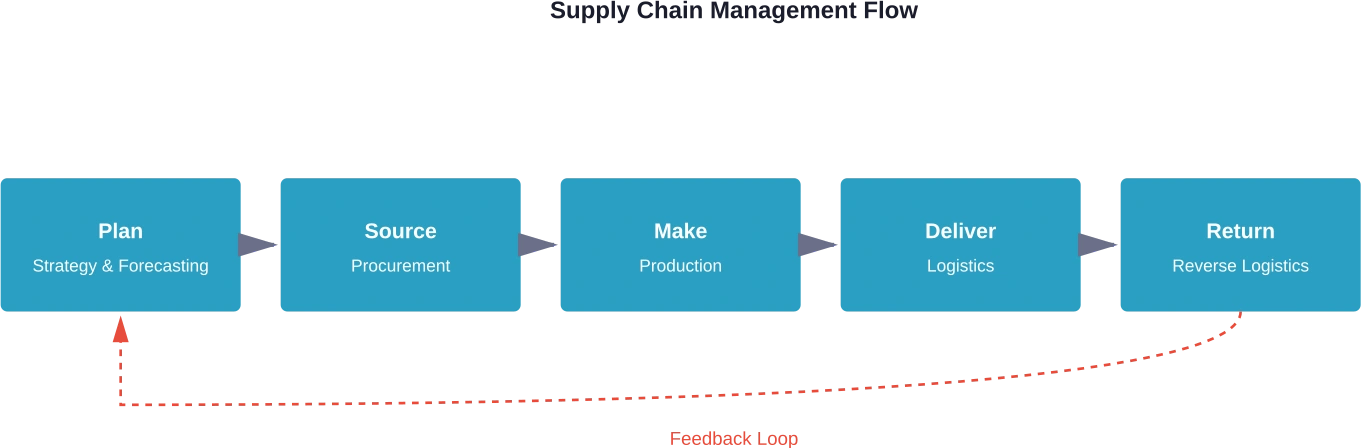
Supply chain management is the coordination of a business’s entire production flow. This spans from sourcing raw materials to delivering a finished item to customers.
The global supply chain is a complex network of suppliers, manufacturers, distributors, retailers, wholesalers, and customers. Effective SCM is about optimizing this network to reduce costs, improve efficiency, and deliver value.
Think of it as orchestrating multiple moving parts. Raw materials need sourcing. Components require assembly. Finished products demand warehousing and transportation. Customer orders need fulfillment. Returns require processing.
Each stage involves coordination across different organizations, time zones, and systems. The goal? Getting the right product to the right place at the right time—while minimizing costs and maximizing customer satisfaction.
Why Supply Chain Management Matters
Supply chain management isn’t just operational busywork. It’s a strategic differentiator that impacts every aspect of business performance.
First, there’s the cost factor. Efficient supply chain operations reduce expenses across procurement, manufacturing, warehousing, and transportation. When organizations optimize their supply chains, they directly improve their bottom line.
Second, SCM helps companies anticipate and mitigate risks. Supply chain disruptions can cripple businesses—as the world learned during recent global events. Organizations with robust SCM practices can pivot quickly, identify alternative suppliers, and maintain operations when disruptions occur.
Customer satisfaction represents another critical dimension. Fast, reliable delivery isn’t a luxury anymore. It’s expected. Supply chain efficiency determines whether businesses can meet those expectations consistently.
Competitive advantage matters too. Companies that master their supply chains can bring products to market faster, respond to demand shifts more nimbly, and operate with lower overhead than competitors.
According to research from MIT’s Digital Supply Chain Transformation initiative, organizations are tackling complex supply chain challenges using rigorous, empirical approaches that ensure findings are grounded in industry and directly actionable.

Make Sure Your Ads Support Your Supply Chain
Good supply chain management keeps products available, but sales still depend on visibility inside Amazon. Even when inventory, logistics, and fulfillment are handled well, advertising often determines how quickly products actually move.
WisePPC helps sellers manage and analyze Amazon advertising alongside sales data. By connecting Amazon Ads and seller account data, the platform lets sellers track campaign performance, review historical metrics, and adjust campaigns without switching between multiple dashboards.
If you want your supply chain to work together with your advertising, WisePPC can help you:
- monitor Amazon PPC campaigns and performance data
- identify which ads and keywords drive product sales
- manage campaigns and bids from a single interface
Keep your ads working alongside your supply chain.
Key Elements of Supply Chain Management
Understanding SCM means breaking it down into core components. The Council of Supply Chain Management Professionals (CSCMP) has developed process standards that identify critical areas within supply chain operations.
Planning and Strategy
Everything starts with planning. Supply chain planning involves forecasting demand, aligning supply with that demand, and managing inventory levels appropriately.
This isn’t guesswork. It requires analyzing historical data, market trends, seasonal patterns, and external factors that might affect demand. Organizations need to balance having enough inventory to meet demand without tying up excessive capital in stock.
Sourcing and Procurement
Sourcing involves identifying, evaluating, and selecting suppliers who can provide the raw materials and components needed for production. Strategic sourcing, supplier management, purchasing, and inbound material management all fall under this umbrella.
The goal is finding reliable suppliers who deliver quality materials at competitive prices, on time. This often involves negotiating contracts, managing supplier relationships, and continuously evaluating supplier performance.
Production and Manufacturing
The production phase transforms raw materials and components into finished products. This involves scheduling manufacturing runs, managing production capacity, ensuring quality control, and coordinating with other supply chain activities.
Efficiency here determines how quickly businesses can convert materials into sellable products and how much that conversion costs.
Delivery and Logistics
Getting finished products to customers requires sophisticated logistics operations. This includes warehousing, inventory management, order fulfillment, transportation, and last-mile delivery.
Order management systems track customer orders from placement through delivery. Logistics networks optimize routes, consolidate shipments, and coordinate across multiple carriers and distribution centers.
Returns Management
Reverse logistics handles product returns, repairs, recycling, and disposal. While often overlooked, effective returns management recovers value from returned products and maintains customer satisfaction.
This process needs to be as efficient as forward logistics. Customers expect easy returns, and businesses need cost-effective ways to handle them.
| SCM Element | Primary Function | Key Metrics |
|---|---|---|
| Planning | Demand forecasting and inventory alignment | Forecast accuracy, inventory turnover |
| Sourcing | Supplier selection and procurement | Supplier performance, material costs |
| Production | Manufacturing and quality control | Production efficiency, defect rates |
| Delivery | Order fulfillment and transportation | On-time delivery, shipping costs |
| Returns | Reverse logistics and recovery | Return rate, recovery value |
The Customer-Centric Supply Chain
Today’s SCM is all about the customer. The supply chain is no longer a linear entity—it’s a complex collection of disparate networks that can be accessed 24 hours a day.
At the center of these networks are consumers expecting their orders to be fulfilled when they want them, the way they want them. This shift has fundamentally changed how supply chains operate.
Traditional supply chains focused on pushing products through a pipeline from manufacturer to consumer. Modern supply chains are demand-driven, responding in real-time to actual customer orders and preferences.
This requires visibility across the entire network, agile operations that can pivot quickly, and technology that connects all stakeholders.
Technology and Digital Transformation in SCM
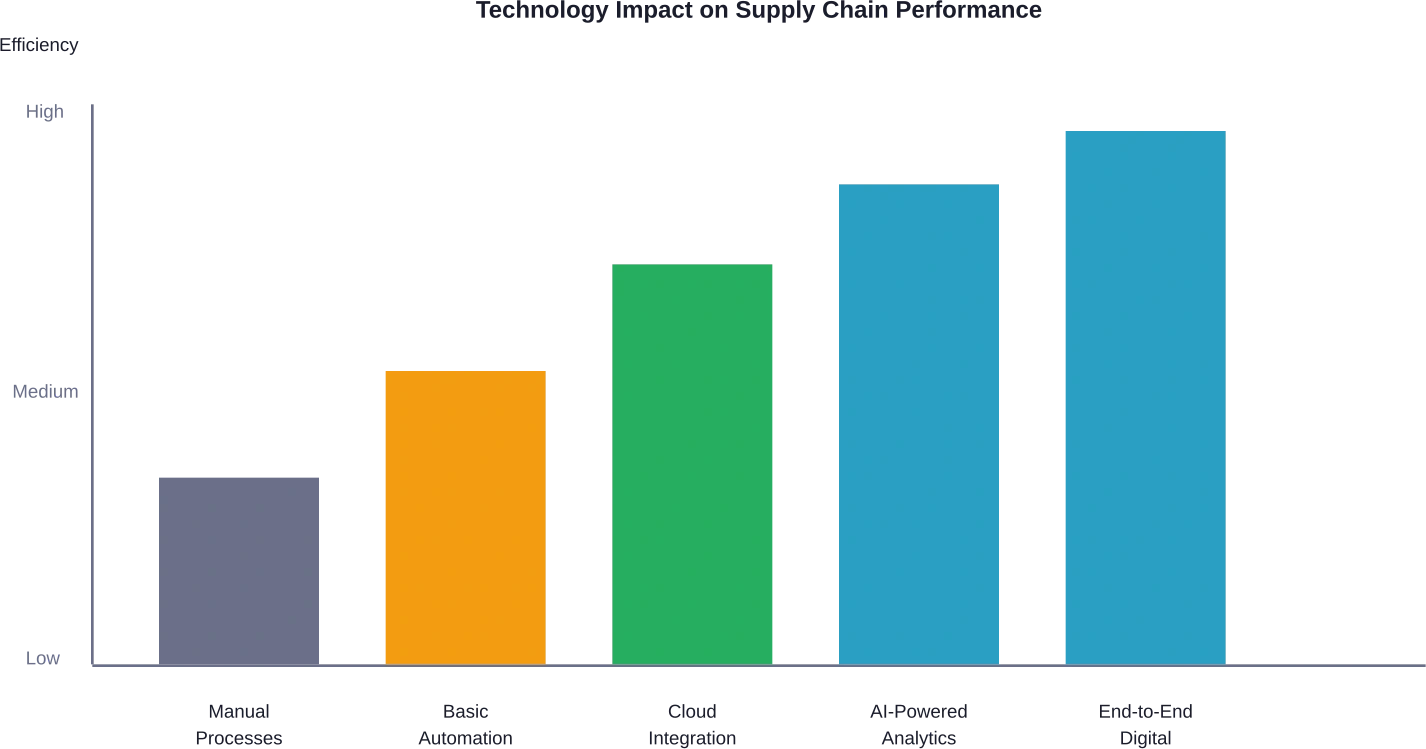
Technology has revolutionized supply chain management. Digital transformation isn’t optional anymore—it’s essential for competitive operations.
Supply Chain Management Software
Modern SCM software integrates planning, execution, and analytics into unified platforms. These systems provide visibility across the supply chain, automate routine tasks, and enable data-driven decision-making.
Features typically include demand planning, inventory optimization, warehouse management, transportation management, and supplier collaboration tools.
Artificial Intelligence and Machine Learning
AI is transforming how supply chains operate. Machine learning algorithms analyze vast datasets to improve demand forecasting, optimize routes, predict maintenance needs, and identify potential disruptions before they occur.
MIT xPRO offers programs on supply chain management that emphasize digital, flexible, and resilient strategies that leverage AI and digital transformation.
Cloud-Based Solutions
Cloud platforms enable real-time collaboration across global supply chain networks. They provide scalability, reduce infrastructure costs, and make supply chain data accessible from anywhere.
Cloud solutions also facilitate integration between different systems and partners, breaking down data silos that traditionally hindered supply chain visibility.
Blockchain for Traceability
Blockchain technology addresses traceability, repudiation, and trust challenges in supply chains. It creates immutable records of transactions and product movements, enabling end-to-end visibility and verification.
This matters especially for industries where provenance, authenticity, and compliance are critical—pharmaceuticals, food and beverage, luxury goods.
Supply Chain Agility and Resilience
Supply chains need agility—the ability to respond quickly to changes in demand, disruptions, or market conditions. Rigid, inflexible supply chains break when unexpected events occur.
Agility requires several capabilities. Real-time visibility into inventory, orders, and shipments across the network enables quick responses. Flexible sourcing arrangements with multiple suppliers reduce dependency on single sources. Modular processes allow rapid reconfiguration when needed.
Recent research from MIT Sloan Management Review emphasizes that protecting supply chains from disruption caused by political actions requires a structured approach to risk management. Organizations need frameworks for identifying geopolitical risks, assessing their potential impact, and developing mitigation strategies.
Resilience goes hand-in-hand with agility. Resilient supply chains can absorb shocks and recover quickly from disruptions. This involves building redundancy where critical, diversifying supplier bases, and maintaining strategic inventory buffers.
The Role of Supply Chain Managers
Supply chain managers orchestrate all these moving parts. Their responsibilities span strategic planning, operational execution, and continuous improvement.
Key duties include developing supply chain strategies aligned with business goals, managing relationships with suppliers and logistics providers, overseeing inventory levels and order fulfillment, analyzing performance metrics, and identifying improvement opportunities.
They also coordinate across functions. Supply chain managers work with sales and marketing to understand demand, with finance to manage costs and working capital, with operations to schedule production, and with IT to implement and optimize systems.
The Association for Supply Chain Management (ASCM) offers certifications including the Certified Supply Chain Professional (CSCP) credential, which validates knowledge across supply chain planning, sourcing, production, delivery, and returns.
Career Paths in Supply Chain Management
Supply chain careers offer diverse opportunities. Entry-level positions might include buyer, planner, logistics coordinator, or inventory analyst roles. Mid-level positions include supply chain manager, logistics manager, materials manager, sourcing manager, or master planner roles.
Senior positions involve director or vice president of supply chain, chief supply chain officer, or global supply chain leadership roles overseeing entire networks.
Industry-Specific Supply Chain Considerations
Supply chain management principles apply across industries, but specific sectors face unique challenges and requirements.
The U.S. Department of Commerce’s Supply Chain Center works on increasing the resilience of critical supply chains by integrating industry expertise and data analytics to develop innovative risk assessment tools and coordinating case studies on select critical supply chains.
Manufacturing
Manufacturing supply chains focus heavily on production scheduling, materials requirement planning, and just-in-time inventory to minimize carrying costs while ensuring materials availability.
Retail and E-commerce
Retail supply chains prioritize rapid fulfillment, omnichannel coordination, and handling high volumes of small orders. E-commerce has intensified these challenges with expectations for same-day or next-day delivery.
Healthcare and Pharmaceuticals
Healthcare supply chains must ensure product integrity, maintain cold chain requirements for temperature-sensitive items, comply with strict regulations, and manage traceability for patient safety.
Food and Beverage
Perishability creates unique constraints. Food supply chains require cold chain management, rapid transportation, inventory rotation, and traceability for food safety and recall management.
Measuring Supply Chain Performance
Effective management requires measurement. Supply chain professionals track numerous metrics to assess performance and identify improvement areas.
| Metric Category | Example Metrics | What It Measures |
|---|---|---|
| Cost Efficiency | Total supply chain cost, cost per order, freight cost percentage | Financial performance and cost control |
| Operational Efficiency | Order cycle time, warehouse productivity, inventory turnover | Process efficiency and asset utilization |
| Customer Service | On-time delivery, perfect order rate, fill rate | Customer satisfaction and reliability |
| Supply Chain Agility | Forecast accuracy, demand variability, response time | Flexibility and responsiveness |
The best supply chain organizations don’t just track metrics—they use data analytics to uncover insights, predict trends, and drive continuous improvement.
Common Supply Chain Challenges
Despite best practices and technology, supply chain management faces persistent challenges.
Demand volatility makes planning difficult. Consumer preferences shift, market conditions change, and unexpected events disrupt normal patterns. Forecasting becomes more art than science.
Supplier issues create bottlenecks. Quality problems, capacity constraints, financial instability, or reliability issues with suppliers can cascade through the supply chain.
Visibility gaps remain common. Many organizations lack real-time visibility into inventory levels, shipment status, or supplier performance across their networks.
Complexity continues increasing. Global supply chains span multiple countries, currencies, regulations, and time zones. Managing this complexity strains systems and people.
Talent shortages affect many organizations. Finding professionals with the right combination of analytical skills, technology expertise, and supply chain knowledge remains challenging.
The Future of Supply Chain Management
Supply chain management continues evolving rapidly. Several trends are shaping its future trajectory.
Sustainability is becoming central to supply chain strategy. Organizations face pressure from consumers, investors, and regulators to reduce environmental impact, source responsibly, and operate sustainably.
According to MIT’s research on supply chain strategy, professionals need to explore the next big trend in supply chain strategy and develop key skills required to be successful in structuring company supply chain strategies and making strategic sourcing decisions.
Automation and robotics are transforming warehouses, manufacturing facilities, and even last-mile delivery. Automated guided vehicles, robotic picking systems, and drone delivery are moving from pilot projects to production operations.
Nearshoring and reshoring are gaining traction. Companies are rethinking global supply chains, bringing production closer to end markets to reduce risk, improve responsiveness, and support local economies.
Digital twins—virtual replicas of physical supply chains—enable scenario planning, simulation, and optimization without disrupting actual operations.
Collaborative networks are replacing traditional arms-length relationships. Organizations increasingly view supply chain partners as strategic collaborators rather than transactional vendors.
Getting Started with Supply Chain Management
For organizations looking to improve their supply chain operations, several practical steps provide a foundation.
Start by mapping current processes. Understanding the current state—how materials flow, where inventory sits, who makes decisions—provides a baseline for improvement.
Identify pain points and bottlenecks. Where do delays occur? Which processes generate the most errors? What creates the highest costs? Prioritize addressing high-impact issues.
Invest in visibility. Implementing systems that provide real-time data on inventory, orders, and shipments pays dividends across all supply chain activities.
Develop collaborative relationships with key suppliers. Strategic partnerships create value that transactional relationships cannot.
Build analytical capabilities. Data-driven decision-making separates leading supply chain organizations from the rest. This might involve hiring analytical talent, implementing advanced analytics tools, or partnering with specialists.
For individuals pursuing supply chain careers, organizations like ASCM and CSCMP offer educational programs, certifications, and resources. The Council of Supply Chain Management Professionals provides workshops like Fundamentals of Supply Chain Management and comprehensive online courses like Supply Chain Management Essentials.
Conclusion
Supply chain management represents one of the most critical capabilities for modern organizations. From sourcing raw materials through delivering finished products to customers, effective SCM touches every aspect of business operations.
The fundamentals remain consistent—planning, sourcing, production, delivery, and returns management. But the execution continues evolving as technology advances, customer expectations rise, and global markets become more complex and interconnected.
Organizations that invest in supply chain excellence reap measurable rewards: lower costs, higher customer satisfaction, reduced risk, and competitive advantage. Those that neglect their supply chains face escalating challenges and eroding market position.
Whether you’re a business leader looking to optimize operations, a professional building a career in the field, or simply someone curious about how products reach your hands, understanding supply chain management provides valuable insight into the mechanisms driving modern commerce.
Ready to deepen your supply chain knowledge? Explore professional certifications from ASCM, educational programs from organizations like CSCMP, or academic offerings from institutions like MIT that combine rigorous research with practical application. The investment in supply chain expertise pays dividends throughout your career and organization.
Frequently Asked Questions
What is the main purpose of supply chain management?
The main purpose of supply chain management is to coordinate and optimize the flow of goods, information, and finances from raw material sourcing through production and delivery to customers. This coordination reduces costs, improves efficiency, enhances customer satisfaction, and creates competitive advantage by ensuring products reach customers at the right time, place, and cost.
What are the 5 basic components of supply chain management?
The five basic components are: Plan (demand forecasting and inventory strategy), Source (supplier selection and procurement), Make (production and manufacturing), Deliver (logistics and order fulfillment), and Return (reverse logistics and returns management). These components work together in a continuous cycle with feedback loops connecting all stages.
How does technology improve supply chain management?
Technology improves SCM by providing real-time visibility across the network, automating routine tasks, enabling data-driven decision-making through analytics, and facilitating collaboration among partners. AI and machine learning enhance demand forecasting, route optimization, and predictive maintenance. Cloud platforms enable scalable, integrated operations. Blockchain provides traceability and trust in complex networks.
What’s the difference between supply chain management and logistics?
Logistics is a subset of supply chain management that focuses specifically on the transportation, warehousing, and distribution of goods. Supply chain management encompasses logistics but also includes strategic planning, sourcing, supplier relationships, production coordination, demand management, and overall network optimization. Logistics handles the physical movement; SCM coordinates the entire system.
Why is supply chain agility important?
Supply chain agility enables organizations to respond quickly to disruptions, demand changes, or market shifts. Agile supply chains can pivot suppliers, adjust production schedules, reroute shipments, and reconfigure operations when unexpected events occur. This flexibility reduces risk, maintains customer service during disruptions, and allows businesses to capitalize on emerging opportunities faster than competitors with rigid supply chains.
What skills do supply chain managers need?
Supply chain managers need analytical skills to interpret data and metrics, strategic thinking to align operations with business goals, technology proficiency with SCM software and analytics tools, relationship management abilities to work with suppliers and partners, problem-solving capabilities to address disruptions, and communication skills to coordinate across functions. Certifications like CSCP from ASCM validate these competencies.
How can companies measure supply chain performance?
Companies measure performance using metrics across multiple dimensions: cost efficiency (total supply chain cost, cost per order), operational efficiency (inventory turnover, cycle time), customer service (on-time delivery, perfect order rate, fill rate), and agility (forecast accuracy, response time). Leading organizations combine these metrics into scorecards and dashboards that provide visibility into overall supply chain health and highlight improvement opportunities.
Join the WisePPC Beta and Get Exclusive Access Benefits
WisePPC is now in beta — and we’re inviting a limited number of early users to join. As a beta tester, you'll get free access, lifetime perks, and a chance to help shape the product — from an Amazon Ads Verified Partner you can trust.
 No credit card required
Free in beta and free extra month free after release
25% off for life — limited beta offer
Access metrics Amazon Ads won’t show you
Be part of shaping the product with your feedback
No credit card required
Free in beta and free extra month free after release
25% off for life — limited beta offer
Access metrics Amazon Ads won’t show you
Be part of shaping the product with your feedback