EN
EN  ES
ES  FR
FR  DE
DE  IT
IT  KO
KO  JA
JA  ZH
ZH  AR
AR  PT
PT  TR
TR  PL
PL Subscribe & Save on Amazon: How It Works and What Sellers Need to Know

Repeat sales are great – until they aren’t predictable. Subscribe & Save was meant to fix that. It gives customers a reason to come back regularly, and sellers a clearer idea of what’s ahead. But it’s not a plug-and-play solution. It needs upkeep, clear data, and an eye on how shoppers actually behave. If you’re selling on Amazon in 2026, understanding the mechanics behind Subscribe & Save can help you avoid common pitfalls and get more value from each subscription.
How Amazon’s Subscription Model Actually Works
Subscribe & Save lets customers schedule recurring deliveries of everyday items – without placing the same order over and over. It’s usually used for things people run out of: vitamins, cleaning supplies, protein powder, diapers, toothpaste. They pick the item, set the delivery frequency (anywhere from monthly to every six months), and get a small discount just for subscribing.
For sellers, this setup unlocks more than just a slight bump in revenue. It creates rhythm. When a customer subscribes, that purchase becomes predictable. You don’t have to win the sale again. You just need to keep the product in stock, deliver on time, and avoid price swings that could drive them to cancel.
That said, it’s not magic. Customers can skip shipments, tweak dates, or cancel whenever they want. The system’s flexible – and that’s the catch. From a seller’s side, Subscribe & Save only works well when there’s visibility into how often people actually reorder, how many churn after one delivery, and whether the discount you’re offering is paying off long-term.
The Upside and the Catch: What Subscribe & Save Really Brings
Subscribe & Save can be a solid growth lever – if you manage it with clarity. It’s designed to build loyalty, bring structure to reorders, and make revenue a little more predictable. But it’s not a set-and-forget feature. Sellers who treat it like one often run into problems: unreliable forecasting, surprise cancellations, margin erosion. Here’s how it actually plays out on both ends.
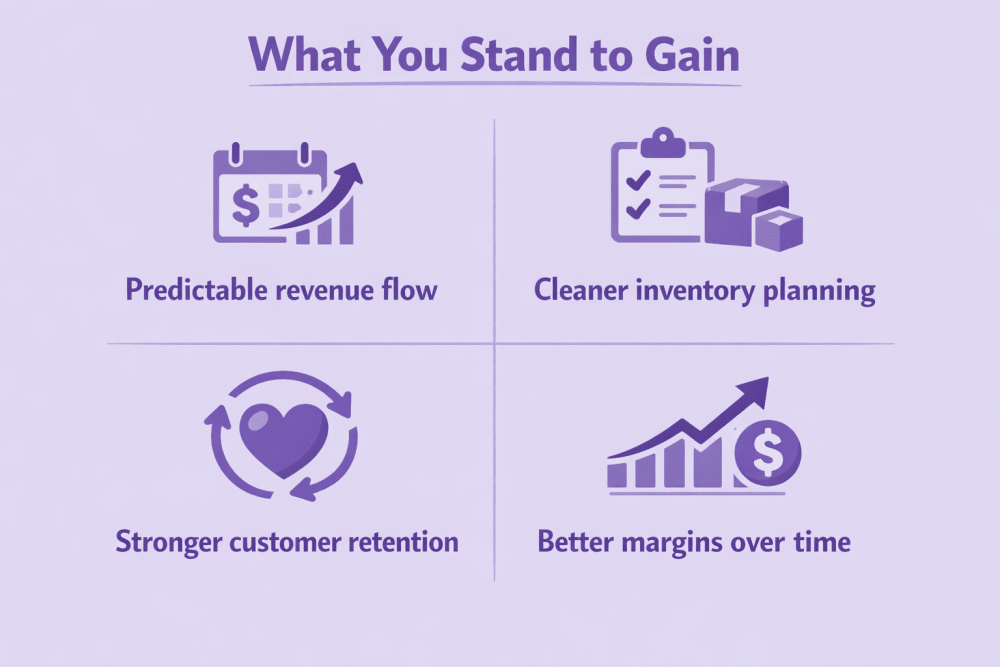
What You Stand to Gain
If the setup is right, the benefits go beyond just more orders.
1. Predictable revenue flow
Subscriptions reduce sales volatility. You’re not constantly re-winning the same customer – you’re becoming part of their routine. That means steadier revenue and fewer dry weeks.
2. Cleaner inventory planning
Recurring orders make forecasting easier. With more consistent demand signals, you can restock with purpose – not guesswork and avoid both stockouts and dead inventory.
3. Stronger customer retention
When someone opts into a subscription, they’re less likely to explore alternatives. It’s passive loyalty, but loyalty nonetheless especially if delivery stays reliable and pricing remains stable.
4. Better margins over time
Even with seller-funded discounts, subscriber LTV often outweighs one-time purchases. If you keep churn low, the long-term revenue more than makes up for the upfront cut.
Where Things Go Sideways
The flexibility that makes Subscribe & Save attractive to customers also creates loopholes.
1. One-and-done discount hunters
Some buyers subscribe, grab the first delivery at 10-15% off, then cancel immediately. It looks like growth – until it isn’t.
2. Choppy subscriber behavior
Shoppers skip deliveries, pause, or change frequencies. That kills consistency and messes with your forecasts.
3. Discount drag
If your margins are tight, that 5-10% seller-funded discount eats into profitability fast – especially if subscribers don’t stick around long.
4. Inventory gaps from fake demand
Sudden influxes of new subscribers can look like a win, but if they cancel before the second cycle, you’re left holding extra stock – and the cost.
Subscribe & Save is worth it – but only if you’re watching the right signals. Sellers who actively track churn, forecast accuracy, and real vs. fake LTV can adjust faster and keep it profitable. Those who don’t? They often spend months chasing numbers that were never real to begin with.

Where Recurring Meets Reality – WisePPC Makes It Visible
Subscriptions bring volume – but not always clarity. Behind every repeat order is a mix of real loyalty, discount-driven churn, and unpredictable behavior. To manage that with confidence, you need more than basic reports. That’s why we built WisePPC – to give sellers a sharper, more complete view of what’s really driving performance.
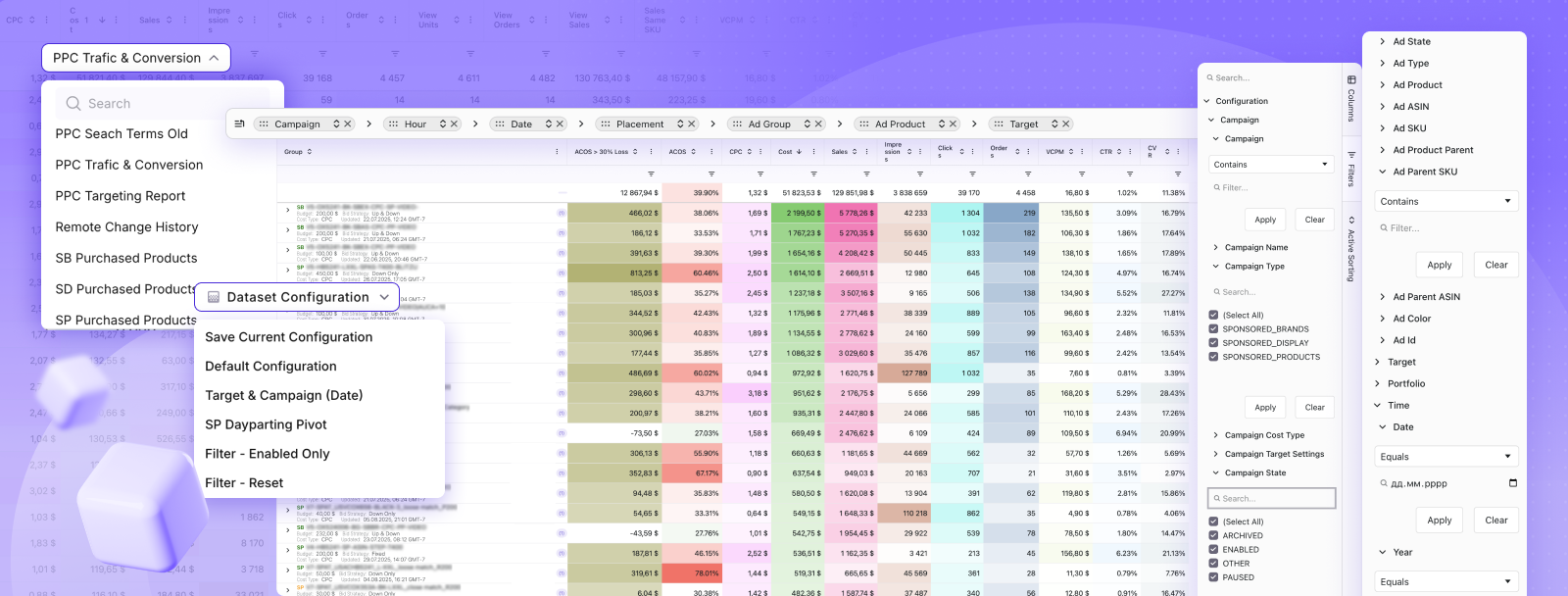
With WisePPC, you can track actual reorder volume, spot early churn, compare forecasted vs. delivered units, and measure how discounts impact profit across products, placements, and keywords. We store long-term data, update in real time, and separate organic from paid results – so you can manage Subscribe & Save based on truth, not assumptions.
For ongoing tips, feature rollouts, and walkthroughs, we post regularly on Facebook, Instagram, and LinkedIn. If you’re serious about scaling subscriptions, we’re building the tools to keep it measurable – and manageable.
Setting Up Subscribe & Save in Seller Central Without Overcomplicating It
The good news? Amazon makes enrollment fairly straightforward – especially if you’re already using FBA. The platform will auto-enroll eligible SKUs by default. But if you’re trying to fine-tune the experience, choose your own discount tiers, or figure out why a product didn’t get enrolled, there are a few things to know.
Start with the Basics
Head to the Subscribe & Save section inside Seller Central. You’ll land on the Manage Products tab. This is where you’ll:
- See which SKUs are already enrolled
- Adjust default discounts (0%, 5%, or 10%)
- Manually edit product-level settings
- Spot eligibility issues if something didn’t make the cut
By default, Amazon sets new products at 0% seller-funded discount. That means unless the customer has five or more active subscriptions scheduled for the same delivery date, there’s no extra discount from Amazon – only your base offer applies.
You can choose from five base funding options: 0%, 5%, 10%, 15%, or 20% to make your Subscribe & Save offer more attractive from the start.
For FBM Sellers (Yes, You Can Still Use It)
If you’re fulfilling orders yourself, it’s not automatic. You’ll need to:
- Submit a request per ASIN from within Seller Central
- Meet performance criteria (on-time delivery, tracking rate, order defect rate, etc.)
- Stick to the rules for at least three months before your product qualifies
FBM sellers also need to offer free domestic shipping and stay under five days on delivery promises. If your logistics are tight, it’s doable. If not, you might hit a wall.
One More Thing: Check What’s Blocking You
If a product isn’t showing up as eligible, Amazon won’t always tell you why upfront. But there’s a self-service tool inside the same Manage Products tab. You plug in the ASIN and get a breakdown of what’s missing – maybe it’s stock rate, maybe it’s price volatility, maybe your listing isn’t buyable yet.
Once you’re set up, everything runs from that dashboard. Discount controls, product eligibility, and eventually, performance tracking. It’s not flashy, but it works. Just check in regularly – things change, and Amazon doesn’t always send a heads-up.
Spotting the Abuse Before It Tanks Your Metrics
Not every subscriber is a real one. Some shoppers sign up just to grab the discount, get one delivery, and cancel before the next cycle. Others cycle through multiple accounts to do it again. At a glance, the numbers might look fine – order volume goes up, subscriptions tick higher – but underneath, you’re left with unreliable forecasts, inflated CAC, and inventory tied up in false demand.
The only way to stay ahead is by reading the patterns. If your subscription sales dip but total sales don’t, something’s off. If refund rates climb right after discounted deliveries, that’s another clue. Big gaps between forecasted and actual S&S shipments usually mean subscribers are canceling early or skipping deliveries. None of these signs are obvious in isolation, but when they stack up, you’ll know it’s time to tighten the system – whether through stricter return rules, smarter discount logic, or just better oversight.
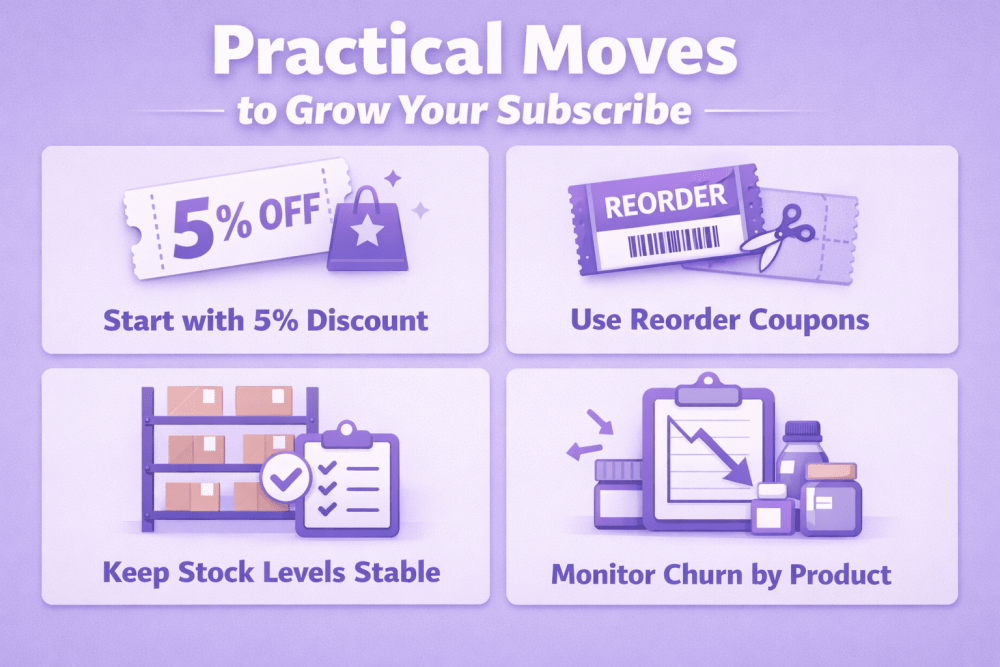
Practical Moves to Grow Your Subscribe & Save Revenue
Running Subscribe & Save well isn’t about doing more – it’s about doing the right things consistently. Most sellers set a discount, walk away, and hope for retention. But the ones who grow it into a dependable revenue stream are usually more hands-on. Here are a few proven ways to get more out of it:
- Start with a 5% discount and test from there: If you jump to 10% right away, you might burn margin on low-LTV customers. Start small, check performance, and only scale when it pays off.
- Use reorder coupons to bring buyers into subscriptions: Target past buyers who didn’t subscribe. A one-time coupon tied to a subscription can convert fence-sitters without sacrificing your full margin upfront.
- Keep stock levels stable: Nothing breaks S&S momentum like a missed shipment. Even short stockouts can trigger cancellations or lower confidence in your brand.
- Monitor churn by product: Not all SKUs behave the same. Some might hold subscribers for 6+ months. Others lose them after the first shipment. Use that data to decide where to push discounts – and where not to.
- Avoid sudden price spikes: Even small price increases can trigger auto-cancellations. If you need to raise prices, do it gradually or pair it with a loyalty offer.
- Clean up deadweight: If a product has high churn, low margin, and zero subscriber retention, pull it from the program. It’s okay to cut what doesn’t stick.
- Stay close to performance data: Subscriber count is just a vanity metric if the LTV is poor. Focus on retention curves, reorder frequency, and actual net profit – not just volume.
Growing Subscribe & Save isn’t about tricks – it’s about building systems that hold up month after month. Keep it lean, track what matters, and adjust before small problems get expensive.
Conclusion
Subscribe & Save can absolutely work in your favor – when it’s treated like a system, not just a bonus feature you turn on and forget. The recurring revenue, better customer retention, cleaner inventory forecasting – all of that is real value. But so are the downsides. Subscription abuse, soft churn, out-of-stock penalties, margin erosion – they creep in fast if you’re not watching the right metrics.
The sellers who succeed don’t just offer discounts – they watch the data closely. They cut what doesn’t convert, adjust discounts when demand softens, and make sure inventory always keeps pace with recurring volume. They treat Subscribe & Save like a flywheel: one that builds momentum only if you keep it tuned. With the right structure, it shifts your focus from chasing orders to building reliable, long-term growth.
FAQ
1. Can I use Subscribe & Save without FBA?
Yes, but you’ll need to meet stricter performance benchmarks. That includes fast shipping, a high tracking rate, and low cancellation metrics – consistently. Each product also has to be manually approved through Seller Central.
2. How do I know which products are eligible?
There’s no single list, but most recurring-use items like household goods, supplements, pet care, and beauty products qualify. If a SKU isn’t showing up, check your in-stock rate, listing health, and pricing stability.
3. Is it worth offering a 10% discount right away?
Not always. It depends on your margins and how long subscribers usually stick around. Starting at 5% gives you room to scale strategically instead of overspending on customers who cancel after one shipment.
4. What if customers keep subscribing and canceling just to get the discount?
It happens. That’s why monitoring churn timing matters. If most cancellations come after the first cycle, you’re likely attracting discount hunters. In that case, dial back discounts or test reorder-only coupons instead.
5. Can Subscribe & Save hurt my inventory planning?
Only if you’re not tracking actual reorder behavior. If forecasted demand looks good but people cancel or skip deliveries, you end up with excess stock. That’s where tighter data helps – watching patterns before they create problems.
6. Is there a way to reward long-term subscribers?
You can get creative. Add reorder-only coupons, early access to new products, or bundle incentives that only unlock after a few successful cycles. These extras make long-term commitment feel worthwhile – and they help filter out the one-and-done crowd.
Join the WisePPC Beta and Get Exclusive Access Benefits
WisePPC is now in beta — and we’re inviting a limited number of early users to join. As a beta tester, you'll get free access, lifetime perks, and a chance to help shape the product — from an Amazon Ads Verified Partner you can trust.
 No credit card required
Free in beta and free extra month free after release
25% off for life — limited beta offer
Access metrics Amazon Ads won’t show you
Be part of shaping the product with your feedback
No credit card required
Free in beta and free extra month free after release
25% off for life — limited beta offer
Access metrics Amazon Ads won’t show you
Be part of shaping the product with your feedback