EN
EN  ES
ES  FR
FR  DE
DE  IT
IT  KO
KO  JA
JA  ZH
ZH  AR
AR  PT
PT  TR
TR  PL
PL What Is a Trademark and Why Your Brand Needs One

You don’t really think about trademarks when you’re sketching logo ideas on a notepad or arguing over business names with your co-founder. At that stage, it’s all creative energy and big plans. But sooner or later, if things start working, someone will notice your brand. That’s when protection stops being optional.
A trademark isn’t just a legal formality. It’s how you claim your space in the market. It tells competitors, customers, and the law that this name, this logo, this identity belongs to you. And if you’re serious about building something that lasts, that matters more than most people realize.
What Is a Trademark in Simple Terms?
A trademark is a legal tool that protects the identity of your business in the marketplace. It can take different forms, including a word or business name, a logo or symbol, a slogan, a combination of text and design, or even a distinctive product shape. In some cases, trademarks may also cover non traditional elements such as a specific color, sound, or even a smell, if they are strongly associated with a brand.
The main purpose of a trademark is to distinguish your goods or services from others in the same category. It does not protect the product itself or the idea behind it. Instead, it protects the sign that tells customers who stands behind that product.
Once registered, a trademark grants you exclusive rights to use that sign within particular classes of goods or services. In practice, this means that other businesses cannot legally use a confusingly similar name, logo, or symbol in the same field.
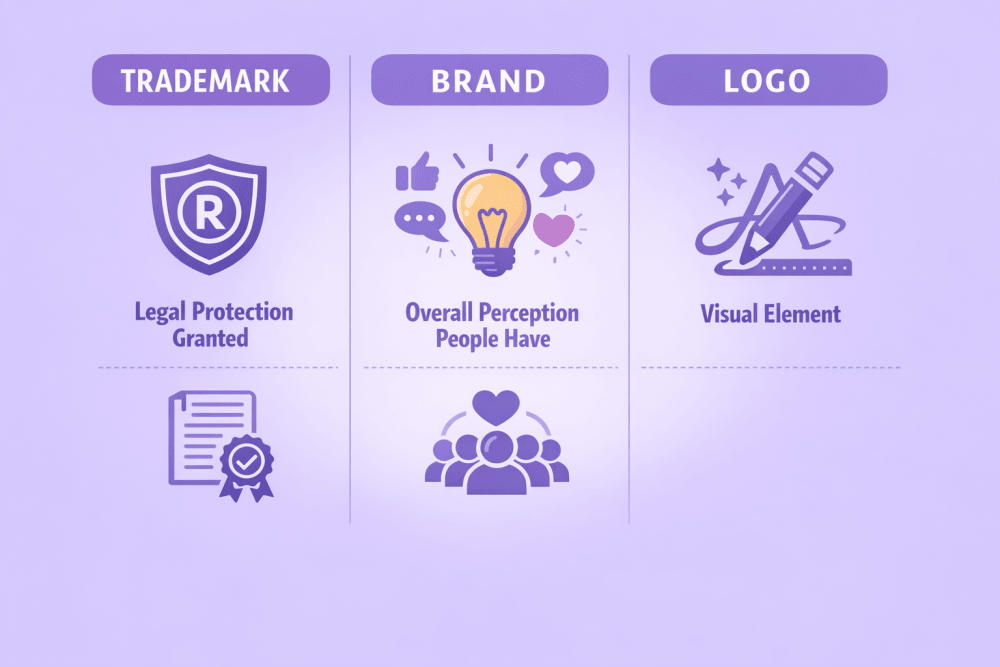
Trademark vs Brand vs Logo
These terms get mixed up all the time, even in business circles.
Here is the distinction:
- A brand is the overall perception people have of your business. It includes reputation, customer experience, values, and emotional associations. It exists in the minds of your audience.
- A logo is a visual element that represents your business. It is a design asset that appears on packaging, websites, and marketing materials.
- A trademark is the legal protection granted to a name, logo, or other distinctive sign. It exists in official registers and gives you enforceable rights.
You can build a recognizable brand without registering a trademark. Many businesses start that way. Without registration, your brand remains legally vulnerable.
That is why experienced founders treat trademark registration as part of long term brand strategy, not as paperwork to deal with later.
Scale Your Brand with Smarter PPC Advertising
Launching a product is only the first step. To grow, it needs visibility, traffic, and controlled ad spend. That is where WisePPC comes in.
We built WisePPC as a performance advertising platform focused on pay per click campaigns. It provides the tools to launch, manage, and scale ads across marketplaces from one dashboard. Campaign automation, bid optimization, conversion tracking, and clear reporting work together so you can see exactly how each click impacts revenue.
The platform supports advertising on Amazon, Shopify, and other sales channels. Instead of managing ads manually, you get structured analytics and performance insights that help allocate budget more effectively.
Trademark protection secures your brand legally. WisePPC focuses on growth. It is built to turn traffic into measurable sales and help products gain traction across marketplaces.
Trademark Protection and Business Risk
In a small, low competition market, brand confusion may not seem like a real threat. But most businesses operate in crowded spaces, especially online, where customers compare brands instantly. Without protection, your name and visual identity can be copied, imitated, or even registered by someone else.
If you do not have a registered trademark, risks increase. A competitor may secure a similar name, a seller could list products under your brand on a marketplace, or a confusingly similar website may appear. Enforcing unregistered rights is possible, but it is harder, slower, and more expensive. A registered trademark puts you in a stronger position and allows you to stop problems before they grow.
Do You Need a Trademark to Start?
In most countries, you can begin trading without a registered trademark. Once you use a brand in commerce, you may gain limited rights. However, these rights are limited and often insufficient for businesses planning to scale.
Waiting can create additional risk. If another business registers a similar mark before you, they may require you to rebrand. That can mean redesigning packaging, changing your domain, updating marketing materials, and rebuilding recognition. The cost of rebranding often exceeds the cost of early registration.
For businesses planning to scale, enter marketplaces, or expand internationally, securing trademark protection early reduces uncertainty and protects long term investment.
Scope and Limitations of Protection
A trademark protects your market identity, not your innovation. It does not cover your business idea, product concept, manufacturing process, or overall business model. Those may fall under patents or trade secrets.
Protection applies to the distinctive sign you register. This may include your business or product name, logo, tagline, a specific color combination associated with your brand, or in rare cases certain non traditional elements such as sounds. The exact scope depends on what you include in your application and the classes of goods or services selected.
Understanding both the risks and the limits of trademark protection helps you make informed decisions about how to secure your brand.
Trademarks as Strategic Business Assets
A trademark is not only about defense. It is a business tool that works both ways. It protects your brand from misuse and at the same time creates measurable value.
On the one hand, registration secures your position in the market. It gives you legal control over your name and identity, reduces the risk of unfair competition, and strengthens your position in disputes and negotiations. You decide who can use your brand and under what conditions.
On the other hand, a trademark increases the economic value of your company. It can:
- Raise overall business valuation
- Appear as intellectual property on your balance sheet
- Increase credibility when attracting investors
- Become the foundation for franchising
- Be licensed to other businesses in exchange for royalties
Franchising depends entirely on trademark ownership, since partners pay for the right to operate under your brand. Licensing works in a similar way, allowing other companies to use your mark on specific products while you retain ownership and receive compensation.
If you plan to sell your business in the future, brand recognition will likely be one of the main assets a buyer evaluates. Without a registered trademark, that asset is legally weaker.
In practical terms, a trademark gives you two things at once: protection and leverage. It safeguards what you have built and allows you to expand it on structured, legally secure terms.
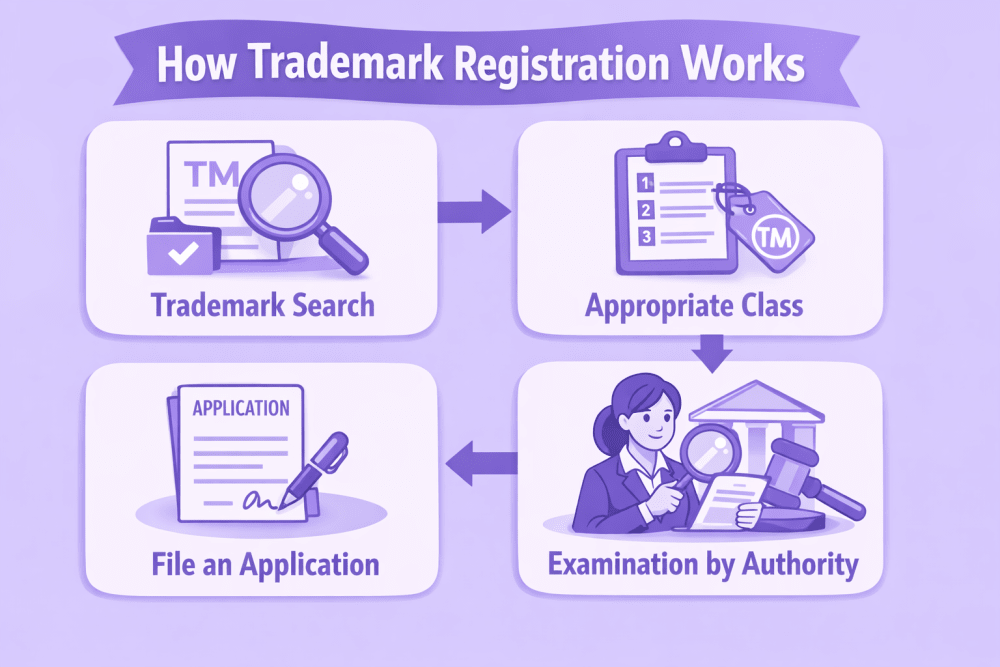
How Trademark Registration Works in Practice
The exact procedure depends on the country, but the general steps are similar.
- Conduct a trademark search. You check whether a similar name or logo is already registered in your class of goods or services.
- Choose the appropriate class. Trademarks are registered in specific classes. There are 45 internationally recognized classes covering goods and services. If you sell clothing today but plan to launch cosmetics later, you may need to apply in multiple classes.
- File an application. You submit details about the mark, the owner, and the goods or services covered.
- Examination by the authority. The national intellectual property office reviews your application for conflicts and compliance.
- Publication and opposition period. Third parties may object if they believe your mark conflicts with theirs.
- Registration. If approved, you receive a certificate and registration number.
Trademark registration usually lasts 10 years from the filing date. After that, it can be renewed indefinitely, provided you pay the renewal fees, continue using the mark, and comply with local regulations.
Although the process may seem simple, trademark searches and class selection can be complex, which is why many businesses work with a trademark attorney or specialist.
Because protection can be maintained for decades through renewal, trademarks are considered long term business assets rather than temporary legal tools.
International Protection
Trademark rights are territorial. One registration does not automatically protect you worldwide. If you want protection in multiple countries, you must register in each of them.
There are international systems that simplify filing in several jurisdictions at once, but fees apply for every territory selected. A common strategy is to register first in your home country, then expand to key export markets, and later add protection in countries where you manufacture or distribute.
For businesses selling online, international exposure increases risk. Even if you operate from one country, customers and competitors may come from many others. Planning protection accordingly is essential.
Can Two Companies Share the Same Name?
In some situations, yes. Because trademarks are registered by class, two companies can use the same or similar names if they operate in completely different industries and there is no likelihood of customer confusion. For example, a clothing brand and a plumbing service might coexist legally under similar names.
However, the digital environment complicates this. Online visibility can blur industry boundaries, and overlapping audiences may create confusion even when products differ. This is why thorough searches and professional advice are important before committing to a name and investing in branding.
Choosing and Securing the Right Trademark
Selecting a trademark is not just a creative task. It is a legal and strategic decision. A strong name can support growth. A weak one can create delays, rejections, or even forced rebranding.
What to Check Before You Commit
Before investing in branding, it is important to carry out a few basic checks. Start by searching national trademark databases to see whether a similar name is already registered. Then verify domain availability and review social media handles to ensure consistency across platforms. It is also worth checking search engine results to understand how widely the name is already used.
A name that sounds strong during a brainstorming session can quickly become a legal problem if someone else already holds the rights to it.
Types of Trademark Registration
When filing a trademark application, you can choose to protect different versions of your brand. This may include a word mark in plain text, a stylized version of that word with a specific font or design, or a combined mark that includes both text and graphic elements.
Each version can be registered separately. Some businesses decide to secure protection for several variations to create broader and stronger legal coverage.
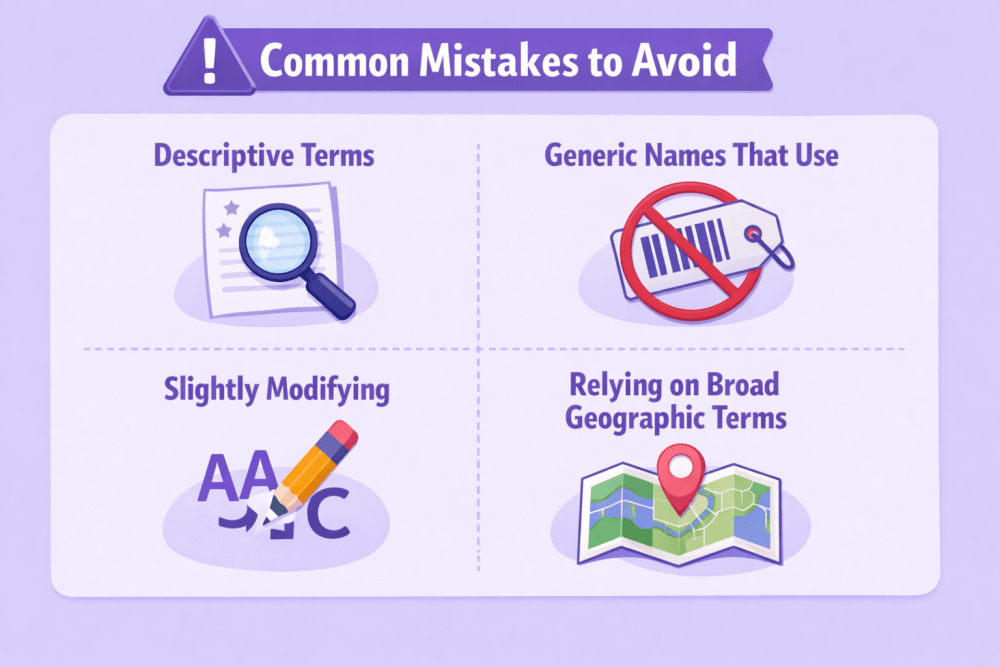
Common Mistakes to Avoid
Not every name can be registered. The most frequent problems include:
- Using descriptive terms that directly explain the product, such as Best Shoes Store
- Choosing generic names that anyone in the industry could use
- Slightly modifying well known brands
- Relying on broad geographic terms
- Selecting a name already widely used in your market
Distinctiveness is key. Invented words or unexpected combinations are usually easier to register and defend because they are less likely to conflict with existing marks.
When You Need a Different Type of Protection
If your product has a unique shape or appearance, trademark law may not be enough. In such cases, industrial design registration may be more appropriate. For example, a distinctive bottle shape could qualify for design protection if it meets legal requirements.
Understanding which legal tool applies to each element of your brand helps you build a clear and effective intellectual property strategy.
Trademarks in E Commerce and Marketplaces
Online selling has changed the risk landscape.
On platforms like Amazon, brand protection is closely tied to trademark registration. Enrollment in programs such as Brand Registry typically requires a registered or at least pending trademark.
With registration, sellers can access tools that help:
- Report listing violations
- Remove counterfeit products
- Gain greater control over product detail pages
- Use enhanced content features
In digital marketplaces, your brand name is often the main differentiator. If others can use it freely, confusion spreads quickly.
Even outside large platforms, search engines and online advertising amplify the impact of brand misuse. A similar name can siphon traffic, affect SEO, and damage customer trust.
In short, trademarks are even more important in the online world than in traditional retail.
Conclusion
A trademark protects the name and identity behind your business. It gives you legal rights, reduces risk, and adds real value to your brand. It is not just a formality. If you are building something you want to grow and keep, protecting it makes sense.
FAQ
1. What is the difference between a trademark and a company name?
Registering a company name allows you to operate legally. A trademark gives you exclusive rights to use that name for specific goods or services.
2. Do I need a trademark if I sell online?
Yes, especially online. Marketplaces and search engines increase visibility, which also increases the risk of copycats. A trademark makes enforcement easier.
3. How long does a trademark last?
Most trademarks last ten years and can be renewed indefinitely if you pay renewal fees and keep using the mark.
4. Can I apply for a trademark myself?
You can, but the process involves proper searching and class selection. Many businesses work with specialists to avoid mistakes.
5. What if someone uses my trademark without permission?
If it is registered, you can demand they stop and take legal action if necessary. Registration gives you a much stronger position.
Join the WisePPC Beta and Get Exclusive Access Benefits
WisePPC is now in beta — and we’re inviting a limited number of early users to join. As a beta tester, you'll get free access, lifetime perks, and a chance to help shape the product — from an Amazon Ads Verified Partner you can trust.
 No credit card required
Free in beta and free extra month free after release
25% off for life — limited beta offer
Access metrics Amazon Ads won’t show you
Be part of shaping the product with your feedback
No credit card required
Free in beta and free extra month free after release
25% off for life — limited beta offer
Access metrics Amazon Ads won’t show you
Be part of shaping the product with your feedback