EN
EN  ES
ES  FR
FR  DE
DE  IT
IT  KO
KO  JA
JA  ZH
ZH  AR
AR  PT
PT  TR
TR  PL
PL The Ultimate Amazon Keyword Research Guide: Free Tools & Proven Strategies for 2026

Amazon keyword research is the foundation of successful product listings and PPC campaigns. With over 2.7 billion searches happening on Amazon every month, understanding what customers are searching for—and optimizing for those terms—can make the difference between a thriving business and one that struggles to gain visibility.
In this comprehensive guide, we’ll dive deep into Amazon keyword research, covering everything from free tools and advanced strategies to common mistakes that even experienced sellers make. Whether you’re launching your first product or managing multiple ASINs, this guide will help you uncover high-converting keywords and build a data-driven approach to Amazon SEO.
Why Amazon Keyword Research Matters More Than Ever
Amazon’s A10 algorithm has become increasingly sophisticated, placing greater emphasis on relevance and conversion potential. Unlike Google, where broad match keywords might work, Amazon requires laser-focused keyword targeting that matches customer purchase intent.
Here’s what makes Amazon keyword research unique:
- Purchase Intent: Amazon users are ready to buy, not just browse
- Competition Density: Millions of products compete for the same keywords
- Relevance Scoring: Amazon’s algorithm heavily weights keyword-to-product relevance
- Conversion Focus: Keywords that drive sales get priority in search results
The Cost of Poor Keyword Research
Without proper keyword research, sellers face several challenges:
- Low organic ranking for their products
- Wasted PPC spend on irrelevant keywords
- Missed opportunities with high-converting search terms
- Poor conversion rates due to traffic mismatch
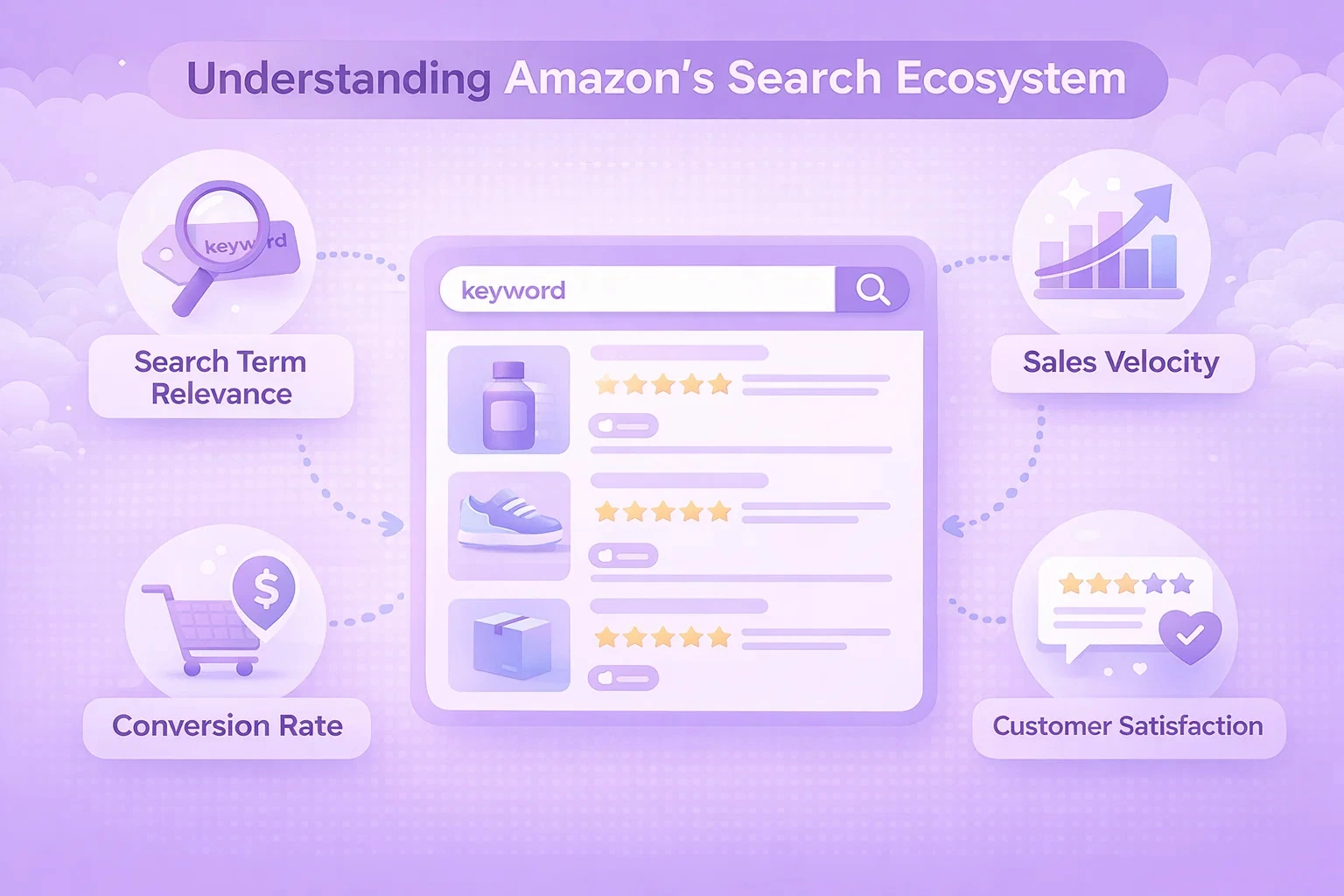
Understanding Amazon’s Search Ecosystem
Before diving into tools and tactics, it’s crucial to understand how Amazon search works. Unlike traditional search engines, Amazon’s algorithm prioritizes factors like:
- Search Term Relevance: How well your keywords match customer queries
- Conversion Rate: Historical performance of keywords for your products
- Sales Velocity: Recent sales momentum associated with specific terms
- Customer Satisfaction: Reviews, returns, and overall product performance
This means your keyword strategy needs to balance search volume with conversion potential—high-volume keywords aren’t always the best choice if they don’t convert for your specific product.
Free Amazon Keyword Research Tools
1. Amazon Search Suggestions
The most underutilized free tool is Amazon’s own autocomplete feature. Here’s how to leverage it:
Basic Autocomplete Method:
- Start typing your seed keyword in Amazon’s search bar
- Note the suggested completions
- Try variations with modifiers (best, cheap, premium, etc.)
Advanced Autocomplete Techniques:
- Use alphabet soup method: add letters A-Z after your keyword
- Try reverse engineering: put keywords at the end
- Use seasonal modifiers: 2026, new, latest, etc.
2. Amazon’s “Customers Who Viewed This Item Also Viewed”
This section reveals related products and their keywords:
- Identify competitor products
- Extract keywords from their titles and descriptions
- Note recurring themes across related products
3. Google Keyword Planner (Amazon-Focused)
While designed for Google Ads, Keyword Planner provides valuable insights:
- Search “amazon [your product]” to find Amazon-specific terms
- Look for long-tail variations
- Identify seasonal trends
4. Sonar by Sellics (Free Tier)
Sonar offers a free keyword database with:
- Amazon-specific search volume data
- Related keyword suggestions
- Historical trend data
Advanced Keyword Research Strategies
Competitor Analysis Deep Dive
Step 1: Identify Top Competitors
- Search your main keywords
- Note products ranking in top 10
- Check their BSR (Best Seller Rank) and reviews
Step 2: Extract Competitor Keywords
- Analyze their titles, bullet points, and descriptions
- Use reverse ASIN lookups (available in tools like WisePPC)
- Study their PPC ads for sponsored keyword insights
Step 3: Gap Analysis
- Compare your keywords against competitors
- Identify high-value keywords you’re missing
- Spot over-optimization opportunities
Long-Tail Keyword Mining
Long-tail keywords (3+ words) often have:
- Lower competition
- Higher conversion rates
- More specific buyer intent
- Better PPC performance
Finding Long-Tail Keywords:
- Start with your main keyword
- Add modifiers: color, size, use case, benefit
- Include question words: how, what, best, top
- Consider customer pain points and solutions
Seasonal Keyword Planning
Amazon’s search patterns vary by season:
- Q4: Holiday-specific terms peak
- Q1: Health and fitness keywords surge
- Q2: Outdoor and travel terms increase
- Q3: Back-to-school keywords dominate
Track these patterns and adjust your keyword strategy accordingly.
Keyword Research Process: Step-by-Step
Phase 1: Seed Keyword Generation (30 minutes)
1. Brainstorm Core Terms
- Main product name
- Primary use cases
- Customer benefits
- Problem it solves
2. Expand with Variations
- Synonyms and alternative terms
- Technical vs. common language
- Abbreviations and full forms
3. Customer Language Mining
- Read product reviews (yours and competitors’)
- Check Q&A sections
- Monitor social media discussions
Phase 2: Keyword Expansion (45 minutes)
1. Use Free Tools Systematically
- Amazon autocomplete for each seed keyword
- Google Keyword Planner with Amazon filters
- Sonar for volume estimates
2. Competitor Keyword Extraction
- Top 5 competitors’ listings
- Their sponsored ads
- Related products sections
3. Long-Tail Development
- Add modifiers to each seed keyword
- Create question-based phrases
- Include size/color/style variations
Phase 3: Keyword Validation (60 minutes)
- Search Volume Assessment
- Use available free tools for estimates
- Cross-reference multiple sources
- Note seasonal trends
2. Competition Analysis
- Search each keyword on Amazon
- Count sponsored results
- Assess organic competition quality
3. Relevance Scoring
- Rate each keyword’s relevance to your product (1-10)
- Consider conversion likelihood
- Factor in customer search intent
Phase 4: Keyword Categorization (30 minutes)
Organize keywords into categories:
- Primary Keywords: Main product terms (highest volume, most relevant)
- Secondary Keywords: Supporting terms (good volume, relevant)
- Long-Tail Keywords: Specific phrases (lower volume, high conversion)
- Brand Keywords: Your brand and competitors’ brands
- Negative Keywords: Terms to avoid in PPC
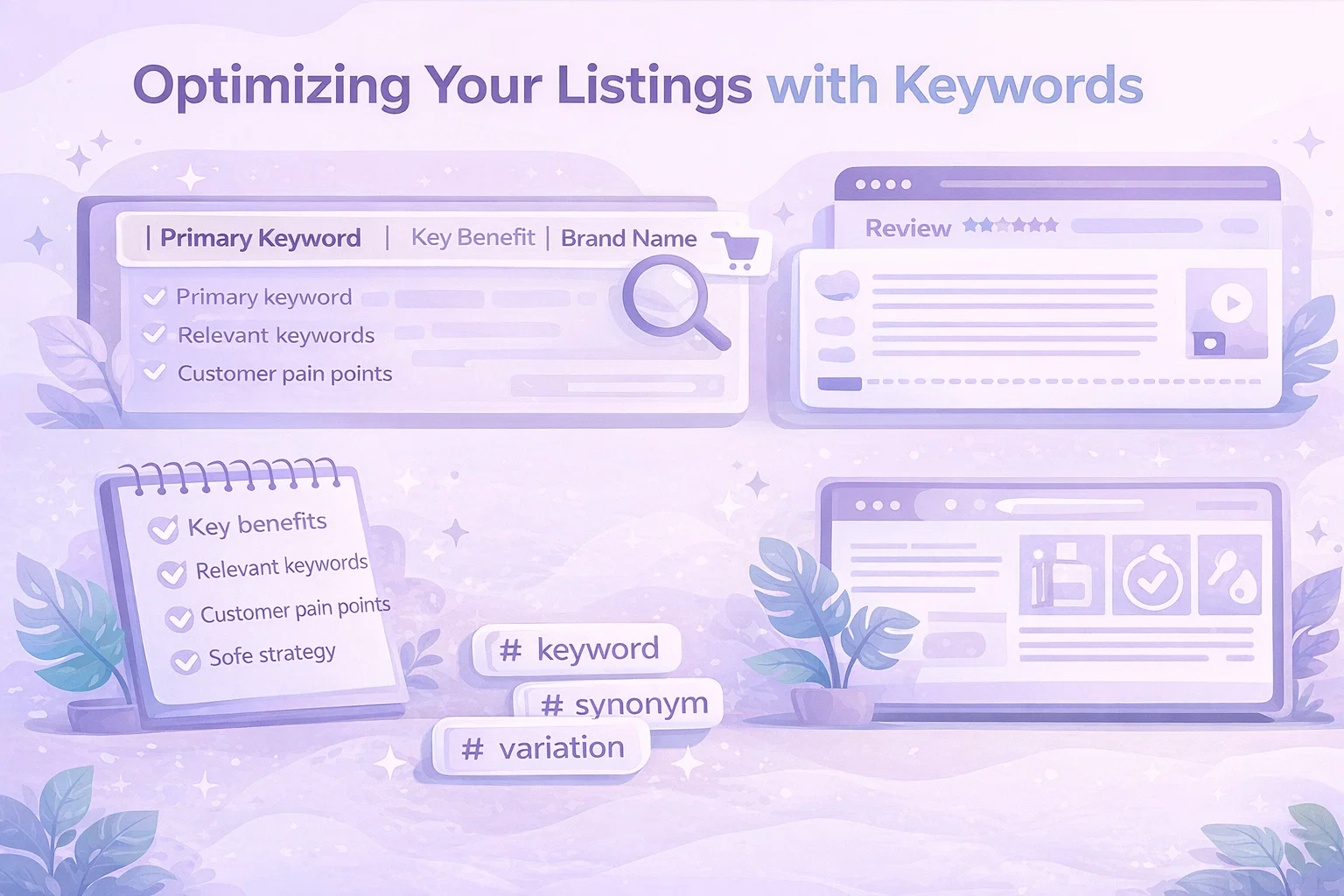
Optimizing Your Listings with Keywords
Title Optimization
Your product title is the most important keyword real estate:
- Include primary keyword within first 80 characters
- Use natural, readable language
- Follow Amazon’s category guidelines
- Include key product attributes
Example Title Structure: [Primary Keyword] – [Key Benefit] | [Size/Color/Variation] | [Brand Name]
Bullet Points Strategy
Each bullet point should:
- Start with a key benefit or feature
- Include relevant keywords naturally
- Address customer pain points
- Use emotional triggers when appropriate
Backend Search Terms
Amazon provides 250 characters for backend keywords:
- Use all 250 characters
- Don’t repeat title keywords
- Include synonyms and variations
- Separate terms with spaces (not commas)
Description and A+ Content
Longer descriptions allow for:
- Natural keyword integration
- Storytelling around benefits
- Additional keyword variations
- Improved customer engagement
PPC Integration: Keywords That Convert
Campaign Structure Based on Keyword Research
Exact Match Campaigns
- Use your validated primary keywords
- Higher bids for proven converters
- Tight control over traffic quality
Phrase Match Campaigns
- Include secondary keywords
- Moderate bids for traffic volume
- Good for discovering new variations
Broad Match Campaigns
- Discovery campaigns with seed keywords
- Lower bids for testing
- Mine search term reports for new keywords
Negative Keyword Strategy
Based on your research, create negative keyword lists for:
- Irrelevant product categories
- Competitor brand names (unless intentional)
- Terms that indicate different purchase intent
- Size/color variations you don’t sell
Advanced Keyword Analytics and Tracking
Setting Up Keyword Performance Tracking
Monitor these metrics for each keyword:
- Impressions: How often your product appears
- Click-Through Rate: Relevance indicator
- Conversion Rate: Purchase intent validation
- ACoS/ROAS: Profitability metrics
Using WisePPC for Keyword Management
WisePPC offers advanced keyword tracking features:
- Bulk keyword management across campaigns
- Historical performance charts
- Automated bid adjustments based on performance
- Cross-campaign keyword analysis
Regular Keyword Audits
Monthly keyword audits should include:
- Performance review of all active keywords
- Search term report analysis for new opportunities
- Negative keyword list updates
- Seasonal adjustment planning
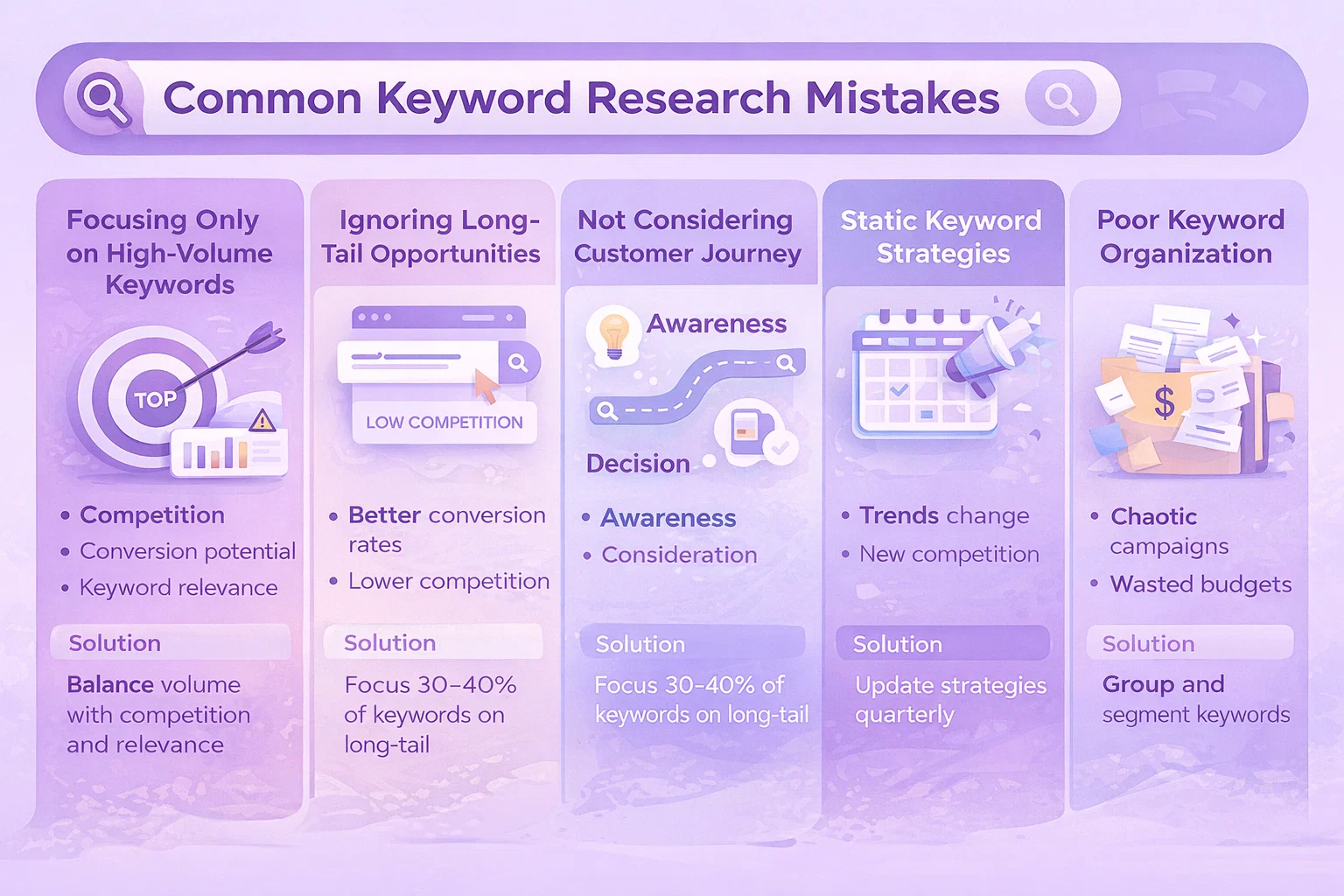
Common Keyword Research Mistakes
1. Focusing Only on High-Volume Keywords
Many sellers chase keywords with massive search volumes, ignoring:
- Competition levels
- Conversion potential
- Relevance to their product
- Budget requirements for competitive bidding
Solution: Balance volume with competition and relevance scores.
2. Ignoring Long-Tail Opportunities
Long-tail keywords often provide:
- Better conversion rates
- Lower competition
- More specific buyer intent
- Higher profit margins
Solution: Allocate 30-40% of your keyword focus to long-tail terms.
3. Not Considering Customer Journey
Keywords should match where customers are in their buying journey:
- Awareness Stage: Broad, educational terms
- Consideration Stage: Comparison and feature keywords
- Decision Stage: Specific product and brand terms
4. Static Keyword Strategies
Markets change, and so do search patterns:
- New competitors enter the market
- Seasonal trends shift
- Customer language evolves
- Amazon algorithm updates
Solution: Review and update keyword strategies quarterly.
5. Poor Keyword Organization
Without proper organization:
- Campaign management becomes chaotic
- Performance tracking is difficult
- Optimization opportunities are missed
- Budgets aren’t allocated effectively
Future-Proofing Your Keyword Strategy
Emerging Trends for 2026
Keep an eye on these developing trends:
- Voice Search: Longer, more conversational queries
- AI-Driven Recommendations: Algorithm-suggested keywords
- Video Content Keywords: Terms related to product videos
- Sustainability Focus: Eco-friendly and sustainable product terms
Tools and Technology Evolution
Stay current with:
- New keyword research tools and features
- Amazon API updates and data availability
- Machine learning applications in keyword selection
- Automation opportunities for keyword management
Measuring Success and ROI
Key Performance Indicators (KPIs)
Track these metrics to measure keyword research success:
- Organic Ranking Improvements: Position changes for target keywords
- Traffic Increase: Sessions from organic search
- Conversion Rate: Keywords that drive sales, not just clicks
- ACoS Improvement: More efficient PPC spend
- Revenue Attribution: Sales directly tied to keyword optimization
Regular Reporting
Create monthly reports that include:
- Top performing keywords by revenue
- New keyword opportunities identified
- Negative keywords added
- Competitive changes observed
- Seasonal adjustments made
Advanced Keyword Research Tools Worth Considering
While this guide focuses on free tools, consider these paid options as your business grows:
Premium Keyword Tools
Helium 10: Comprehensive Amazon toolsuite including Cerebro and Frankenstein
Jungle Scout: Keyword Scout and listing optimization features
AMZScout: Keyword research and product research combined
Sellics (now Perpetua): Advanced keyword and PPC management
When to Upgrade to Paid Tools
Consider paid tools when:
- Managing 10+ products
- PPC spend exceeds $1,000/month
- Need for automation increases
- Competitive intelligence becomes crucial

WisePPC’s Role in Your Keyword Strategy
WisePPC provides several keyword-focused features:
- Bulk campaign management for implementing keyword strategies at scale
- Advanced filtering to identify top-performing keyword combinations
- Historical metrics charts to track keyword performance over time
- Multi-account reporting for agencies managing multiple Amazon brands
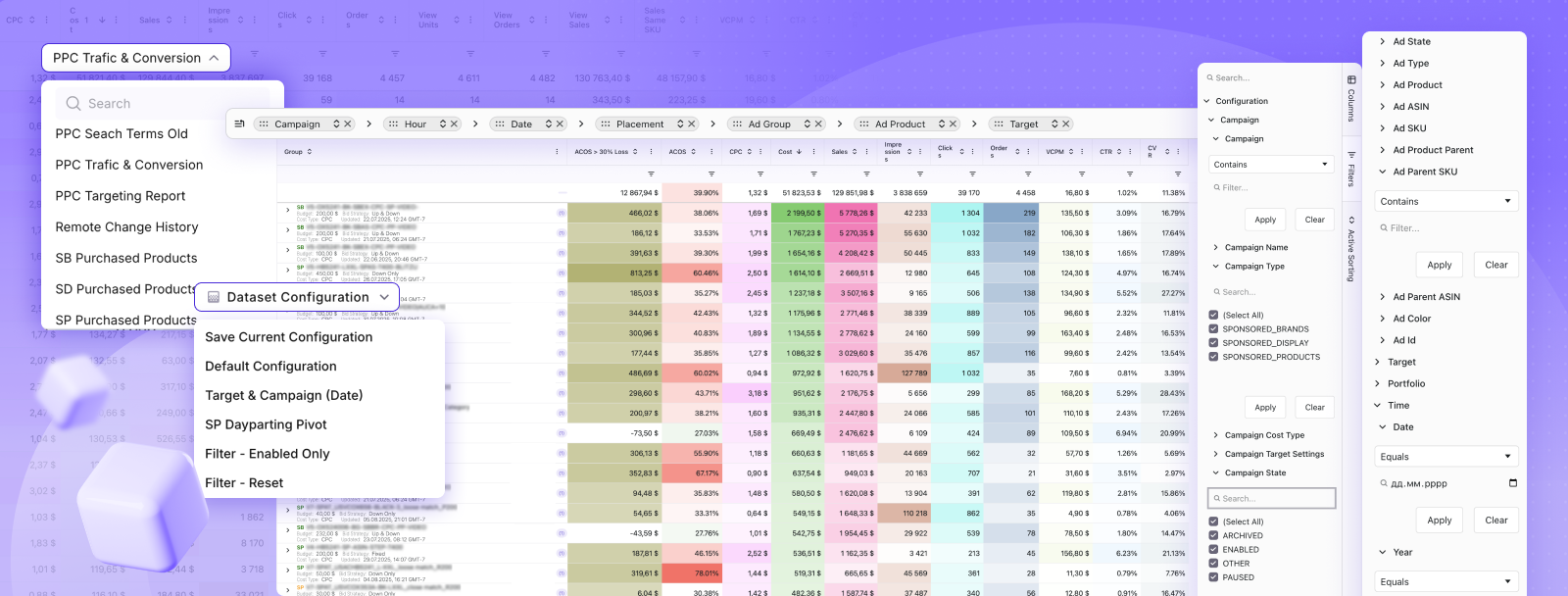
These features are particularly valuable when managing large keyword lists across multiple campaigns and products.
Conclusion
Effective Amazon keyword research requires a systematic approach that combines free tools, competitive intelligence, and ongoing optimization. The strategies outlined in this guide provide a comprehensive framework for discovering, validating, and implementing keywords that drive real business results.
Remember that keyword research isn’t a one-time activity—it’s an ongoing process that should evolve with your business, your market, and Amazon’s algorithm changes. Start with the free tools and processes outlined here, track your results, and gradually invest in more advanced tools as your business grows.
The key to success lies not in finding the “perfect” keywords, but in building a sustainable system for continuously discovering, testing, and optimizing your keyword strategy. With the right approach and tools, keyword research becomes a competitive advantage that drives long-term success on Amazon.
About WisePPC
WisePPC helps Amazon sellers and agencies optimize their PPC campaigns with advanced keyword management, automated bid adjustments, and comprehensive performance analytics. Our platform is designed to streamline the keyword research and campaign management process, allowing sellers to focus on growing their business while we handle the technical complexity of Amazon advertising optimization.
Ready to take your Amazon keyword research to the next level? Explore WisePPC’s advanced keyword management features and see how our platform can streamline your optimization process.
Join the WisePPC Beta and Get Exclusive Access Benefits
WisePPC is now in beta — and we’re inviting a limited number of early users to join. As a beta tester, you'll get free access, lifetime perks, and a chance to help shape the product — from an Amazon Ads Verified Partner you can trust.
 No credit card required
Free in beta and free extra month free after release
25% off for life — limited beta offer
Access metrics Amazon Ads won’t show you
Be part of shaping the product with your feedback
No credit card required
Free in beta and free extra month free after release
25% off for life — limited beta offer
Access metrics Amazon Ads won’t show you
Be part of shaping the product with your feedback